
Identify the Competition Types of Competitors Direct Competitors
- Slides: 12
Identify the Competition
Types of Competitors Direct Competitors – companies that sell products or services that are functionally very similar. ◦ Same industry. ◦ Products/Services similarly priced. ◦ Rely heavily on marketing and advertising to differentiate products. ◦ Success is based on % of market share.
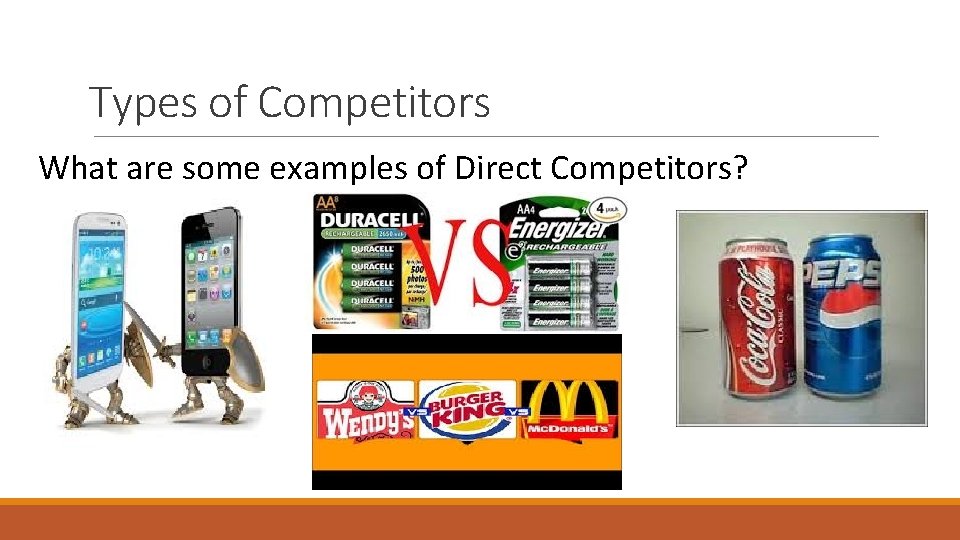
Types of Competitors What are some examples of Direct Competitors?
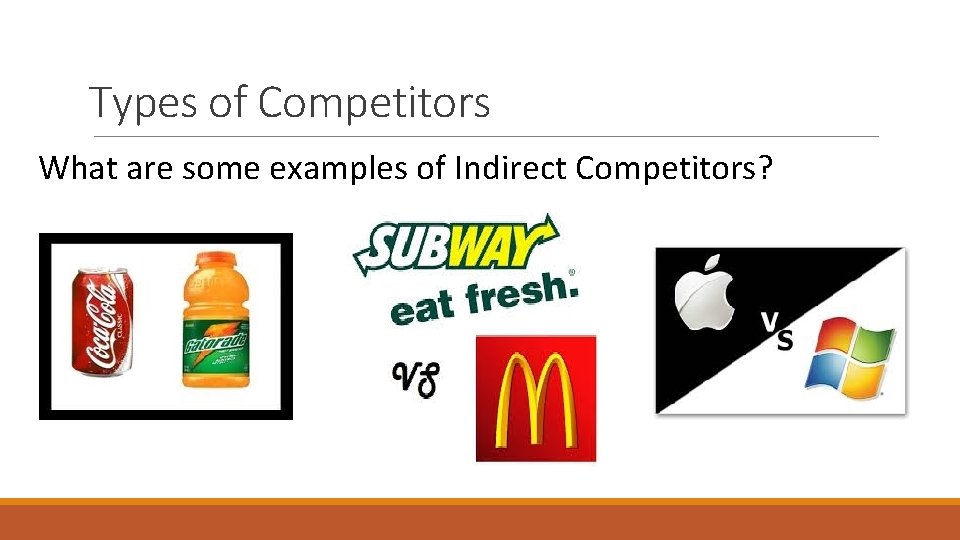
Types of Competitors Indirect Competitors – Companies that do not necessarily sell the same products but offer different alternatives to satisfying the same customer need. ◦ Do Not Directly compete in the same industry. ◦ But may still tend to impact each other. ◦ Different products BUT Same customers
Types of Competitors What are some examples of Indirect Competitors?
Market Share is the percentage of the total sales that one business has in a specific market. ◦ Based on the size of the market Market Size is the total sales per year for a specific product. ◦ Most business measure sales in Dollars. ◦ Sales can also be measured in # of units sold.
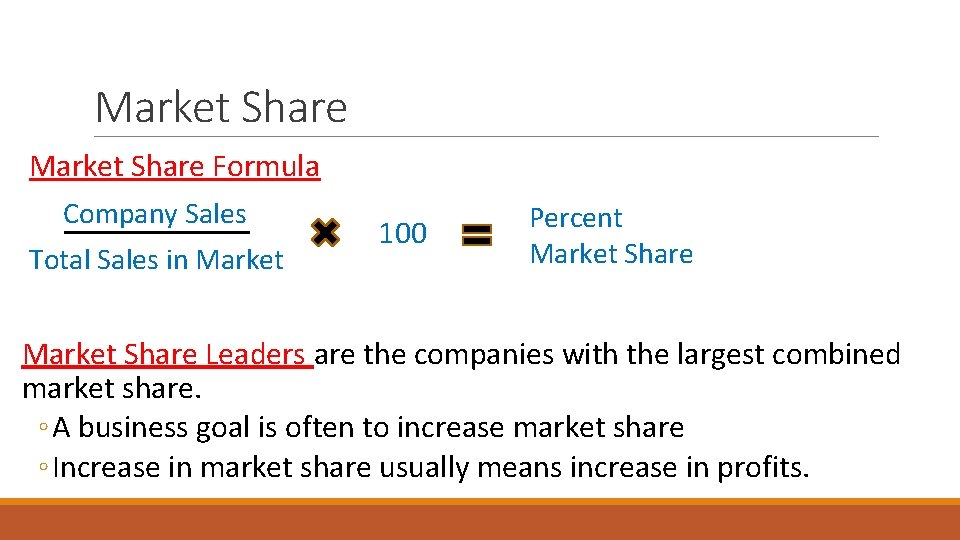
Market Share Formula Company Sales Total Sales in Market 100 Percent Market Share Leaders are the companies with the largest combined market share. ◦ A business goal is often to increase market share ◦ Increase in market share usually means increase in profits.
Competitive Advantage of a product or business is offering better value, features, or service than the competition. Answers the question: “Why would customers want to buy this product from this business instead of from a competitor? ” Having an advantage over competitors ◦ Increases Sales ◦ Increases Profits
Unique Selling Proposition (USP) Unique Selling Proposition is the statement summarizing the special features or benefits of a product or business. Examples: M&Ms: "The milk chocolate melts in your mouth, not in your hand. " Ny. Quil: "The nighttime, coughing, achy, sniffling, stuffy head, fever, so you can rest medicine"
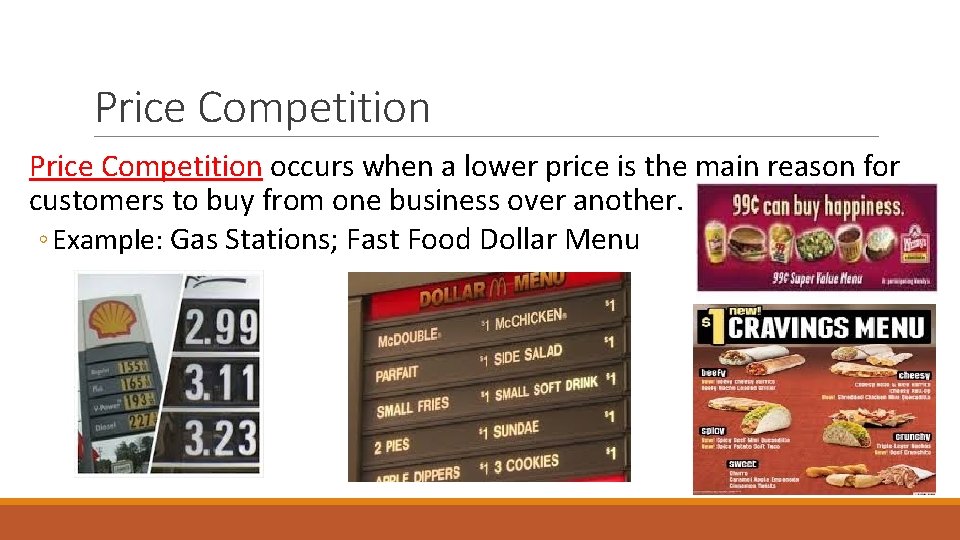
Price Competition occurs when a lower price is the main reason for customers to buy from one business over another. ◦ Example: Gas Stations; Fast Food Dollar Menu
Non-price Competition Non-Price Competition is a competitive advantage based on factors other than price. ◦ Better service ◦ Exclusive brands Features are facts about a product or service. Benefits are the traits of a product that serve as an advantage for the customer. ◦ What are some other examples? ? ?
Competitive Analysis is the assessment of the strengths and weaknesses of current and potential competitors. Main factors of a Competitive Analysis: ◦ Products and their Pricing ◦ Product Features and Benefits ◦ How the Products are Sold ◦ Promotion and Advertisment Techniques Analyze this information and determine how your business is and can be better than the competition.