
Identify Signs of Radicalisation What is Radicalisation a
- Slides: 15
Identify Signs of Radicalisation
What is Radicalisation? a process in which individuals are drawn into terrorist-related activity. In many cases this process is related to the search for identity , meaning and community.
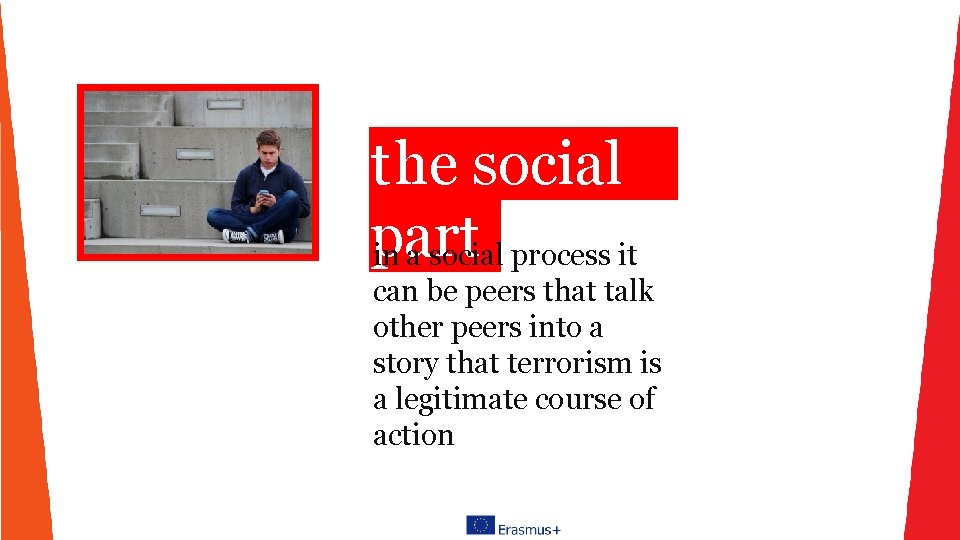
the social part in a social process it can be peers that talk other peers into a story that terrorism is a legitimate course of action
The process of radicalisation There are basically three level: Identification Ideologisation Mobilisation
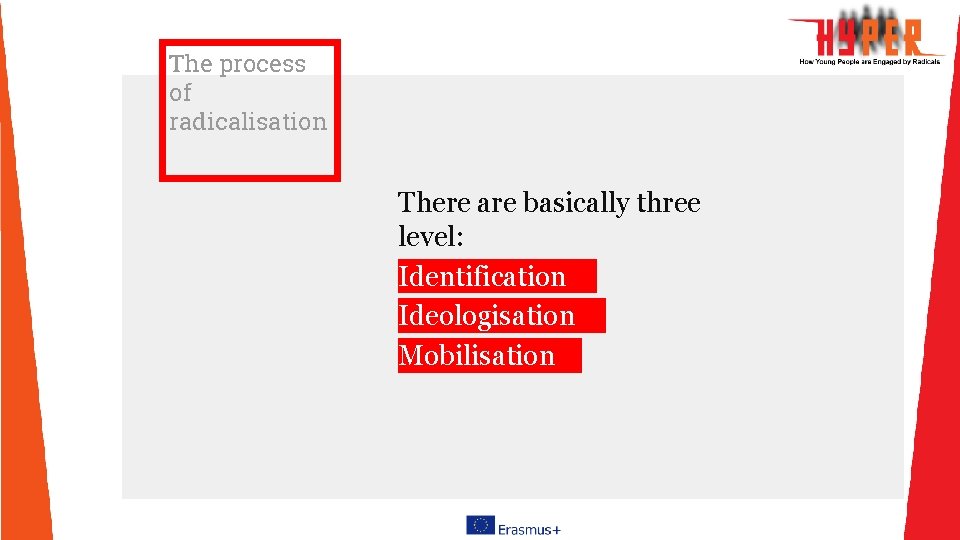
Identificatio A starting point in n young age can be searching for a sense of identity and belonging in social groups.
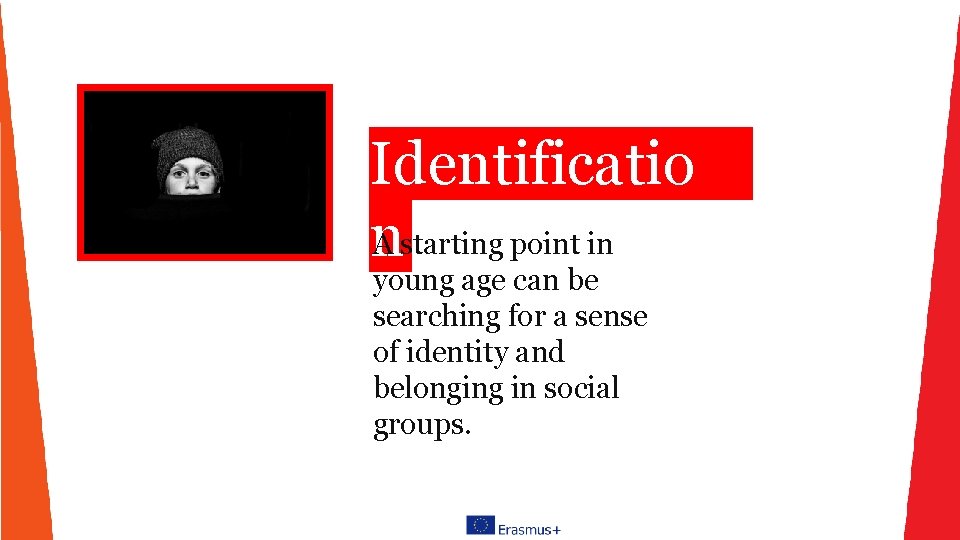
Identificatio Argumentation and n behavior patterns of a group will be adapted.
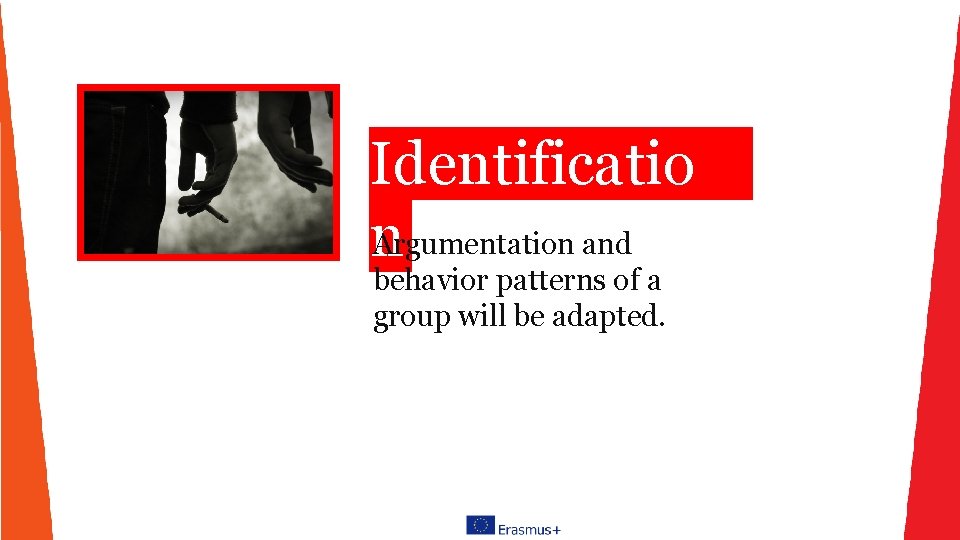
Ideologisati A feeling of dissatisfaction is on drawn in a certain direction. “We against them. ” – assures a strong cohesion. Easy answers and a frame of rules and moral provide orientation.
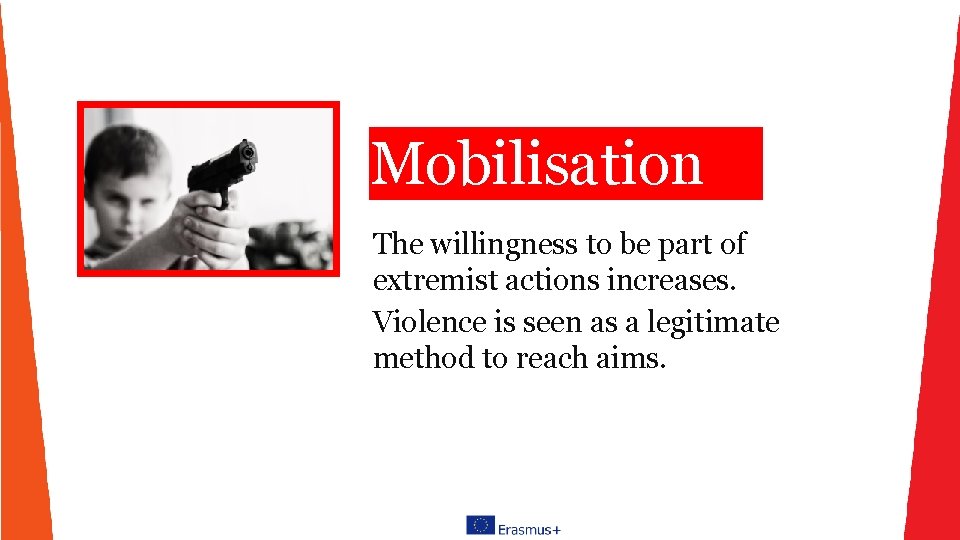
Mobilisation The willingness to be part of extremist actions increases. Violence is seen as a legitimate method to reach aims.
What are signs of radicalisation? Let’s have a look what you can think of it…
Signs of radicalisation □ Becoming increasingly argumentative □ Refusing to listen to different points of view □ Unwilling to engage with students who are different □ Becoming abusive to students who are different
Signs of radicalisation □ Embracing conspiracy theories □ Feeling persecuted □ Changing friends and appearance □ Distancing themselves from old friends □ No longer doing things they used to enjoy
Signs of radicalisation □ Converting to a new religion □ Being secretive and reluctant to discuss their whereabouts □ Sympathetic to extremist ideologies and groups □ Changing online identity
Signs of radicalisation □ Having more than one online identity □ Spending a lot of time online or on the phone □ Accessing extremist online content □ Joining or trying to join an extremist organisation
The European Commission's support for the production of this publication does not constitute an endorsement of the contents, which reflect the views only of the authors, and the Commission cannot be held responsible for any use which may be made of the information contained therein. This work is licensed under a Creative Commons Attribution 4. 0 International License.