
Identification of Highly Hazardous Pesticides and Field Surveys

- Slides: 30
Identification of Highly Hazardous Pesticides and Field Surveys on Conditions of Use- Preliminary Findings (BOTSWANA) MINISTRY OF AGRICULTURE Botswana Mr. Loitseng Sebetwane Pesticides Registrar
Outline v Current use of pesticides in Botswana v Identification of HHPs v Conditions of use – field survey v Multi stakeholder consultation on alternatives v Next steps
Introduction
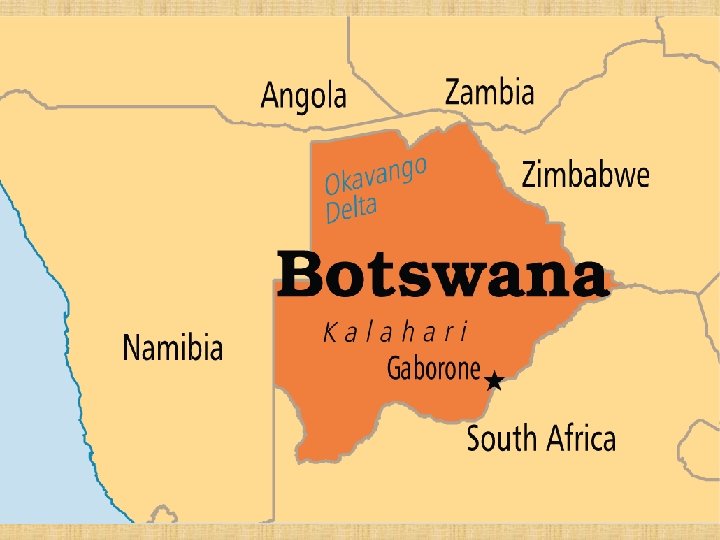
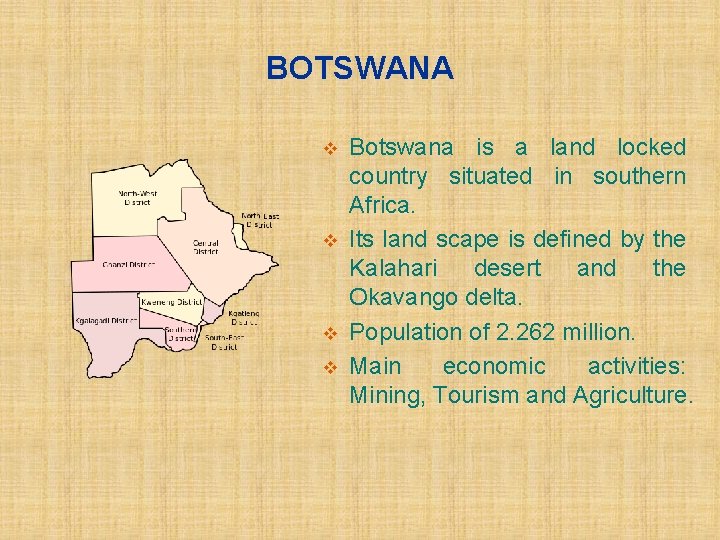
BOTSWANA v v Botswana is a land locked country situated in southern Africa. Its land scape is defined by the Kalahari desert and the Okavango delta. Population of 2. 262 million. Main economic activities: Mining, Tourism and Agriculture.
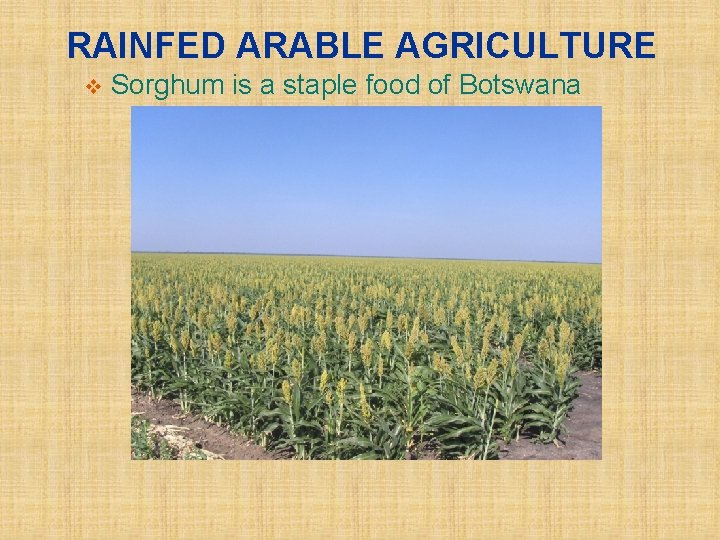
RAINFED ARABLE AGRICULTURE v Sorghum is a staple food of Botswana
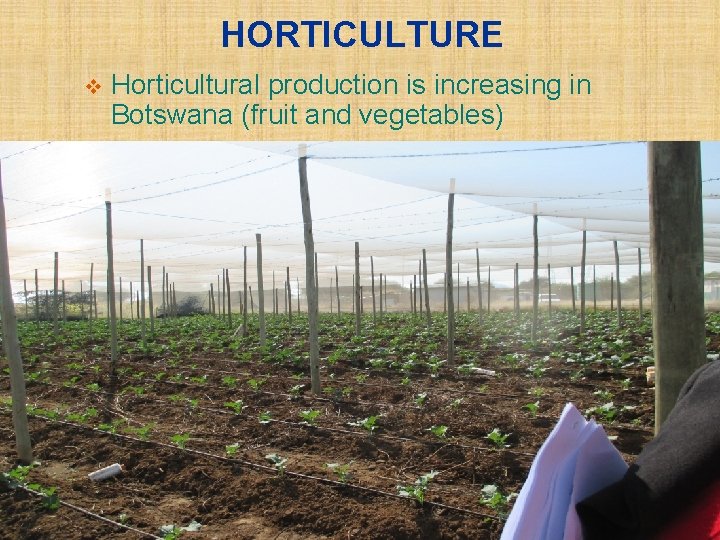
HORTICULTURE v Horticultural production is increasing in Botswana (fruit and vegetables)
Public Health Botswana still uses DDT for Malaria control – IRS in the Eastern and Northern regions of the country v Various other pesticides are used to control household pests v
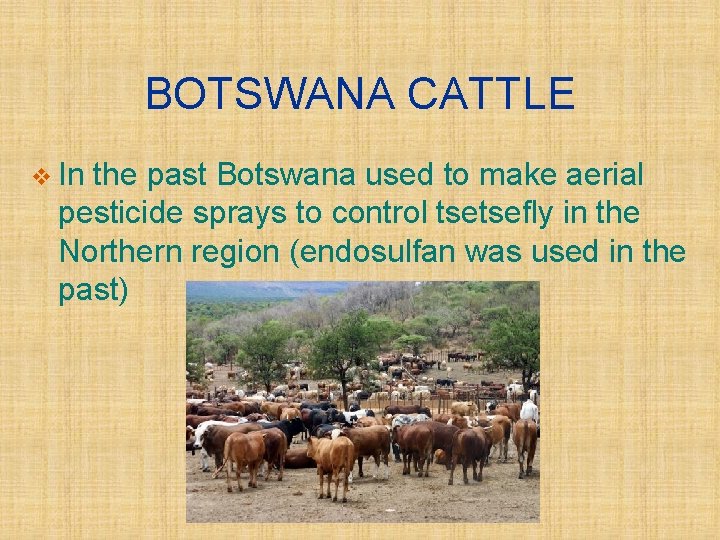
BOTSWANA CATTLE v In the past Botswana used to make aerial pesticide sprays to control tsetsefly in the Northern region (endosulfan was used in the past)
WHY WE NEED TO WORK ON HHPs? Negative impact on the tourism industry Vulture poisoning Poisoning of wildlife (predators) Negative human health effects incl. suicide cases To safeguard food safety and trade Pollution of the Environment Poisoning of domestic animals Poaching (elephants)
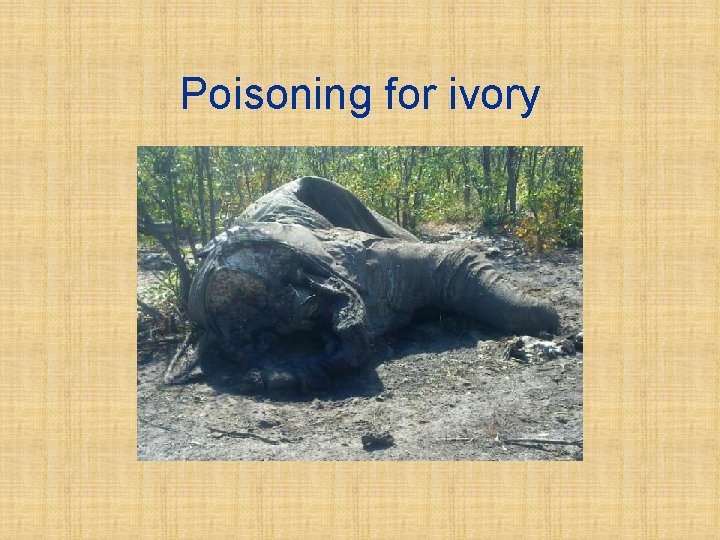
Poisoning for ivory
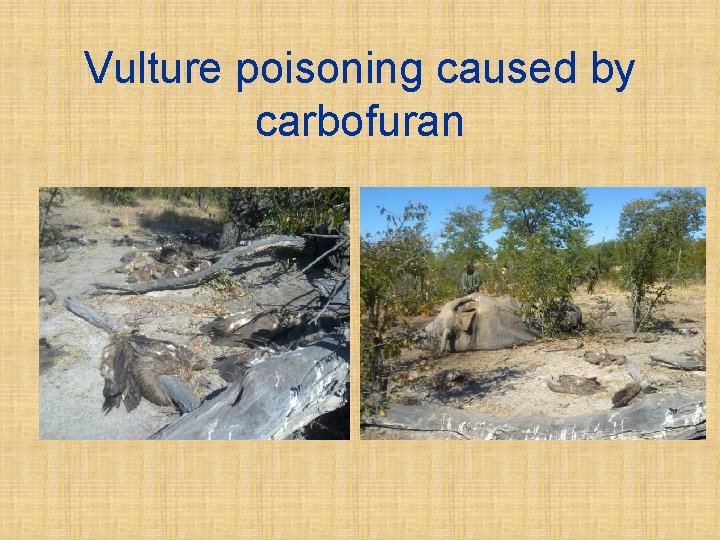
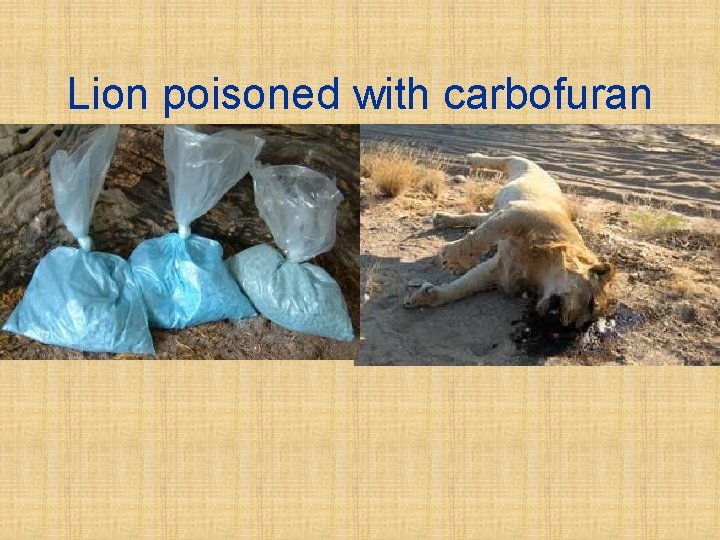
Vulture poisoning caused by carbofuran
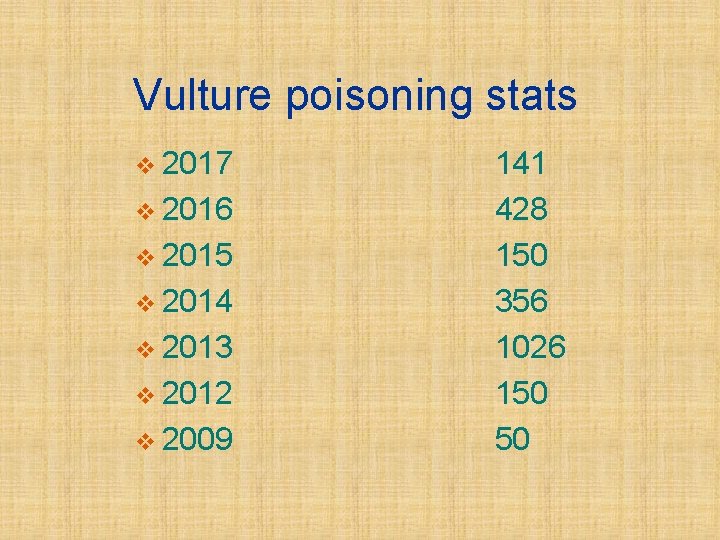
Vulture poisoning stats v 2017 v 2016 v 2015 v 2014 v 2013 v 2012 v 2009 141 428 150 356 1026 150 50
Lion poisoned with carbofuran
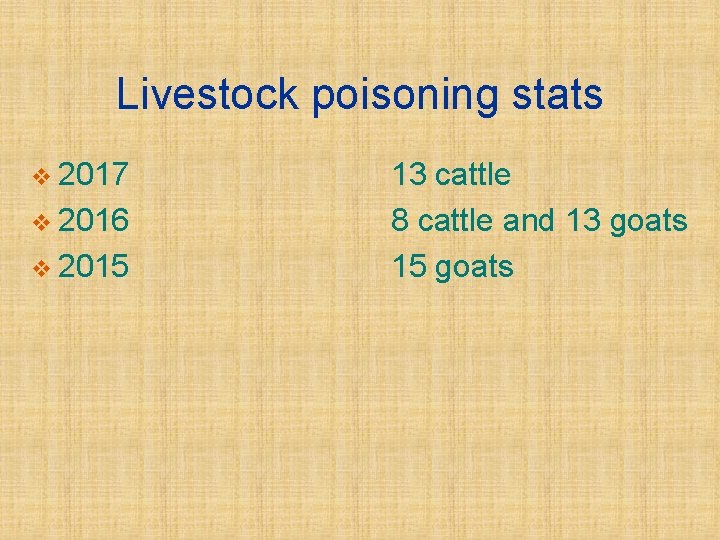
Livestock poisoning stats v 2017 v 2016 v 2015 13 cattle 8 cattle and 13 goats 15 goats
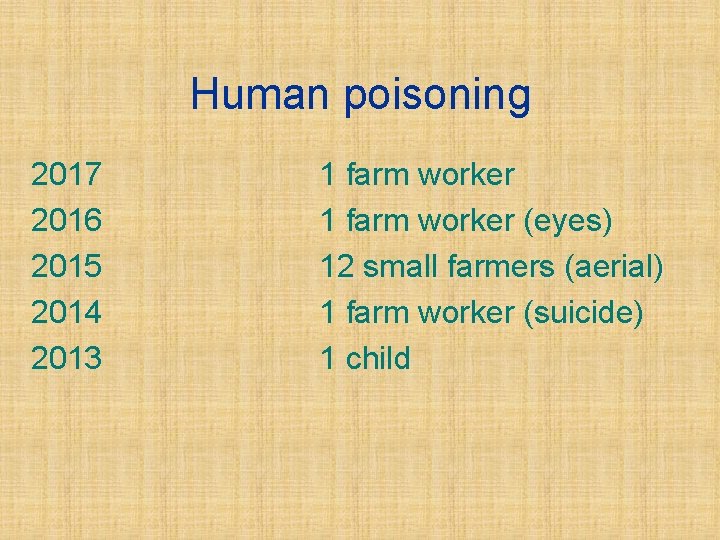
Human poisoning 2017 2016 2015 2014 2013 1 farm worker (eyes) 12 small farmers (aerial) 1 farm worker (suicide) 1 child
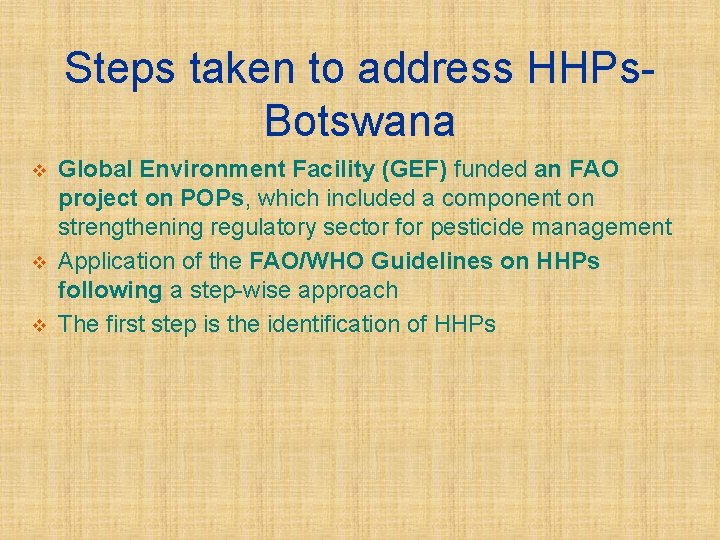
Steps taken to address HHPs. Botswana v v v Global Environment Facility (GEF) funded an FAO project on POPs, which included a component on strengthening regulatory sector for pesticide management Application of the FAO/WHO Guidelines on HHPs following a step-wise approach The first step is the identification of HHPs
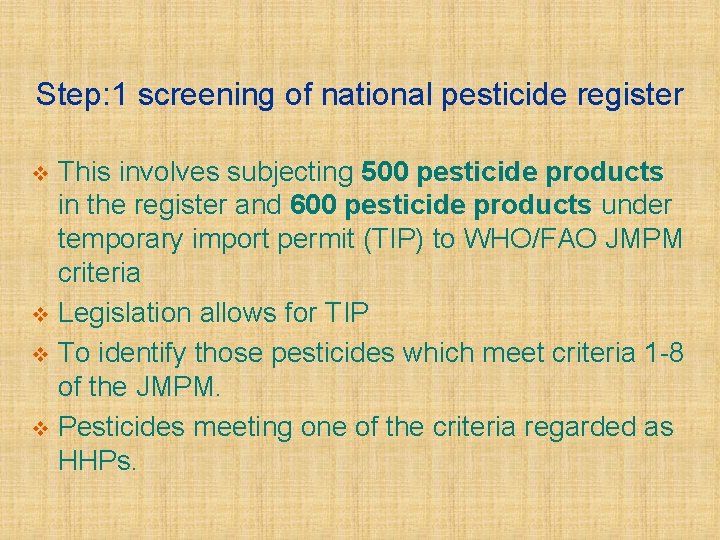
Step: 1 screening of national pesticide register This involves subjecting 500 pesticide products in the register and 600 pesticide products under temporary import permit (TIP) to WHO/FAO JMPM criteria v Legislation allows for TIP v To identify those pesticides which meet criteria 1 -8 of the JMPM. v Pesticides meeting one of the criteria regarded as HHPs. v
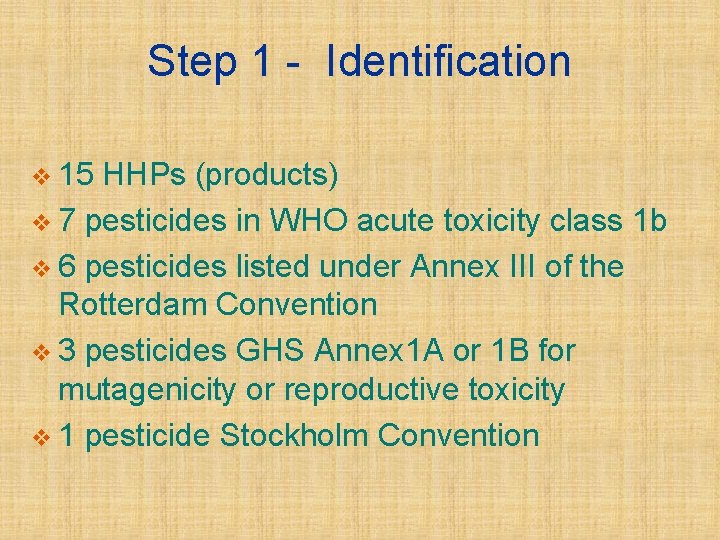
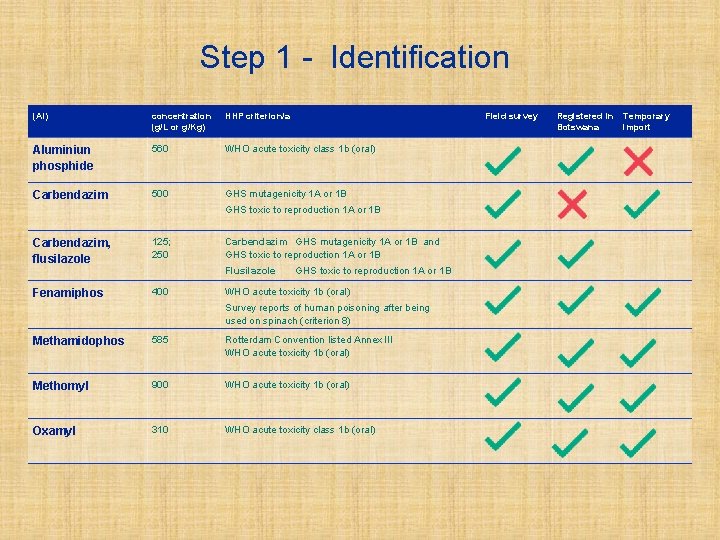
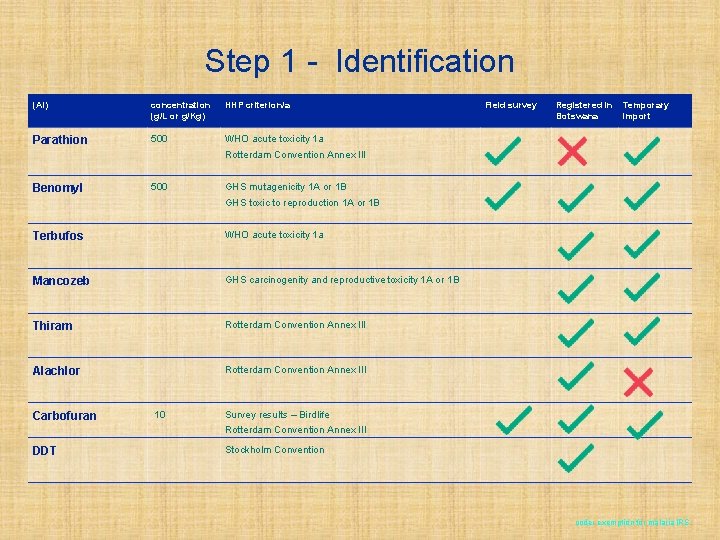
Step 1 - Identification v 15 HHPs (products) v 7 pesticides in WHO acute toxicity class 1 b v 6 pesticides listed under Annex III of the Rotterdam Convention v 3 pesticides GHS Annex 1 A or 1 B for mutagenicity or reproductive toxicity v 1 pesticide Stockholm Convention
Step 1 - Identification (AI) concentration (g/L or g/Kg) HHP criterion/a Field survey Aluminiun phosphide 560 WHO acute toxicity class 1 b (oral) Carbendazim 500 GHS mutagenicity 1 A or 1 B GHS toxic to reproduction 1 A or 1 B Carbendazim, flusilazole 125; 250 Fenamiphos 400 Carbendazim GHS mutagenicity 1 A or 1 B and GHS toxic to reproduction 1 A or 1 B Flusilazole GHS toxic to reproduction 1 A or 1 B WHO acute toxicity 1 b (oral) Survey reports of human poisoning after being used on spinach (criterion 8) Methamidophos 585 Rotterdam Convention listed Annex III WHO acute toxicity 1 b (oral) Methomyl 900 WHO acute toxicity 1 b (oral) Oxamyl 310 WHO acute toxicity class 1 b (oral) Registered in Temporary Botswana import
Step 1 - Identification (AI) concentration (g/L or g/Kg) HHP criterion/a Parathion 500 WHO acute toxicity 1 a Field survey Registered in Temporary Botswana import Rotterdam Convention Annex III Benomyl 500 GHS mutagenicity 1 A or 1 B GHS toxic to reproduction 1 A or 1 B Terbufos WHO acute toxicity 1 a Mancozeb GHS carcinogenity and reproductive toxicity 1 A or 1 B Thiram Rotterdam Convention Annex III Alachlor Rotterdam Convention Annex III Carbofuran 10 Survey results – Birdlife Rotterdam Convention Annex III DDT Stockholm Convention under exemption for malaria IRS
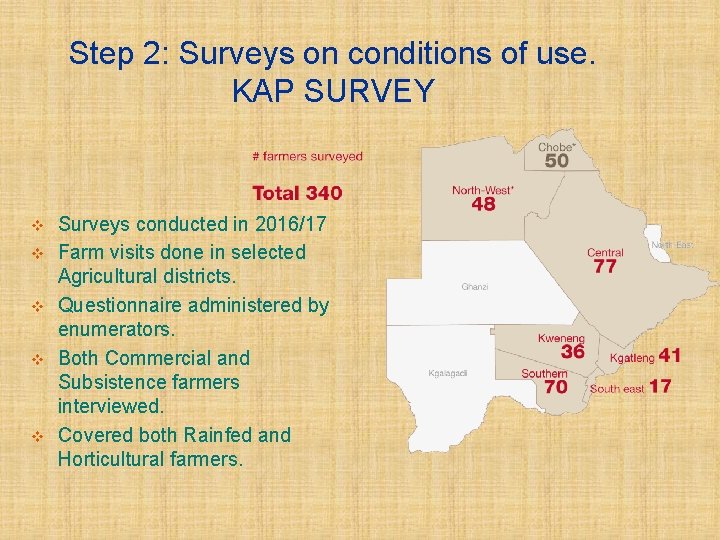
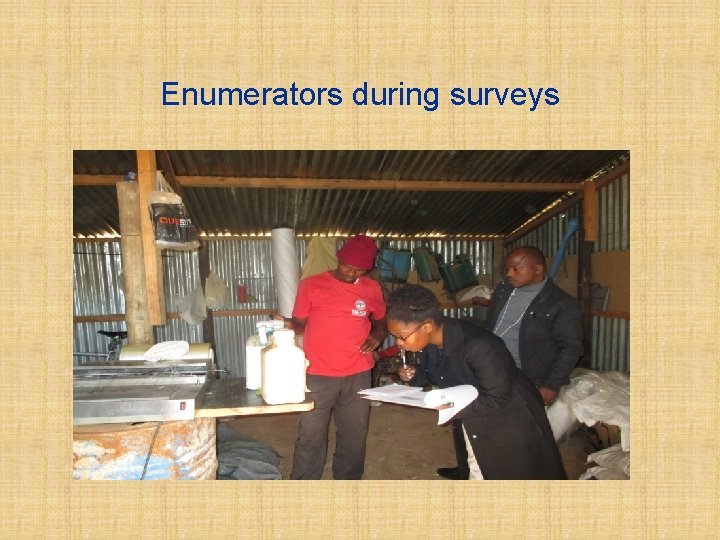
Step 2: Surveys on conditions of use. KAP SURVEY v v v Surveys conducted in 2016/17 Farm visits done in selected Agricultural districts. Questionnaire administered by enumerators. Both Commercial and Subsistence farmers interviewed. Covered both Rainfed and Horticultural farmers.
Enumerators during surveys
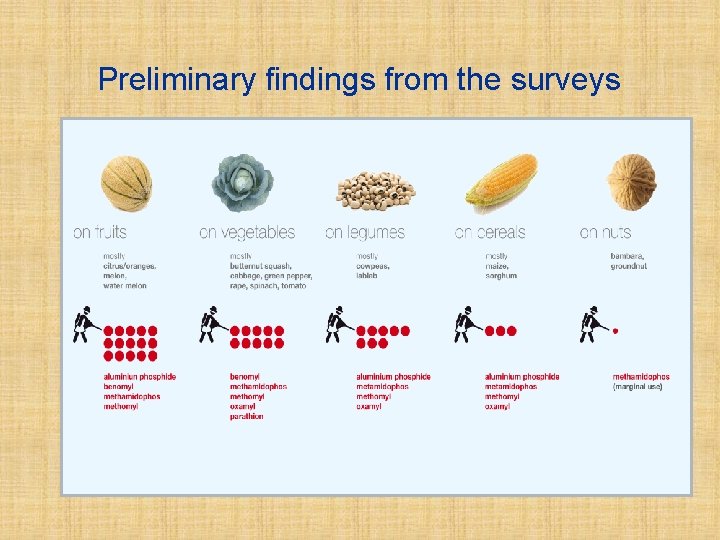
Preliminary findings from the surveys
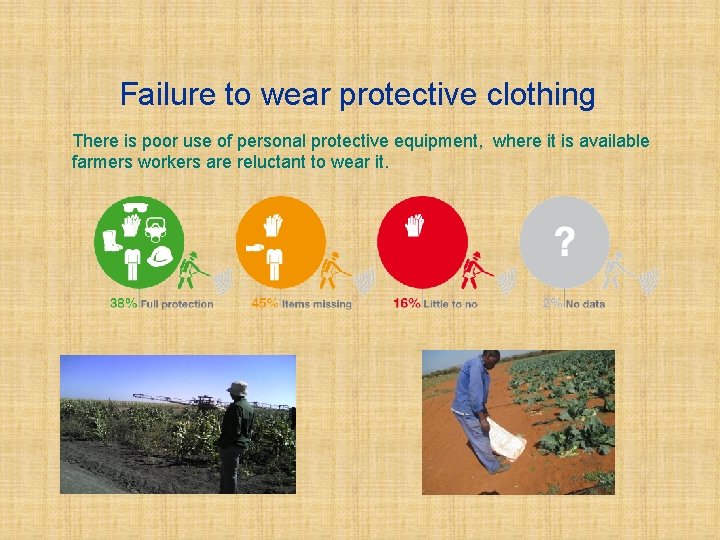
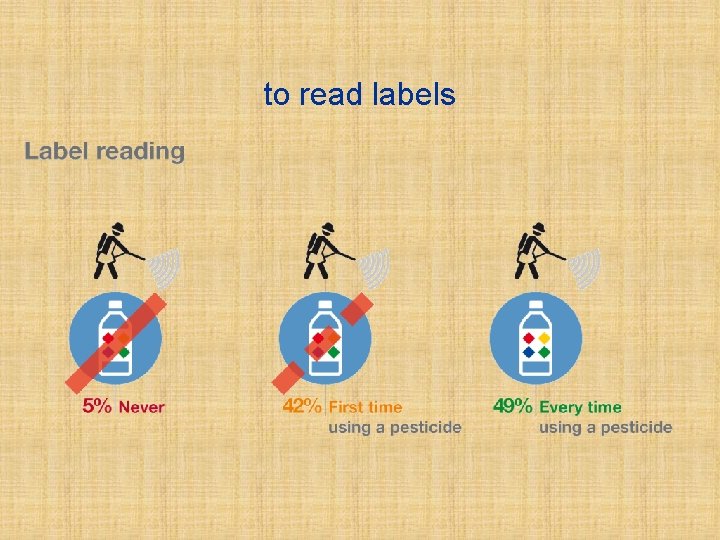
Failure to wear protective clothing There is poor use of personal protective equipment, where it is available farmers workers are reluctant to wear it.
to read labels
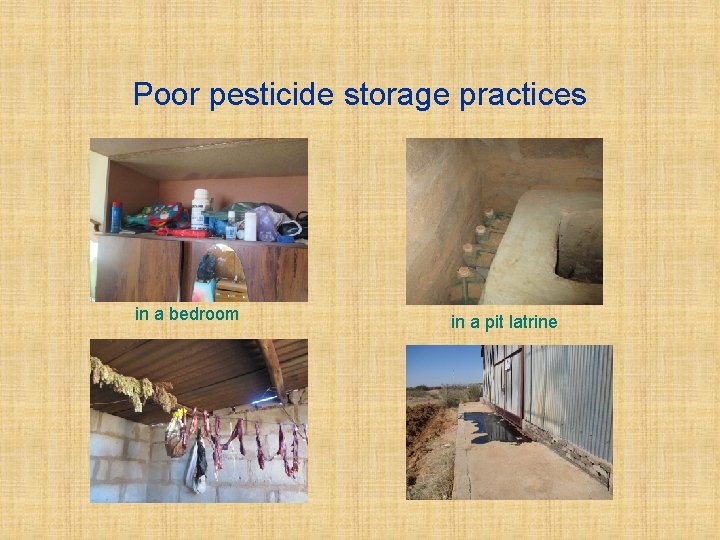
Poor pesticide storage practices in a bedroom in a pit latrine
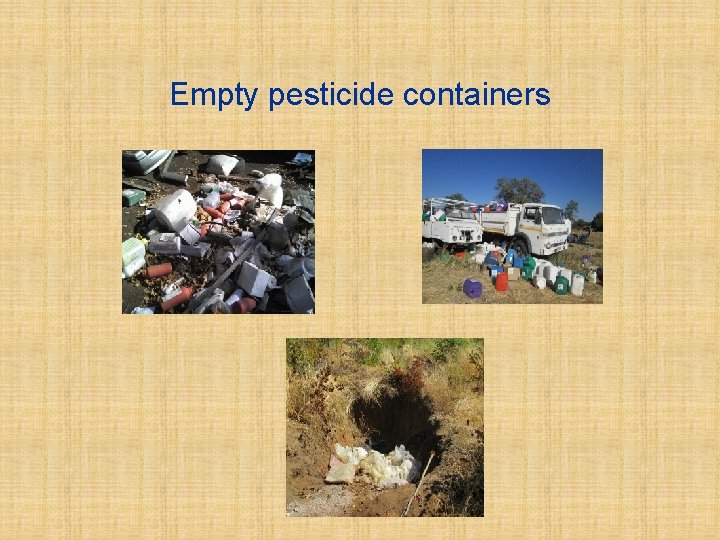
Empty pesticide containers
Poisoning incidences v Surveys revealed that most of the pesticide poisonings are not reported v Many cases of suicide have not been reported v Spray men are at risk from HHPs
Way forward Conduct stakeholders workshop in June 2017 to share the findings. v Look into alternatives to HHPs. v Take necessary final regulatory action. v Intensify implementation of container management strategy. v Complete the pesticide legislation review v Create awareness on HHPs. v Develop a communication strategy. v
Thank You! 30