
IDENTIFICATION OF DISEASE CAUSING MUTATIONS IN HYPERGLYCINEMIC CAPTIVE



- Slides: 25
IDENTIFICATION OF DISEASE CAUSING MUTATIONS IN HYPERGLYCINEMIC CAPTIVE BRED VERVET MONKEYS (CHLOROCEBUS AETHIOPS) Presenter: Zandisiwe Magwebu (zmagwebu@mrc. ac. za) Primate Unit and Delft Animal Centre (PUDAC) 13 September 2016 Berlin, Germany
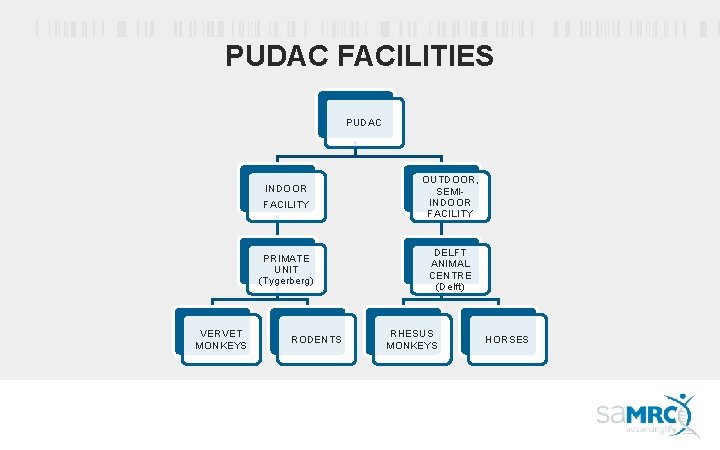
PUDAC FACILITIES PUDAC VERVET MONKEYS INDOOR FACILITY OUTDOOR, SEMIINDOOR FACILITY PRIMATE UNIT (Tygerberg) DELFT ANIMAL CENTRE (Delft) RODENTS RHESUS MONKEYS HORSES
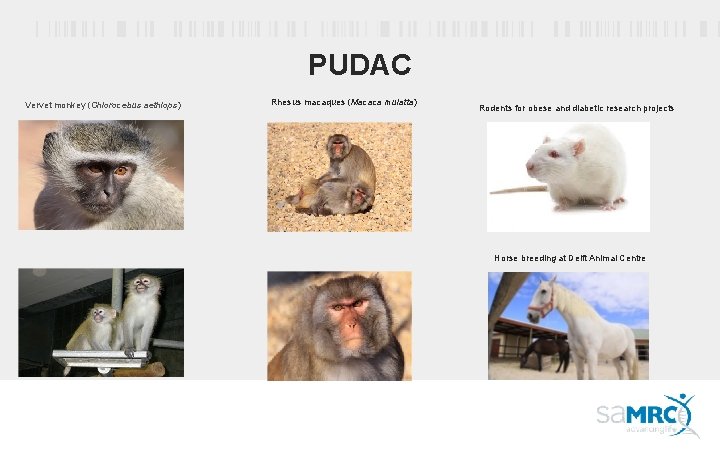
PUDAC Vervet monkey (Chlorocebus aethiops) Rhesus macaques (Macaca mulatta) Rodents for obese and diabetic research projects Horse breeding at Delft Animal Centre
RANGE OF SERVICES AND RESEARCH SUPPORT
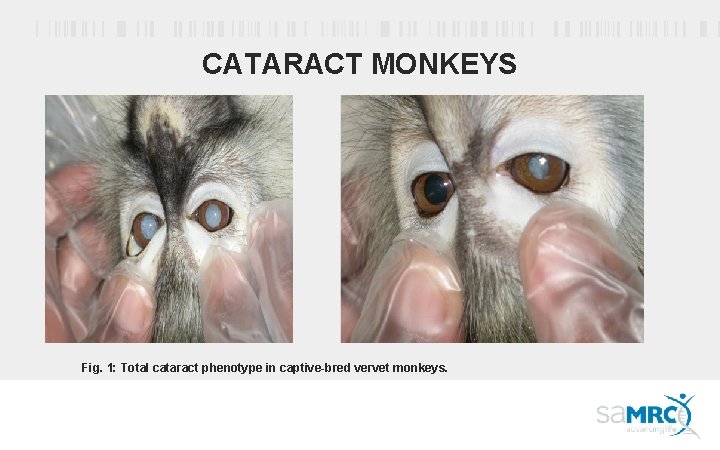
HYPERGLYCINEMIA IN VERVET MONKEYS • Cataract individuals are hyperglycinemic: – Plasma: 740µmol/L, normal ≤ 450 µmol/L – CSF: >12µmol/L, normal <8µmol/L • In humans, CSF/plasma ratio >0. 02 ~ Nonketotic hyperglycinemia (NKH). • Association between cataract and NKH?
CATARACT MONKEYS Fig. 1: Total cataract phenotype in captive-bred vervet monkeys.
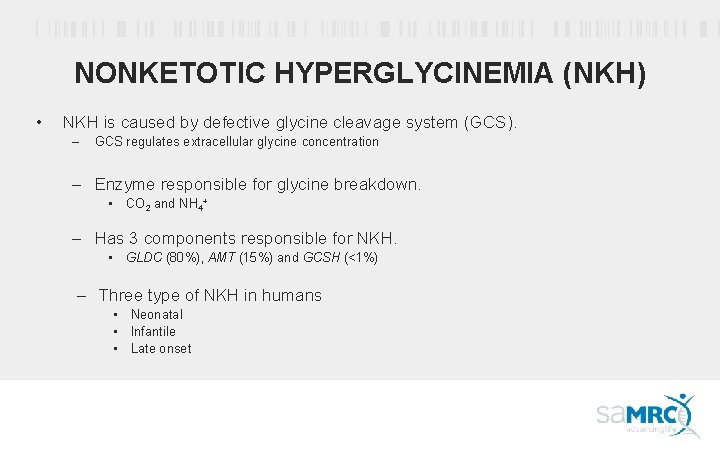
NONKETOTIC HYPERGLYCINEMIA (NKH) • NKH is caused by defective glycine cleavage system (GCS). – GCS regulates extracellular glycine concentration – Enzyme responsible for glycine breakdown. • CO 2 and NH 4+ – Has 3 components responsible for NKH. • GLDC (80%), AMT (15%) and GCSH (<1%) – Three type of NKH in humans • Neonatal • Infantile • Late onset
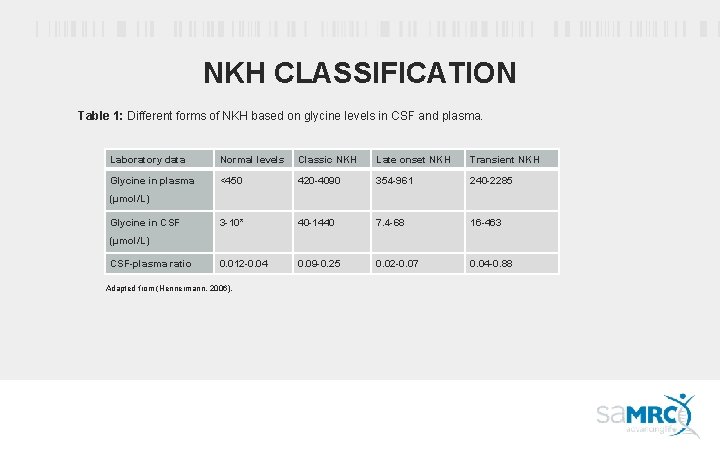
NKH CLASSIFICATION Table 1: Different forms of NKH based on glycine levels in CSF and plasma. Laboratory data Normal levels Classic NKH Late onset NKH Transient NKH Glycine in plasma <450 420 -4090 354 -961 240 -2285 3 -10* 40 -1440 7. 4 -68 16 -463 0. 012 -0. 04 0. 09 -0. 25 0. 02 -0. 07 0. 04 -0. 88 (µmol/L) Glycine in CSF (µmol/L) CSF-plasma ratio Adapted from (Hennermann, 2006).
NONKETOTIC HYPERGLYCINEMIA (NKH) • NKH is also caused by defective glycine transporters Gly. T 1 (SLC 6 A 9) – Removes glycine from extracellular space to avoid saturation at NMDA receptors – Failure to remove glycine results in hyperglycinemia • NKH can be mechanically induced by valproate – Anticonvulsant
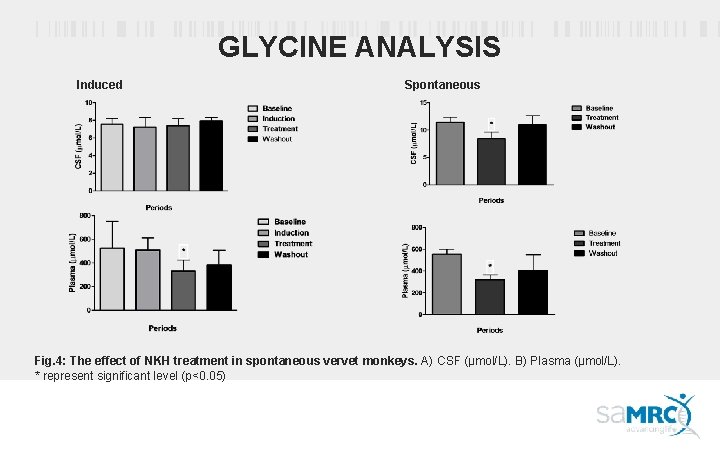
NKH TREATMENT • There is no cure for NKH. • Alternative treatment: sodium benzoate and dextromethorphan. • The treatment reduces glycine levels and minimizes seizures.
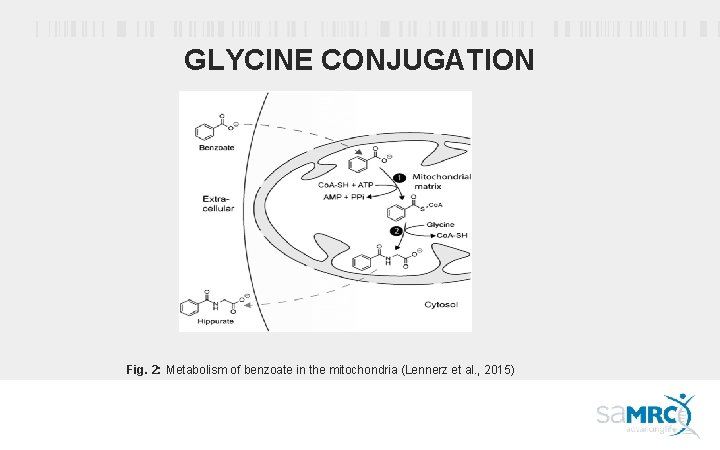
GLYCINE CONJUGATION Fig. 2: Metabolism of benzoate in the mitochondria (Lennerz et al. , 2015)
AIMS/OBJECTIVES • Aim – To determine the underlying cause of hyperglycinemia in cataract vervet monkeys. • Objectives – Screen for sequence variants in SLC 6 A 9. – Gene expression: GLDC, AMT and SLC 6 A 9.
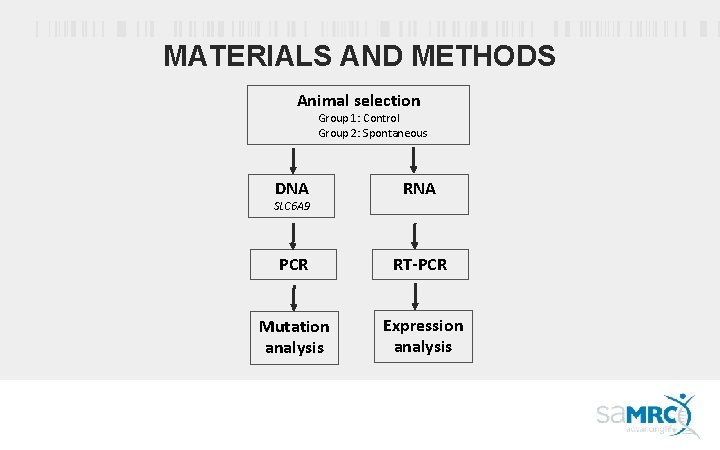
MATERIALS AND METHODS Animal selection Group 1: Control Group 2: Spontaneous DNA RNA PCR RT-PCR Mutation analysis Expression analysis SLC 6 A 9
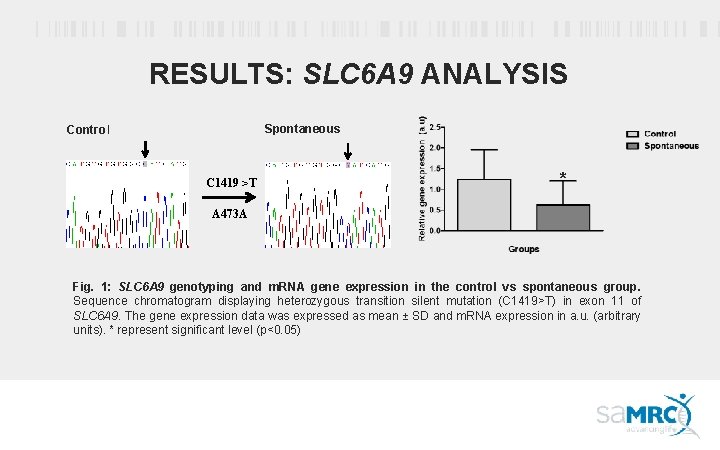
RESULTS: SLC 6 A 9 ANALYSIS Spontaneous Control C 1419 >T * A 473 A Fig. 1: SLC 6 A 9 genotyping and m. RNA gene expression in the control vs spontaneous group. Sequence chromatogram displaying heterozygous transition silent mutation (C 1419>T) in exon 11 of SLC 6 A 9. The gene expression data was expressed as mean ± SD and m. RNA expression in a. u. (arbitrary units). * represent significant level (p<0. 05)
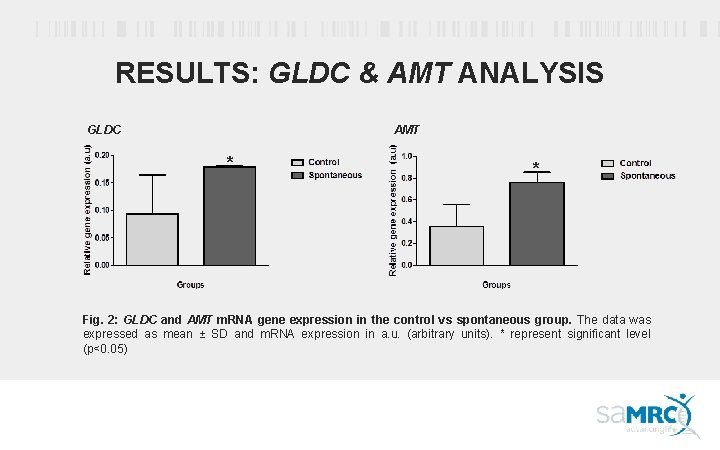
RESULTS: GLDC & AMT ANALYSIS GLDC AMT * * Fig. 2: GLDC and AMT m. RNA gene expression in the control vs spontaneous group. The data was expressed as mean ± SD and m. RNA expression in a. u. (arbitrary units). * represent significant level (p<0. 05)
DISCUSSION • The presence of hyperglycinemia and cataract formation in NHP is unique • Genotyping analysis of GLDC, AMT and SLC 6 A 9 revealed eight novel singlebase substitutions. • Expression of GLDC and AMT was upregulated while SLC 6 A 9 was downregulated • Mutations in any of the GCS complex genes affect overall activity of the complex • It has been suggested that mutations in (SLC 6 A 9) are responsible for a different form of NKH
CONCLUSION • Genotyping and gene expression findings confirmed that there is an association between the two disorders • The findings also confirmed that both defective GCS and Gly. T 1 contributed to hyperglycinemia • Since Gly. T 1 is reported for the first time, findings can be extrapolated to humans • Future studies are aimed at using multiplex ligation-dependent probe amplification (MLPA)
ACKNOWLEDGEMENTS Supervisors: Dr Chesa Chauke (PUDAC) and Dr Abdul-Rasool (UWC) Financial support: SAMRC-PUDAC CSF collection: Prof Ali Dhansay Glycine Analysis: NHLS/UCT and Path. Care PUDAC Staff: Dr. Charon de Villiers, Joritha van Heerden, Timothy Collop and Abe Davids
PUDAC CONTACT DETAILS • ADDRESS: SAMRC-PUDAC NIVS/RIND Building P. O Box 19070 Francie van zijl drive Tygerberg 7505 • Email: Chesa. chauke@mrc. ac. za or Charon. devilliers@mrc. ac. za • Tel: +27 21 938 0369 or ext. 0671
AIMS/OBJECTIVES • To determine the induced effect of valproate (50 mg/kg) in vervet monkeys and to assess the treatment effect of sodium benzoate and dextromethorphan in valproate induced as compared to spontaneous monkeys.
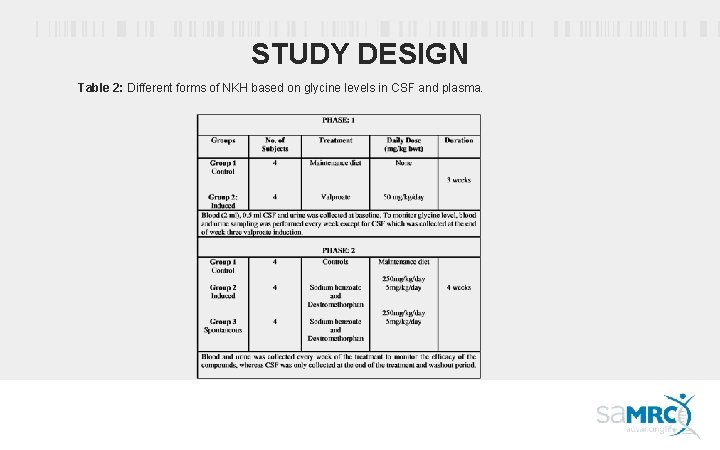
STUDY DESIGN Table 2: Different forms of NKH based on glycine levels in CSF and plasma.
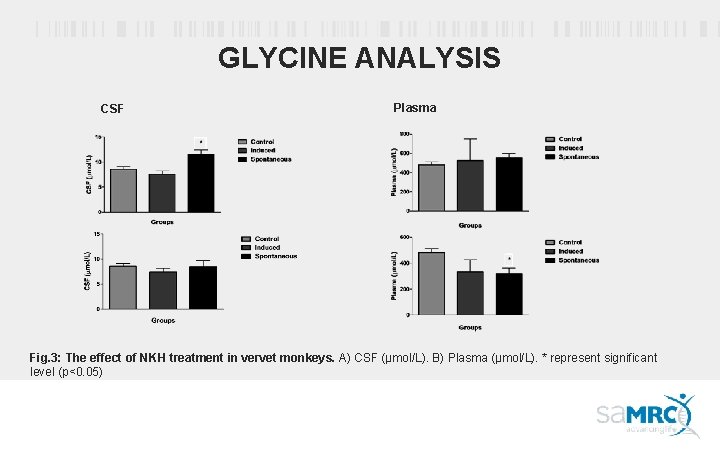
GLYCINE ANALYSIS CSF Plasma Fig. 3: The effect of NKH treatment in vervet monkeys. A) CSF (µmol/L). B) Plasma (µmol/L). * represent significant level (p<0. 05)
GLYCINE ANALYSIS Induced Spontaneous Fig. 4: The effect of NKH treatment in spontaneous vervet monkeys. A) CSF (µmol/L). B) Plasma (µmol/L). * represent significant level (p<0. 05)
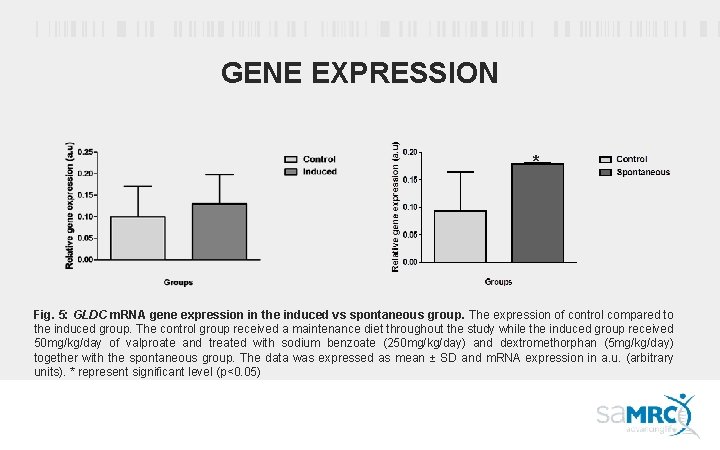
GENE EXPRESSION * Fig. 5: GLDC m. RNA gene expression in the induced vs spontaneous group. The expression of control compared to the induced group. The control group received a maintenance diet throughout the study while the induced group received 50 mg/kg/day of valproate and treated with sodium benzoate (250 mg/kg/day) and dextromethorphan (5 mg/kg/day) together with the spontaneous group. The data was expressed as mean ± SD and m. RNA expression in a. u. (arbitrary units). * represent significant level (p<0. 05)
PUDAC CONTACT DETAILS • ADDRESS: SAMRC-PUDAC NIVS/RIND Building P. O Box 19070 Francie van zijl drive Tygerberg 7505 • Email: Chesa. chauke@mrc. ac. za or Charon. devilliers@mrc. ac. za • Tel: +27 21 938 0369 or ext. 0671