
Identification of Bacteria depend on 1 Microscopic appearance
Identification of Bacteria depend on: 1 – Microscopic appearance : -under the compound light microscope which include a. Reaction with gram stain. b. Morphology and arrangement. c. Capsulated or not. d. Motile or not. e. Spore forming or not. 2 – Macroscopic appearance : include a. Culture appearance. b. Biochemical tests. c. Gene tests.
Culture Media common ingredient of culture media : pepton , meat extract , Na. Cl , agar , water. Uses of culture media: 1 -To obtain pure culture. 2 -Identification and recognition of bacteria. 3 -Some media use to study the bacteria. (to do biochemical tests). Types of media: According to A- physical status there is : ● liquid media. ● solid media. ● semisolid media.

B_ use of the media: 1. simple (basal) media : It uses for cultivation of common m. o. but not for fastidious bacteria. e. g nutrient broth, nutrient agar.

2. Special purpose media A/ enriched media : e. g (blood agar , Chocolate agar). It is simple media enriched with one of the following substance (blood, serum, glucose, …) it used to cultivate fastidious m. o. e. g. Neisseria gonorrhoeae, Haemophilus lnfluenzae.
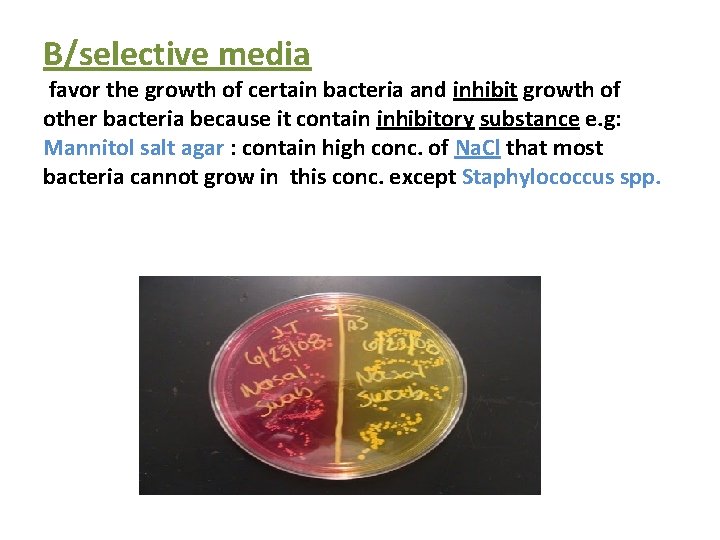
B/selective media favor the growth of certain bacteria and inhibit growth of other bacteria because it contain inhibitory substance e. g: Mannitol salt agar : contain high conc. of Na. Cl that most bacteria cannot grow in this conc. except Staphylococcus spp.
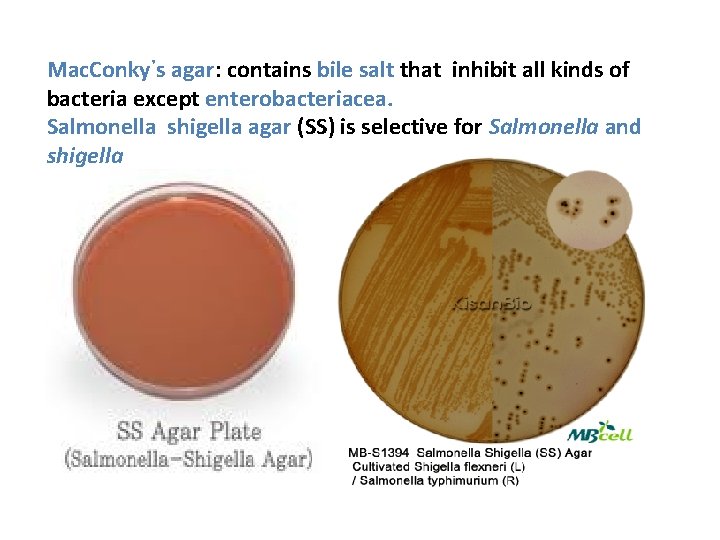
Mac. Conky᾽s agar: contains bile salt that inhibit all kinds of bacteria except enterobacteriacea. Salmonella shigella agar (SS) is selective for Salmonella and shigella
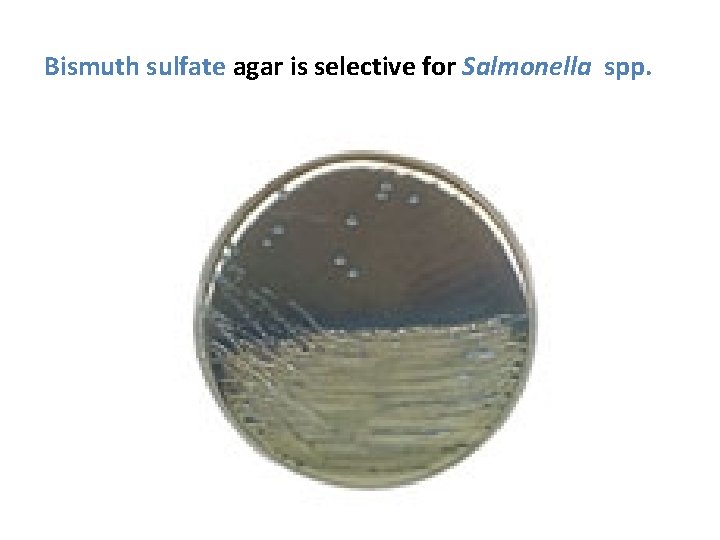
Bismuth sulfate agar is selective for Salmonella spp.
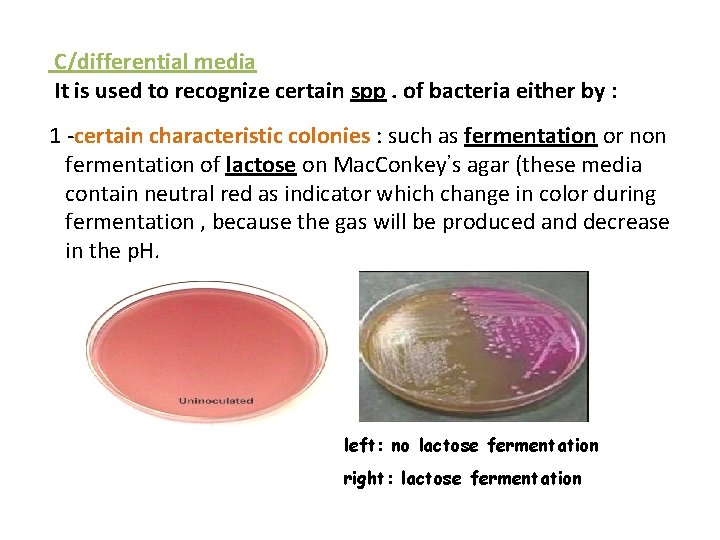
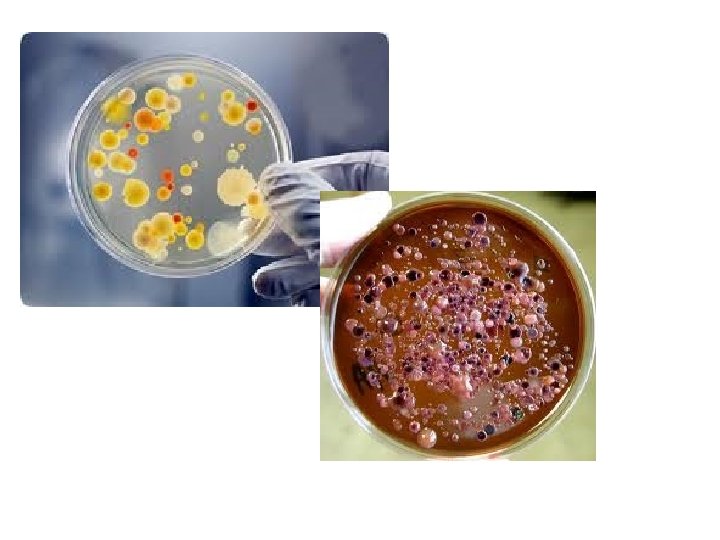
C/differential media It is used to recognize certain spp. of bacteria either by : 1 -certain characteristic colonies : such as fermentation or non fermentation of lactose on Mac. Conkey᾽s agar (these media contain neutral red as indicator which change in color during fermentation , because the gas will be produced and decrease in the p. H. left: no lactose fermentation right: lactose fermentation
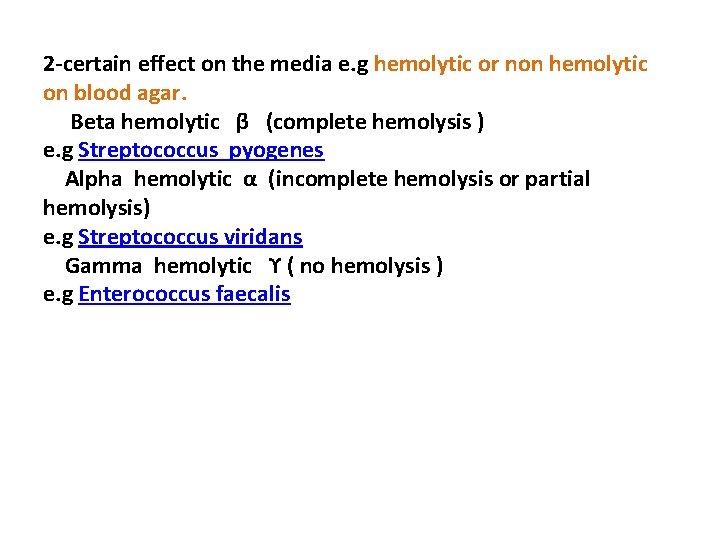
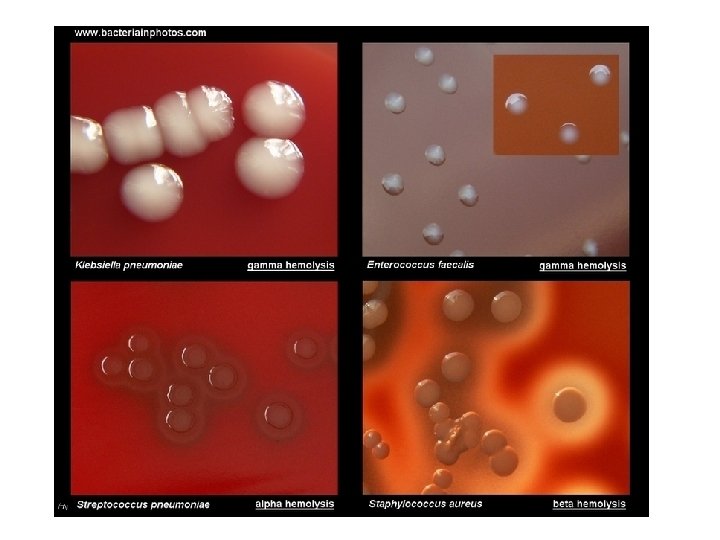
2 -certain effect on the media e. g hemolytic or non hemolytic on blood agar. Beta hemolytic β (complete hemolysis ) e. g Streptococcus pyogenes Alpha hemolytic α (incomplete hemolysis or partial hemolysis) e. g Streptococcus viridans Gamma hemolytic ϒ ( no hemolysis ) e. g Enterococcus faecalis

Macroscopic characteristics of the microorganism in any culture 1 -Size : very small (pinhead ≤ 1 mm ) Medium size =1 -2 mm Large size > 2 mm 2 -Shape : circular , irregular , radiated , rhizoid , filamentous. 3 -Elevation : flat , raised , low convex , convex dam , papillate. 4 -Surface structure : smooth , rough , granular , ringed papillate. 5 -Edge : entire , lobate , cranate , dentate, curled , filament. 6 -Color and opacity : transparent, translucent, opaque, fluorescence, metallic sheen. 7 -Consistency : butyrous , viscid , friable , membranous. 8 -Emulsifinibility : easy or difficult , homogenous granules, membranous.

9 -phenomenon : swarming (Proteus ) Medusa head (Bacillus) Swarming of Proteus mirabilis Medusa head of bacillus anthracis
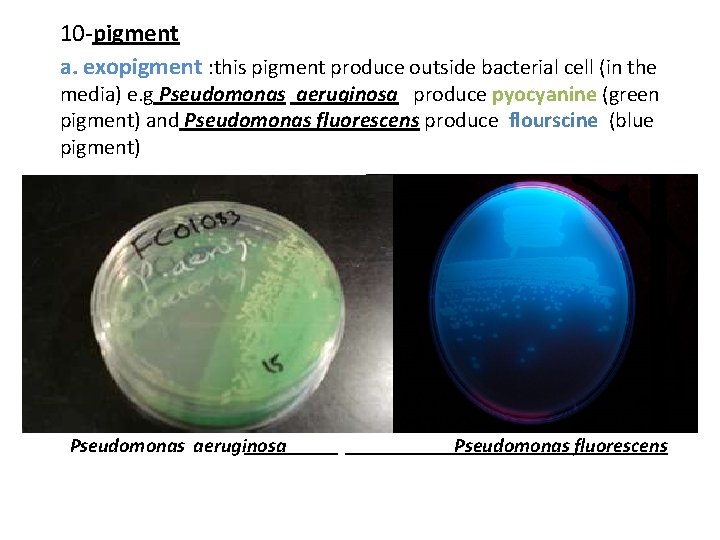
10 -pigment a. exopigment : this pigment produce outside bacterial cell (in the media) e. g Pseudomonas aeruginosa produce pyocyanine (green pigment) and Pseudomonas fluorescens produce flourscine (blue pigment) Pseudomonas fluorescens Pseudomonas aeruginosa Pseudomonas fluorescens
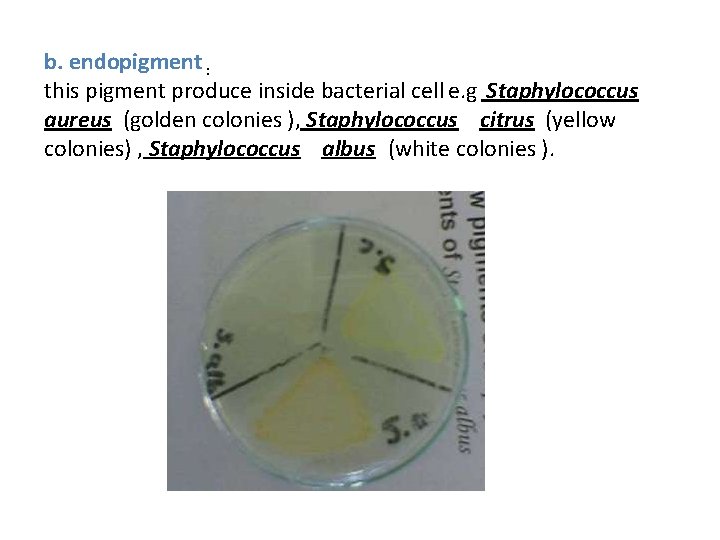
b. endopigment : this pigment produce inside bacterial cell e. g Staphylococcus aureus (golden colonies ), Staphylococcus citrus (yellow colonies) , Staphylococcus albus (white colonies ).
11 -odor: sweet odor (apple) such as Pseudomonas. bad odor (fish) such as Proteus. 12 -growth in semisolid media Gelatin test 13 -haemolysis in blood
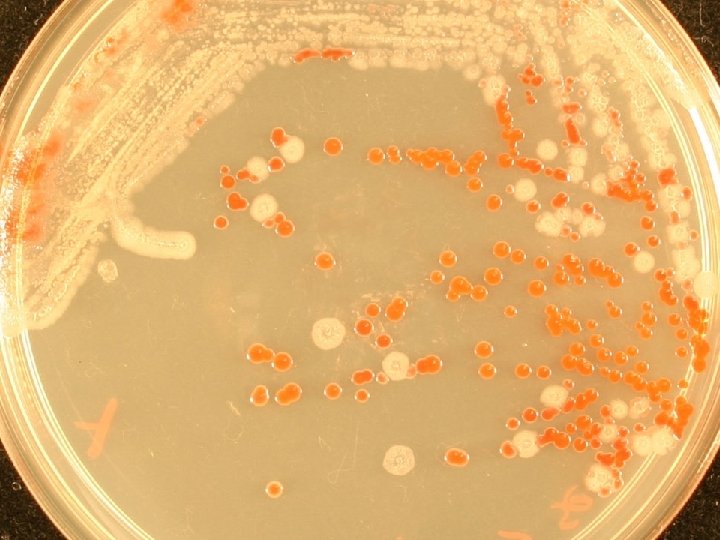
Methods of inoculation and isolation of pure culture Mixed bacterial population; sputum, urine, pus, infected wound, abscess, …. ect Pure culture: a single kind of m. o. growing alone in a protected environment. Bacterial colony: a mass composed of identical bacterial cells. Methods : 1 - the streak plate method (e. g. Quadrant steak) 2 - the pour plate method 3 - the serial dilution method 4 - the micromanipulater technique
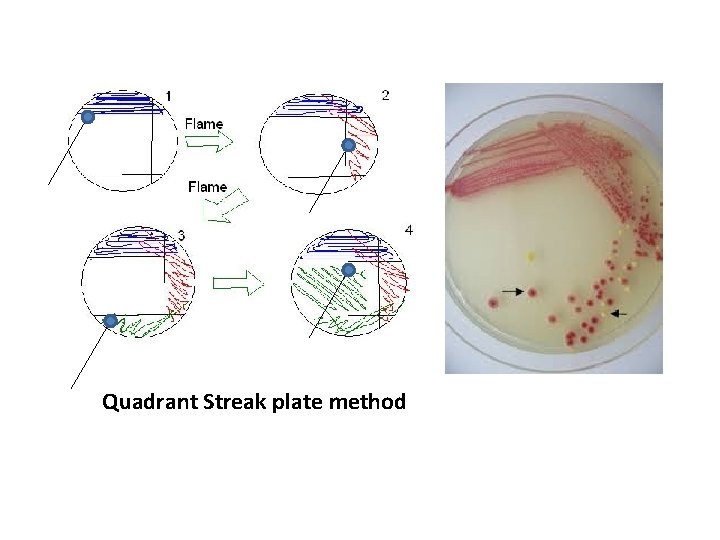
Quadrant Streak plate method

The End
- Slides: 20