
Identification Breeds Lecture 4 Horse Identification Stallion or
Identification & Breeds Lecture 4
Horse Identification Stallion or Stud? Gelding Mare Colt Filly Weanling Yearling Foal
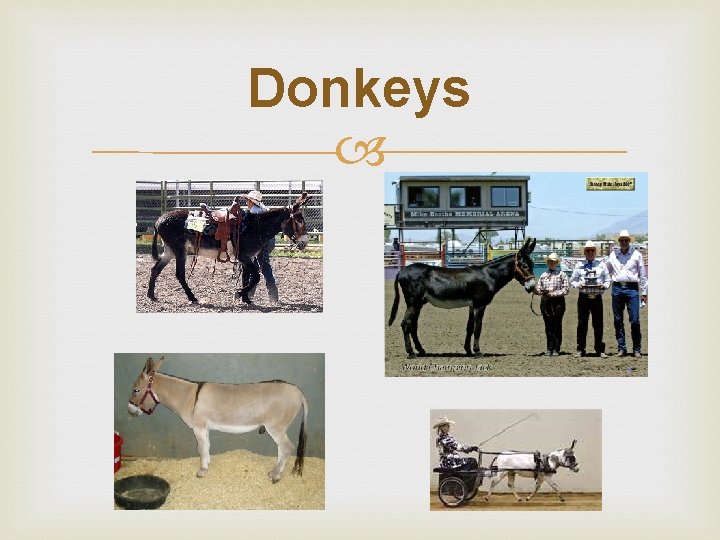
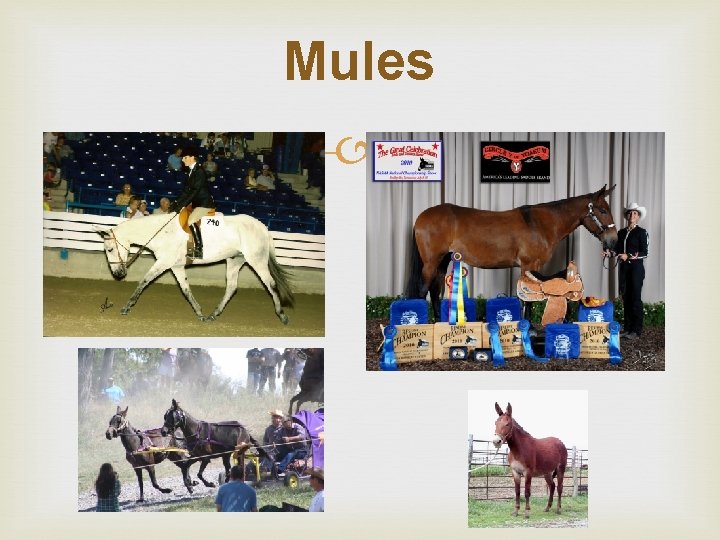
Donkeys and Mules Intact male donkey? Jack Female donkey? Jenny Male donkey bred to female horse? Mule Male horse bred to female donkey? Hinny
Mule Male Mule Gelded Mule? John Mule Female Mule? Molly
Mules Generally infertile? Number of chromosomes Horse 64 Donkey 62 Mule and Hinny 63 Light Medium Heavy weight
Mules Some say More patient Sure-footed Hardy Outlive horses No offspring from male mule Female mules on rare occasion have given birth
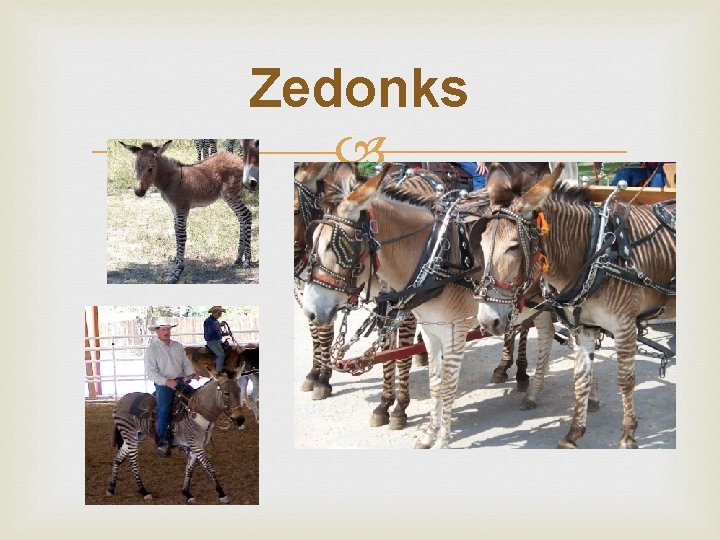
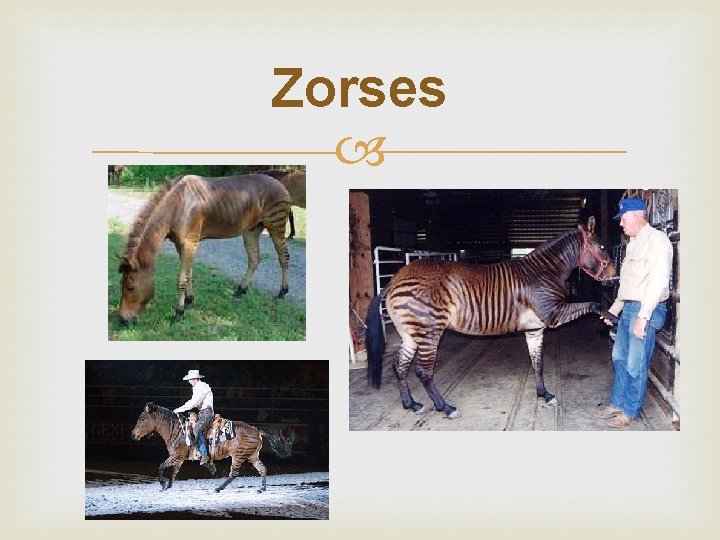
American Donkey and Mule Society Lewisville, TX Established 1967 Donkeys Mules Zebra hybrids Miniature to Mammoth Zorse Zedonk
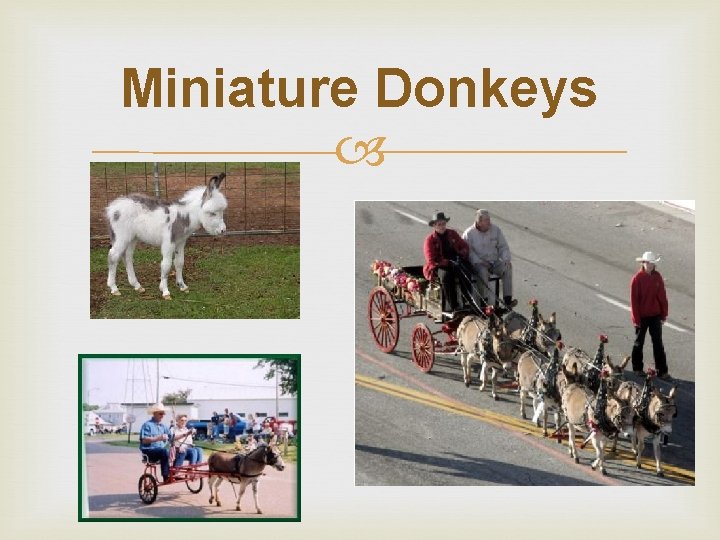
Miniature Donkeys
Donkeys
Mules
Zedonks
Zorses

Light Horse Breeds
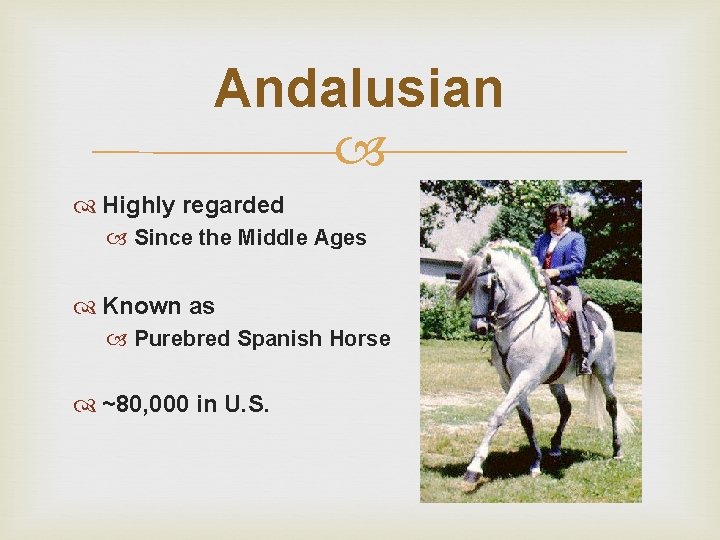
Andalusian Highly regarded Since the Middle Ages Known as Purebred Spanish Horse ~80, 000 in U. S.
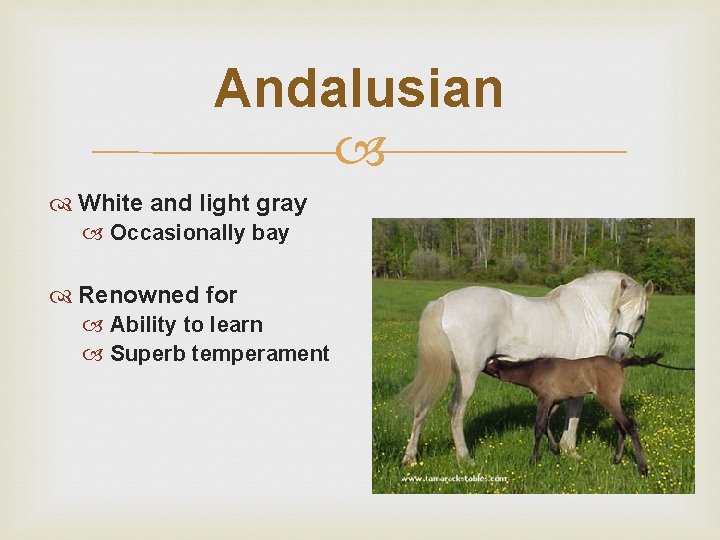
Andalusian White and light gray Occasionally bay Renowned for Ability to learn Superb temperament
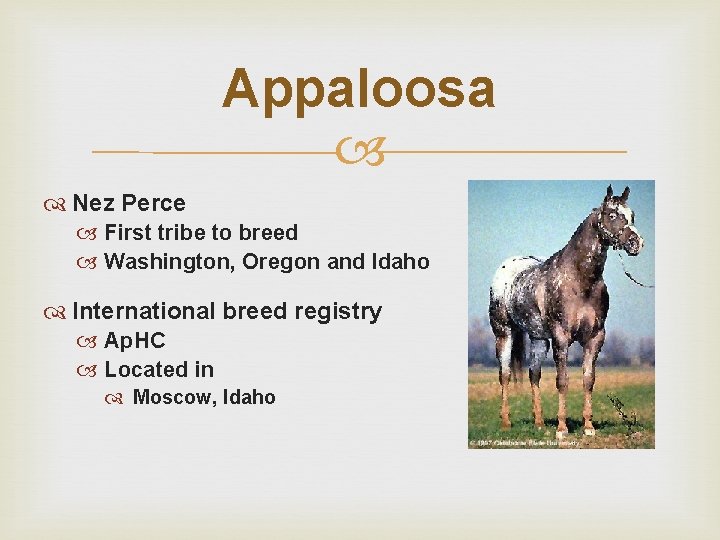
Appaloosa Nez Perce First tribe to breed Washington, Oregon and Idaho International breed registry Ap. HC Located in Moscow, Idaho
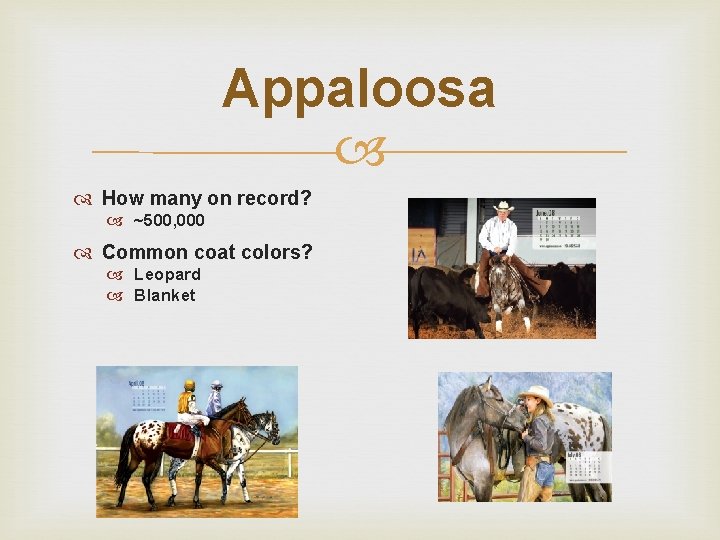
Appaloosa How many on record? ~500, 000 Common coat colors? Leopard Blanket
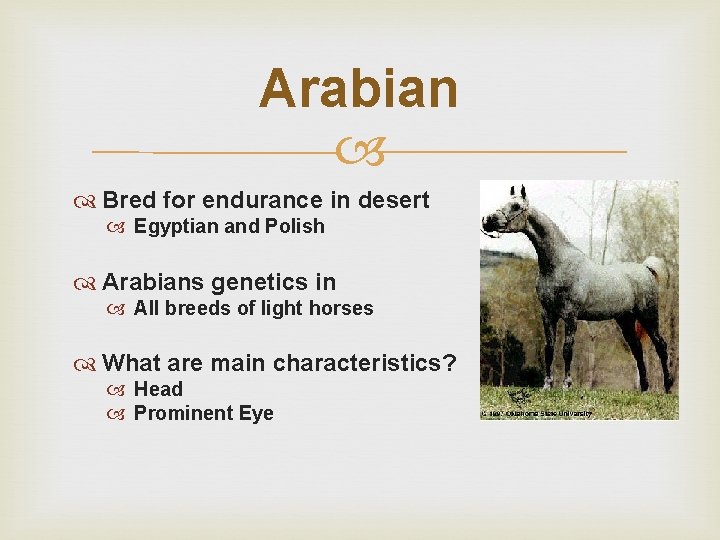
Arabian Bred for endurance in desert Egyptian and Polish Arabians genetics in All breeds of light horses What are main characteristics? Head Prominent Eye
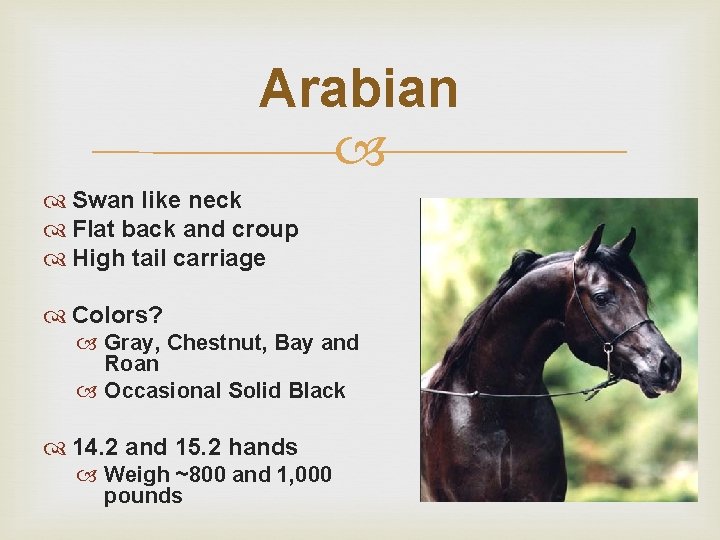
Arabian Swan like neck Flat back and croup High tail carriage Colors? Gray, Chestnut, Bay and Roan Occasional Solid Black 14. 2 and 15. 2 hands Weigh ~800 and 1, 000 pounds
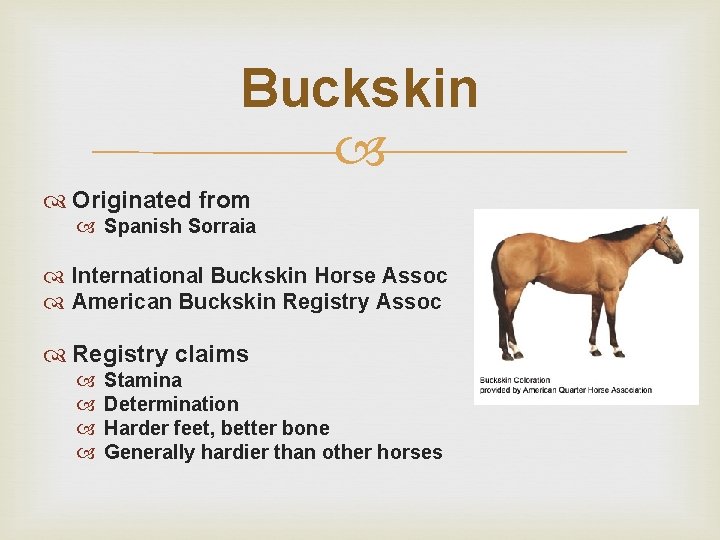
Buckskin Originated from Spanish Sorraia International Buckskin Horse Assoc American Buckskin Registry Assoc Registry claims Stamina Determination Harder feet, better bone Generally hardier than other horses
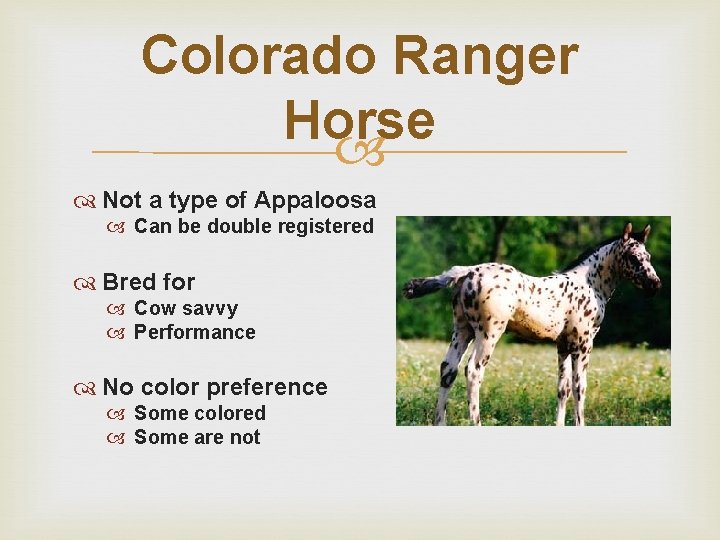
Colorado Ranger Horse Not a type of Appaloosa Can be double registered Bred for Cow savvy Performance No color preference Some colored Some are not
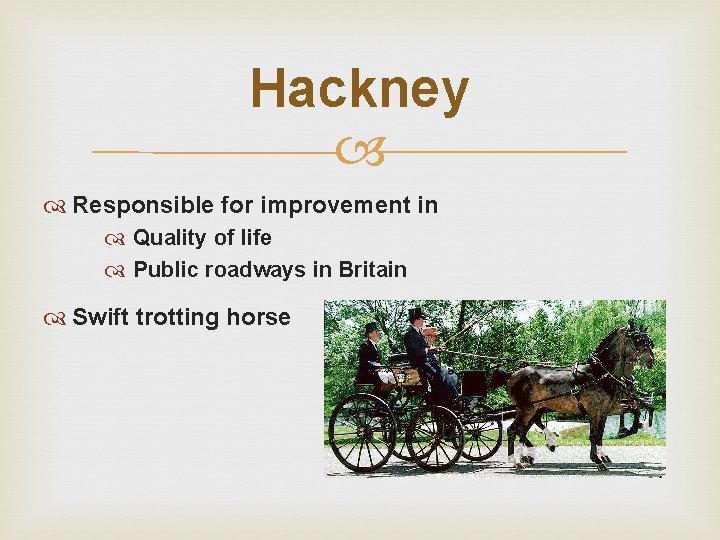
Hackney Responsible for improvement in Quality of life Public roadways in Britain Swift trotting horse
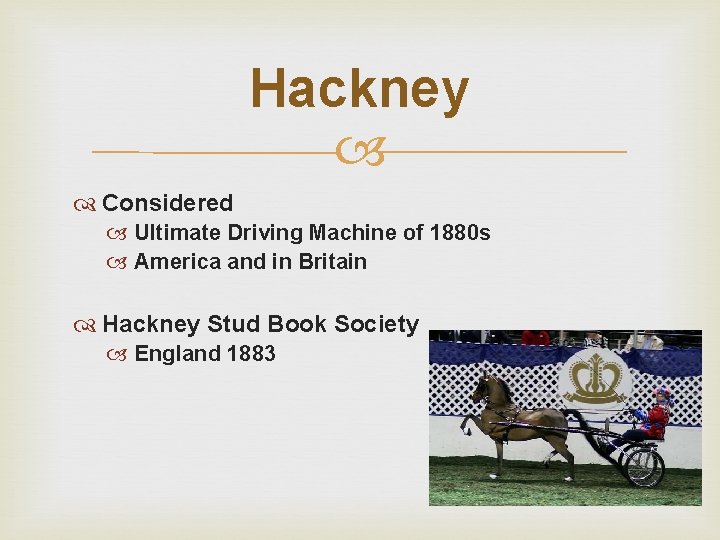
Hackney Considered Ultimate Driving Machine of 1880 s America and in Britain Hackney Stud Book Society England 1883
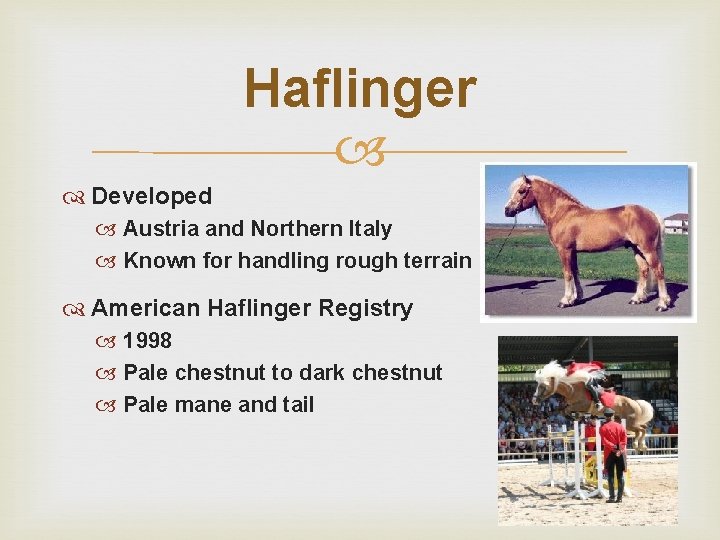
Haflinger Developed Austria and Northern Italy Known for handling rough terrain American Haflinger Registry 1998 Pale chestnut to dark chestnut Pale mane and tail
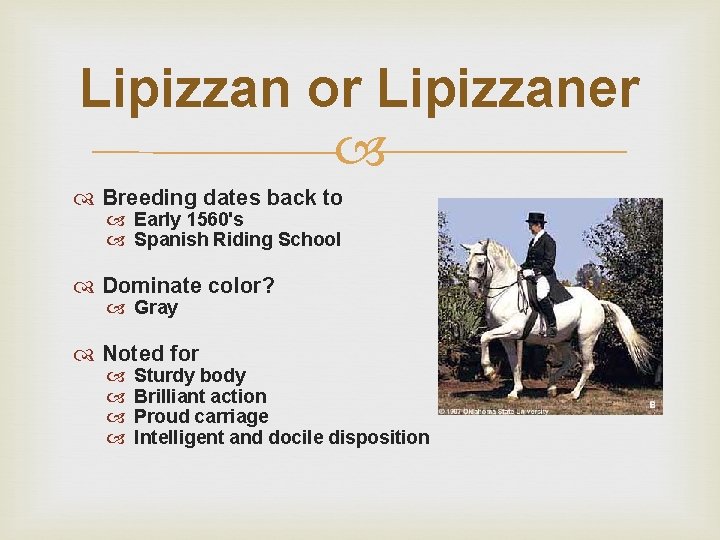
Lipizzan or Lipizzaner Breeding dates back to Early 1560's Spanish Riding School Dominate color? Gray Noted for Sturdy body Brilliant action Proud carriage Intelligent and docile disposition
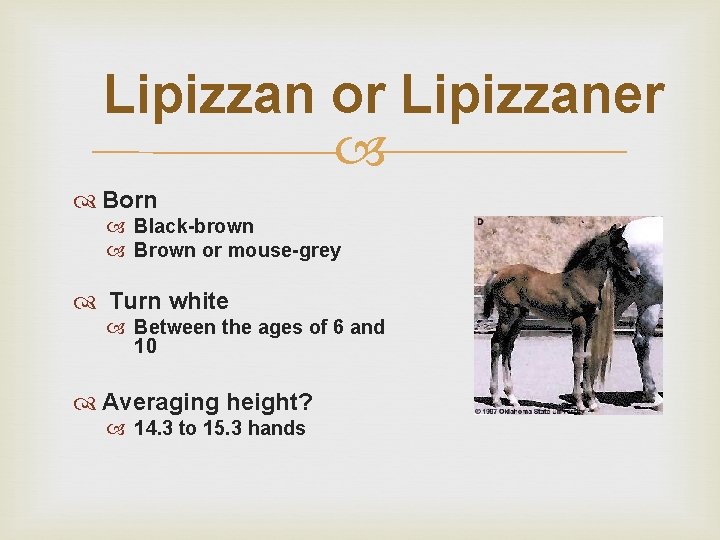
Lipizzan or Lipizzaner Born Black-brown Brown or mouse-grey Turn white Between the ages of 6 and 10 Averaging height? 14. 3 to 15. 3 hands
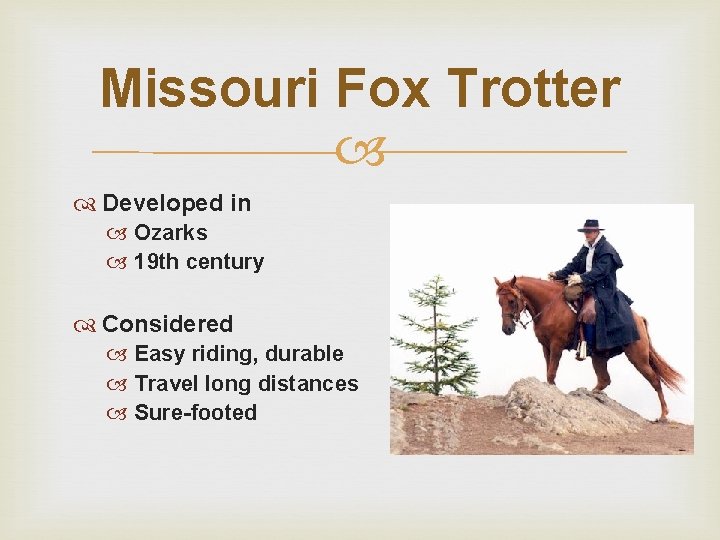
Missouri Fox Trotter Developed in Ozarks 19 th century Considered Easy riding, durable Travel long distances Sure-footed
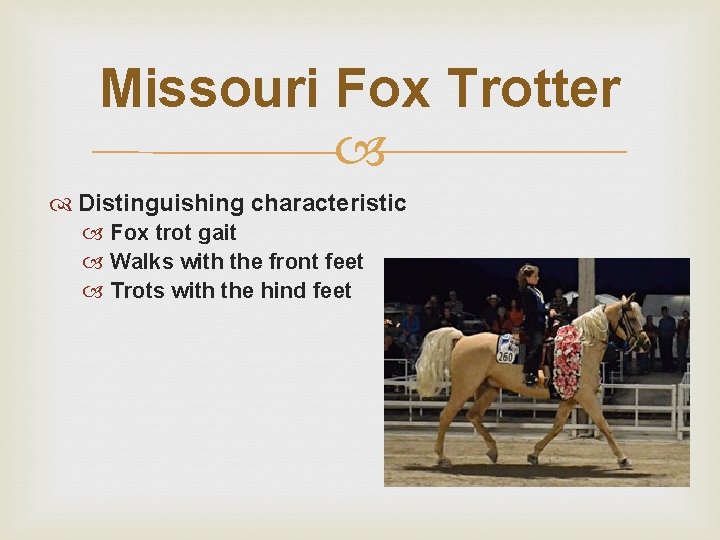
Missouri Fox Trotter Distinguishing characteristic Fox trot gait Walks with the front feet Trots with the hind feet
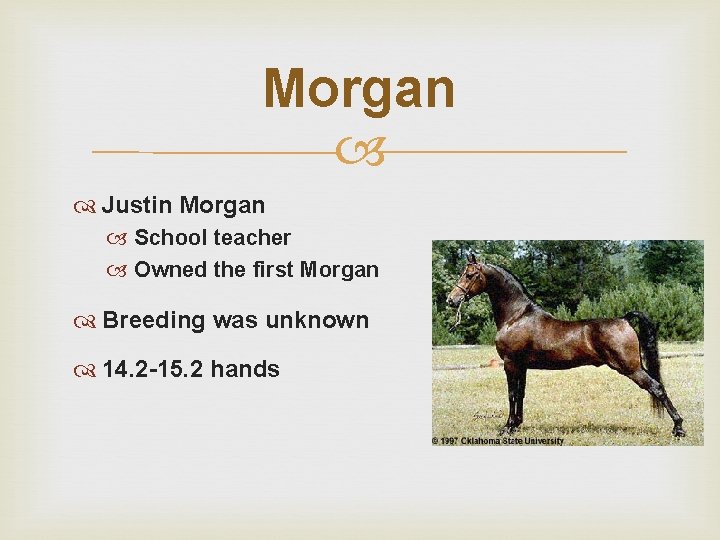
Morgan Justin Morgan School teacher Owned the first Morgan Breeding was unknown 14. 2 -15. 2 hands
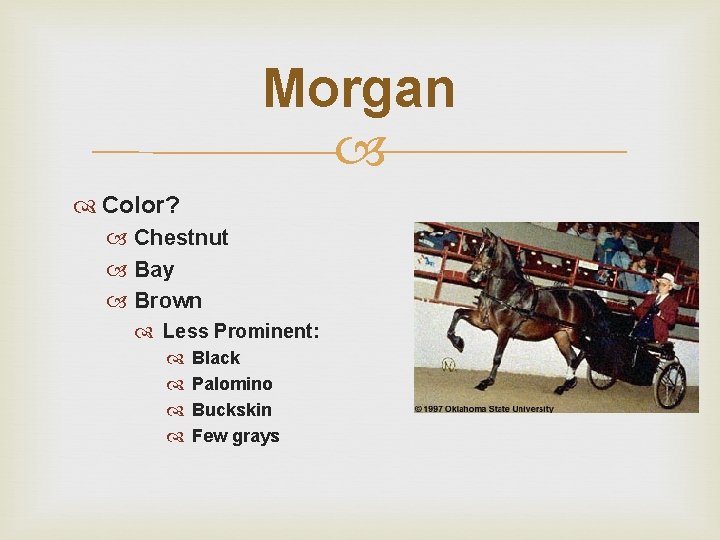
Morgan Color? Chestnut Bay Brown Less Prominent: Black Palomino Buckskin Few grays
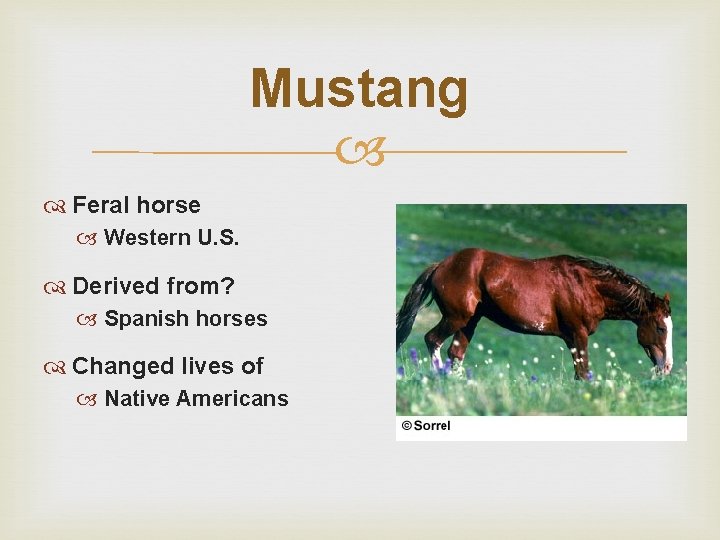
Mustang Feral horse Western U. S. Derived from? Spanish horses Changed lives of Native Americans
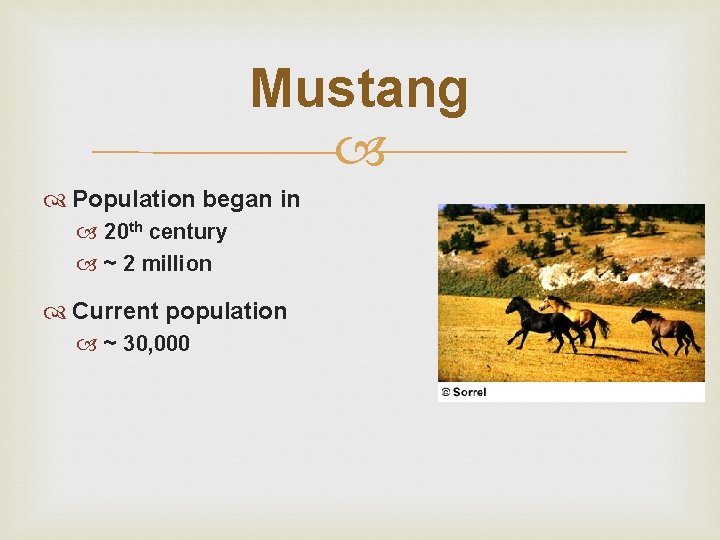
Mustang Population began in 20 th century ~ 2 million Current population ~ 30, 000
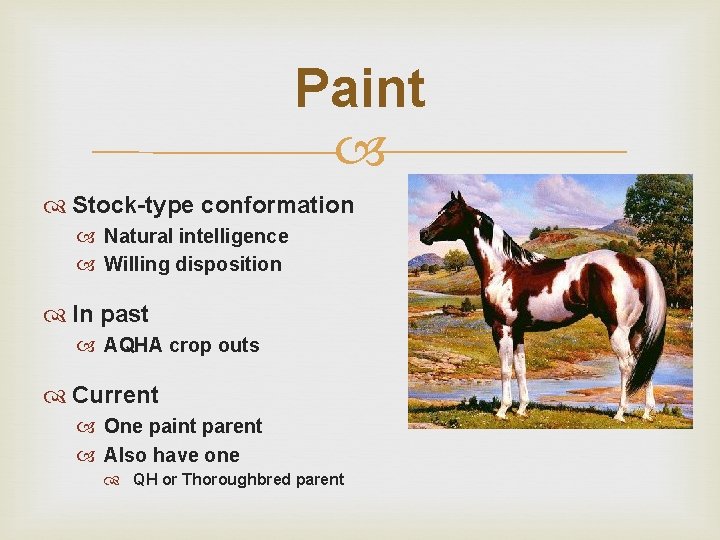
Paint Stock-type conformation Natural intelligence Willing disposition In past AQHA crop outs Current One paint parent Also have one QH or Thoroughbred parent
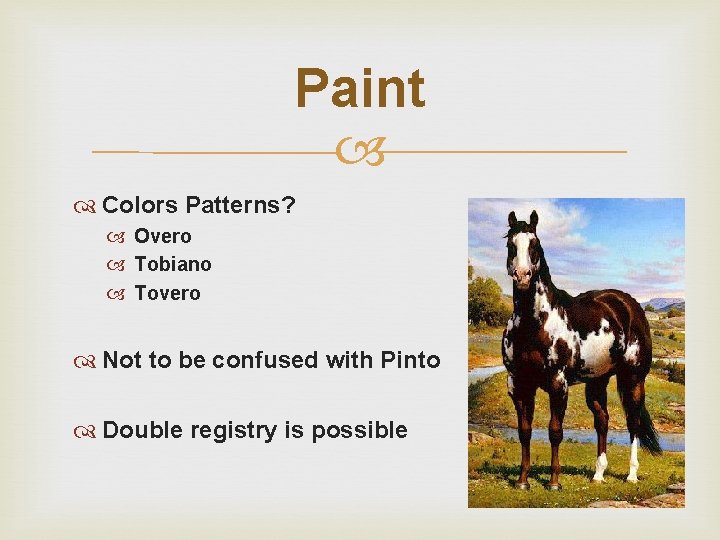
Paint Colors Patterns? Overo Tobiano Tovero Not to be confused with Pinto Double registry is possible
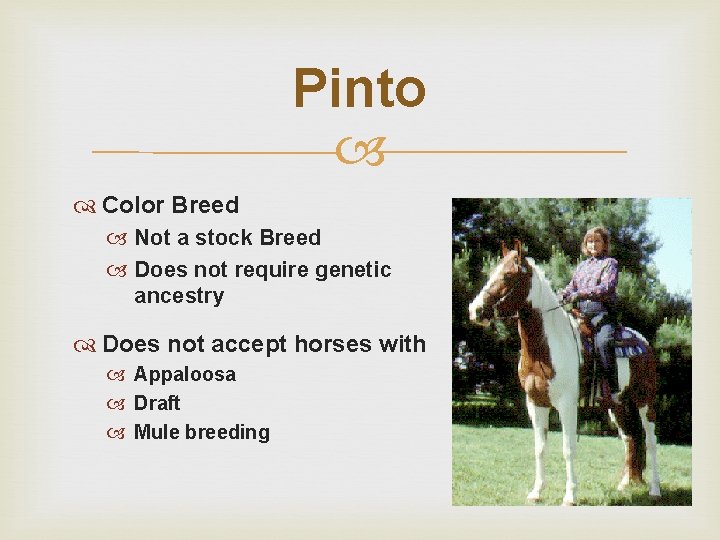
Pinto Color Breed Not a stock Breed Does not require genetic ancestry Does not accept horses with Appaloosa Draft Mule breeding
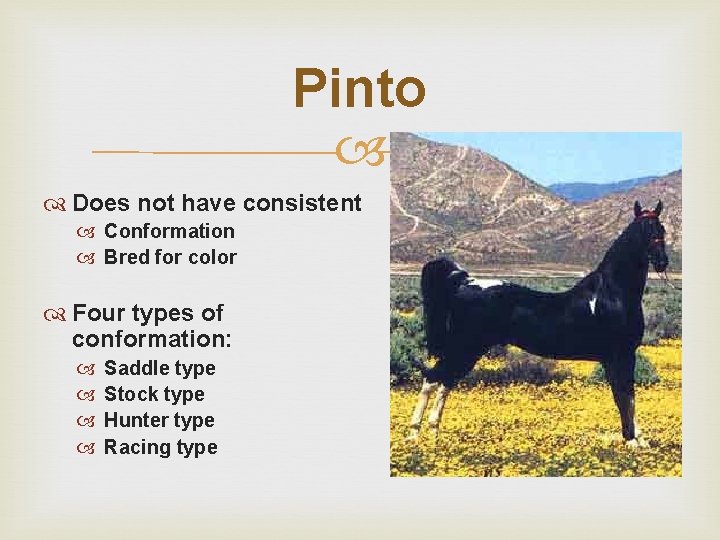
Pinto Does not have consistent Conformation Bred for color Four types of conformation: Saddle type Stock type Hunter type Racing type
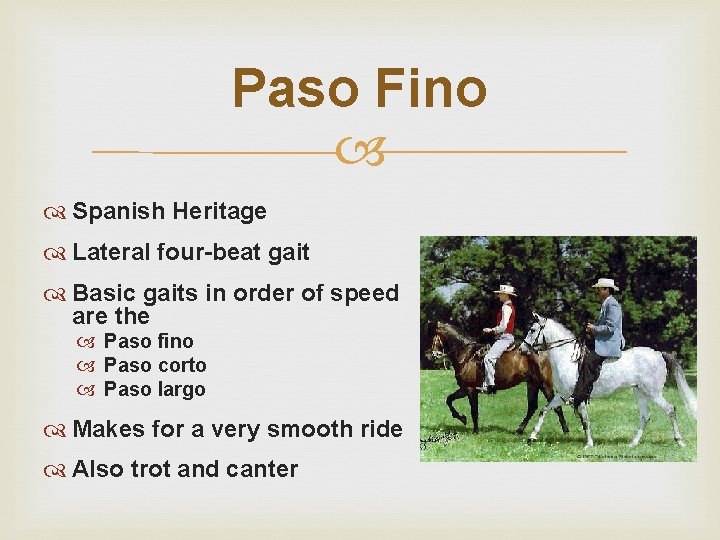
Paso Fino Spanish Heritage Lateral four-beat gait Basic gaits in order of speed are the Paso fino Paso corto Paso largo Makes for a very smooth ride Also trot and canter
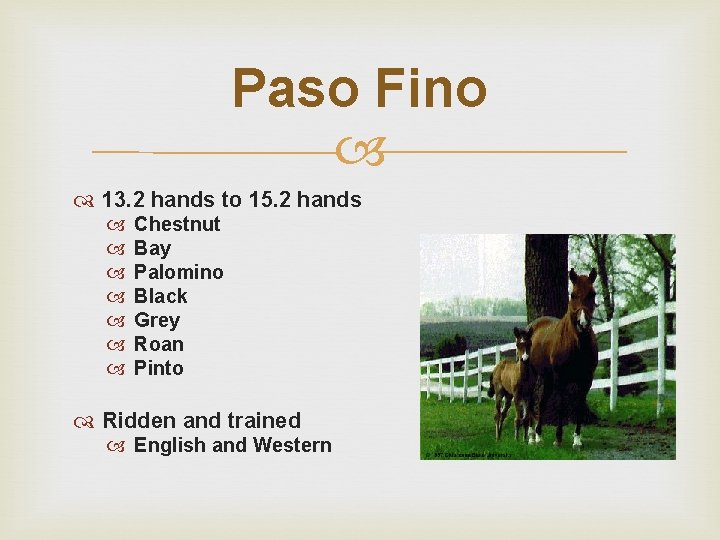
Paso Fino 13. 2 hands to 15. 2 hands Chestnut Bay Palomino Black Grey Roan Pinto Ridden and trained English and Western
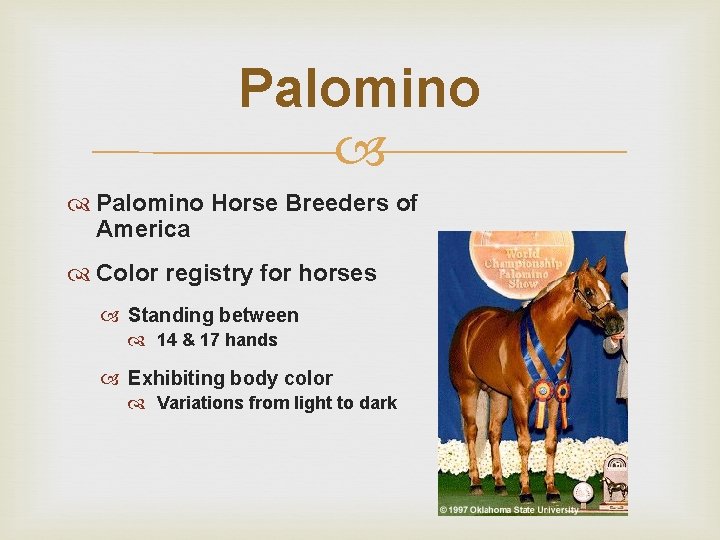
Palomino Horse Breeders of America Color registry for horses Standing between 14 & 17 hands Exhibiting body color Variations from light to dark
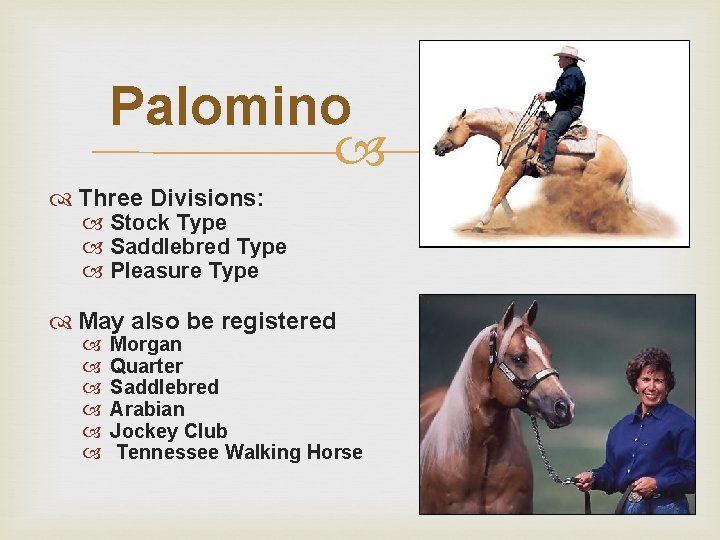
Palomino Three Divisions: Stock Type Saddlebred Type Pleasure Type May also be registered Morgan Quarter Saddlebred Arabian Jockey Club Tennessee Walking Horse
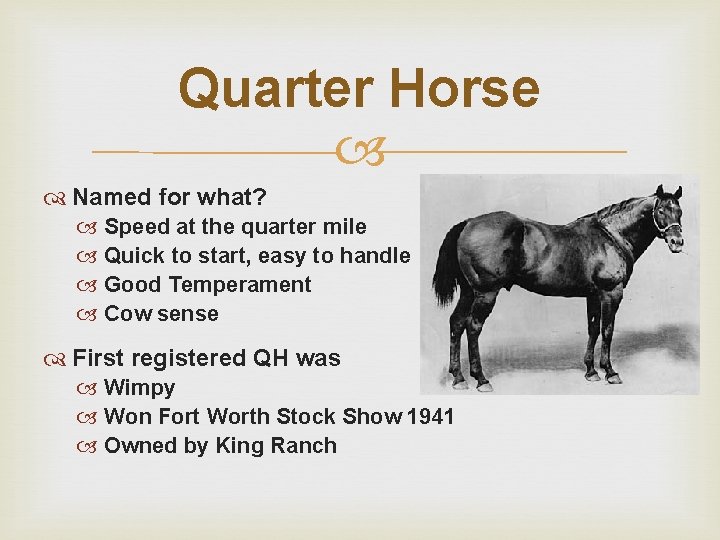
Quarter Horse Named for what? Speed at the quarter mile Quick to start, easy to handle Good Temperament Cow sense First registered QH was Wimpy Won Fort Worth Stock Show 1941 Owned by King Ranch
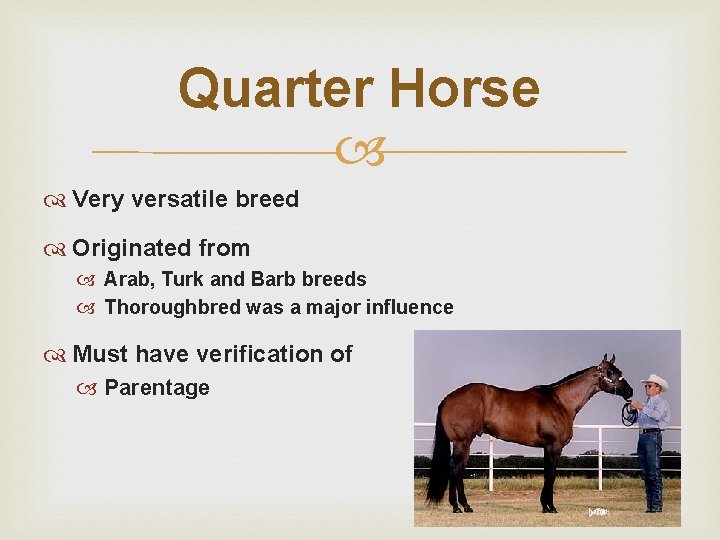
Quarter Horse Very versatile breed Originated from Arab, Turk and Barb breeds Thoroughbred was a major influence Must have verification of Parentage
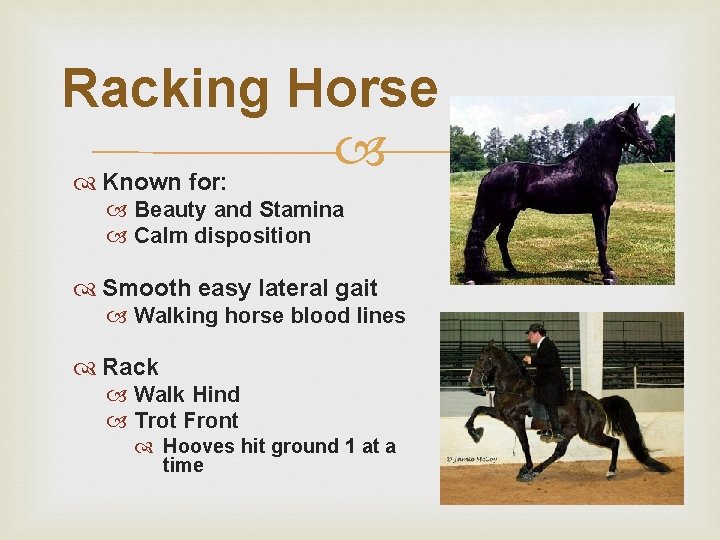
Racking Horse Known for: Beauty and Stamina Calm disposition Smooth easy lateral gait Walking horse blood lines Rack Walk Hind Trot Front Hooves hit ground 1 at a time
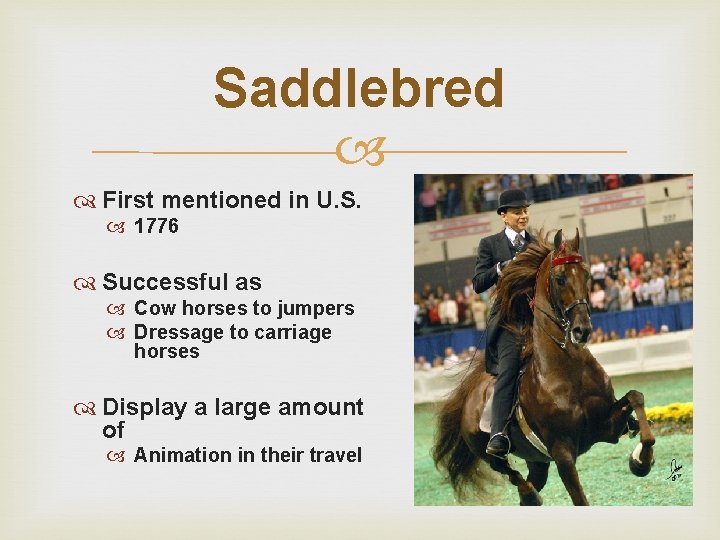
Saddlebred First mentioned in U. S. 1776 Successful as Cow horses to jumpers Dressage to carriage horses Display a large amount of Animation in their travel
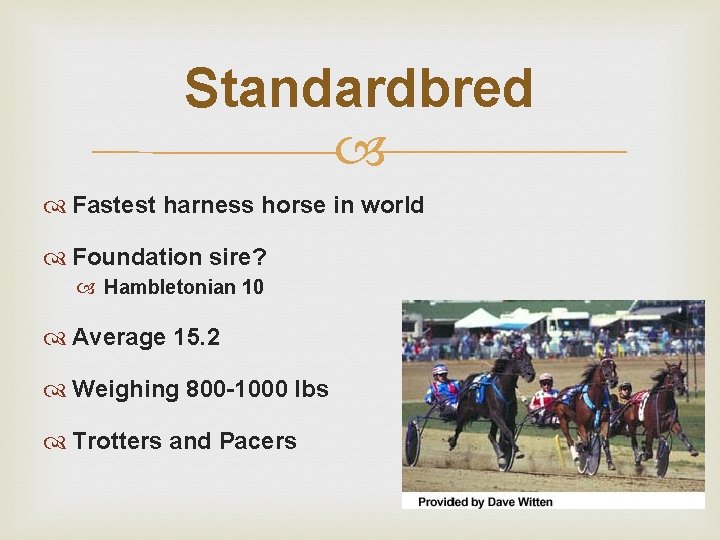
Standardbred Fastest harness horse in world Foundation sire? Hambletonian 10 Average 15. 2 Weighing 800 -1000 lbs Trotters and Pacers
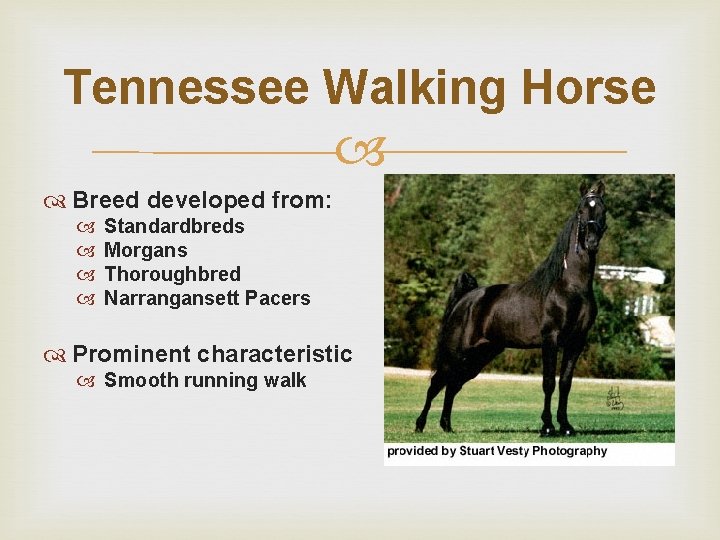
Tennessee Walking Horse Breed developed from: Standardbreds Morgans Thoroughbred Narrangansett Pacers Prominent characteristic Smooth running walk
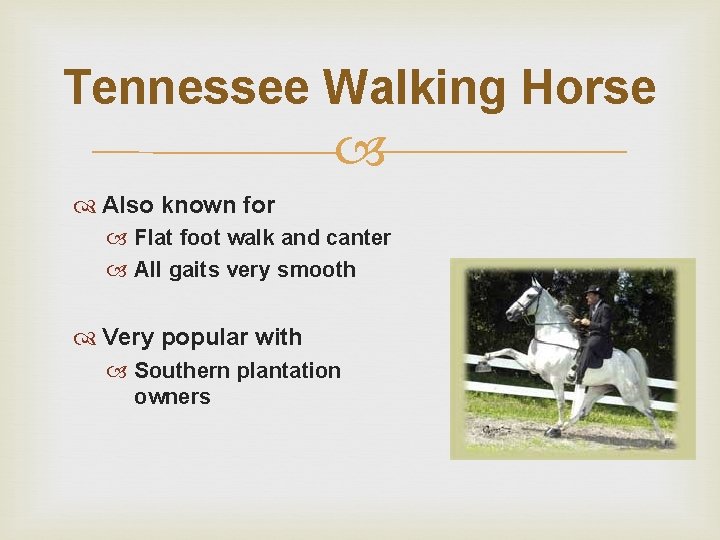
Tennessee Walking Horse Also known for Flat foot walk and canter All gaits very smooth Very popular with Southern plantation owners
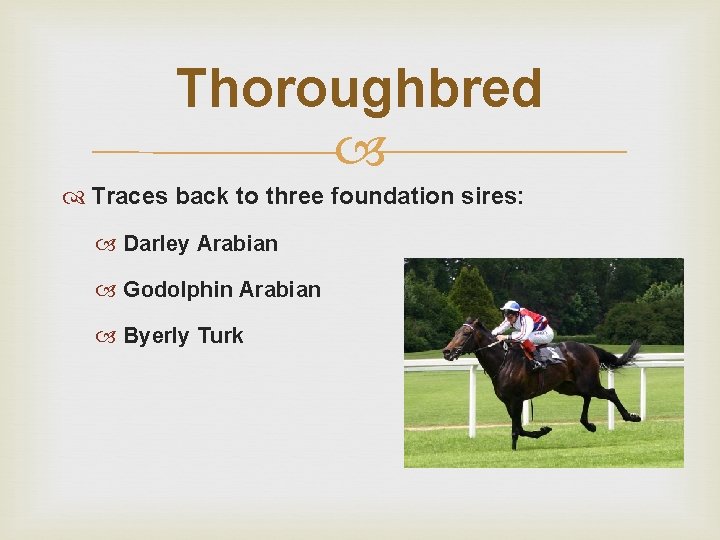
Thoroughbred Traces back to three foundation sires: Darley Arabian Godolphin Arabian Byerly Turk
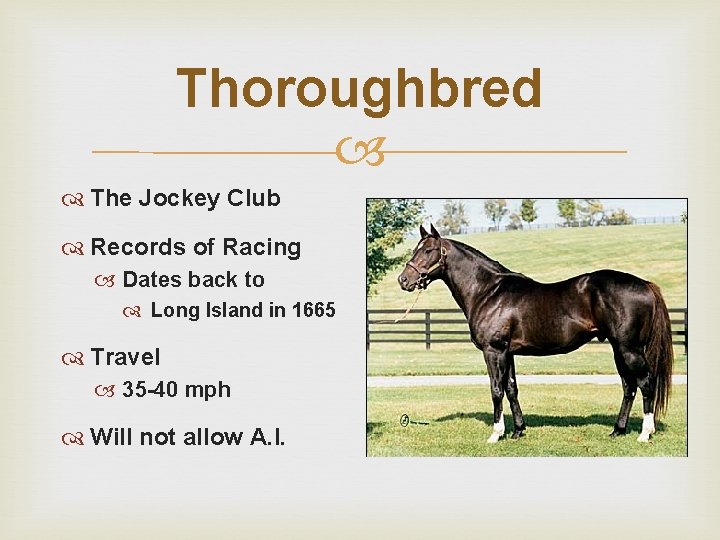
Thoroughbred The Jockey Club Records of Racing Dates back to Long Island in 1665 Travel 35 -40 mph Will not allow A. I.
Warmbloods
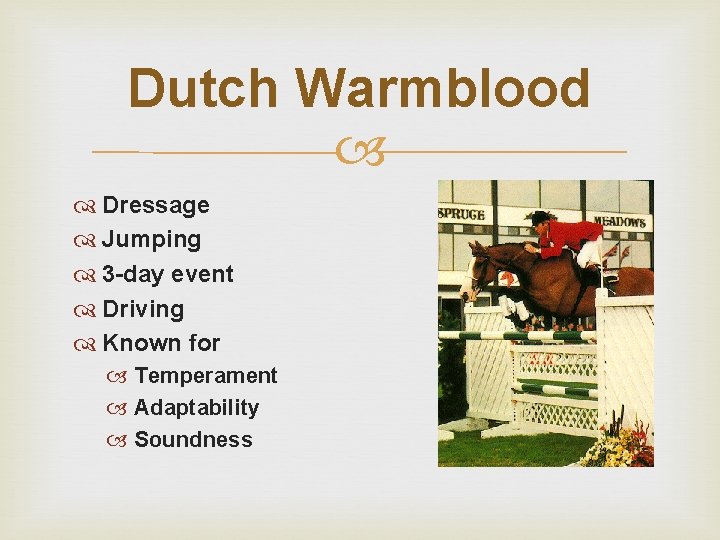
Dutch Warmblood Dressage Jumping 3 -day event Driving Known for Temperament Adaptability Soundness
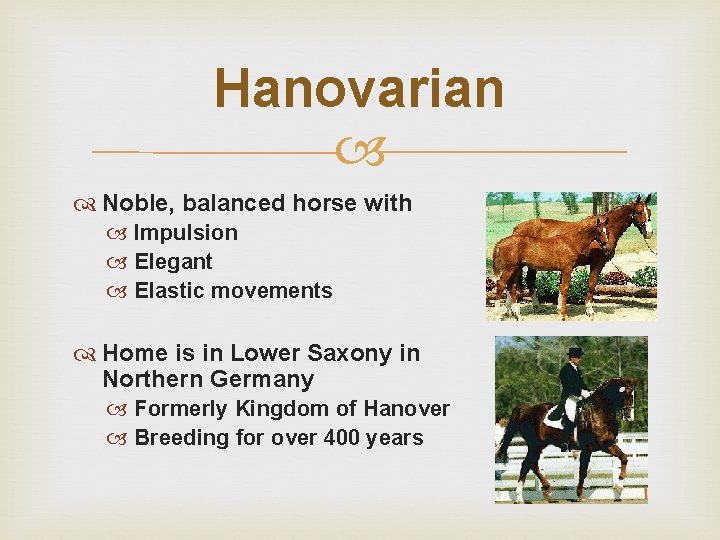
Hanovarian Noble, balanced horse with Impulsion Elegant Elastic movements Home is in Lower Saxony in Northern Germany Formerly Kingdom of Hanover Breeding for over 400 years
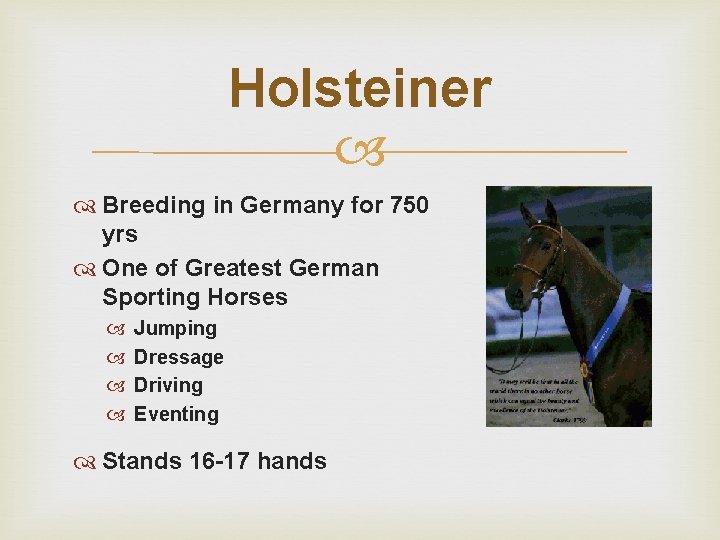
Holsteiner Breeding in Germany for 750 yrs One of Greatest German Sporting Horses Jumping Dressage Driving Eventing Stands 16 -17 hands
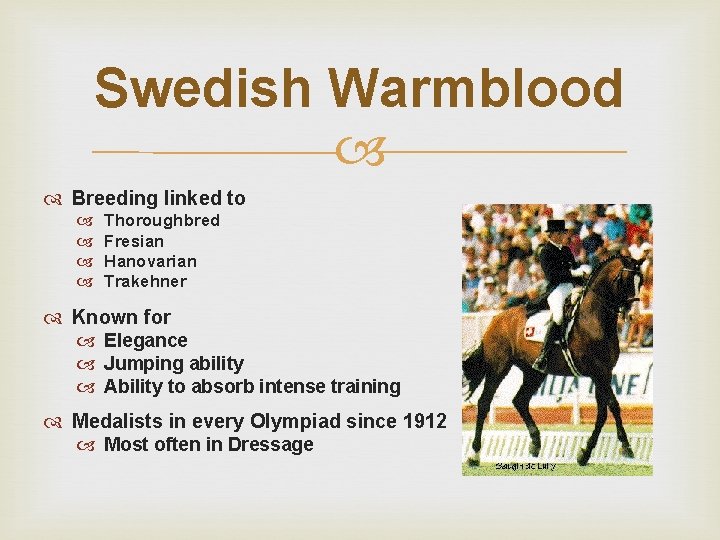
Swedish Warmblood Breeding linked to Thoroughbred Fresian Hanovarian Trakehner Known for Elegance Jumping ability Ability to absorb intense training Medalists in every Olympiad since 1912 Most often in Dressage
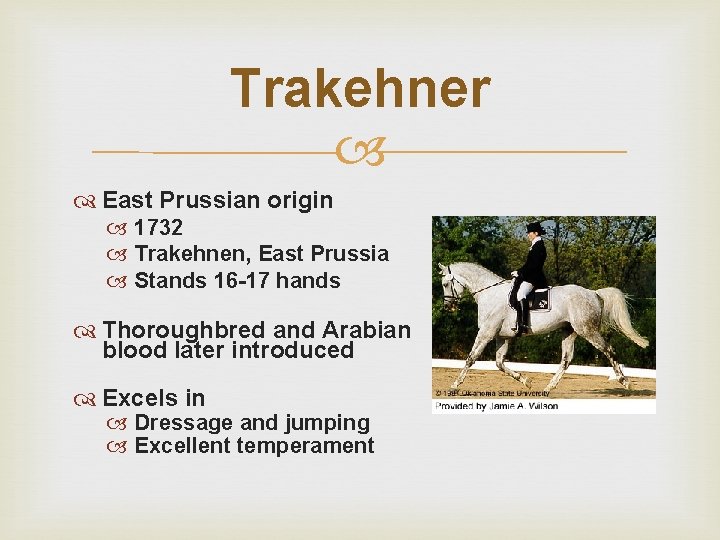
Trakehner East Prussian origin 1732 Trakehnen, East Prussia Stands 16 -17 hands Thoroughbred and Arabian blood later introduced Excels in Dressage and jumping Excellent temperament

Draft Horses
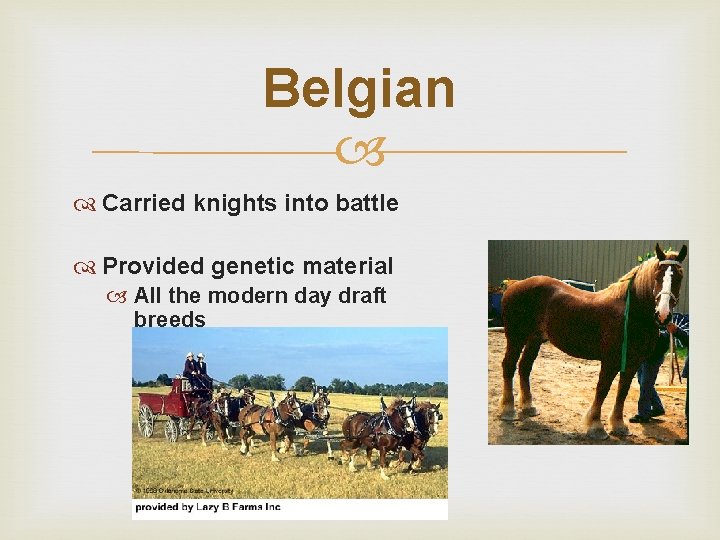
Belgian Carried knights into battle Provided genetic material All the modern day draft breeds
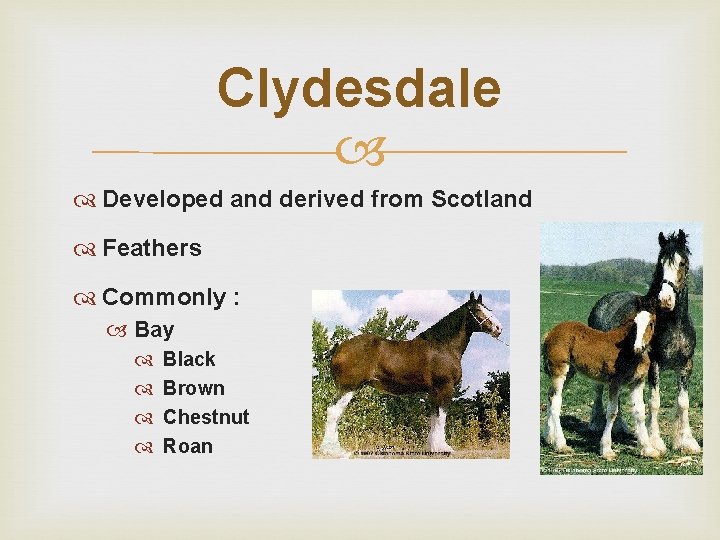
Clydesdale Developed and derived from Scotland Feathers Commonly : Bay Black Brown Chestnut Roan
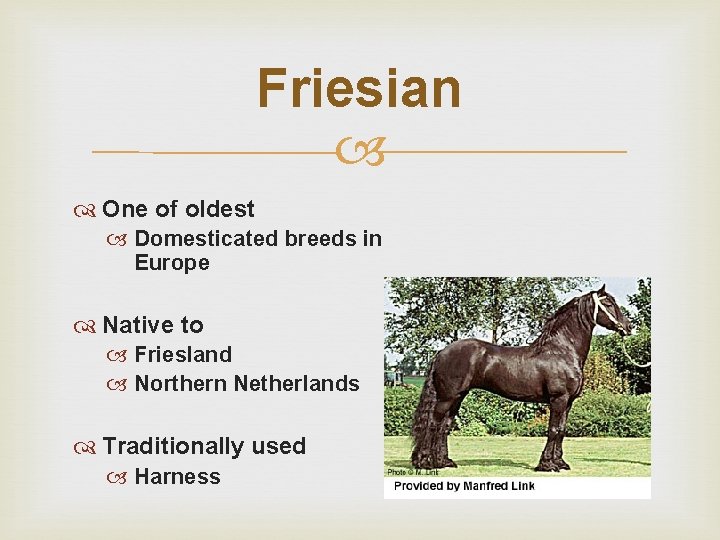
Friesian One of oldest Domesticated breeds in Europe Native to Friesland Northern Netherlands Traditionally used Harness
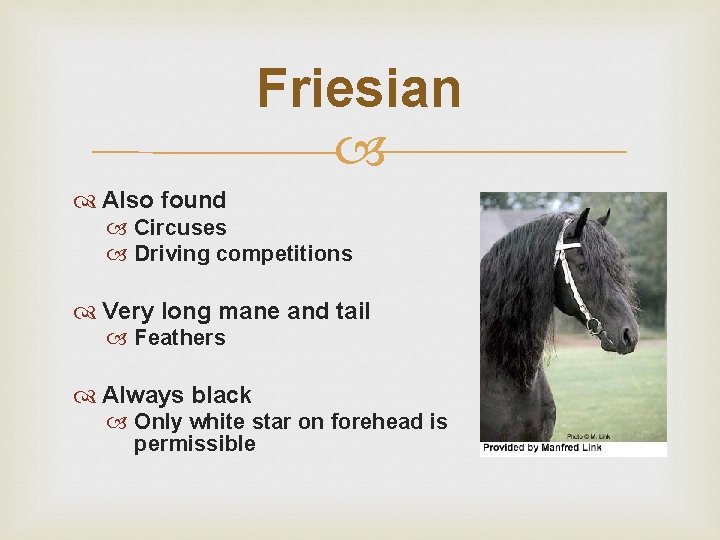
Friesian Also found Circuses Driving competitions Very long mane and tail Feathers Always black Only white star on forehead is permissible
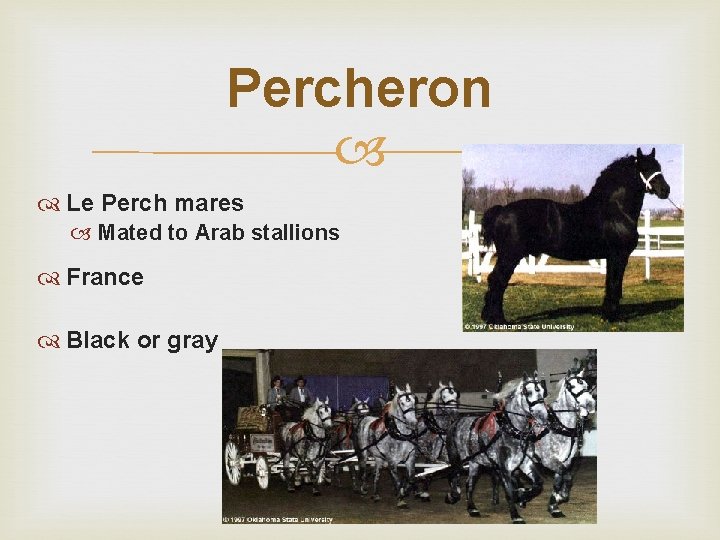
Percheron Le Perch mares Mated to Arab stallions France Black or gray
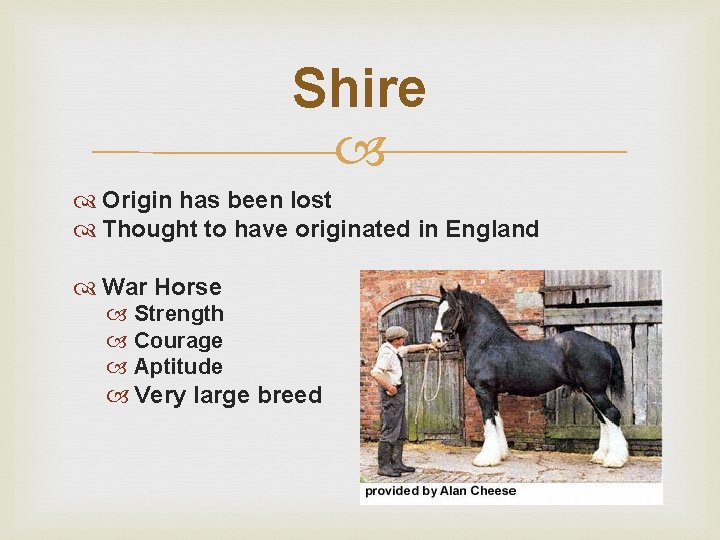
Shire Origin has been lost Thought to have originated in England War Horse Strength Courage Aptitude Very large breed

Ponies
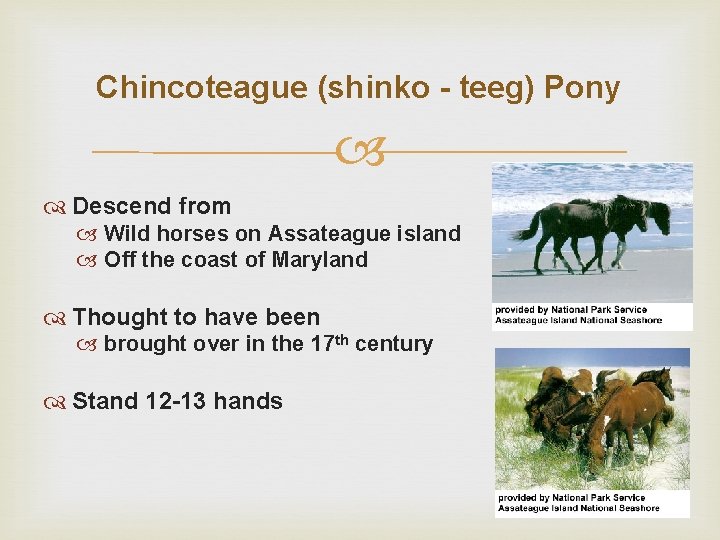
Chincoteague (shinko - teeg) Pony Descend from Wild horses on Assateague island Off the coast of Maryland Thought to have been brought over in the 17 th century Stand 12 -13 hands
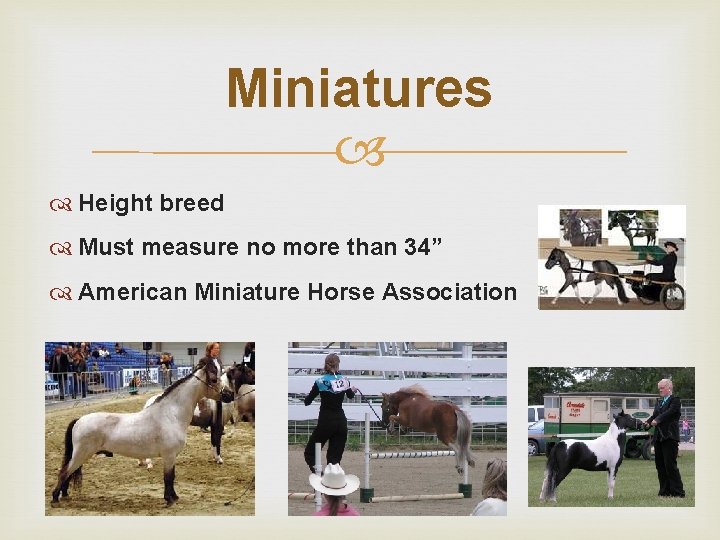
Miniatures Height breed Must measure no more than 34” American Miniature Horse Association
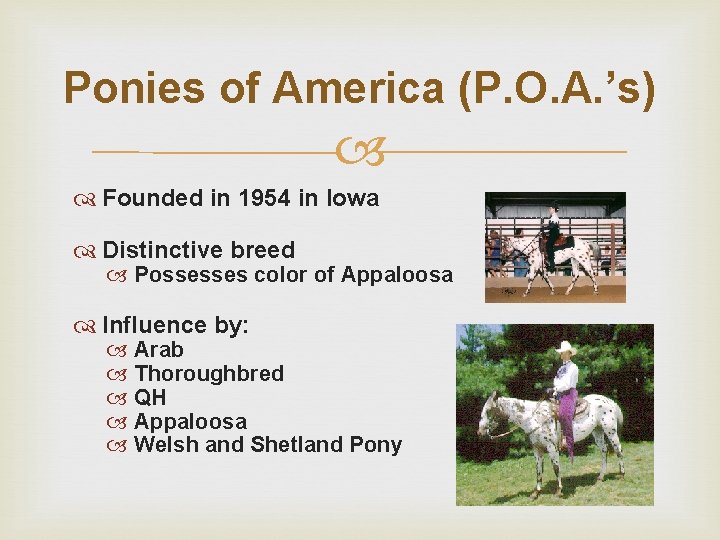
Ponies of America (P. O. A. ’s) Founded in 1954 in Iowa Distinctive breed Possesses color of Appaloosa Influence by: Arab Thoroughbred QH Appaloosa Welsh and Shetland Pony
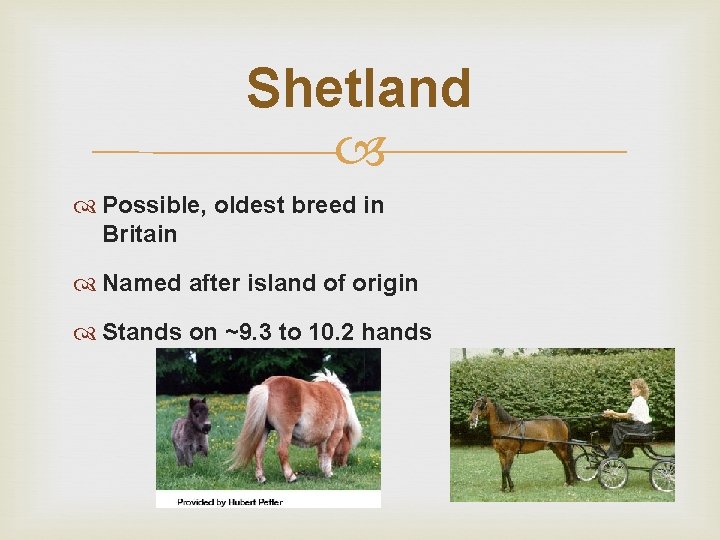
Shetland Possible, oldest breed in Britain Named after island of origin Stands on ~9. 3 to 10. 2 hands
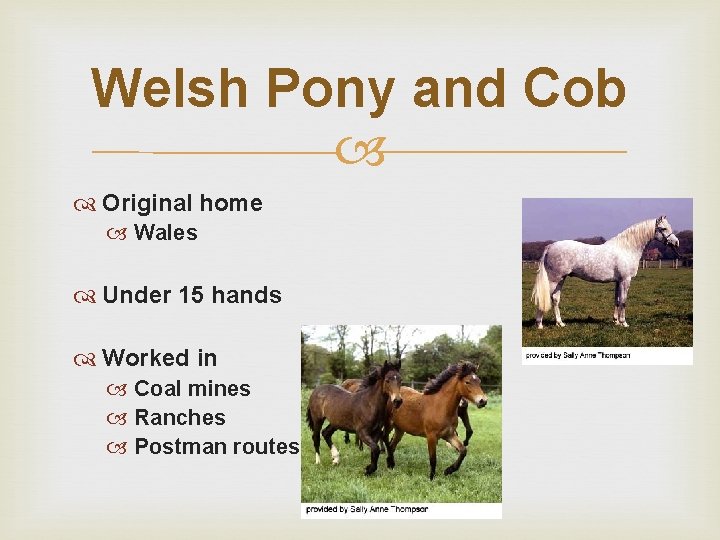
Welsh Pony and Cob Original home Wales Under 15 hands Worked in Coal mines Ranches Postman routes
- Slides: 68