
Ideas Science Progress Russia Russian Federation Statistics Square
- Slides: 17
Ideas. Science. Progress. Russia
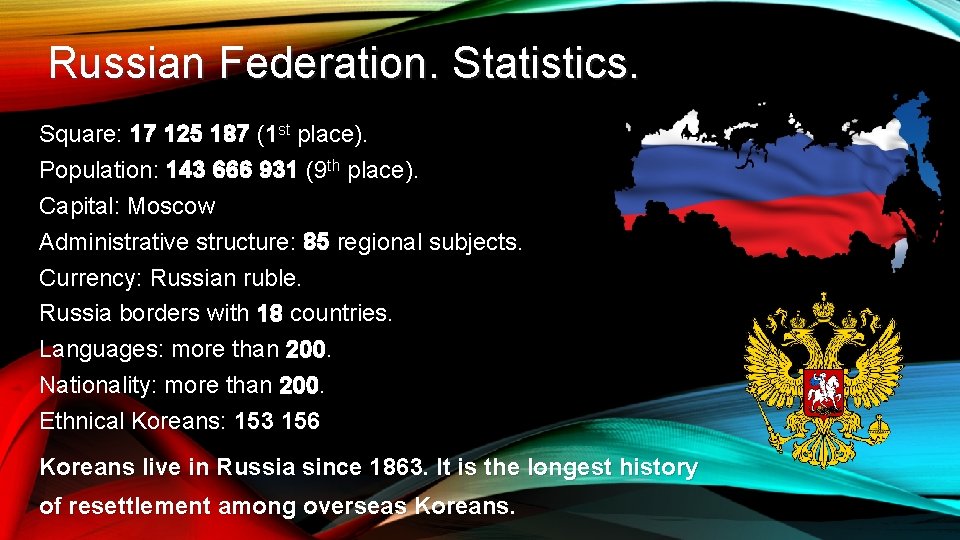
Russian Federation. Statistics. Square: 17 125 187 (1 st place). Population: 143 666 931 (9 th place). Capital: Moscow Administrative structure: 85 regional subjects. Currency: Russian ruble. Russia borders with 18 countries. Languages: more than 200. Nationality: more than 200. Ethnical Koreans: 153 156 Koreans live in Russia since 1863. It is the longest history of resettlement among overseas Koreans.
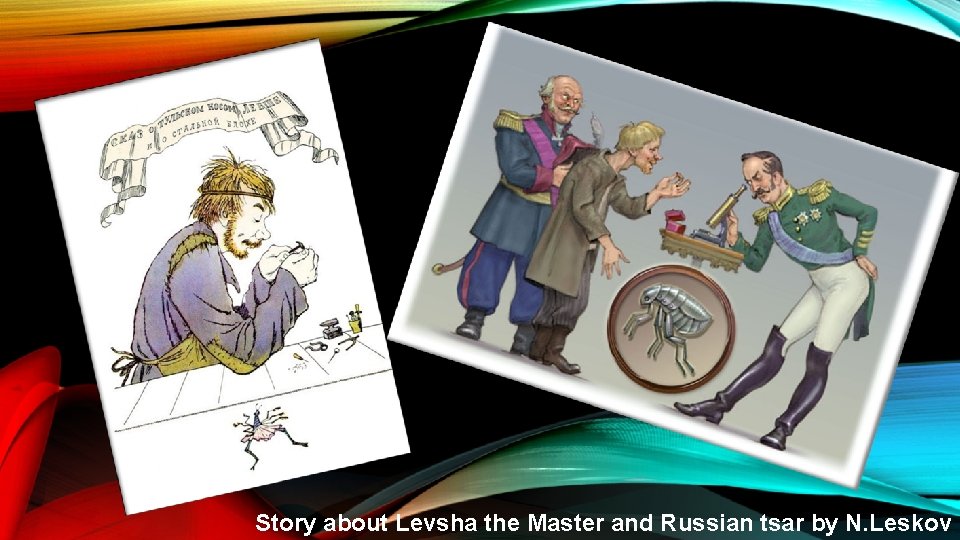
Story about Levsha the Master and Russian tsar by N. Leskov
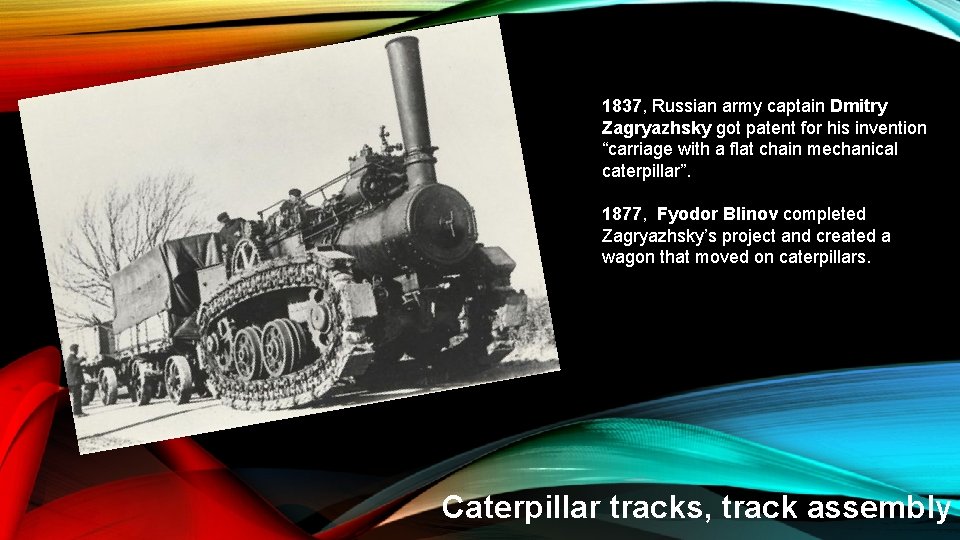
1837, Russian army captain Dmitry Zagryazhsky got patent for his invention “carriage with a flat chain mechanical caterpillar”. 1877, Fyodor Blinov completed Zagryazhsky’s project and created a wagon that moved on caterpillars. Caterpillar tracks, track assembly
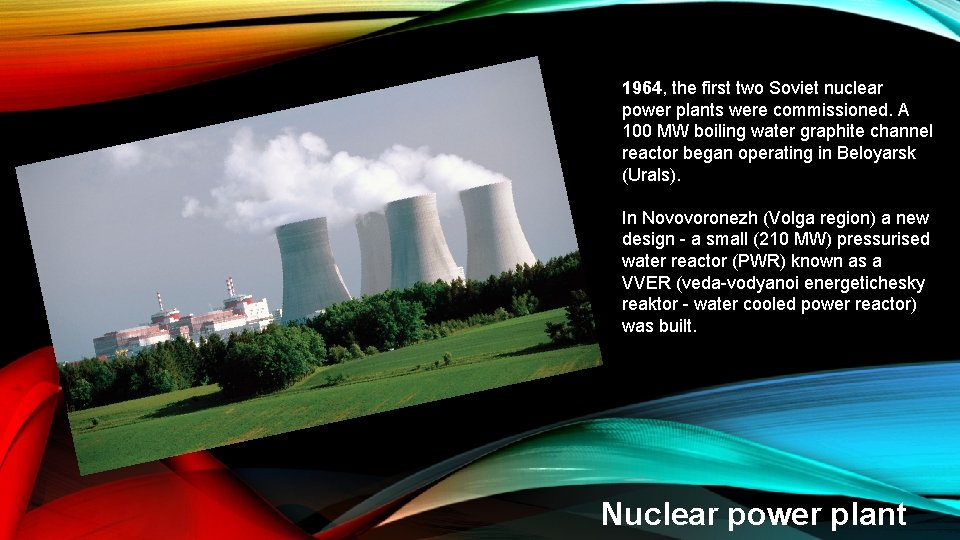
1964, the first two Soviet nuclear power plants were commissioned. A 100 MW boiling water graphite channel reactor began operating in Beloyarsk (Urals). In Novovoronezh (Volga region) a new design - a small (210 MW) pressurised water reactor (PWR) known as a VVER (veda-vodyanoi energetichesky reaktor - water cooled power reactor) was built. Nuclear power plant
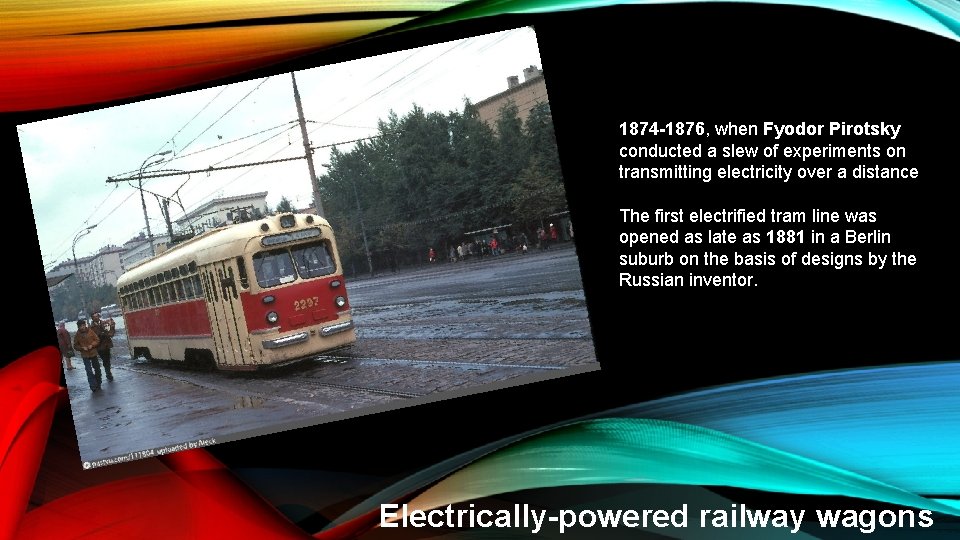
1874 -1876, when Fyodor Pirotsky conducted a slew of experiments on transmitting electricity over a distance The first electrified tram line was opened as late as 1881 in a Berlin suburb on the basis of designs by the Russian inventor. Electrically-powered railway wagons
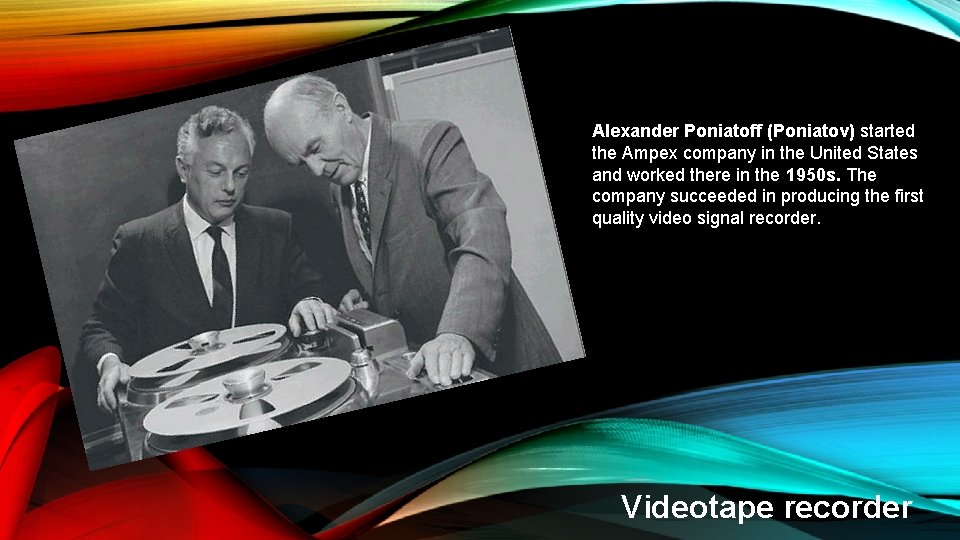
Alexander Poniatoff (Poniatov) started the Ampex company in the United States and worked there in the 1950 s. The company succeeded in producing the first quality video signal recorder. Videotape recorder
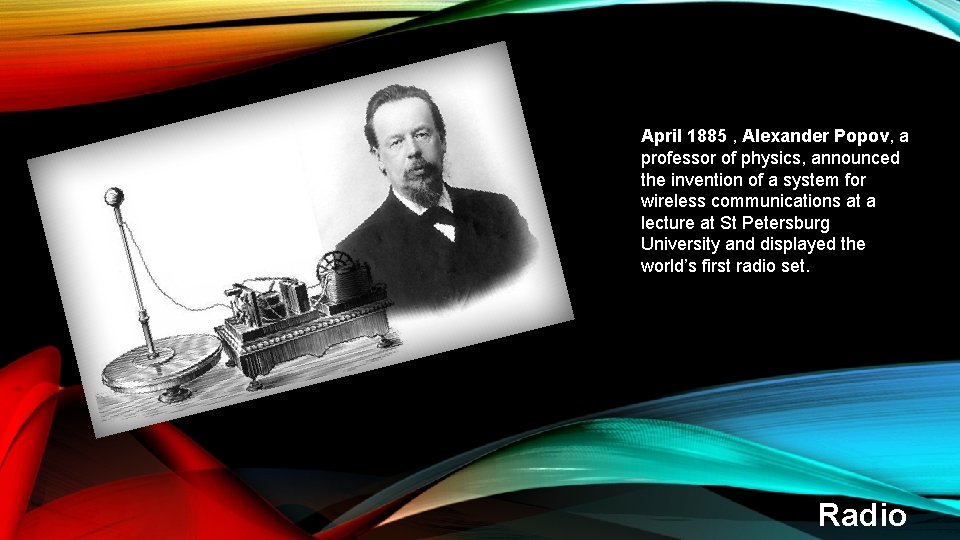
April 1885 , Alexander Popov, a professor of physics, announced the invention of a system for wireless communications at a lecture at St Petersburg University and displayed the world’s first radio set. Radio
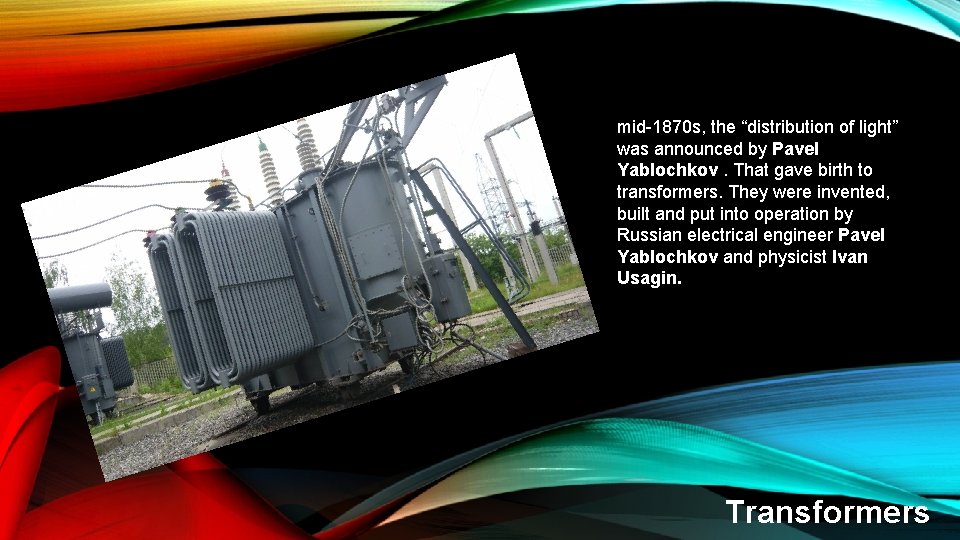
mid-1870 s, the “distribution of light” was announced by Pavel Yablochkov. That gave birth to transformers. They were invented, built and put into operation by Russian electrical engineer Pavel Yablochkov and physicist Ivan Usagin. Transformers
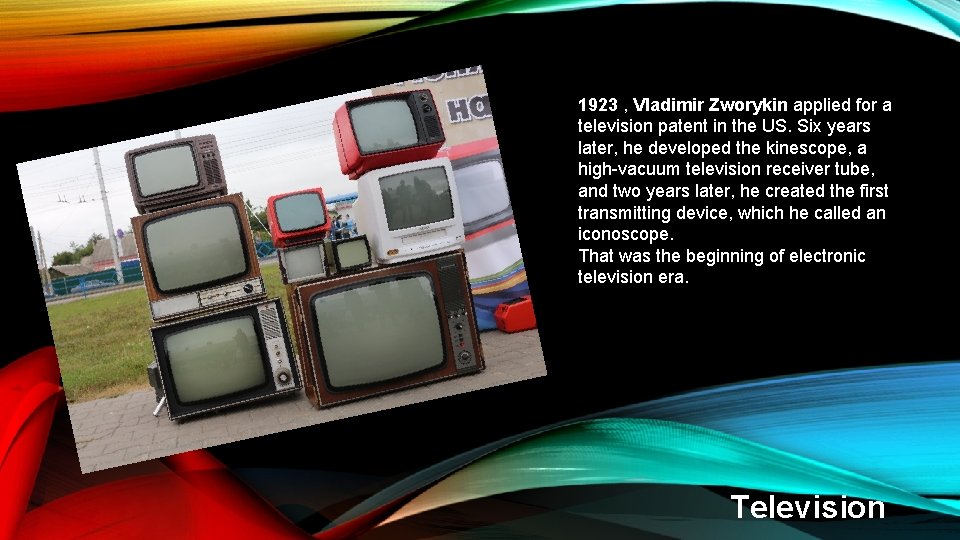
1923 , Vladimir Zworykin applied for a television patent in the US. Six years later, he developed the kinescope, a high-vacuum television receiver tube, and two years later, he created the first transmitting device, which he called an iconoscope. That was the beginning of electronic television era. Television
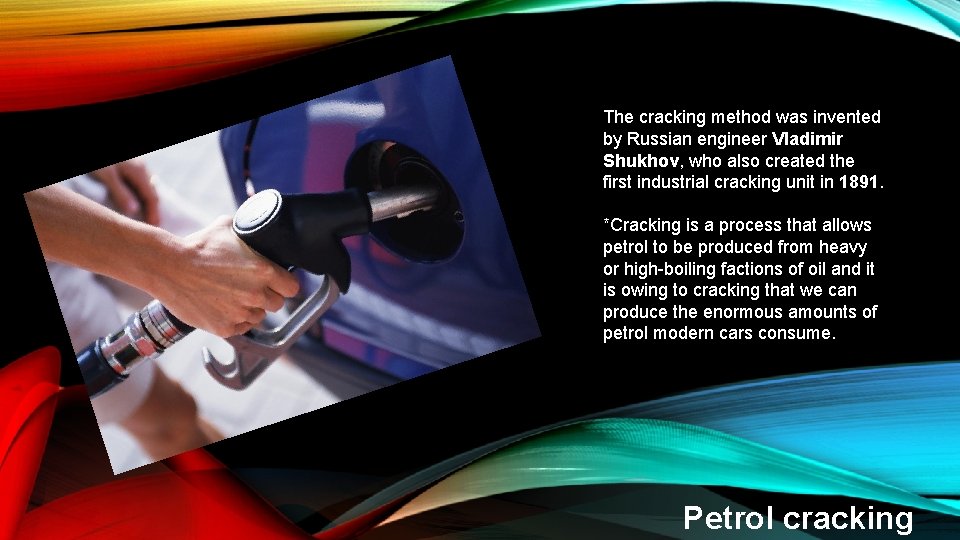
The cracking method was invented by Russian engineer Vladimir Shukhov, who also created the first industrial cracking unit in 1891. *Cracking is a process that allows petrol to be produced from heavy or high-boiling factions of oil and it is owing to cracking that we can produce the enormous amounts of petrol modern cars consume. Petrol cracking
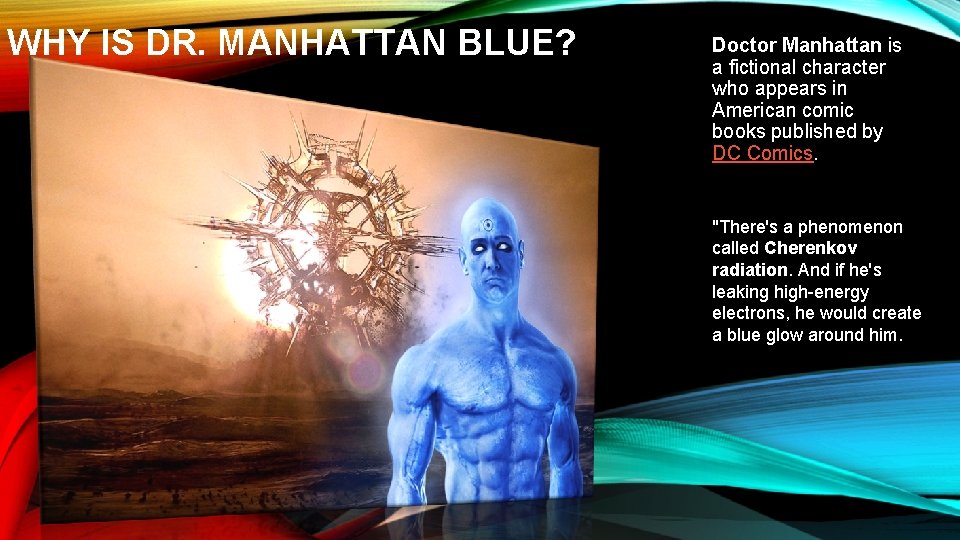
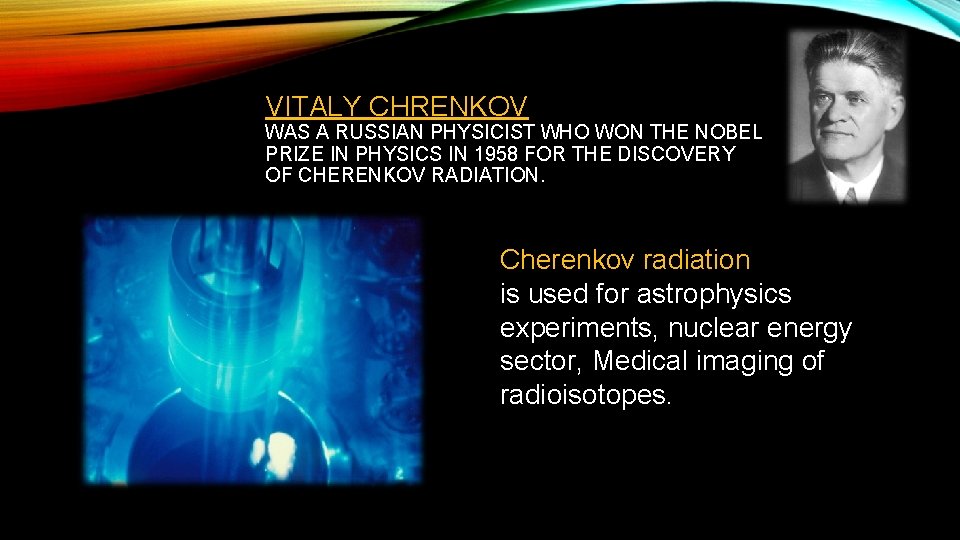
WHY IS DR. MANHATTAN BLUE? Doctor Manhattan is a fictional character who appears in American comic books published by DC Comics. "There's a phenomenon called Cherenkov radiation. And if he's leaking high-energy electrons, he would create a blue glow around him.
VITALY CHRENKOV WAS A RUSSIAN PHYSICIST WHO WON THE NOBEL PRIZE IN PHYSICS IN 1958 FOR THE DISCOVERY OF CHERENKOV RADIATION. Cherenkov radiation is used for astrophysics experiments, nuclear energy sector, Medical imaging of radioisotopes.
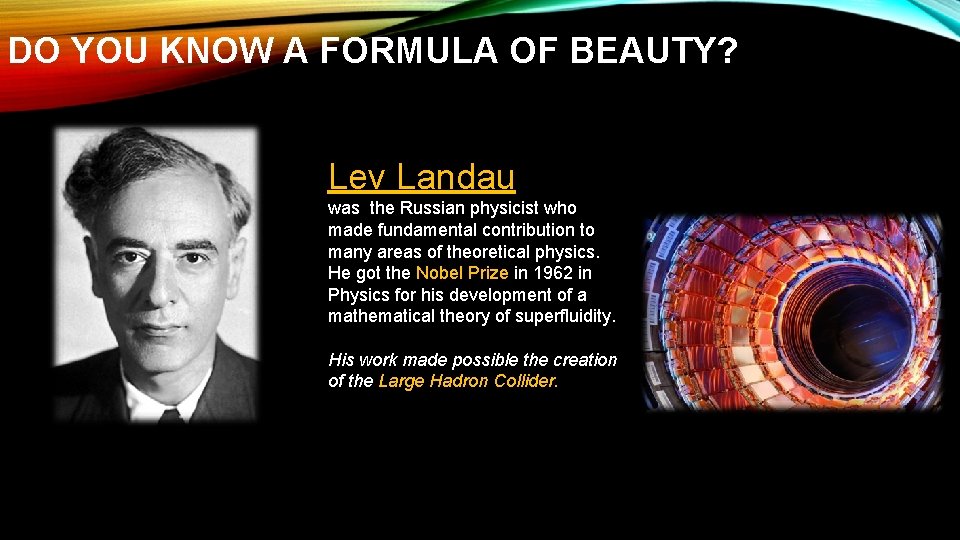
DO YOU KNOW A FORMULA OF BEAUTY? Lev Landau was the Russian physicist who made fundamental contribution to many areas of theoretical physics. He got the Nobel Prize in 1962 in Physics for his development of a mathematical theory of superfluidity. His work made possible the creation of the Large Hadron Collider.
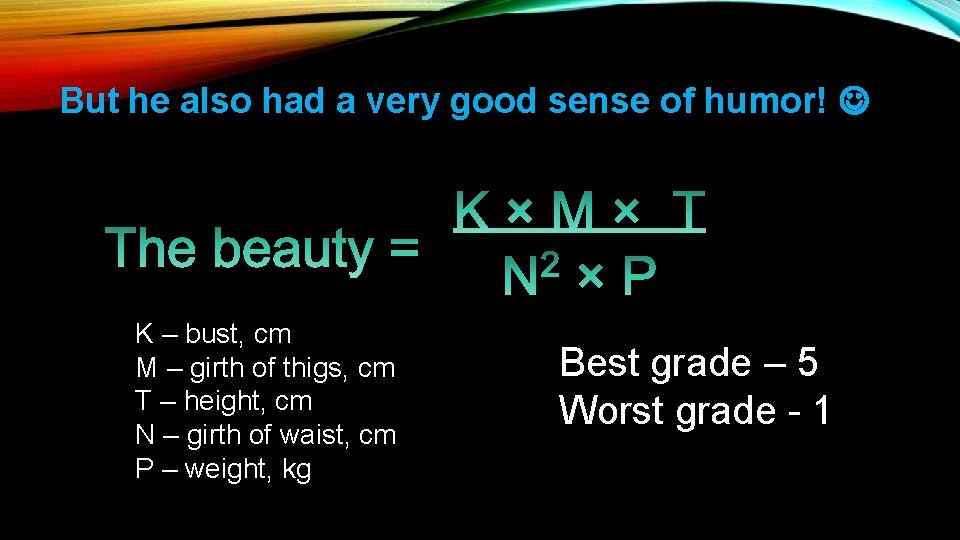
But he also had a very good sense of humor! K – bust, cm M – girth of thigs, cm T – height, cm N – girth of waist, cm P – weight, kg Best grade – 5 Worst grade - 1
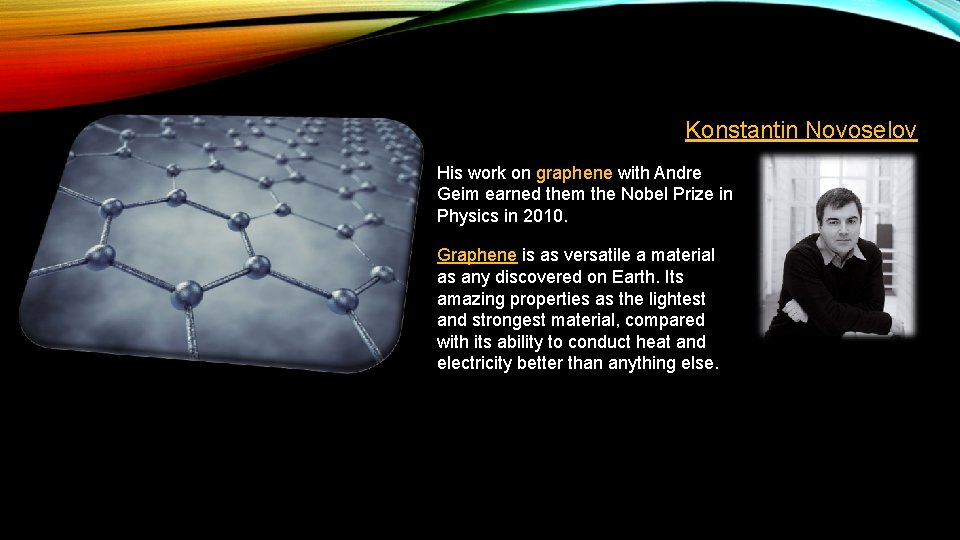
Konstantin Novoselov His work on graphene with Andre Geim earned them the Nobel Prize in Physics in 2010. Graphene is as versatile a material as any discovered on Earth. Its amazing properties as the lightest and strongest material, compared with its ability to conduct heat and electricity better than anything else.
NEW GENERATION. NEW IDEAS.