
Ideal Middle School Inside the Box Molly Hoekman
Ideal Middle School Inside the Box Molly Hoekman ED 2350 Dr. Swank Fall 2016
Introduction Goal: Improve middle school experience in ways that support the student body’s developmental needs physically, cognitively, and socially/emotionally Task: Suggest changes to be put into place that do not interfere with the basic elements of school, must fit “inside the box” of ideas to improve middle schools
Non-negotiables • Certified teachers • Location • Standards • Core subjects • Grading system • Standardized • Time in school • Transportation testing • Accommodations
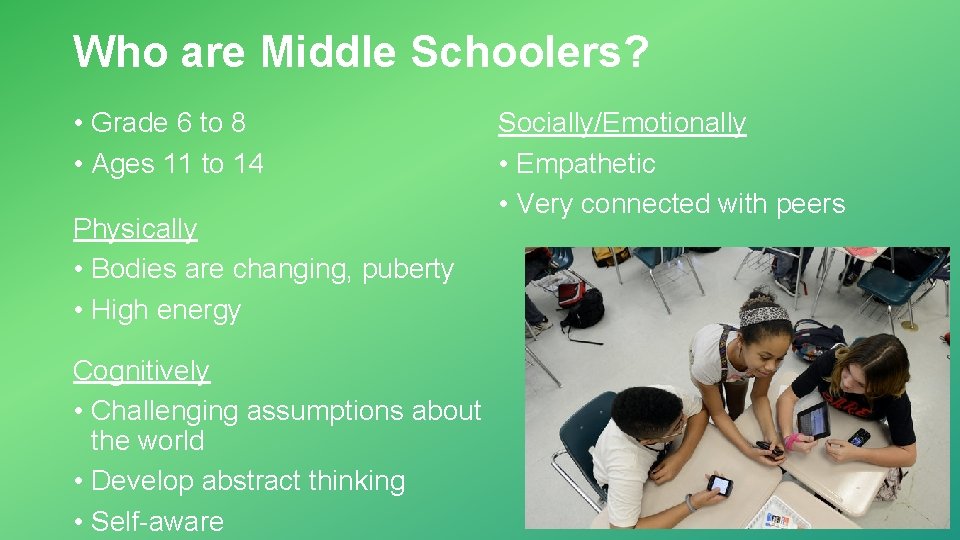
Who are Middle Schoolers? • Grade 6 to 8 • Ages 11 to 14 Physically • Bodies are changing, puberty • High energy Cognitively • Challenging assumptions about the world • Develop abstract thinking • Self-aware Socially/Emotionally • Empathetic • Very connected with peers
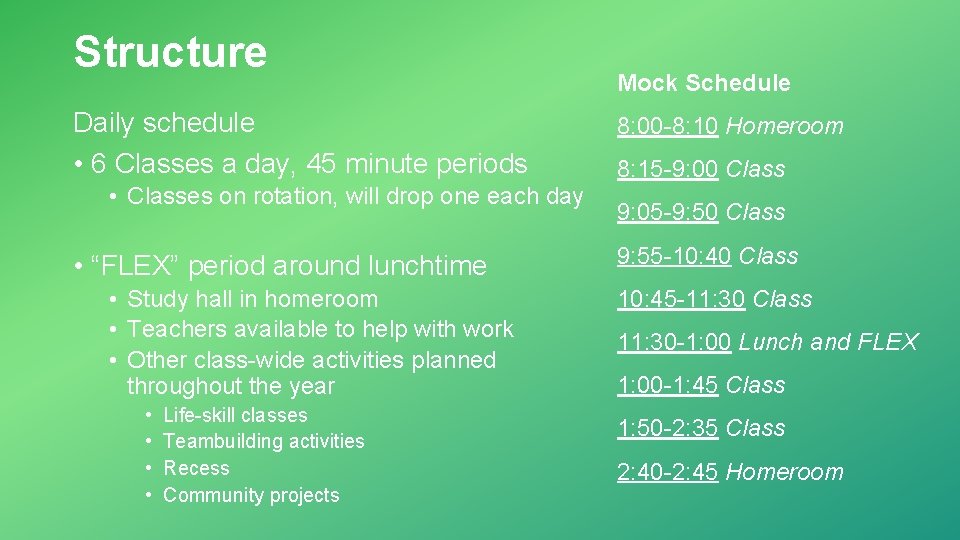
Structure Daily schedule • 6 Classes a day, 45 minute periods • Classes on rotation, will drop one each day • “FLEX” period around lunchtime • Study hall in homeroom • Teachers available to help with work • Other class-wide activities planned throughout the year • • Life-skill classes Teambuilding activities Recess Community projects Mock Schedule 8: 00 -8: 10 Homeroom 8: 15 -9: 00 Class 9: 05 -9: 50 Class 9: 55 -10: 40 Class 10: 45 -11: 30 Class 11: 30 -1: 00 Lunch and FLEX 1: 00 -1: 45 Class 1: 50 -2: 35 Class 2: 40 -2: 45 Homeroom
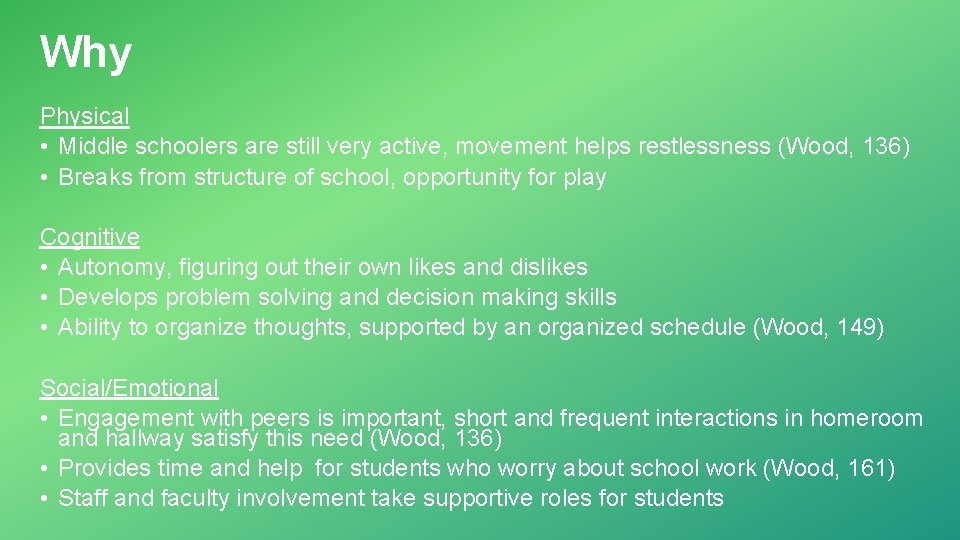
Why Physical • Middle schoolers are still very active, movement helps restlessness (Wood, 136) • Breaks from structure of school, opportunity for play Cognitive • Autonomy, figuring out their own likes and dislikes • Develops problem solving and decision making skills • Ability to organize thoughts, supported by an organized schedule (Wood, 149) Social/Emotional • Engagement with peers is important, short and frequent interactions in homeroom and hallway satisfy this need (Wood, 136) • Provides time and help for students who worry about school work (Wood, 161) • Staff and faculty involvement take supportive roles for students

Environment Classroom Layout • Clusters, not rows • Desks touching or tables • Very organized, everything has a place • Accessible materials for all • Students have freedom to walk around classroom to get materials needed for the day
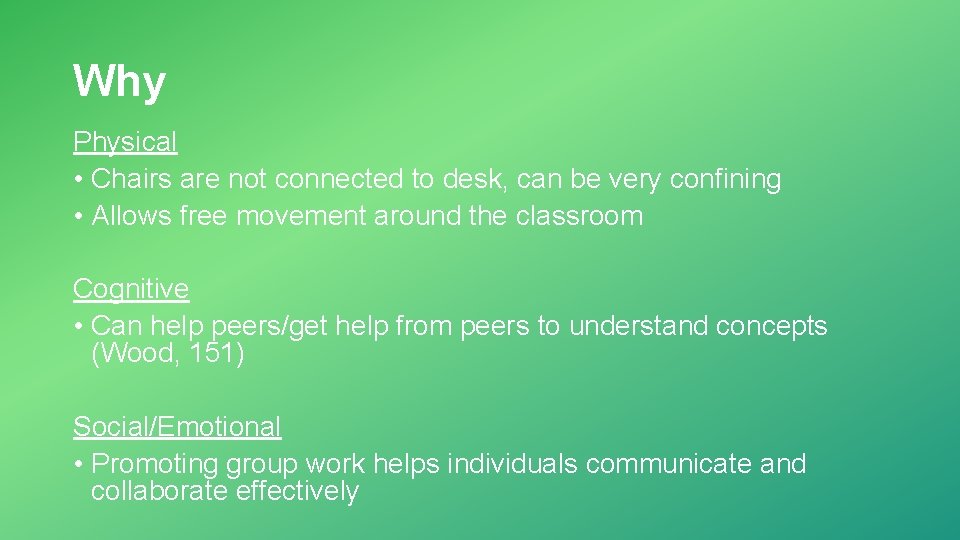
Why Physical • Chairs are not connected to desk, can be very confining • Allows free movement around the classroom Cognitive • Can help peers/get help from peers to understand concepts (Wood, 151) Social/Emotional • Promoting group work helps individuals communicate and collaborate effectively
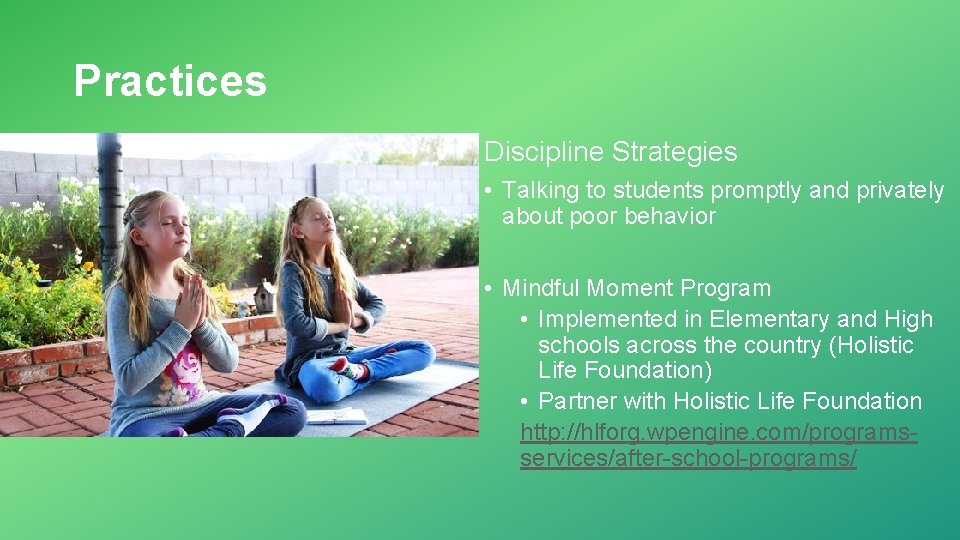
Practices Discipline Strategies • Talking to students promptly and privately about poor behavior • Mindful Moment Program • Implemented in Elementary and High schools across the country (Holistic Life Foundation) • Partner with Holistic Life Foundation http: //hlforg. wpengine. com/programsservices/after-school-programs/
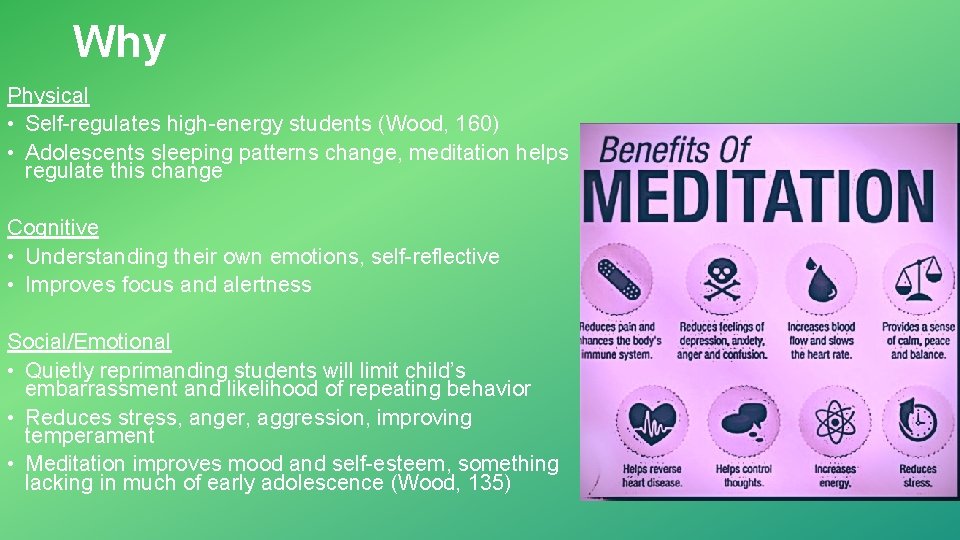
Why Physical • Self-regulates high-energy students (Wood, 160) • Adolescents sleeping patterns change, meditation helps regulate this change Cognitive • Understanding their own emotions, self-reflective • Improves focus and alertness Social/Emotional • Quietly reprimanding students will limit child’s embarrassment and likelihood of repeating behavior • Reduces stress, anger, aggression, improving temperament • Meditation improves mood and self-esteem, something lacking in much of early adolescence (Wood, 135)
Small changes = Big difference • Lifelong skills being learned • Meditation • Structure is key • Everything else is seemingly out of control (e. g. bodies, emotions, relationships with others) • Making sense of the world, supported by faculty and peers • Developing self-concept and self-image through new experiences
References Mindful Moment Program. (2016). Retrieved October 15, 2016, from http: //hlfinc. org/programs-services/mindful- moment-program/. What an Effective Teacher's Classroom Looks Like. (2014, July 14). Retrieved October 15, 2016, from http: //www. middleweb. com/16325/effective-teachers-classroomlooks-like/. Wood, C. (2007). Yardsticks: Children in the Classroom Ages 4 -14 (3 rd ed. ). Turner Falls, MA: Northeast Foundation for Children.
- Slides: 12