
Idea Generation Techniques Higher Design and Manufacture Idea
- Slides: 13
Idea Generation Techniques Higher Design and Manufacture
Idea Generation Techniques There are many different techniques that can be used to help you to generate ideas: MOOD BOARD LIFESTYLE BOARD RELATED PRODUCTS MIND MAPS MORPHOLOGICAL ANALYSIS LATERAL THINKING
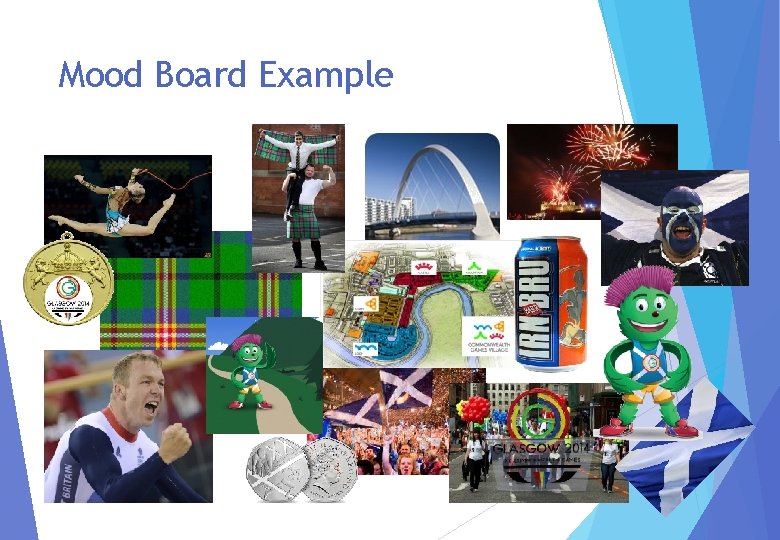
Mood Board A mood board – similar to a lifestyle board – brings together visual images from a range of sources and can act as a inspiration for design. A mood board should create an atmosphere which reflects a chosen mood. It can be useful to help give a product a particular image. The mood of a product is the feeling or emotion we feel when the product is first seen.
Mood Board Example
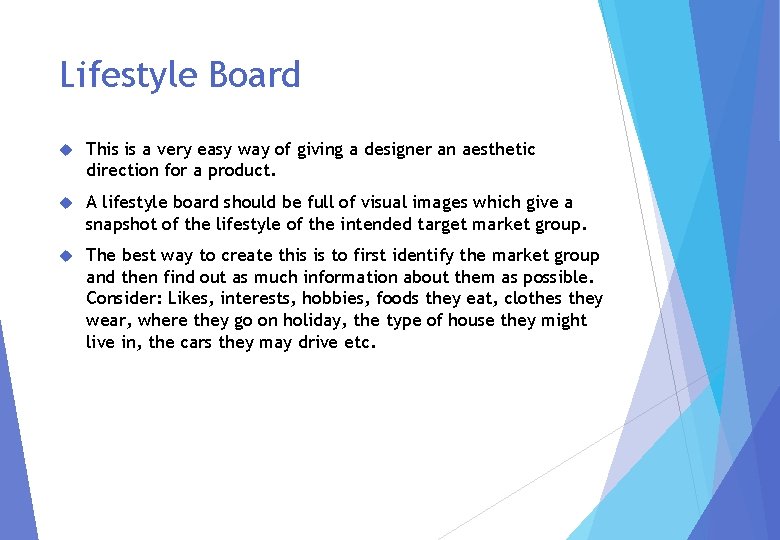
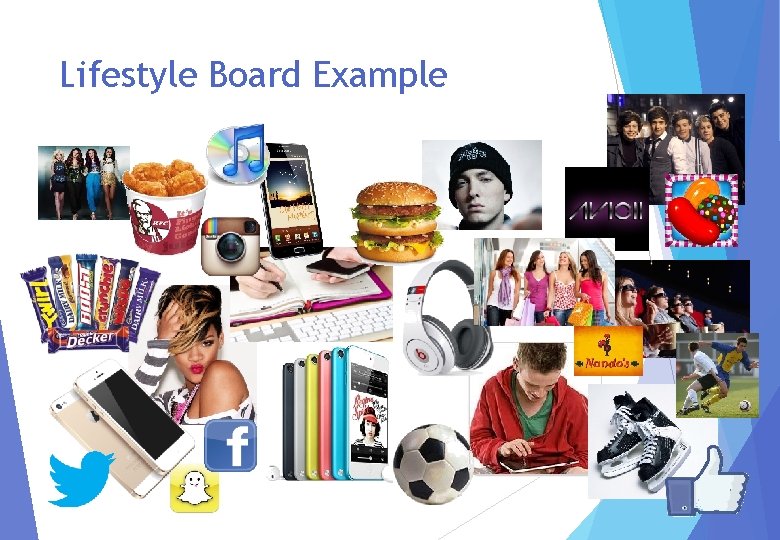
Lifestyle Board This is a very easy way of giving a designer an aesthetic direction for a product. A lifestyle board should be full of visual images which give a snapshot of the lifestyle of the intended target market group. The best way to create this is to first identify the market group and then find out as much information about them as possible. Consider: Likes, interests, hobbies, foods they eat, clothes they wear, where they go on holiday, the type of house they might live in, the cars they may drive etc.
Lifestyle Board Example
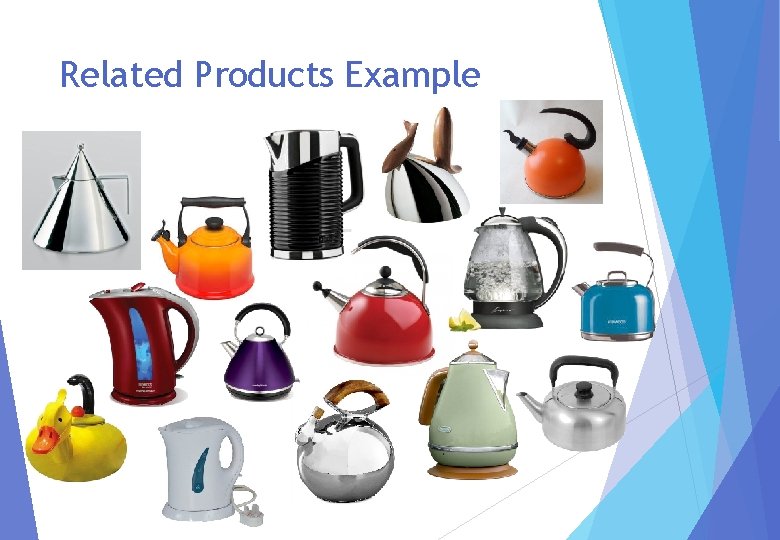
Related Products By looking at related products, we can identify similarities in designs that could be carried into our own. Remember if you are redesigning a product, someone has already done research on shape, colours, materials etc. that could help save you time by influencing your design. This does not mean you should copy someone's design, but by looking at related products it can help give you inspiration.
Related Products Example
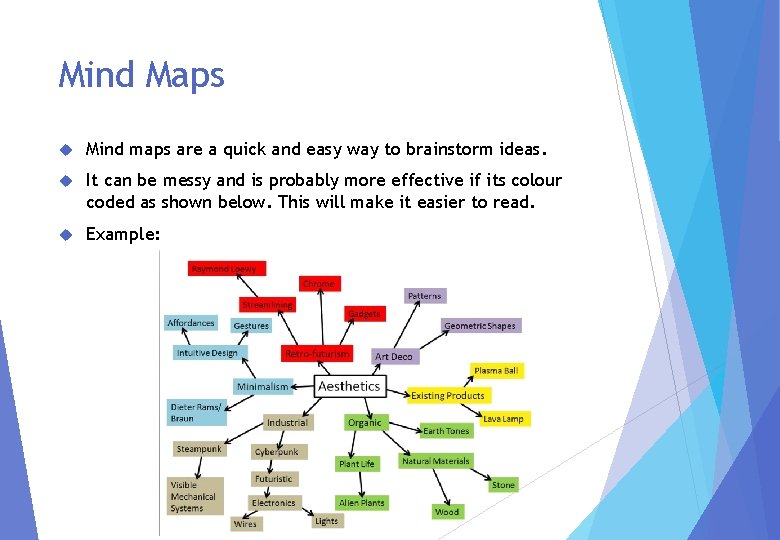
Mind Maps Mind maps are a quick and easy way to brainstorm ideas. It can be messy and is probably more effective if its colour coded as shown below. This will make it easier to read. Example:
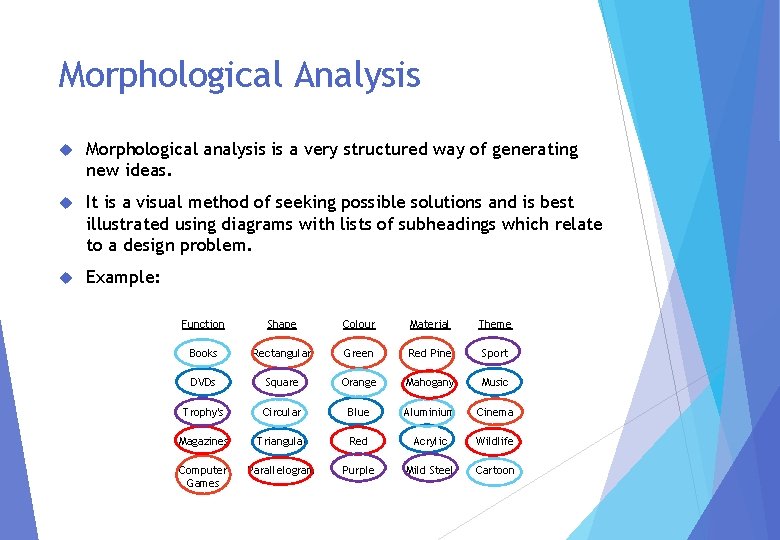
Morphological Analysis Morphological analysis is a very structured way of generating new ideas. It is a visual method of seeking possible solutions and is best illustrated using diagrams with lists of subheadings which relate to a design problem. Example: Function Shape Colour Material Theme Books Rectangular Green Red Pine Sport DVDs Square Orange Mahogany Music Trophy's Circular Blue Aluminium Cinema Magazines Triangular Red Acrylic Wildlife Computer Games Parallelogram Purple Mild Steel Cartoon
Lateral Thinking We all have habits in the way we think. These habits can often block our ability to correctly perceive a problem and create a solution. Lateral thinking is about looking at the problem in a different way and avoiding our everyday vertical type approach to thinking. In lateral thinking, it is not necessary to be right at every step since it is sometimes desirable to be wrong in order to organise and alter information or ideas. Like a young child, lateral thinking constantly asks `why? ’
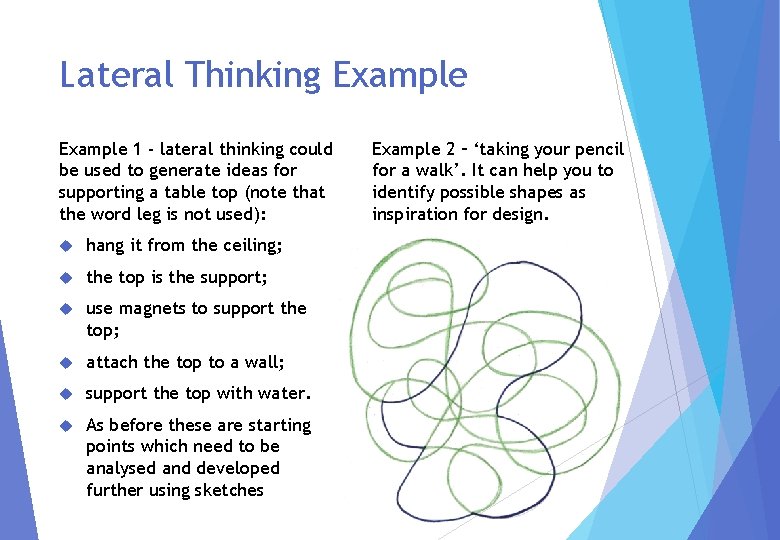
Lateral Thinking Example 1 - lateral thinking could be used to generate ideas for supporting a table top (note that the word leg is not used): hang it from the ceiling; the top is the support; use magnets to support the top; attach the top to a wall; support the top with water. As before these are starting points which need to be analysed and developed further using sketches Example 2 – ‘taking your pencil for a walk’. It can help you to identify possible shapes as inspiration for design.
Questions Question 1: Past Paper - 2013 Q. 8 c) (2 marks) Describe two idea generation techniques that could be used to help produce concept ideas. Question 2: Past Paper – 2015 Q. 5 c) (2 marks) Describe two idea generation techniques that could be used (to design the product shown). You may use sketches/diagrams to illustrate your answer.