
ICU Pharmacology Sean Forsythe M D Assistant Professor



- Slides: 52
ICU Pharmacology Sean Forsythe M. D. Assistant Professor of Medicine
ICU Pharmacology Sedatives Analgesics Paralytics Pressors
Sedation Relieve pain, decrease anxiety and agitation, provide amnesia, reduce patient-ventilator dysynchrony, decrease respiratory muscle oxygen consumption, facilitate nursing care. May prolong mechanical ventilation and increase costs.
Goals of Sedation Old- Obtundation New- Sleepy but arousable patient Almost always a combination of anxiolytics and analgesics.
What is Agitation? Pain Anxiety Delirium Fear Sleep deprivation Patient-ventilator interactions Encephalopathy Withdrawal Depression ICU psychosis
Benzodiazepines Act as sedative, hypnotic, amnestic, anticonvulsant, anxiolytic. No analgesia. Develop tolerance. Synergistic effect with opiates. Lipid soluble, metabolized in the liver, excreted in the urine. Interact with erythro, propranolol, theo
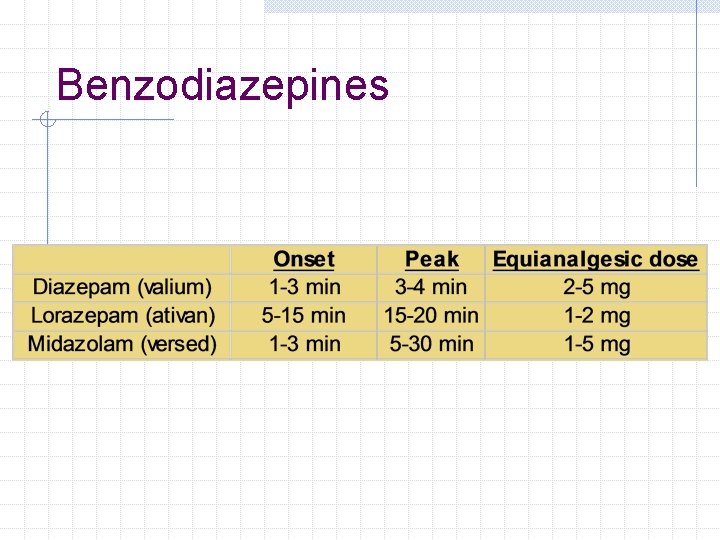
Benzodiazepines Diazepam (Valium) n n Repeated dosing leads to accumulation Difficult to use in continuous infusion Lorazepam (Ativan) n n Slowest onset, longest acting Metabolism not affected by liver disease Midazolam (Versed) n n Fast onset, short duration Accumulates when given in infusion >48 hours.
Benzodiazepines
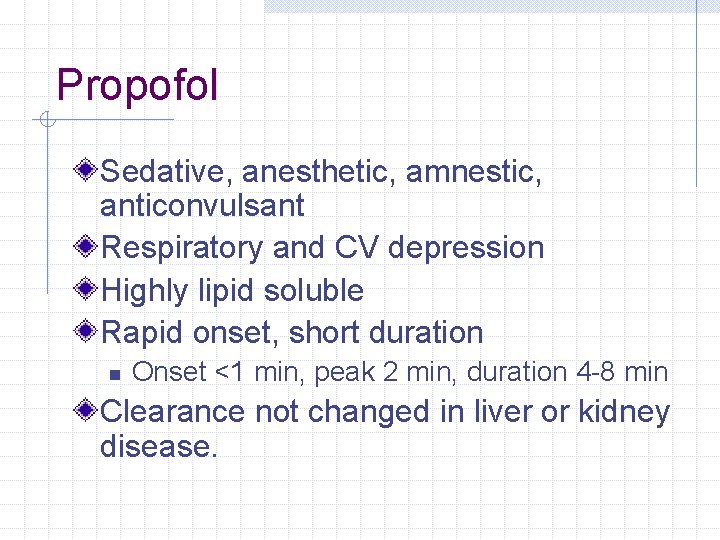
Propofol Sedative, anesthetic, amnestic, anticonvulsant Respiratory and CV depression Highly lipid soluble Rapid onset, short duration n Onset <1 min, peak 2 min, duration 4 -8 min Clearance not changed in liver or kidney disease.
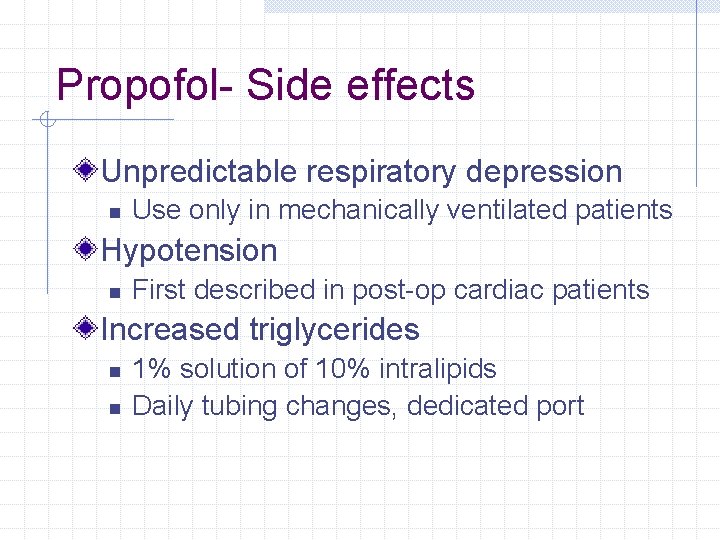
Propofol- Side effects Unpredictable respiratory depression n Use only in mechanically ventilated patients Hypotension n First described in post-op cardiac patients Increased triglycerides n n 1% solution of 10% intralipids Daily tubing changes, dedicated port
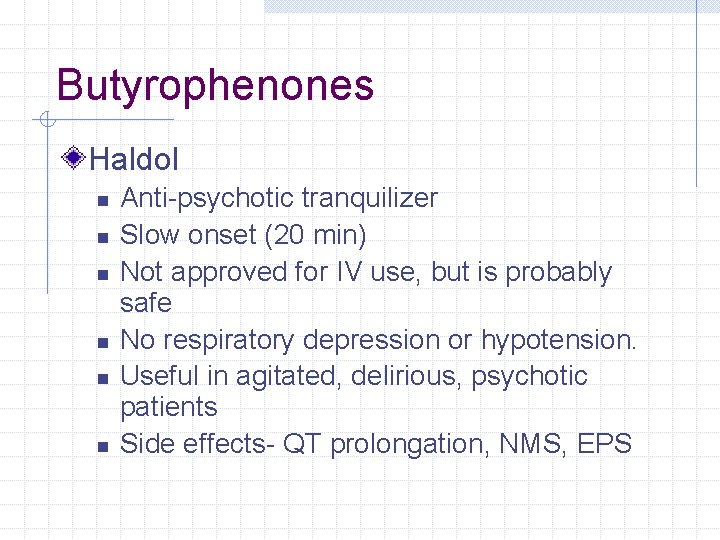
Butyrophenones Haldol n n n Anti-psychotic tranquilizer Slow onset (20 min) Not approved for IV use, but is probably safe No respiratory depression or hypotension. Useful in agitated, delirious, psychotic patients Side effects- QT prolongation, NMS, EPS
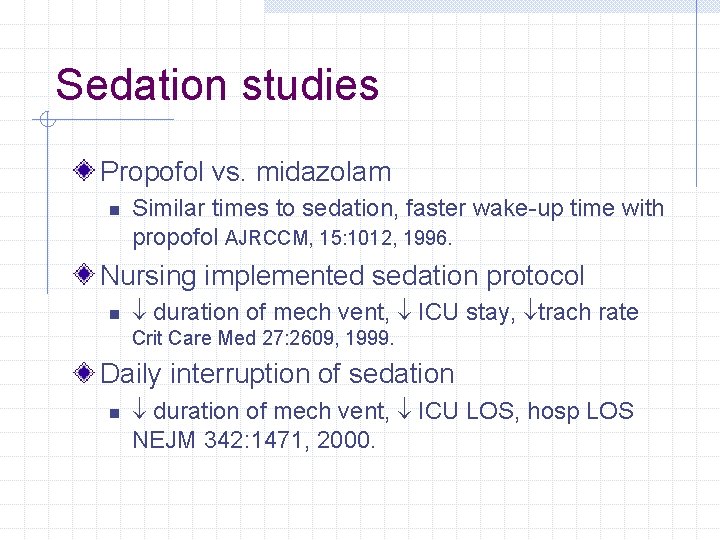
Sedation studies Propofol vs. midazolam n Similar times to sedation, faster wake-up time with propofol AJRCCM, 15: 1012, 1996. Nursing implemented sedation protocol n duration of mech vent, ICU stay, trach rate Crit Care Med 27: 2609, 1999. Daily interruption of sedation n duration of mech vent, ICU LOS, hosp LOS NEJM 342: 1471, 2000.
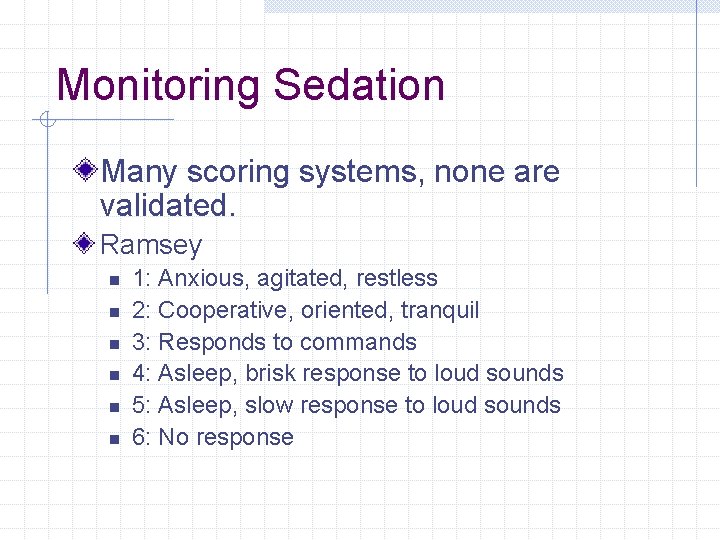
Monitoring Sedation Many scoring systems, none are validated. Ramsey n n n 1: Anxious, agitated, restless 2: Cooperative, oriented, tranquil 3: Responds to commands 4: Asleep, brisk response to loud sounds 5: Asleep, slow response to loud sounds 6: No response
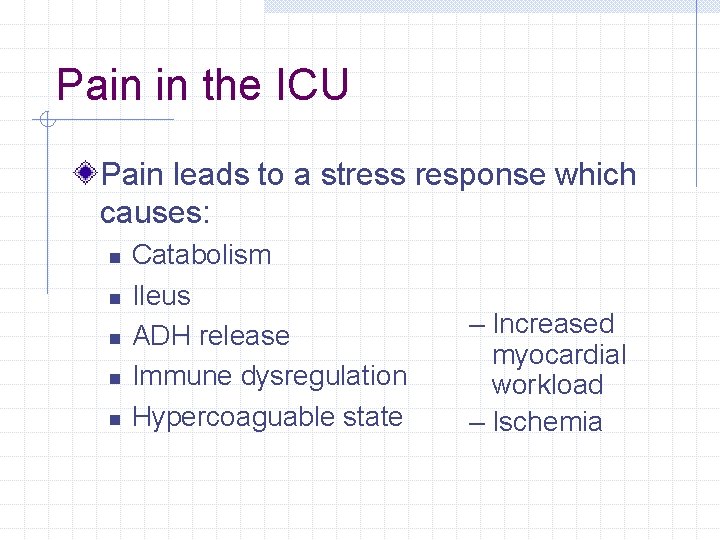
Pain in the ICU Pain leads to a stress response which causes: n n n Catabolism Ileus ADH release Immune dysregulation Hypercoaguable state – Increased myocardial workload – Ischemia
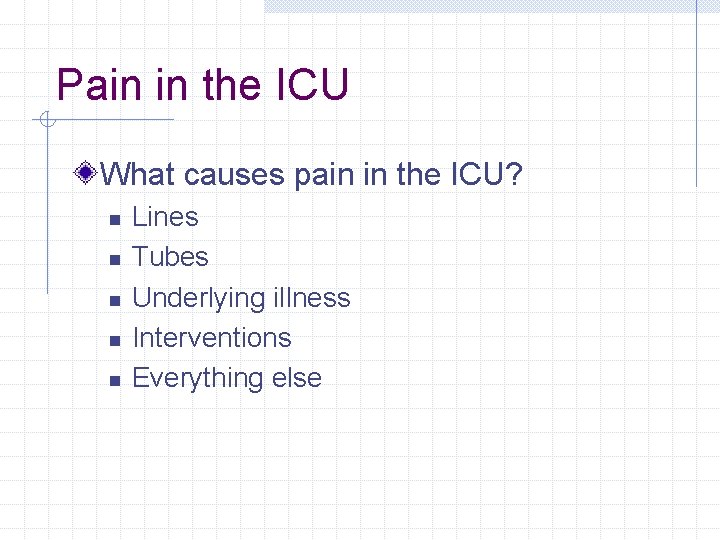
Pain in the ICU What causes pain in the ICU? n n n Lines Tubes Underlying illness Interventions Everything else
Analgesics Relieve Pain Opioides Non-opiodes Can be given PRN or continuous infusion n PRN avoids over sedation, but also has peaks and valleys and is more labor intensive.
Opiodes Metabolized by the liver, excreted in the urine. n n n Morphine- Potential for histamine release and hypotension. Fentanyl- Lipid soluble, 100 X potency of MSO 4, more rapid onset, no histamine release, expensive. Demerol- Not a good analgesic, potential for abuse, hallucinations, metabolites build up and can lead to seizures.
Opiodes Adverse effects n n Respiratory depression Hypotension (sympatholysis, histamine release) Decreased GI motility (peripheral effect) Pruritis
Non-opiodes Ketamine n n n Analog of phencyclidine, sedative and anesthetic, dissociative anesthesia. Hypertension, hypertonicity, hallucinations, nightmares. Potent bronchodilator
Non-opiodes Ketorolac n n n NSAID Limited efficacy (post-op ortho) Synergistic with opiodes No respiratory depression Increased side effects in the critically ill Renal failure, thrombocytopenia, gastritis
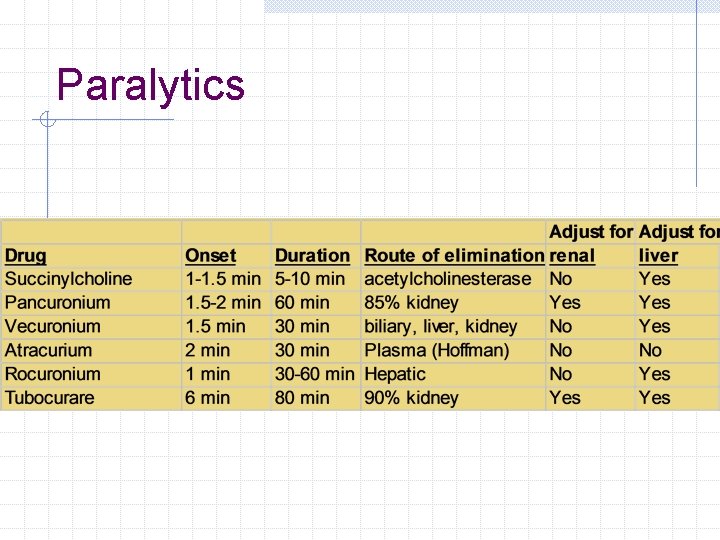
Paralytics Paralyze skeletal muscle at the neuromuscular junction. They do not provide any analgesia or sedation. Prevent examination of the CNS Increase risks of DVT, pressure ulcers, nerve compression syndromes.
Use of Paralytics Intubation Facilitation of mechanical ventilation Preventing increases in ICP Decreasing metabolic demands (shivering) Decreasing lactic acidosis in tetanus, NMS.
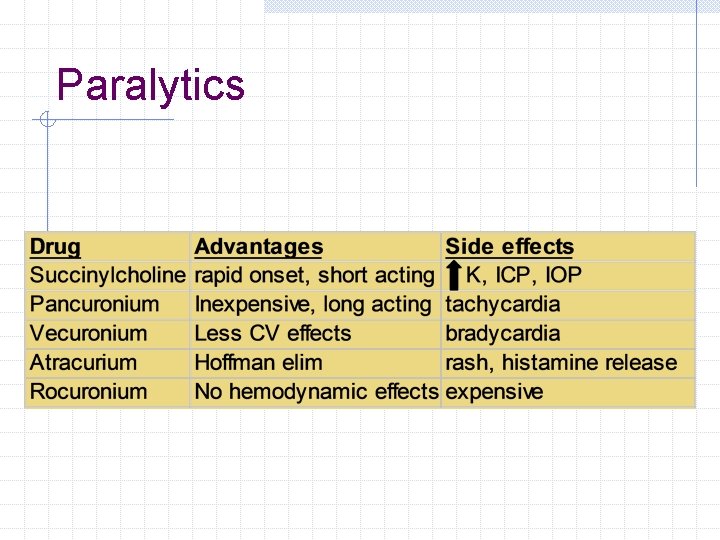
Paralytics Depolarizing agents n Succinylcholine Non-depolarizing agents n n n Pancuronium Vecuronium Atracurium
Paralytics
Paralytics
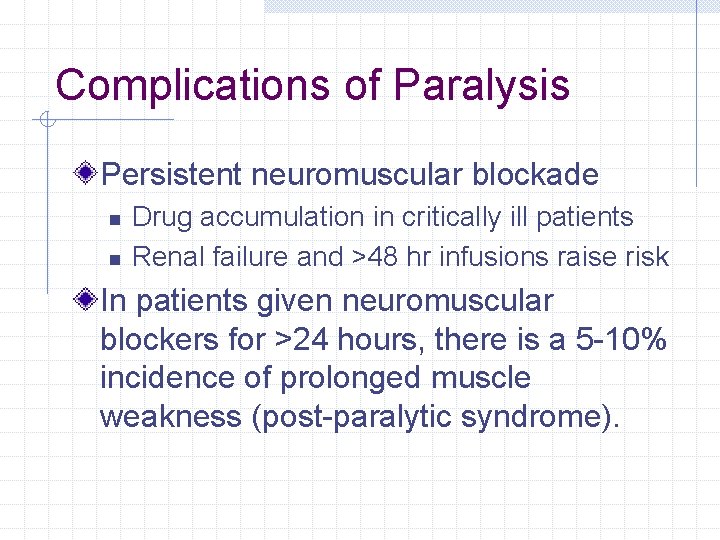
Complications of Paralysis Persistent neuromuscular blockade n n Drug accumulation in critically ill patients Renal failure and >48 hr infusions raise risk In patients given neuromuscular blockers for >24 hours, there is a 5 -10% incidence of prolonged muscle weakness (post-paralytic syndrome).
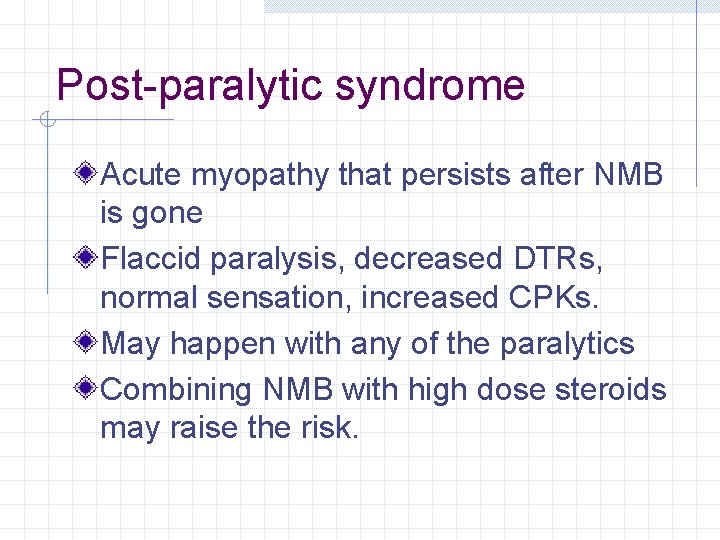
Post-paralytic syndrome Acute myopathy that persists after NMB is gone Flaccid paralysis, decreased DTRs, normal sensation, increased CPKs. May happen with any of the paralytics Combining NMB with high dose steroids may raise the risk.
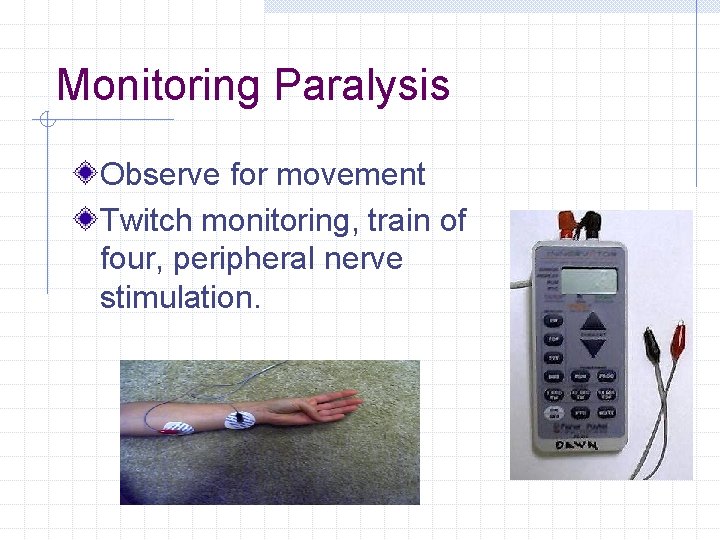
Monitoring Paralysis Observe for movement Twitch monitoring, train of four, peripheral nerve stimulation.
Shock Hypoperfusion of multiple organ systems. May present as tachycardia, tachypnea, altered mental status, decreased urine output, lactic acidosis. Not all hypotension is shock and not all shock has hypotension.
Shock Rapidity of diagnosis is key. The types: n n n Hypovolemic/ hemorrhagic Cardiogenic High output Fluid bolus is almost always the correct initial therapy.
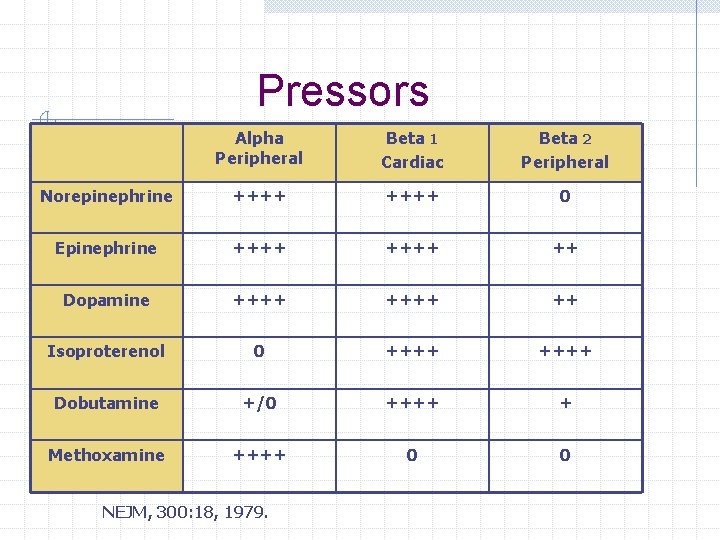
Pressors b 1 myocardium- contractility b 2 arterioles- vasodilation b 1 SA node- chronotropy b 2 lungs- bronchodilation a peripheral- vasoconstriction
Pressors Alpha Peripheral Beta 1 Cardiac Beta 2 Peripheral Norepinephrine ++++ 0 Epinephrine ++++ ++ Dopamine ++++ ++ Isoproterenol 0 ++++ Dobutamine +/0 ++++ + Methoxamine ++++ 0 0 NEJM, 300: 18, 1979.
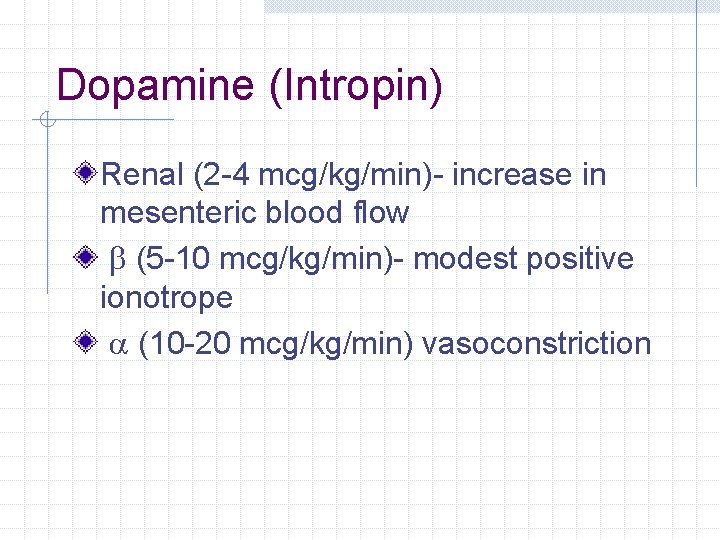
Dopamine (Intropin) Renal (2 -4 mcg/kg/min)- increase in mesenteric blood flow b (5 -10 mcg/kg/min)- modest positive ionotrope a (10 -20 mcg/kg/min) vasoconstriction
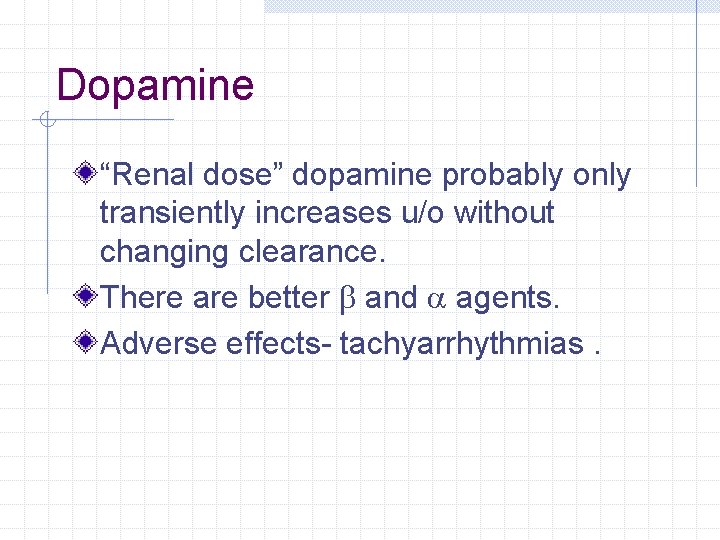
Dopamine “Renal dose” dopamine probably only transiently increases u/o without changing clearance. There are better b and a agents. Adverse effects- tachyarrhythmias.
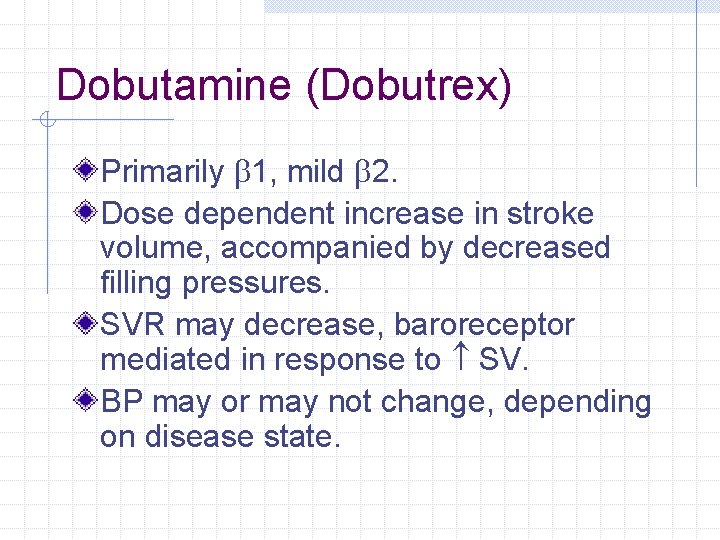
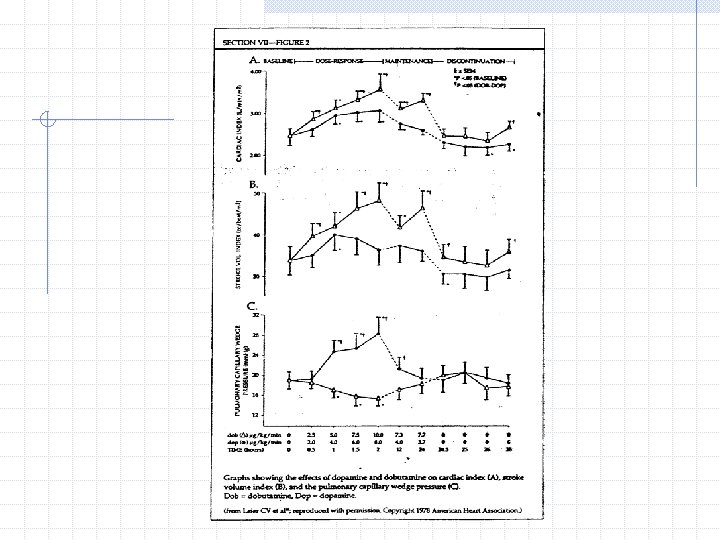
Dobutamine (Dobutrex) Primarily b 1, mild b 2. Dose dependent increase in stroke volume, accompanied by decreased filling pressures. SVR may decrease, baroreceptor mediated in response to SV. BP may or may not change, depending on disease state.
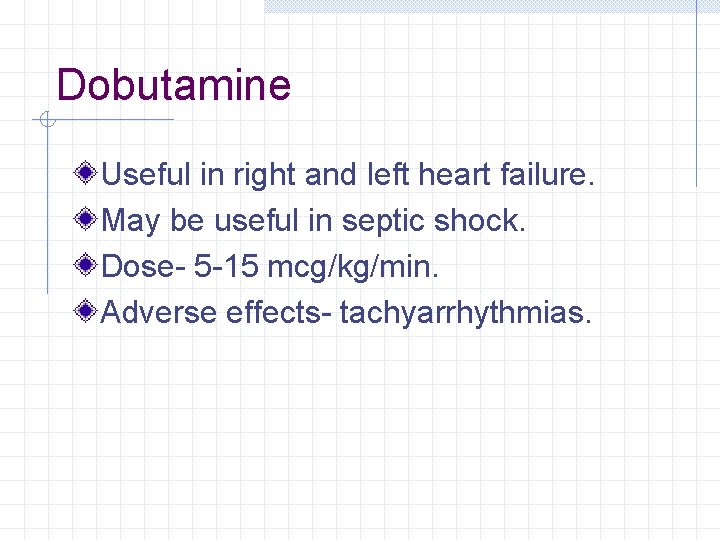
Dobutamine Useful in right and left heart failure. May be useful in septic shock. Dose- 5 -15 mcg/kg/min. Adverse effects- tachyarrhythmias.
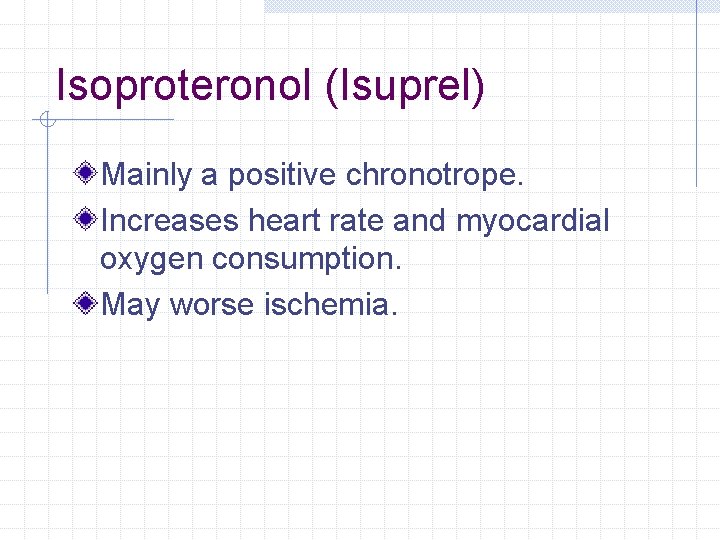
Isoproteronol (Isuprel) Mainly a positive chronotrope. Increases heart rate and myocardial oxygen consumption. May worse ischemia.
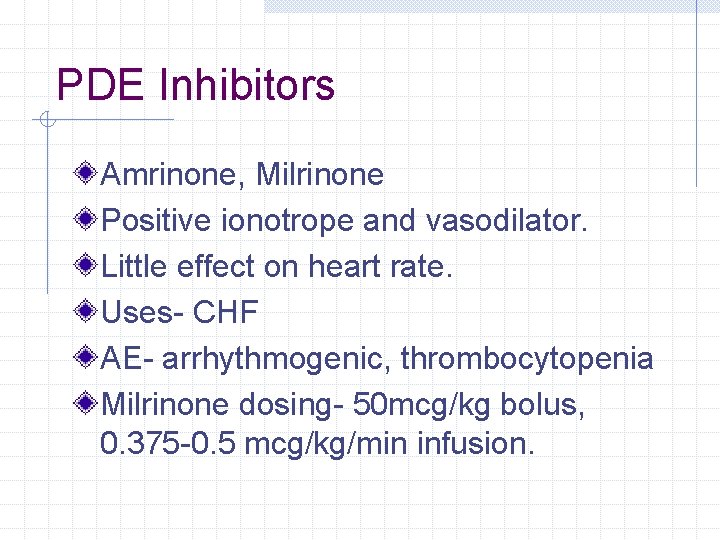
PDE Inhibitors Amrinone, Milrinone Positive ionotrope and vasodilator. Little effect on heart rate. Uses- CHF AE- arrhythmogenic, thrombocytopenia Milrinone dosing- 50 mcg/kg bolus, 0. 375 -0. 5 mcg/kg/min infusion.
Epinephrine b at very low doses, a at higher doses. Very potent agent. Some effects on metabolic rate, inflammation. Useful in anaphylaxis. AE- Arrhythmogenic, coronary ischemia, renal vasoconstriction, metabolic rate.
Norepinephrine (Levophed) Potent a agent, some b Vasoconstriction (that tends to spare the brain and heart). Good agent to SVR in high output shock. Dose 1 -12 mcg/min Can cause reflex bradycardia (vagal).
Phenylephrine (Neosynephrine) Strong, pure a agent. Vasoconstriction with minimal in heart rate or contractility. Does not spare the heart or brain. BP at the expense of perfusion.
Ephedrine Releases tissue stores of epinephrine. Longer lasting, less potent than epi. Used mostly by anesthesiologists. 5 -25 mg IVP.
Vasopressin Vasoconstrictor that may be useful in septic shock. Use evolving to parallel hormone replacement therapy. 0. 4 units/min
Nitroglycerine Venodilator at low doses (<40 mcg/min) Arteriolar dilation at high doses (>200 mcg/min). Rapid onset, short duration, tolerance. AE- inhibits platelet aggregation, ICP, headache.
Nitroprusside (Nipride) Balanced vasodilator Rapid onset, short elimination time Useful in hypertensive emergency, severe CHF, aortic dissection Accumulates in renal and liver dysfunction. Toxicity= CN poisoning (decreased CO, lactic acidosis, seizures).
Nitroprusside Dosing- 0. 2 - 10 mcg/kg/min Other AE- ICP
Labetolol (Normodyne) a 1 and non-selective b blocker. Dose related decrease in SVR and BP without tachycardia. Does not ICP Useful in the treatment of hypertensive emergencies, aortic dissection. Bolus= 20 mg, infusion= 2 mg/min.
Types of Shock Hypovolemic Cardiogenic High output
Hypovolemic Shock Cold and clammy, thready pulse, clear lungs. GI bleeds, trauma, dehydration. Treatment-Volume, volume
Cardiogenic Shock Cold and clammy, thready pulse, crackles, S 3. Left heart failure, right heart failure, valvular disease. Treatment- preload reduction(diuretics), afterload reduction (ACE-I), increase contractility (PDE inhibitor, dobutamine)
High Output Shock Warm and well perused, bounding pulses Sepsis, sepsis, and then other things Treatment- Volume first, then norepi +/ - dobutamine.