
ICT Driving Licence at the University of Helsinki
- Slides: 20
ICT Driving Licence at the University of Helsinki EAHIL Conference, Cluj-Napoca, Romania Theme: ”Education and Learning” 13. 9. 2006 Tiina Heino Medical Faculty National Library of Health Sciences – Terkko http: //www. terkko. helsinki. fi
Contents of the presentation n Background n Coordination and participants n ICT Driving Licence: its structure and contents n Evaluation of the project n Case: ICT Driving Licence at the Medical Faculty
ICT Driving Licence – Why? n Bologna process n The reform of the degree structure (two cycles) n Start autumn 2005 n Necessary ICT knowledge and skills for all new students n The effective use of educational technology n The effective use of electronic library n Official and systematic n 3 ECTS (common & faculty tailored together)
ICT Driving Licence – Who? n A shared project of the University of Helsinki n Project Coordinator n financed: autumn 2004 – 2005 n Continuing 2006: 1 man-year plus translation of the learning material (English and Swedish) n Persons from all faculties (11): n Teachers n Support persons for educational technology n Faculty and campus libraries, Undergraduated library n IT Department n Open University, University of Helsinki
ICT Driving Licence – What? n Common learning material plus faculty tailored part n Learning material: 1. Introduction to the use of computers 2. The computer environment at the University of Helsinki 3. Modifying and presenting data 4. Information seeking n ” Learning goals: the new student will be able to use the services of the University of Helsinki libraries, and to seek information from different sources. She/he will be familiar with different search techniques, with which she/he can make her/his work more effective. In addition, she/he will know the basics of copyrights. ” 5. Data security and privacy protection
4. Information seeking n Contents: 1. Planning the information search 2. Finding material from the HELKA libraries (the libraries at the University of Helsinki) 3. Seeking information about a specific subject 4. Utilising and evaluating search results n National Project for Studying Plan for Information Literacy n http: //www. helsinki. fi/infolukutaito/english/index. htm n ICT Driving Licence made it possible to integrate the information literacy into the curriculum of the first year students in every faculty =>
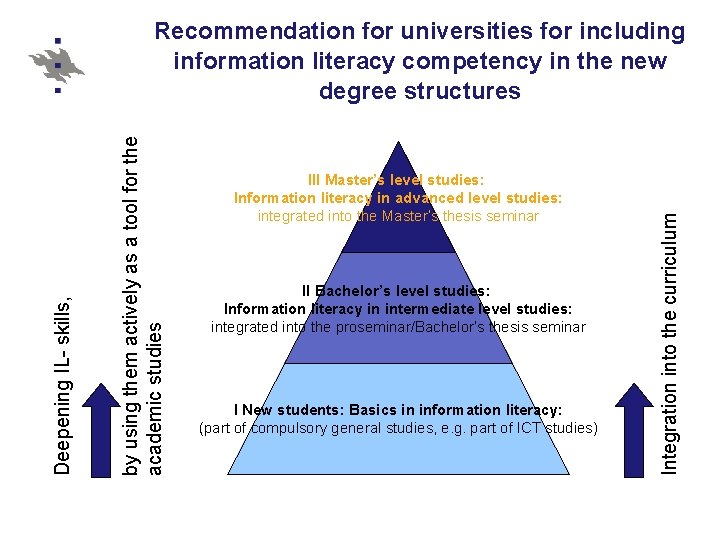
III Master’s level studies: Information literacy in advanced level studies: integrated into the Master’s thesis seminar II Bachelor’s level studies: Information literacy in intermediate level studies: integrated into the proseminar/Bachelor’s thesis seminar I New students: Basics in information literacy: (part of compulsory general studies, e. g. part of ICT studies) Integration into the curriculum by using them actively as a tool for the academic studies Deepening IL- skills, Recommendation for universities for including information literacy competency in the new degree structures
ICT Driving Licence – How? n Learning material (produced together) www. helsinki. fi/tvt-ajokortti/english n Entry level tests and final exams (examination) n Questions and tasks produced together n in Web. CT (e-learning environment): n Technically OK n Questions and tasks are in continuous development process (focusing, targeting, measuring skills) n Teaching sessions n Faculty tailored part n Support material for the teaching staff
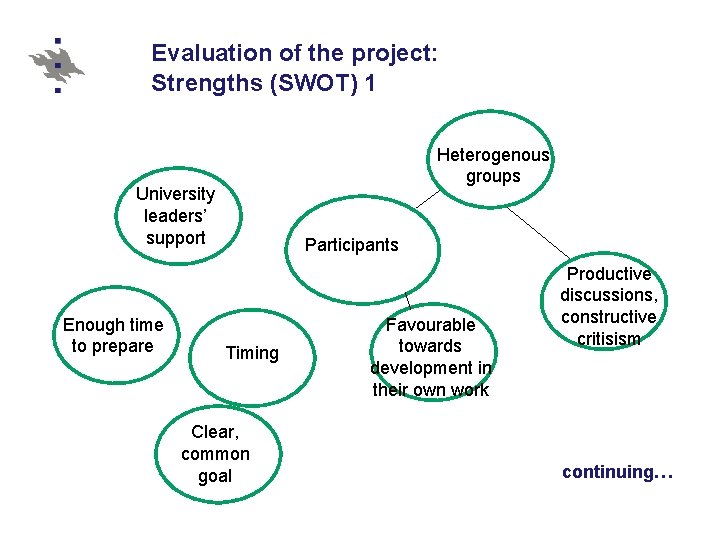
Evaluation of the project: Strengths (SWOT) 1 Heterogenous groups University leaders’ support Enough time to prepare Participants Timing Clear, common goal Favourable towards development in their own work Productive discussions, constructive critisism continuing…
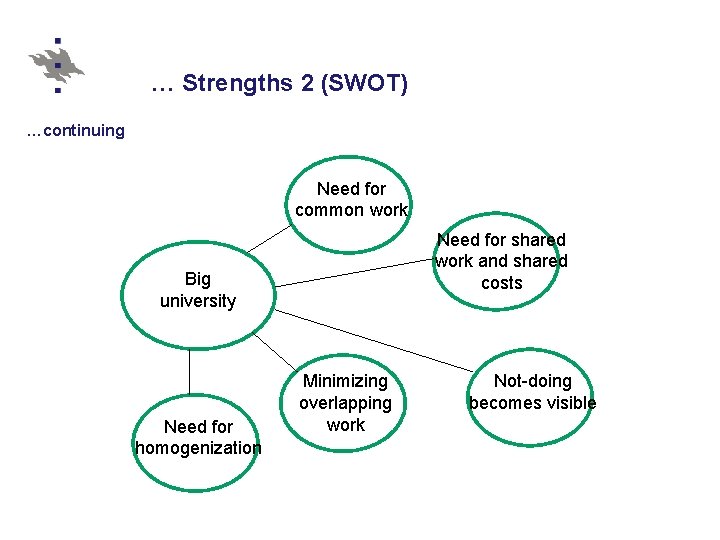
… Strengths 2 (SWOT) …continuing Need for common work Need for shared work and shared costs Big university Need for homogenization Minimizing overlapping work Not-doing becomes visible
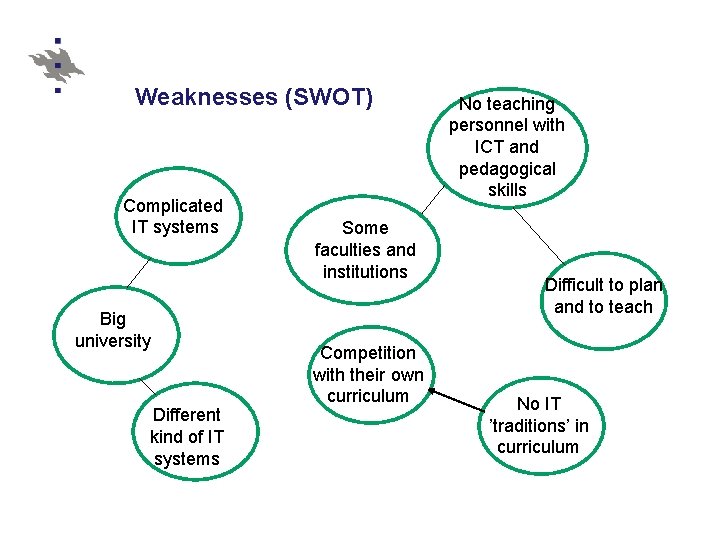
Weaknesses (SWOT) Complicated IT systems Big university Different kind of IT systems Some faculties and institutions Competition with their own curriculum No teaching personnel with ICT and pedagogical skills Difficult to plan and to teach No IT ’traditions’ in curriculum
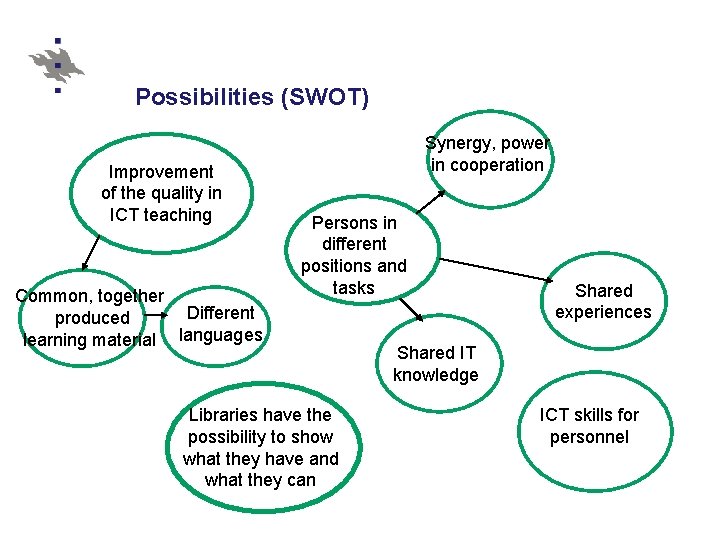
Possibilities (SWOT) Improvement of the quality in ICT teaching Common, together Different produced learning material languages Synergy, power in cooperation Persons in different positions and tasks Libraries have the possibility to show what they have and what they can Shared experiences Shared IT knowledge ICT skills for personnel
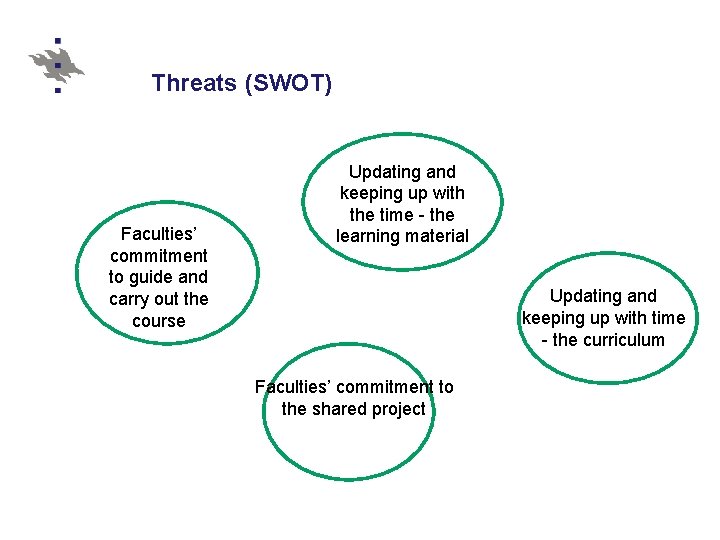
Threats (SWOT) Faculties’ commitment to guide and carry out the course Updating and keeping up with the time - the learning material Updating and keeping up with time - the curriculum Faculties’ commitment to the shared project
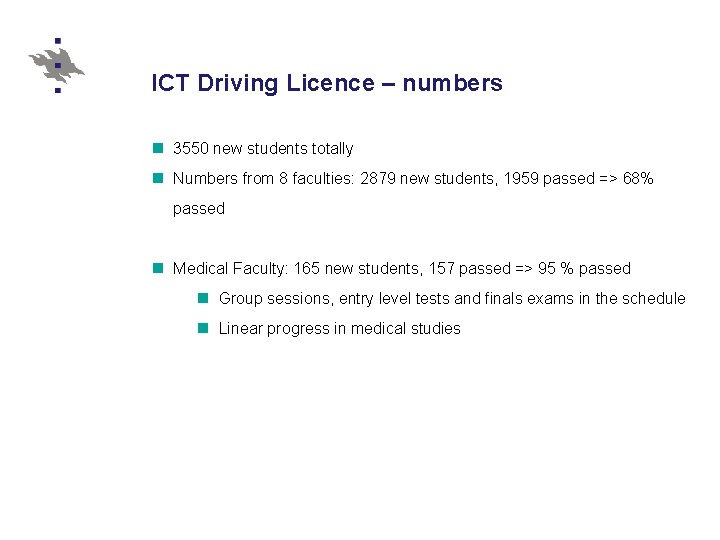
ICT Driving Licence – numbers n 3550 new students totally n Numbers from 8 faculties: 2879 new students, 1959 passed => 68% passed n Medical Faculty: 165 new students, 157 passed => 95 % passed n Group sessions, entry level tests and finals exams in the schedule n Linear progress in medical studies
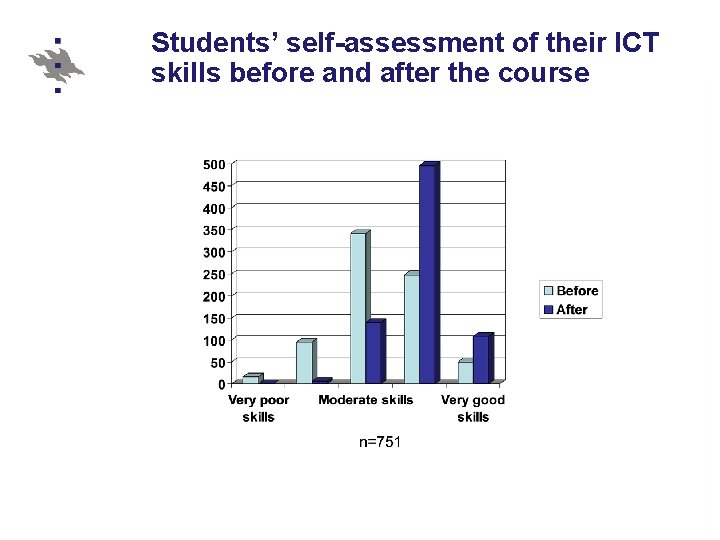
Students’ self-assessment of their ICT skills before and after the course
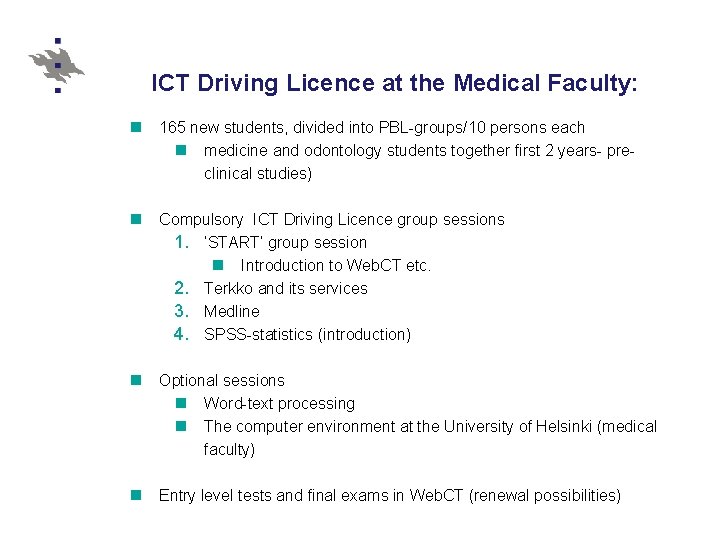
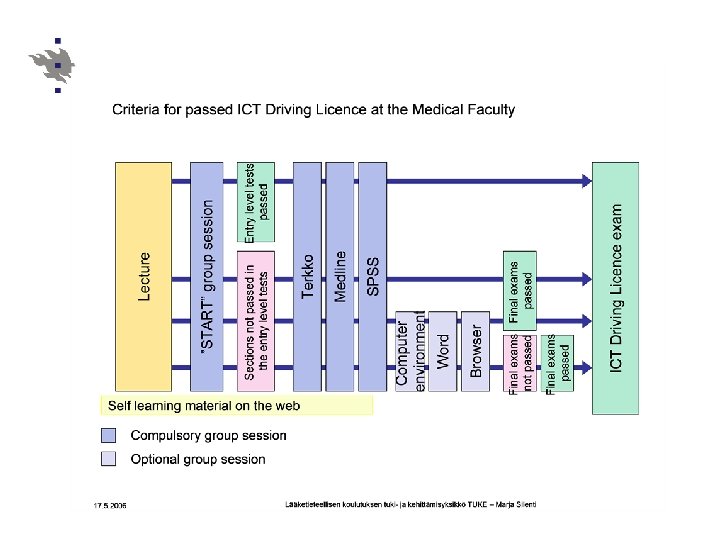
ICT Driving Licence at the Medical Faculty: n 165 new students, divided into PBL-groups/10 persons each n medicine and odontology students together first 2 years- preclinical studies) n Compulsory ICT Driving Licence group sessions 1. ’START’ group session n Introduction to Web. CT etc. 2. Terkko and its services 3. Medline 4. SPSS-statistics (introduction) n Optional sessions n Word-text processing n The computer environment at the University of Helsinki (medical faculty) n Entry level tests and final exams in Web. CT (renewal possibilities)
ICT Driving Licence at the Medical Faculty
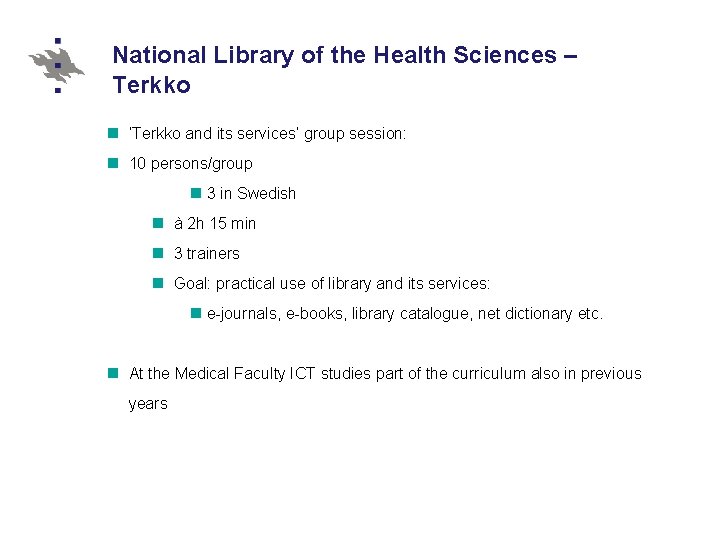
National Library of the Health Sciences – Terkko n ’Terkko and its services’ group session: n 10 persons/group n 3 in Swedish n à 2 h 15 min n 3 trainers n Goal: practical use of library and its services: n e-journals, e-books, library catalogue, net dictionary etc. n At the Medical Faculty ICT studies part of the curriculum also in previous years
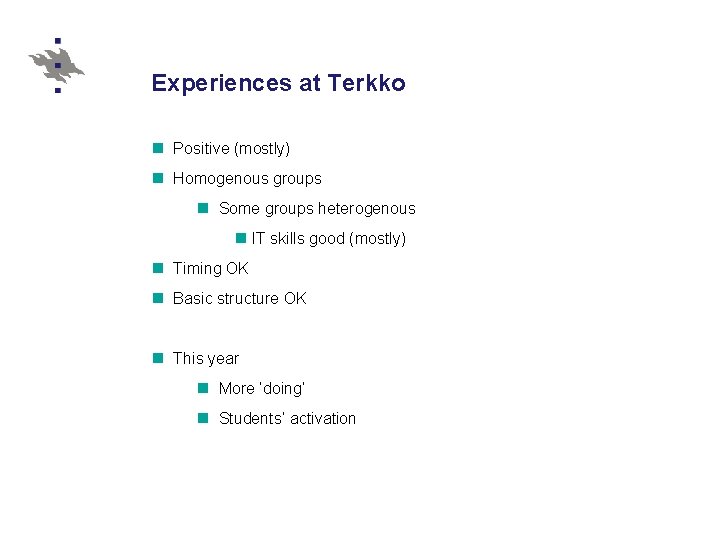
Experiences at Terkko n Positive (mostly) n Homogenous groups n Some groups heterogenous n IT skills good (mostly) n Timing OK n Basic structure OK n This year n More ’doing’ n Students’ activation
Thank You! More information: tiina. m. heino@helsinki. fi 2006