
ICT BASIC ELECTRICAL TECH 100 E 2 Motors
ICT BASIC ELECTRICAL TECH 100 E 2 Motors and Motor Starting (Modified) #1 Fan Motors
Basic Electric Motor • Stator – Stationary electromagnet • Rotor – Rotating magnet • Movement of the rotor – Rotates by repulsion and attraction of stator 2
![Exploded View of Motor STATOR (with windings) ROTOR (with shaft) ] 3](http://slidetodoc.com/presentation_image/691bbb483e3f4c722629b99c550f0f8d/image-3.jpg "Exploded View of Motor STATOR (with windings) ROTOR (with shaft) ] 3")
Exploded View of Motor STATOR (with windings) ROTOR (with shaft) ] 3

Two-pole stator motor Stator Rotor (Stationary) (Rotates) Polarity reverses (N to S) on stator N S +_ N S Stator repels & attracts rotor into motion When stator is energized the rotor will make a half turn with each half of current cycle 4
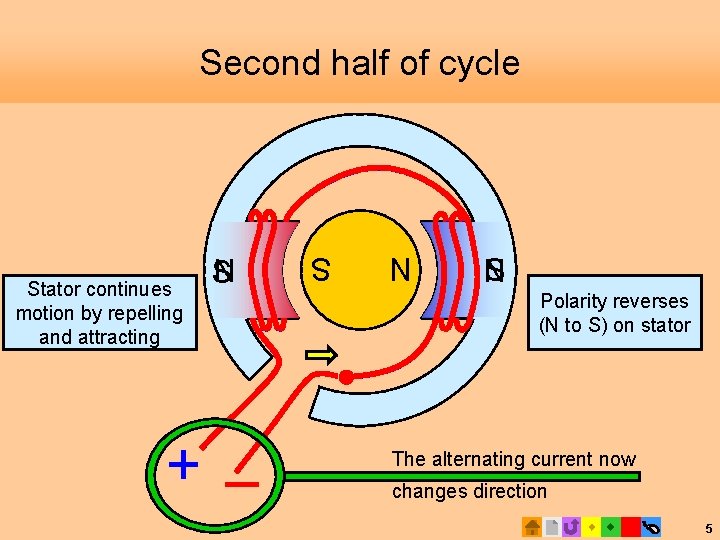
Second half of cycle + _ S N Stator continues motion by repelling and attracting S N Polarity reverses (N to S) on stator The alternating current now changes direction 5
Motor Starting All motors need a phase shift to start rotation 6
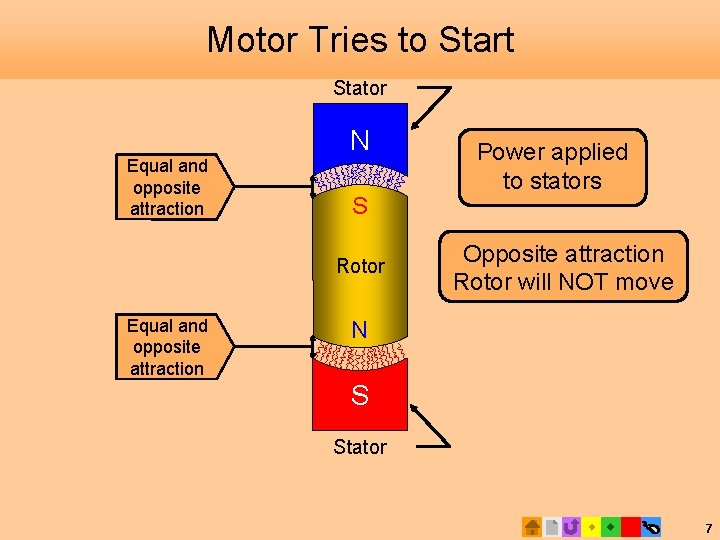
Motor Tries to Start Stator Equal and opposite attraction N S Rotor Equal and opposite attraction Power applied to stators Opposite attraction Rotor will NOT move N S Stator 7
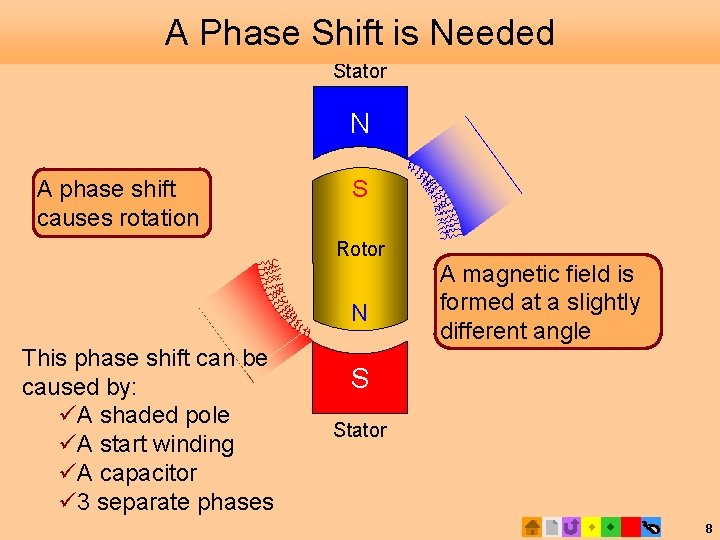
A Phase Shift is Needed Stator N A phase shift causes rotation S Rotor N This phase shift can be caused by: üA shaded pole üA start winding üA capacitor ü 3 separate phases A magnetic field is formed at a slightly different angle S Stator 8
Shaded-Pole Motors • Low starting torque • Low efficiency • Low cost 9
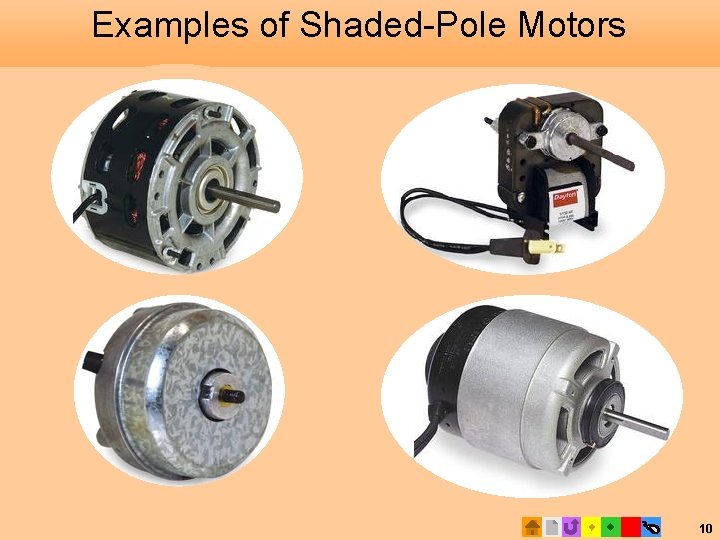
Examples of Shaded-Pole Motors 10
Starting a Shaded-Pole Motor • Each pole has a copper band attached – The shaded-pole provides the phase shift needed to start rotation • Usually impedance protected – A stalled blade will not cause burned windings 11
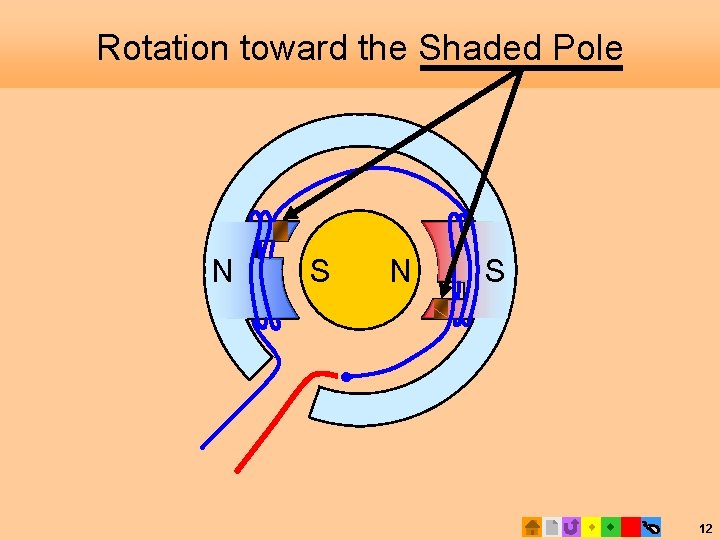
Rotation toward the Shaded Pole N S 12
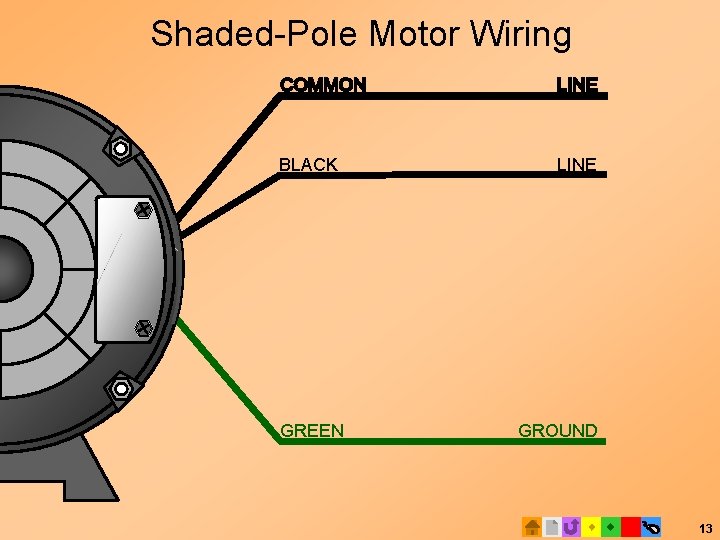
Shaded-Pole Motor Wiring BLACK GREEN LINE GROUND 13
Changing Motor Rotation • Shaded-pole motors can be reversed: – First, turn stator around – Second, turn blade around 14
Interesting Motor Fact Motor efficiency: A 100 watt 50% efficient motor will put out 50 watts of work, and 50 watts of heat. 15
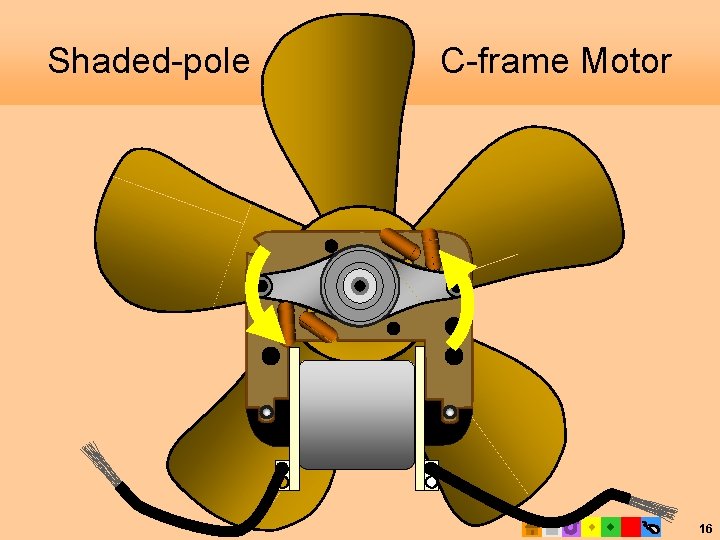
Shaded-pole C-frame Motor 16
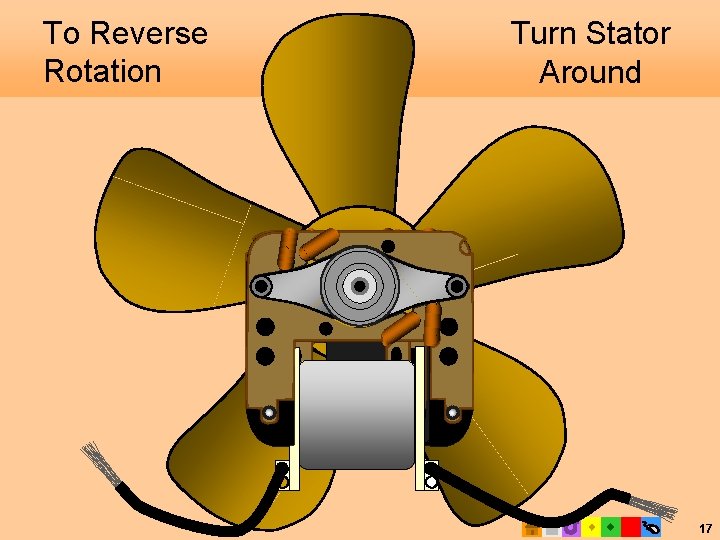
To Reverse Rotation Turn Stator Around ` ` 17
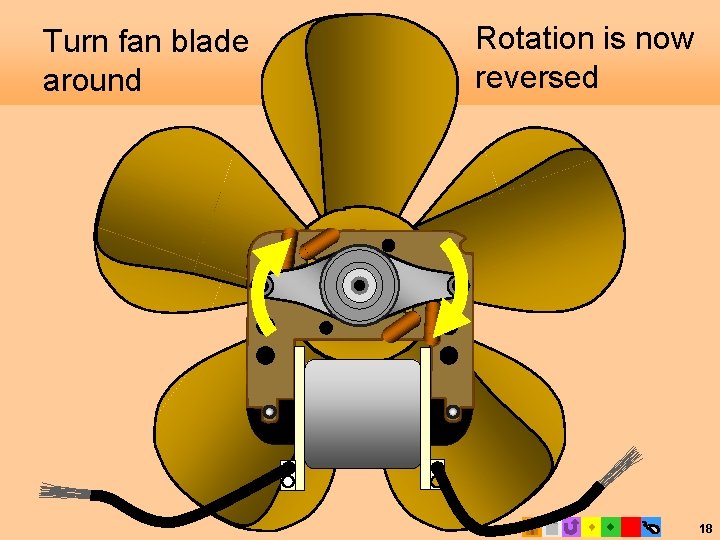
Rotation is now reversed Turn fan blade around ` 18
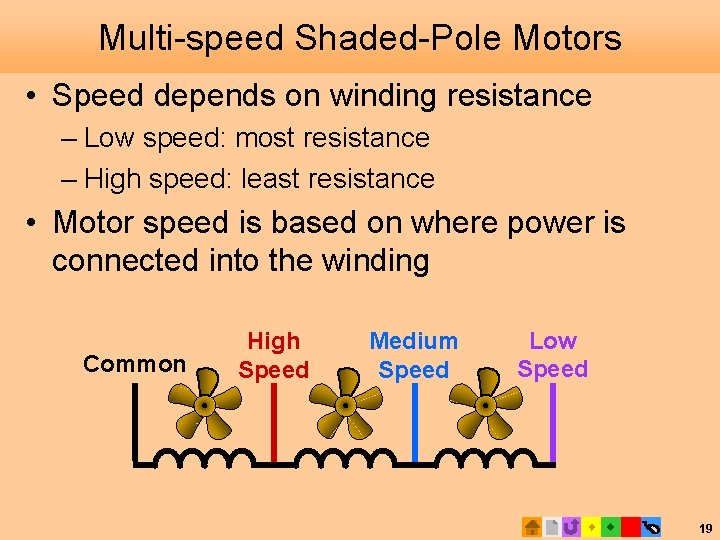
Multi-speed Shaded-Pole Motors • Speed depends on winding resistance – Low speed: most resistance – High speed: least resistance • Motor speed is based on where power is connected into the winding Common High Speed Medium Speed Low Speed 19

Shaded-Pole 3 -Speed Motor Wiring Common Wire is White (115 v) or Black (230 v) BLACK-HIGH BLUE-MED LINE RED-LOW GREEN GROUND 20
Split Phase Motors • Have two separate windings, a run and a start • The start winding provides the phase shift for starting • More efficient and have more torque than shaded pole motors 21
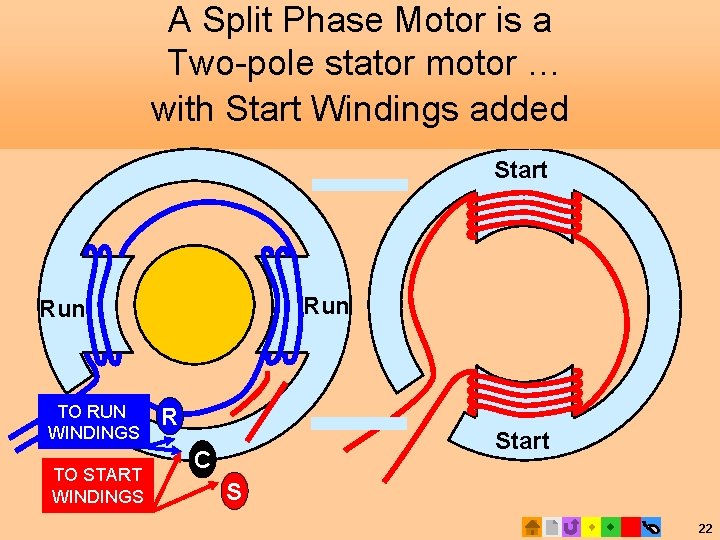
A Split Phase Motor is a Two-pole stator motor … with Start Windings added Start Run TO RUN WINDINGS TO START WINDINGS R Start C S 22
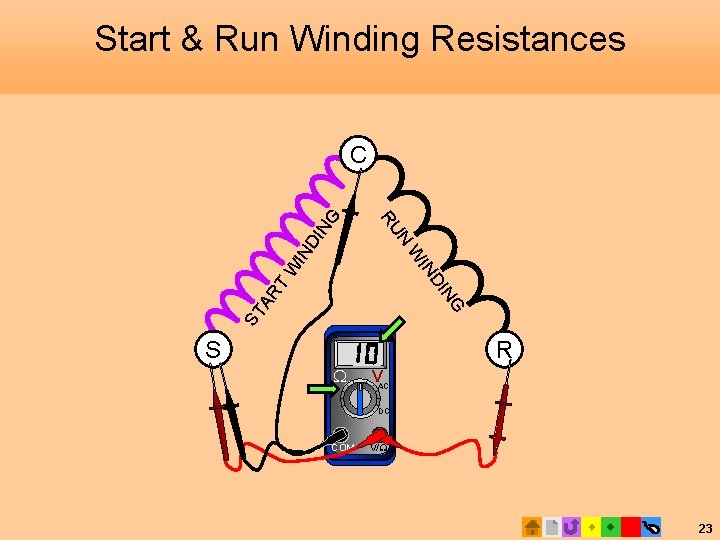
Start & Run Winding Resistances W IN N DI RU NG C ST AR T NG DI S Ω Ω R VAC DC COM V/ 23
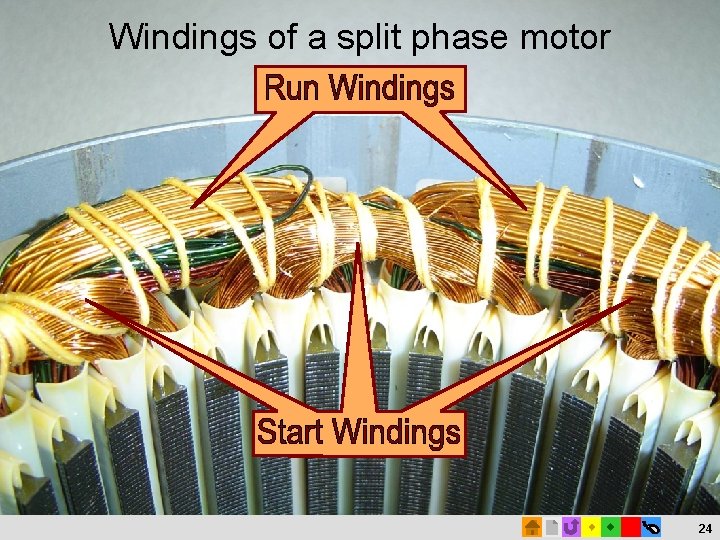
Windings of a split phase motor 24
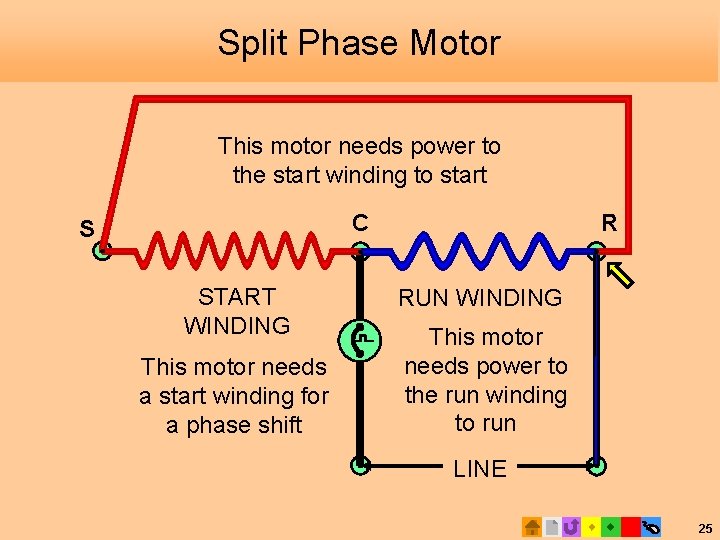
Split Phase Motor This motor needs power to the start winding to start C S START WINDING This motor needs a start winding for a phase shift R RUN WINDING This motor needs power to the run winding to run LINE 25
Fan Motor with Centrifugal Switch • A mechanical switch is used to de-energize the start winding • The switch is attached to the motor shaft • After the motor starts, centrifugal force opens the switch • The start winding circuit remains open as long as the motor is running 26
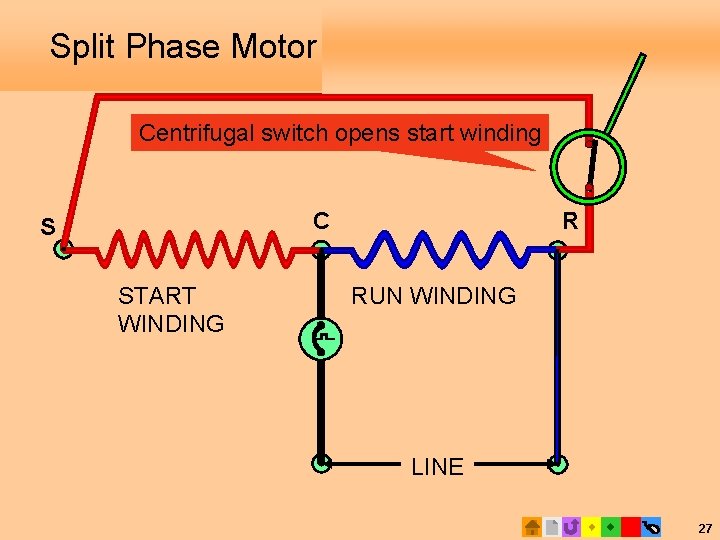
Split Phase Motor with Centrifugal Switch Centrifugal switch opens start winding C S START WINDING R RUN WINDING LINE 27
Fan Motor with Centrifugal Switch • The next slide is a picture of a fan motor with the motor cover removed • The centrifugal switch is attached to the motor shaft • The switch contacts are attached to the end bell (motor cover) 28
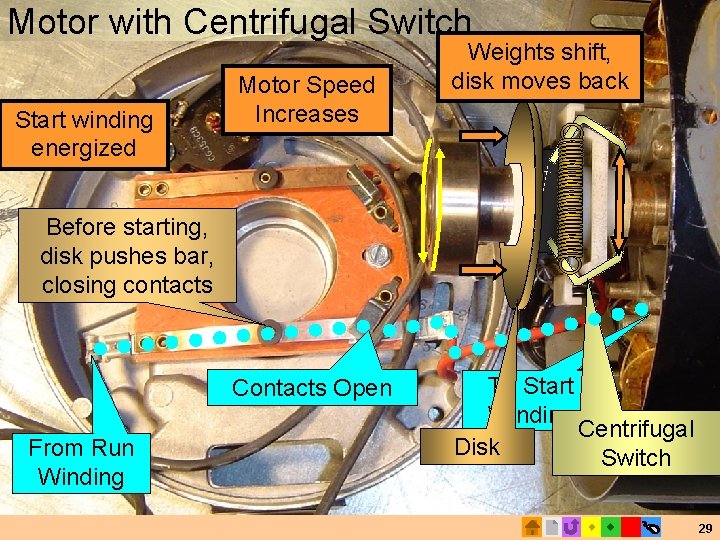
Motor with Centrifugal Switch Start winding energized Motor Speed Increases Weights shift, disk moves back Before starting, disk pushes bar, closing contacts Contacts Open From Run Winding To Start Winding Centrifugal Disk Switch 29
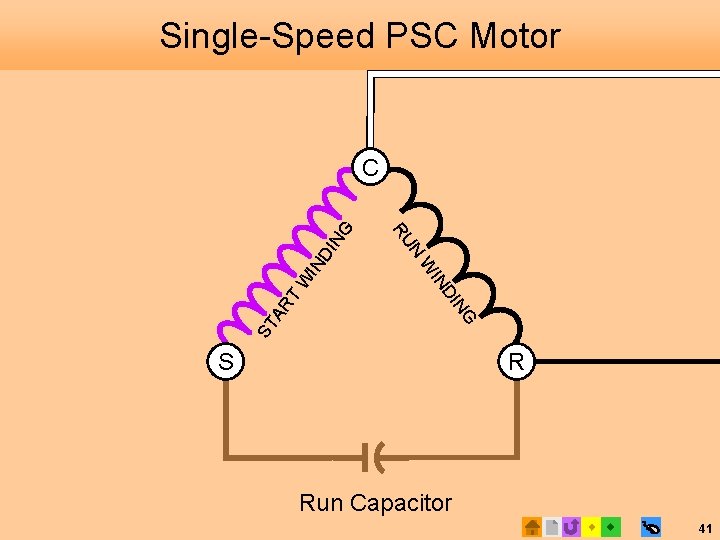
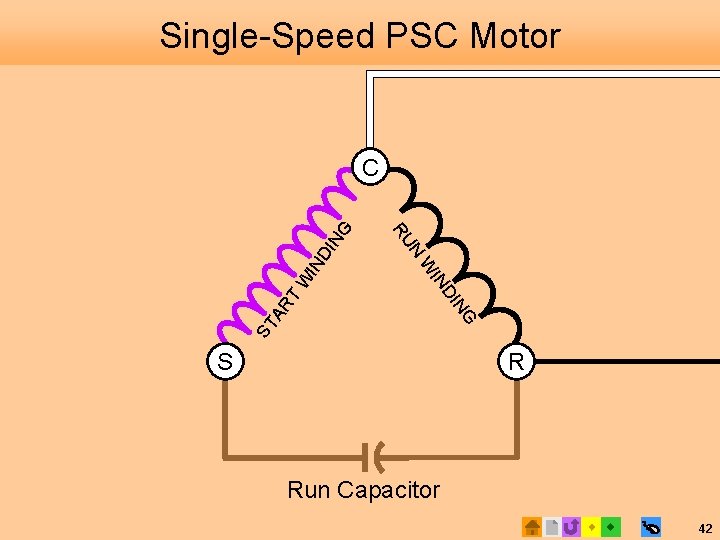
Permanent Split Capacitor Motors • A run capacitor is “permanently” wired into the start winding circuit • The capacitor provides partial voltage to the start winding, during start and run 30
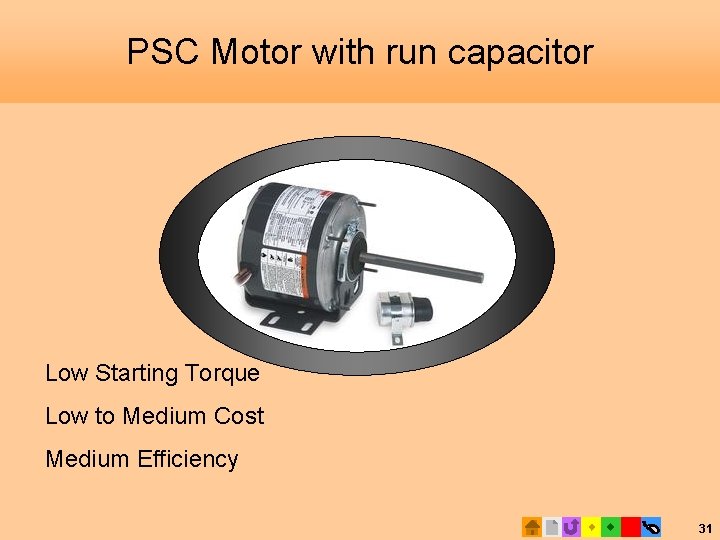
PSC Motor with run capacitor Low Starting Torque Low to Medium Cost Medium Efficiency 31
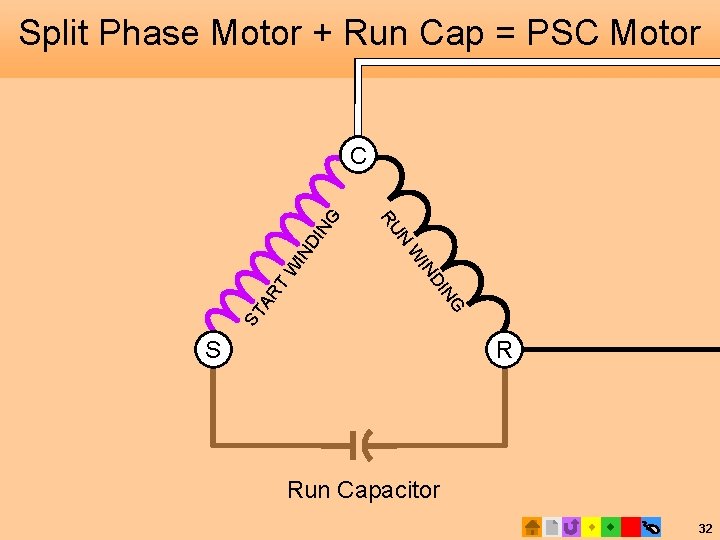
Split Phase Motor + Run Cap = PSC Motor DI IN W T NG DI IN W AR N ST RU NG C S R Run Capacitor 32
Interesting Motor Fact A PSC motor with a shorted run capacitor will act like an overloaded motor. A PSC motor with an open run capacitor will not start. 33
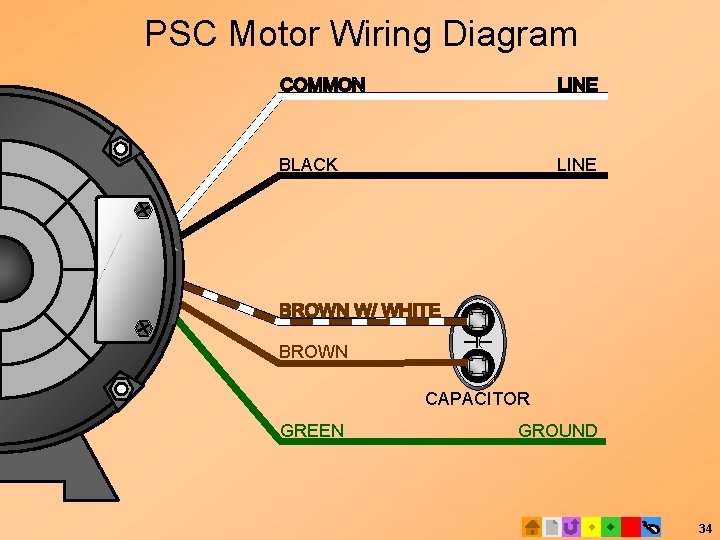
PSC Motor Wiring Diagram BLACK LINE BROWN CAPACITOR GREEN GROUND 34
Motor Speeds • The synchronous speed of a motor can be determined by the number of its poles. • The more poles, the lower the speed. 35
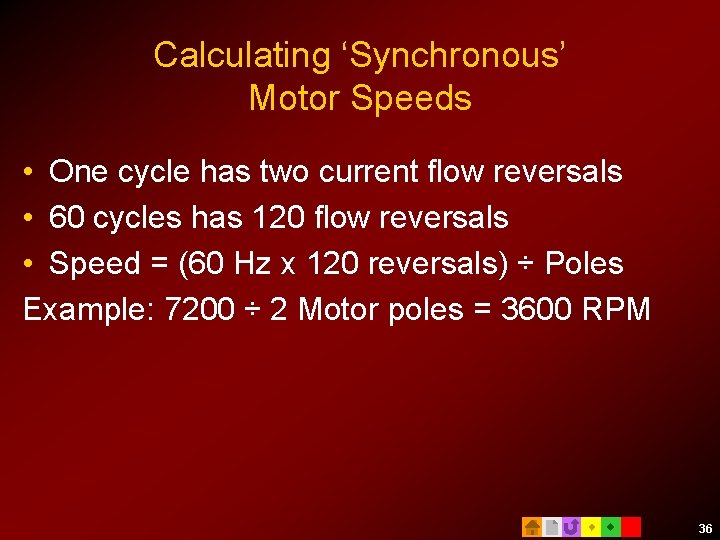
Calculating ‘Synchronous’ Motor Speeds • One cycle has two current flow reversals • 60 cycles has 120 flow reversals • Speed = (60 Hz x 120 reversals) ÷ Poles Example: 7200 ÷ 2 Motor poles = 3600 RPM 36
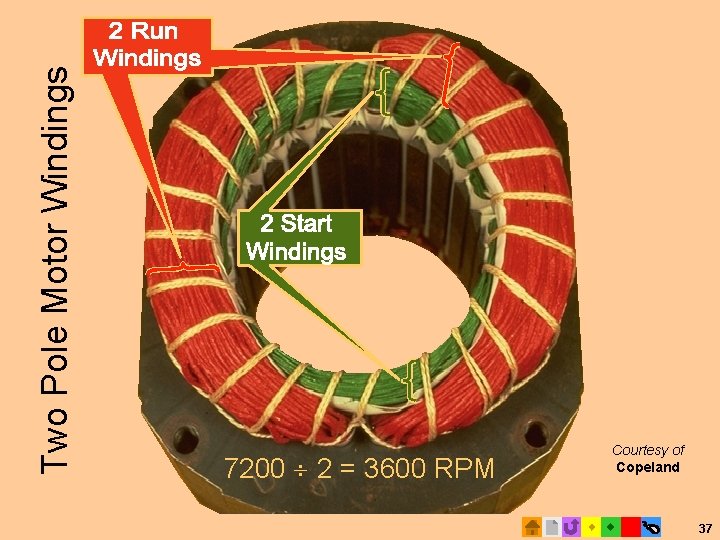
Two Pole Motor Windings Courtesy of Copeland 7200 2 = 3600 RPM 37
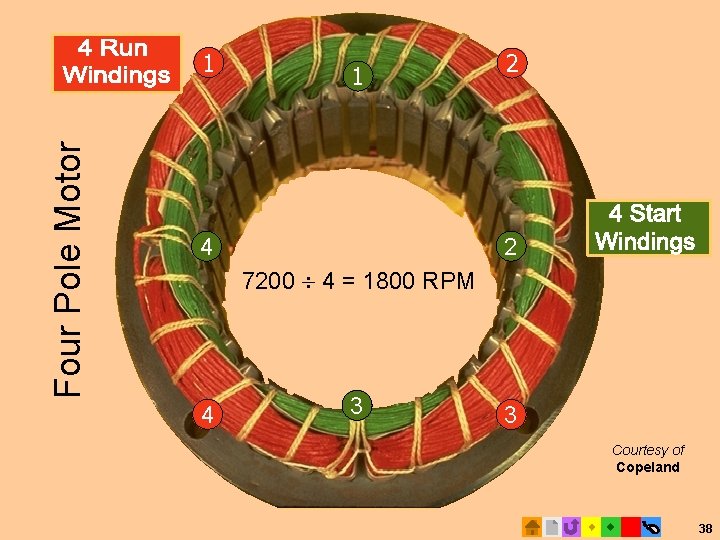
Four Pole Motor 1 1 2 2 4 7200 4 = 1800 RPM 4 3 3 Courtesy of Copeland 38
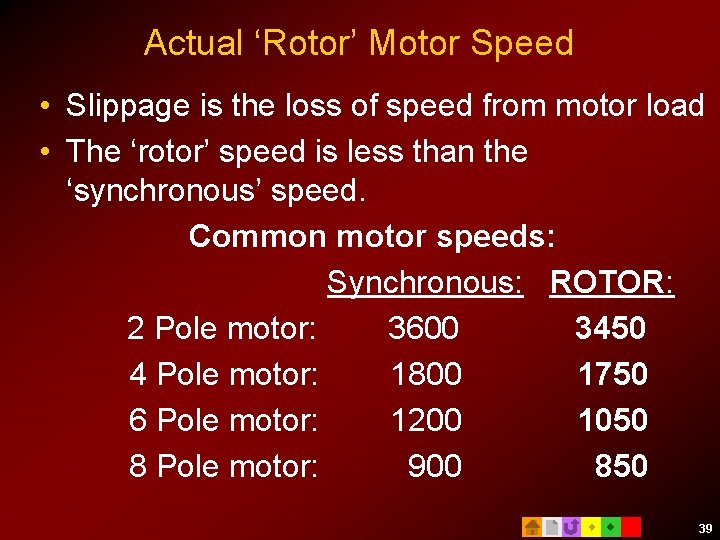
Actual ‘Rotor’ Motor Speed • Slippage is the loss of speed from motor load • The ‘rotor’ speed is less than the ‘synchronous’ speed. Common motor speeds: Synchronous: ROTOR: 2 Pole motor: 3600 3450 4 Pole motor: 1800 1750 6 Pole motor: 1200 1050 8 Pole motor: 900 850 39
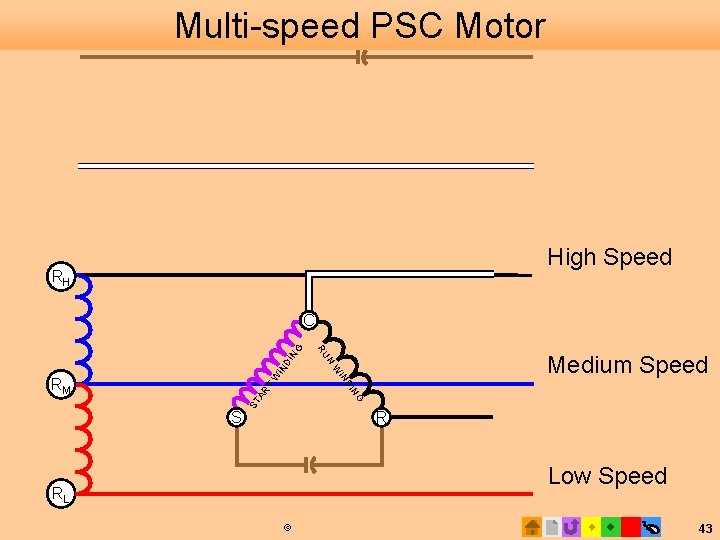
Multi-Speed PSC Motors • Actually they are “Multi-horsepower” • The windings are tapped so the motor is weaker, running slower under load • Example of a 3 -speed 1/3 HP motor: – High speed is 1/3 HP – Medium speed is 1/4 HP – Low speed is 1/6 HP 40
Single-Speed PSC Motor DI IN T W NG DI IN AR W ST N RU NG C S R Run Capacitor 41
Single-Speed PSC Motor DI IN W T NG DI IN W AR N ST RU NG C S R Run Capacitor 42
Multi-speed PSC Motor High Speed RH DI IN ST NG AR T DI IN W W S Medium Speed N RM RU NG C R Low Speed RL © 43
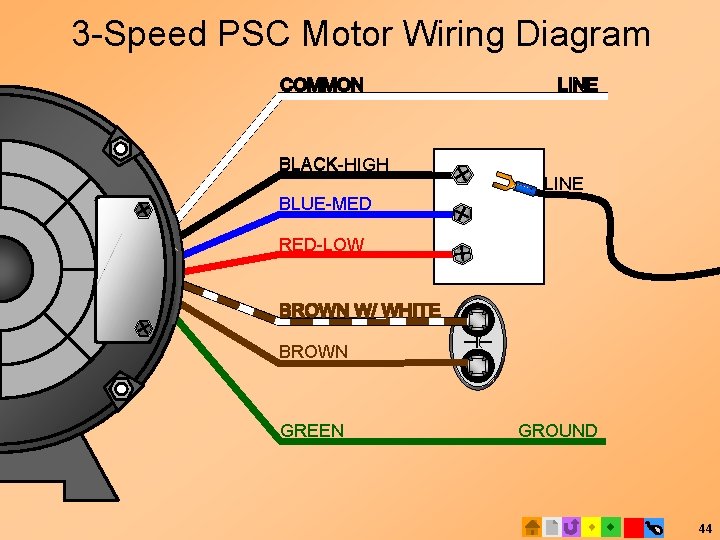
3 -Speed PSC Motor Wiring Diagram BLACK-HIGH BLUE-MED LINE RED-LOW BROWN GREEN GROUND 44
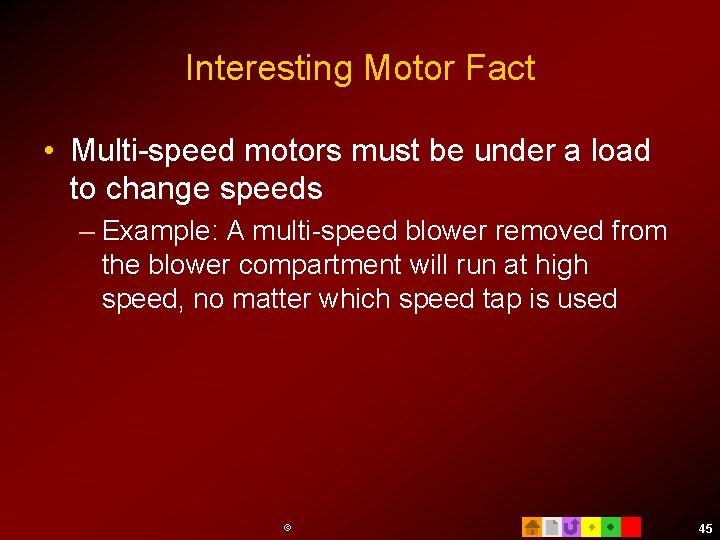
Interesting Motor Fact • Multi-speed motors must be under a load to change speeds – Example: A multi-speed blower removed from the blower compartment will run at high speed, no matter which speed tap is used © 45
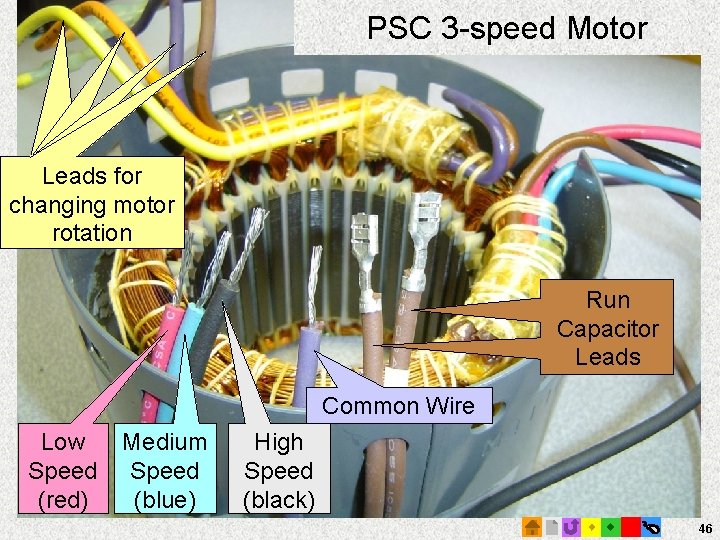
PSC 3 -speed Motor Leads for changing motor rotation Run Capacitor Leads Common Wire Low Speed (red) Medium Speed (blue) High Speed (black) 46
Three Phase Motors • High starting torque • High efficiency • Medium to high cost 47
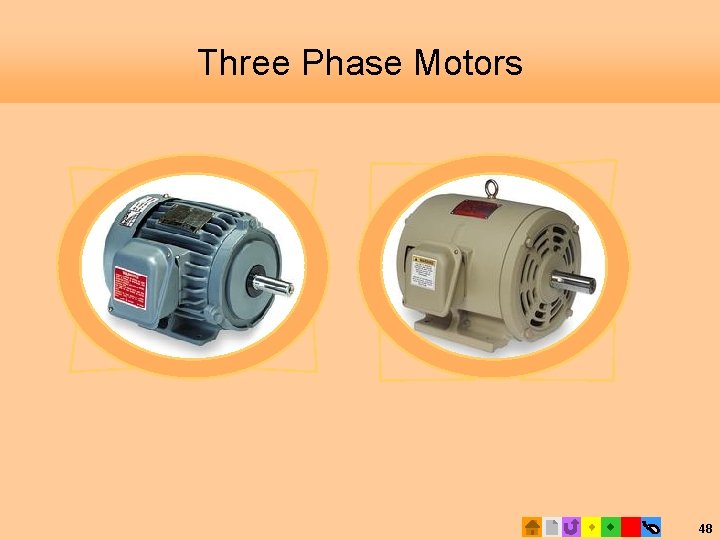
Three Phase Motors 48
Three Phase Motor Starting • No start windings or capacitors needed • High torque because the windings are 120° out of phase 49
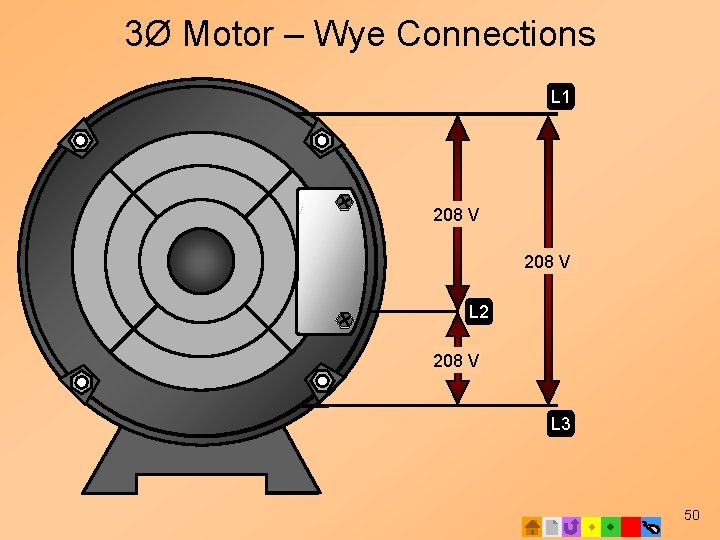
3Ø Motor – Wye Connections L 1 T 1 208 V T 3 T 2 L 2 208 V L 3 50
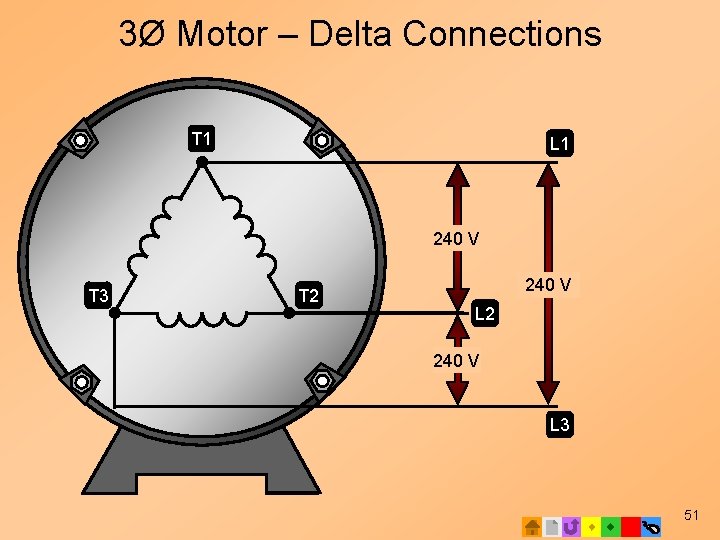
3Ø Motor – Delta Connections T 1 L 1 240 V T 3 T 2 240 V L 3 51
Describing Common Motors • Motor descriptions include the following information: – Type – Enclosure – Mounting 52
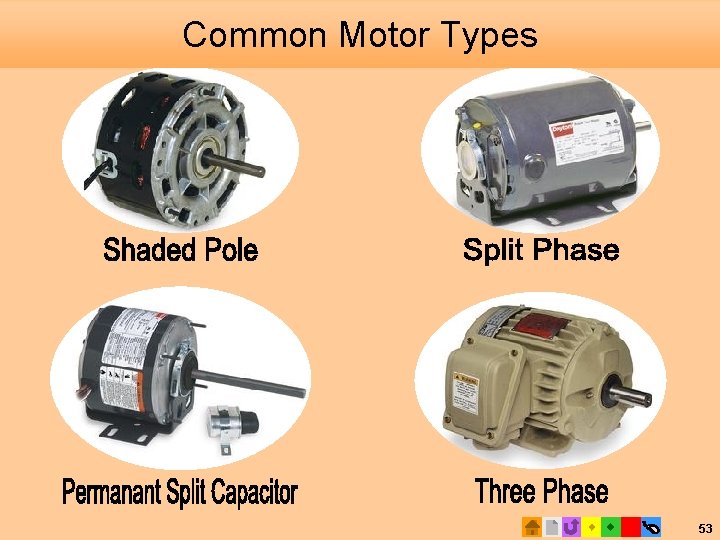
Common Motor Types 53
Motor Enclosure Types • • Open Dripproof Totally enclosed fan cooled 54
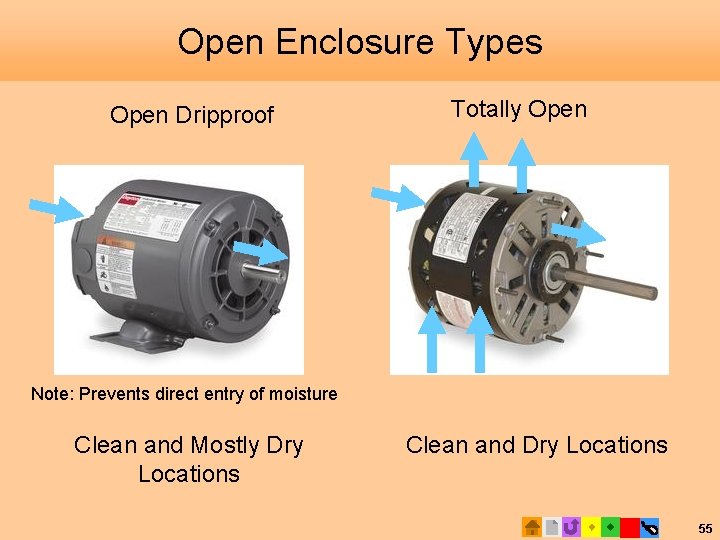
Open Enclosure Types Open Dripproof Totally Open Note: Prevents direct entry of moisture Clean and Mostly Dry Locations Clean and Dry Locations 55
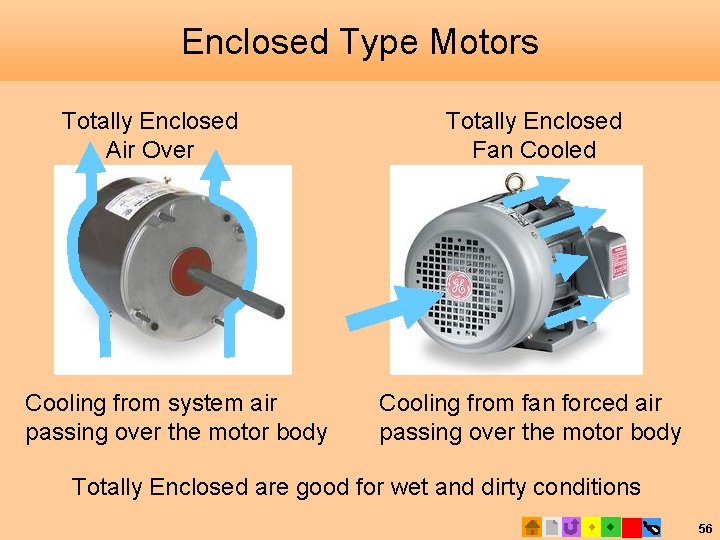
Enclosed Type Motors Totally Enclosed Air Over Cooling from system air passing over the motor body Totally Enclosed Fan Cooled Cooling from fan forced air passing over the motor body Totally Enclosed are good for wet and dirty conditions 56
Motor Mounting • Some of the more common mounts: – Rigid – Cradle – Belly band – Stud – C-frame – Unit bearing 57
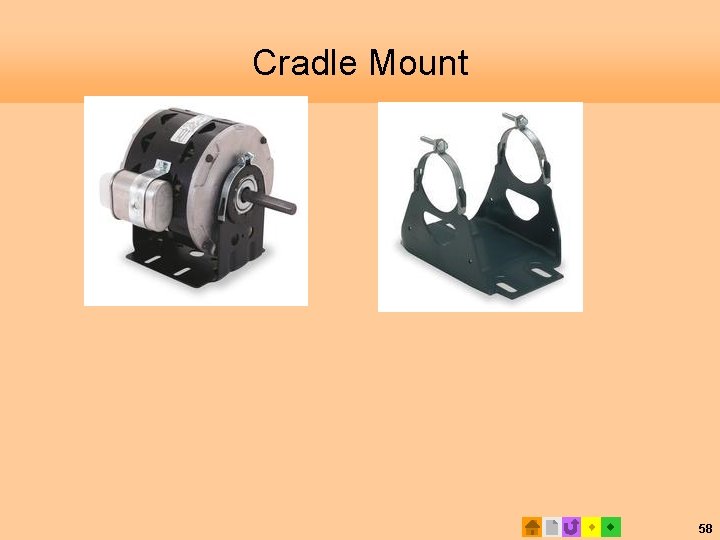
Cradle Mount 58
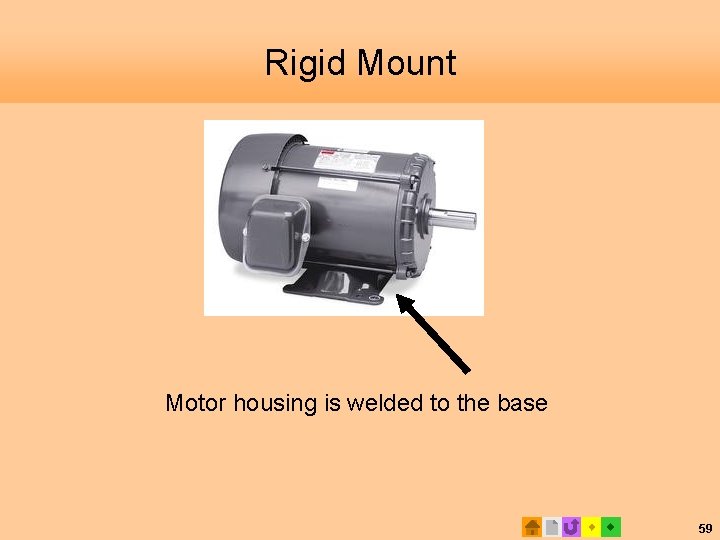
Rigid Mount Motor housing is welded to the base 59
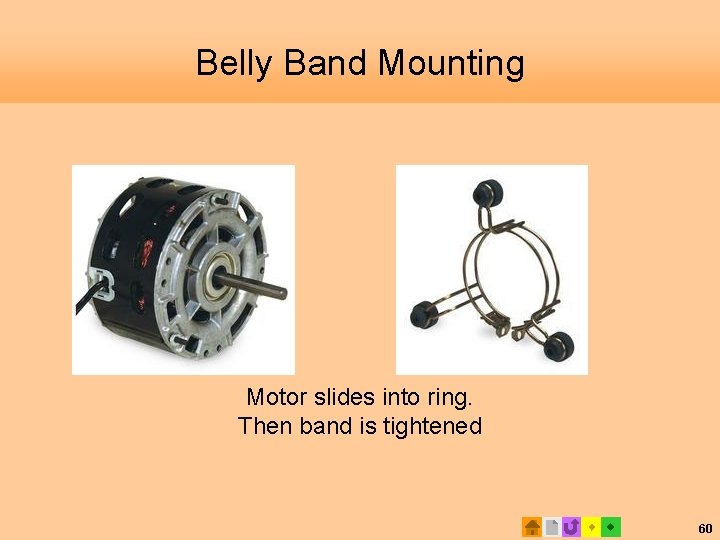
Belly Band Mounting Motor slides into ring. Then band is tightened 60
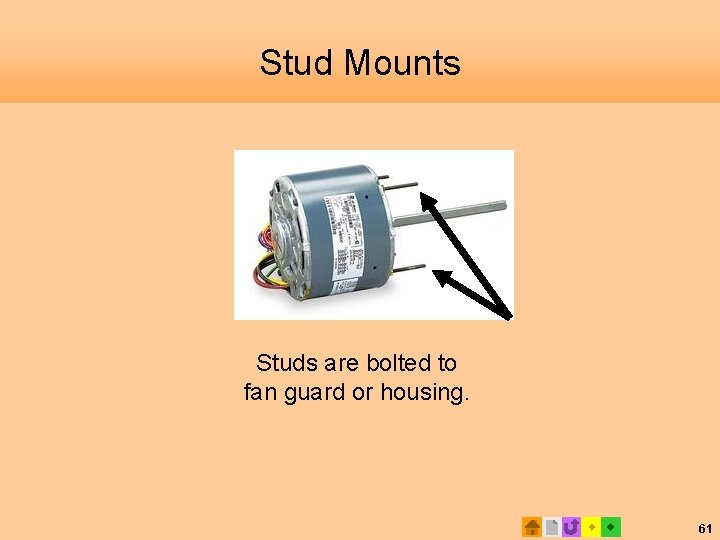
Stud Mounts Studs are bolted to fan guard or housing. 61
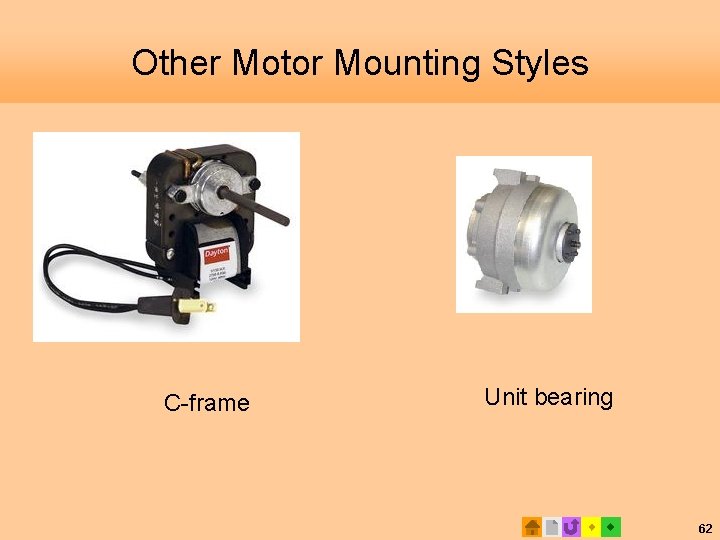
Other Motor Mounting Styles C-frame Unit bearing 62
Motor Nameplate • Nameplates contain essential information 63
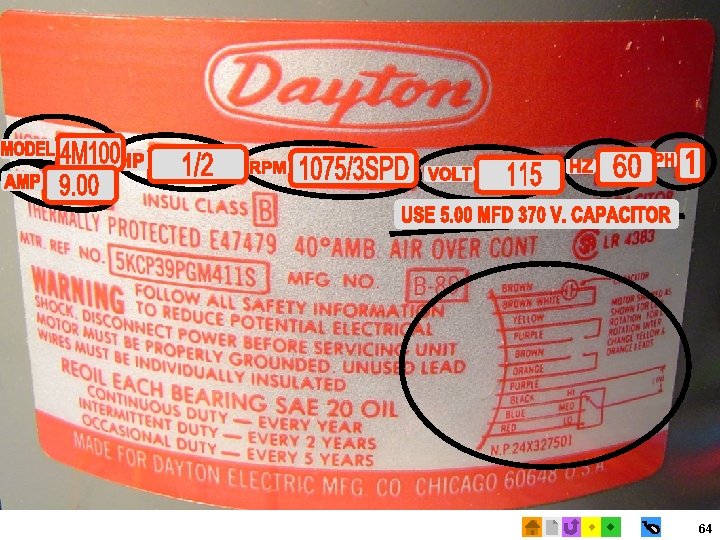
Motor Nameplate explained 64
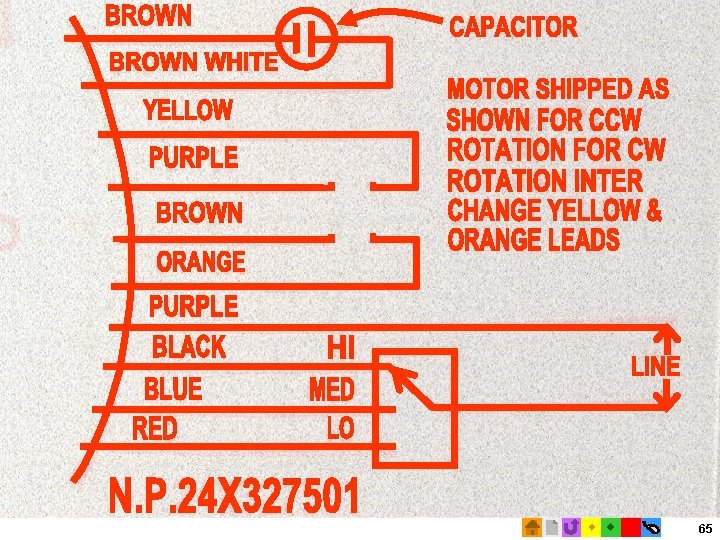
65 Motor Nameplate wiring diagram
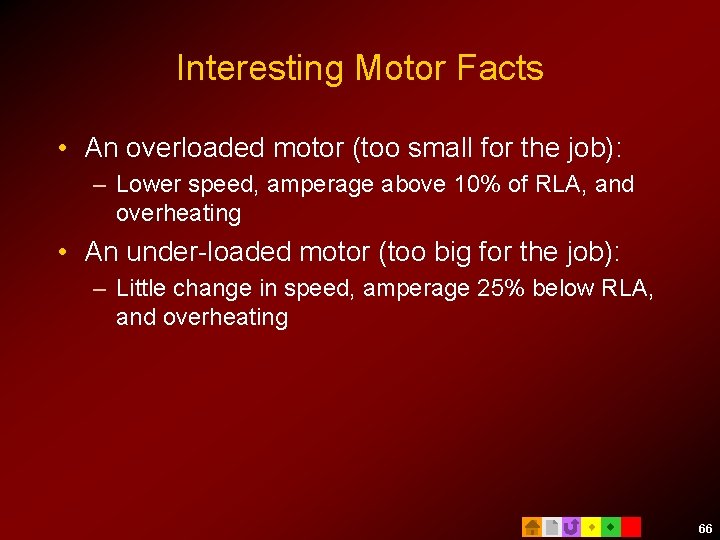
Interesting Motor Facts • An overloaded motor (too small for the job): – Lower speed, amperage above 10% of RLA, and overheating • An under-loaded motor (too big for the job): – Little change in speed, amperage 25% below RLA, and overheating 66

THANKS FOR YOUR ATTENTION 67
- Slides: 67