
ICSI Research Plan 1990 92 The initial research
- Slides: 2
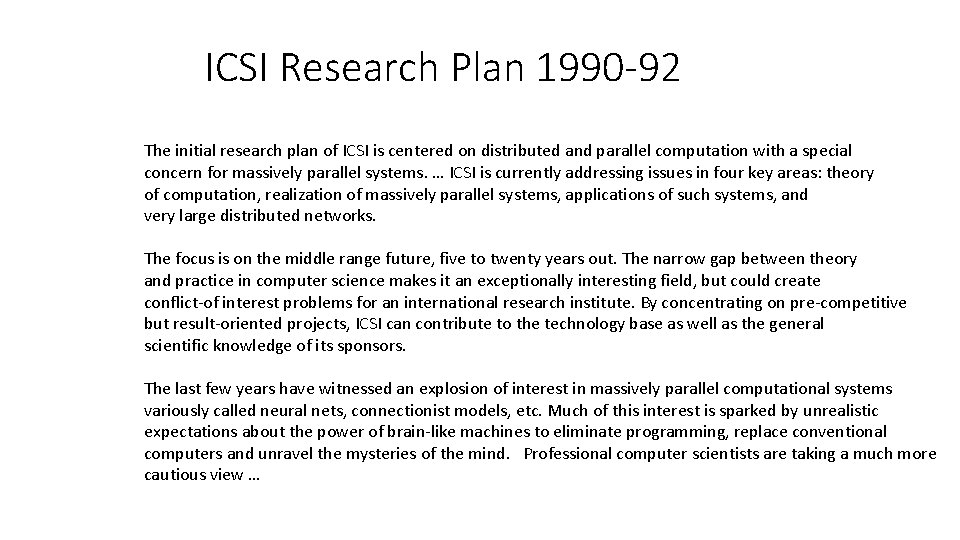
ICSI Research Plan 1990 -92 The initial research plan of ICSI is centered on distributed and parallel computation with a special concern for massively parallel systems. … ICSI is currently addressing issues in four key areas: theory of computation, realization of massively parallel systems, applications of such systems, and very large distributed networks. The focus is on the middle range future, five to twenty years out. The narrow gap between theory and practice in computer science makes it an exceptionally interesting field, but could create conflict-of interest problems for an international research institute. By concentrating on pre-competitive but result-oriented projects, ICSI can contribute to the technology base as well as the general scientific knowledge of its sponsors. The last few years have witnessed an explosion of interest in massively parallel computational systems variously called neural nets, connectionist models, etc. Much of this interest is sparked by unrealistic expectations about the power of brain-like machines to eliminate programming, replace conventional computers and unravel the mysteries of the mind. Professional computer scientists are taking a much more cautious view …
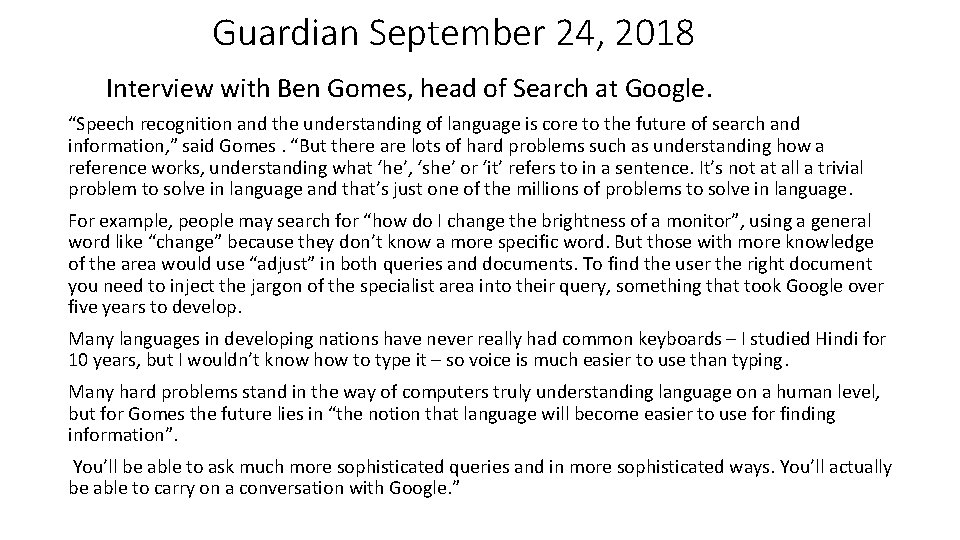
Guardian September 24, 2018 Interview with Ben Gomes, head of Search at Google. “Speech recognition and the understanding of language is core to the future of search and information, ” said Gomes. “But there are lots of hard problems such as understanding how a reference works, understanding what ‘he’, ‘she’ or ‘it’ refers to in a sentence. It’s not at all a trivial problem to solve in language and that’s just one of the millions of problems to solve in language. For example, people may search for “how do I change the brightness of a monitor”, using a general word like “change” because they don’t know a more specific word. But those with more knowledge of the area would use “adjust” in both queries and documents. To find the user the right document you need to inject the jargon of the specialist area into their query, something that took Google over five years to develop. Many languages in developing nations have never really had common keyboards – I studied Hindi for 10 years, but I wouldn’t know how to type it – so voice is much easier to use than typing. Many hard problems stand in the way of computers truly understanding language on a human level, but for Gomes the future lies in “the notion that language will become easier to use for finding information”. You’ll be able to ask much more sophisticated queries and in more sophisticated ways. You’ll actually be able to carry on a conversation with Google. ”