
ICS100 Introduction to ICS for Schools Unit 1
- Slides: 60
ICS-100: Introduction to ICS for Schools Unit 1: Course Overview
ICS-100 Course Objective Gain basic understanding and awareness of the Incident Command System (ICS) and how it applies to school-based incidents. Unit 1: Course Overview
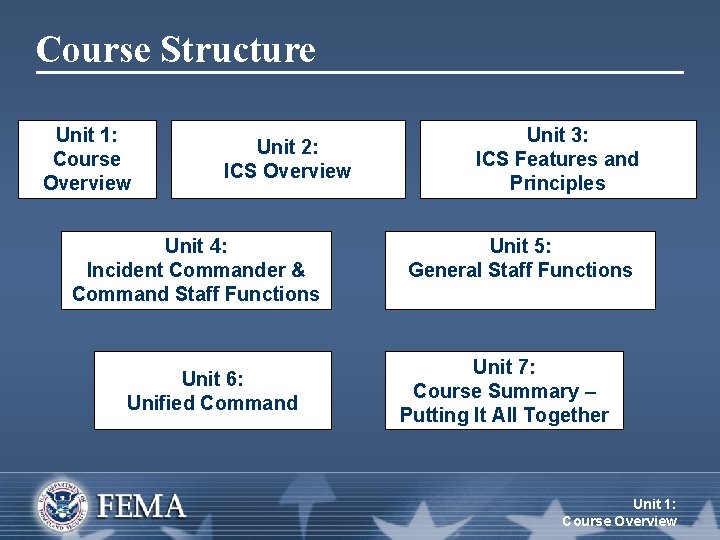
Course Structure Unit 1: Course Overview Unit 2: ICS Overview Unit 4: Incident Commander & Command Staff Functions Unit 6: Unified Command Unit 3: ICS Features and Principles Unit 5: General Staff Functions Unit 7: Course Summary – Putting It All Together Unit 1: Course Overview
Unit 2: ICS Overview
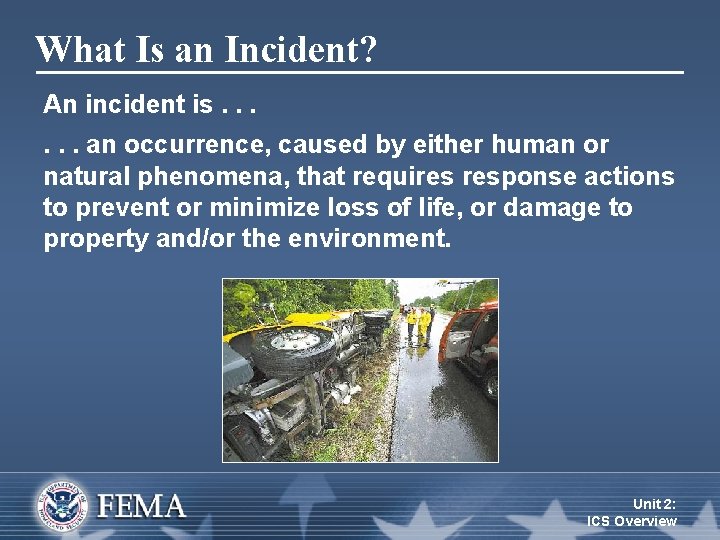
What Is an Incident? An incident is. . . an occurrence, caused by either human or natural phenomena, that requires response actions to prevent or minimize loss of life, or damage to property and/or the environment. Unit 2: ICS Overview
What Is ICS? The Incident Command System: § Is a standardized, on-scene, all-hazard incident management concept. § Allows its users to adopt an integrated organizational structure to match the complexities and demands of single or multiple incidents without being hindered by jurisdictional boundaries. Unit 2: ICS Overview
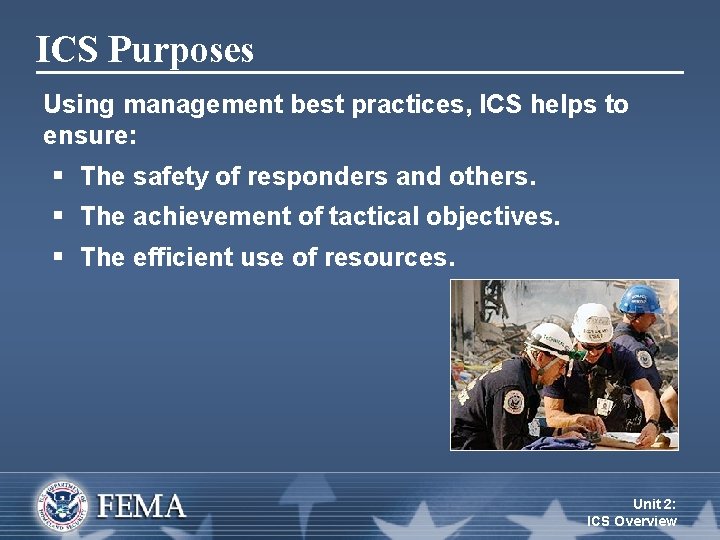
ICS Purposes Using management best practices, ICS helps to ensure: § The safety of responders and others. § The achievement of tactical objectives. § The efficient use of resources. Unit 2: ICS Overview
Activity Briefly describe two examples where ICS could be used to manage planned events in your school. Unit 2: ICS Overview
ICS Mandates § The National Incident Management System (NIMS) requires all levels of government to: § Prepare for and use ICS for all domestic responses. § Adopt ICS as a condition of receiving federal preparedness funding. § This requirement also applies to schools and school districts receiving emergency preparedness funding including the U. S. Department of Education Readiness and Emergency Management for Schools (REMS) grants. Unit 2: ICS Overview
Activity: Management Challenges Scenario: A second-grade class is on a science field trip to a State park. Although the day started out bright and sunny, severe weather is now threatening. The lead teacher decides to end the trip a little early to avoid getting caught in a storm. Students are organized and loaded onto the bus. The final count reveals that one student is missing. Other students and teachers report that they last saw the missing student at a spot near where the river and dense wooded area meet. While the students wait on the bus, a few teachers and park personnel search the area but fail to find the missing child. Questions: What are the top three challenges in this scenario? How could the use of ICS help you address those challenges? Unit 2: ICS Overview
Summary ICS. . . § Is a standardized management tool for meeting the demands of small or large emergency or nonemergency situations. § Represents "best practices, " and has become the standard for emergency management across the country. § May be used for planned events, natural disasters, and acts of terrorism. § Is a key feature of NIMS. Unit 2: ICS Overview
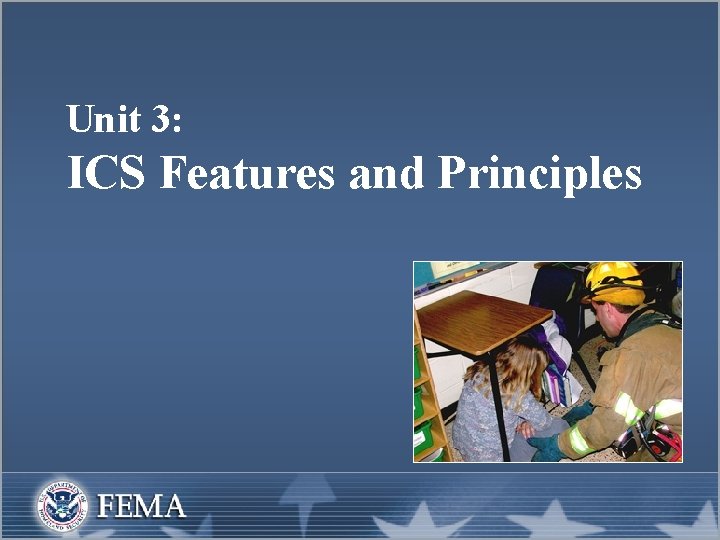
Unit 3: ICS Features and Principles
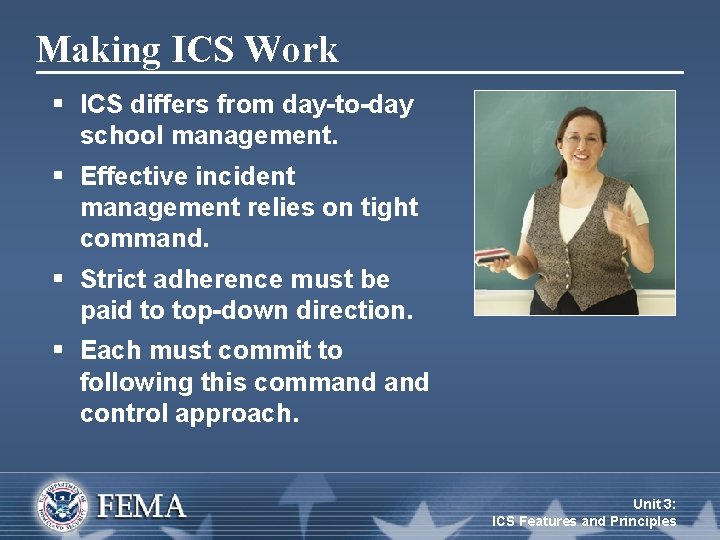
Making ICS Work § ICS differs from day-to-day school management. § Effective incident management relies on tight command. § Strict adherence must be paid to top-down direction. § Each must commit to following this command control approach. Unit 3: ICS Features and Principles
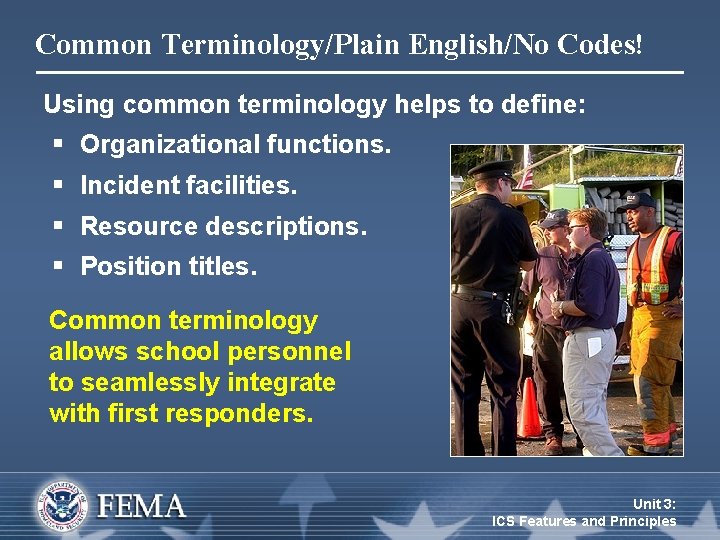
Common Terminology/Plain English/No Codes! Using common terminology helps to define: § Organizational functions. § Incident facilities. § Resource descriptions. § Position titles. Common terminology allows school personnel to seamlessly integrate with first responders. Unit 3: ICS Features and Principles
Activity: Use of Plain English Even if you use codes on a daily basis, why should you use plain English during an incident response? Unit 3: ICS Features and Principles
ICS Organization Differs from the day-to-day, administrative organizational structures and positions. § Unique ICS position titles and organizational structures are designed to avoid confusion during incident response. § Rank may change during an incident. For example, a supervisor may not hold a high level position when deployed under an ICS structure. Unit 3: ICS Features and Principles
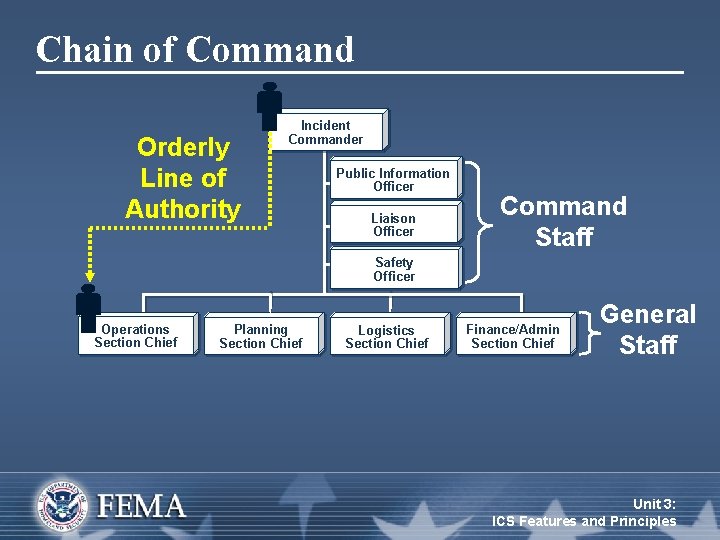
Chain of Command Orderly Line of Authority Incident Commander Public Information Officer Liaison Officer Command Staff Safety Officer Operations Section Chief Planning Section Chief Logistics Section Chief Finance/Admin Section Chief General Staff Unit 3: ICS Features and Principles
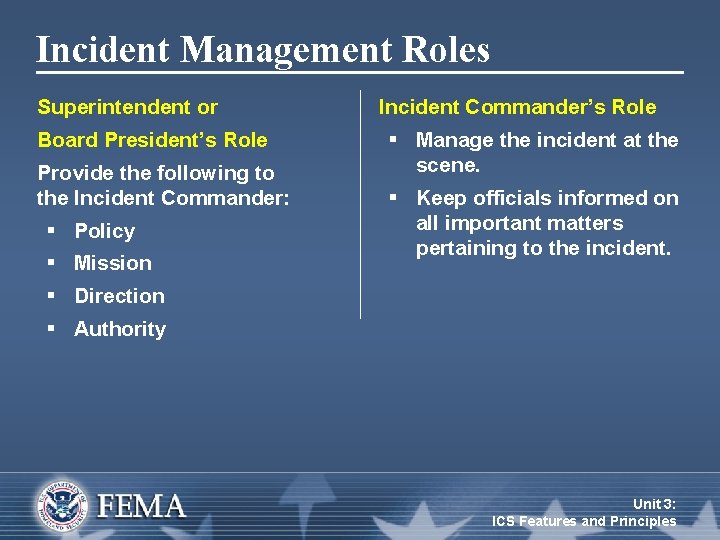
Incident Management Roles Superintendent or Board President’s Role Provide the following to the Incident Commander: § Policy § Mission Incident Commander’s Role § Manage the incident at the scene. § Keep officials informed on all important matters pertaining to the incident. § Direction § Authority Unit 3: ICS Features and Principles
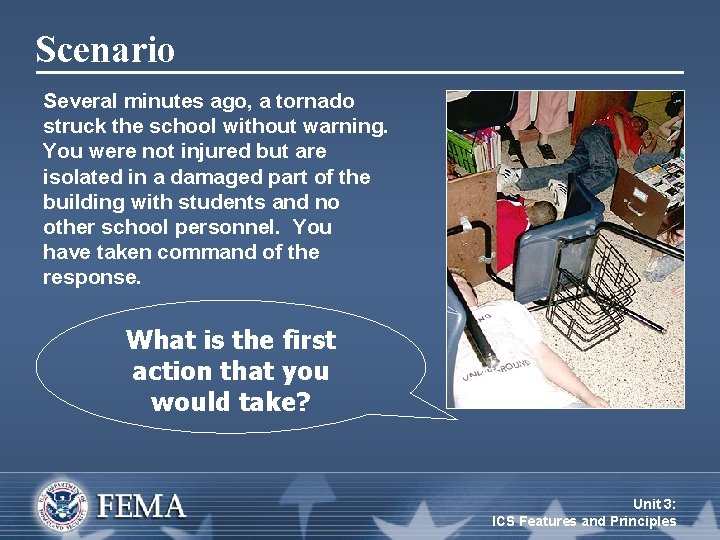
Scenario Several minutes ago, a tornado struck the school without warning. You were not injured but are isolated in a damaged part of the building with students and no other school personnel. You have taken command of the response. What is the first action that you would take? Unit 3: ICS Features and Principles
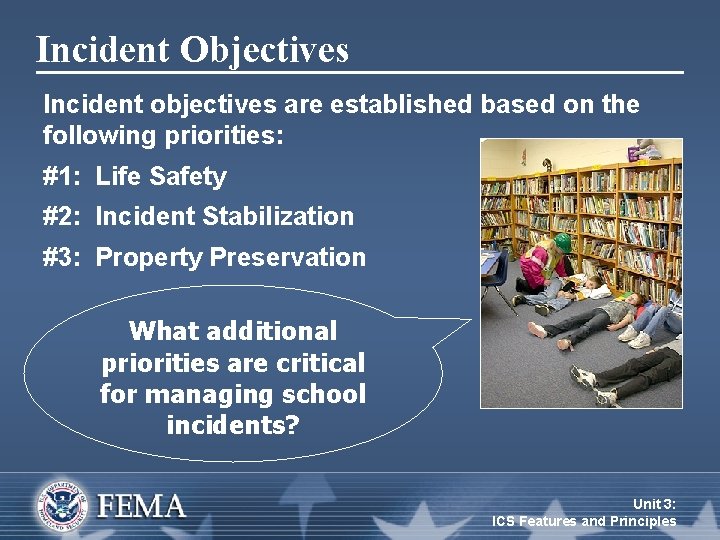
Incident Objectives Incident objectives are established based on the following priorities: #1: Life Safety #2: Incident Stabilization #3: Property Preservation What additional priorities are critical for managing school incidents? Unit 3: ICS Features and Principles
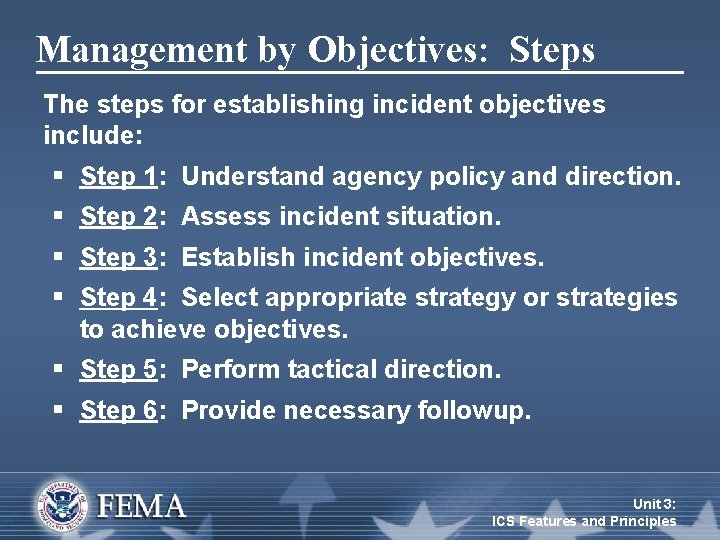
Management by Objectives: Steps The steps for establishing incident objectives include: § Step 1: Understand agency policy and direction. § Step 2: Assess incident situation. § Step 3: Establish incident objectives. § Step 4: Select appropriate strategy or strategies to achieve objectives. § Step 5: Perform tactical direction. § Step 6: Provide necessary followup. Unit 3: ICS Features and Principles
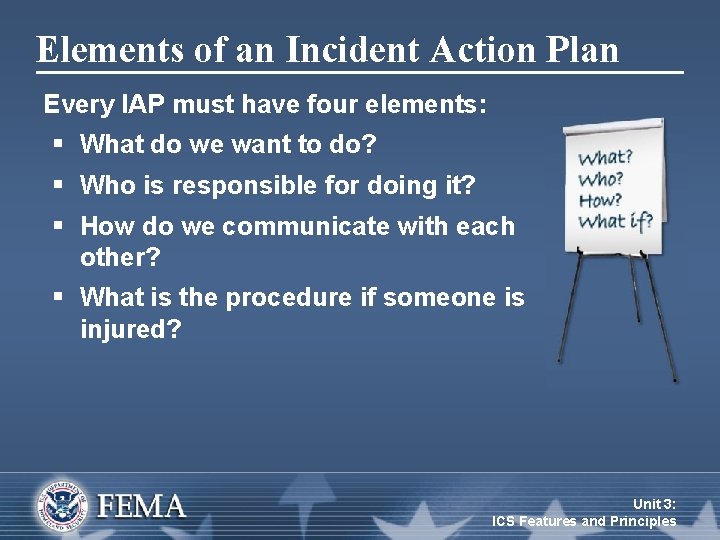
Elements of an Incident Action Plan Every IAP must have four elements: § What do we want to do? § Who is responsible for doing it? § How do we communicate with each other? § What is the procedure if someone is injured? Unit 3: ICS Features and Principles
Activity: Incident Action Plan Instructions: § Working as a team, identify four items you would include in an IAP. § Write these items on chart paper. § Select a spokesperson. Be prepared to present in 5 minutes. Unit 3: ICS Features and Principles
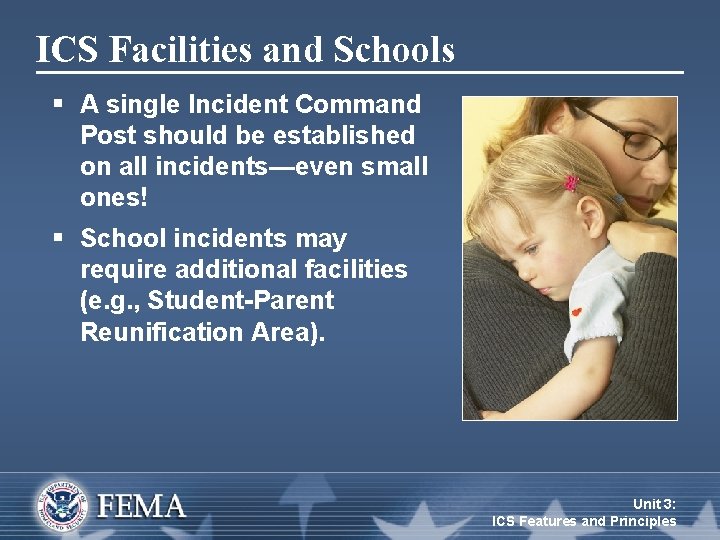
ICS Facilities and Schools § A single Incident Command Post should be established on all incidents—even small ones! § School incidents may require additional facilities (e. g. , Student-Parent Reunification Area). Unit 3: ICS Features and Principles
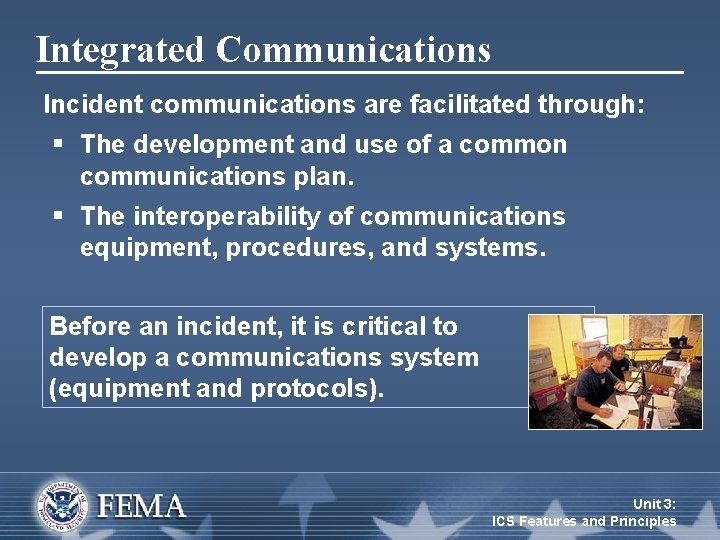
Integrated Communications Incident communications are facilitated through: § The development and use of a common communications plan. § The interoperability of communications equipment, procedures, and systems. Before an incident, it is critical to develop a communications system (equipment and protocols). Unit 3: ICS Features and Principles
Information & Intelligence Management Information and intelligence are critical to incident response. What are some examples of information and intelligence used to manage an incident? Unit 3: ICS Features and Principles
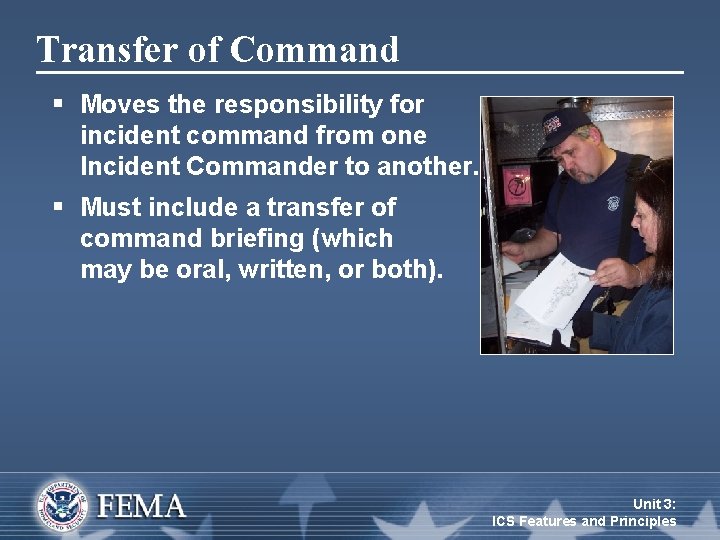
Transfer of Command § Moves the responsibility for incident command from one Incident Commander to another. § Must include a transfer of command briefing (which may be oral, written, or both). Unit 3: ICS Features and Principles
When Command Is Transferred A thorough briefing occurs when command is transferred. Command is transferred when: § A jurisdiction or agency is legally required to take command. § A more qualified Incident Commander arrives. § Incident complexity changes. § The current Incident Commander needs to rest. What would you include in a transfer of command briefing? Unit 3: ICS Features and Principles
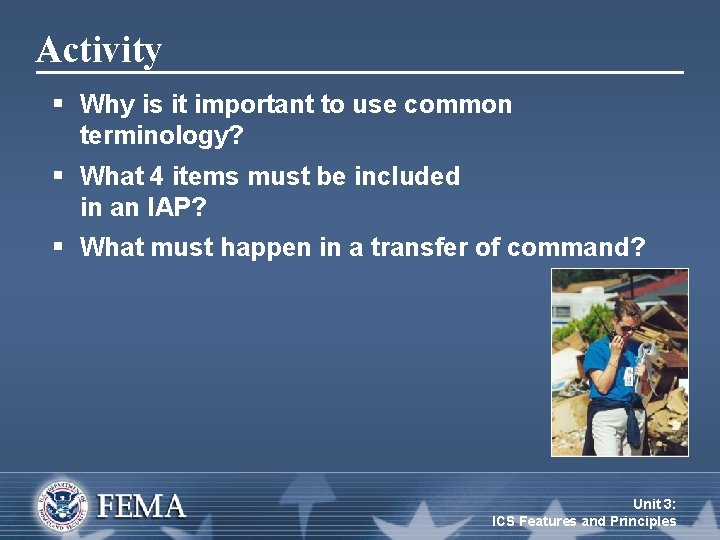
Activity § Why is it important to use common terminology? § What 4 items must be included in an IAP? § What must happen in a transfer of command? Unit 3: ICS Features and Principles
Summary (1 of 2) ICS: § Utilizes management features including the use of common terminology. § Emphasizes effective planning through the use of management by objectives and Incident Action Plans. § Supports responders by providing data they need through effective information and intelligence management. Unit 3: ICS Features and Principles
Summary (2 of 2) ICS: § Utilizes the principles of chain of command, unity of command, and transfer of command. § Ensures full utilization of incident resources by maintaining a manageable span of control, establishing predesignated incident facilities, implementing resource management practices, and ensuring integrated communications. Unit 3: ICS Features and Principles
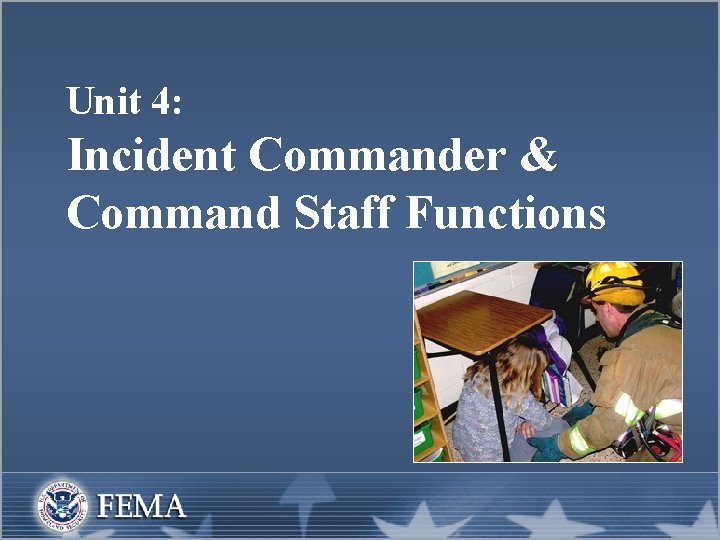
Unit 4: Incident Commander & Command Staff Functions
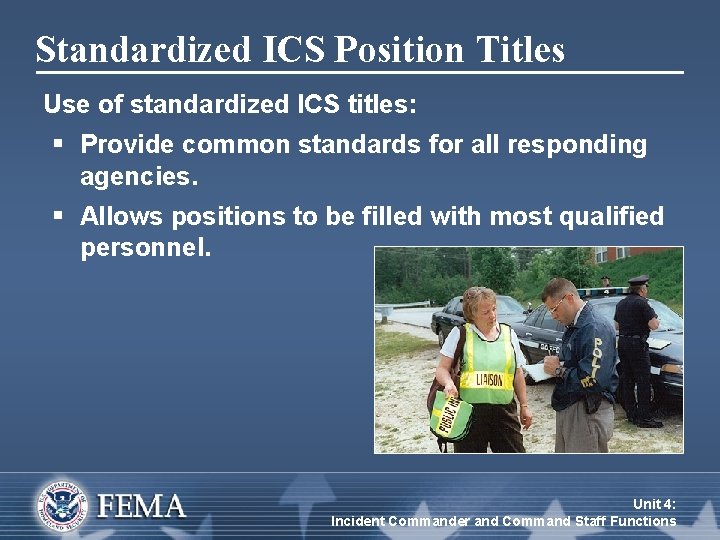
Standardized ICS Position Titles Use of standardized ICS titles: § Provide common standards for all responding agencies. § Allows positions to be filled with most qualified personnel. Unit 4: Incident Commander and Command Staff Functions
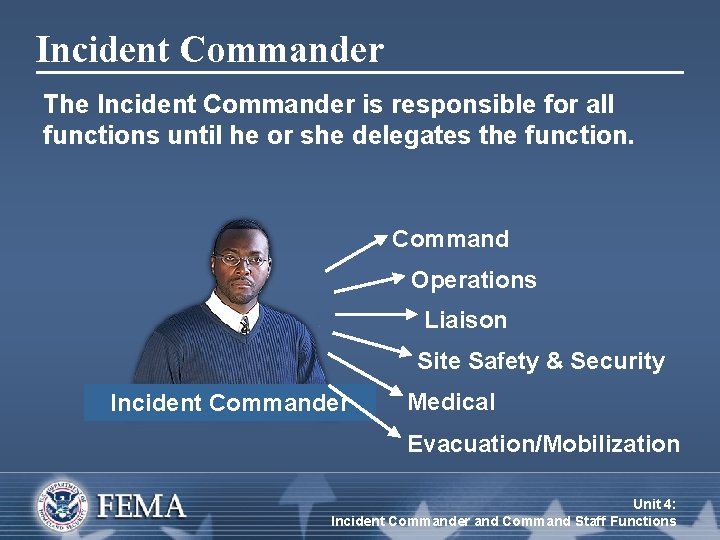
Incident Commander The Incident Commander is responsible for all functions until he or she delegates the function. Command Operations Liaison Site Safety & Security Incident Commander Medical Evacuation/Mobilization Unit 4: Incident Commander and Command Staff Functions
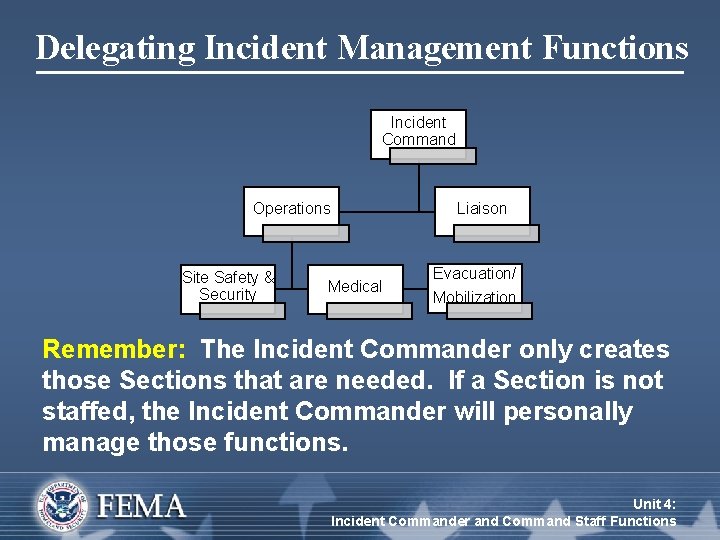
Delegating Incident Management Functions Incident Command Operations Site Safety & Security Medical Liaison Evacuation/ Mobilization Remember: The Incident Commander only creates those Sections that are needed. If a Section is not staffed, the Incident Commander will personally manage those functions. Unit 4: Incident Commander and Command Staff Functions
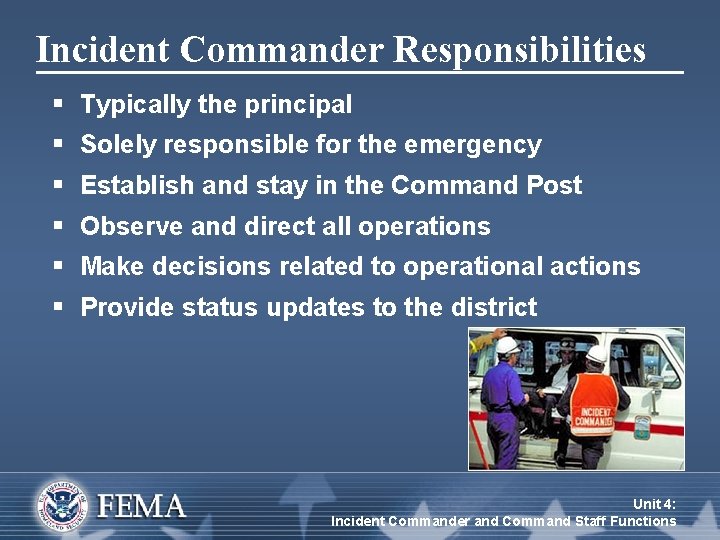
Incident Commander Responsibilities § Typically the principal § Solely responsible for the emergency § Establish and stay in the Command Post § Observe and direct all operations § Make decisions related to operational actions § Provide status updates to the district Unit 4: Incident Commander and Command Staff Functions
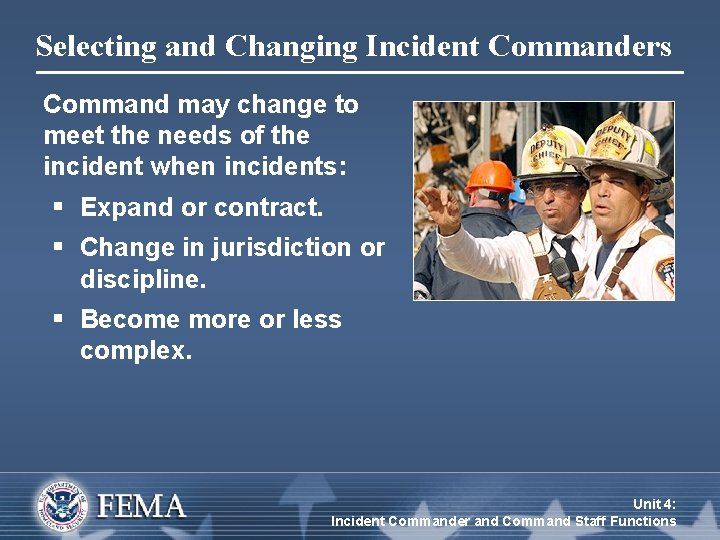
Selecting and Changing Incident Commanders Command may change to meet the needs of the incident when incidents: § Expand or contract. § Change in jurisdiction or discipline. § Become more or less complex. Unit 4: Incident Commander and Command Staff Functions
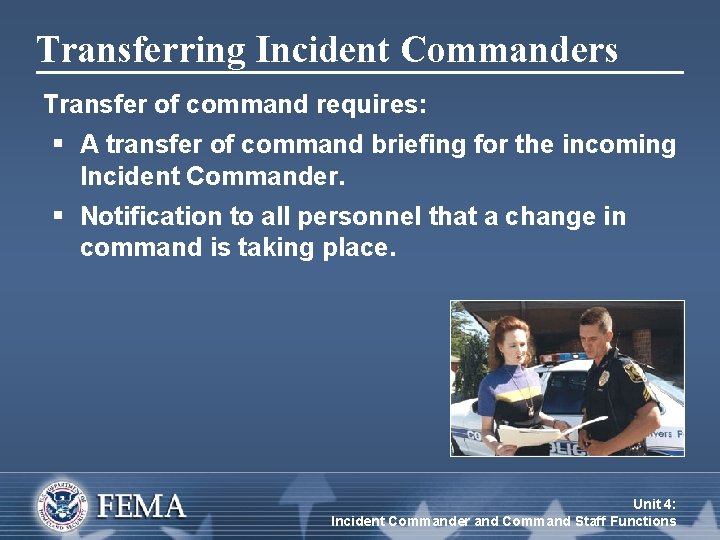
Transferring Incident Commanders Transfer of command requires: § A transfer of command briefing for the incoming Incident Commander. § Notification to all personnel that a change in command is taking place. Unit 4: Incident Commander and Command Staff Functions
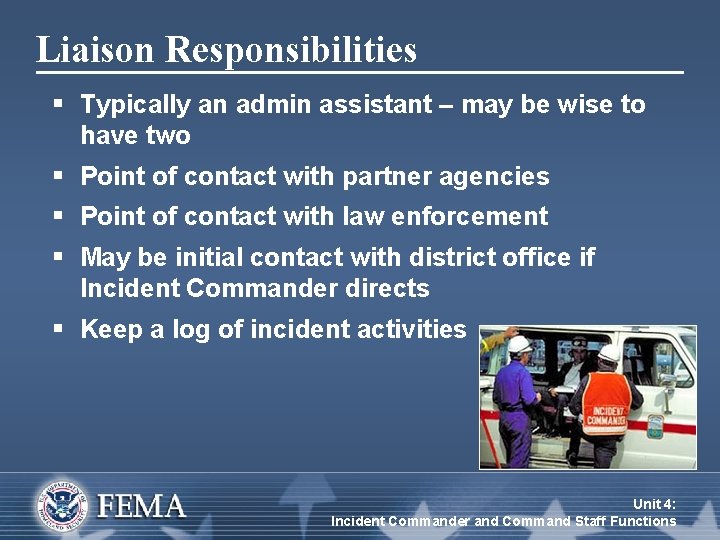
Liaison Responsibilities § Typically an admin assistant – may be wise to have two § Point of contact with partner agencies § Point of contact with law enforcement § May be initial contact with district office if Incident Commander directs § Keep a log of incident activities Unit 4: Incident Commander and Command Staff Functions
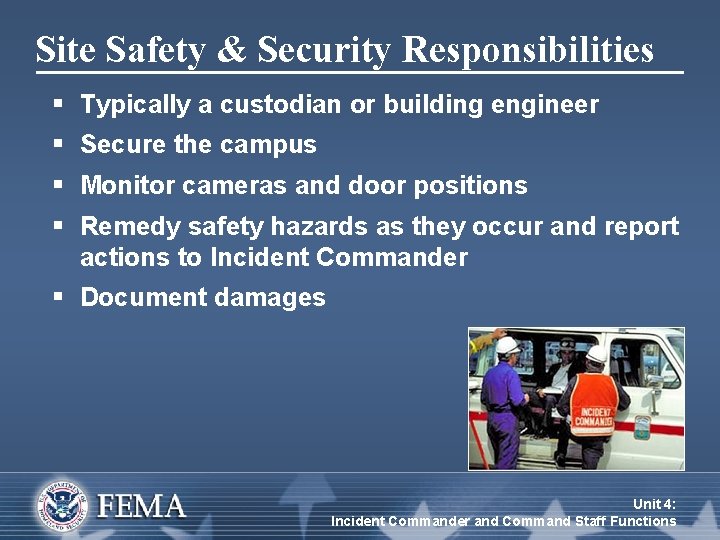
Site Safety & Security Responsibilities § Typically a custodian or building engineer § Secure the campus § Monitor cameras and door positions § Remedy safety hazards as they occur and report actions to Incident Commander § Document damages Unit 4: Incident Commander and Command Staff Functions
Activity § Identify the position titles associated with the Command Staff § Describe the role and function of the Incident Commander § Describe the selection and transfer of Incident Commanders § Describe the role and function of the Command Staff Unit 4: Incident Commander and Command Staff Functions
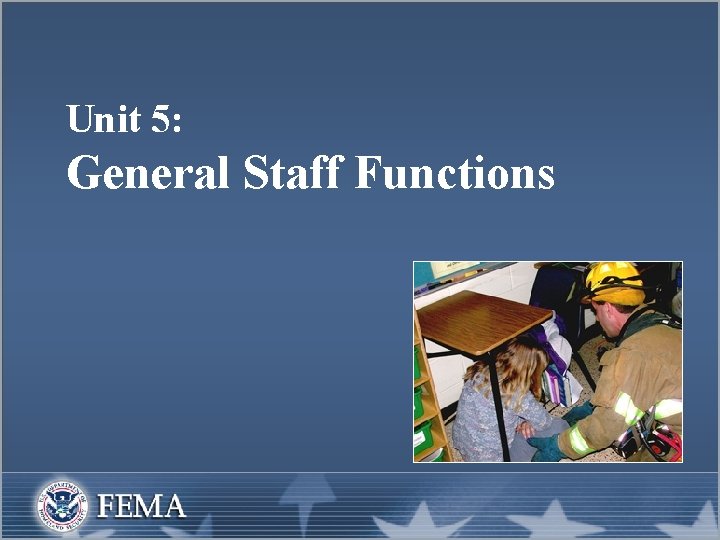
Unit 5: General Staff Functions
Operations Chief § Typically an assistant principal, dean or counselor § “boots on the ground” § Keep all members of the team updated on the situation § Carry out all operational actions Unit 5: General Staff Functions
Medical § Typically a nurse, PE teacher or office personnel § Provide emergency medical response or first aid § Responsible for all medications stored by the school § Request outside medical assistance when necessary § Document all actions taken § Report deaths and serious injuries immediately to the Incident Commander Unit 5: General Staff Functions
Evacuation/Mobilization § Typically a teacher on prep § Responsible for the safe and efficient movement of students and staff across- or off-campus § Direct all traffic to appropriate rally points § Assist in loading school buses Unit 5: General Staff Functions
Activity: ICS Assignments: Considerations Instructions: Read the following scenario and answer the questions that follow. Scenario: An explosion and fire have just occurred in a middle school science lab. First responders have not yet arrived. § Which ICS positions would be activated? In your school, who is likely to assume these positions? § What procedures would you use to account for students during the evacuation? § When first responders arrive, what needs to happen? Unit 5: General Staff Functions
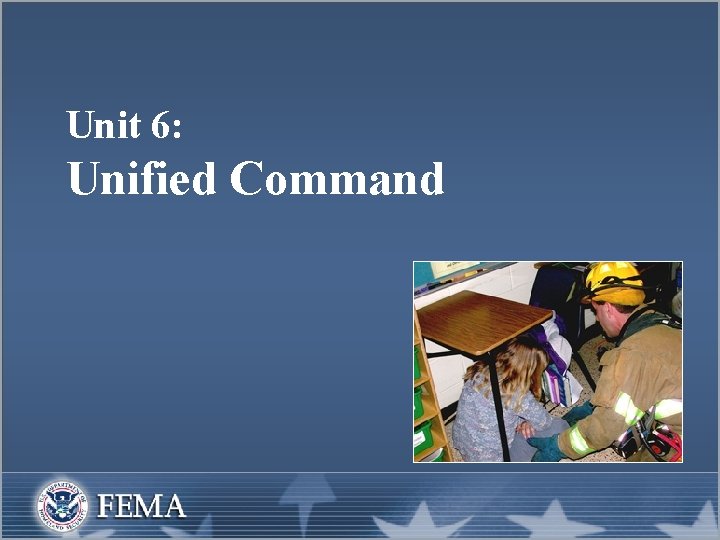
Unit 6: Unified Command
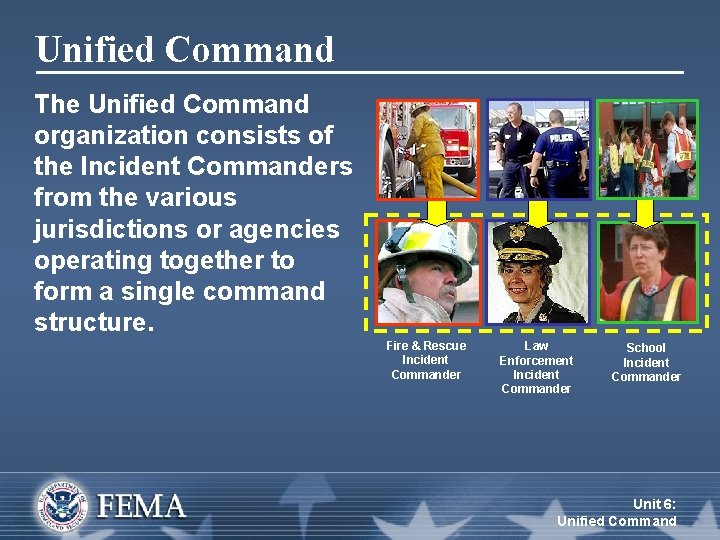
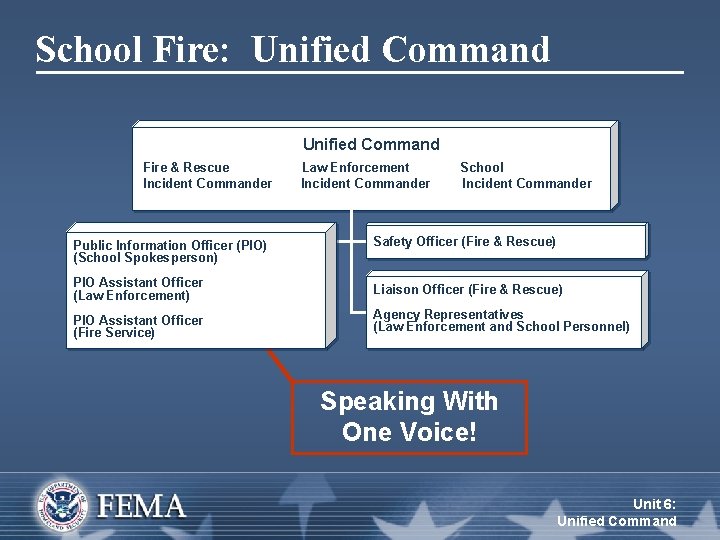
Unified Command The Unified Command organization consists of the Incident Commanders from the various jurisdictions or agencies operating together to form a single command structure. Fire & Rescue Incident Commander Law Enforcement Incident Commander School Incident Commander Unit 6: Unified Command
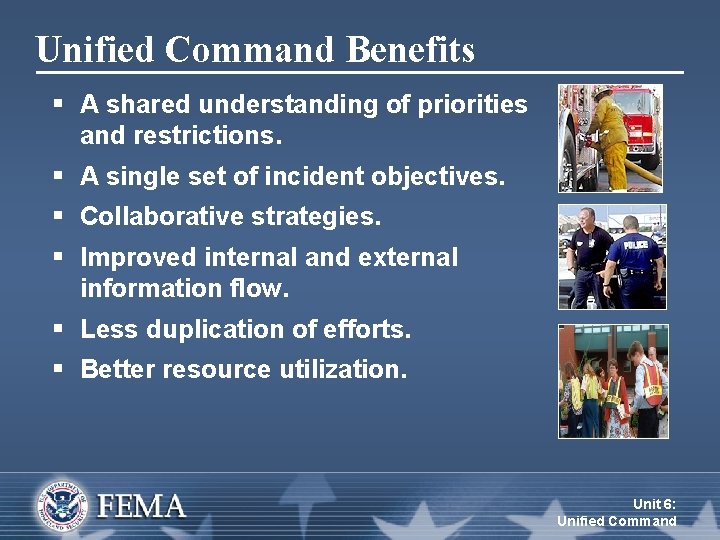
Unified Command Benefits § A shared understanding of priorities and restrictions. § A single set of incident objectives. § Collaborative strategies. § Improved internal and external information flow. § Less duplication of efforts. § Better resource utilization. Unit 6: Unified Command
School Fire: Unified Command Fire & Rescue Incident Commander Public Information Officer (PIO) (School Spokesperson) Law Enforcement Incident Commander School Incident Commander Safety Officer (Fire & Rescue) PIO Assistant Officer (Law Enforcement) Liaison Officer (Fire & Rescue) PIO Assistant Officer (Fire Service) Agency Representatives (Law Enforcement and School Personnel) Speaking With One Voice! Unit 6: Unified Command
Overcoming Barriers to Unified Command What are the potential barriers to school personnel being included in the Unified Command? How can you overcome these barriers? Unit 6: Unified Command
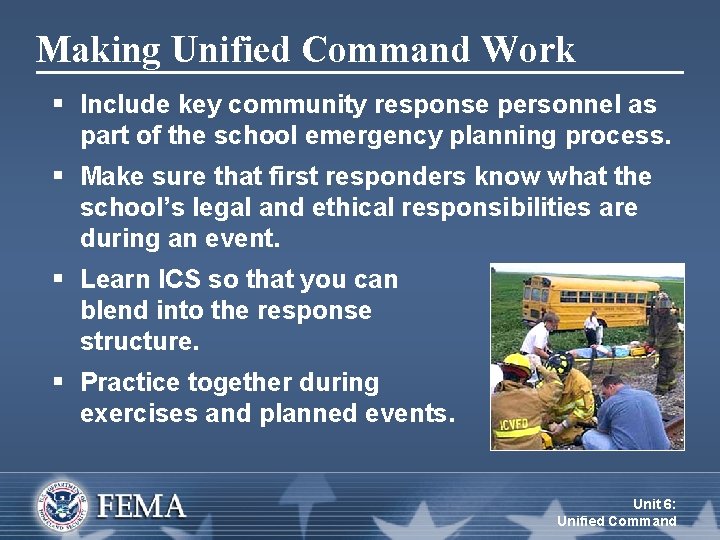
Making Unified Command Work § Include key community response personnel as part of the school emergency planning process. § Make sure that first responders know what the school’s legal and ethical responsibilities are during an event. § Learn ICS so that you can blend into the response structure. § Practice together during exercises and planned events. Unit 6: Unified Command
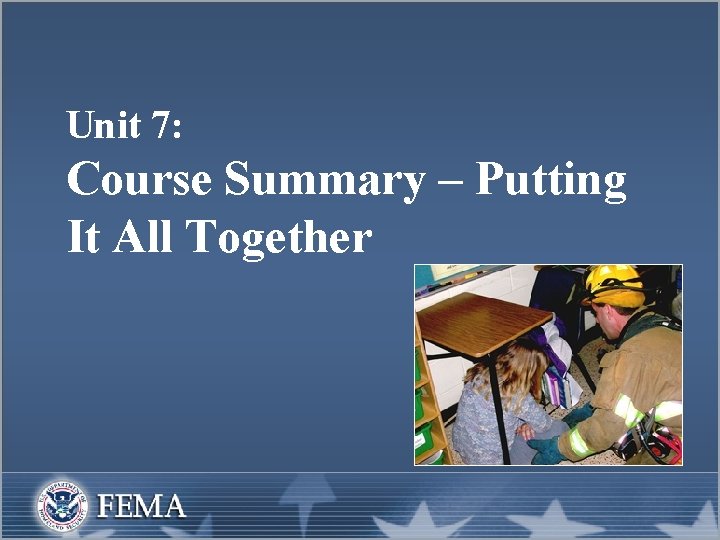
Unit 7: Course Summary – Putting It All Together
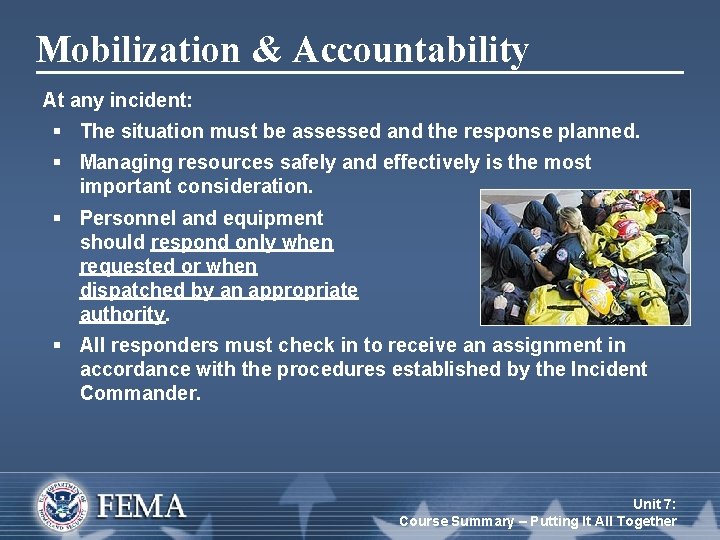
Mobilization & Accountability At any incident: § The situation must be assessed and the response planned. § Managing resources safely and effectively is the most important consideration. § Personnel and equipment should respond only when requested or when dispatched by an appropriate authority. § All responders must check in to receive an assignment in accordance with the procedures established by the Incident Commander. Unit 7: Course Summary – Putting It All Together
Discussion Question What’s the issue with having personnel arrive at an incident without being requested or dispatched? Unit 7: Course Summary – Putting It All Together
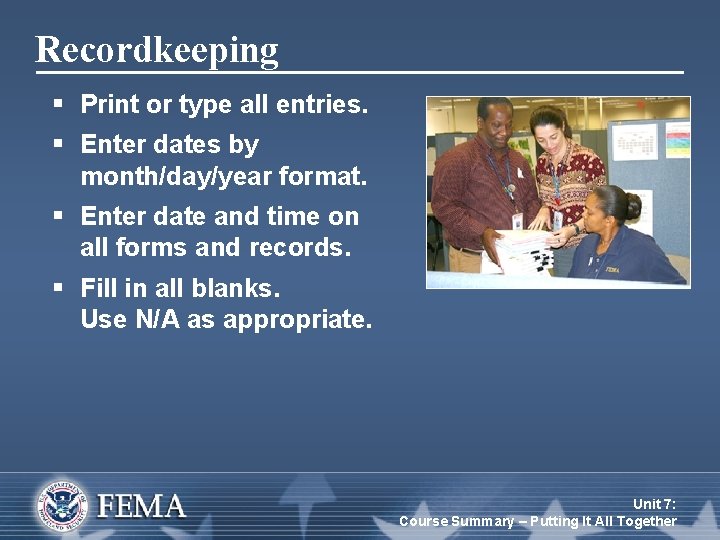
Recordkeeping § Print or type all entries. § Enter dates by month/day/year format. § Enter date and time on all forms and records. § Fill in all blanks. Use N/A as appropriate. Unit 7: Course Summary – Putting It All Together
Demobilization § Complete all tasks and required forms/reports. § Brief supervisor. § Complete post-incident reports, critiques, evaluations, and medical followup. Unit 7: Course Summary – Putting It All Together
Training and Exercising § Do you have sufficient personnel trained and ready to assume ICS Command key General Staff positions? § When was the last tabletop or functional exercise that practiced ICS? Do you use ICS during planned events (e. g. , graduation, field trips)? Unit 7: Course Summary – Putting It All Together
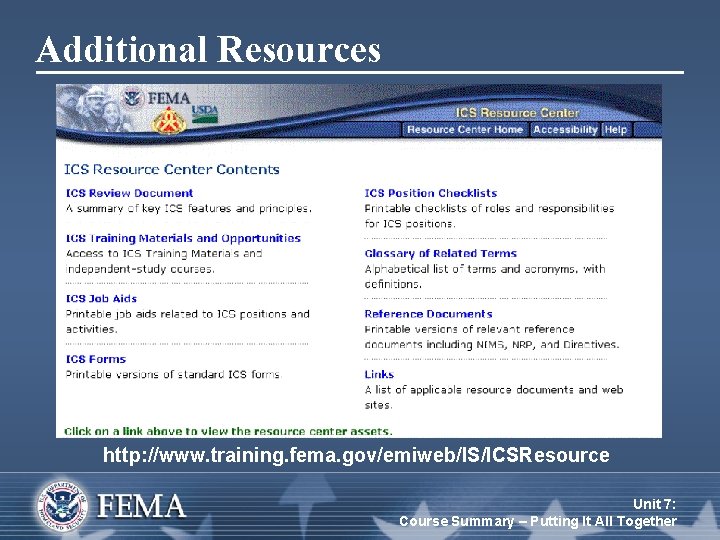
Additional Resources http: //www. training. fema. gov/emiweb/IS/ICSResource Unit 7: Course Summary – Putting It All Together
Thank You! Contact School Safety & Security Coordinator Heather Konschak with any questions: hkonschak@west-fargo. k 12. nd. us (701) 499 -1072 Unit 7: Course Summary – Putting It All Together