
ICIS 2006 Summary of Papers on Image Understanding




- Slides: 25
ICIS 2006 Summary of Papers on Image Understanding & Content Recognition Prevalent Themes: Image Processing is now assisting / automating the adjustment/correction, human inspection, and analysis of images Pictorial Imaging - Automatic IQ Optimization based on scene content - Camera, Photofinishing, Printing Medical Imaging- identification of organs and disease Security Systems- automatic identification of people, non-standard behavior, expressions. ICIS 2006 Summary June 6, 2006 Roger Triplett
In order for: A Picture is to be Worth a 1000 Words Sometimes it may Require a 1000 Verbs Action Required ICIS 2006 Summary June 6, 2006 Roger Triplett
Key Papers: Image Content Identification Pictorial Imaging: Image Understanding – Tutorial by J. Luo of Kodak Perfect Touch Technology “Everywhere” Fuji. Film Image Intelligence – Next Gen Auto IQ optimization Medical Imaging: Quantitative Medical Imaging – Virtual Scopics Frontiers in Computer Vision – GE Global Research Security Systems: Frontiers in Computer Vision – GE Global Research ICIS 2006 Summary June 6, 2006 Roger Triplett
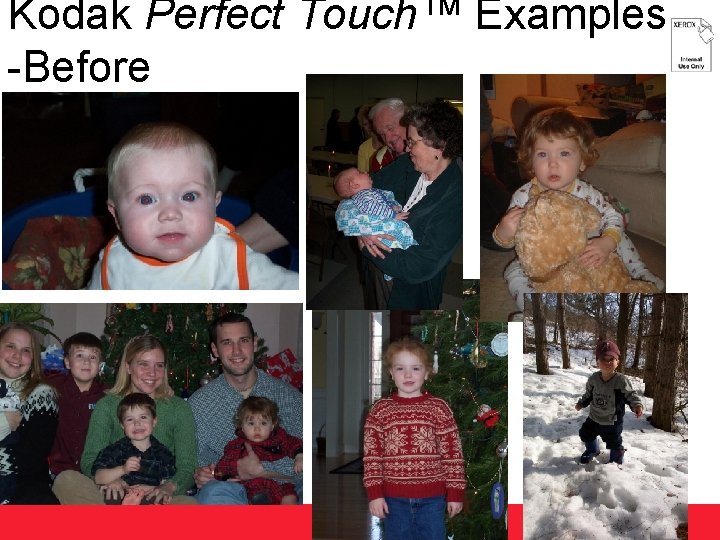
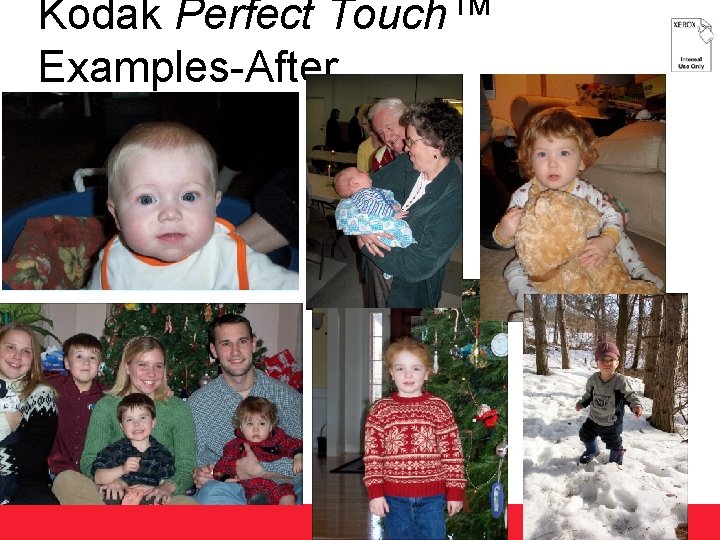
Pictorial Image Understanding: Kodak • Tutorial by Jiebo Luo: Automatic Scene and Image Content Analysis • Enables improved Photographic Quality in camera & photofinishing • Automatic detection of: People, Faces, Facial Features Sky, Sand, Water, Beach Snow, Foliage Pavement Man-made Structures Flags, Logos Sunset Front lit or Backlit Scene Indoor / Outdoor Lighting Mood • But Why? Auto Red. Eye Removal Auto Orientation (Portrait vs Landscape, vs upside down) Auto Crop (aspect change) Auto Color Balance Adjust (leave the red cast in the sunset photo) Auto Exposure/Contrast Adjust Auto Dodge/Burn (local area exposure adjustments) Selective Sharpen Grain and Noise Correction Auto Select Background Music for slide show ICIS 2006 Summary June 6, 2006 Roger Triplett
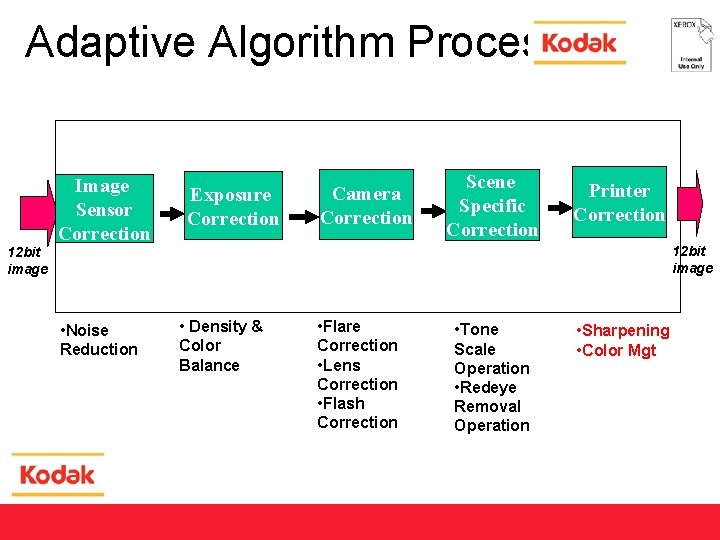
Adaptive Algorithm Processing Image Sensor Correction Exposure Correction Camera Correction Scene Specific Correction Printer Correction 12 bit image • Noise Reduction • Density & Color Balance • Flare Correction • Lens Correction • Flash Correction • Tone Scale Operation • Redeye Removal Operation • Sharpening • Color Mgt
Kodak Perfect Touch™ Examples -Before
Kodak Perfect Touch™ Examples-After
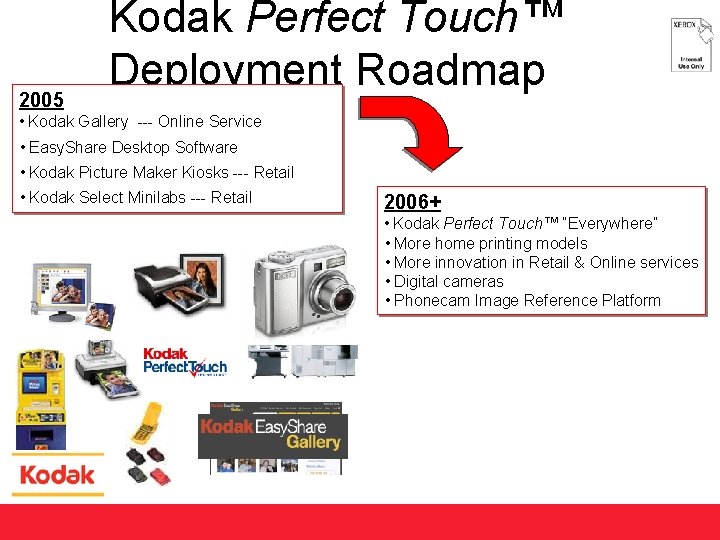
2005 Kodak Perfect Touch™ Deployment Roadmap • Kodak Gallery --- Online Service • Easy. Share Desktop Software • Kodak Picture Maker Kiosks --- Retail • Kodak Select Minilabs --- Retail 2006+ • Kodak Perfect Touch™ “Everywhere” • More home printing models • More innovation in Retail & Online services • Digital cameras • Phonecam Image Reference Platform
Future Kodak Perfect Touch. TM Technology Features Processing Speed n More efficient algorithms. Perform intelligent logic to determine the algorithms needed by each image. Product Architectures n Must function in PC Windows based desktops and systems, Linux servers, and in a variety of embedded platforms. Image Quality n Continue to innovate to raise image quality capability. Legacy Systems n Upgrades must be compatible, where possible, with
Questions? ? One question from the Audience asked about the IQ performance of serial applications of Perfect Touch, when they put it “Everywhere” (Camera, Services, Photofinishing) Answer: Kodak is aware of some IQ problems with successive application of Perfect Touch. They are working with the International Standards Committees to get information into standard file formats ( Meta. Data), so that downstream systems have a chance (not always) of knowing whether Perfect Touch has been applied. ICIS 2006 Summary June 6, 2006 Roger Triplett
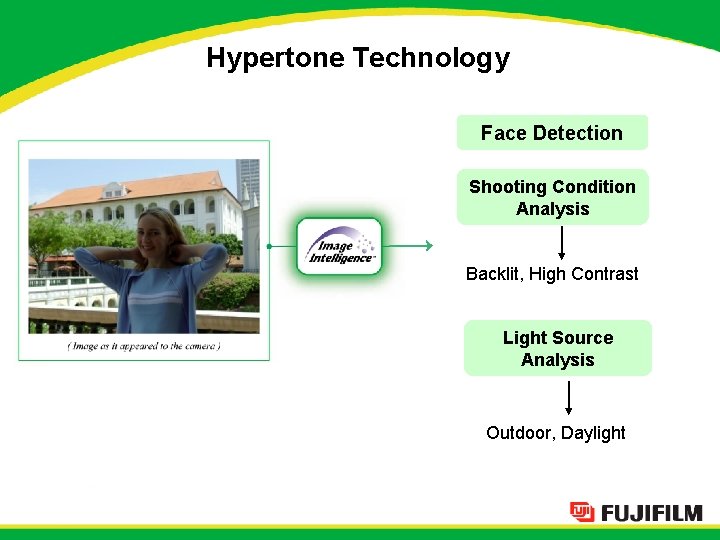
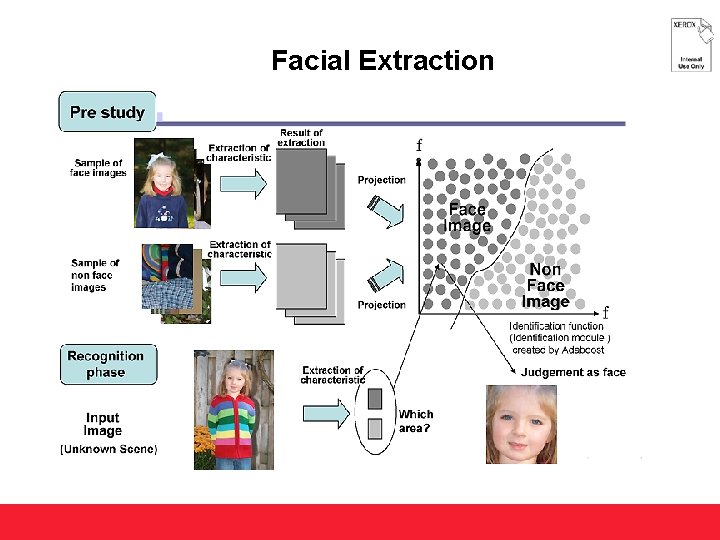
New Fuji Image Intelligence • Emphasizes facial feature detection as basis for image correction • Skin tone accuracy is the dominant factor for judging image quality • Color rendition, smoothness, & detail of skin tone have to be perceived correctly • Scene identification is used to optimize the image as the photographer intended
New Fuji Image Intelligence • Two sets of software technology used: • 1) Scene analysis algorithms • 2) Image expression algorithms • Draws on a large image reference database
New Fuji Image Intelligence • Scene analysis algorithms automatically analyze photographic conditions: • Light source, exposure, & lighting direction • Identify the subject, using facial detection
Hypertone Technology Face Detection Shooting Condition Analysis Backlit, High Contrast Light Source Analysis Outdoor, Daylight
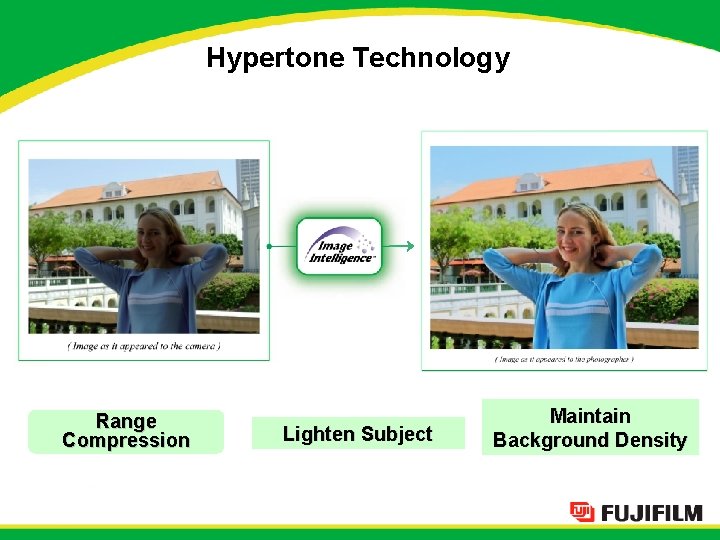
Hypertone Technology Range Compression Lighten Subject Maintain Background Density
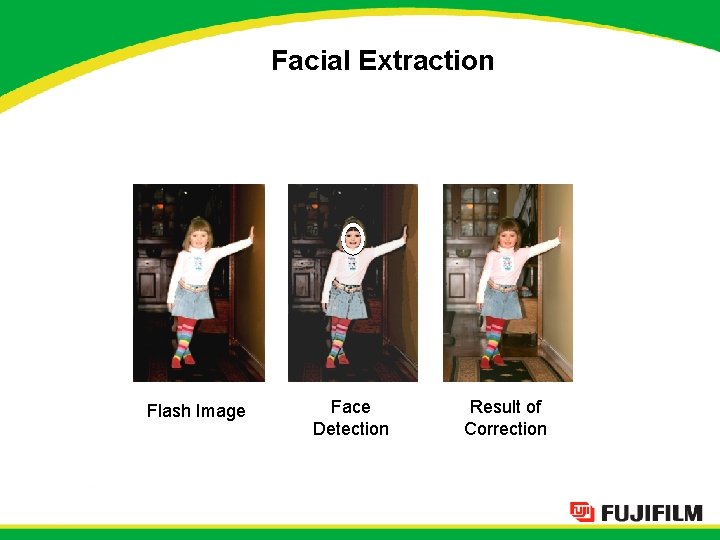
Facial Extraction Flash Image Face Detection Result of Correction
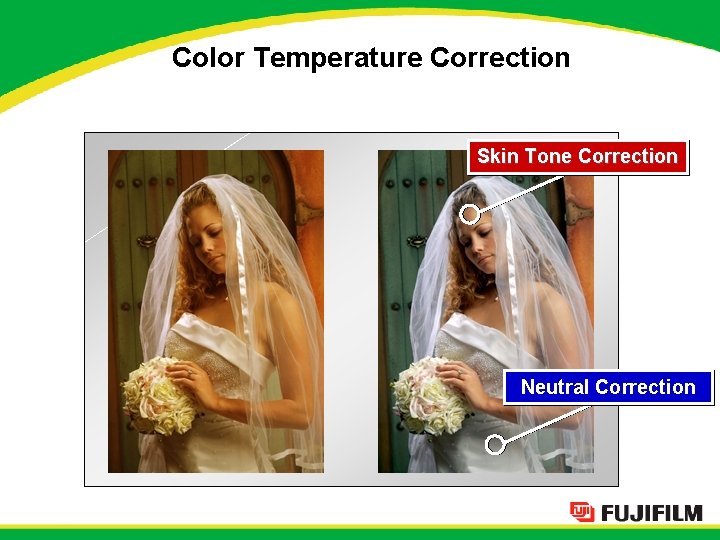
Color Temperature Correction Skin Tone Correction Neutral Correction
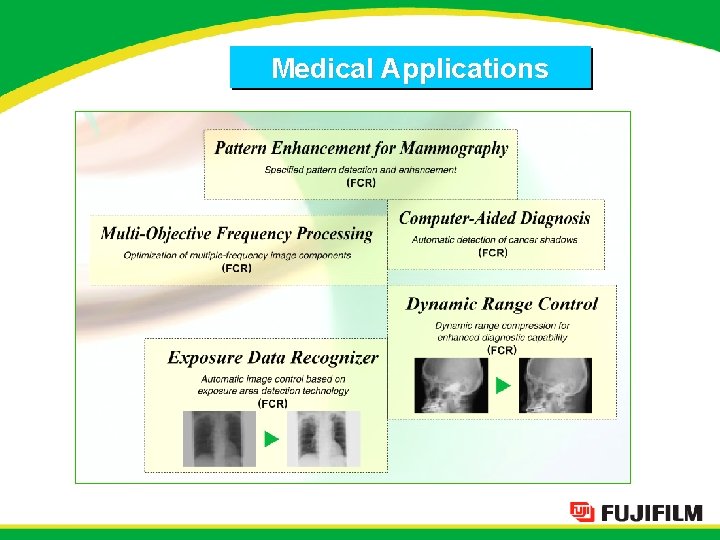
Medical Applications
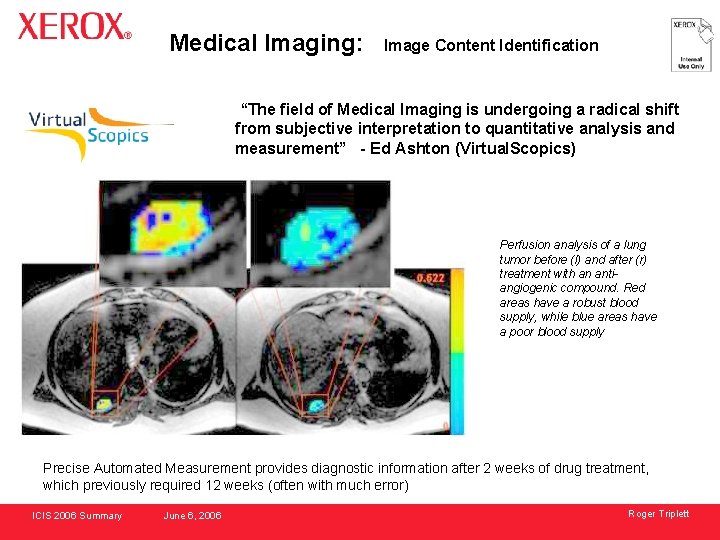
Medical Imaging: Image Content Identification “The field of Medical Imaging is undergoing a radical shift from subjective interpretation to quantitative analysis and measurement” - Ed Ashton (Virtual. Scopics) Perfusion analysis of a lung tumor before (l) and after (r) treatment with an antiangiogenic compound. Red areas have a robust blood supply, while blue areas have a poor blood supply Precise Automated Measurement provides diagnostic information after 2 weeks of drug treatment, which previously required 12 weeks (often with much error) ICIS 2006 Summary June 6, 2006 Roger Triplett
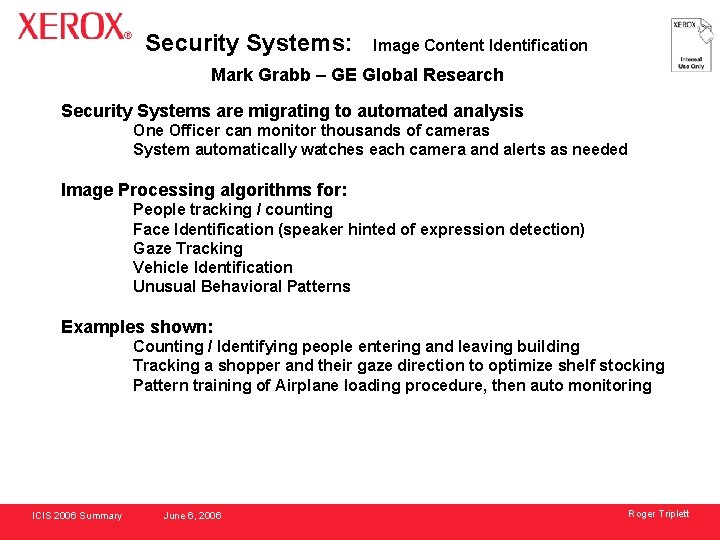
Security Systems: Image Content Identification Mark Grabb – GE Global Research Security Systems are migrating to automated analysis One Officer can monitor thousands of cameras System automatically watches each camera and alerts as needed Image Processing algorithms for: People tracking / counting Face Identification (speaker hinted of expression detection) Gaze Tracking Vehicle Identification Unusual Behavioral Patterns Examples shown: Counting / Identifying people entering and leaving building Tracking a shopper and their gaze direction to optimize shelf stocking Pattern training of Airplane loading procedure, then auto monitoring ICIS 2006 Summary June 6, 2006 Roger Triplett
Verbs A Picture is Worth a 1000 Words And today the verbs are being done, AUTOMATICALLY
Back. Up Slides ICIS 2006 Summary June 6, 2006 Roger Triplett
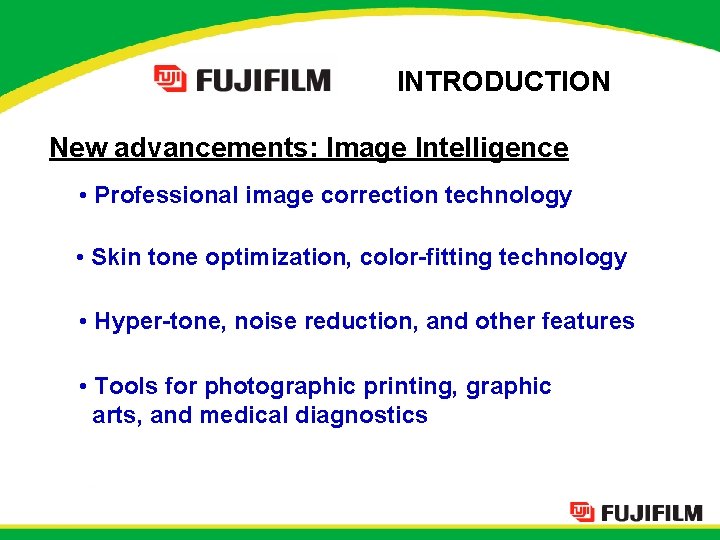
INTRODUCTION New advancements: Image Intelligence • Professional image correction technology • Skin tone optimization, color-fitting technology • Hyper-tone, noise reduction, and other features • Tools for photographic printing, graphic arts, and medical diagnostics
Facial Extraction