
ICIDH International Classification of Impairments Disabilities and Handicaps
ICIDH: International Classification of Impairments, Disabilities, and Handicaps ******* ICIDH-2: International Classification of Functioning and Disability
Need for the ICIDH • Change in the Health Care Scene: from acute to chronic disease • Change from disease focus to consequences focus • Need for an international ‘common language’ of consequences • To serve the needs of people with disability
Foundations of ICIDH-2 • Human Functioning - not merely disablement • Universal Model - not a minority model • Integrative Model - not merely medical or social • Interactive Model- not linear progressive • Parity - not etiological causality • Inclusive - contextual: environment & person • Cultural applicability - not western concepts
Medical AND Social Models • • • PERSONAL problem AND SOCIAL problem Medical care AND Bio-psychosocial integration Individual treatment AND Social action Professional help AND Individual & collective responsibility Personal AND Eenvironmental adjustment manipulation Behaviour AND Attitude Care AND Human rights Health care policy AND Politics Individual adaptation AND Social change
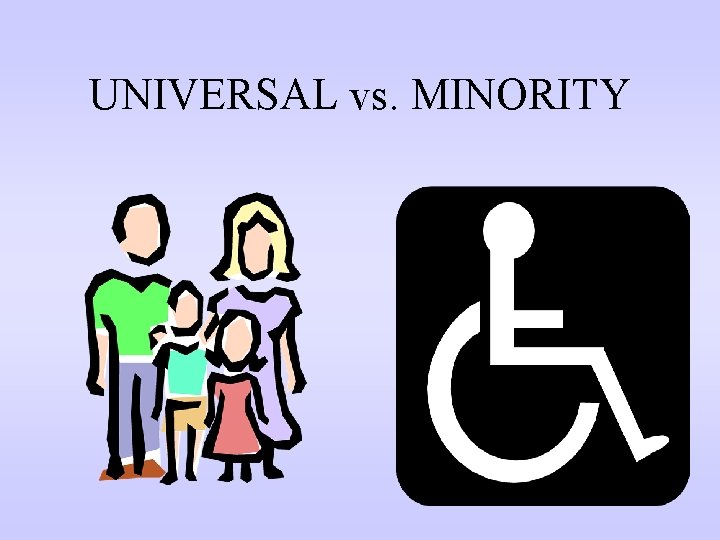
UNIVERSAL vs. MINORITY
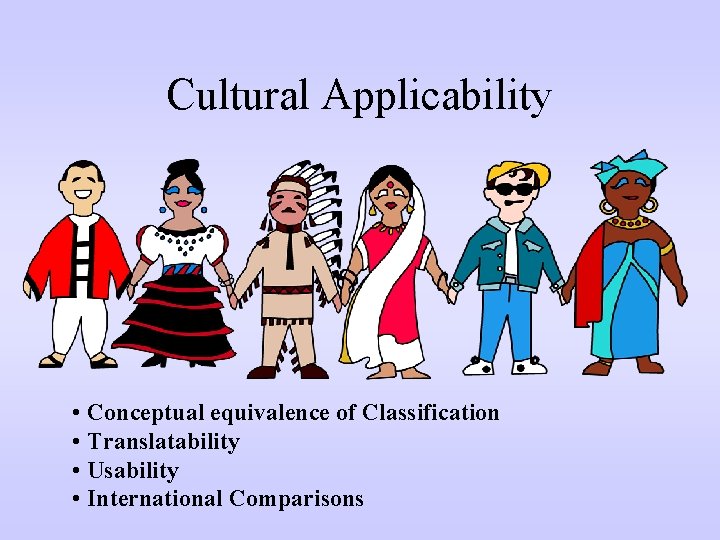
Cultural Applicability • Conceptual equivalence of Classification • Translatability • Usability • International Comparisons
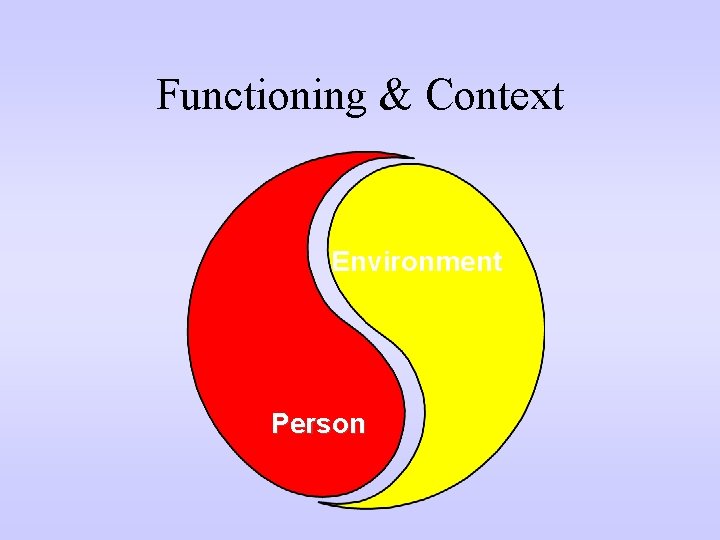
Functioning & Context Environment Person
Principles of Revision • Multi-center network support for development and later training • WHO being the client server • Multiple versions for different users at different sectors and levels of health care • Field trials: applicability is the key • Empirical work serves the conceptual position and comes before ideological position
Overall Objective of ICIDH-2 Revision To develop an operational classification system on human functioning and disability • That is applicable to every human being: universality • Addresses multiple dimensions regarding the ‘person’ and ‘environment’ (at body, person and society levels) • International practices that are culture sensitive • Based on user needs • Empirical field trials on applicability, reliability and utility
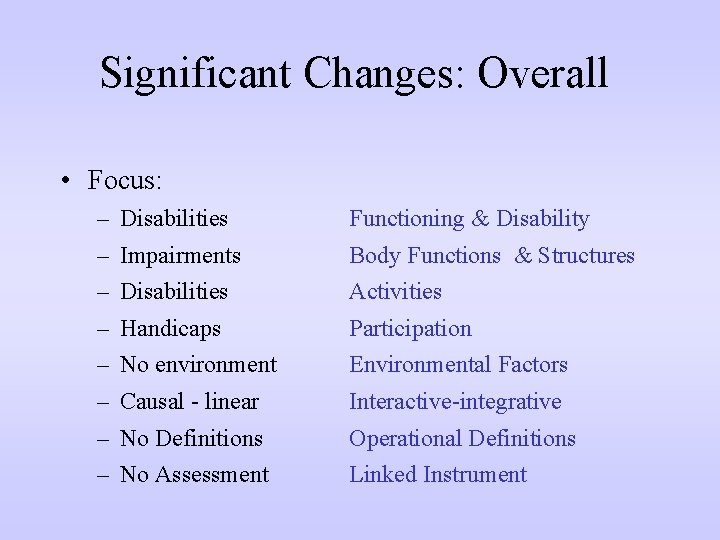
Significant Changes: Overall • Focus: – – – – Disabilities Functioning & Disability Impairments Body Functions & Structures Disabilities Activities Handicaps Participation No environment Environmental Factors Causal - linear Interactive-integrative No Definitions Operational Definitions No Assessment Linked Instrument
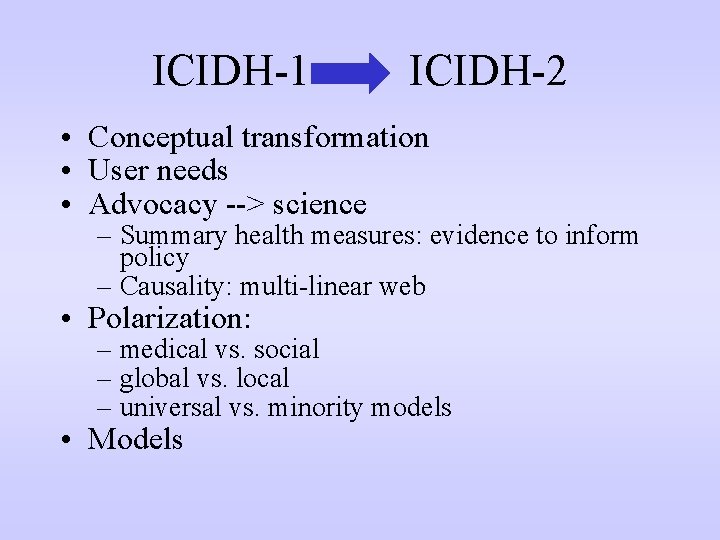
ICIDH-1 ICIDH-2 • Conceptual transformation • User needs • Advocacy --> science – Summary health measures: evidence to inform policy – Causality: multi-linear web • Polarization: – medical vs. social – global vs. local – universal vs. minority models • Models
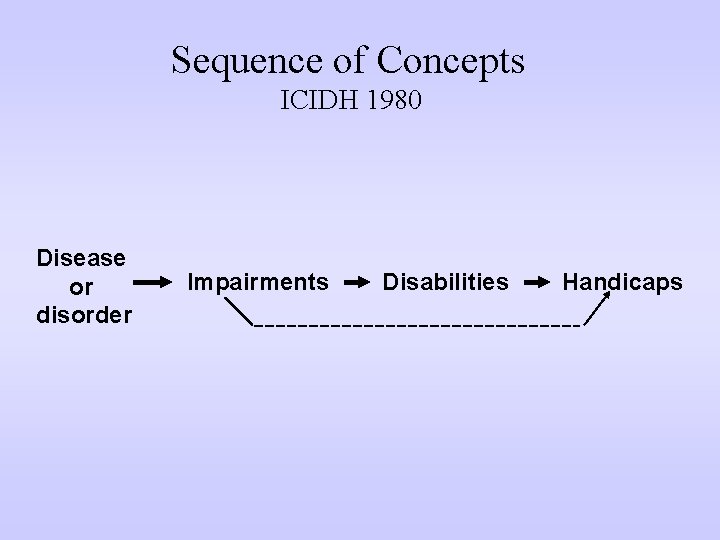
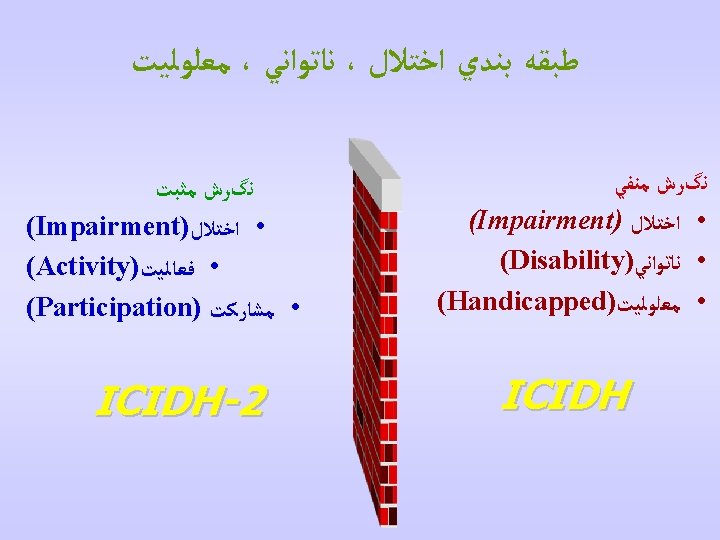
Sequence of Concepts ICIDH 1980 Disease or disorder Impairments Disabilities Handicaps
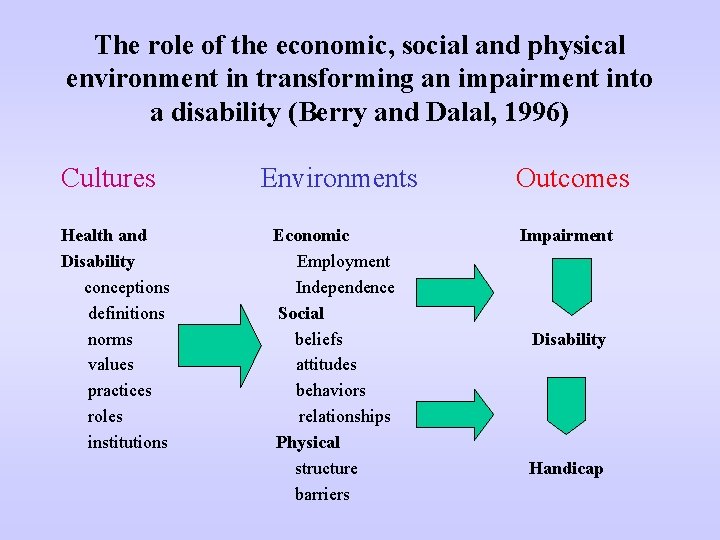
The role of the economic, social and physical environment in transforming an impairment into a disability (Berry and Dalal, 1996) Cultures Health and Disability conceptions definitions norms values practices roles institutions Environments Economic Employment Independence Social beliefs attitudes behaviors relationships Physical structure barriers Outcomes Impairment Disability Handicap
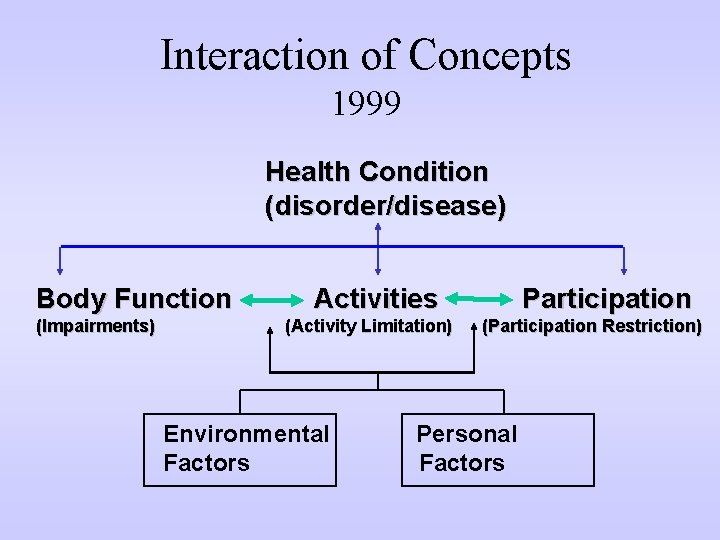
Interaction of Concepts 1999 Health Condition (disorder/disease) Body Function (Impairments) Activities (Activity Limitation) Environmental Factors Participation (Participation Restriction) Personal Factors
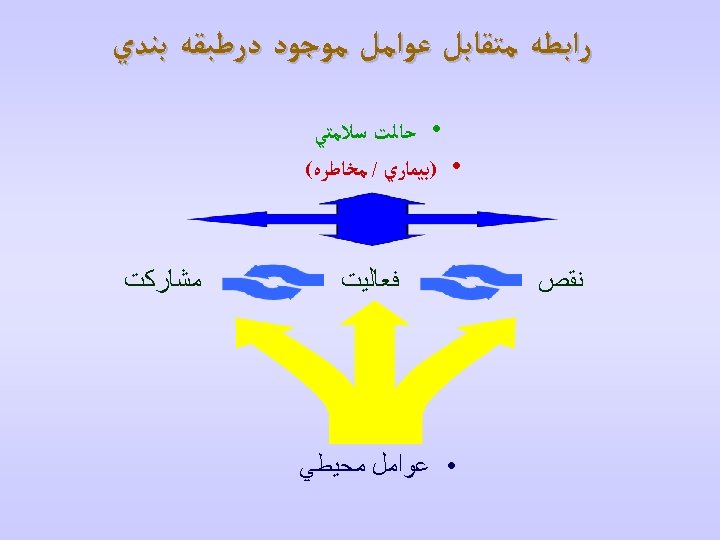
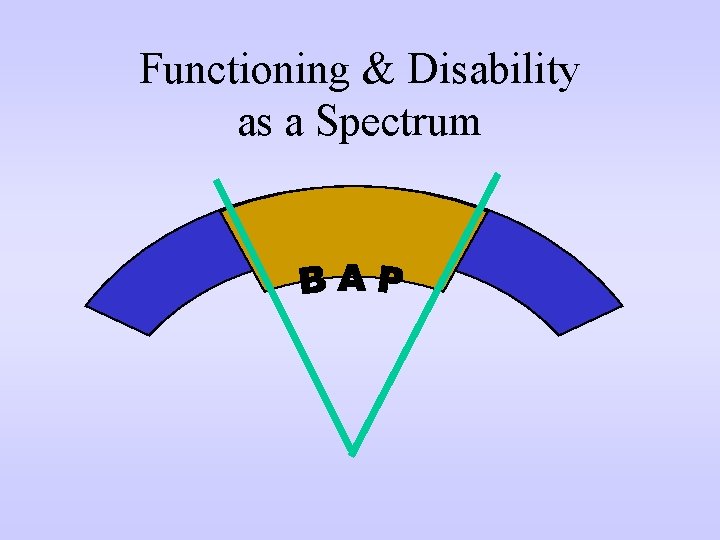
Functioning & Disability as a Spectrum
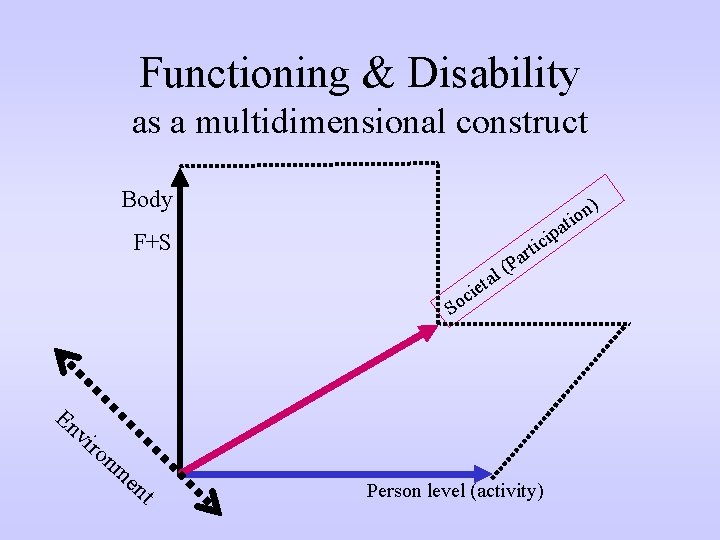
Functioning & Disability as a multidimensional construct Body ) n o ti a p i ic F+S l eta rt a P ( i c So En vi ro n m en t Person level (activity)
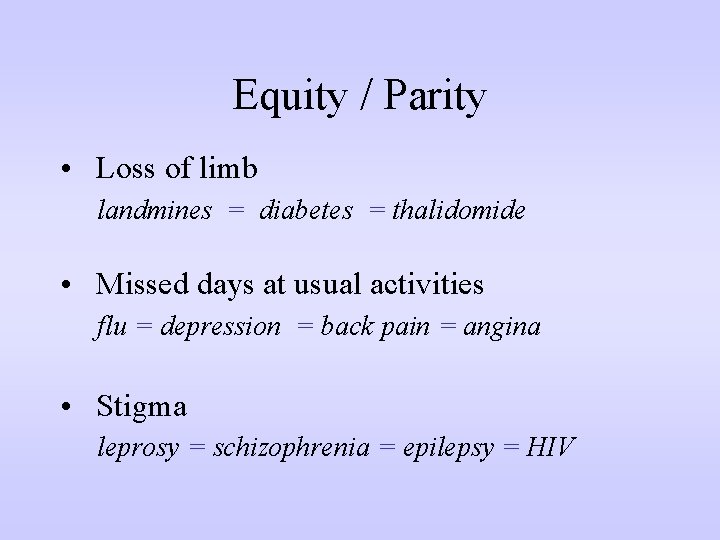
Equity / Parity • Loss of limb landmines = diabetes = thalidomide • Missed days at usual activities flu = depression = back pain = angina • Stigma leprosy = schizophrenia = epilepsy = HIV
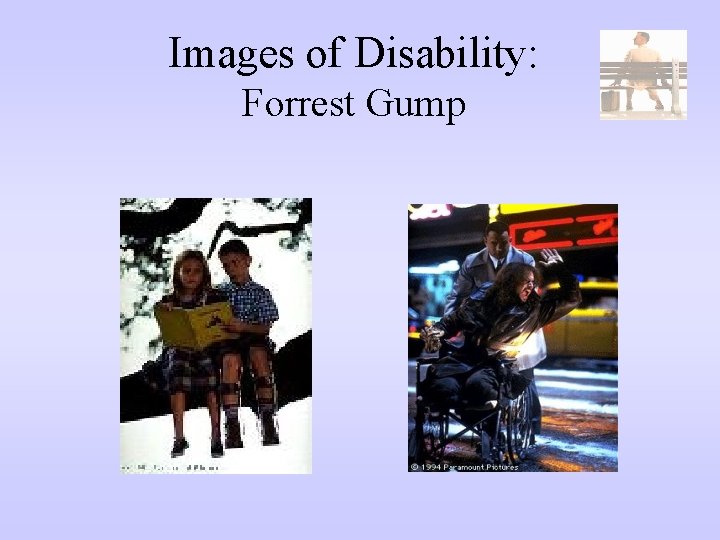
Images of Disability: Forrest Gump
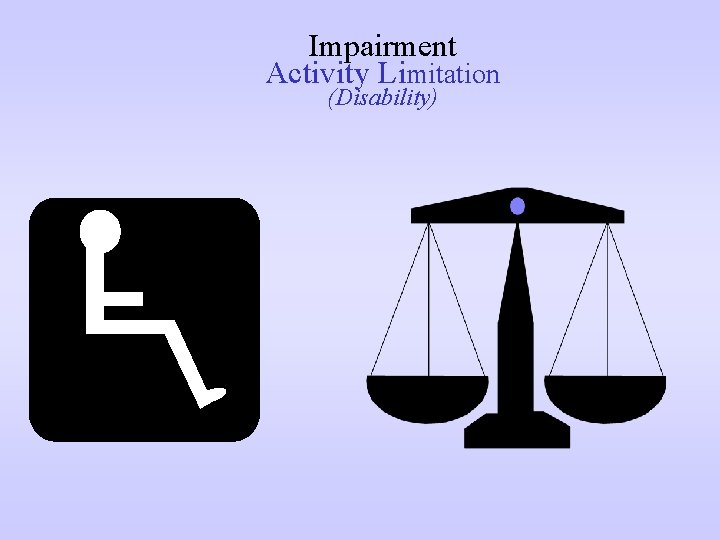
Impairment Activity Limitation (Disability)
Activity Limitation (Disability)
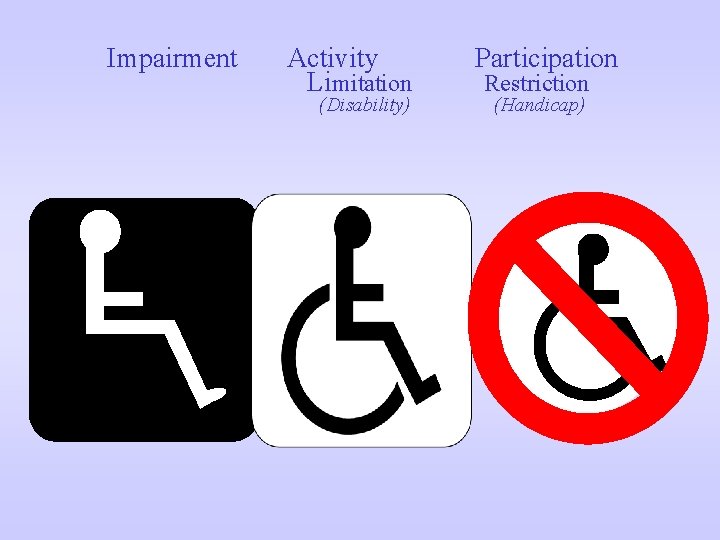
Impairment Activity Limitation (Disability) Participation Restriction (Handicap)
ICIDH in simple terms • Your body doesn’t function properly • You are limited in your activities • You face barriers in society
Components of ICIDH-II • Body Functions • Body Structure • Activity • Participation • Environmental Factors
ICIDH-II • Body Functions are the physiological or psychological functions of body systems. • Body Structures are anatomic parts of the body such as organs, limbs and their components. • Impairments are problems in body function or structure such as a significant deviation or loss.
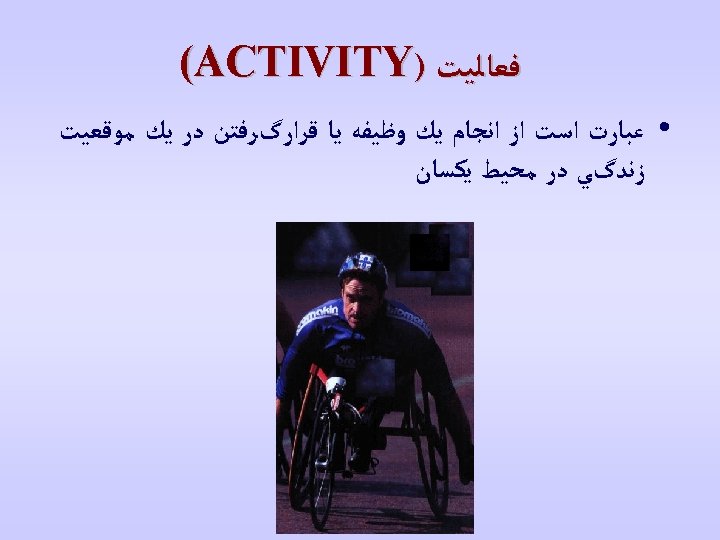
ICIDH-II • Activity is the performance of a task or action by an individual. • Activity Limitations are difficulties an individual may have in the performance of activities.
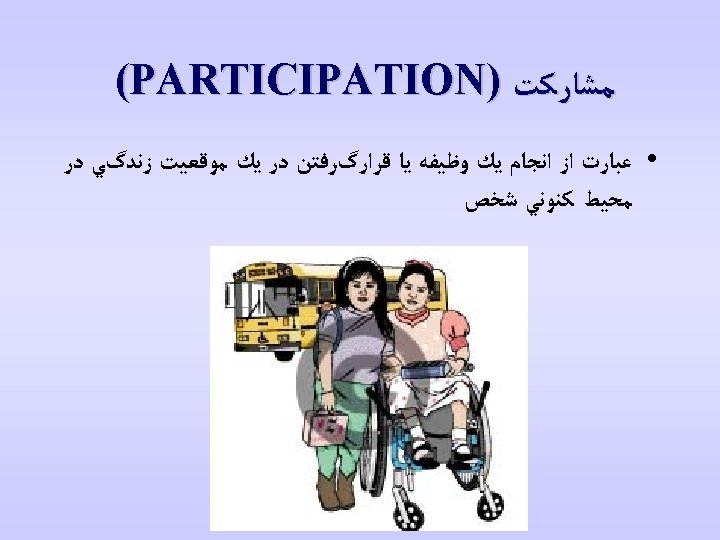
ICIDH-II • Participation is an individual's involvement in life situations in relation to Health Conditions, Body Functions and Structure, Activities, and Contextual factors. • Participation Restrictions are problems an individual may have in the manner or extent of involvement in life situation
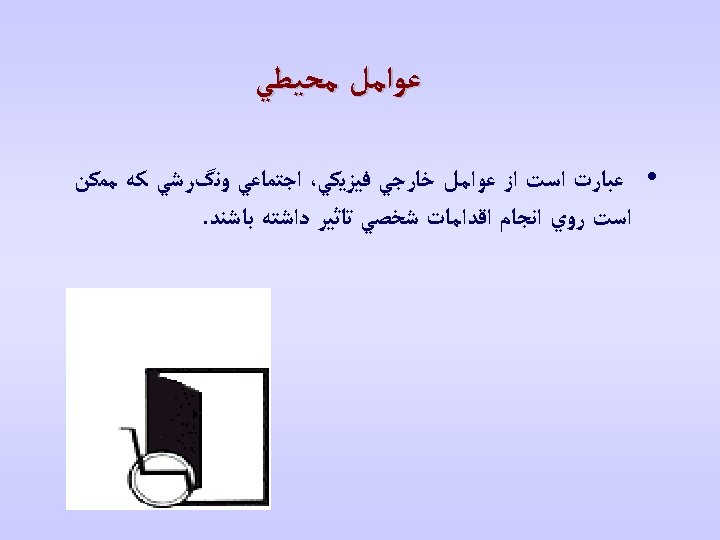
ICIDH-II Environmental Factors make up the physical, social and attitudinal environment in which people live and conduct their lives
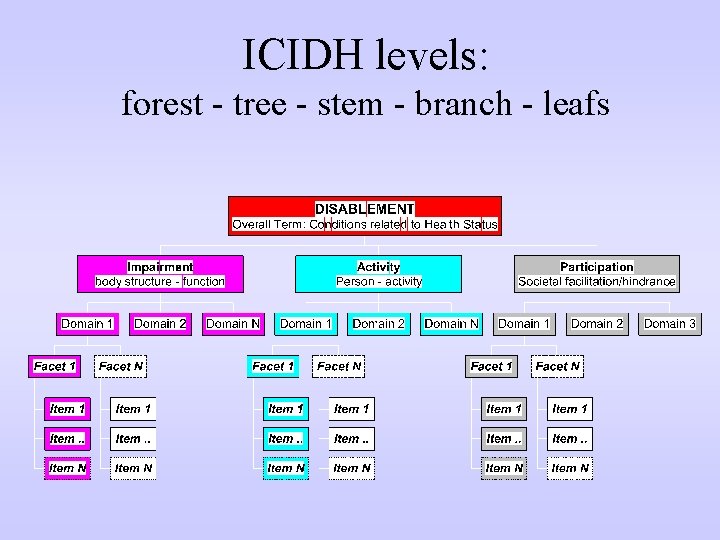
ICIDH levels: forest - tree - stem - branch - leafs
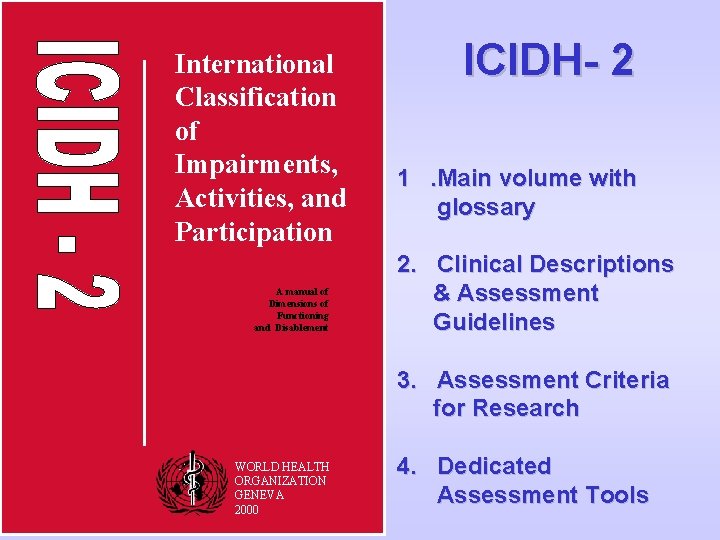
International Classification of Impairments, Activities, and Participation A manual of Dimensions of Functioning and Disablement ICIDH- 2 1. Main volume with glossary 2. Clinical Descriptions & Assessment Guidelines 3. Assessment Criteria for Research WORLD HEALTH ORGANIZATION GENEVA 2000 4. Dedicated Assessment Tools
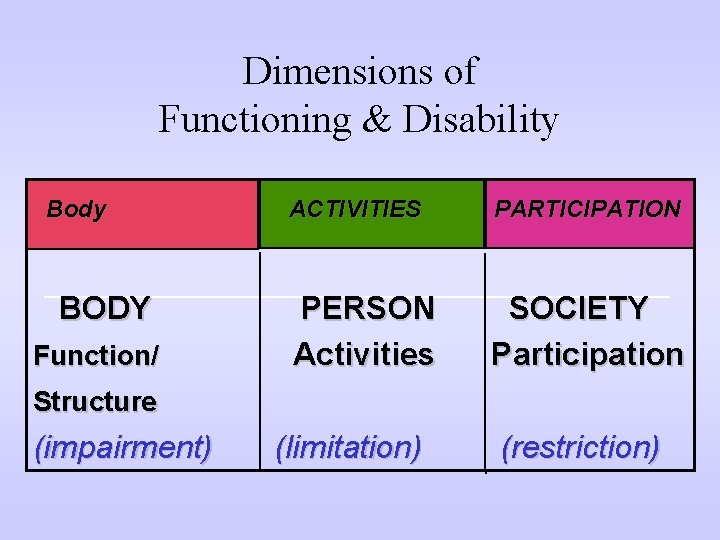
Dimensions of Functioning & Disability Body BODY Function/ ACTIVITIES PARTICIPATION PERSON Activities SOCIETY Participation Structure (impairment) (limitation) (restriction)
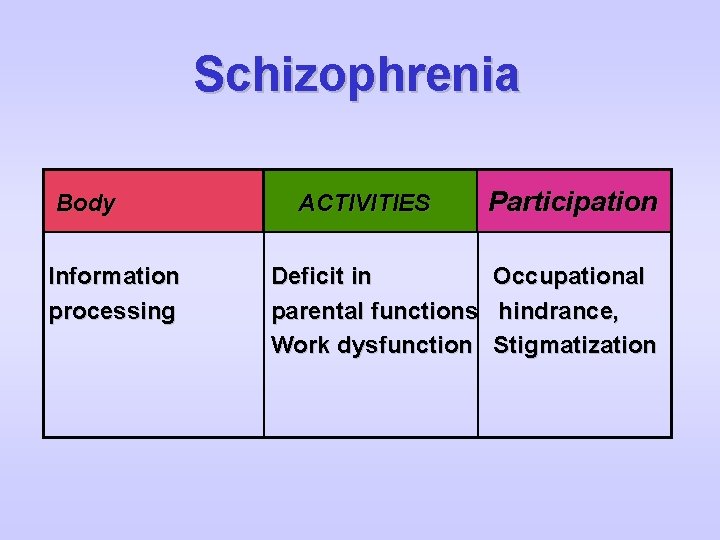
Schizophrenia Body Information processing ACTIVITIES Participation Deficit in Occupational parental functions hindrance, Work dysfunction Stigmatization
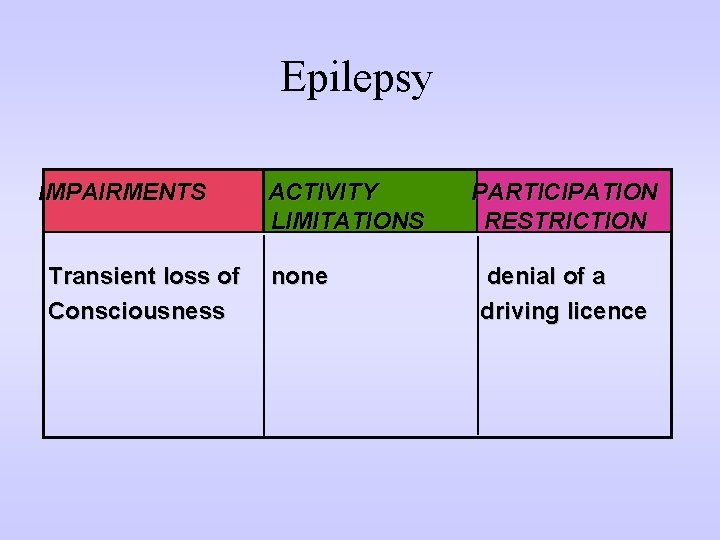
Epilepsy IMPAIRMENTS Transient loss of Consciousness ACTIVITY LIMITATIONS none PARTICIPATION RESTRICTION denial of a driving licence
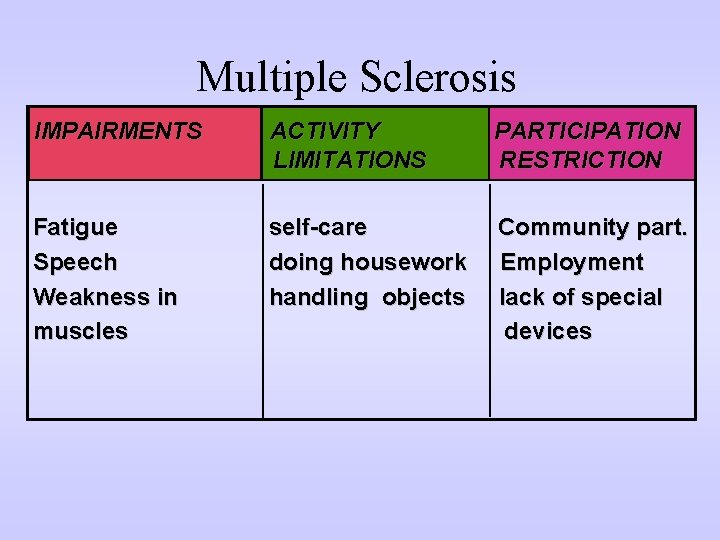
Multiple Sclerosis IMPAIRMENTS ACTIVITY LIMITATIONS PARTICIPATION RESTRICTION Fatigue Speech Weakness in muscles self-care doing housework handling objects Community part. Employment lack of special devices
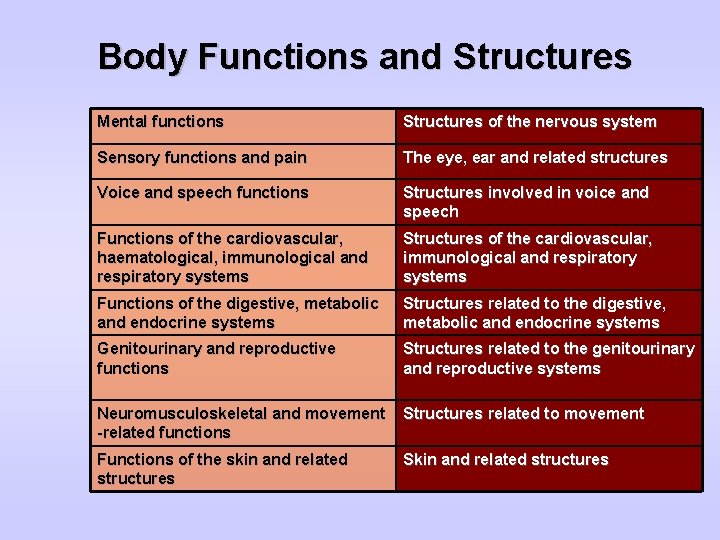
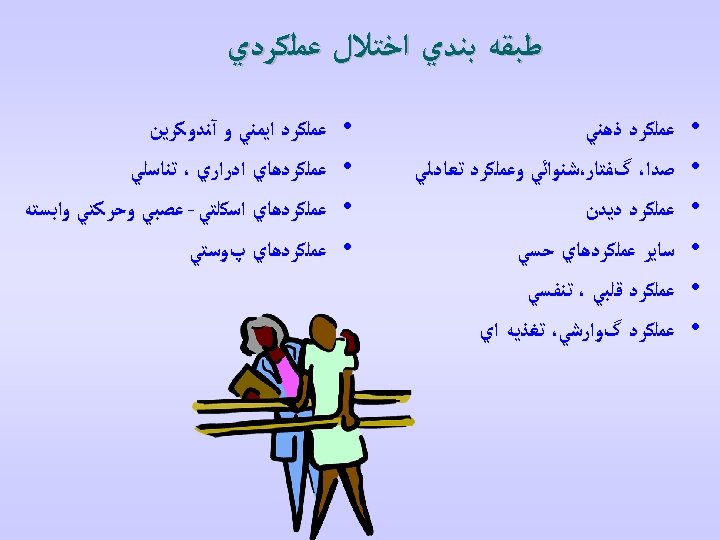
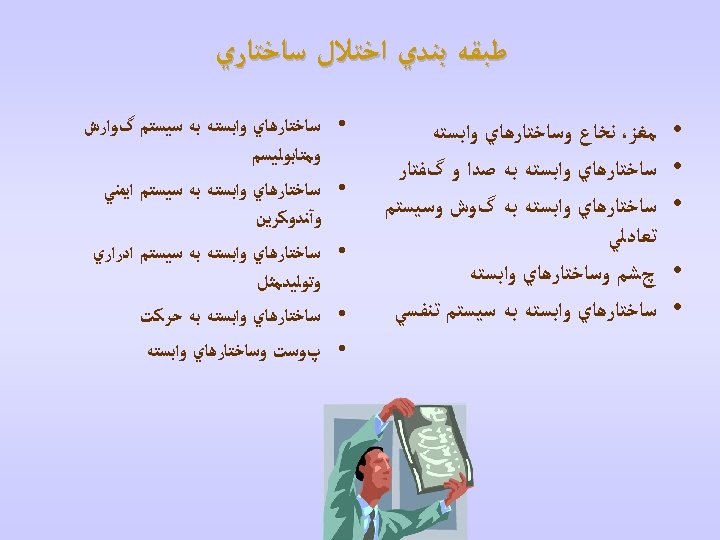
Body Functions and Structures Mental functions Structures of the nervous system Sensory functions and pain The eye, ear and related structures Voice and speech functions Structures involved in voice and speech Functions of the cardiovascular, haematological, immunological and respiratory systems Structures of the cardiovascular, immunological and respiratory systems Functions of the digestive, metabolic and endocrine systems Structures related to the digestive, metabolic and endocrine systems Genitourinary and reproductive functions Structures related to the genitourinary and reproductive systems Neuromusculoskeletal and movement -related functions Structures related to movement Functions of the skin and related structures Skin and related structures
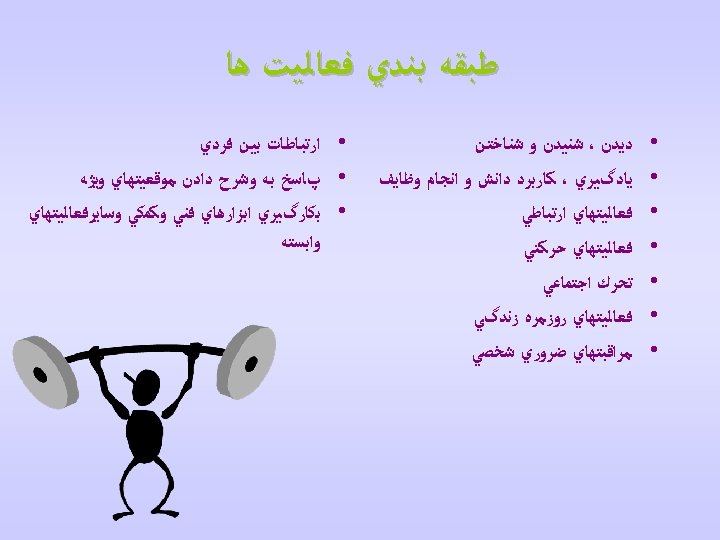
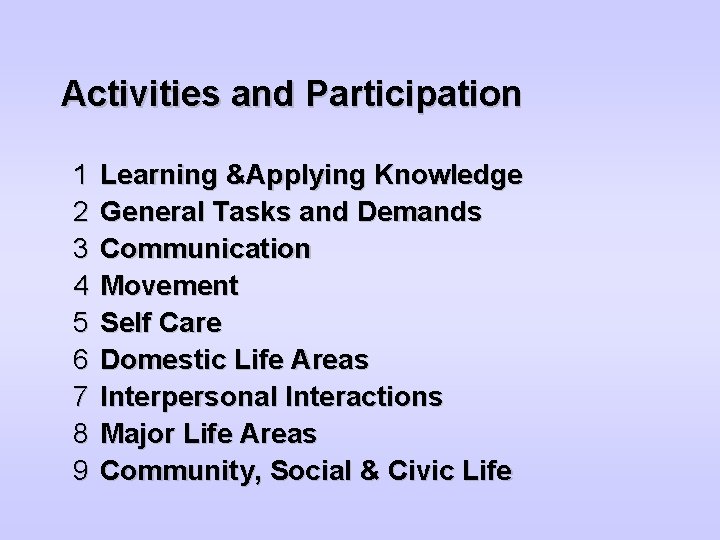
Activities and Participation 1 2 3 4 5 6 7 8 9 Learning &Applying Knowledge General Tasks and Demands Communication Movement Self Care Domestic Life Areas Interpersonal Interactions Major Life Areas Community, Social & Civic Life
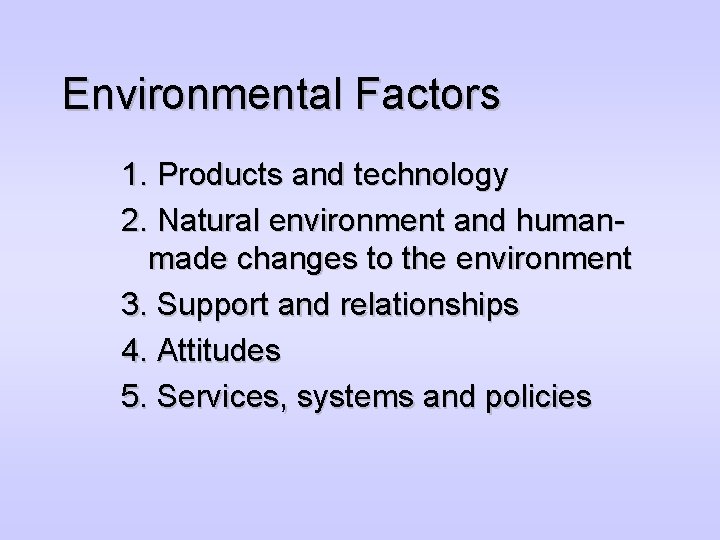
Environmental Factors 1. Products and technology 2. Natural environment and humanmade changes to the environment 3. Support and relationships 4. Attitudes 5. Services, systems and policies
- Slides: 51