
IceIce Collisions An Ice Multiplication Process in Atmospheric

- Slides: 26
Ice-Ice Collisions: An Ice Multiplication Process in Atmospheric Clouds by Vaughan Phillips (Uni. of Hawaii) Jun-Ichi Yano(Meteo France)
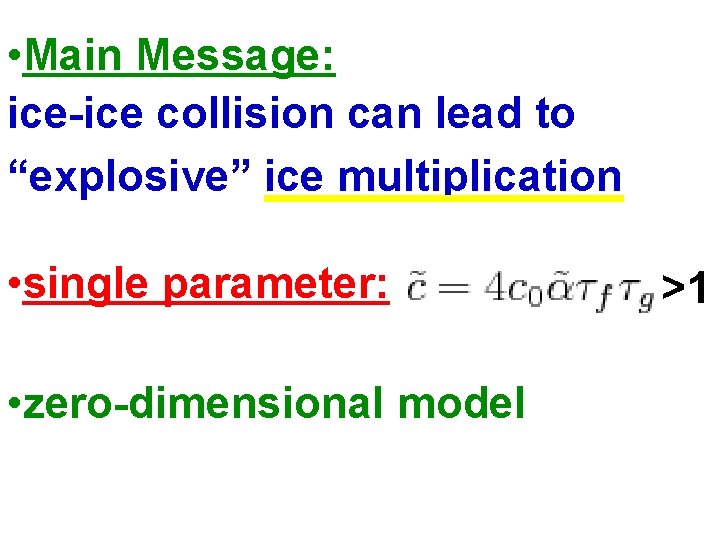
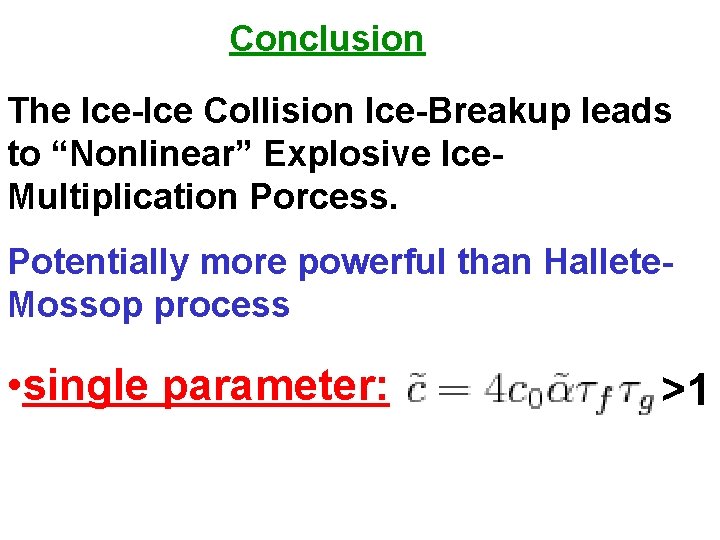
• Main Message: ice-ice collision can lead to “explosive” ice multiplication • single parameter: • zero-dimensional model >1
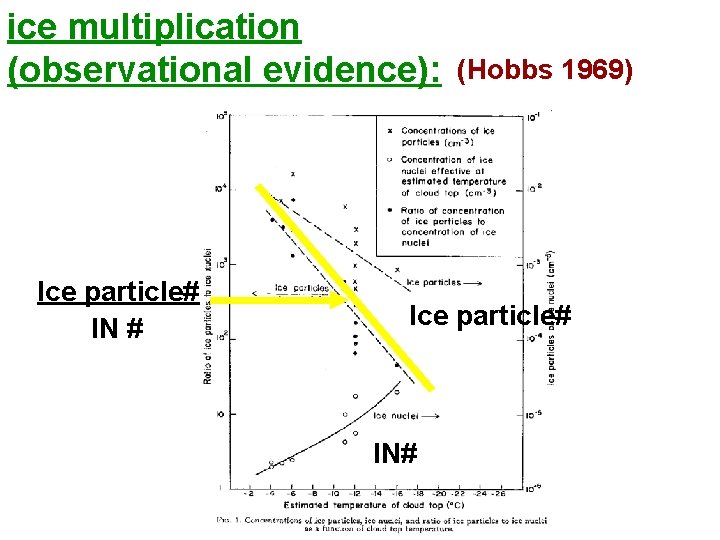
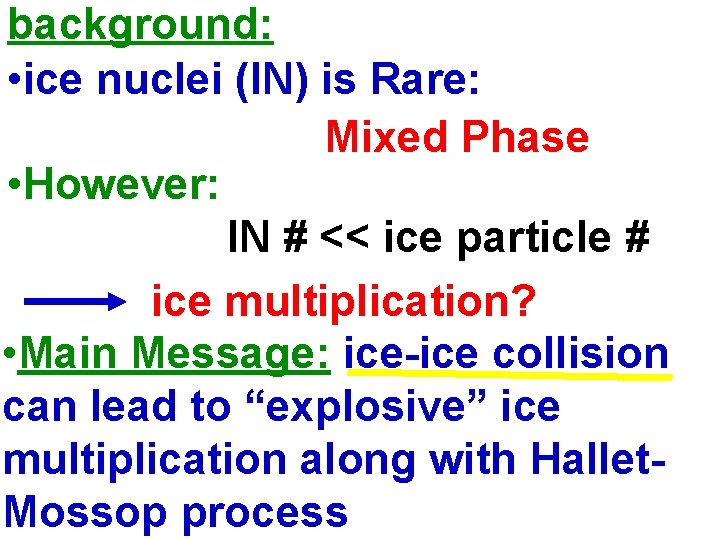
background: • ice nuclei (IN) is Rare: Mixed Phase • However: IN # << ice particle # ice multiplication?
ice multiplication (observational evidence): Ice particle# IN # (Hobbs 1969) Ice particle# IN#
background: • ice nuclei (IN) is Rare: Mixed Phase • However: IN # << ice particle # ice multiplication? • Main Message: ice-ice collision can lead to “explosive” ice multiplication along with Hallet. Mossop process
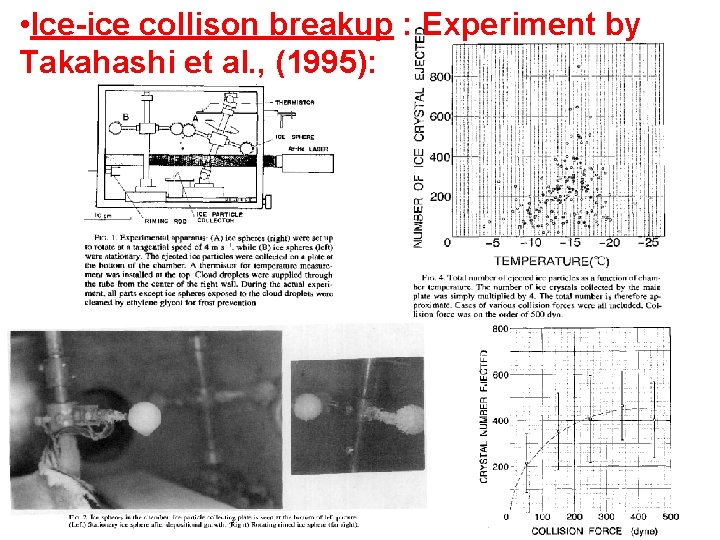
• Ice-ice collison breakup : Experiment by Takahashi et al. , (1995):
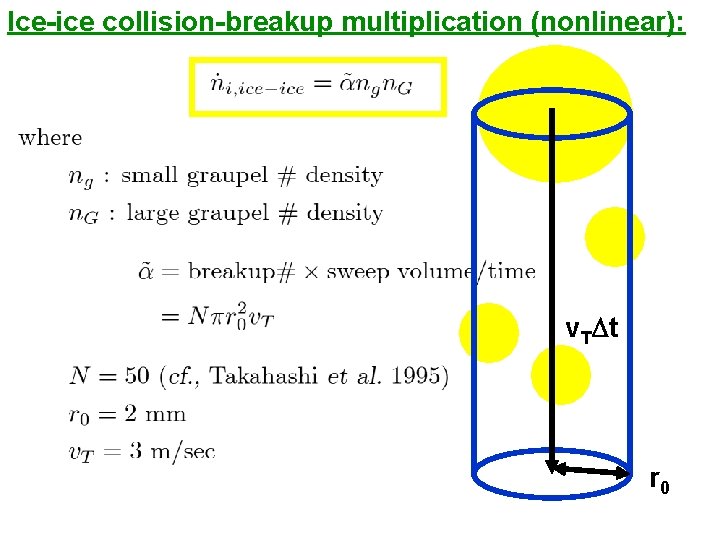
Ice-ice collision-breakup multiplication (nonlinear): v. TDt r 0
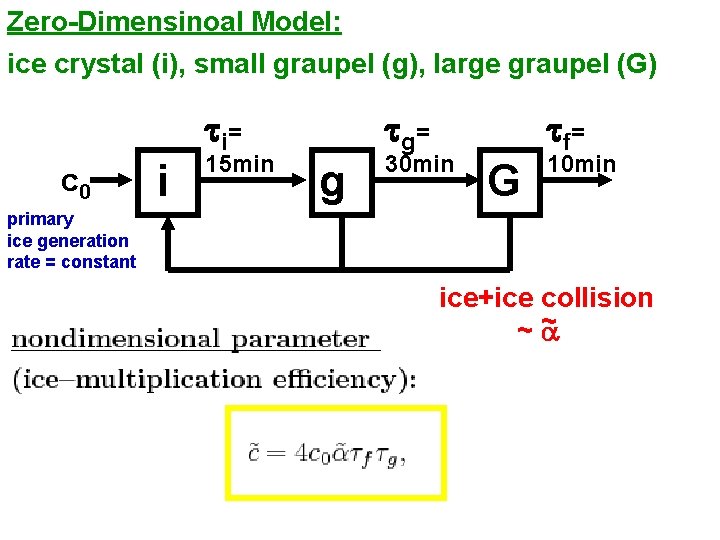
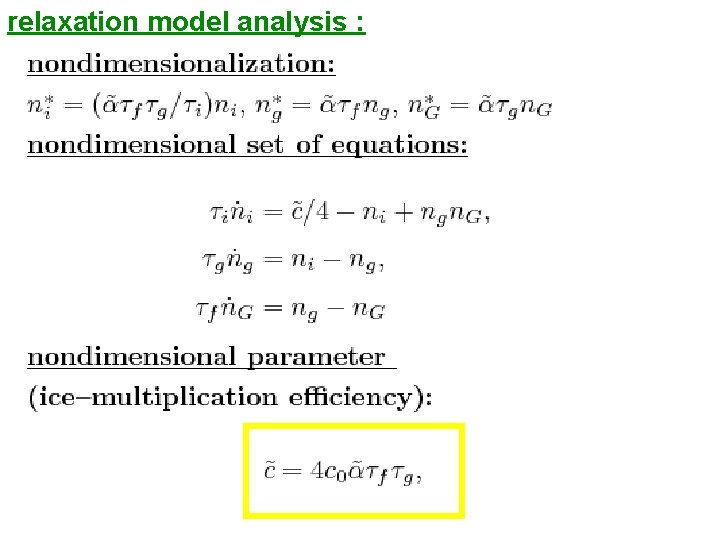
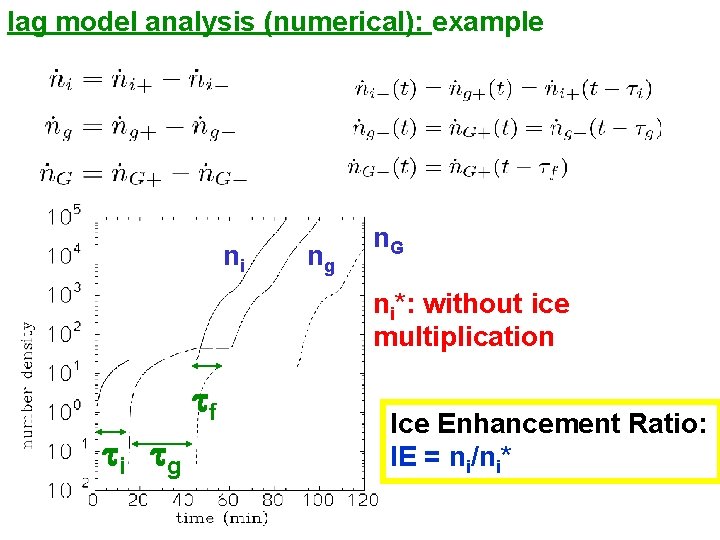
Zero-Dimensinoal Model: ice crystal (i), small graupel (g), large graupel (G) t i= c 0 i 15 min t g= g 30 min t f= G 10 min primary ice generation rate = constant ice+ice collision ~ ~a
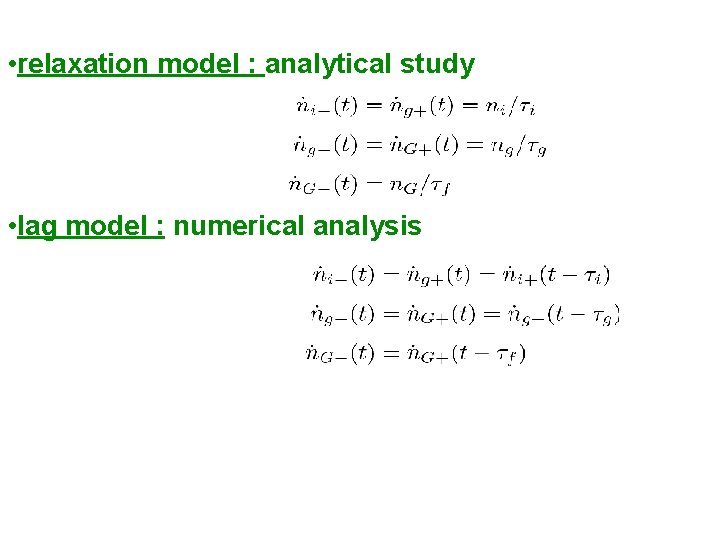
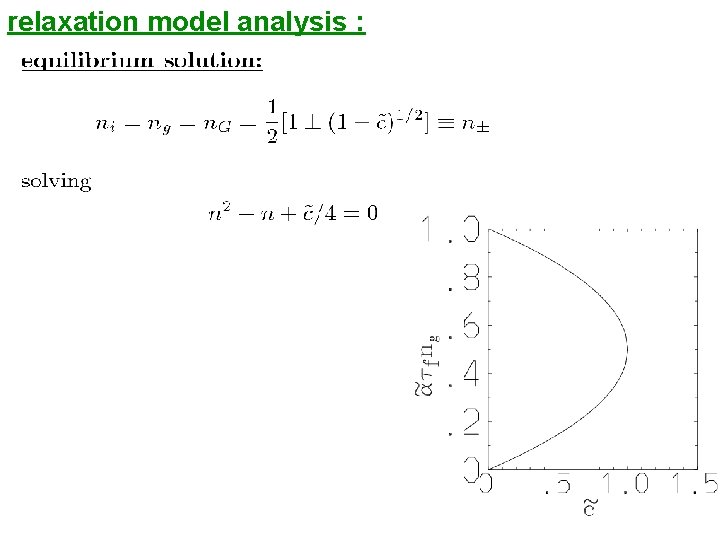
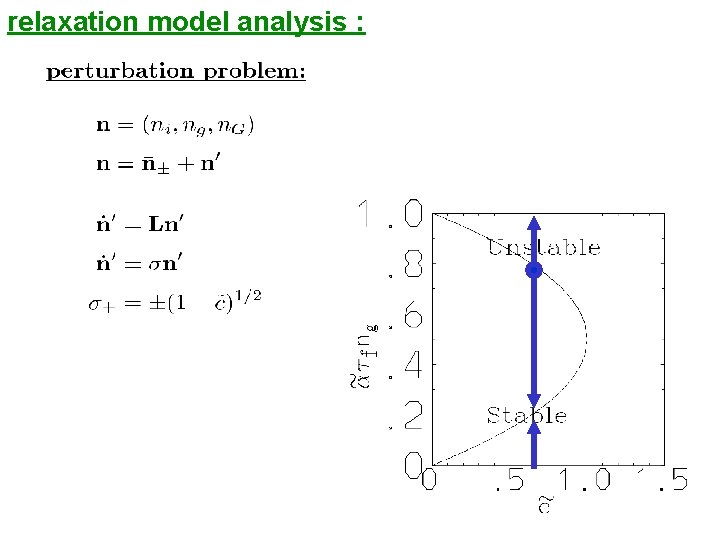
• relaxation model : analytical study • lag model : numerical analysis
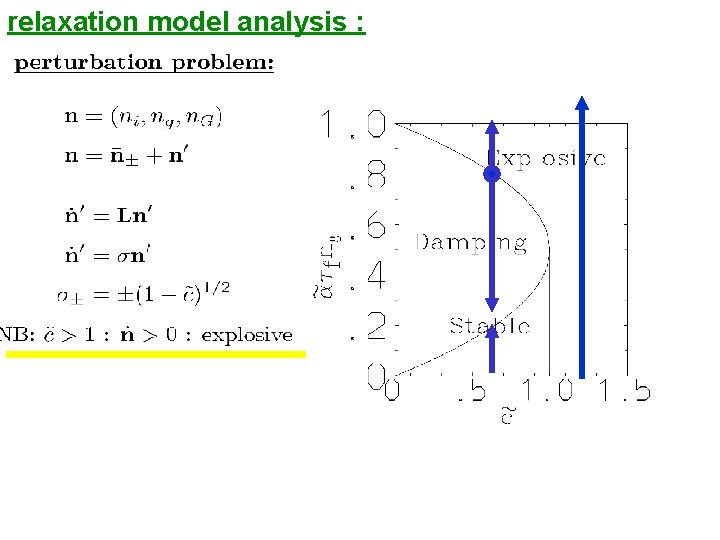
relaxation model analysis :
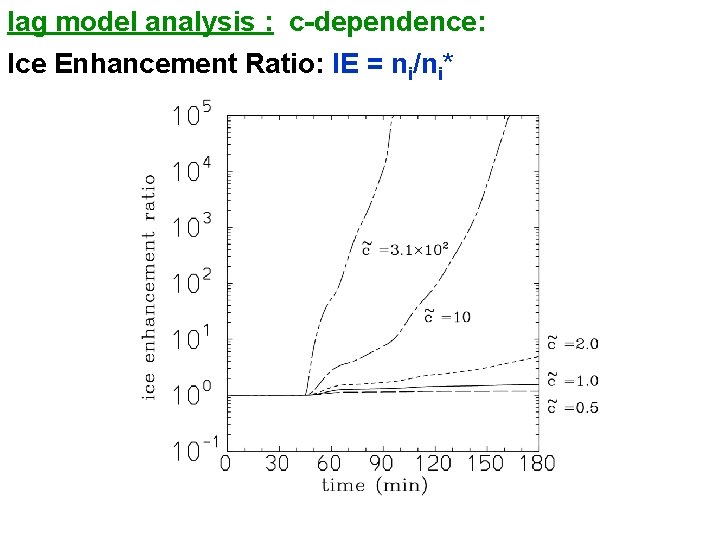
lag model analysis : c-dependence: Ice Enhancement Ratio: IE = ni/ni*
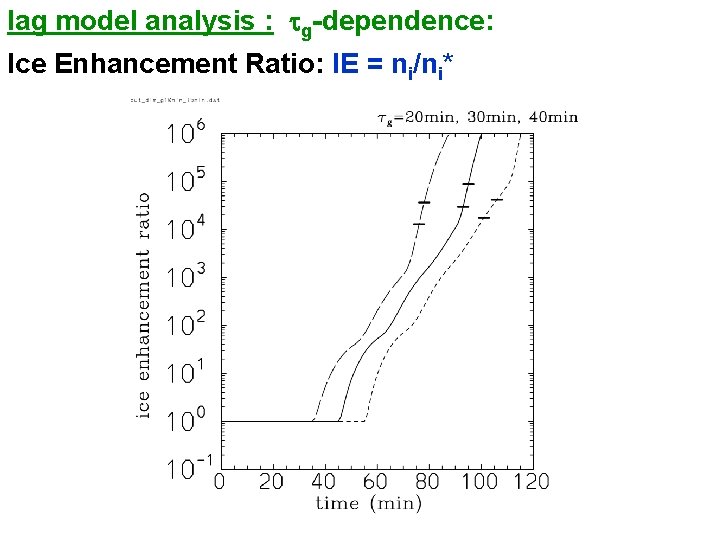
lag model analysis : tg-dependence: Ice Enhancement Ratio: IE = ni/ni*
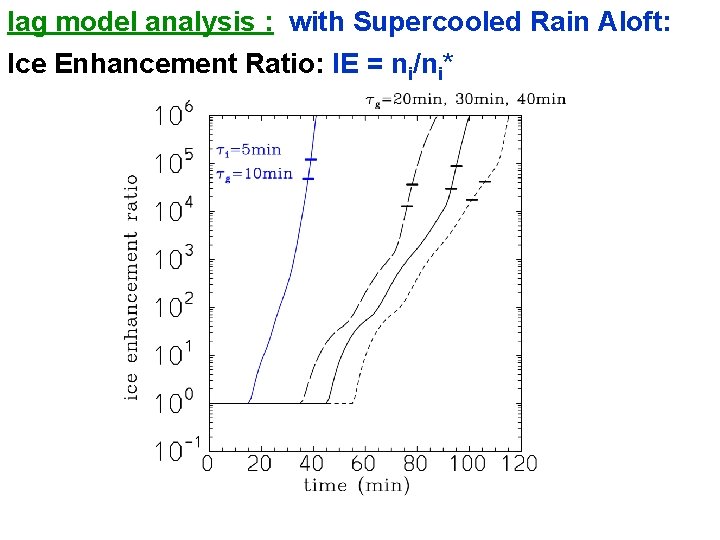
lag model analysis : with Supercooled Rain Aloft: Ice Enhancement Ratio: IE = ni/ni*
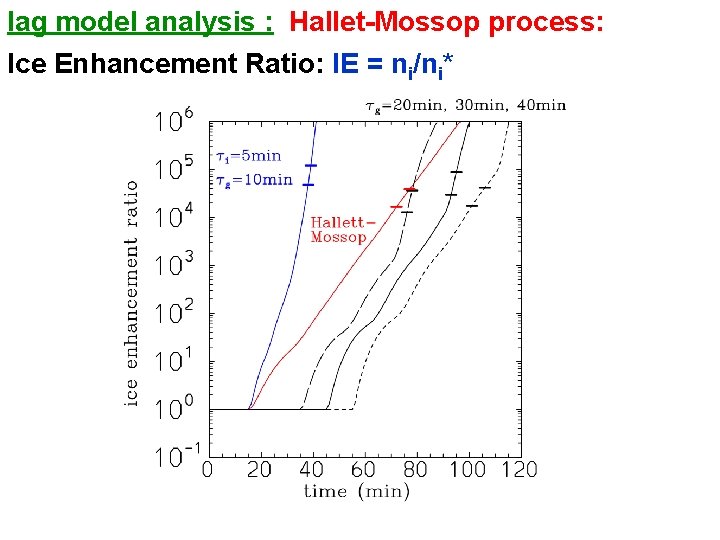
lag model analysis : Hallet-Mossop process: Ice Enhancement Ratio: IE = ni/ni*
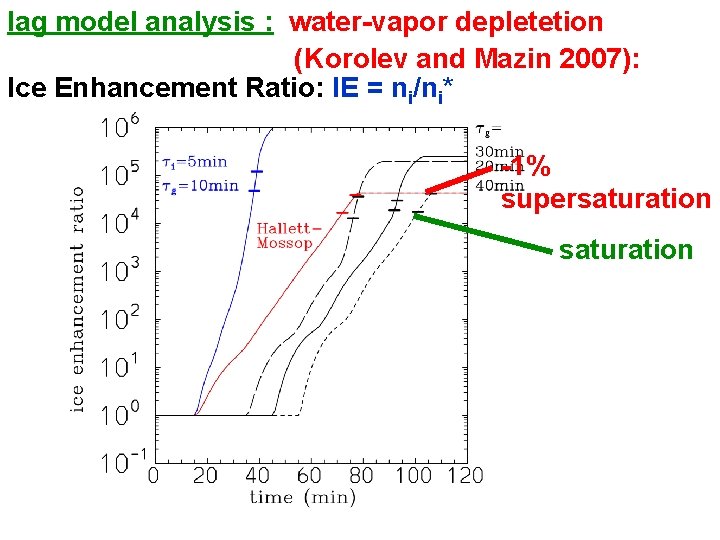
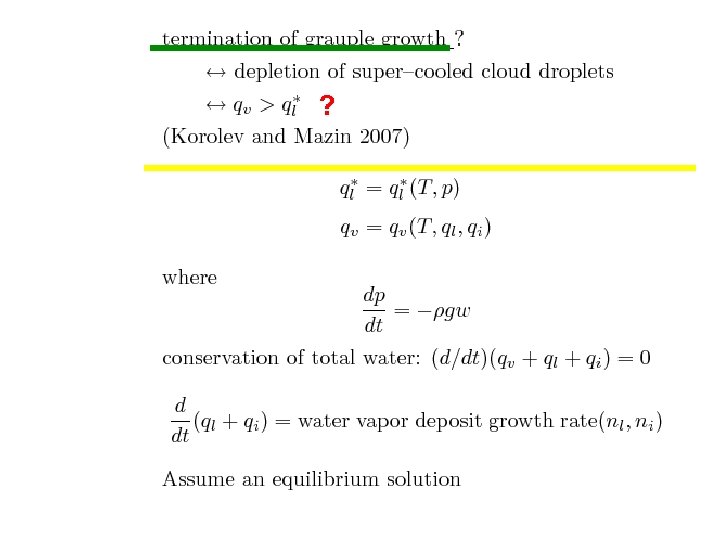
lag model analysis : water-vapor depletetion (Korolev and Mazin 2007): Ice Enhancement Ratio: IE = ni/ni* -1% supersaturation
Conclusion The Ice-Ice Collision Ice-Breakup leads to “Nonlinear” Explosive Ice. Multiplication Porcess. Potentially more powerful than Hallete. Mossop process • single parameter: >1
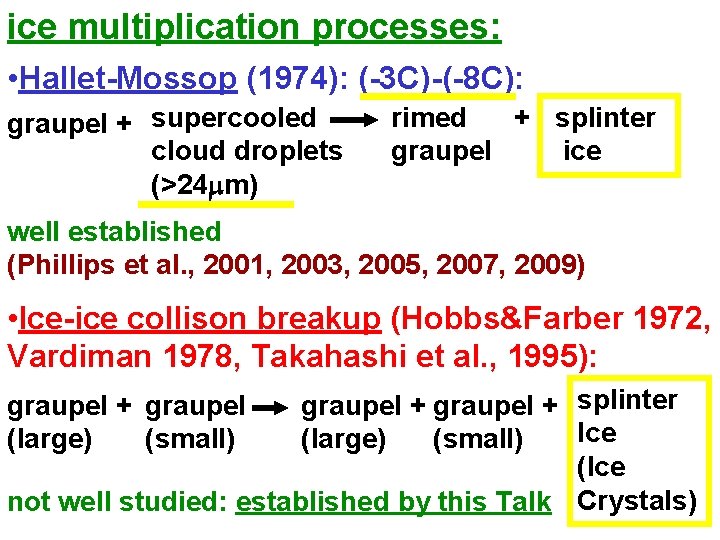
ice multiplication processes: • Hallet-Mossop (1974): (-3 C)-(-8 C): graupel + supercooled cloud droplets (>24 mm) rimed + splinter graupel ice well established (Phillips et al. , 2001, 2003, 2005, 2007, 2009) • Ice-ice collison breakup (Hobbs&Farber 1972, Vardiman 1978, Takahashi et al. , 1995): graupel + splinter Ice (large) (small) (Ice not well studied: established by this Talk Crystals) graupel + graupel (large) (small)
relaxation model analysis :
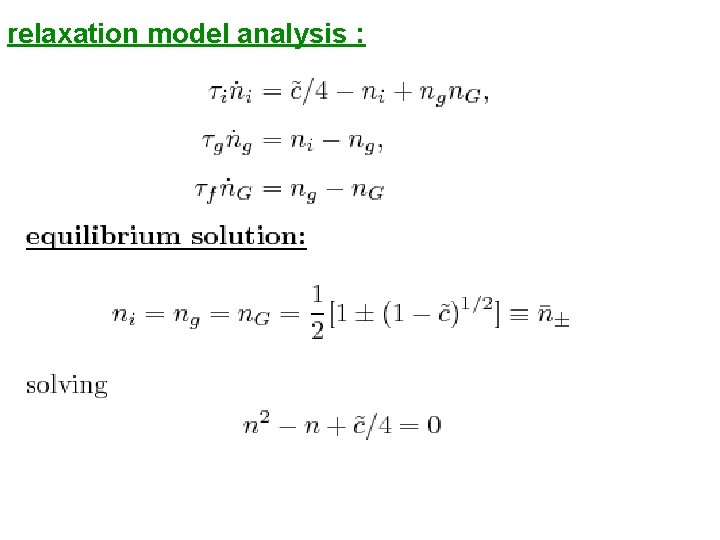
relaxation model analysis :
relaxation model analysis :
relaxation model analysis :
lag model analysis (numerical): example ni ng n. G ni*: without ice multiplication tf ti tg Ice Enhancement Ratio: IE = ni/ni*
summary • a high IE ratio of 104 is attained about an hour af in standard run without supercooled rain • the time for an IE ratio to exceed 104 is shortened to only 20 min with supercooled raindrops • the HM process starts much sooner than mechanical break-up if active • inclusion of the response of humidity to explosive ice multiplication yields a maximum IE ratio of the order of about 105