
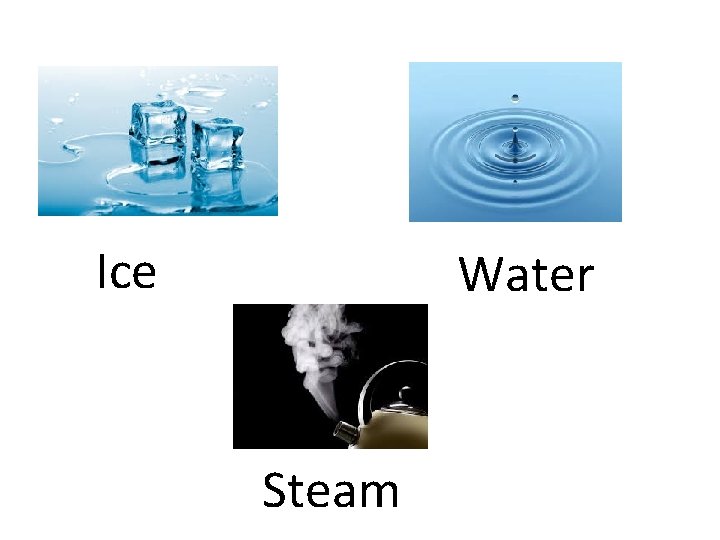
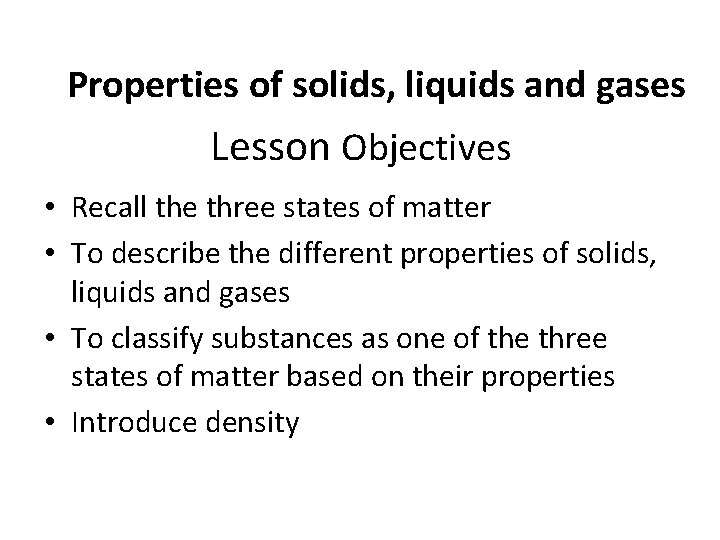
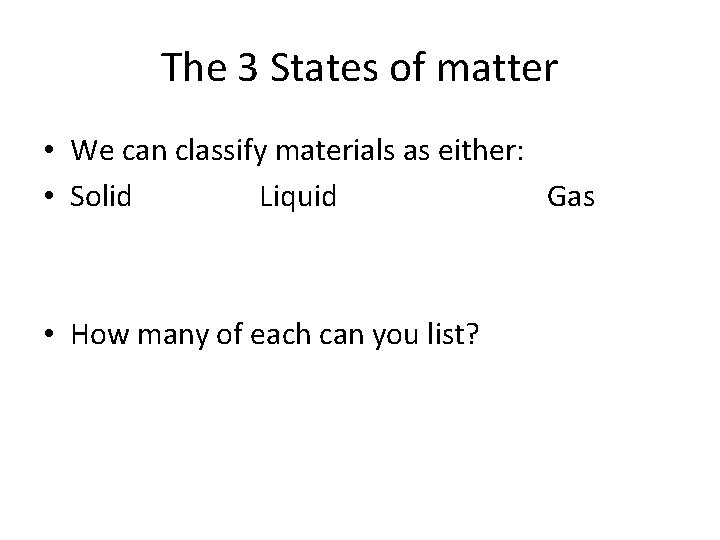
Ice Water Steam Properties of solids liquids and
- Slides: 16
Ice Water Steam
Properties of solids, liquids and gases Lesson Objectives • Recall the three states of matter • To describe the different properties of solids, liquids and gases • To classify substances as one of the three states of matter based on their properties • Introduce density
The 3 States of matter • We can classify materials as either: • Solid Liquid Gas • How many of each can you list?
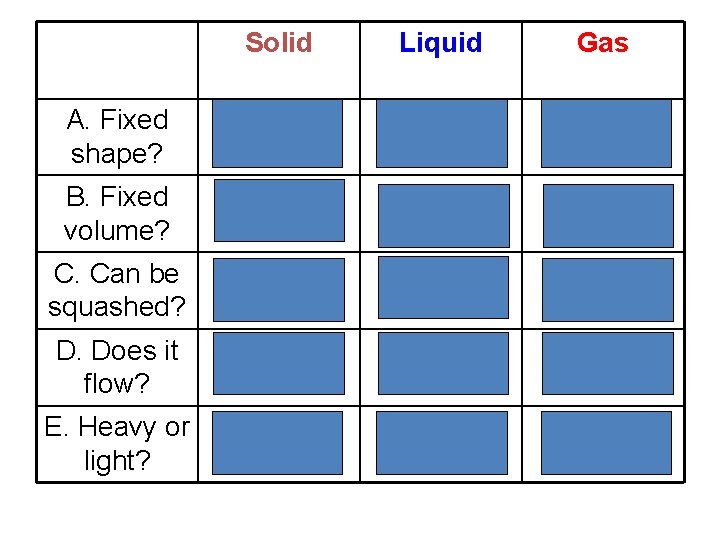
The 3 States of matter • Classify (sort) the objects you have been given into solids, liquids and gases, and record it in your book. • Think about the properties of each state and fill in the next table as you do the practical
Solid Liquid Gas A. Fixed shape? YES NO NO B. Fixed volume? YES NO C. Can be squashed? NO NO YES D. Does it flow? NO YES E. Heavy or light? Heavy Medium Light
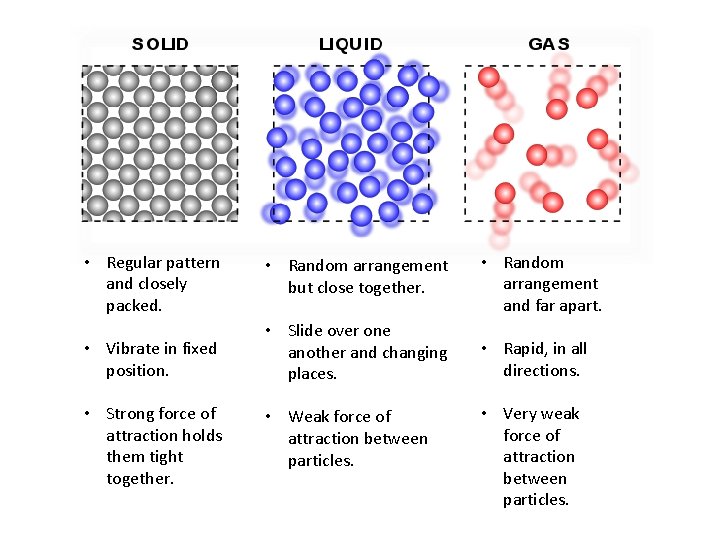
• Regular pattern and closely packed. • Random arrangement but close together. • Random arrangement and far apart. • Vibrate in fixed position. • Slide over one another and changing places. • Rapid, in all directions. • Strong force of attraction holds them tight together. • Weak force of attraction between particles. • Very weak force of attraction between particles.
Solid • A solid has a fixed shape, a fixed volume, and can NOT be squashed.
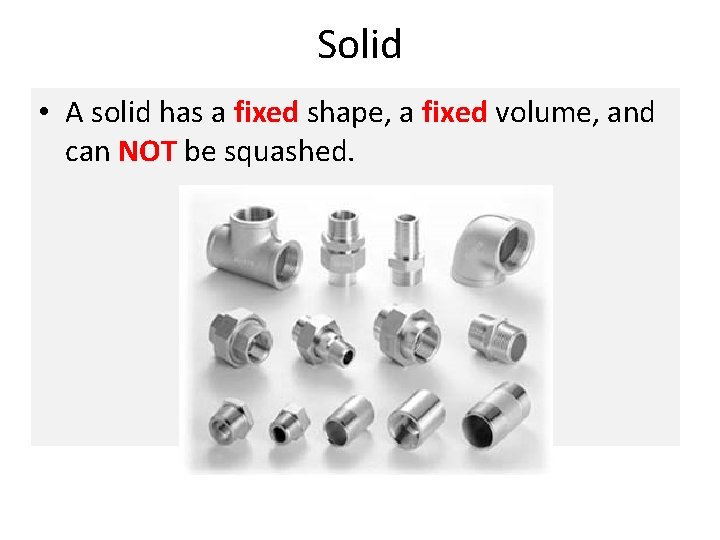
Solid • A solid has a fixed shape, a fixed volume, and can NOT be squashed.
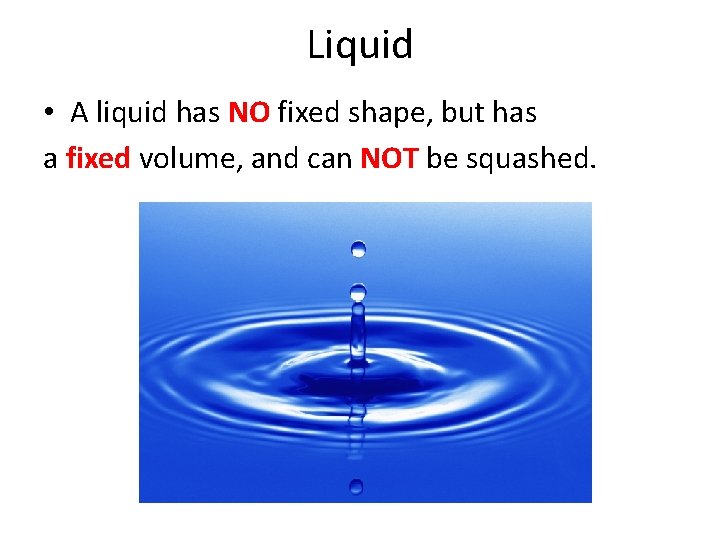
Liquid • A liquid has NO fixed shape, but has a fixed volume, and can NOT be squashed.
Liquid • A liquid has NO fixed shape, but has a fixed volume, and can NOT be squashed.
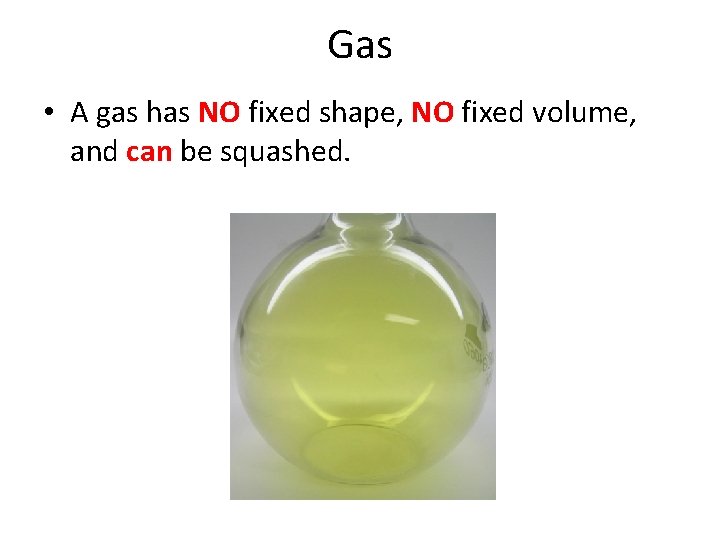
Gas • A gas has NO fixed shape, NO fixed volume, and can be squashed.
Gas • A gas has NO fixed shape, NO fixed volume, and can be squashed.
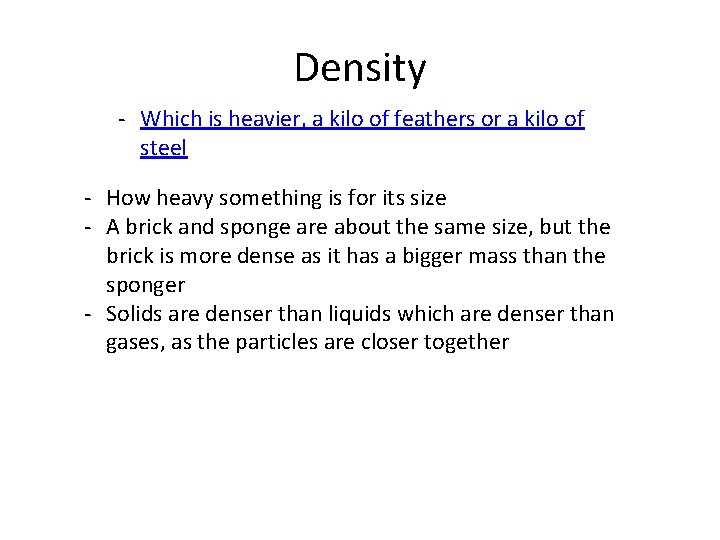
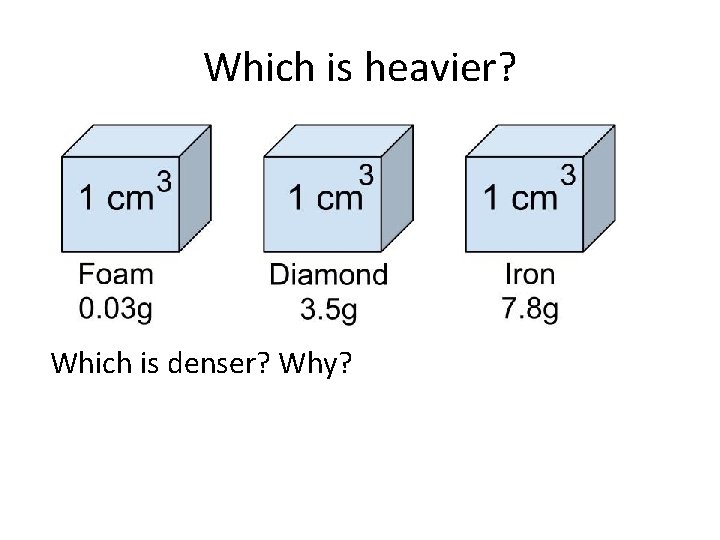
Density - Which is heavier, a kilo of feathers or a kilo of steel - How heavy something is for its size - A brick and sponge are about the same size, but the brick is more dense as it has a bigger mass than the sponger - Solids are denser than liquids which are denser than gases, as the particles are closer together
Which is heavier? Which is denser? Why?
Homework • Learn spellings and definitions of keywords for this topic
Plenary • Can you walk on custard? ? ? (4. 00 min)