
ICD10 CM Overview with Concentration on Neoplasms and

- Slides: 35
ICD-10 CM Overview with Concentration on Neoplasms and Fracture Elizabeth Kollai RHIT, CCS-P, CHTS-TR AHIMA Approved ICD-10 Trainer
Only 136 days left before ICD-10 CM Are you ready?
ICD-10 CM Resources 2015 ICD-10 -CM is available at http: //www. cdc. gov/nchs/icd 10 cm. htm or http: //www. cms. hhs. gov/ICD 10 2015 ICD-10 -CM Index to Diseases and Injuries 2015 ICD-10 -CM Tabular List of Diseases and Injuries Instructional Notations 2015 Official Guidelines for Coding and Reporting 2015 Table of Drugs and Chemicals 2015 Neoplasm Table 2015 Index to External Causes 2015 Mapping ICD-9 -CM to ICD-10 -CM and ICD-10 -CM to ICD-9 -CM
Changes from ICD-9 CM 21 chapters instead of 17 chapters in ICD-9 CM V and E supplemental codes are incorporated into the main ICD-10 CM codes Injuries are grouped by site and then type instead of first by type as in ICD-9 CM ICD-10 -CM codes are alphanumeric and can be up to seven characters in length ICD-10 -CM added seventh characters for obstetrics, injuries, and external causes of injuries ICD-10 -CM added a placeholder X
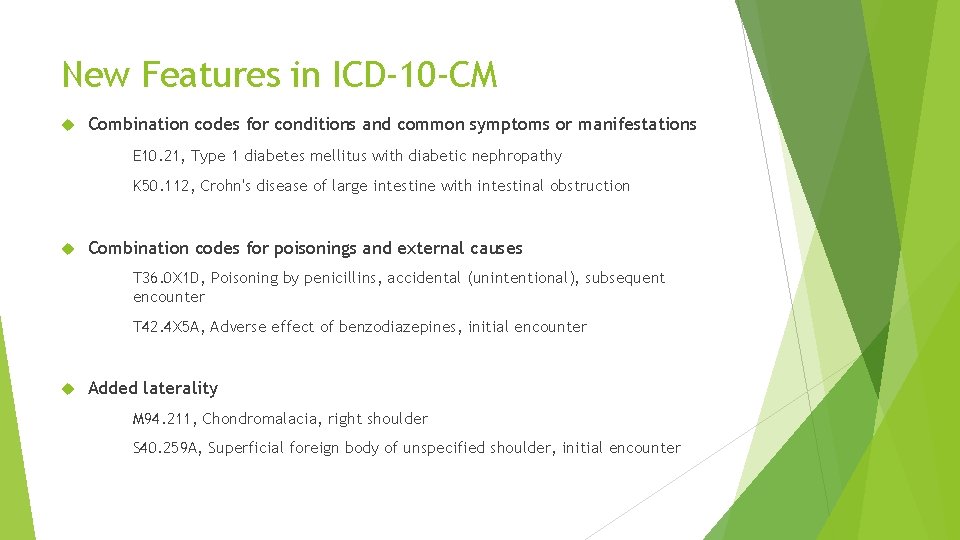
New Features in ICD-10 -CM Combination codes for conditions and common symptoms or manifestations E 10. 21, Type 1 diabetes mellitus with diabetic nephropathy K 50. 112, Crohn's disease of large intestine with intestinal obstruction Combination codes for poisonings and external causes T 36. 0 X 1 D, Poisoning by penicillins, accidental (unintentional), subsequent encounter T 42. 4 X 5 A, Adverse effect of benzodiazepines, initial encounter Added laterality M 94. 211, Chondromalacia, right shoulder S 40. 259 A, Superficial foreign body of unspecified shoulder, initial encounter
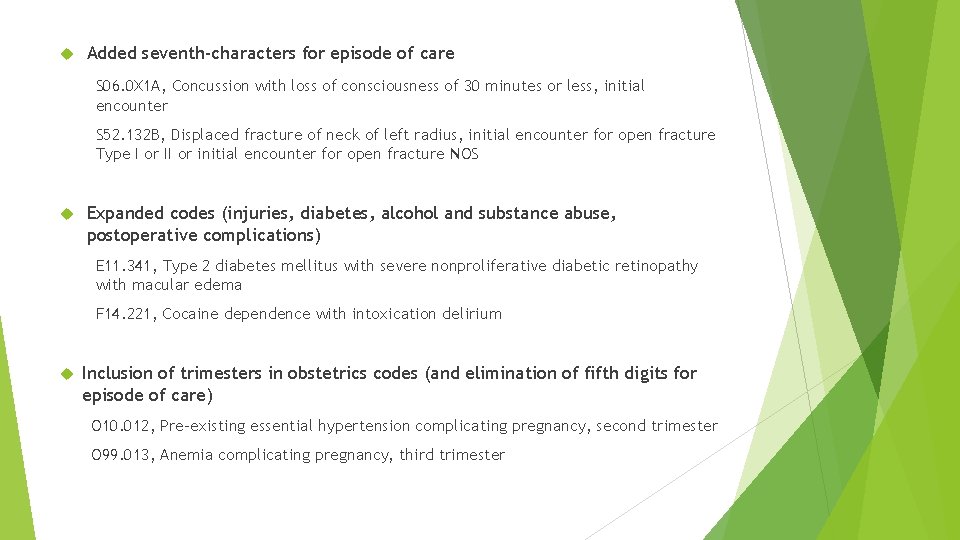
Added seventh-characters for episode of care S 06. 0 X 1 A, Concussion with loss of consciousness of 30 minutes or less, initial encounter S 52. 132 B, Displaced fracture of neck of left radius, initial encounter for open fracture Type I or II or initial encounter for open fracture NOS Expanded codes (injuries, diabetes, alcohol and substance abuse, postoperative complications) E 11. 341, Type 2 diabetes mellitus with severe nonproliferative diabetic retinopathy with macular edema F 14. 221, Cocaine dependence with intoxication delirium Inclusion of trimesters in obstetrics codes (and elimination of fifth digits for episode of care) O 10. 012, Pre-existing essential hypertension complicating pregnancy, second trimester O 99. 013, Anemia complicating pregnancy, third trimester
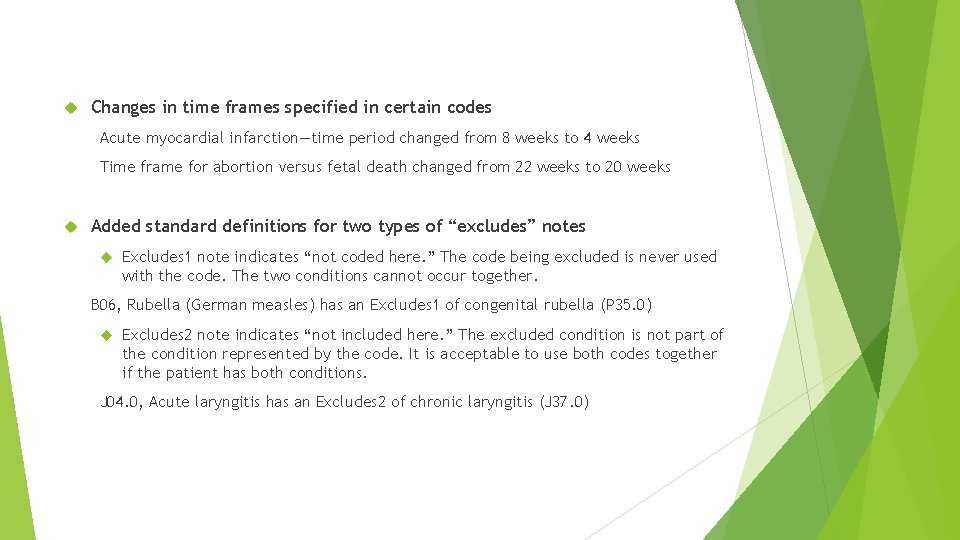
Changes in time frames specified in certain codes Acute myocardial infarction—time period changed from 8 weeks to 4 weeks Time frame for abortion versus fetal death changed from 22 weeks to 20 weeks Added standard definitions for two types of “excludes” notes Excludes 1 note indicates “not coded here. ” The code being excluded is never used with the code. The two conditions cannot occur together. B 06, Rubella (German measles) has an Excludes 1 of congenital rubella (P 35. 0) Excludes 2 note indicates “not included here. ” The excluded condition is not part of the condition represented by the code. It is acceptable to use both codes together if the patient has both conditions. J 04. 0, Acute laryngitis has an Excludes 2 of chronic laryngitis (J 37. 0)
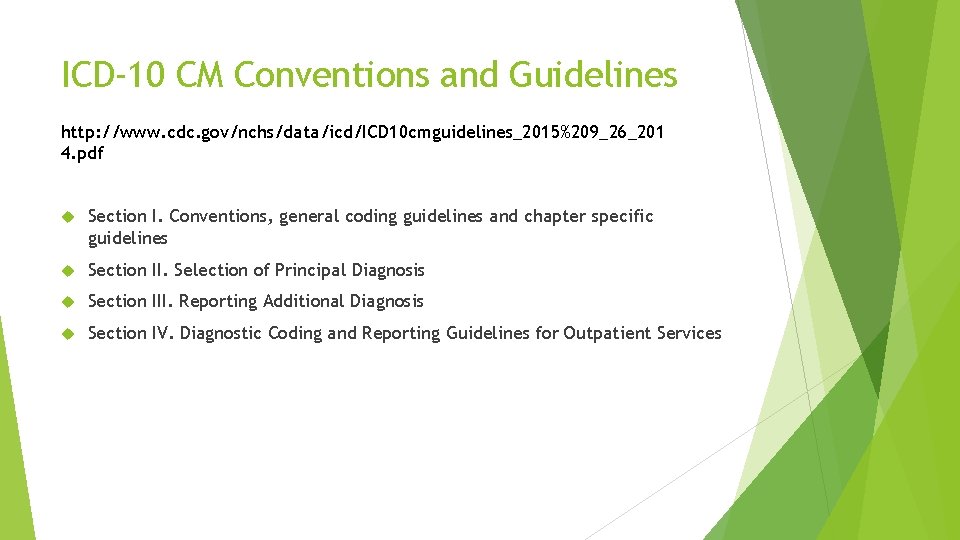
ICD-10 CM Conventions and Guidelines http: //www. cdc. gov/nchs/data/icd/ICD 10 cmguidelines_2015%209_26_201 4. pdf Section I. Conventions, general coding guidelines and chapter specific guidelines Section II. Selection of Principal Diagnosis Section III. Reporting Additional Diagnosis Section IV. Diagnostic Coding and Reporting Guidelines for Outpatient Services
Chapter 2: Neoplasms (C 00 -D 49)
Changes from ICD-9 CM ICD-10 -CM, the block of codes for in situ neoplasms is located before the block for benign neoplasms. The addition in ICD-10 -CM of a separate fifth character for extranodal and solid organ sites for lymphomas and Hodgkin's. ICD-9 -CM included these sites with the fifth digit for unspecified site in codes for Hodgkin's disease, non-Hodgkin's lymphoma, peripheral, and cutaneous T-cell lymphomas.
Guidelines To properly code a neoplasm it is necessary to determine from the record if the neoplasm is benign, in-situ, malignant, or of uncertain histologic behavior. If malignant, any secondary (metastatic) sites should also be determined. Treatment directed at the malignancy Treatment of secondary site Coding and sequencing of complications Anemia associated with malignancy Anemia associated with chemotherapy, immunotherapy and radiation therapy Management of dehydration due to the malignancy Treatment of a complication resulting from a surgical procedure Primary malignancy previously excised
Admissions/Encounters involving chemotherapy, immunotherapy and radiation therapy Episode of care involves surgical removal of neoplasm Patient admission/encounter solely for administration of chemotherapy, immunotherapy and radiation therapy Patient admitted for radiation therapy, chemotherapy or immunotherapy and develops complications Admission/encounter to determine extent of malignancy Symptoms, signs, and abnormal findings listed in Chapter 18 associated with neoplasms Admission/encounter for pain control/management Malignancy in two or more noncontiguous sites Disseminated malignant neoplasm, unspecified Malignant neoplasm without specification of site
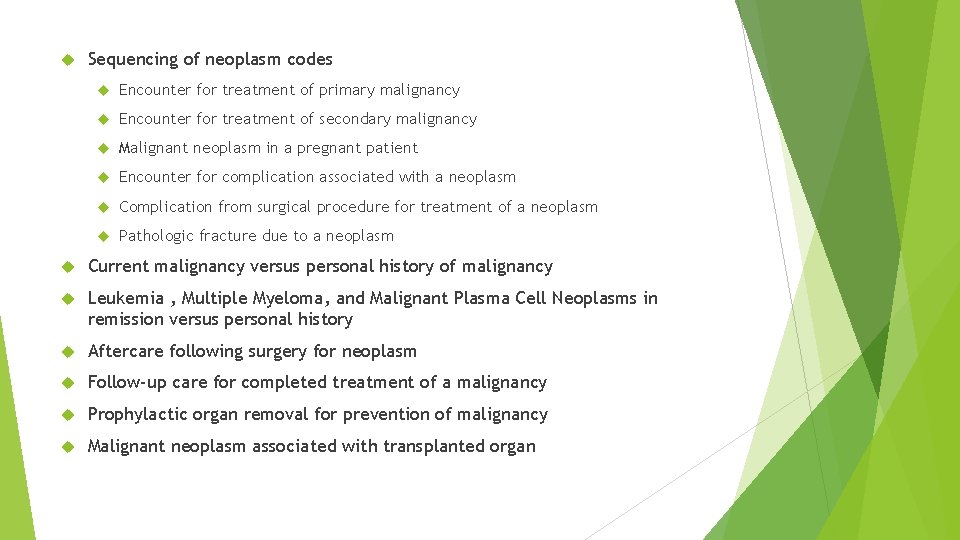
Sequencing of neoplasm codes Encounter for treatment of primary malignancy Encounter for treatment of secondary malignancy Malignant neoplasm in a pregnant patient Encounter for complication associated with a neoplasm Complication from surgical procedure for treatment of a neoplasm Pathologic fracture due to a neoplasm Current malignancy versus personal history of malignancy Leukemia , Multiple Myeloma, and Malignant Plasma Cell Neoplasms in remission versus personal history Aftercare following surgery for neoplasm Follow-up care for completed treatment of a malignancy Prophylactic organ removal for prevention of malignancy Malignant neoplasm associated with transplanted organ
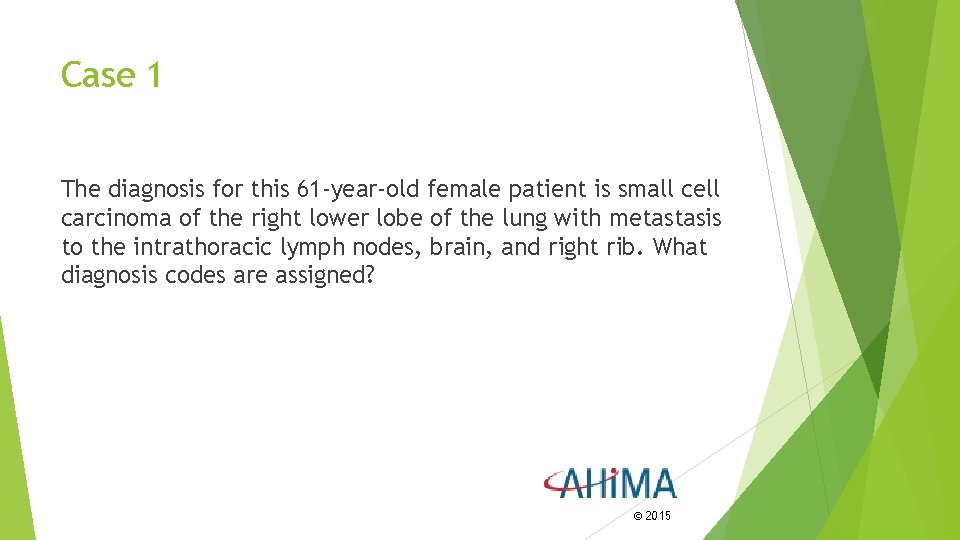
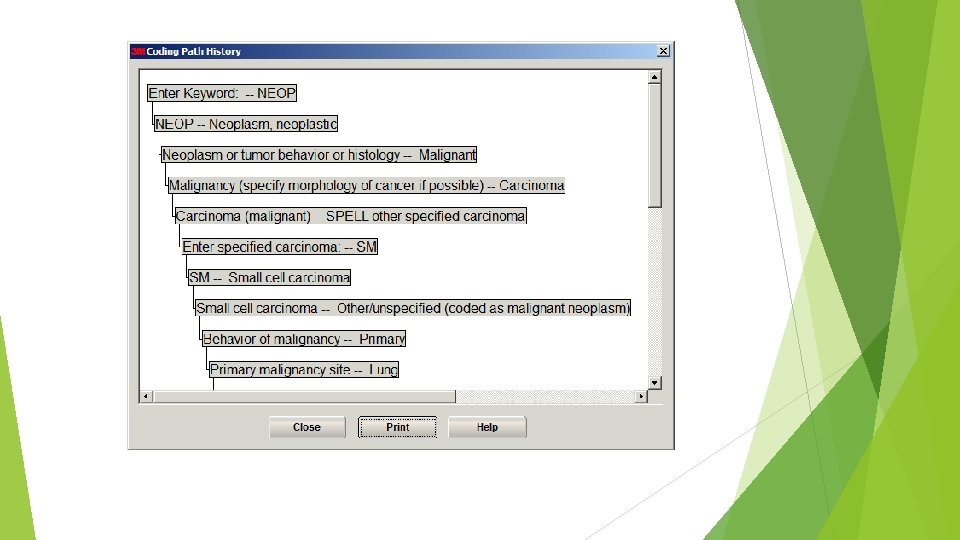
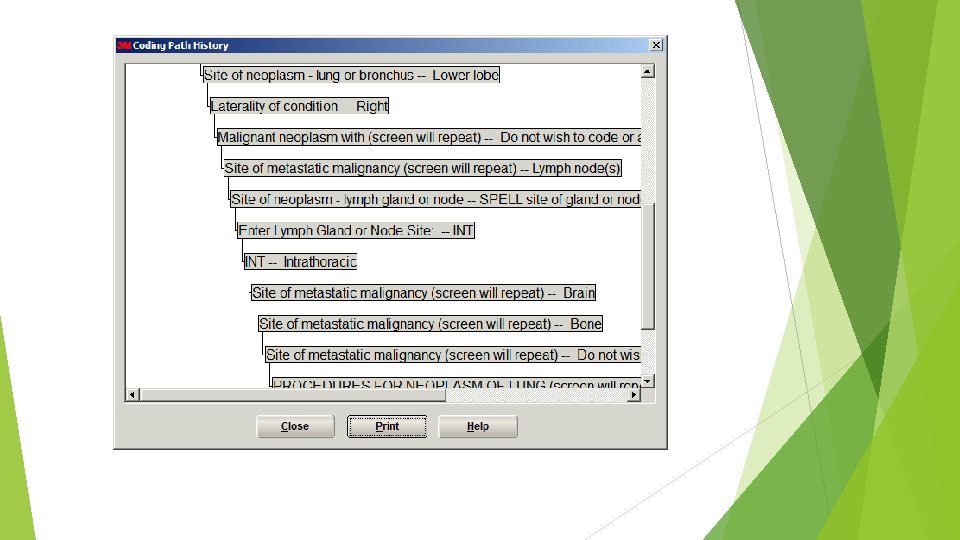
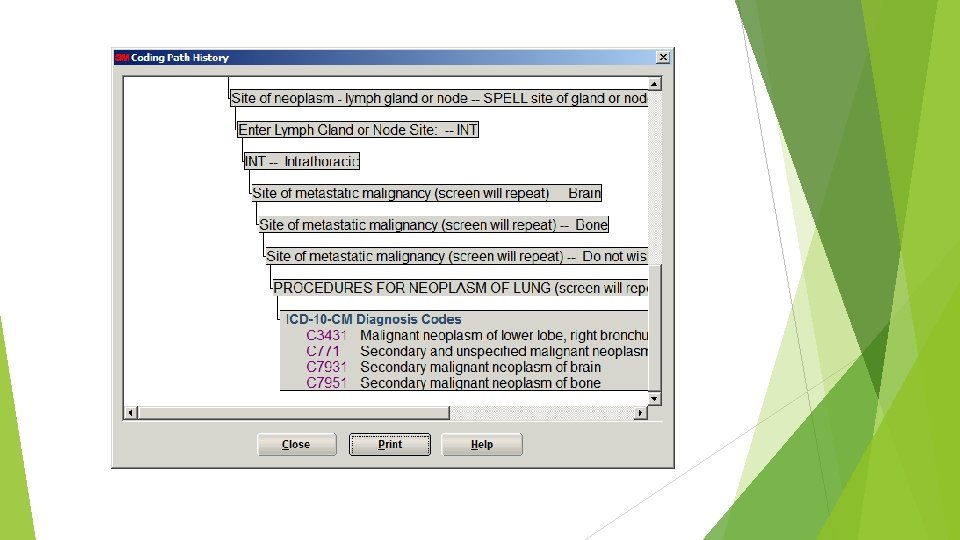
Case 1 The diagnosis for this 61 -year-old female patient is small cell carcinoma of the right lower lobe of the lung with metastasis to the intrathoracic lymph nodes, brain, and right rib. What diagnosis codes are assigned? © 2015
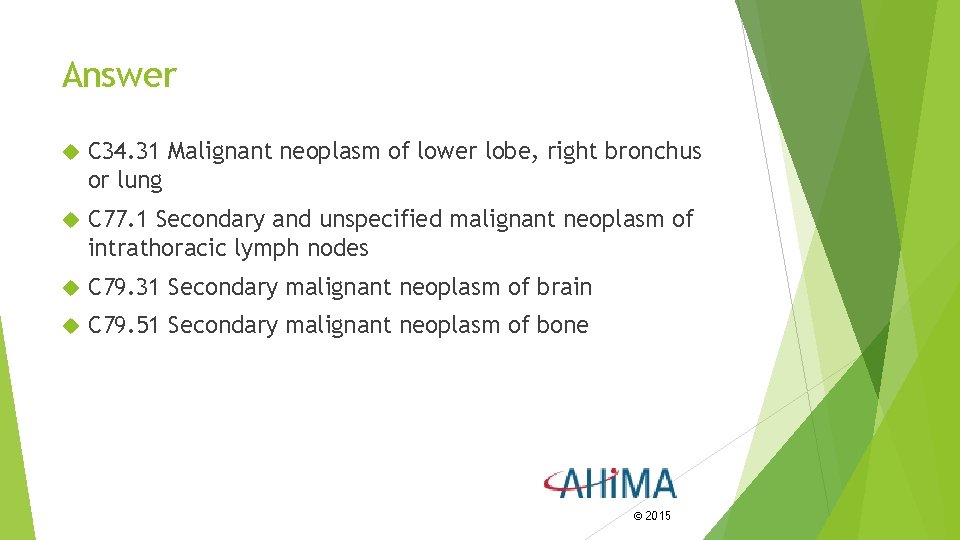
Answer C 34. 31 Malignant neoplasm of lower lobe, right bronchus or lung C 77. 1 Secondary and unspecified malignant neoplasm of intrathoracic lymph nodes C 79. 31 Secondary malignant neoplasm of brain C 79. 51 Secondary malignant neoplasm of bone © 2015
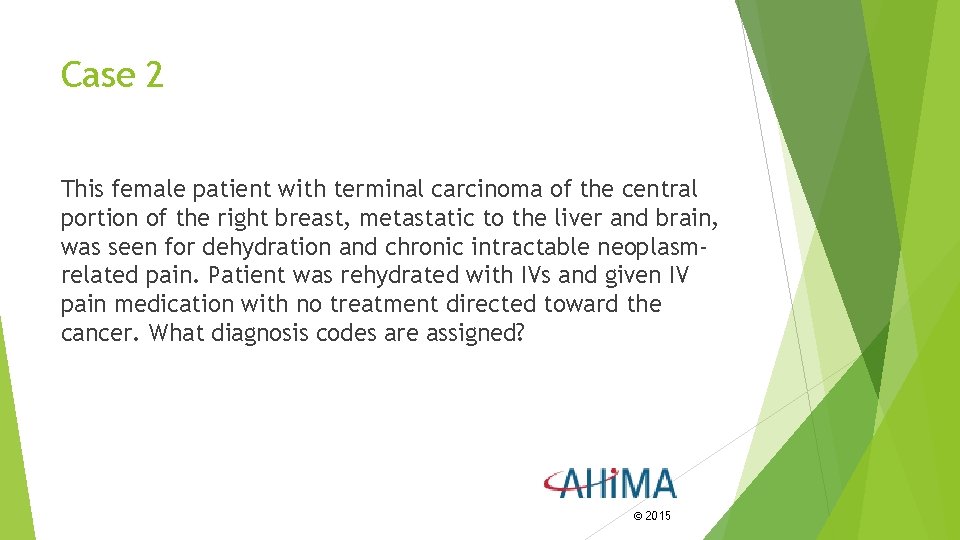
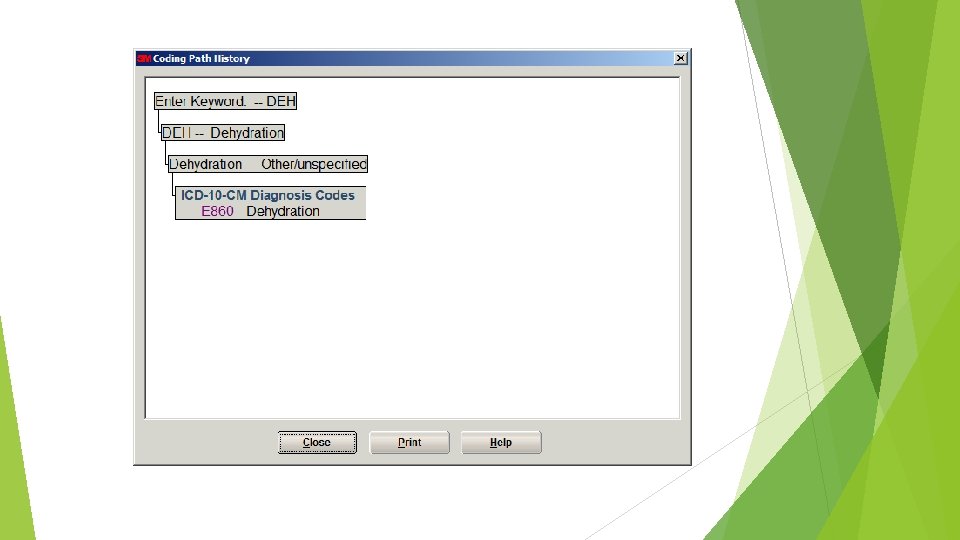
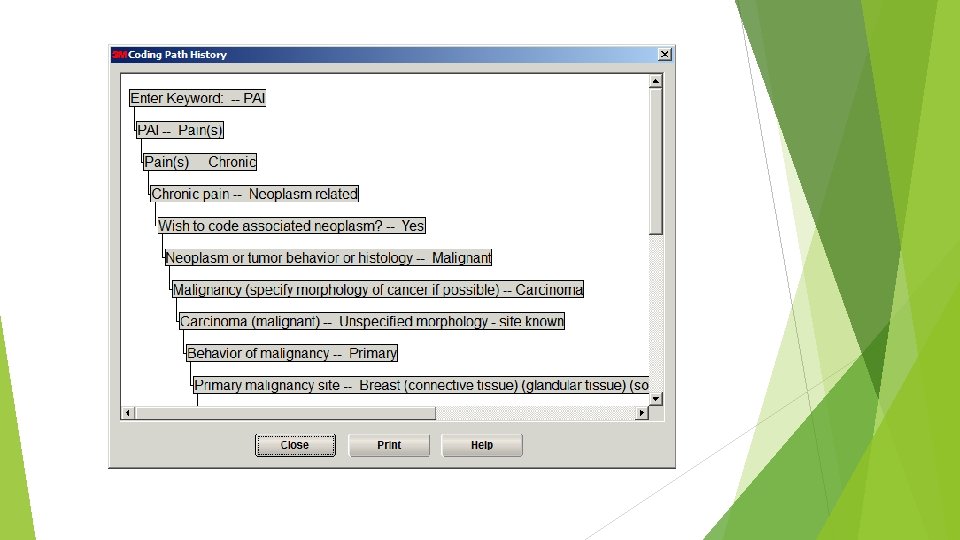
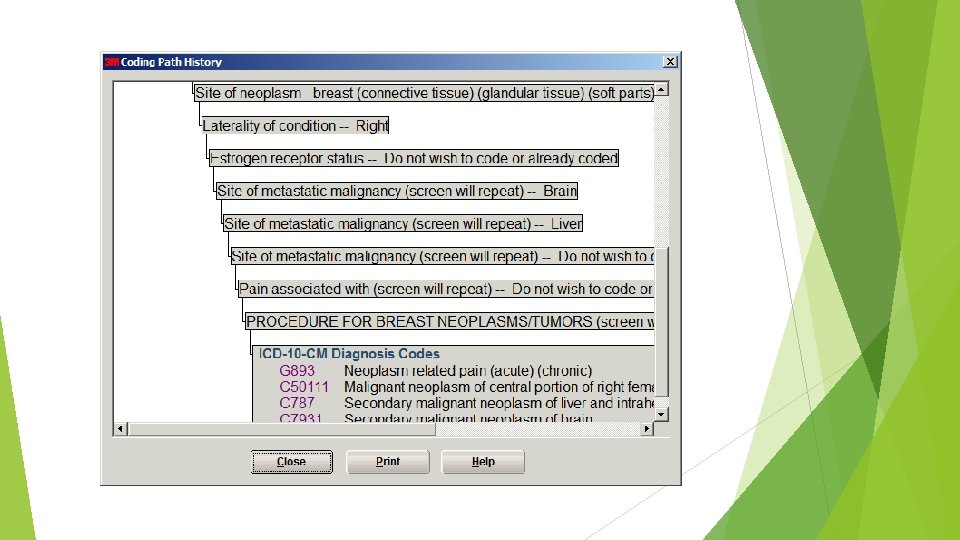
Case 2 This female patient with terminal carcinoma of the central portion of the right breast, metastatic to the liver and brain, was seen for dehydration and chronic intractable neoplasmrelated pain. Patient was rehydrated with IVs and given IV pain medication with no treatment directed toward the cancer. What diagnosis codes are assigned? © 2015
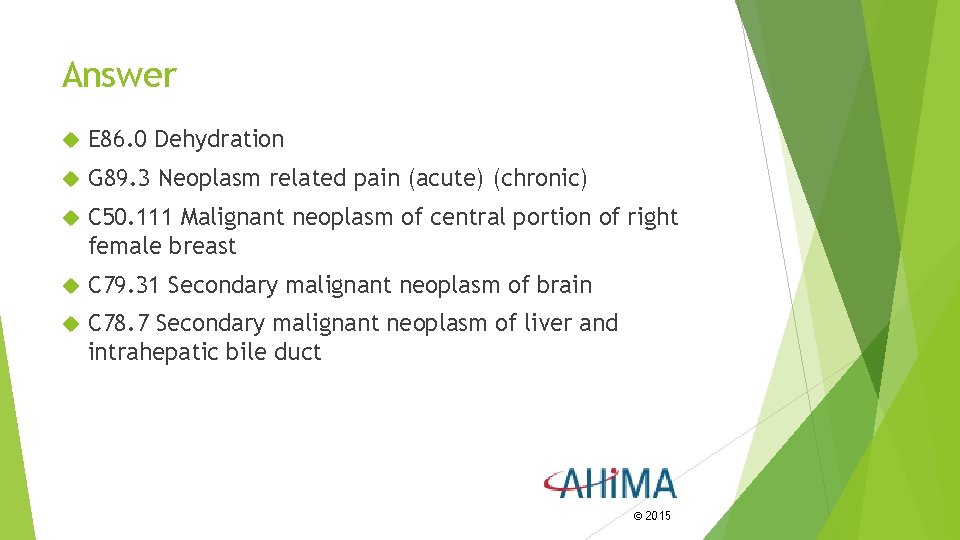
Answer E 86. 0 Dehydration G 89. 3 Neoplasm related pain (acute) (chronic) C 50. 111 Malignant neoplasm of central portion of right female breast C 79. 31 Secondary malignant neoplasm of brain C 78. 7 Secondary malignant neoplasm of liver and intrahepatic bile duct © 2015
Fractures in Chapter 19: Injury, poisoning and certain other consequences of external causes (S 00 -T 88)
Changes from ICD-9 CM related to fractures Injuries are grouped by body part instead of by injury type Greater specificity Laterality Type of fracture Location of fracture Displacement status Healing status Seventh character indicates initial, subsequent, sequel Additional seventh characters for Gustilo open fracture classification
Guidelines Application of 7 th Characters in Chapter 19 Coding of Traumatic Fractures Initial vs. Subsequent Encounter for Fractures Multiple fractures sequencing
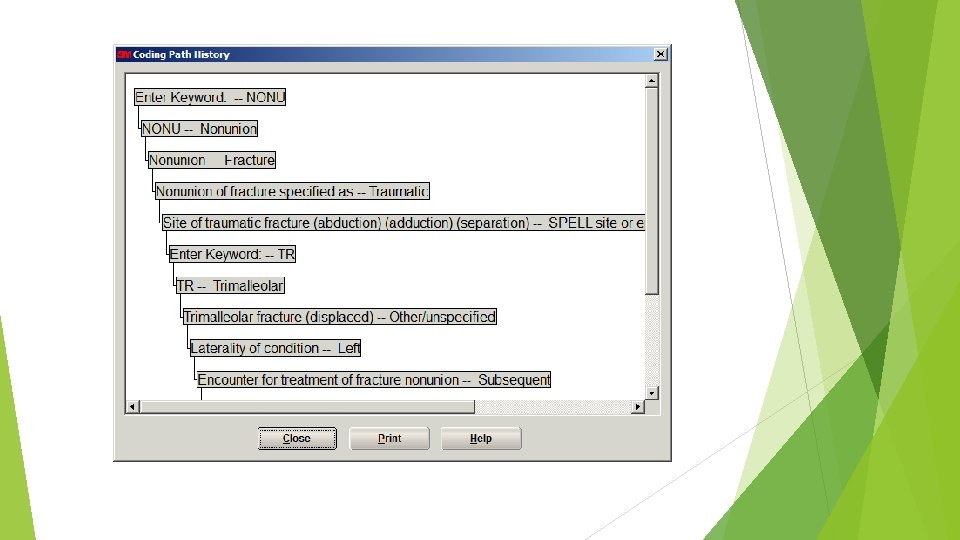
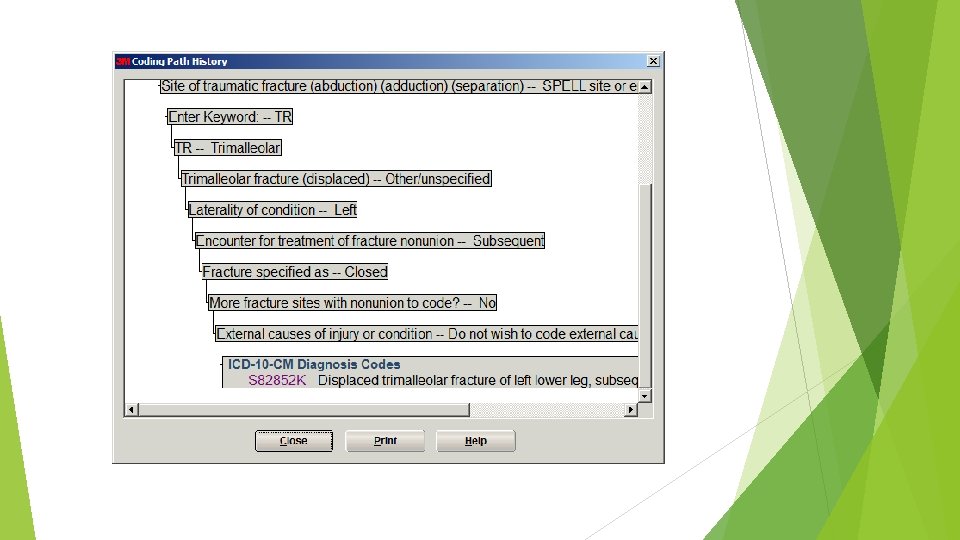
Case 1 This patient is seen for increased pain in her ankle. She has previous trimalleolar fracture of the left ankle. After evaluation she was found to have a nonunion of her left trimalleolar fracture. What is the correct diagnosis code(s)? (Do not assign external cause codes. ) © 2015
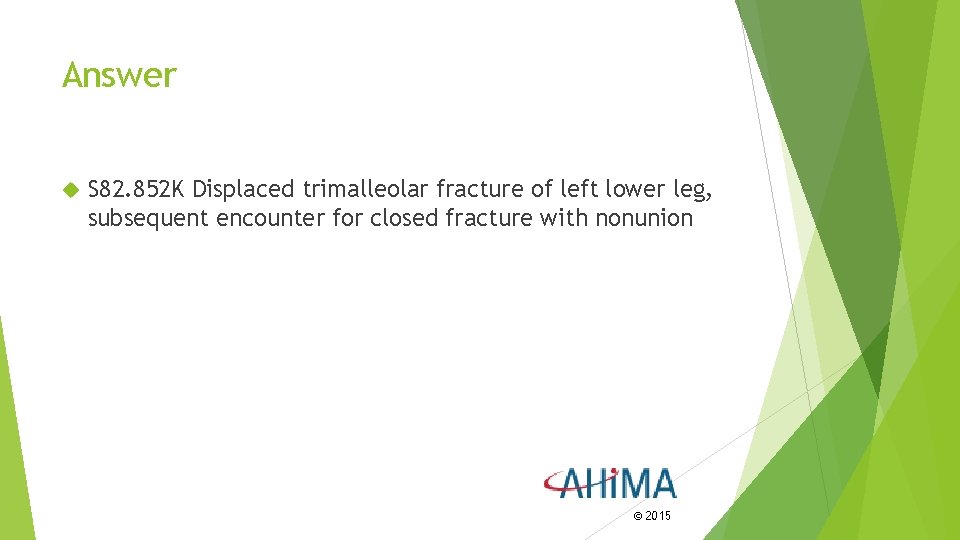
Answer S 82. 852 K Displaced trimalleolar fracture of left lower leg, subsequent encounter for closed fracture with nonunion © 2015
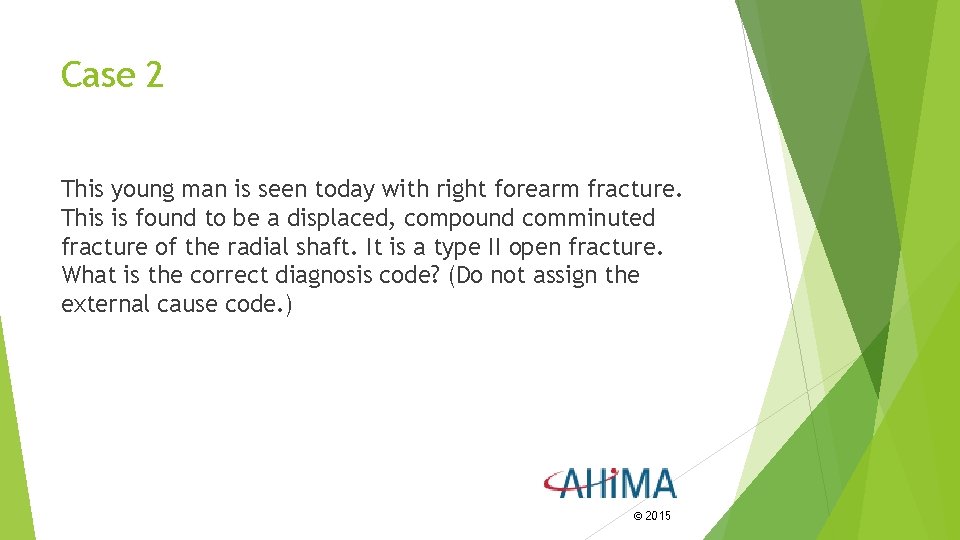
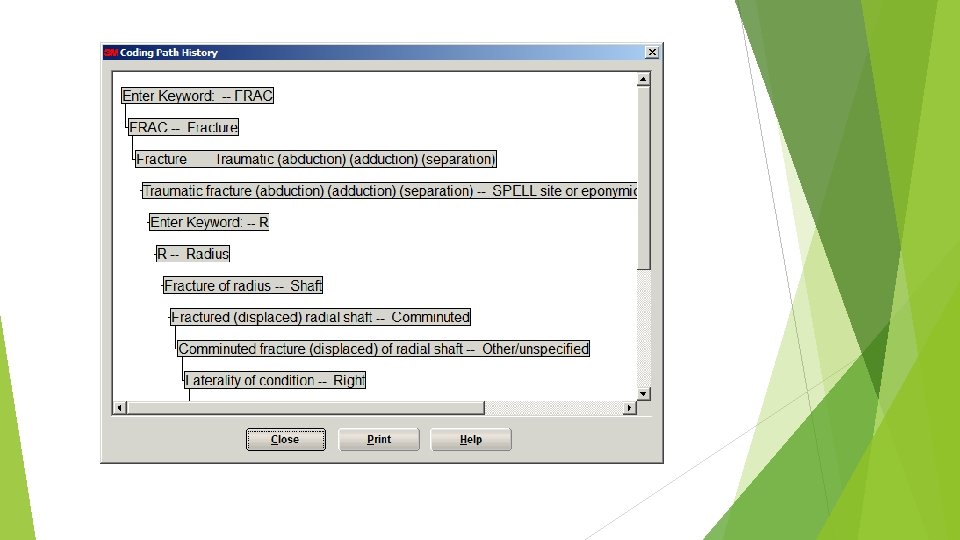
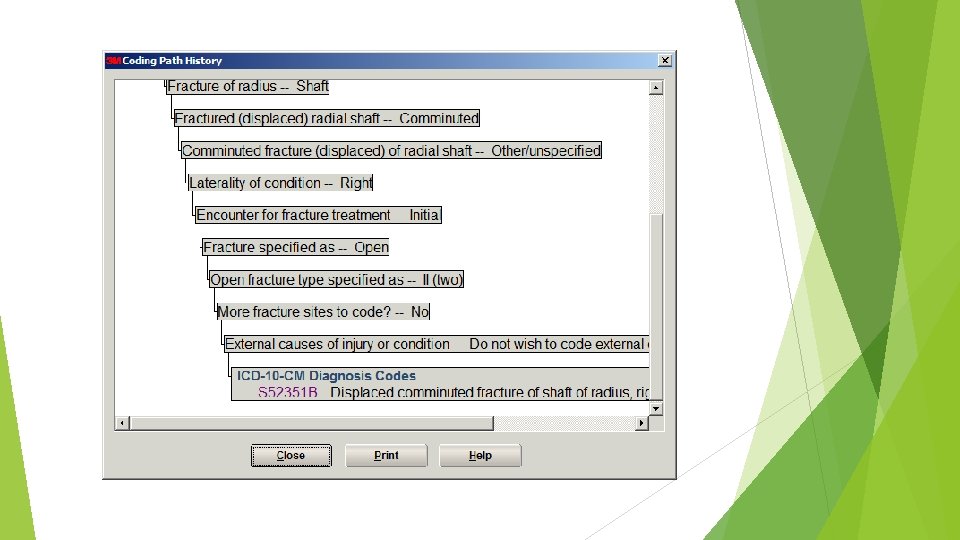
Case 2 This young man is seen today with right forearm fracture. This is found to be a displaced, compound comminuted fracture of the radial shaft. It is a type II open fracture. What is the correct diagnosis code? (Do not assign the external cause code. ) © 2015
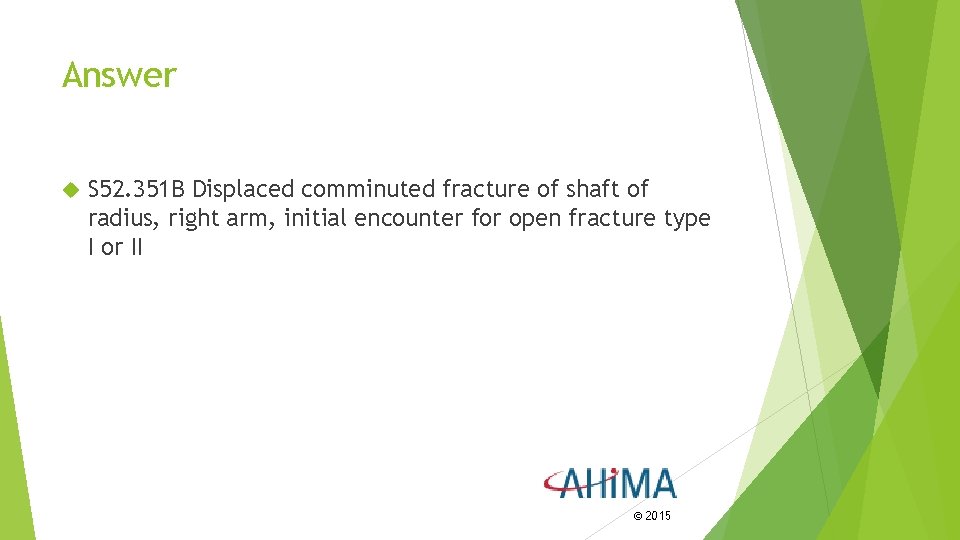
Answer S 52. 351 B Displaced comminuted fracture of shaft of radius, right arm, initial encounter for open fracture type I or II © 2015
Questions?