
ICANN Basic Level Webinar Albert Daniels albert danielsicann
ICANN (Basic Level Webinar) Albert Daniels | albert. daniels@icann. org | 7 July 2015
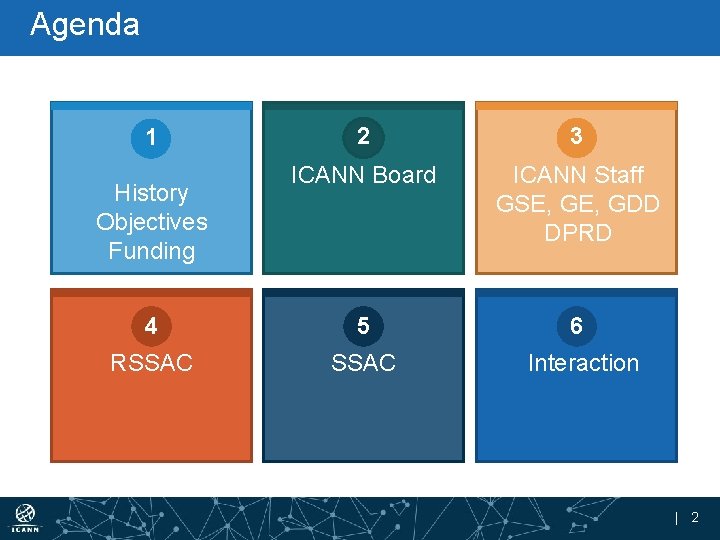
Agenda 2 3 ICANN Board ICANN Staff GSE, GDD DPRD 4 5 6 RSSAC 1 History Objectives Funding Interaction | 2
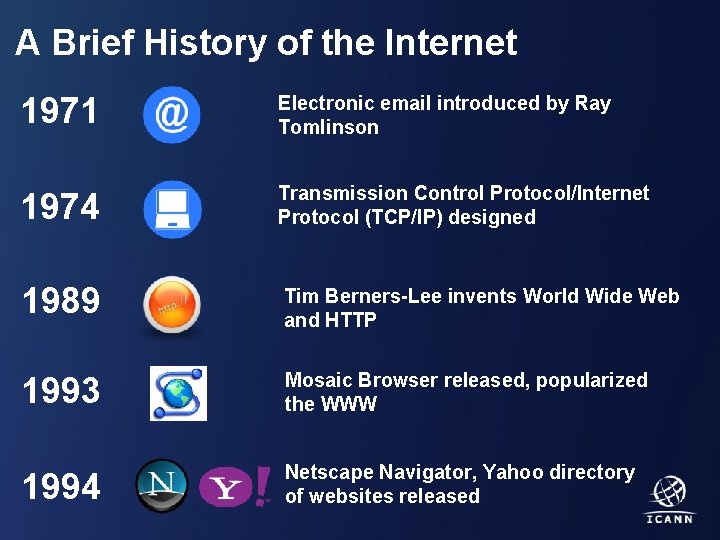
A Brief History of the Internet 1971 Electronic email introduced by Ray Tomlinson 1974 Transmission Control Protocol/Internet Protocol (TCP/IP) designed 1989 Tim Berners-Lee invents World Wide Web and HTTP 1993 Mosaic Browser released, popularized the WWW 1994 Netscape Navigator, Yahoo directory of websites released
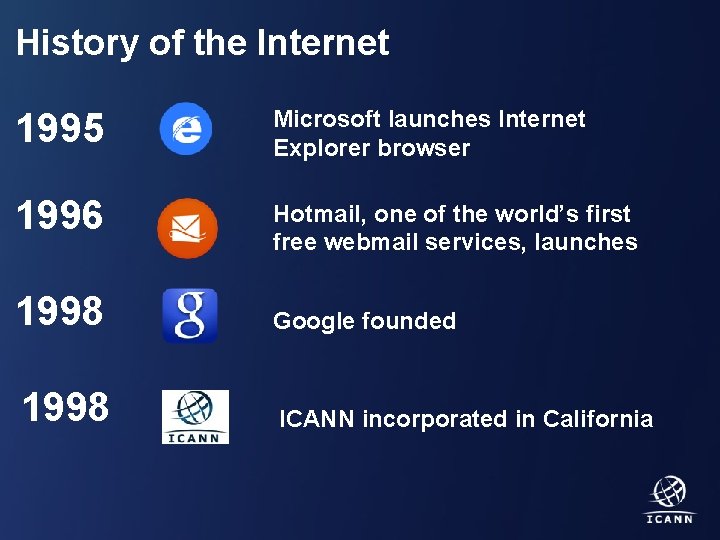
History of the Internet 1995 Microsoft launches Internet Explorer browser 1996 Hotmail, one of the world’s first free webmail services, launches 1998 Google founded 1998 ICANN incorporated in California
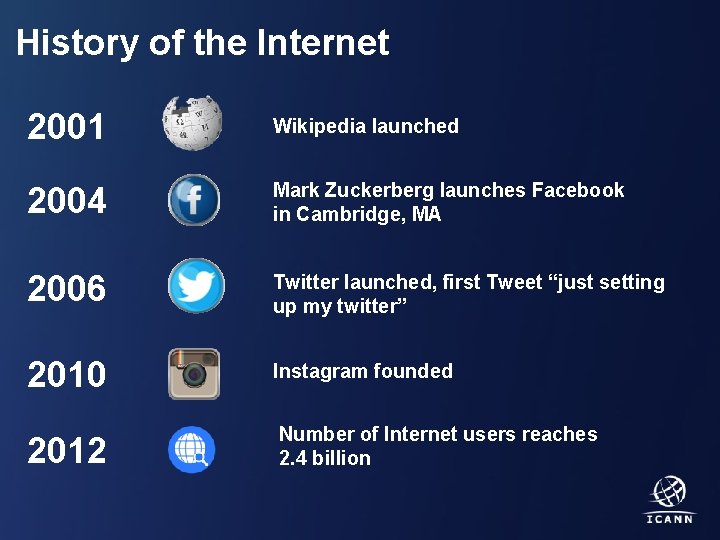
History of the Internet 2001 Wikipedia launched 2004 Mark Zuckerberg launches Facebook in Cambridge, MA 2006 Twitter launched, first Tweet “just setting up my twitter” 2010 Instagram founded 2012 Number of Internet users reaches 2. 4 billion
Components of Internet Ecosystem • Organizations, individuals and processes that shape the coordination and management of the global Internet • Highly interdependent parts which require significant coordination • ICANN is one of these organizations • ICANN is pivotal to naming and addressing | 6
Establishment of ICANN • ICANN is a nonprofit private organization, created on September 18, 1998 and incorporated on September 30, 1998 to oversee a number of tasks previously performed directly on behalf of the U. S. government by other organizations, notably the Internet Assigned Numbers Authority (IANA) which ICANN now operates. | 7

What Does ICANN Do and Why?
ICANN’s Role • ICANN is responsible for coordination of the global internet’s unique identifiers; to ensure secure and stable operation of these systems • ICANN staff does not create policy; we support and resource the worldwide community, who determine Internet policy in “bottom up” manner • ICANN mandate is to make competition and choice available in a safe, secure operating environment. Examples are new g. TLDs and IDN’s | 9
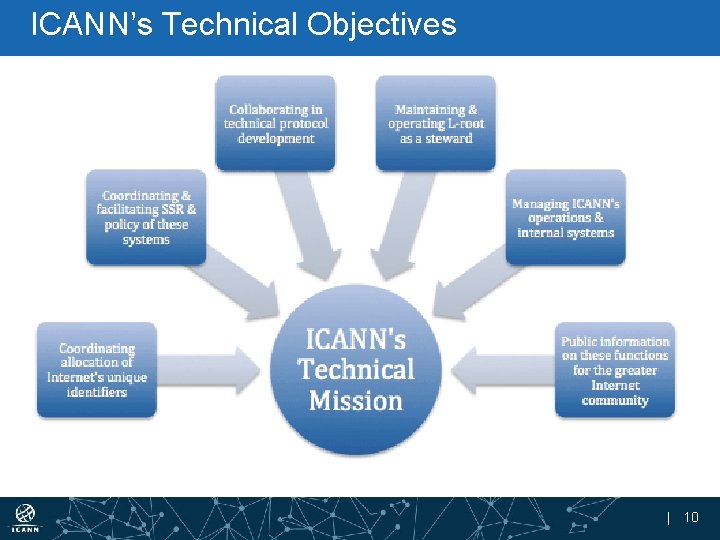
ICANN’s Technical Objectives | 10
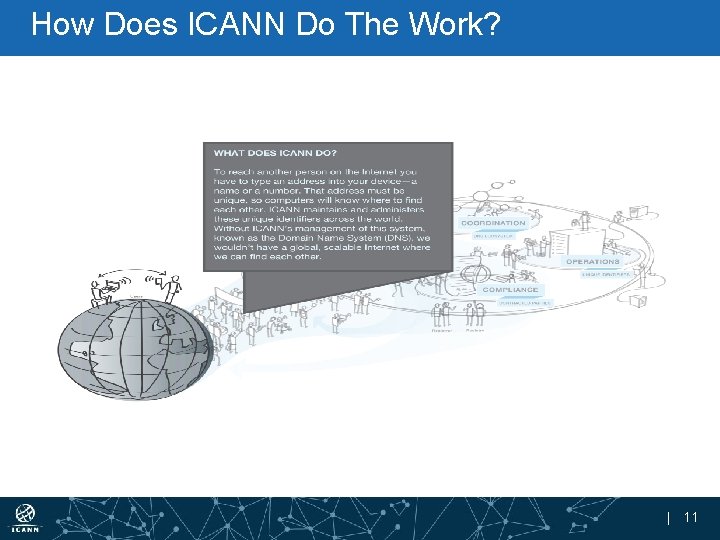
How Does ICANN Do The Work? | 11
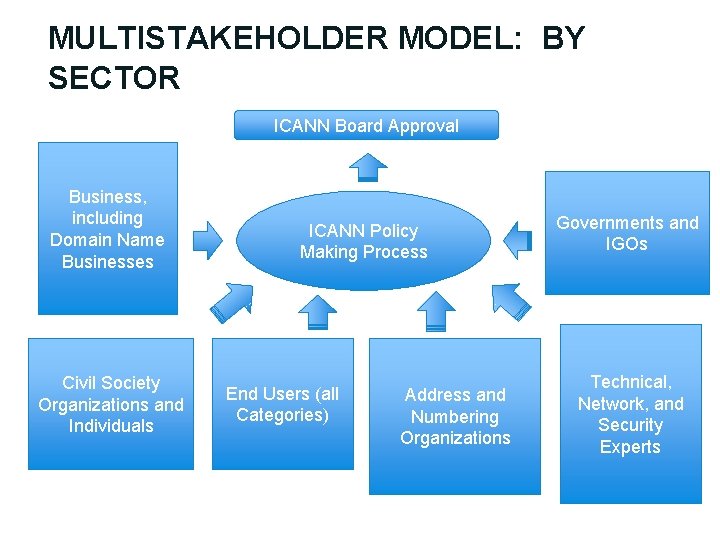
MULTISTAKEHOLDER MODEL: BY SECTOR ICANN Board Approval Business, including Domain Name Businesses Civil Society Organizations and Individuals ICANN Policy Making Process End Users (all Categories) Address and Numbering Organizations Governments and IGOs Technical, Network, and Security Experts
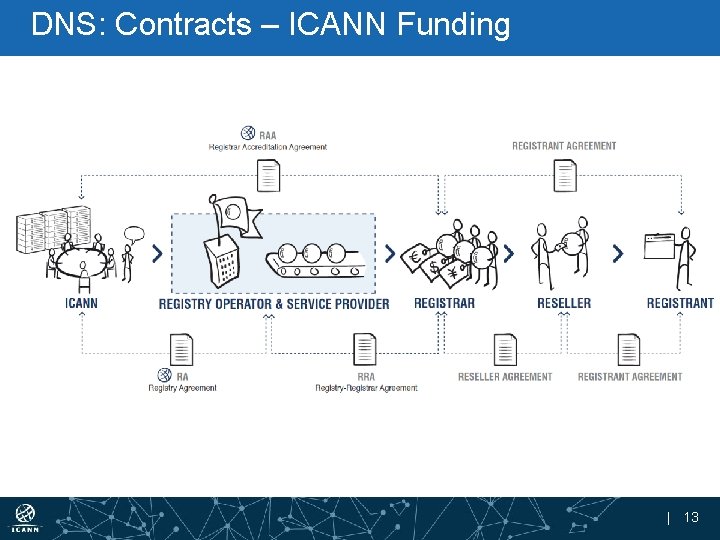
DNS: Contracts – ICANN Funding | 13
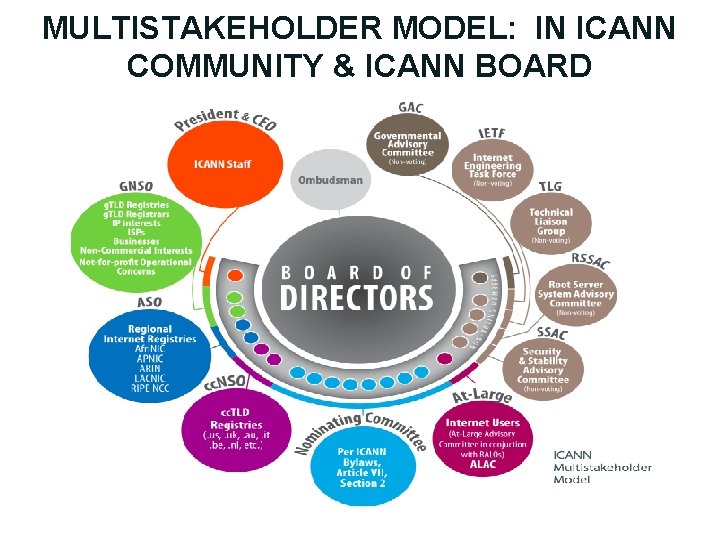
MULTISTAKEHOLDER MODEL: IN ICANN COMMUNITY & ICANN BOARD
ICANN Structure + Supporting Organizations (SOs) • Address Supporting Organization (ASO) • Country Code Names Supporting Organization - 155 members (cc. NSO) • Generic Names Supporting Organization (GNSO) + Board of Directors‘Advisory Committees (ACs) • Governmental Advisory Committee (GAC) • At-Large Advisory Committee (ALAC) • DNS Root Server System Advisory Committee (RSSAC) • Security & Stability Advisory Committee (SSAC) + Technical Advisory Bodies • Technical Liaison Group, made up of the European Telecommunications Standards Institute (ETSI), the ITU-T, the World Wide Web Consortium (W 3 C), and the Internet Architecture Board (IAB). • Internet Engineering Task Force | 15
ICANN Staff: GSE GLOBAL STAKEHOLDER ENGAGEMENT ICANN GSE is a team of people appointed to demonstrate ICANN’s commitment to international participation and the efficacy of its multistakeholder environment The GSE networks with the community and organization’s staff to achieve a strategic goal of better representing the regions in ICANN and facilitating ICANN’s engagement with and responsiveness to the regions. | 16
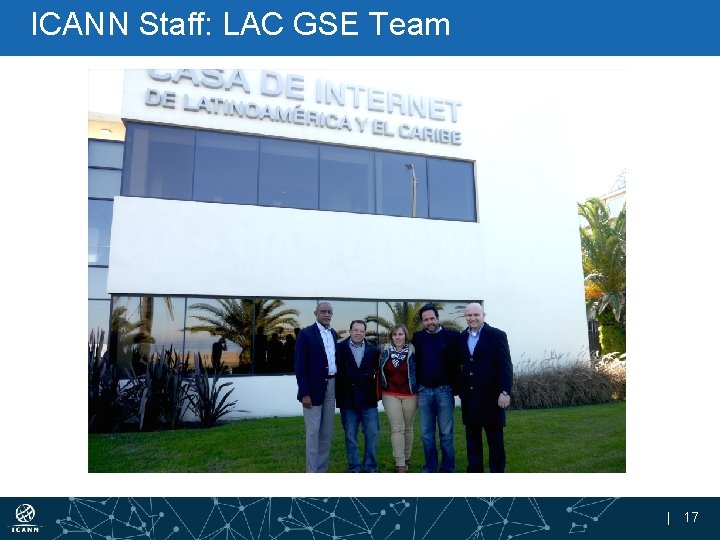
ICANN Staff: LAC GSE Team | 17
ICANN Staff: Government Engagement (GE) WHAT DO WE DO GE staff collaborate with inter-governmental and international organizations to promote a single open, secure and interoperable Internet through the multi-stakeholder model, and secure consensus on the role ICANN plays in Internet governance | 18
ICANN Staff: Global Domain Division (GDD) WHAT DO WE DO Engage the Internet community to implement ICANN policies through contracts and services OUR MISSION Serve the global public interest, registrants and Internet end-users, by ensuring a secure and stable domain name system (DNS), while promoting trust, choice, and competition | 19
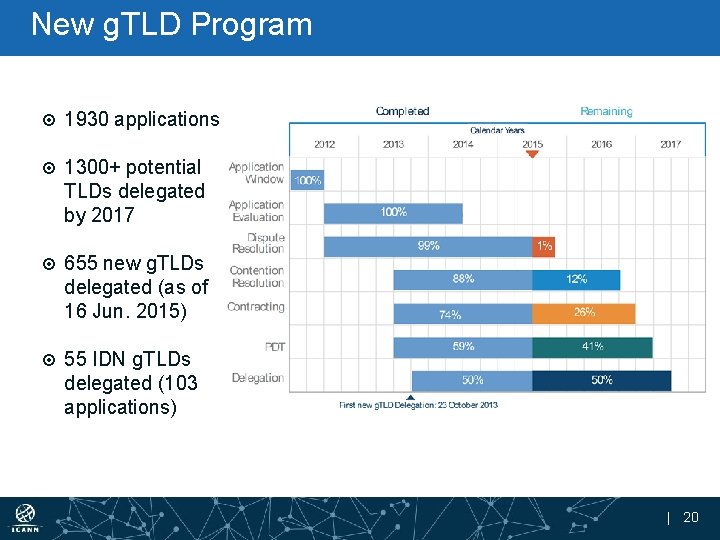
New g. TLD Program 1930 applications 1300+ potential TLDs delegated by 2017 655 new g. TLDs delegated (as of 16 Jun. 2015) 55 IDN g. TLDs delegated (103 applications) | 20
Development and Public Responsibility Department
DPRD Purpose The Panel defined the global public interest of the Internet as ensuring that the Internet “becomes, and continues to be, stable, inclusive, and accessible across the globe so that all may enjoy the benefits of a single and open Internet. ” Recognizing that this is a broad concept that permeates all of ICANN’s work, the Panel determined that for practical and operational reasons “public responsibility” work should be streamlined through one department. The purpose of the DPRD is to streamline and formalize ICANN’s development and public responsibility efforts in collaboration with regional teams, other ICANN Departments, and external organizations so that ICANN may better serve and broaden the community, and facilitate participation through these specific and measurable tracks. | 22
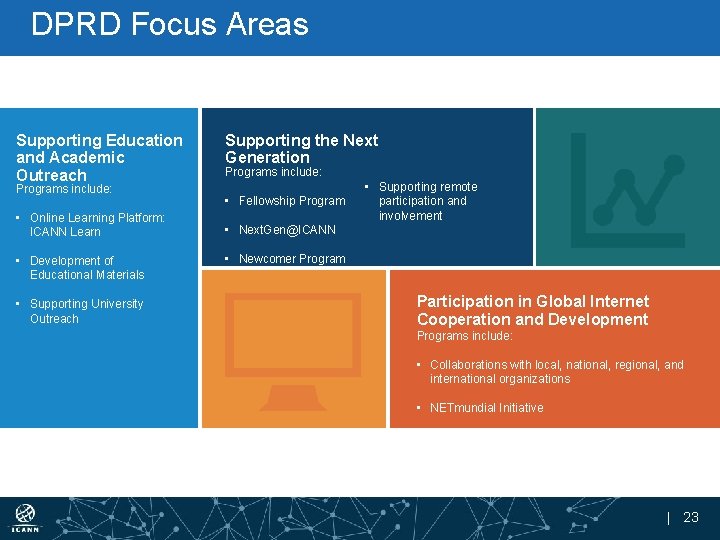
DPRD Focus Areas Supporting Education and Academic Outreach Programs include: • Online Learning Platform: ICANN Learn • Development of Educational Materials • Supporting University Outreach Supporting the Next Generation Programs include: • Fellowship Program • Supporting remote participation and involvement • Next. Gen@ICANN • Newcomer Program Participation in Global Internet Cooperation and Development Programs include: • Collaborations with local, national, regional, and international organizations • NETmundial Initiative | 23
Governments • Governmental Advisory Council (GAC) provides advice to the Board and other SOs/ACs on issues of public policy and possible interaction between ICANN's activities or policies and national laws or international agreements • Membership is open to all national governments and distinct economies • Multi-national governmental organisations and treaty organisations may join as observers • Approx. 152 governments have identified representatives; 32 Govt’s hold Observer status • Sends a non-voting representative to the Board; advice has a special status | 24
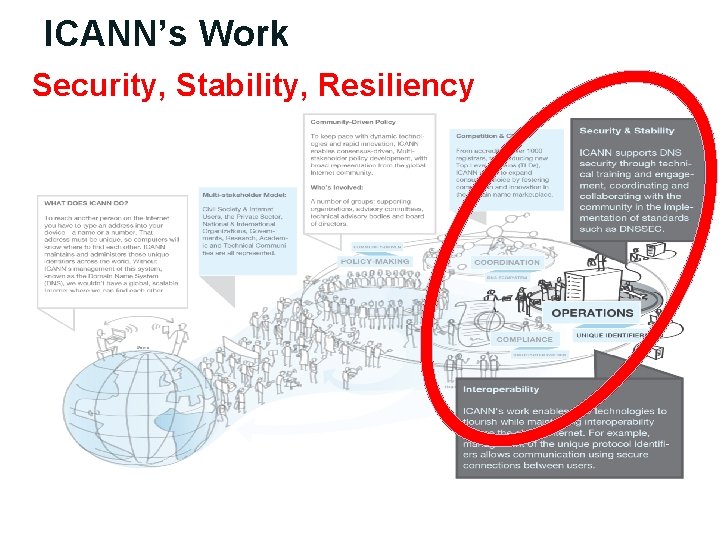
ICANN’s Work Security, Stability, Resiliency
Security, Stability, Resiliency: SSAC WHAT IS SSAC The Security and Stability Advisory Committee (SSAC) advises the ICANN community and Board on matters relating to the security and integrity of the Internet’s naming and addressing systems. WHAT DOES THIS INCLUDE a) Operational matters e. g. pertaining to the correct and reliable operation of the root name system b) Administrative matters e. g. matters pertaining to address allocation and internet number assignment c) Registration matters e. g. matters pertaining to registry and registrar services such as WHOIS | 26
Security Stability Resiliency: SSAC MORE SPECIFICALLY • SSAC engages in ongoing threat assessment and risk analysis of the Internet naming and address allocation services to assess where the principal threats to stability and security lie, and advises the ICANN community accordingly. | 27
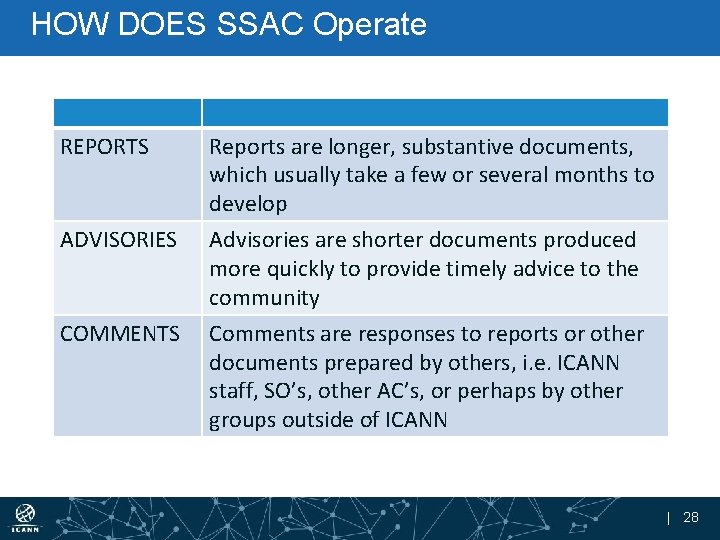
HOW DOES SSAC Operate REPORTS Reports are longer, substantive documents, which usually take a few or several months to develop ADVISORIES Advisories are shorter documents produced more quickly to provide timely advice to the community COMMENTS Comments are responses to reports or other documents prepared by others, i. e. ICANN staff, SO’s, other AC’s, or perhaps by other groups outside of ICANN | 28
Security Stability Resiliency: RSSAC WHAT IS RSSAC The role of the Root Server System Advisory Committee (“RSSAC”) is to advise the ICANN community and Board on matters relating to the operation, administration, security, and integrity of the Internet’s Root Server System. | 29
Security Stability Resiliency: RSSAC MORE SPECIFICALLY • The operation of the Root Servers with the technical community and the ICANN community • The administration of the Root Zone with those who have direct responsibility for that administration | 30
Engage With ICANN Thank You and Questions Reach us at: Email: albert. daniels@icann. org Website: icann. org twitter. com/icann facebook. com/icannorg linkedin. com/company/ icann youtube. com/user/ican nnews gplus. to/icann weibo. com/ICANNo rg flickr. com/photos/ican n slideshare. net/icannpresen tations | 31
- Slides: 31