
Ibogaine and methamphetamine A review of the available
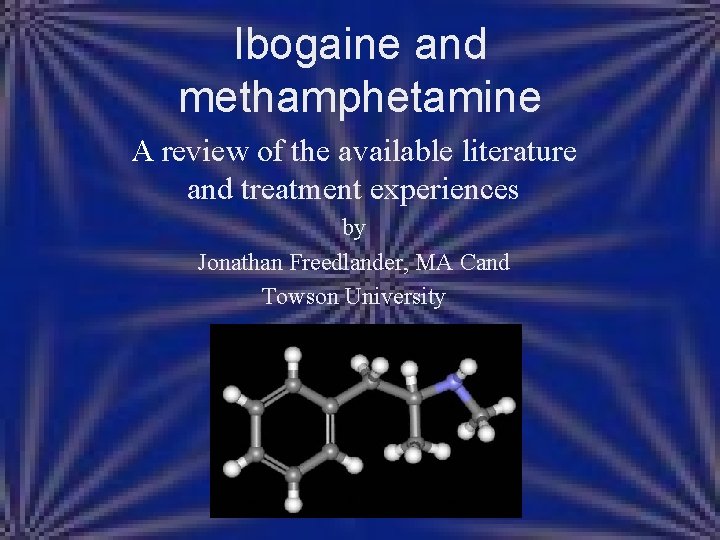
Ibogaine and methamphetamine A review of the available literature and treatment experiences by Jonathan Freedlander, MA Cand Towson University
Methamphetamine epidemiology • According to the 2002 National Survey on Drug Use and Health, 12. 4 million Americans age 12 and older had tried methamphetamine (METH) at least once in their lifetimes (5. 3 % of the population) • Up from 3. 8 million (1. 8 %) in 1994 • Majority of past-year users between 18 and 34 years of age • In 2003, 6. 2 % of high school seniors had reported lifetime use • From 1999 -2002, METH related visits to hospital emergency departments (EDs) rose from 12, 496 to 21, 644
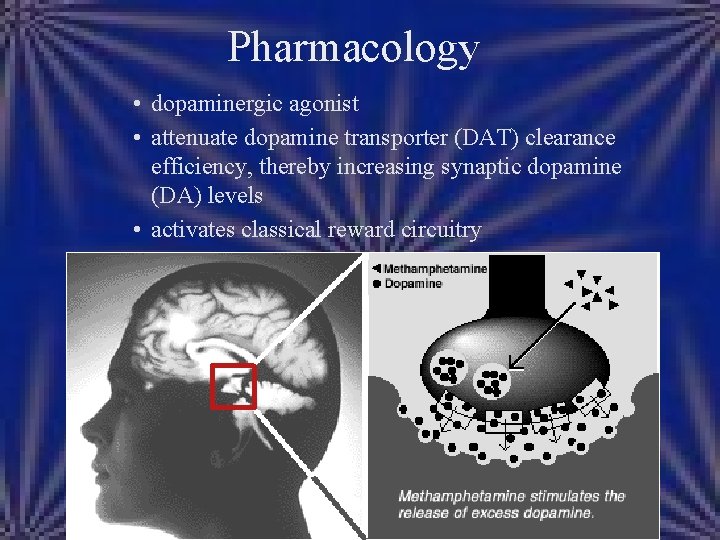
Pharmacology • dopaminergic agonist • attenuate dopamine transporter (DAT) clearance efficiency, thereby increasing synaptic dopamine (DA) levels • activates classical reward circuitry
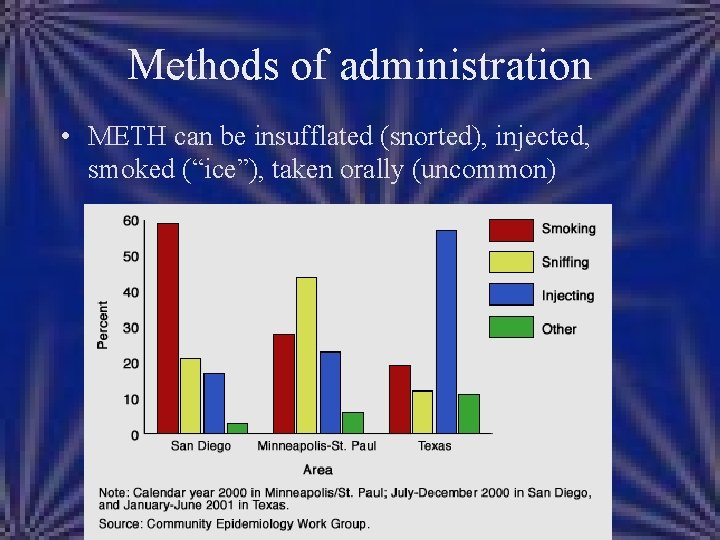
Methods of administration • METH can be insufflated (snorted), injected, smoked (“ice”), taken orally (uncommon)
Acute effects • euphoria • increased activity and alertness • decreased need for sleep • appetite reduction • reduced behavioral dishinibition • increased heart rate and blood pressure • anxiety/paranoia • increased aggression • grandiose thinking • hyperthermia and convulsions, can result in death
Long term effects • • damage to blood vessels stroke irregular heartbeat respiratory problems anorexia cardiovascular collapse withdrawal syndrome following abrupt cessation in chronic users – anxiety – craving – sleep disturbances
Neurocognitive issues • After chronic drug abuse and during withdrawal, brain dopamine function is markedly decreased – can result in pre-Parkinsonian symptoms • dysfunction of prefrontal regions – problems with attention – deficits in episodic verbal memory • decreased serotonergic function • altered EEGs correlated with neurocognitive deficits • neurocognitive impairment may be especially pronounced in HIV+ individuals • neuropathology may reverse somewhat following prolonged abstinence
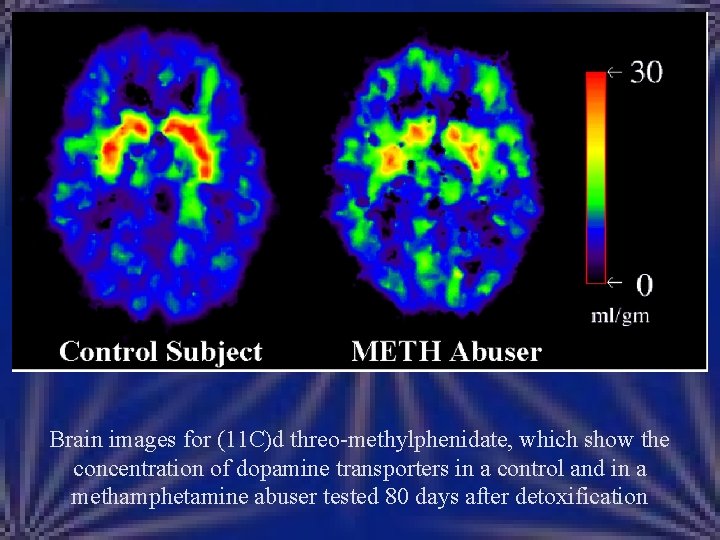
Brain images for (11 C)d threo-methylphenidate, which show the concentration of dopamine transporters in a control and in a methamphetamine abuser tested 80 days after detoxification
Psychological issues Long-term users may experience: – mood disturbances • depression and sucicidality • anxiety and panic attacks – sleep disturbances • insomnia/hypersomnia • reduced slow wave sleep • poor sleep continuity – paranoia – problems controlling anger and violent behavior – hallucinations and psychosis
Iboga alkaloids and METH – scientific research • Iboga agents augment both the locomotor and stereotypic effects of METH in a manner consistent with previous reports for cocaine • Reverse the behavioral disinhibiting and corticosterone effects of acute meth in rats • Reduces IV METH self-administratration in rats, but least effective compared to other drugs tested
Ibogaine and methamphetamine Three treatment providers’ experiences
Jeffrey Kamlet, MD • Has treated many people for methamphetamine dependency and abuse • Estimates about 50% are able to achieve long-term abstinence with effective aftercare • Long-term abstinence unlikely without aftercare • More receptive to treatment/therapy following ibogaine
• Recommend individualized therapy following treatment – Different patients respond better to different kinds of treatment/therapy based on their particular needs • Be aware of physical health – METH addicts frequently in poor shape – cardiac problems – pre-Parkinsonian symptoms • Some METH users may not be able to take full advantage of “spiritual experience” because of poor health
• Since METH withdrawal symptoms are less tangible than opiates, more difficult to say how ibogaine affects them post treatment • Suggests a week of stabilization prior to treatment, at least 5 days – off METH – good nutrition and hydration – cardiac work-up • Proper nutrition very important to restore physical and psychological health • Patients should be informed they are likely to feel “unwell” for 3 - 6 months
Eric Taub • Has treated several stimulant users, 2 or 3 for METH specificially (most have been for cocaine) • Stimulant users usually younger (under 35) – have lost less compared to older addicts – less responsibility – feeling of invincibility - “I don’t need therapy” • Ibogaine increases treatment readiness • Less of “the equation” than with opiates • Ibogaine seems to help withdrawal related anxiety, but not hypersomnia
• 70 – 80 % success with effective aftercare • New environment very important postibogaine – 90% relapse rate if they return home to same environment – Visual and behavioral cues more salient than with opiates • Must engage in therapy of some kind postibogaine – address issues that led to dependence • abandonment (real or emotional) by same-sex parent – must admire and respect therapy provider – explore emotions that have been repressed
Sara Glatt • Limited experience treating METH problems • About 50% success rate • Sees quicker recovery in those who eat nutriously – phenylalanine – melatonin – soya proteins
• People with external motivations (job, drug test) faired better in short term – addictions research shows external motivation unlikely to produce long-term success without internal motivation • People who’s family paid for treatment didn’t do as well – lack of internal motivation? • Long term outcomes unknown
Discussion • Ibogaine seems to be an effective tool in the treatment of METH dependence, though not as effective as for opiates – The suppression of opiate withdrawal symptoms may give opiate users more of a feeling of a “clean break” from their habits • Aftercare is important in all ibogaine treatment, but this seems especially true for METH – Behavioral cues or triggers seem more of a challenge • Makes sense as stimulants act primarily on pleasure-reward system involved in classical and instrumental conditioning
• METH users tend to have different demographic characteristics – younger – typically newer dependent – may be more treatment resistant, ibogaine seems to help with this • Nutrition especially important – reverse effects of anorexia-related malnutrition – stimulants more physiologically damaging than opiates
Future research • Effect of ibogaine on salience of visual and behavioural cues – Classical conditioning: • suppresion ratio following ibogaine – Instrumental conditioning: • response rate following ibogaine • Effect of ibogaine on withdrawal symptoms – polysomnograph to measure sleep disturbances – measures of craving and anxiety

For references, questions, or general harrassment, email: jfreed 1@umbc. edu
- Slides: 22