
IBM Information Server Data Stage PX Lookup Stage
IBM Information. Server Data. Stage PX § Lookup Stage: A Deep Dive § Gary Foster Sr. Software Engineer § 2015/05/14
Objectives • Lookup Types • Terminology • Dissect the Lookup steps • Job design vs actual operation • Tuning and platform Considerations • Range Lookup & APT_NO_SORT_INSERTION • Case Study • Conclusion/Questions
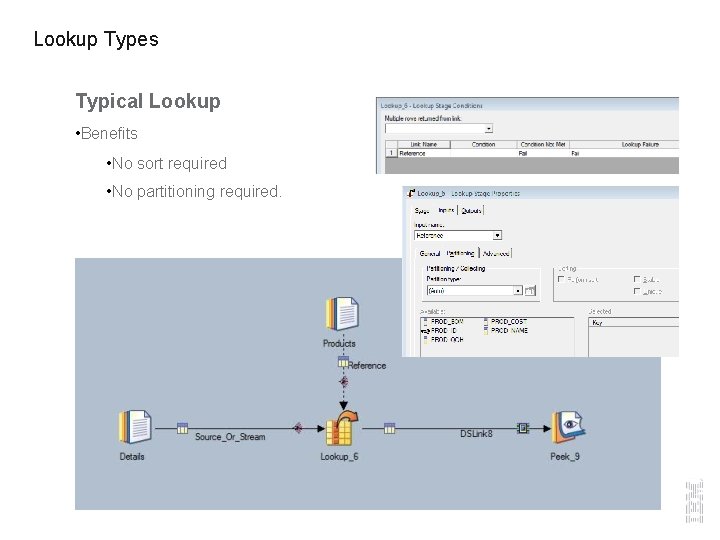
Lookup Types Typical Lookup • Benefits • No sort required • No partitioning required.
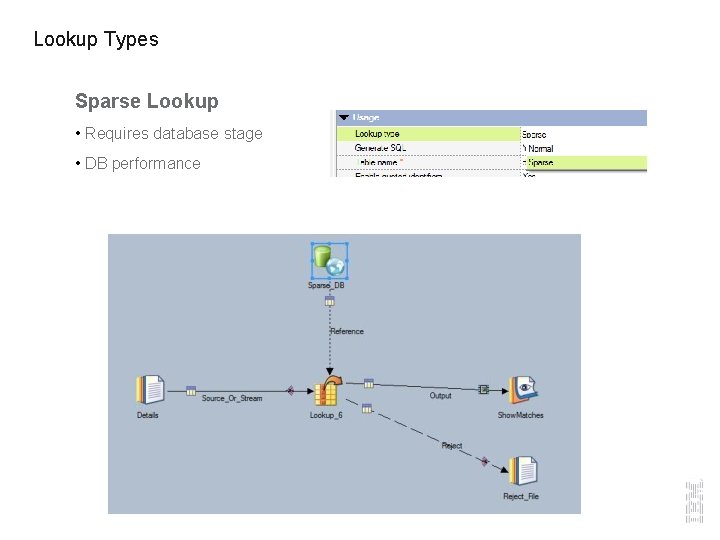
Lookup Types Sparse Lookup • Requires database stage • DB performance
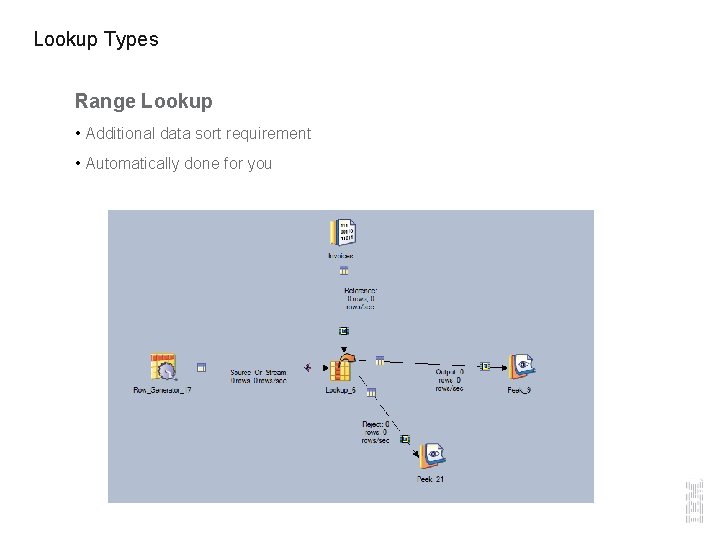
Lookup Types Range Lookup • Additional data sort requirement • Automatically done for you
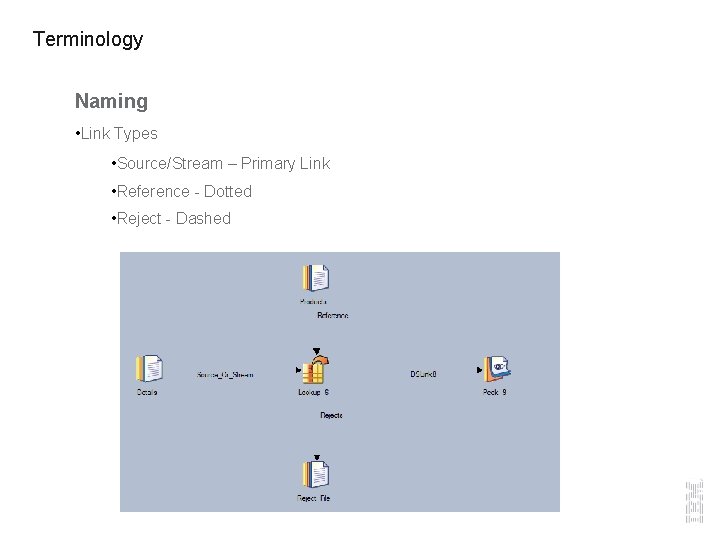
Terminology Naming • Link Types • Source/Stream – Primary Link • Reference - Dotted • Reject - Dashed
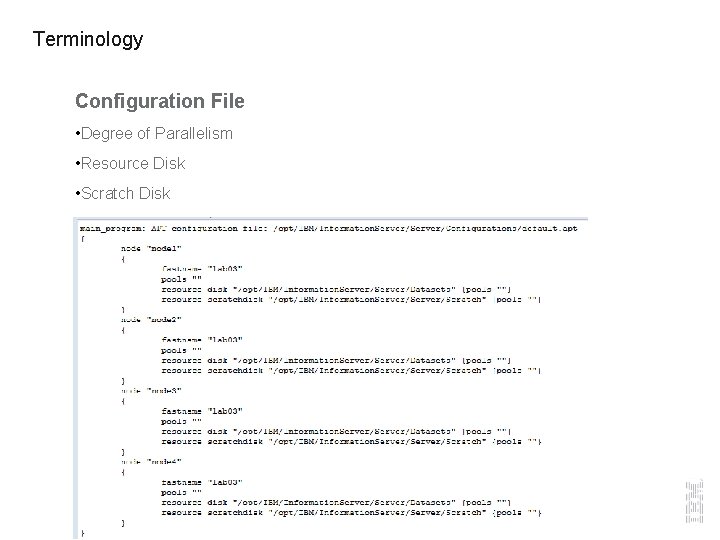
Terminology Configuration File • Degree of Parallelism • Resource Disk • Scratch Disk
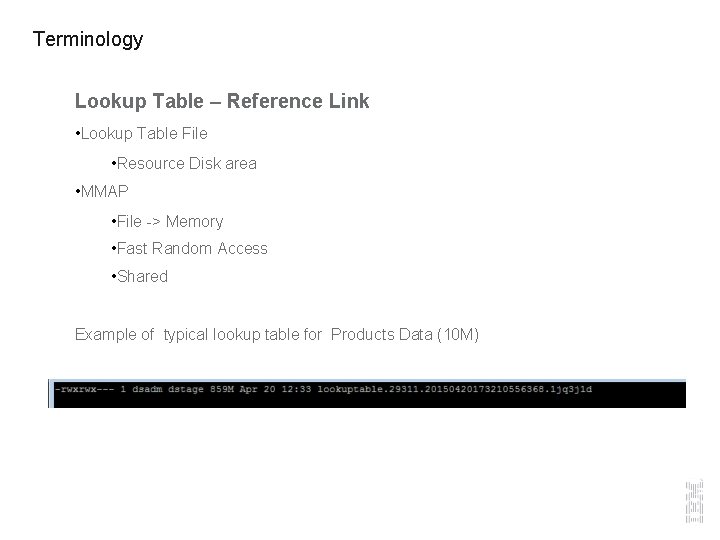
Terminology Lookup Table – Reference Link • Lookup Table File • Resource Disk area • MMAP • File -> Memory • Fast Random Access • Shared Example of typical lookup table for Products Data (10 M)
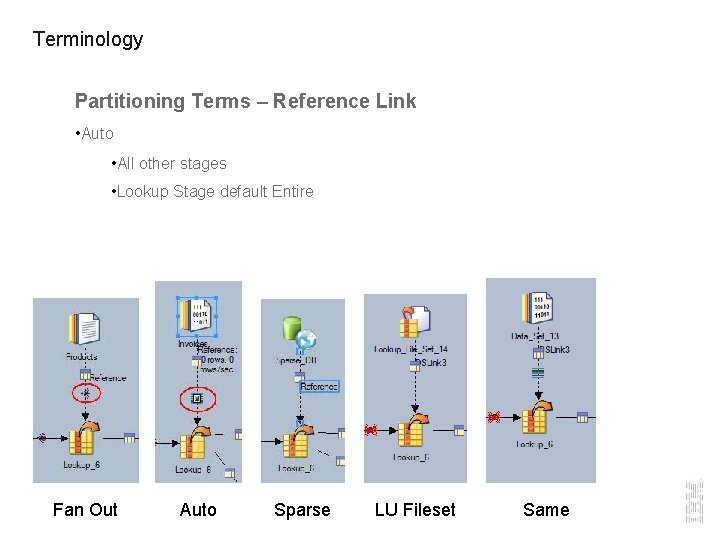
Terminology Partitioning Terms – Reference Link • Auto • All other stages • Lookup Stage default Entire Fan Out Auto Sparse LU Fileset Same
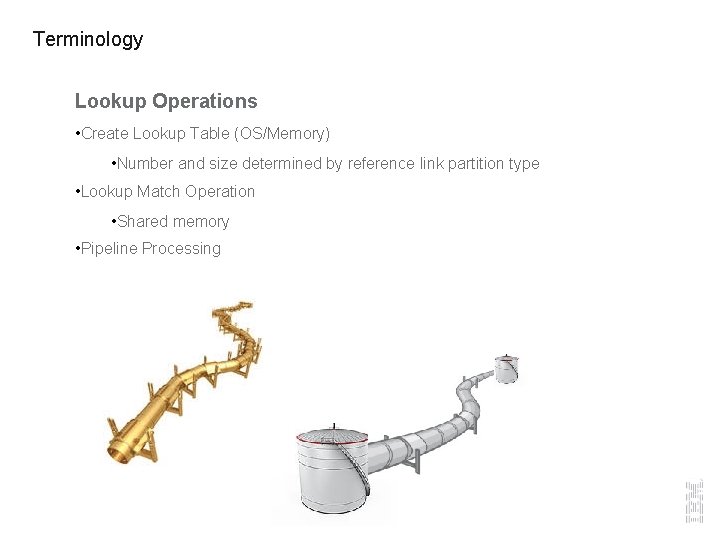
Terminology Lookup Operations • Create Lookup Table (OS/Memory) • Number and size determined by reference link partition type • Lookup Match Operation • Shared memory • Pipeline Processing
Terminology Lookup Operations • SMP • All processes are executed on a single engine tier • Limited CPU • Memory segments can be shared • MPP • Dynamic CPU • Lookup Tables cannot be shared in memory across nodes • Lookup data can be duplicated causing additional network traffic
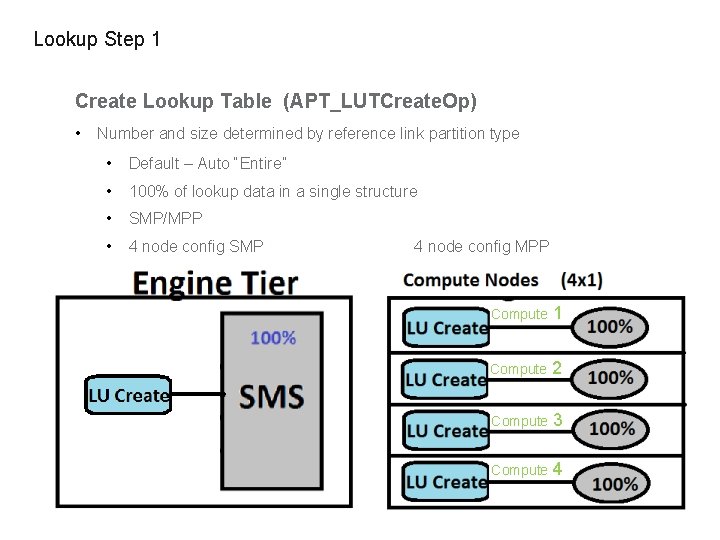
Lookup Step 1 Create Lookup Table (APT_LUTCreate. Op) • Number and size determined by reference link partition type • Default – Auto “Entire” • 100% of lookup data in a single structure • SMP/MPP • 4 node config SMP 4 node config MPP Compute 1 Compute 2 Compute 3 Compute 4
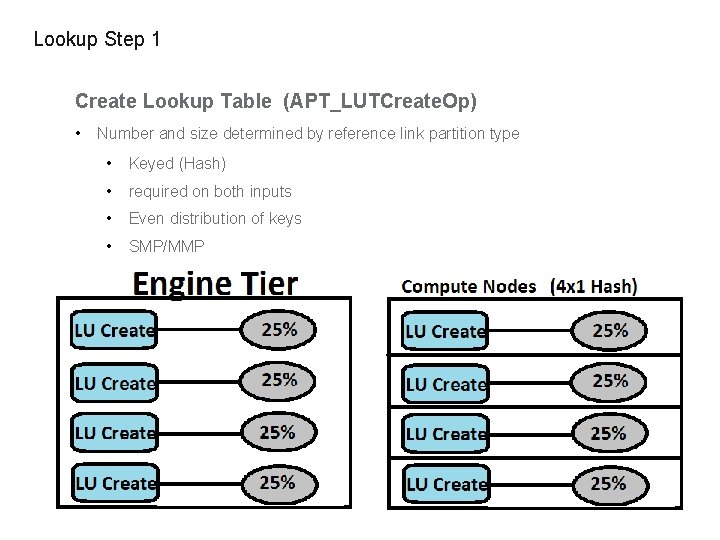
Lookup Step 1 Create Lookup Table (APT_LUTCreate. Op) • Number and size determined by reference link partition type • Keyed (Hash) • required on both inputs • Even distribution of keys • SMP/MMP
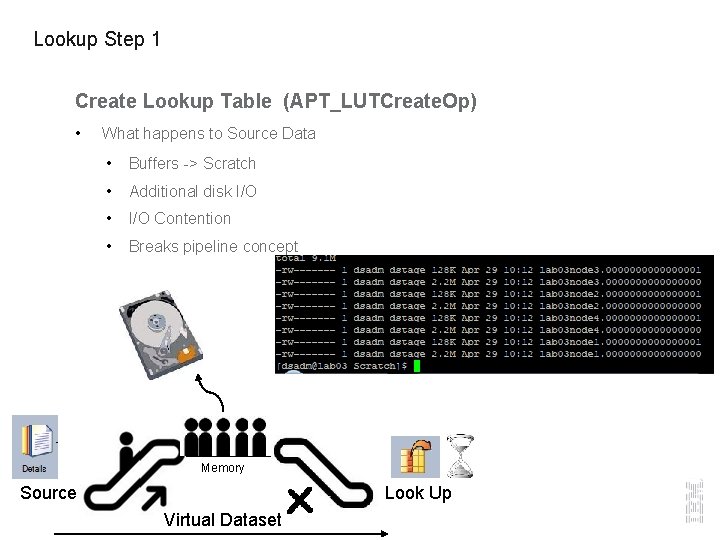
Lookup Step 1 Create Lookup Table (APT_LUTCreate. Op) • What happens to Source Data • Buffers -> Scratch • Additional disk I/O • I/O Contention • Breaks pipeline concept Memory Source Look Up Virtual Dataset
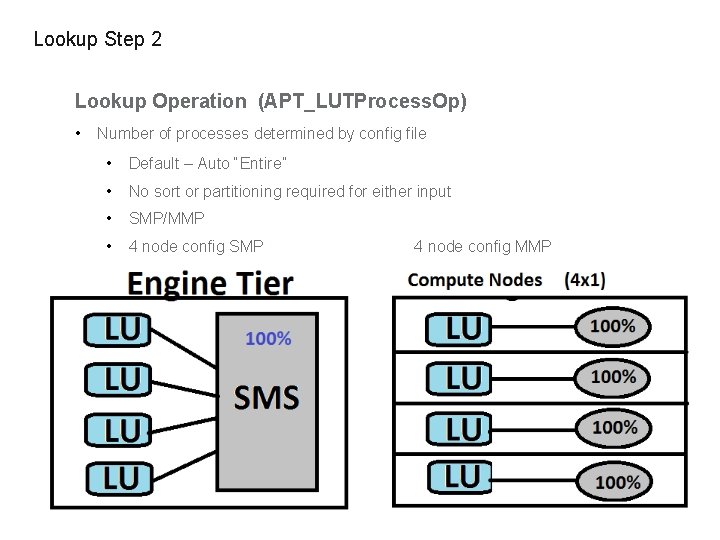
Lookup Step 2 Lookup Operation (APT_LUTProcess. Op) • Number of processes determined by config file • Default – Auto “Entire” • No sort or partitioning required for either input • SMP/MMP • 4 node config SMP 4 node config MMP
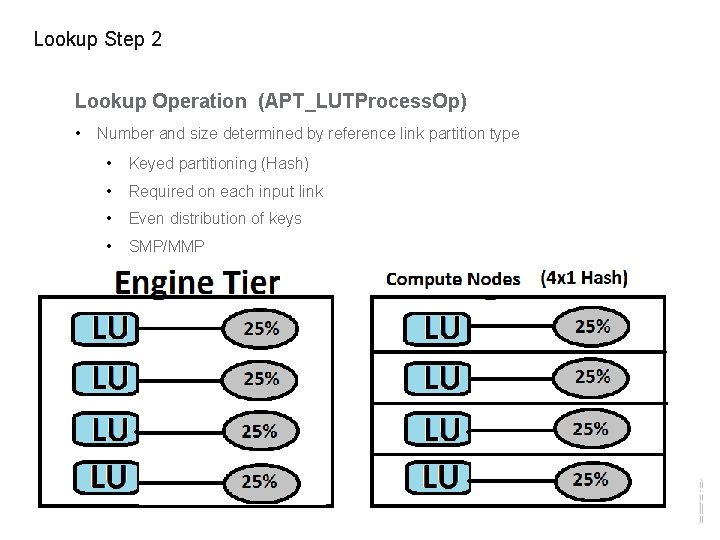
Lookup Step 2 Lookup Operation (APT_LUTProcess. Op) • Number and size determined by reference link partition type • Keyed partitioning (Hash) • Required on each input link • Even distribution of keys • SMP/MMP
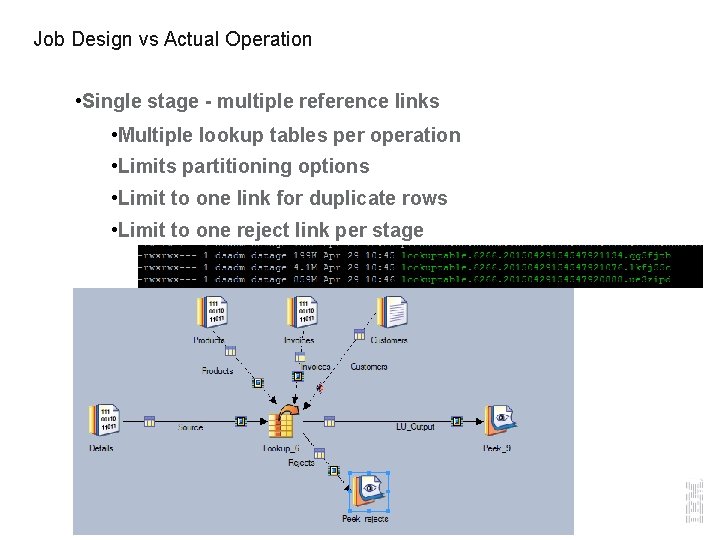
Job Design vs Actual Operation • Single stage - multiple reference links • Multiple lookup tables per operation • Limits partitioning options • Limit to one link for duplicate rows • Limit to one reject link per stage
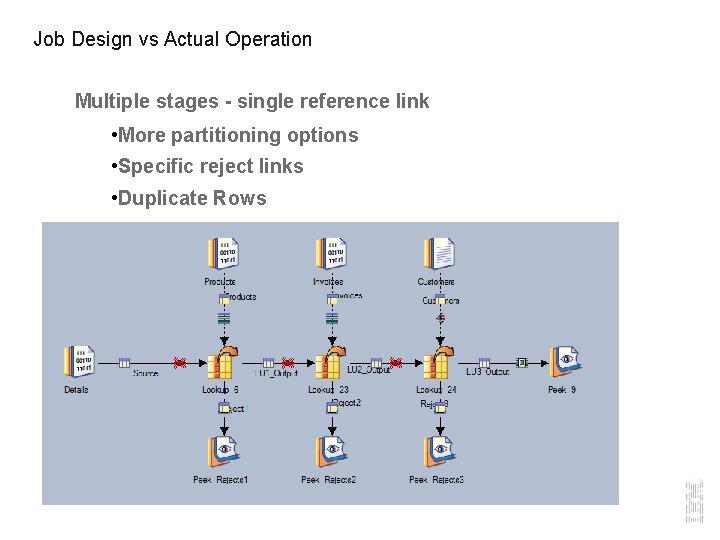
Job Design vs Actual Operation Multiple stages - single reference link • More partitioning options • Specific reject links • Duplicate Rows
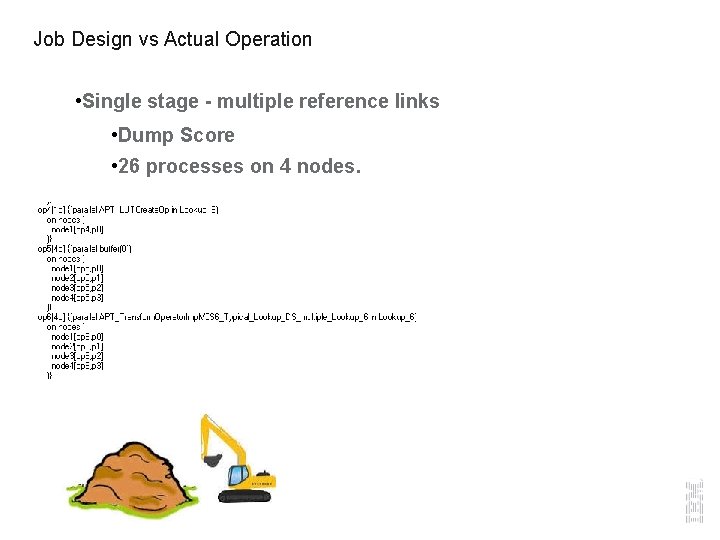
Job Design vs Actual Operation • Single stage - multiple reference links • Dump Score • 26 processes on 4 nodes.
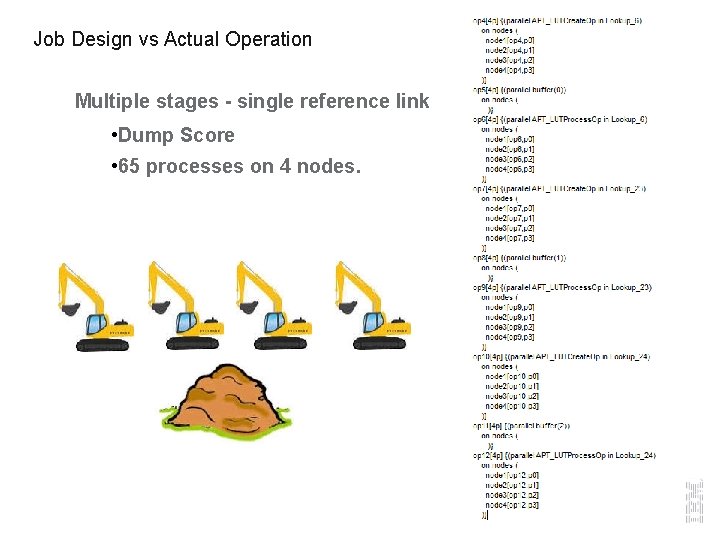
Job Design vs Actual Operation Multiple stages - single reference link • Dump Score • 65 processes on 4 nodes.
Tuning and Configuration • Topology • SMP • Limited resources • Design/scheduling • Faster job runs • More jobs running simultaneously • More processes = more resources = better performance (single job) • CPU • Memory • Network
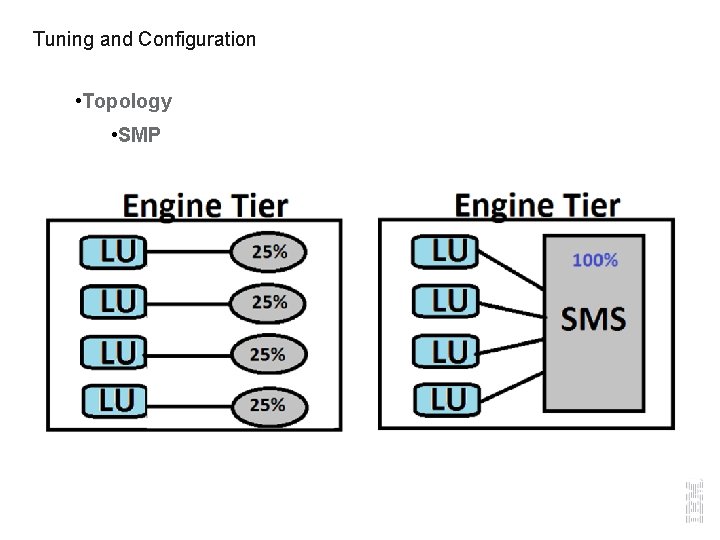
Tuning and Configuration • Topology • SMP
Tuning and Configuration • Topology • MPP • Dynamic resources • Design/scheduling • Faster job runs & • More jobs running simultaneously • More processes = more resources = better performance (multiple jobs) • CPU (dynamic) • Memory (dynamic) • Network (problem? ) • Repartitioning

Tuning and Configuration • Topology • MPP • Network (problem? ) • Repartitioning increases network traffic between nodes
Tuning and Configuration • Tuning • $APT_LUTCREATE_NO_MMAP Setting this environment variable will force lookup tables to be created using malloced memory. By default lookup table creation is done using memory mapped files. There may be situations depending on the OS configuration or file system where writing to memory mapped files causes poor performance. In these situations this variable can be set so that malloced memory is used, which should boost performance. • $APT_LUTCREATE_FIXEDBLOCK When defined sets the size in MB of the memory block that is used to buffer records being read by the lookup create operator. When this isn't set the default value is 1 MB. Setting this environment variable to 0 will disable block buffering of input records causing each individual record to be written to disk upon being read. • $APT_NO_SORT_INSERTION When defined, turns off automatic insertion of sorting based on operator requirements. • $APT_NO_PART_INSERTION When defined, turns off automatic insertion of partitioners based on operator requirements.
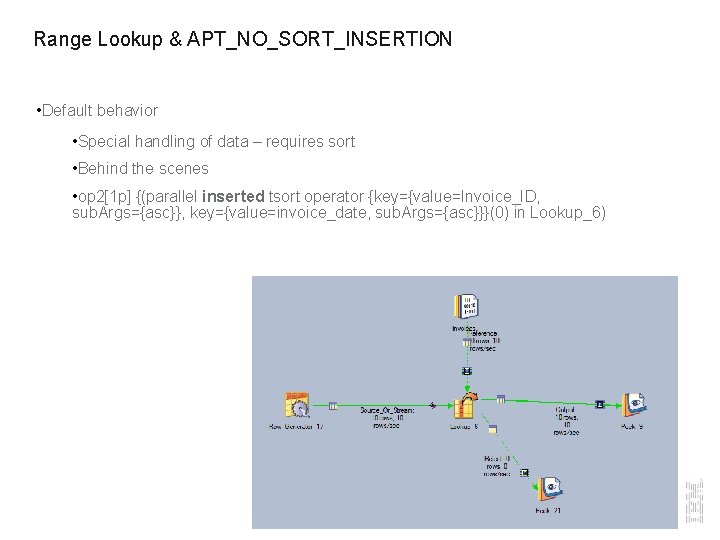
Range Lookup & APT_NO_SORT_INSERTION • Default behavior • Special handling of data – requires sort • Behind the scenes • op 2[1 p] {(parallel inserted tsort operator {key={value=Invoice_ID, sub. Args={asc}}, key={value=invoice_date, sub. Args={asc}}}(0) in Lookup_6)
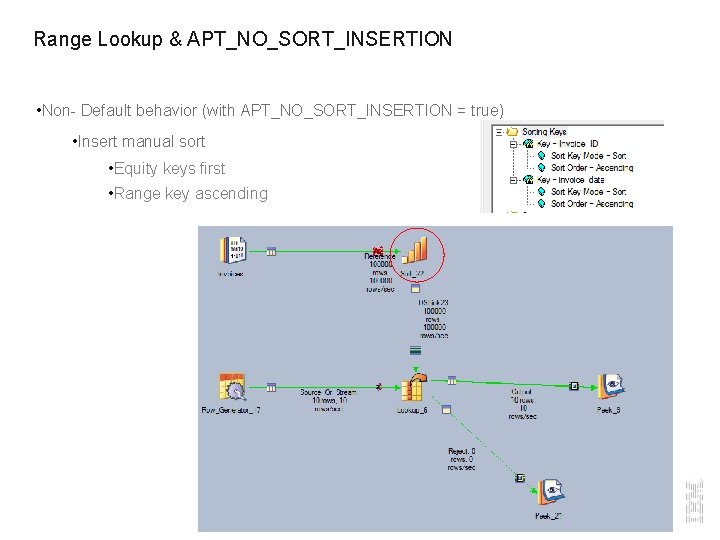
Range Lookup & APT_NO_SORT_INSERTION • Non- Default behavior (with APT_NO_SORT_INSERTION = true) • Insert manual sort • Equity keys first • Range key ascending
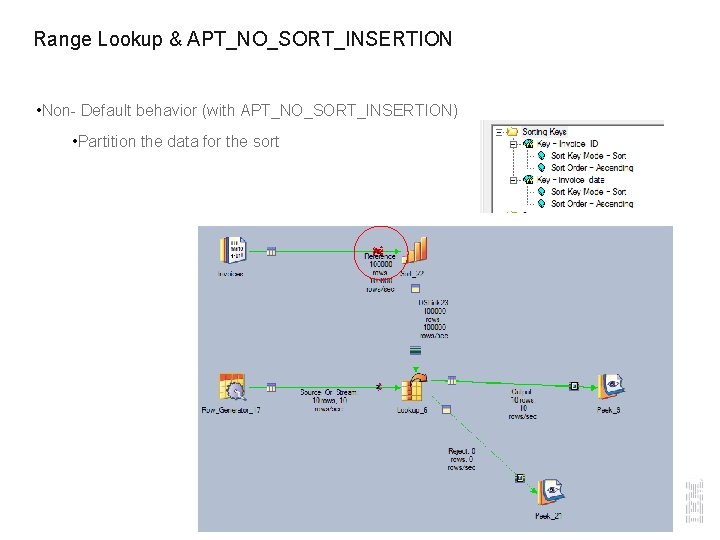
Range Lookup & APT_NO_SORT_INSERTION • Non- Default behavior (with APT_NO_SORT_INSERTION) • Partition the data for the sort
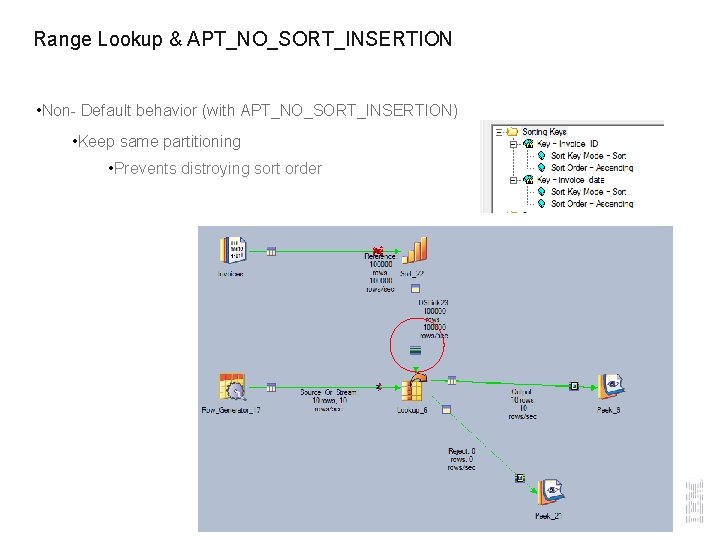
Range Lookup & APT_NO_SORT_INSERTION • Non- Default behavior (with APT_NO_SORT_INSERTION) • Keep same partitioning • Prevents distroying sort order
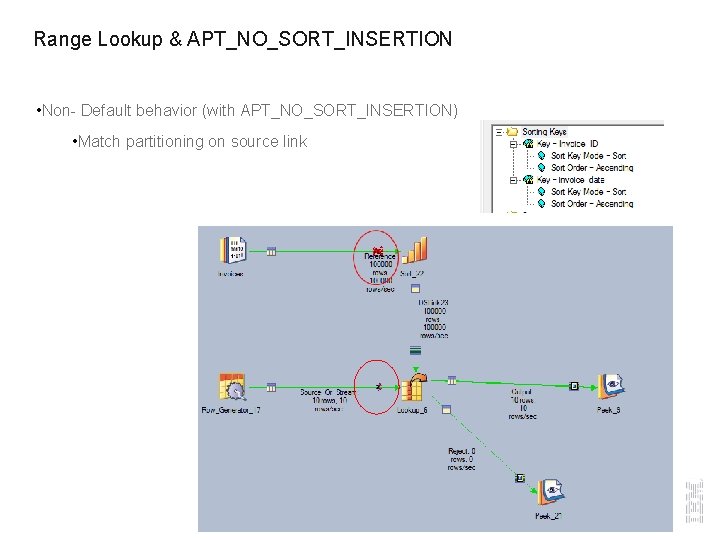
Range Lookup & APT_NO_SORT_INSERTION • Non- Default behavior (with APT_NO_SORT_INSERTION) • Match partitioning on source link
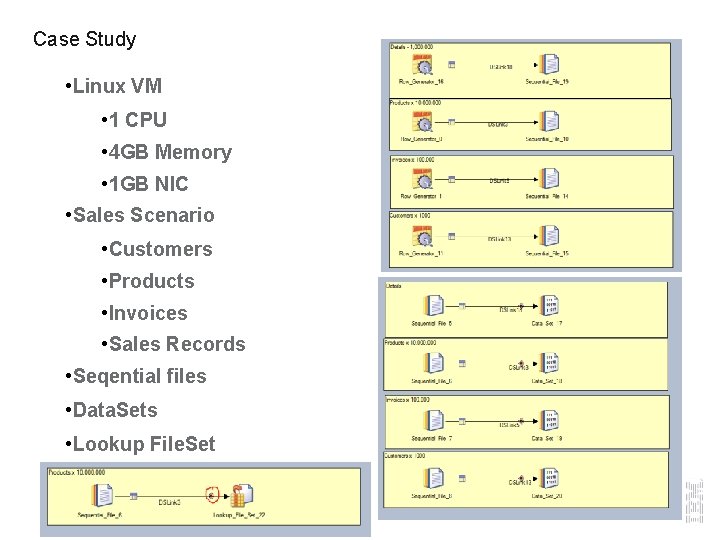
Case Study • Linux VM • 1 CPU • 4 GB Memory • 1 GB NIC • Sales Scenario • Customers • Products • Invoices • Sales Records • Seqential files • Data. Sets • Lookup File. Set
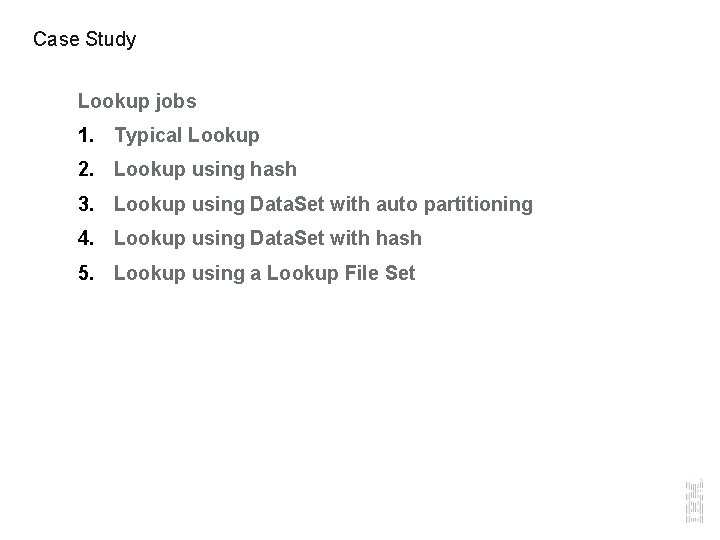
Case Study Lookup jobs 1. Typical Lookup 2. Lookup using hash 3. Lookup using Data. Set with auto partitioning 4. Lookup using Data. Set with hash 5. Lookup using a Lookup File Set
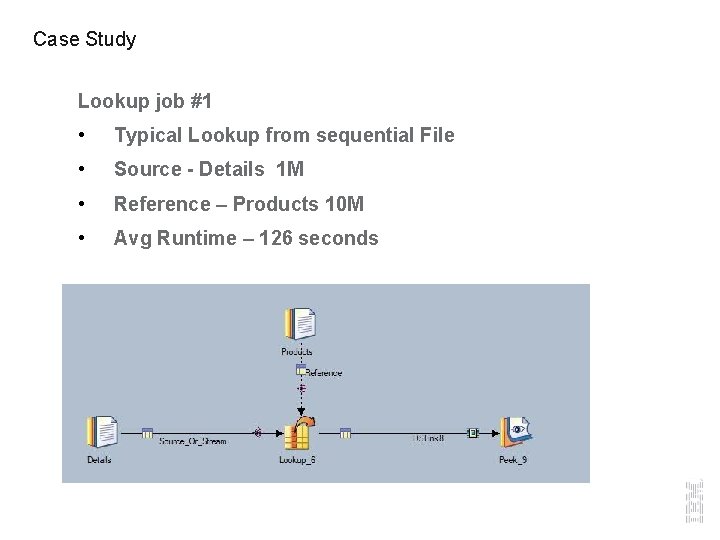
Case Study Lookup job #1 • Typical Lookup from sequential File • Source - Details 1 M • Reference – Products 10 M • Avg Runtime – 126 seconds
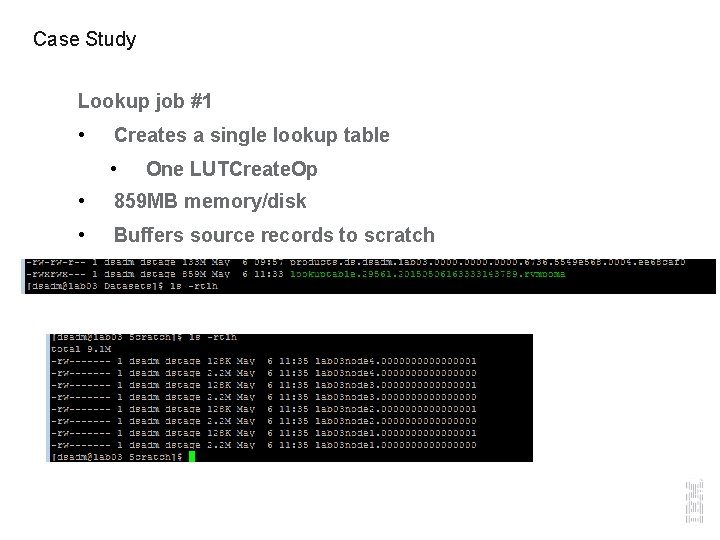
Case Study Lookup job #1 • Creates a single lookup table • One LUTCreate. Op • 859 MB memory/disk • Buffers source records to scratch
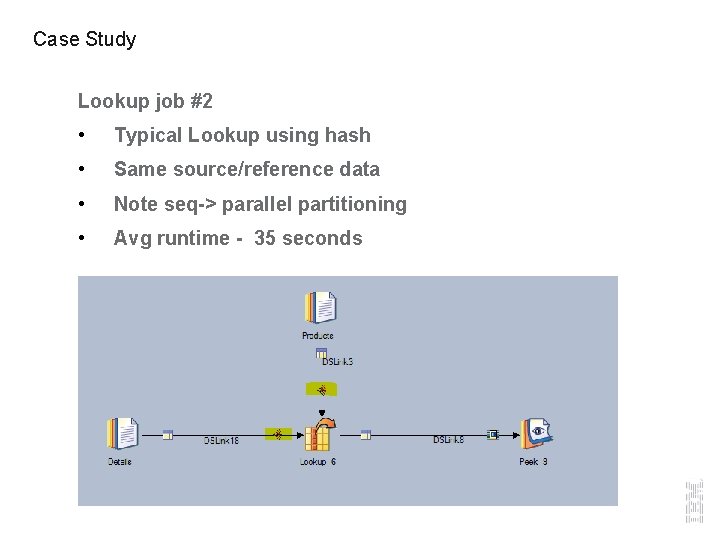
Case Study Lookup job #2 • Typical Lookup using hash • Same source/reference data • Note seq-> parallel partitioning • Avg runtime - 35 seconds
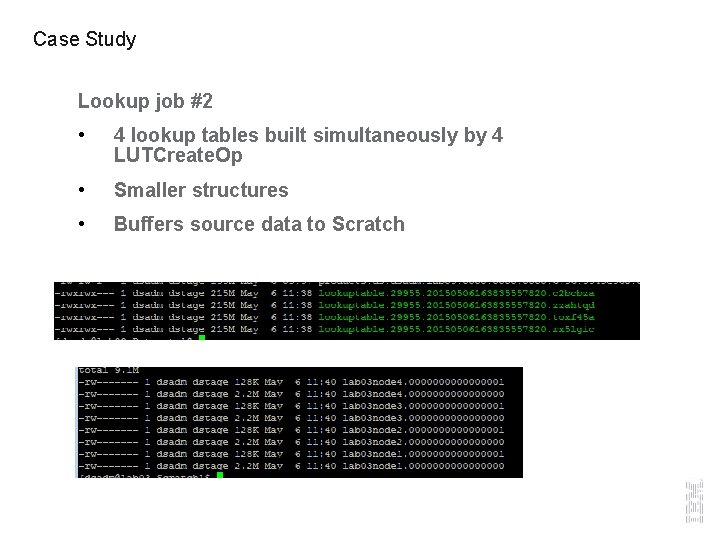
Case Study Lookup job #2 • 4 lookup tables built simultaneously by 4 LUTCreate. Op • Smaller structures • Buffers source data to Scratch
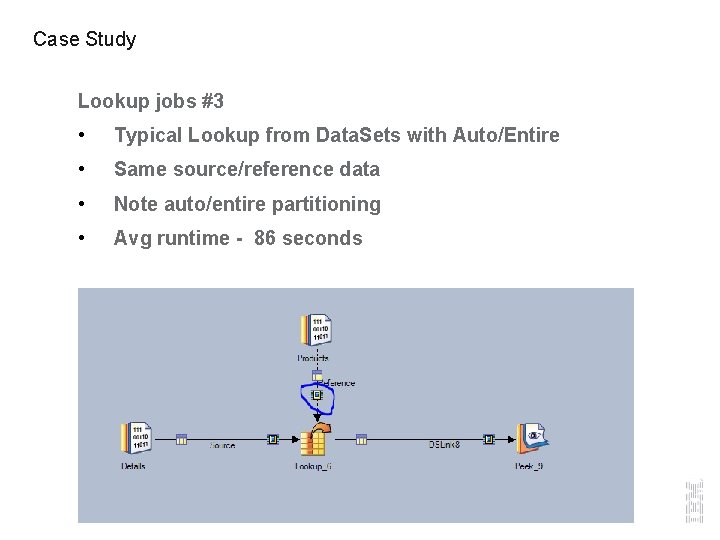
Case Study Lookup jobs #3 • Typical Lookup from Data. Sets with Auto/Entire • Same source/reference data • Note auto/entire partitioning • Avg runtime - 86 seconds
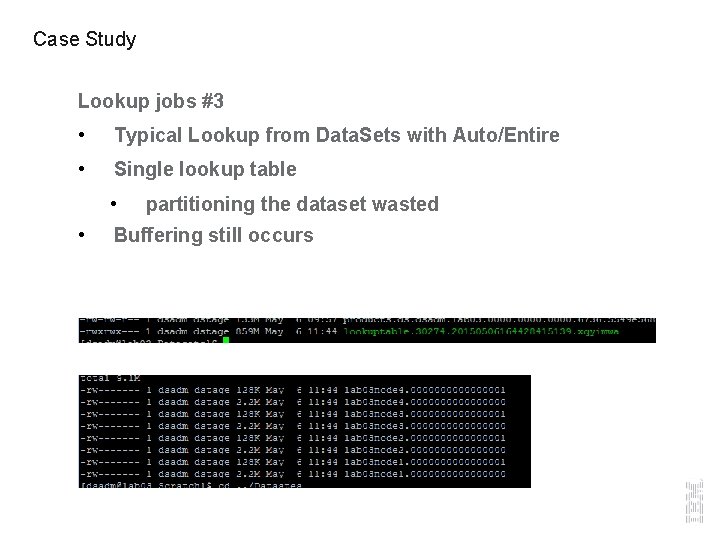
Case Study Lookup jobs #3 • Typical Lookup from Data. Sets with Auto/Entire • Single lookup table • • partitioning the dataset wasted Buffering still occurs
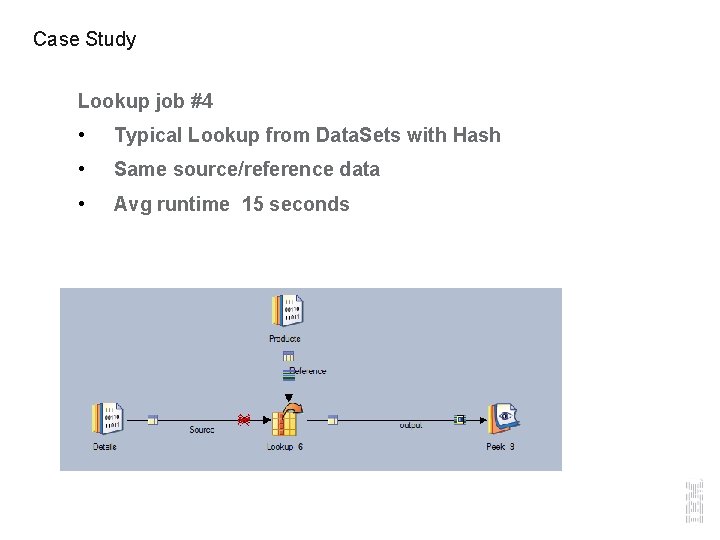
Case Study Lookup job #4 • Typical Lookup from Data. Sets with Hash • Same source/reference data • Avg runtime 15 seconds
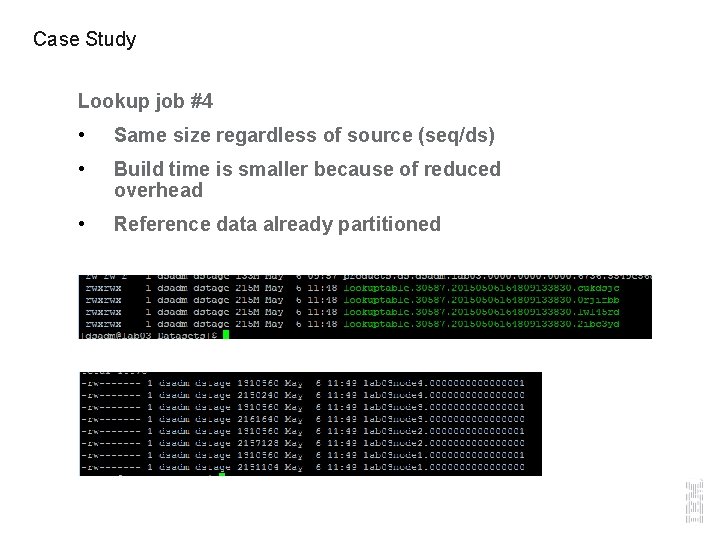
Case Study Lookup job #4 • Same size regardless of source (seq/ds) • Build time is smaller because of reduced overhead • Reference data already partitioned
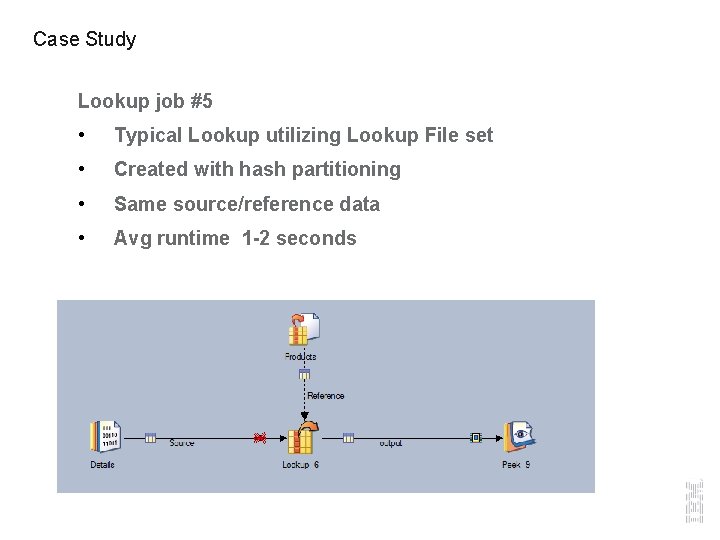
Case Study Lookup job #5 • Typical Lookup utilizing Lookup File set • Created with hash partitioning • Same source/reference data • Avg runtime 1 -2 seconds
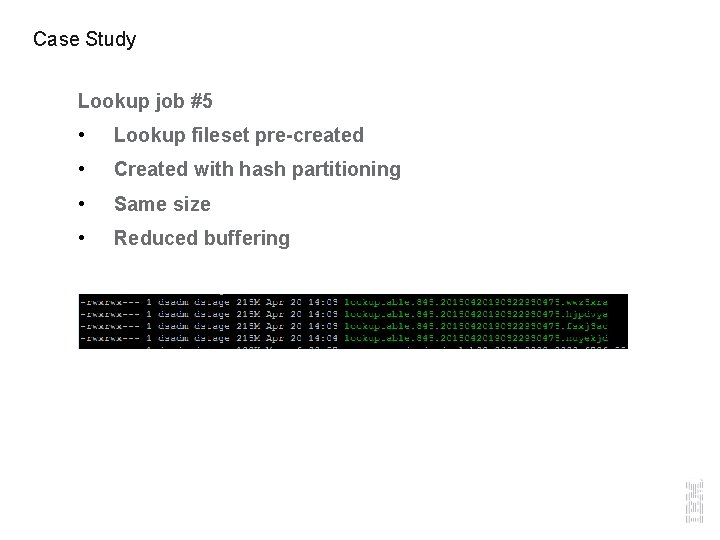
Case Study Lookup job #5 • Lookup fileset pre-created • Created with hash partitioning • Same size • Reduced buffering
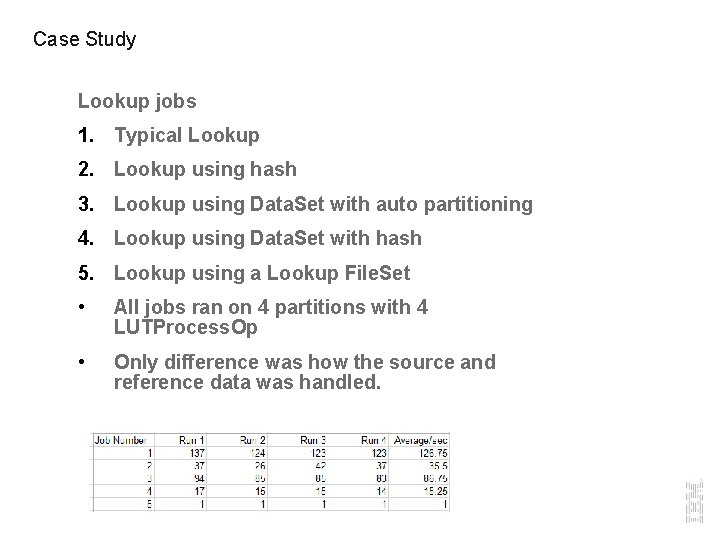
Case Study Lookup jobs 1. Typical Lookup 2. Lookup using hash 3. Lookup using Data. Set with auto partitioning 4. Lookup using Data. Set with hash 5. Lookup using a Lookup File. Set • All jobs ran on 4 partitions with 4 LUTProcess. Op • Only difference was how the source and reference data was handled.
Questions? Important links: • Lookup Vs Join - http: //www 01. ibm. com/support/knowledgecenter/SSZJPZ_9. 1. 0/com. ibm. swg. im. iis. ds. parjob. dev. doc/topics/c_deeref_Join_Versus _Lookup. html? lang=en • SMP vs MPP - http: //www 01. ibm. com/support/knowledgecenter/SSZJPZ_8. 7. 0/com. ibm. swg. im. iis. productization. iisinfsv. install. doc/topics/wsisin st_pln_engscalabilityparallel. html • Pipeline Processing - http: //www 01. ibm. com/support/knowledgecenter/SSZJPZ_8. 7. 0/com. ibm. swg. im. iis. ds. parjob. dev. doc/topics/combiningpipelineand partitionparallelism. html • Lookup File Set Stage -http: //www 01. ibm. com/support/knowledgecenter/SSZJPZ_9. 1. 0/com. ibm. swg. im. iis. ds. parjob. dev. doc/topics/c_deeref_Lookup_File _Set_Stage. html? lang=en • Lookup Stage - http: //www 01. ibm. com/support/knowledgecenter/SSZJPZ_9. 1. 0/com. ibm. swg. im. iis. ds. parjob. dev. doc/topics/c_deeref_Lookup_Sta ge. html? lang=en • Range Lookup - http: //www 01. ibm. com/support/knowledgecenter/SSZJPZ_9. 1. 0/com. ibm. swg. im. iis. ds. parjob. dev. doc/topics/t_deeref_Range_Look ups. html? lang=en • Sparse lookup vs Join - http: //www 01. ibm. com/support/knowledgecenter/SSZJPZ_9. 1. 0/com. ibm. swg. im. iis. ds. parjob. dev. doc/topics/c_deeref_Join_Versus _Lookup. html? lang=en • Link Buffering - http: //www 01. ibm. com/support/knowledgecenter/SSZJPZ_9. 1. 0/com. ibm. swg. im. iis. ds. parjob. adref. doc/topics/c_deeadvrf_Link_Buf fering. html? lang=en • General Performance Tips - http: //www 01. ibm. com/support/knowledgecenter/SSZJPZ_9. 1. 0/com. ibm. swg. im. iis. ds. parjob. adref. doc/topics/c_deeadvrf_Improvin g_Performance. html? lang=en
- Slides: 44