
IBM Capital Structure How Much Debt Prof Ian
IBM Capital Structure: How Much Debt? Prof. Ian Giddy New York University
First Principles q Invest in projects that yield a return greater than the minimum acceptable hurdle rate. The hurdle rate should be higher for riskier projects and reflect the financing mix used - owners’ funds (equity) or borrowed money (debt) u Returns on projects should be measured based on cash flows generated and the timing of these cash flows; they should also consider both positive and negative side effects of these projects. u q q Choose a financing mix that minimizes the hurdle rate and matches the assets being financed. If there are not enough investments that earn the hurdle rate, return the cash to stockholders. u The form of returns - dividends and stock buybacks - will depend upon the stockholders’ characteristics. Copyright © 2004 Ian H. Giddy Capital Structure 3
The Agenda q What determines the optimal mix of debt and equity for a company? q How does altering the mix of debt and equity affect the value of a company? q What is the right kind of debt for a company? Copyright © 2004 Ian H. Giddy Capital Structure 4

Corporate Finance CORPORATE FINANCE DECISONS INVESTMENT FINANCING PORTFOLIO CAPITAL M&A Copyright © 2004 Ian H. Giddy RISK MGT MEASUREMENT DEBT EQUITY TOOLS Capital Structure 5
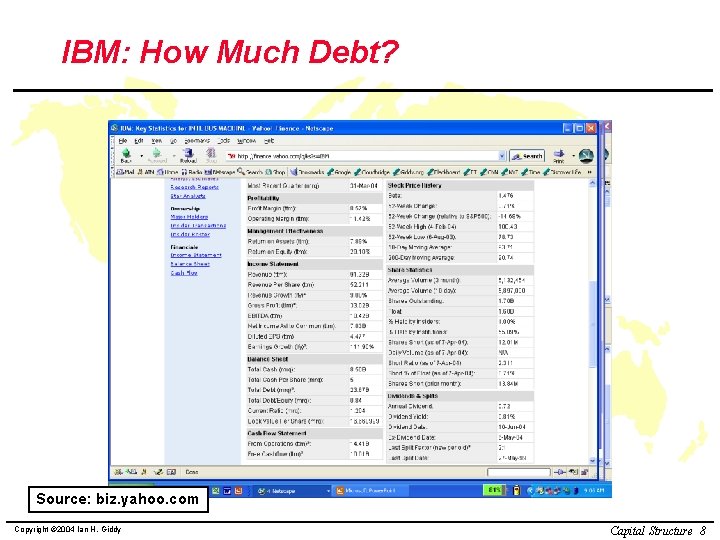
IBM: How Much Debt? Source: biz. yahoo. com Copyright © 2004 Ian H. Giddy Capital Structure 8
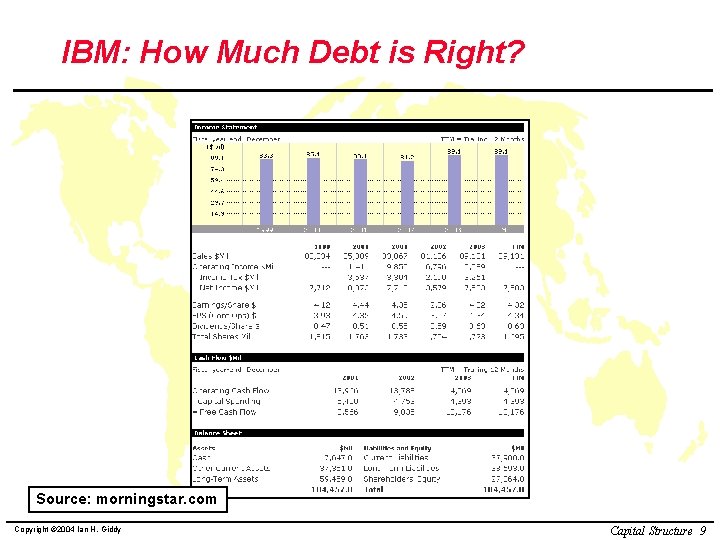
IBM: How Much Debt is Right? Source: morningstar. com Copyright © 2004 Ian H. Giddy Capital Structure 9
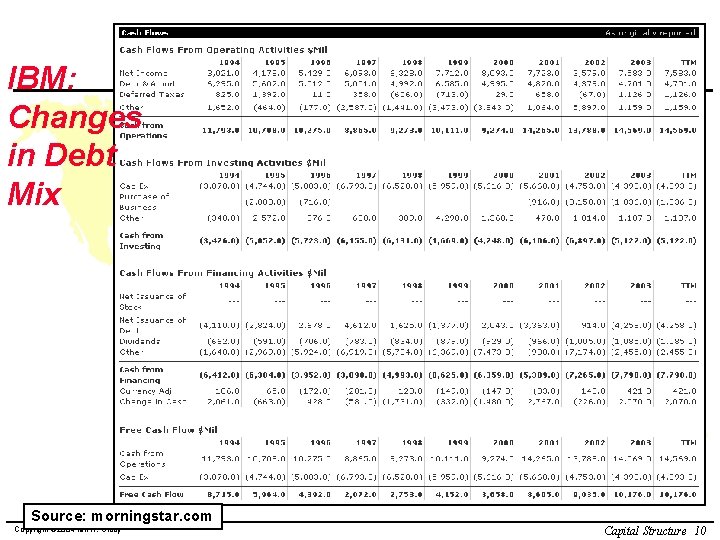
IBM: Changes in Debt Mix Source: morningstar. com Copyright © 2004 Ian H. Giddy Capital Structure 10
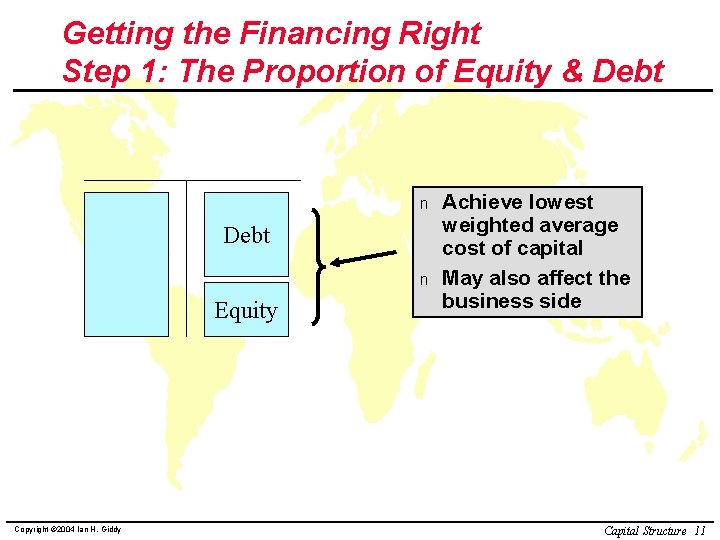
Getting the Financing Right Step 1: The Proportion of Equity & Debt n Equity Copyright © 2004 Ian H. Giddy Achieve lowest weighted average cost of capital May also affect the business side Capital Structure 11
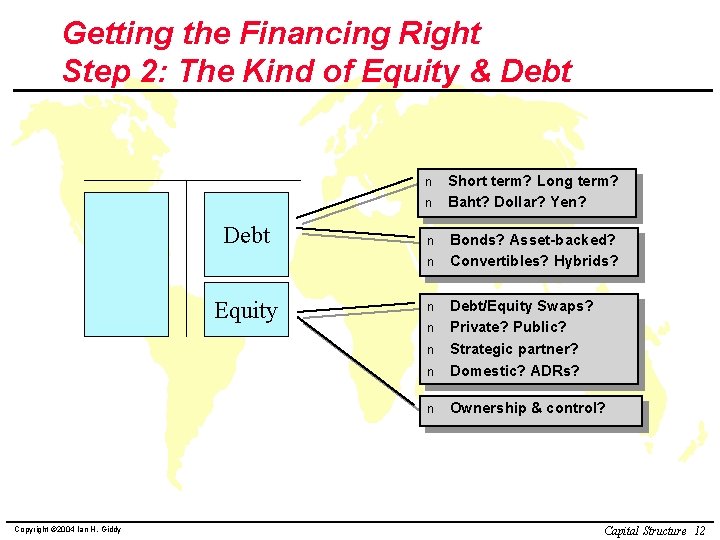
Getting the Financing Right Step 2: The Kind of Equity & Debt n n Equity Bonds? Asset-backed? Convertibles? Hybrids? n Debt/Equity Swaps? Private? Public? Strategic partner? Domestic? ADRs? n Ownership & control? n n n Copyright © 2004 Ian H. Giddy Short term? Long term? Baht? Dollar? Yen? Capital Structure 12
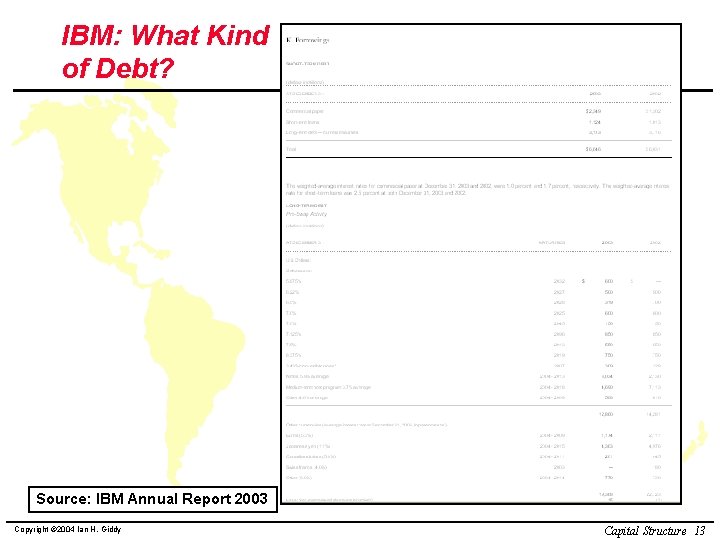
IBM: What Kind of Debt? Source: IBM Annual Report 2003 Copyright © 2004 Ian H. Giddy Capital Structure 13

Does Capital Structure Matter? Yes! Assets’ value is the present value of the cash flows from the real business of the firm Value of the firm =PV(Cash Flows) COST OF CAPITAL Copyright © 2004 Ian H. Giddy Debt Equity Value of the firm =D+E Optimal debt ratio? DEBT RATIO Capital Structure 14
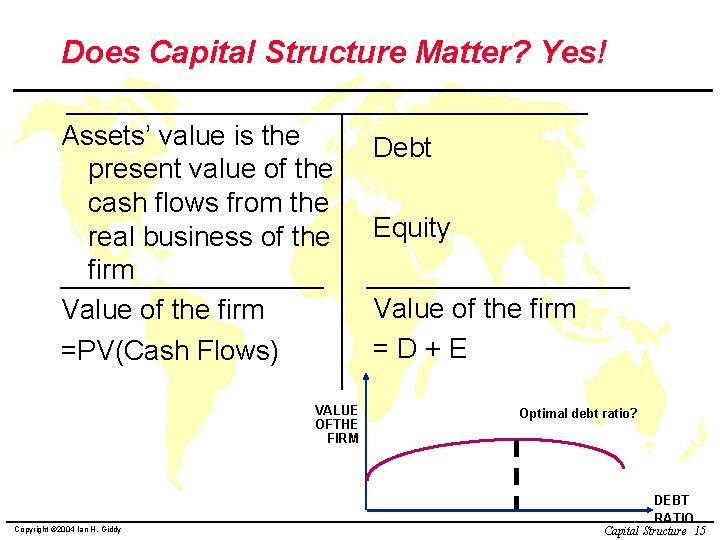
Does Capital Structure Matter? Yes! Assets’ value is the present value of the cash flows from the real business of the firm Value of the firm =PV(Cash Flows) VALUE OFTHE FIRM Copyright © 2004 Ian H. Giddy Debt Equity Value of the firm =D+E Optimal debt ratio? DEBT RATIO Capital Structure 15
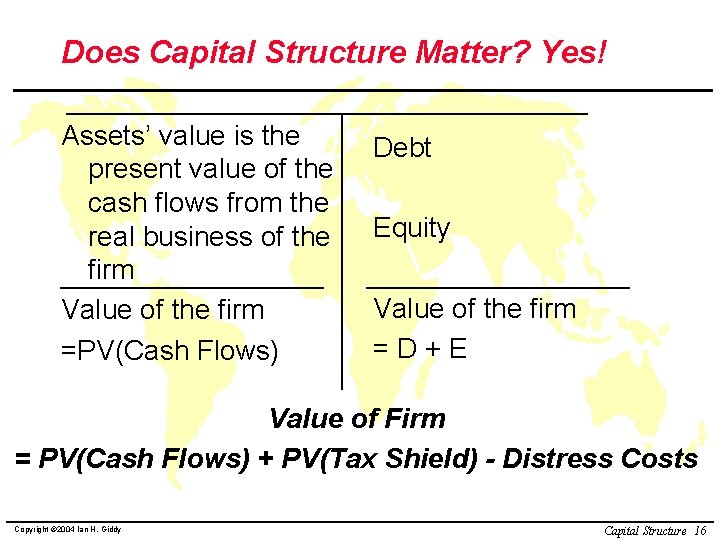
Does Capital Structure Matter? Yes! Assets’ value is the present value of the cash flows from the real business of the firm Value of the firm =PV(Cash Flows) Debt Equity Value of the firm =D+E Value of Firm = PV(Cash Flows) + PV(Tax Shield) - Distress Costs Copyright © 2004 Ian H. Giddy Capital Structure 16
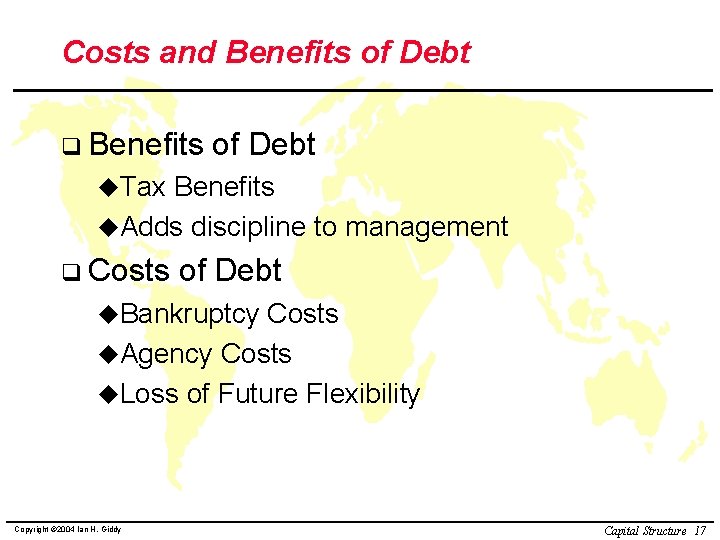
Costs and Benefits of Debt q Benefits of Debt u. Tax Benefits u. Adds discipline to management q Costs of Debt u. Bankruptcy Costs u. Agency Costs u. Loss of Future Flexibility Copyright © 2004 Ian H. Giddy Capital Structure 17
Tax Benefits of Debt q Tax Benefits: Interest on debt is tax deductible whereas cash flows on equity (like dividends) are not. u. Tax benefit each year = t r B u. After tax interest rate of debt = (1 -t) r q Other things being equal, the higher the marginal tax rate of a corporation, the more debt it will have in its capital structure. Copyright © 2004 Ian H. Giddy Capital Structure 18
Debt Adds Discipline to Management q Equity is a cushion; Debt is a sword; q The management of firms which have high cash flows left over each year are more likely to be complacent and inefficient. Copyright © 2004 Ian H. Giddy Capital Structure 19
Bankruptcy Cost q The expected bankruptcy cost is a function of two variables-u the cost of going bankrupt § § direct costs: Legal and other Deadweight Costs indirect costs: Lost Sales. . . üdurable versus non-durable goods (cars) üquality/safety is important (airlines) üsupplementary services (copiers) uthe Copyright © 2004 Ian H. Giddy probability of bankruptcy Capital Structure 20
The Bankruptcy Cost Proposition q Other things being equal, the greater the implicit bankruptcy cost and/or probability of bankruptcy in the operating cash flows of the firm, the less debt the firm can afford to use. Copyright © 2004 Ian H. Giddy Capital Structure 21
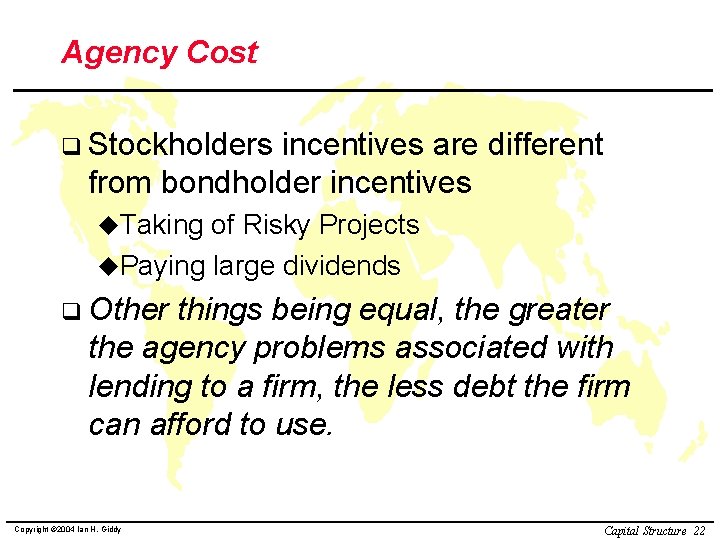
Agency Cost q Stockholders incentives are different from bondholder incentives u. Taking of Risky Projects u. Paying large dividends q Other things being equal, the greater the agency problems associated with lending to a firm, the less debt the firm can afford to use. Copyright © 2004 Ian H. Giddy Capital Structure 22
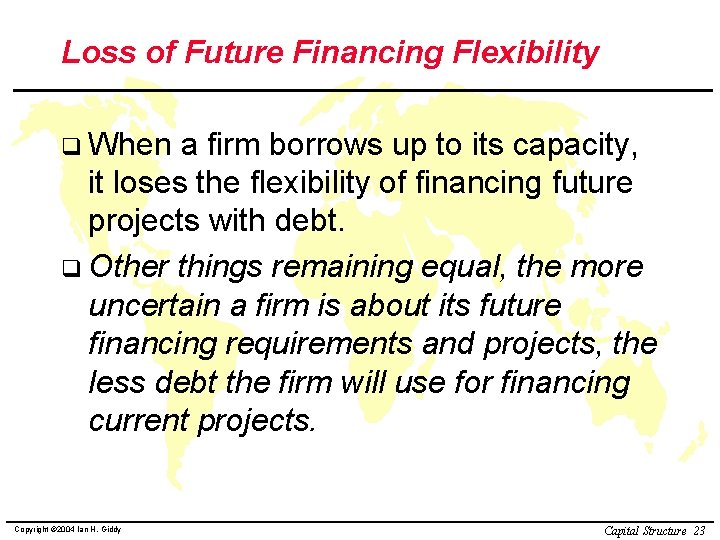
Loss of Future Financing Flexibility q When a firm borrows up to its capacity, it loses the flexibility of financing future projects with debt. q Other things remaining equal, the more uncertain a firm is about its future financing requirements and projects, the less debt the firm will use for financing current projects. Copyright © 2004 Ian H. Giddy Capital Structure 23
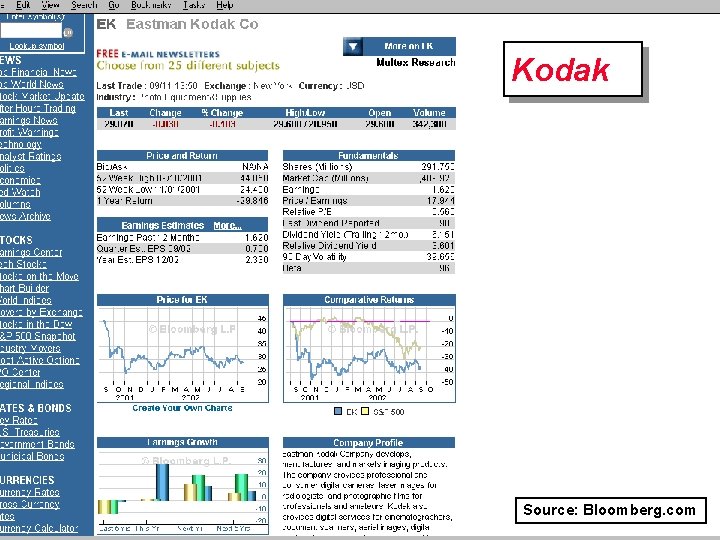
Kodak Source: Bloomberg. com Copyright © 2004 Ian H. Giddy Capital Structure 24
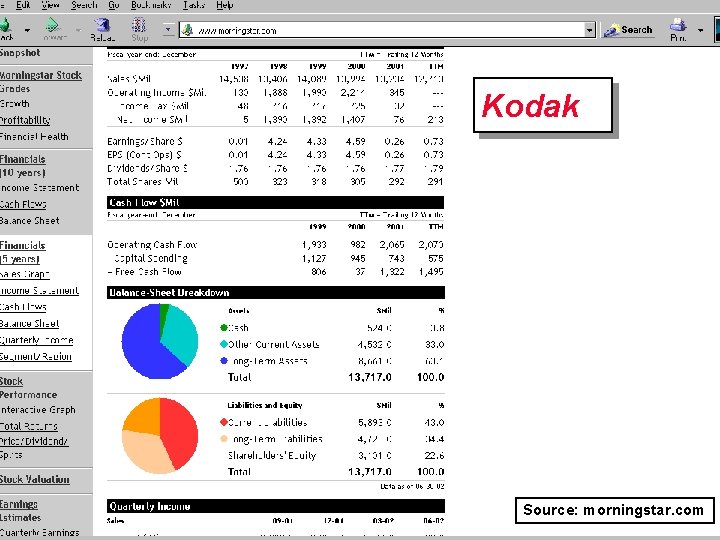
Kodak Source: morningstar. com Copyright © 2004 Ian H. Giddy Capital Structure 25
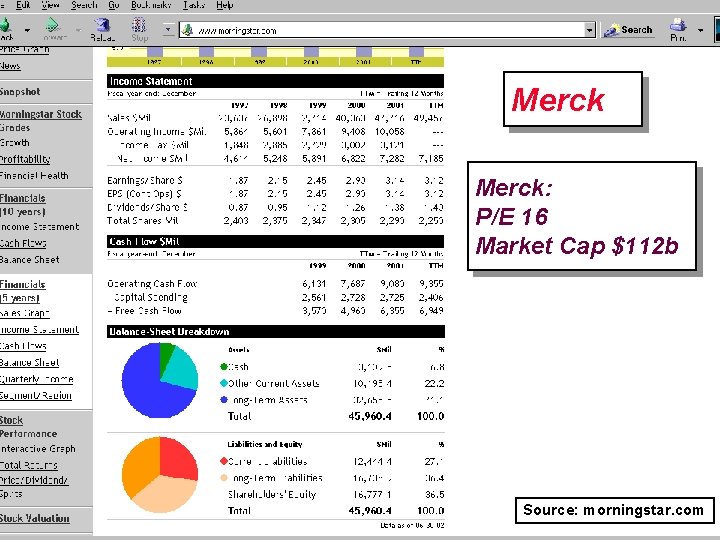
Merck: P/E 16 Market Cap $112 b Source: morningstar. com Copyright © 2004 Ian H. Giddy Capital Structure 26
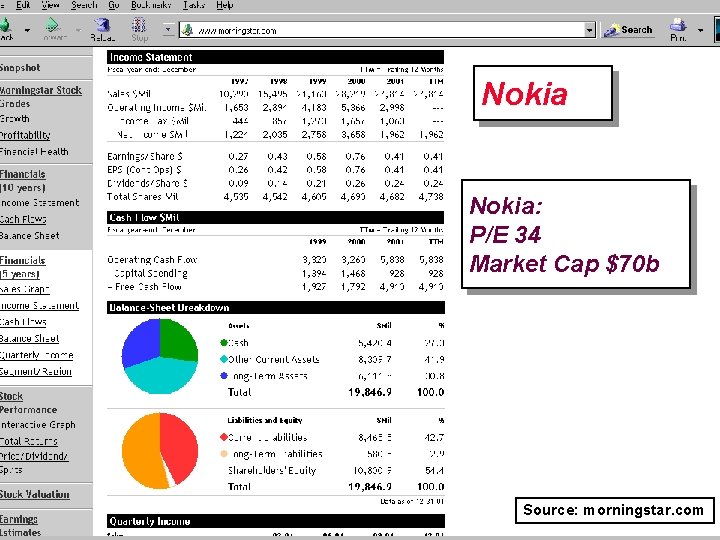
Nokia: P/E 34 Market Cap $70 b Source: morningstar. com Copyright © 2004 Ian H. Giddy Capital Structure 27
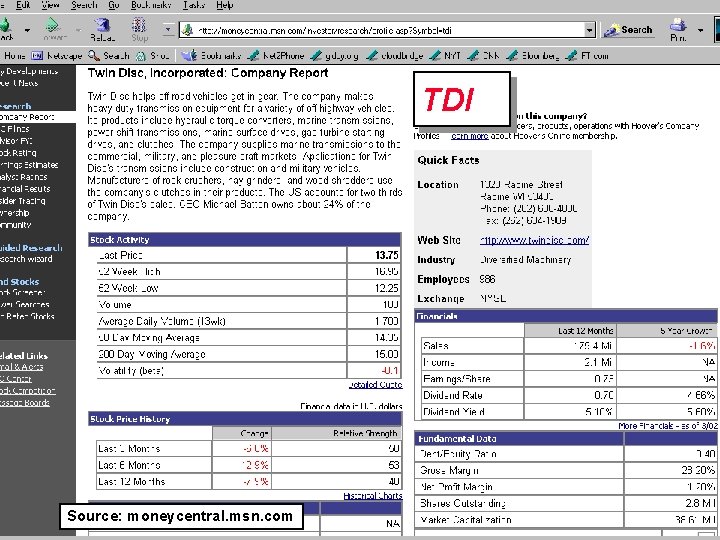
TDI Source: moneycentral. msn. com Copyright © 2004 Ian H. Giddy Capital Structure 29
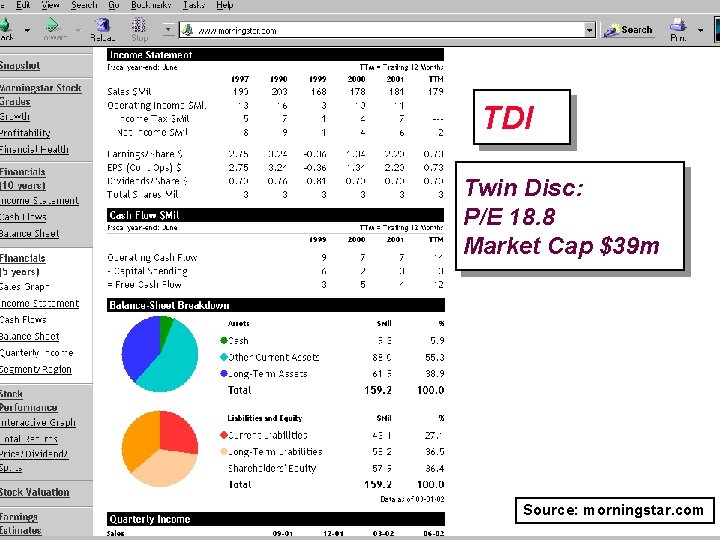
TDI Twin Disc: P/E 18. 8 Market Cap $39 m Source: morningstar. com Copyright © 2004 Ian H. Giddy Capital Structure 30
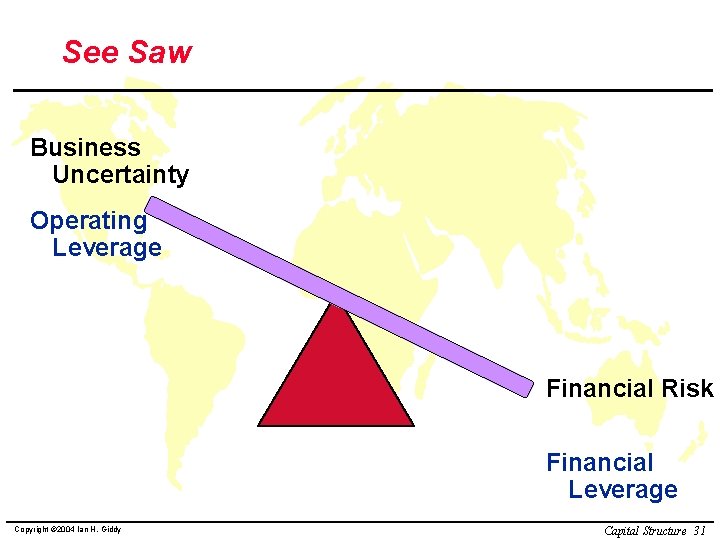
See Saw Business Uncertainty Operating Leverage Financial Risk Financial Leverage Copyright © 2004 Ian H. Giddy Capital Structure 31
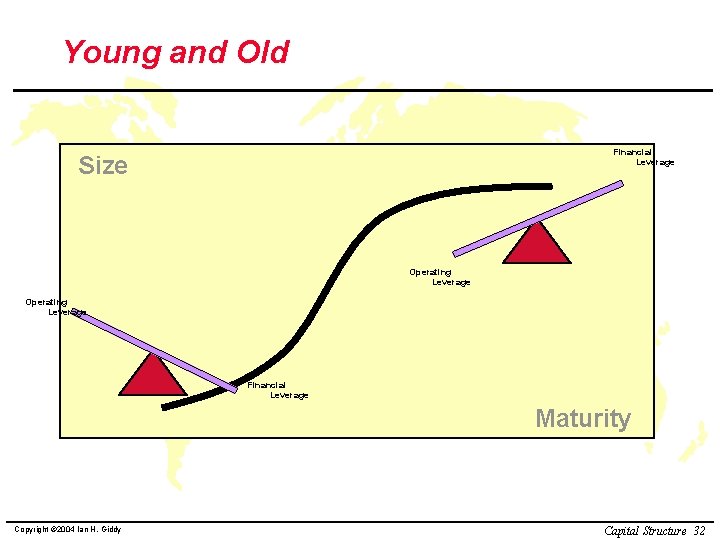
Young and Old Financial Leverage Size Operating Leverage Financial Leverage Maturity Copyright © 2004 Ian H. Giddy Capital Structure 32
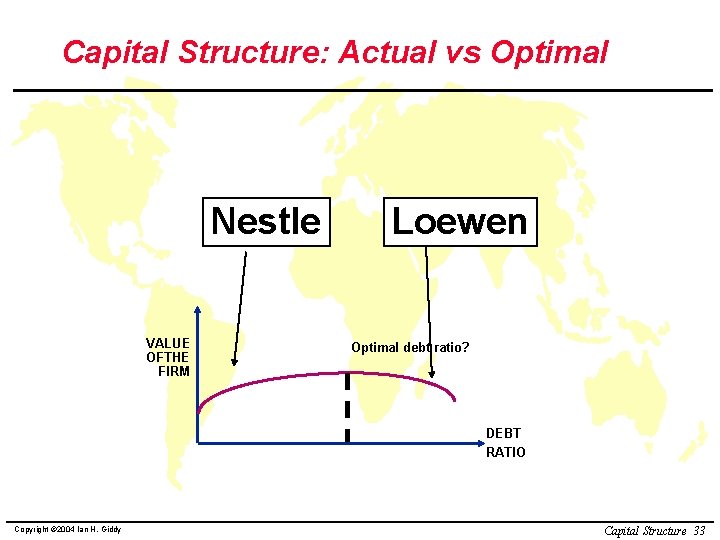
Capital Structure: Actual vs Optimal Nestle VALUE OFTHE FIRM Loewen Optimal debt ratio? DEBT RATIO Copyright © 2004 Ian H. Giddy Capital Structure 33
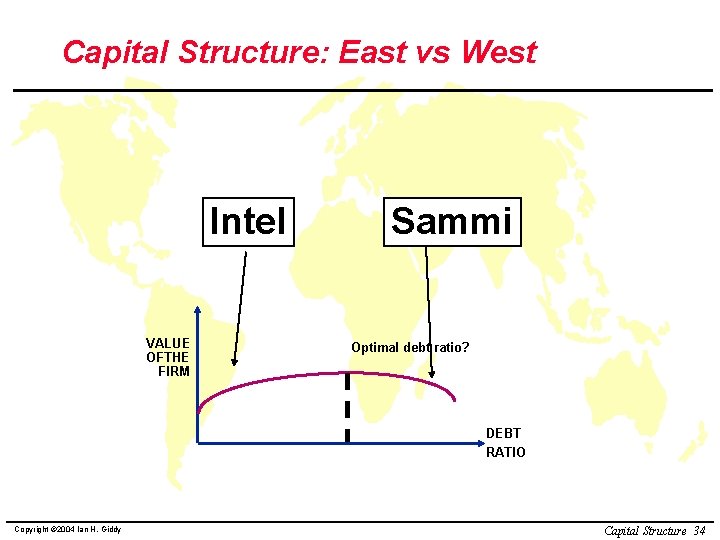
Capital Structure: East vs West Intel VALUE OFTHE FIRM Sammi Optimal debt ratio? DEBT RATIO Copyright © 2004 Ian H. Giddy Capital Structure 34
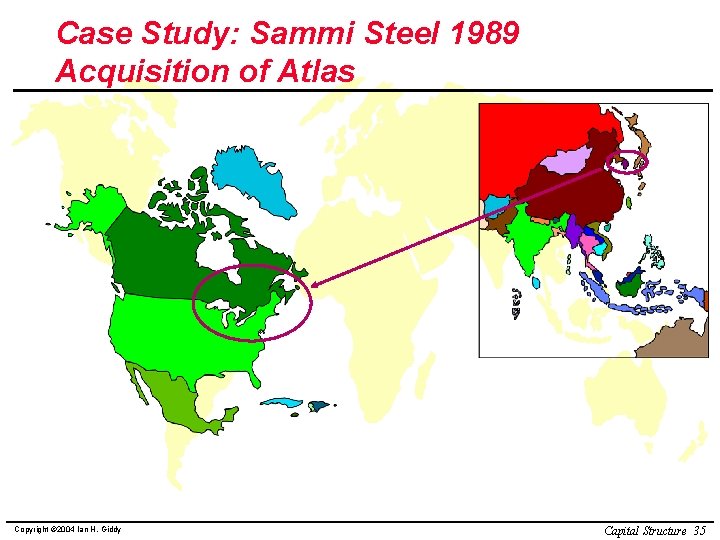
Case Study: Sammi Steel 1989 Acquisition of Atlas Copyright © 2004 Ian H. Giddy Capital Structure 35
How Much Debt? A $19. 95 company. . . an “ISP” Profits: Zero ~ Risks: High Copyright © 2004 Ian H. Giddy Capital Structure 37
Financing Growth Companies: The Agenda q Where can we get the initial equity financing we need to grow? q Do we want money, management, or more? q When do we want to sell out, and how? q When is the right time for debt for a growth company? What kind? Copyright © 2004 Ian H. Giddy Capital Structure 38
What Kind of Equity? q Sources of Equity u. Private investors u. Strategic investors u. Interventionist investors u. Public market q And Kinds u. Common stock u. Stock with restricted voting rights u. Hybrids, including convertibles Copyright © 2004 Ian H. Giddy Capital Structure 39
Case Study: Photronics Copyright © 2004 Ian H. Giddy Capital Structure 40
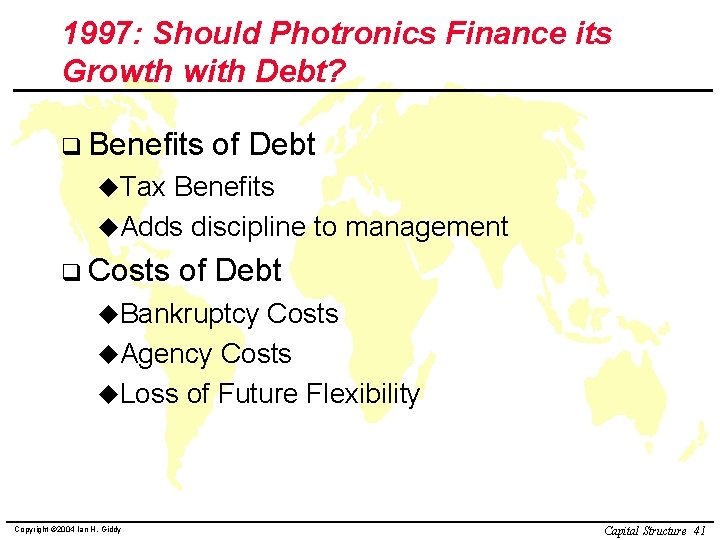
1997: Should Photronics Finance its Growth with Debt? q Benefits of Debt u. Tax Benefits u. Adds discipline to management q Costs of Debt u. Bankruptcy Costs u. Agency Costs u. Loss of Future Flexibility Copyright © 2004 Ian H. Giddy Capital Structure 41
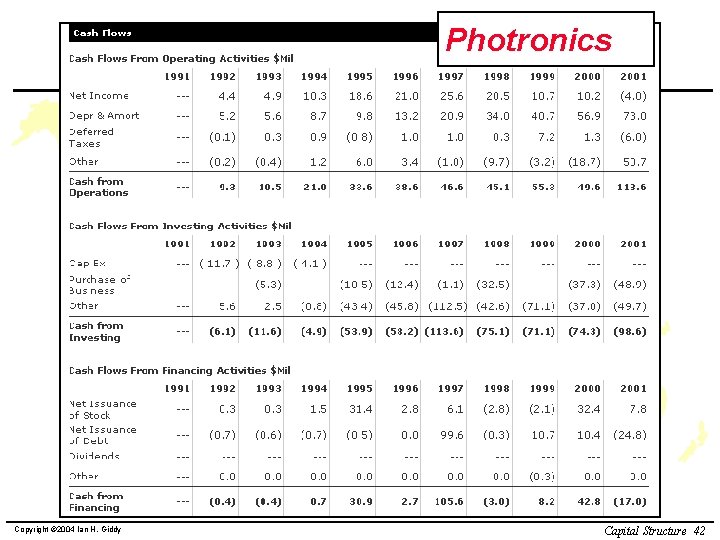
Photronics Copyright © 2004 Ian H. Giddy Capital Structure 42
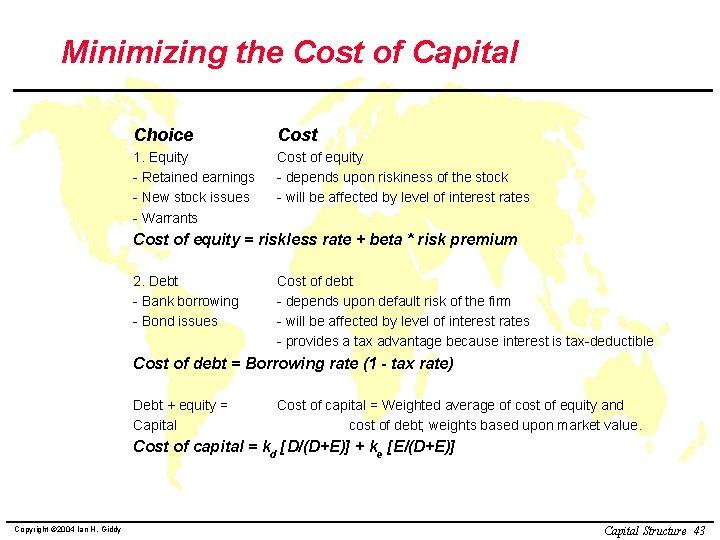
Minimizing the Cost of Capital Choice Cost 1. Equity - Retained earnings - New stock issues - Warrants Cost of equity - depends upon riskiness of the stock - will be affected by level of interest rates Cost of equity = riskless rate + beta * risk premium 2. Debt - Bank borrowing - Bond issues Cost of debt - depends upon default risk of the firm - will be affected by level of interest rates - provides a tax advantage because interest is tax-deductible Cost of debt = Borrowing rate (1 - tax rate) Debt + equity = Capital Cost of capital = Weighted average of cost of equity and cost of debt; weights based upon market value. Cost of capital = kd [D/(D+E)] + ke [E/(D+E)] Copyright © 2004 Ian H. Giddy Capital Structure 43
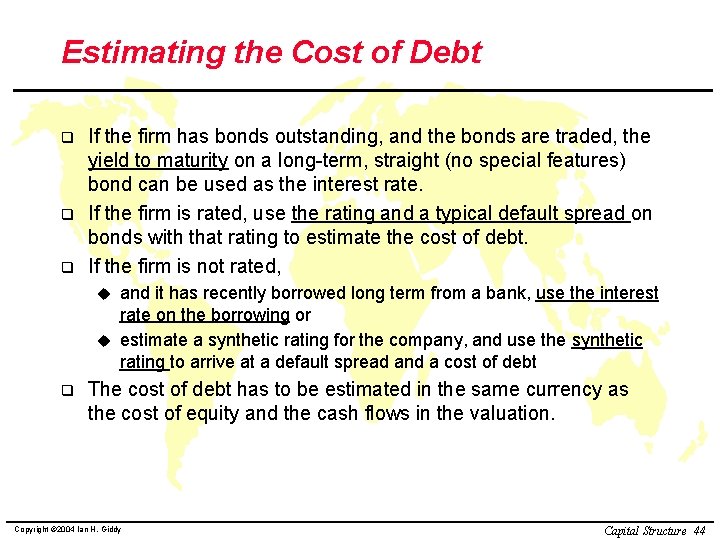
Estimating the Cost of Debt q q q If the firm has bonds outstanding, and the bonds are traded, the yield to maturity on a long-term, straight (no special features) bond can be used as the interest rate. If the firm is rated, use the rating and a typical default spread on bonds with that rating to estimate the cost of debt. If the firm is not rated, and it has recently borrowed long term from a bank, use the interest rate on the borrowing or u estimate a synthetic rating for the company, and use the synthetic rating to arrive at a default spread and a cost of debt u q The cost of debt has to be estimated in the same currency as the cost of equity and the cash flows in the valuation. Copyright © 2004 Ian H. Giddy Capital Structure 44
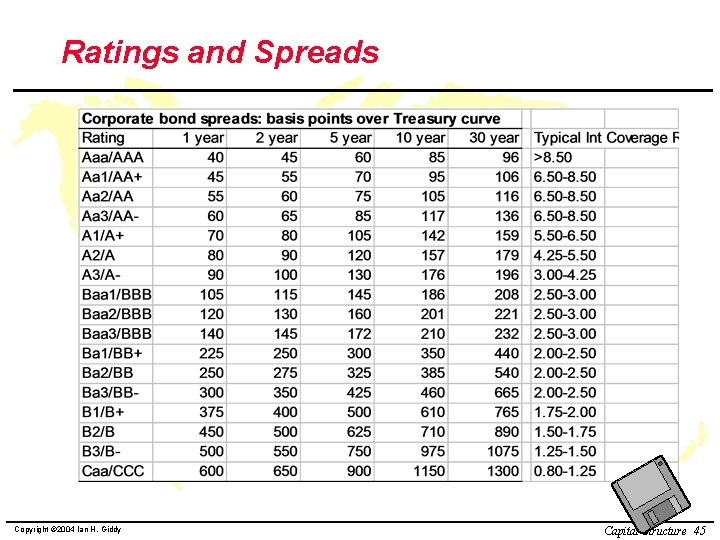
Ratings and Spreads Copyright © 2004 Ian H. Giddy Capital Structure 45
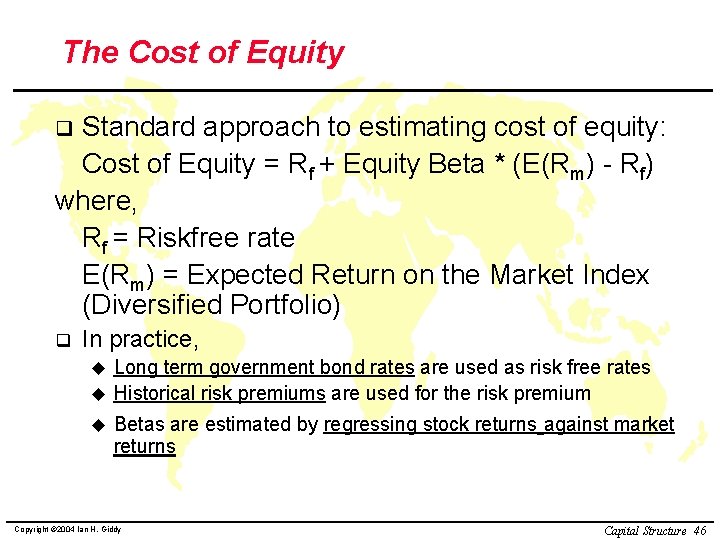
The Cost of Equity Standard approach to estimating cost of equity: Cost of Equity = Rf + Equity Beta * (E(Rm) - Rf) where, Rf = Riskfree rate E(Rm) = Expected Return on the Market Index (Diversified Portfolio) q q In practice, Long term government bond rates are used as risk free rates u Historical risk premiums are used for the risk premium u u Betas are estimated by regressing stock returns against market returns Copyright © 2004 Ian H. Giddy Capital Structure 46
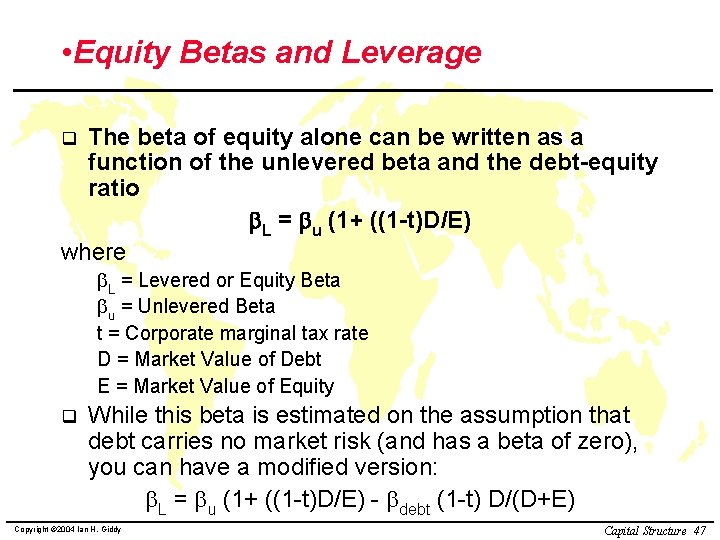
• Equity Betas and Leverage The beta of equity alone can be written as a function of the unlevered beta and the debt-equity ratio L = u (1+ ((1 -t)D/E) where q L = Levered or Equity Beta u = Unlevered Beta t = Corporate marginal tax rate D = Market Value of Debt E = Market Value of Equity q While this beta is estimated on the assumption that debt carries no market risk (and has a beta of zero), you can have a modified version: L = u (1+ ((1 -t)D/E) - debt (1 -t) D/(D+E) Copyright © 2004 Ian H. Giddy Capital Structure 47
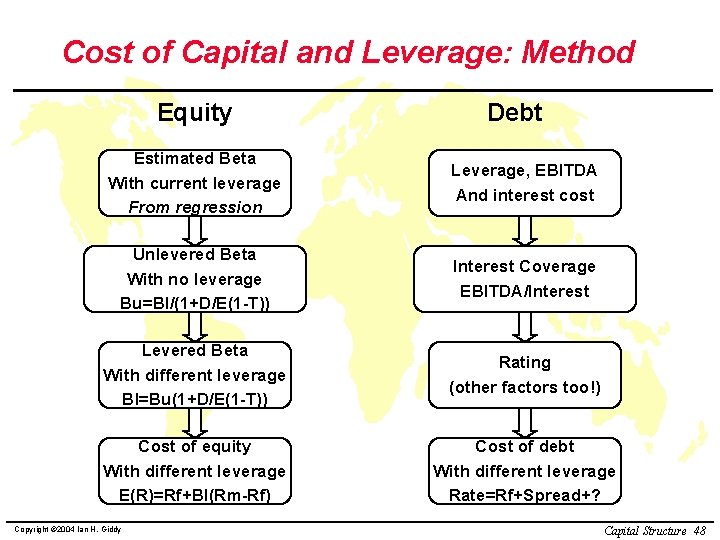
Cost of Capital and Leverage: Method Equity Debt Estimated Beta With current leverage From regression Leverage, EBITDA And interest cost Unlevered Beta With no leverage Bu=Bl/(1+D/E(1 -T)) Interest Coverage EBITDA/Interest Levered Beta With different leverage Bl=Bu(1+D/E(1 -T)) Rating (other factors too!) Cost of equity With different leverage E(R)=Rf+Bl(Rm-Rf) Cost of debt With different leverage Rate=Rf+Spread+? Copyright © 2004 Ian H. Giddy Capital Structure 48
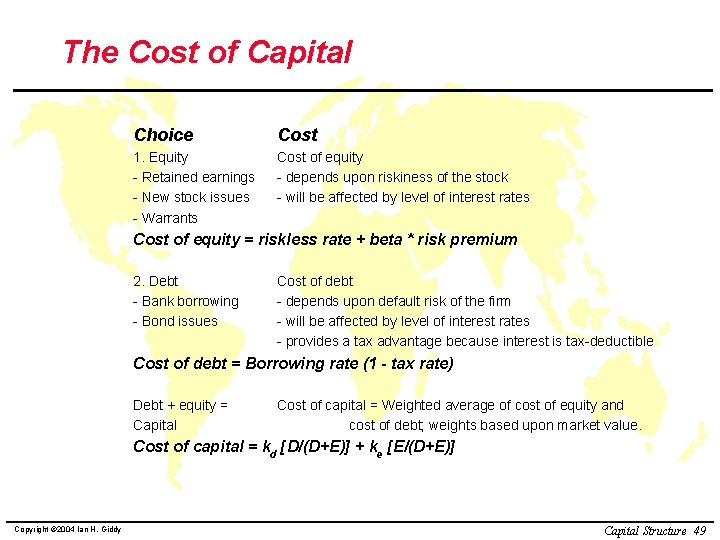
The Cost of Capital Choice Cost 1. Equity - Retained earnings - New stock issues - Warrants Cost of equity - depends upon riskiness of the stock - will be affected by level of interest rates Cost of equity = riskless rate + beta * risk premium 2. Debt - Bank borrowing - Bond issues Cost of debt - depends upon default risk of the firm - will be affected by level of interest rates - provides a tax advantage because interest is tax-deductible Cost of debt = Borrowing rate (1 - tax rate) Debt + equity = Capital Cost of capital = Weighted average of cost of equity and cost of debt; weights based upon market value. Cost of capital = kd [D/(D+E)] + ke [E/(D+E)] Copyright © 2004 Ian H. Giddy Capital Structure 49
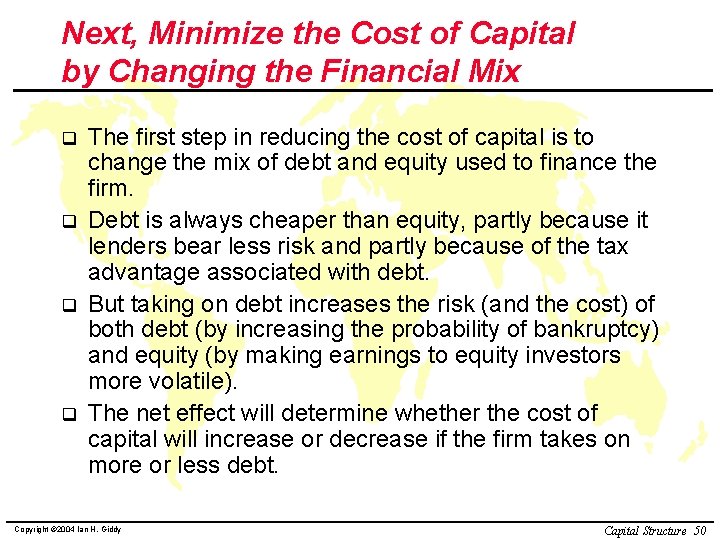
Next, Minimize the Cost of Capital by Changing the Financial Mix q q The first step in reducing the cost of capital is to change the mix of debt and equity used to finance the firm. Debt is always cheaper than equity, partly because it lenders bear less risk and partly because of the tax advantage associated with debt. But taking on debt increases the risk (and the cost) of both debt (by increasing the probability of bankruptcy) and equity (by making earnings to equity investors more volatile). The net effect will determine whether the cost of capital will increase or decrease if the firm takes on more or less debt. Copyright © 2004 Ian H. Giddy Capital Structure 50
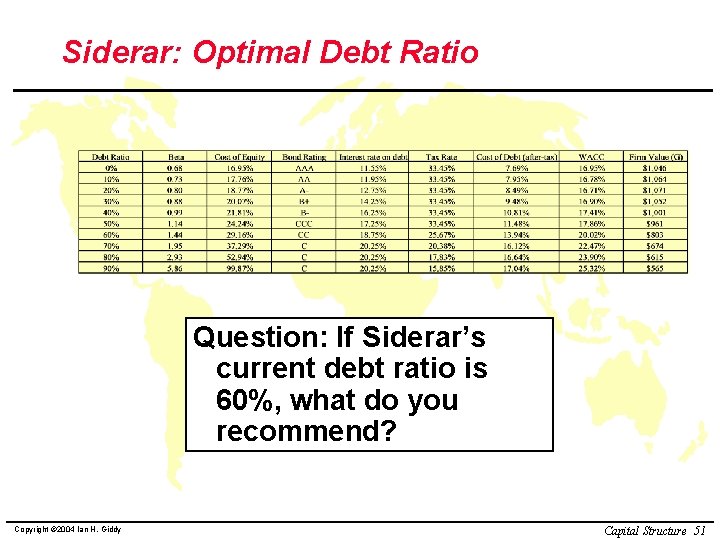
Siderar: Optimal Debt Ratio Question: If Siderar’s current debt ratio is 60%, what do you recommend? Copyright © 2004 Ian H. Giddy Capital Structure 51
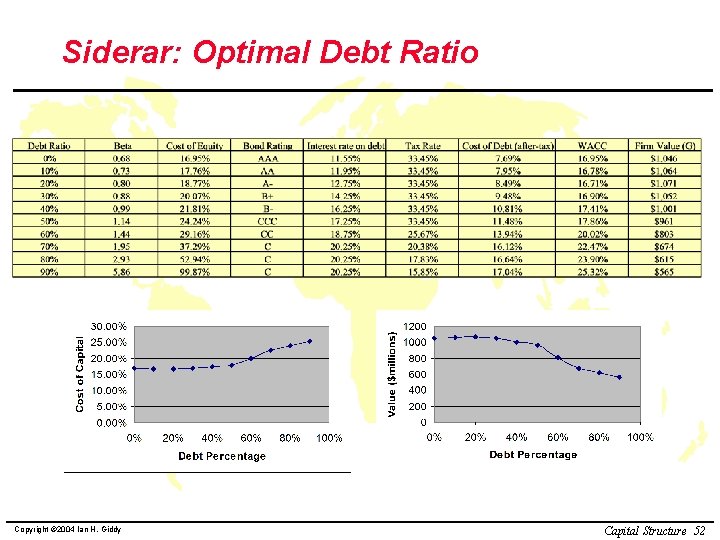
Siderar: Optimal Debt Ratio Copyright © 2004 Ian H. Giddy Capital Structure 52

Case Study: SAP Should SAP take on additional debt? If so, how much? q What is the weighted average cost of capital before and after the additional debt? q What will be the estimated price per share after the company takes on new debt? q Copyright © 2004 Ian H. Giddy Capital Structure 54
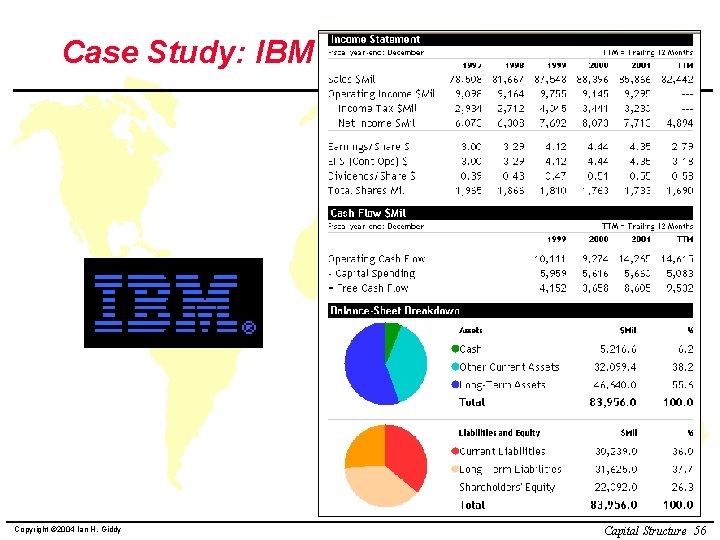
Case Study: IBM Copyright © 2004 Ian H. Giddy Capital Structure 56
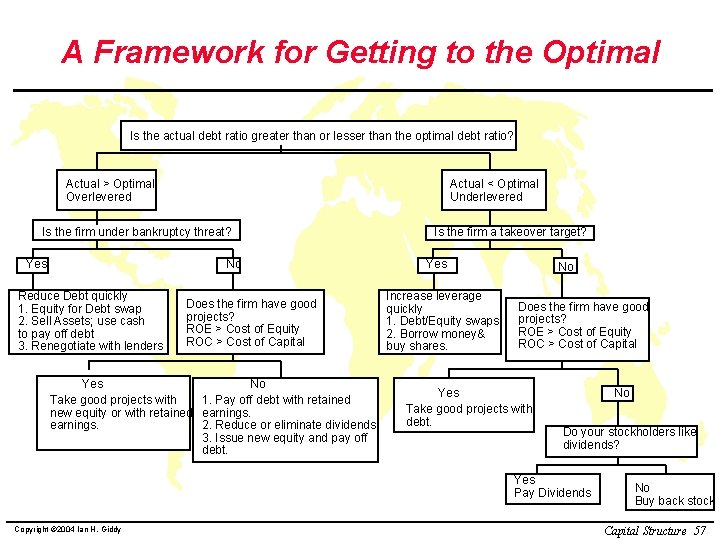
A Framework for Getting to the Optimal Is the actual debt ratio greater than or lesser than the optimal debt ratio? Actual > Optimal Overlevered Actual < Optimal Underlevered Is the firm under bankruptcy threat? Yes No Reduce Debt quickly 1. Equity for Debt swap 2. Sell Assets; use cash to pay off debt 3. Renegotiate with lenders Does the firm have good projects? ROE > Cost of Equity ROC > Cost of Capital Yes No Take good projects with 1. Pay off debt with retained new equity or with retained earnings. 2. Reduce or eliminate dividends. 3. Issue new equity and pay off debt. Is the firm a takeover target? Yes Increase leverage quickly 1. Debt/Equity swaps 2. Borrow money& buy shares. No Does the firm have good projects? ROE > Cost of Equity ROC > Cost of Capital Yes Take good projects with debt. No Do your stockholders like dividends? Yes Pay Dividends Copyright © 2004 Ian H. Giddy No Buy back stock Capital Structure 57
First Principles q Invest in projects that yield a return greater than the minimum acceptable hurdle rate. The hurdle rate should be higher for riskier projects and reflect the financing mix used - owners’ funds (equity) or borrowed money (debt) u Returns on projects should be measured based on cash flows generated and the timing of these cash flows; they should also consider both positive and negative side effects of these projects. u q q Choose a financing mix that minimizes the hurdle rate and matches the assets being financed. If there are not enough investments that earn the hurdle rate, return the cash to stockholders. u The form of returns - dividends and stock buybacks - will depend upon the stockholders’ characteristics. Copyright © 2004 Ian H. Giddy Capital Structure 58
Links n Useful Links Company information: biz. yahoo. com/ifc Industry ratios: www. stern. nyu. edu/~adamodar Debt ratings and spreads: bondsonline. com Copyright © 2004 Ian H. Giddy Capital Structure 59
Contact NYU Stern School of Business 44 West 4 th Street New York, NY 10012, USA 212 -998 -0426 ian. giddy@nyu. edu http: //giddy. org Copyright © 2004 Ian H. Giddy Capital Structure 64
- Slides: 53