
IBC Modified IBC SBC and Site Specific Considerations

IBC, Modified IBC, SBC, and Site Specific Considerations Shahram Pezeshk, Ph. D. , P. E. spezeshk@memphis. edu

IBC 2018 and ASCE 7 -16 2
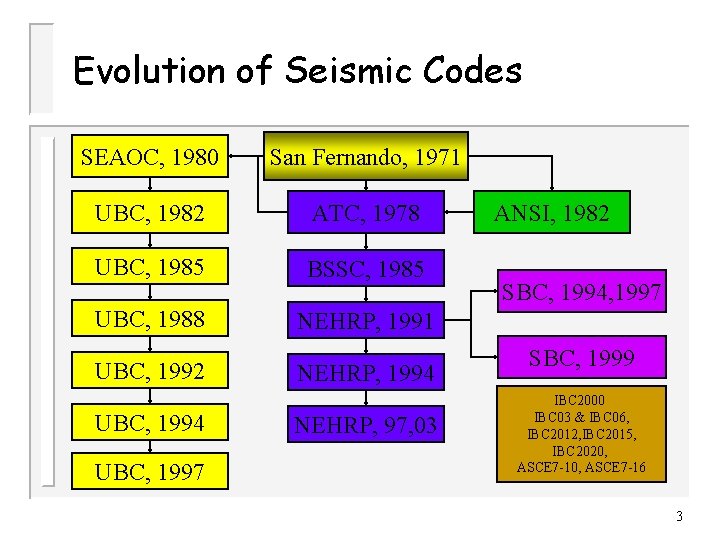
Evolution of Seismic Codes SEAOC, 1980 San Fernando, 1971 UBC, 1982 ATC, 1978 UBC, 1985 BSSC, 1985 UBC, 1988 NEHRP, 1991 UBC, 1992 UBC, 1994 UBC, 1997 NEHRP, 1994 NEHRP, 97, 03 ANSI, 1982 SBC, 1994, 1997 SBC, 1999 IBC 2000 IBC 03 & IBC 06, IBC 2012, IBC 2015, IBC 2020, ASCE 7 -16 3
Maximum Considered Earthquake Ground Motion n n The NEHRP 94, seismic hazards around the nation were defined at a uniform 10% probability of exceedance in 50 years and the design requirements were based on assigning a structure to a Seismic Hazard Exposure Group and a Seismic Performance Category (SPC). While this approach provided a uniform likelihood throughout the nation that the design ground motion would not be exceeded, it did not provide for a uniform margin of failure for structures designed for that ground motion. 4
Maximum Considered Earthquake Ground Motion n It is intended to provide a uniform margin against collapse at the design ground motion. Ground motion hazards are defined in terms of maximum considered earthquake ground motions. The maximum considered earthquake ground motions are based on a set of rules that depend on the seismicity of an individual region. 5
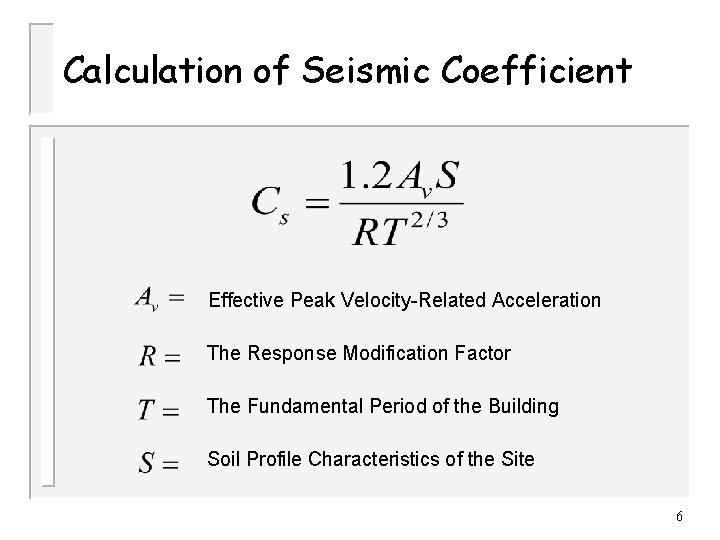
Calculation of Seismic Coefficient Effective Peak Velocity-Related Acceleration The Response Modification Factor The Fundamental Period of the Building Soil Profile Characteristics of the Site 6
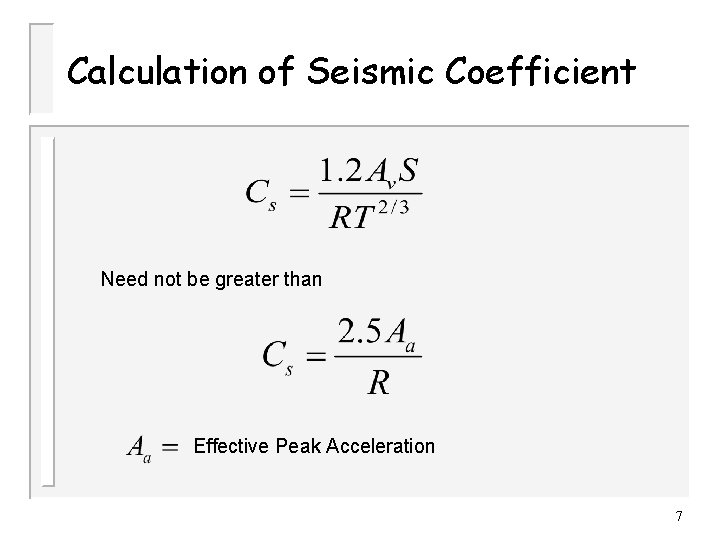
Calculation of Seismic Coefficient Need not be greater than Effective Peak Acceleration 7
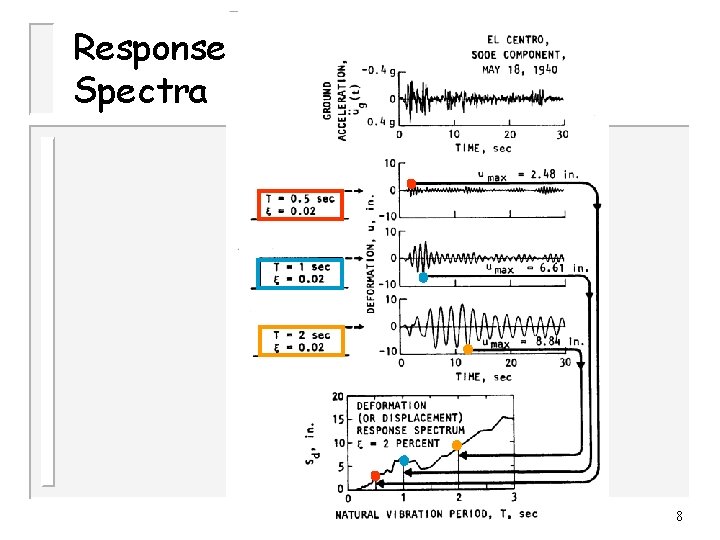
Response Spectra 8
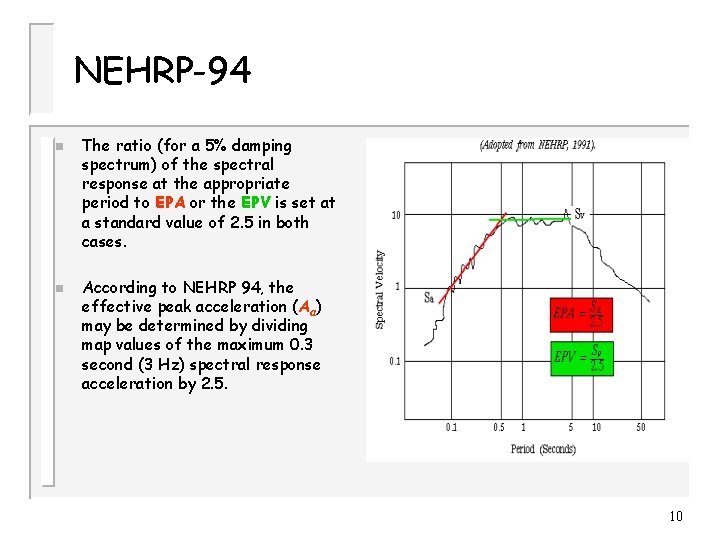
NEHRP-94 n n The ratio (for a 5% damping spectrum) of the spectral response at the appropriate period to EPA or the EPV is set at a standard value of 2. 5 in both cases. According to NEHRP 94, the effective peak acceleration (Aa) may be determined by dividing map values of the maximum 0. 3 second (3 Hz) spectral response acceleration by 2. 5. 10
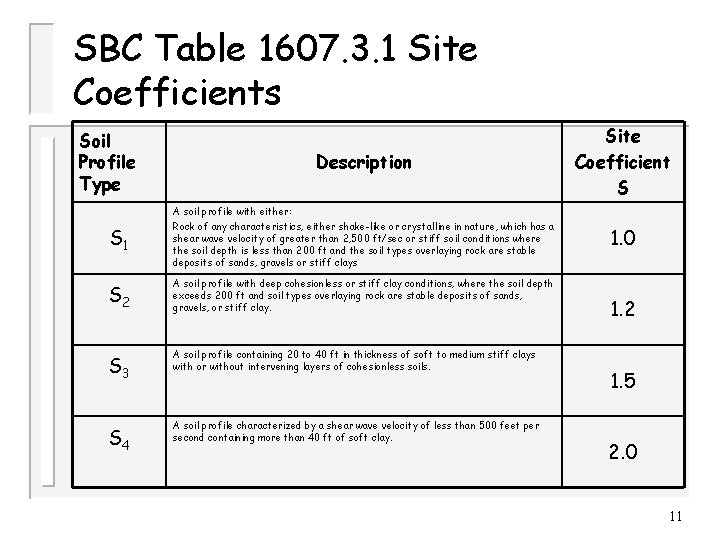
SBC Table 1607. 3. 1 Site Coefficients Description Site Coefficient S S 1 A soil profile with either: Rock of any characteristics, either shake-like or crystalline in nature, which has a shear wave velocity of greater than 2, 500 ft/sec or stiff soil conditions where the soil depth is less than 200 ft and the soil types overlaying rock are stable deposits of sands, gravels or stiff clays 1. 0 S 2 A soil profile with deep cohesionless or stiff clay conditions, where the soil depth exceeds 200 ft and soil types overlaying rock are stable deposits of sands, gravels, or stiff clay. S 3 A soil profile containing 20 to 40 ft in thickness of soft to medium stiff clays with or without intervening layers of cohesionless soils. S 4 A soil profile characterized by a shear wave velocity of less than 500 feet per second containing more than 40 ft of soft clay. Soil Profile Type 1. 2 1. 5 2. 0 11

Acceleration Spectra for Different Site Conditions 12
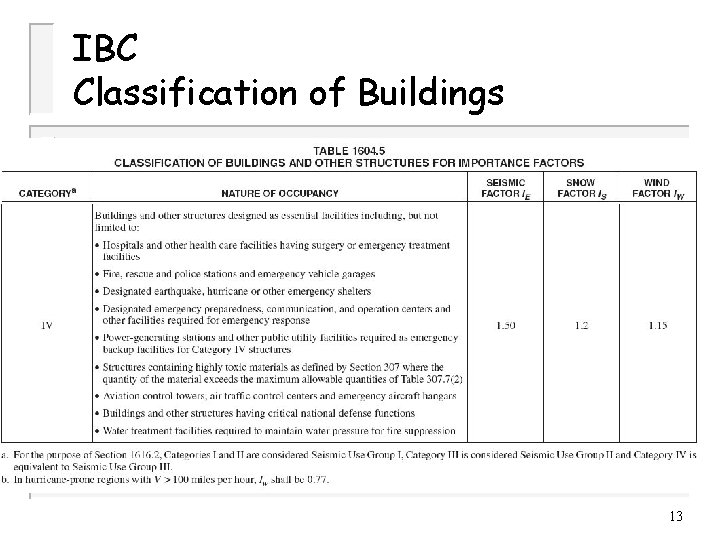
IBC Classification of Buildings 13
IBC 2003 and NEHRP 97 Maximum Considered Earthquake Ground Motion n It is intended to provide a uniform margin against collapse at the design ground motion. Ground motion hazards are defined in terms of maximum considered earthquake ground motions The maximum considered earthquake ground motions are based on a set of rules that depend on the seismicity of an individual region. 14
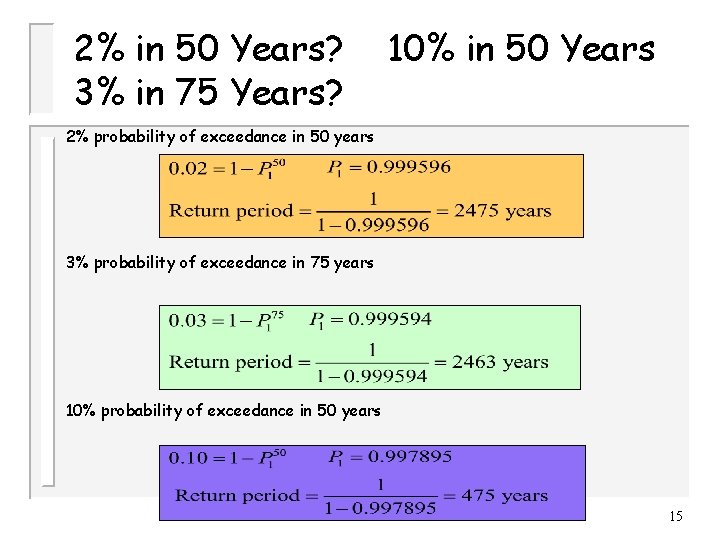
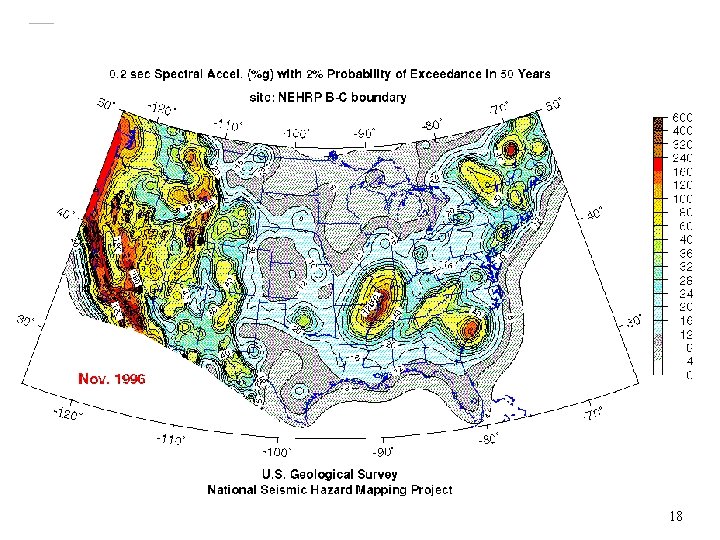
2% in 50 Years? 3% in 75 Years? 10% in 50 Years 2% probability of exceedance in 50 years 3% probability of exceedance in 75 years 10% probability of exceedance in 50 years 15
Design Spectral Response Accelerations Maps, Ss and S 1 n n Ss is the mapped value, from Map 1 of 5% damped maximum considered earthquake spectral response acceleration, for short period structures founded on Class B, firm rock, sites. The short period acceleration has been determined at a period of 0. 2 seconds. 16
Design Spectral Response Accelerations Maps, Ss and S 1 n n S 1 is the mapped value, from Map 2 of 5% damped maximum considered earthquake spectral response acceleration at a period of 1 second on site Class B. The spectral response acceleration at periods other than 1 second can typically be derived from the acceleration at 1 second. 17
18
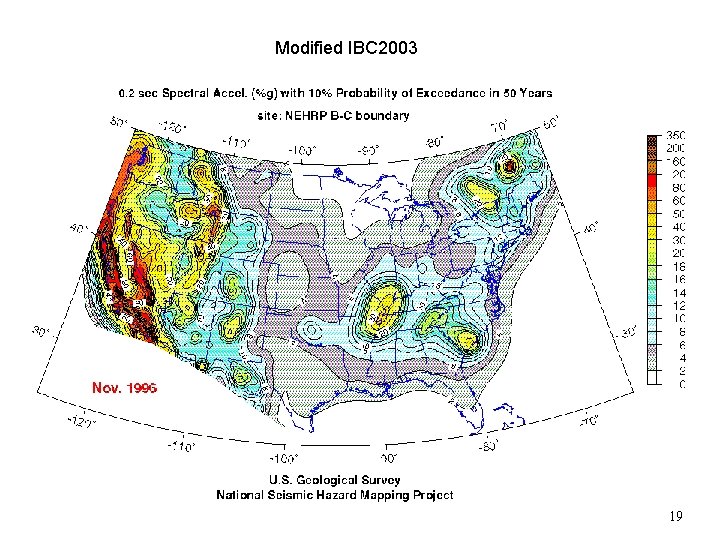
Modified IBC 2003 19
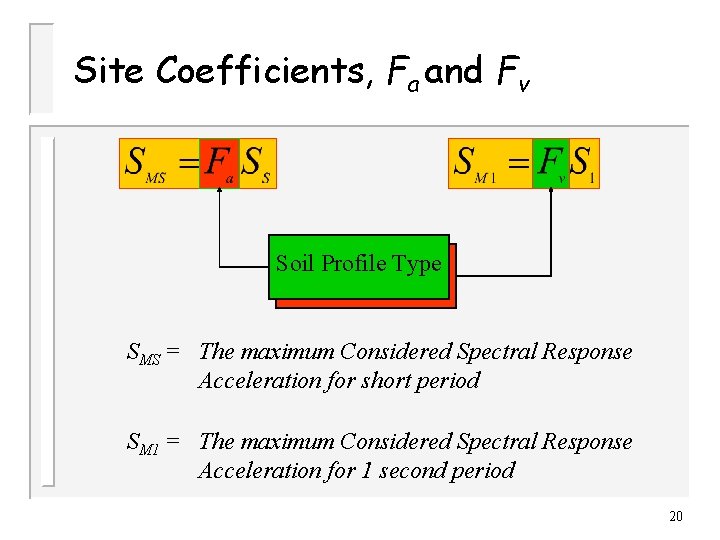
Site Coefficients, Fa and Fv Soil Profile Type SMS = The maximum Considered Spectral Response Acceleration for short period SM 1 = The maximum Considered Spectral Response Acceleration for 1 second period 20
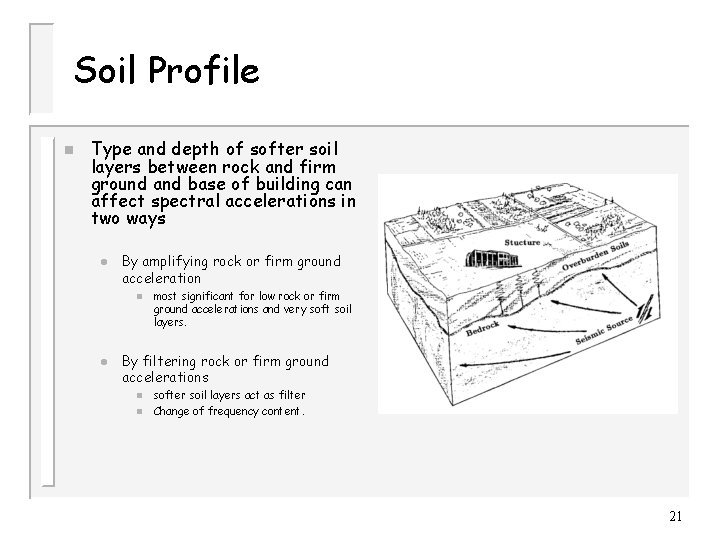
Soil Profile n Type and depth of softer soil layers between rock and firm ground and base of building can affect spectral accelerations in two ways l By amplifying rock or firm ground acceleration n l most significant for low rock or firm ground accelerations and very soft soil layers. By filtering rock or firm ground accelerations n n softer soil layers act as filter Change of frequency content. 21
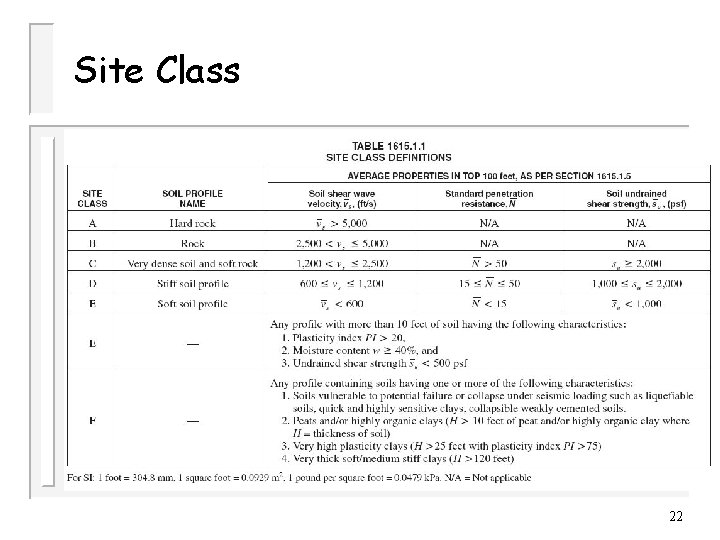
Site Class 22

Average Shear-Wave Velocity and Average Blow Count 23
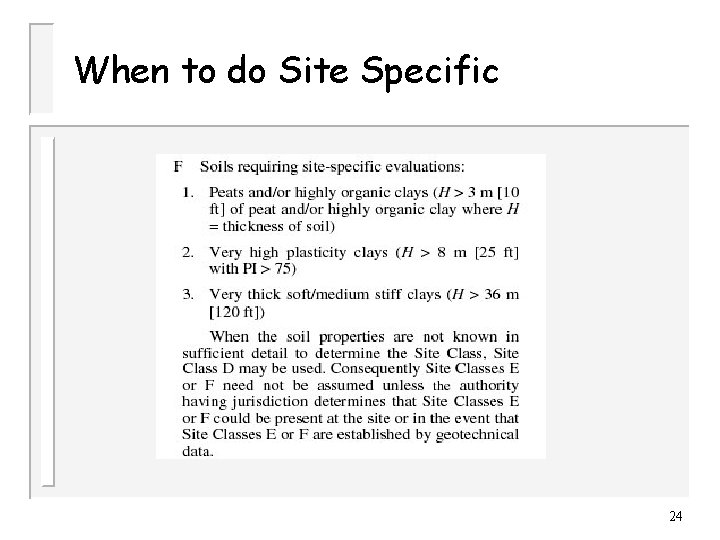
When to do Site Specific 24
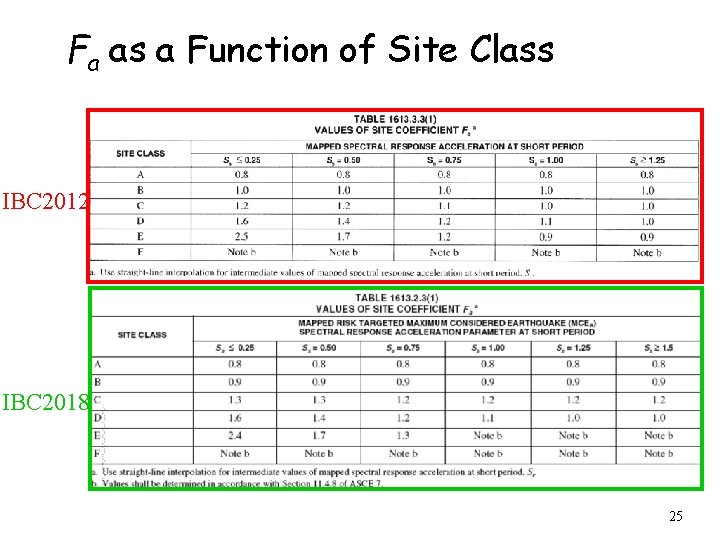
Fa as a Function of Site Class IBC 2012 IBC 2018 25
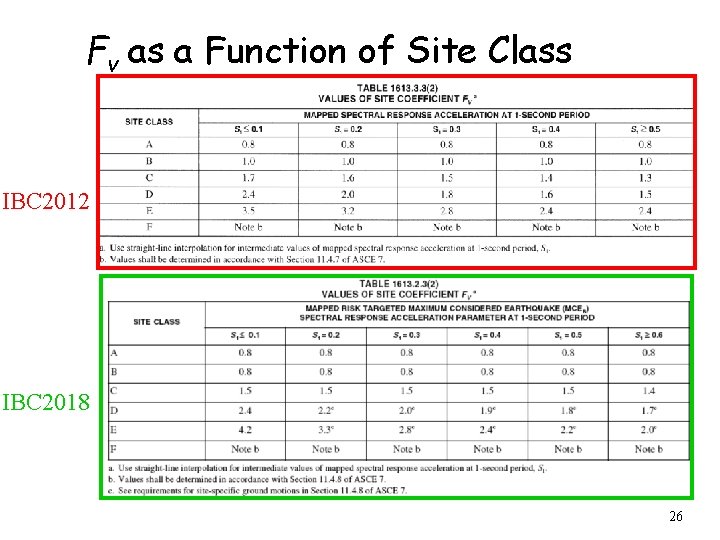
Fv as a Function of Site Class IBC 2012 IBC 2018 26
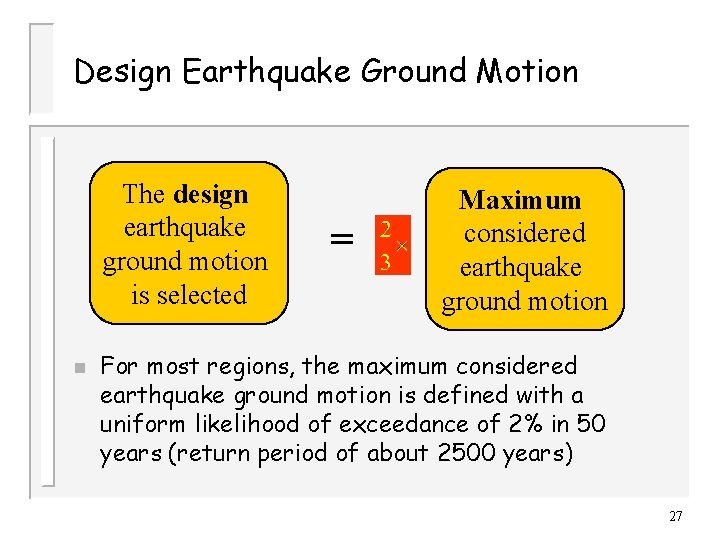
Design Earthquake Ground Motion The design earthquake ground motion is selected n = Maximum considered earthquake ground motion For most regions, the maximum considered earthquake ground motion is defined with a uniform likelihood of exceedance of 2% in 50 years (return period of about 2500 years) 27
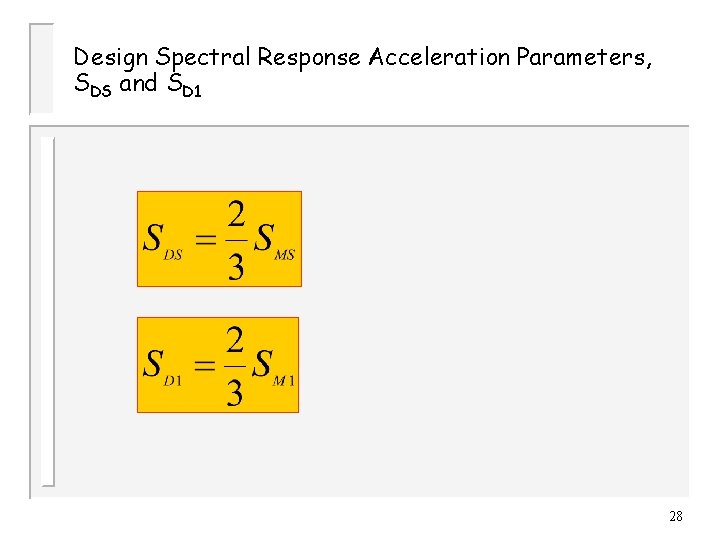
Design Spectral Response Acceleration Parameters, SDS and SD 1 28
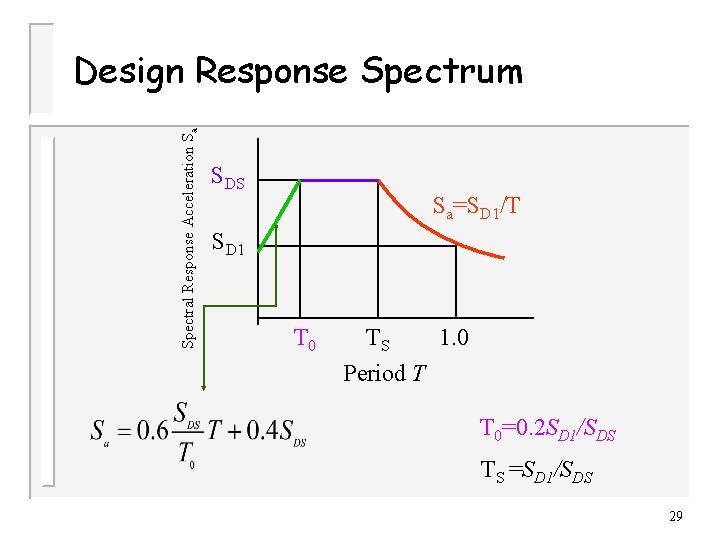
Spectral Response Acceleration Sa Design Response Spectrum SDS Sa=SD 1/T SD 1 T 0 TS 1. 0 Period T T 0=0. 2 SD 1/SDS TS =SD 1/SDS 29
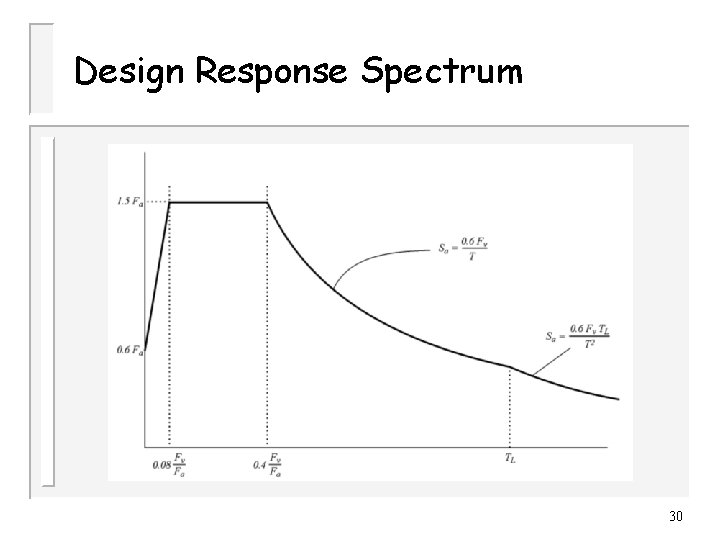
Design Response Spectrum 30
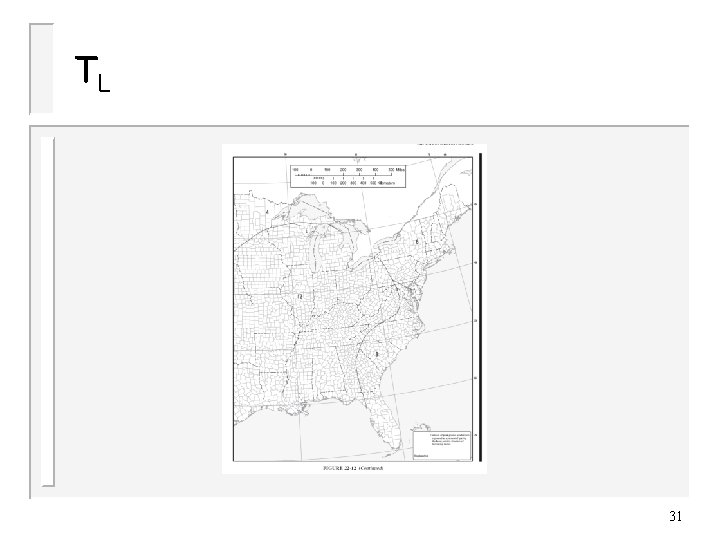
TL 31
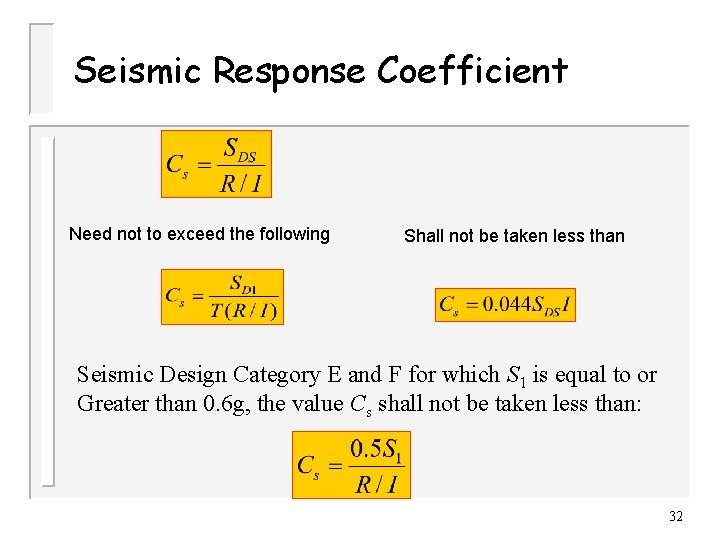
Seismic Response Coefficient Need not to exceed the following Shall not be taken less than Seismic Design Category E and F for which S 1 is equal to or Greater than 0. 6 g, the value Cs shall not be taken less than: 32
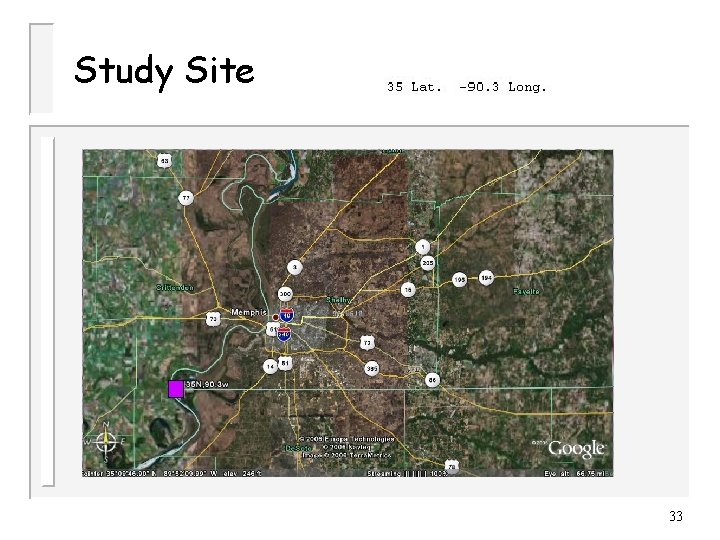
Study Site 33
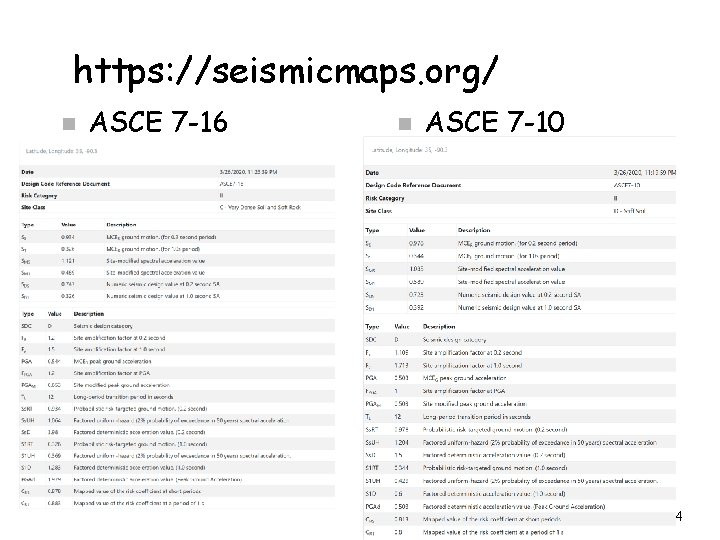
https: //seismicmaps. org/ n ASCE 7 -16 n ASCE 7 -10 34
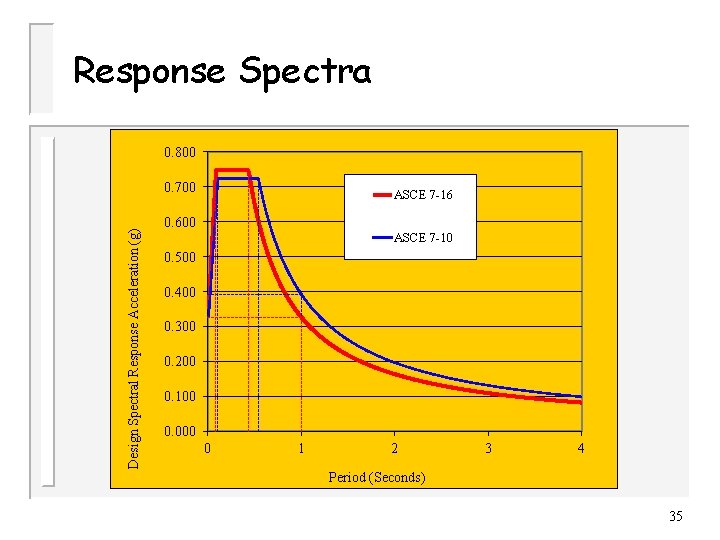
Response Spectra 0. 800 Design Spectral Response Acceleration (g) 0. 700 ASCE 7 -16 0. 600 ASCE 7 -10 0. 500 0. 400 0. 300 0. 200 0. 100 0. 000 0 1 2 3 4 Period (Seconds) 35
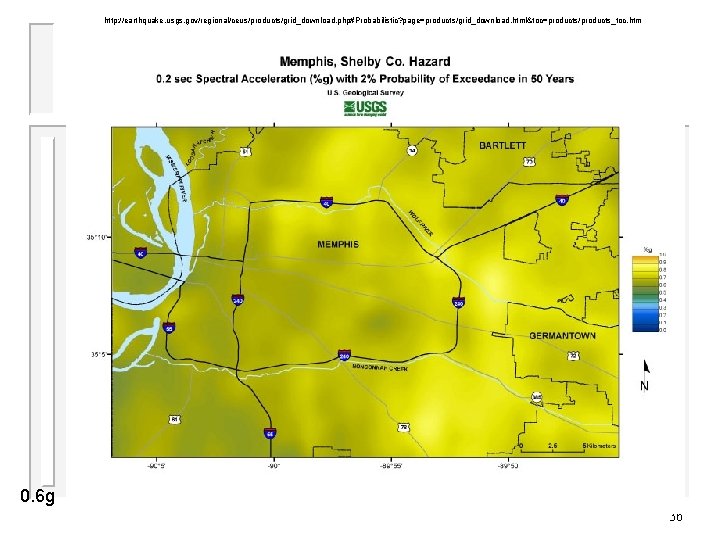
http: //earthquake. usgs. gov/regional/ceus/products/grid_download. php#Probabilistic? page=products/grid_download. html&toc=products/products_toc. htm 0. 6 g 36
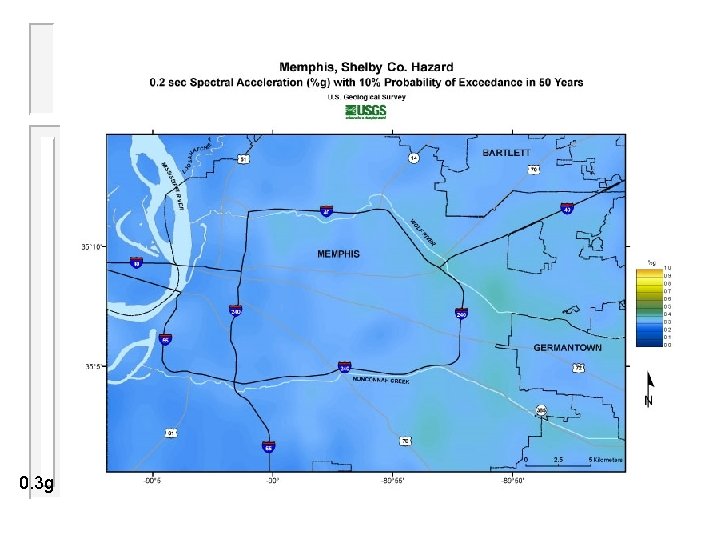
0. 3 g 37
When to Perform Site Specific Analyses n Perform site-specific studies when we have evidence that uncertainties associated with site-specific analyses can be reduced by going to the effort and cost to conduct such analyses. 38
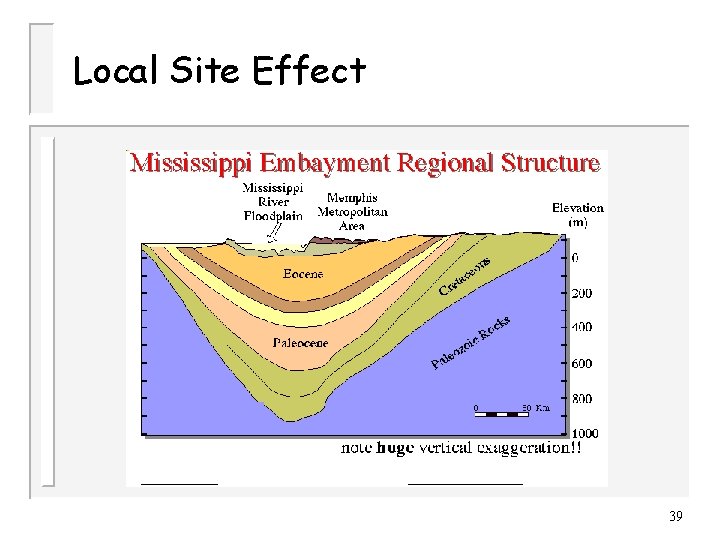
Local Site Effect 39
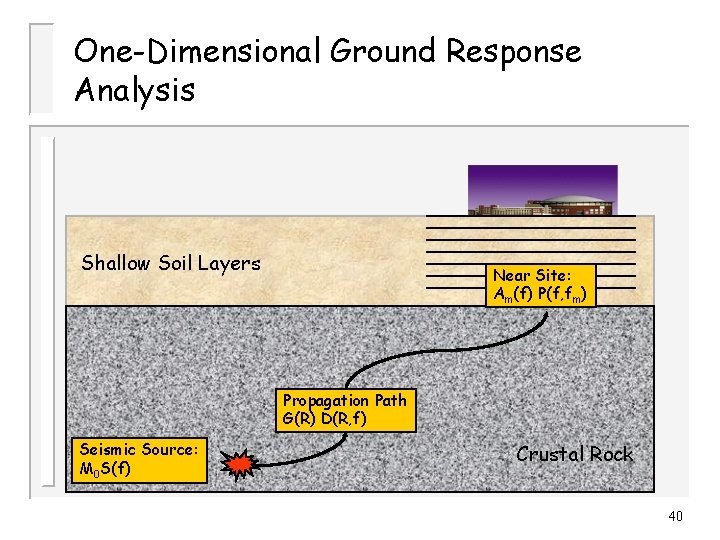
One-Dimensional Ground Response Analysis Shallow Soil Layers Near Site: Am(f) P(f, fm) Propagation Path G(R) D(R, f) Seismic Source: M 0 S(f) Crustal Rock 40
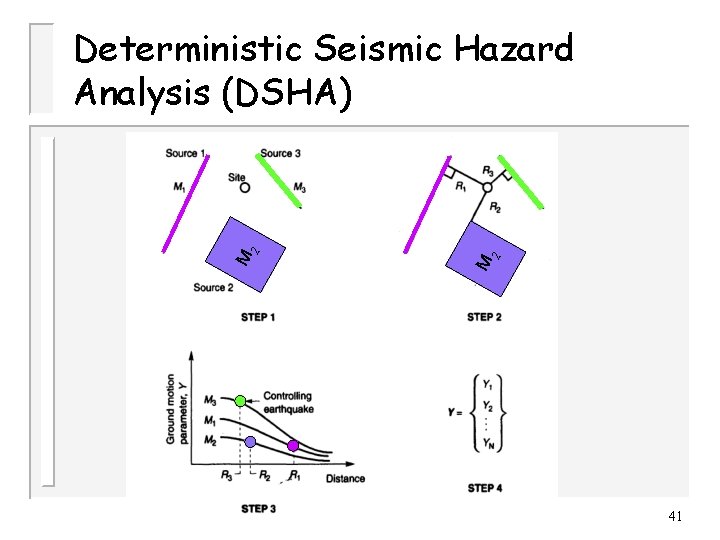
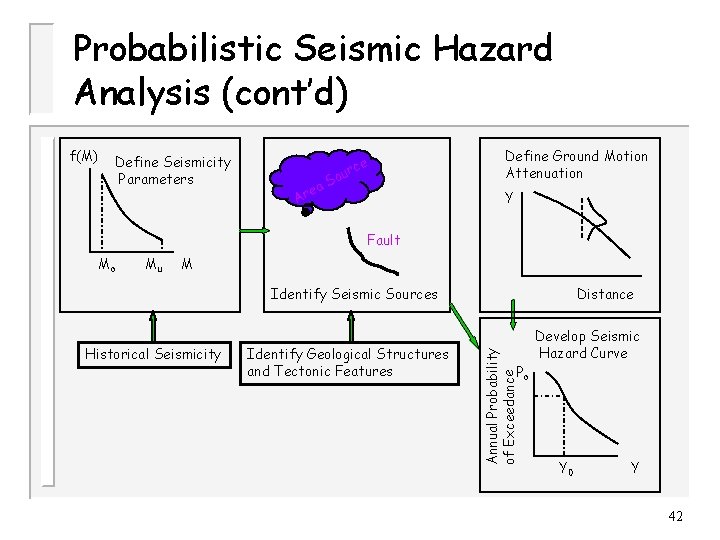
2 M M 2 Deterministic Seismic Hazard Analysis (DSHA) 41
Probabilistic Seismic Hazard Analysis (cont’d) f(M) Define Seismicity Parameters e urc o S rea A Define Ground Motion Attenuation Y Fault Mo Mu M Historical Seismicity Identify Geological Structures and Tectonic Features Distance Annual Probability of Exceedance Identify Seismic Sources Po Develop Seismic Hazard Curve Y 0 Y 42
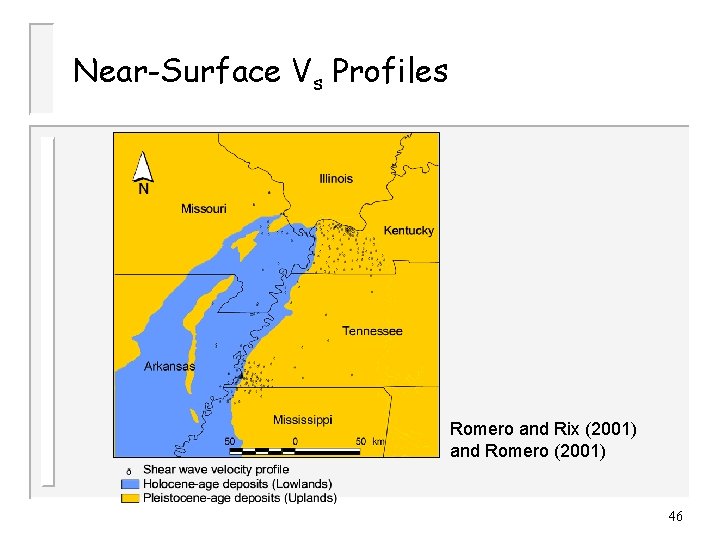
Near-Surface Vs Profiles Romero and Rix (2001) and Romero (2001) 46
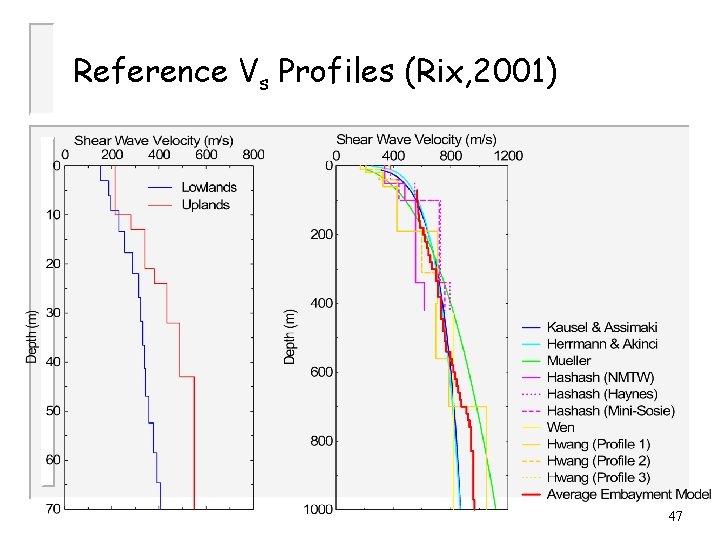
Reference Vs Profiles (Rix, 2001) 47
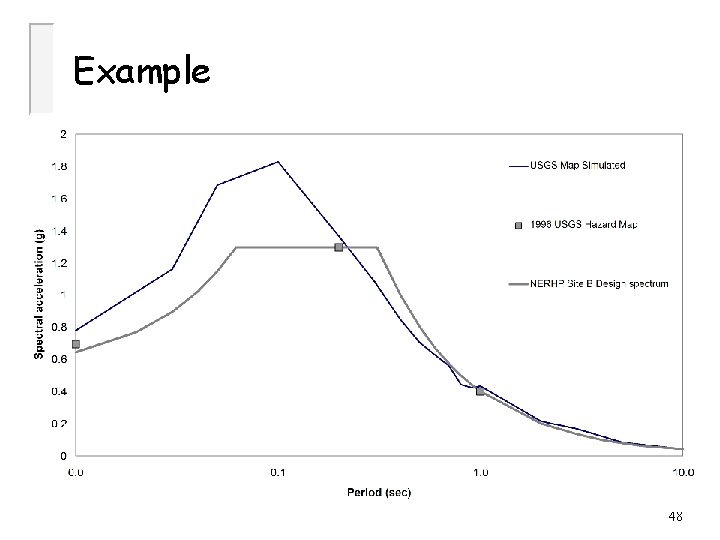
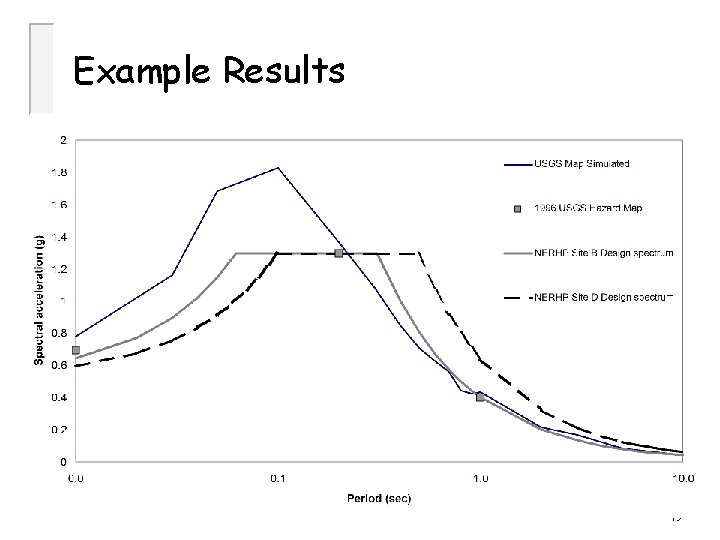
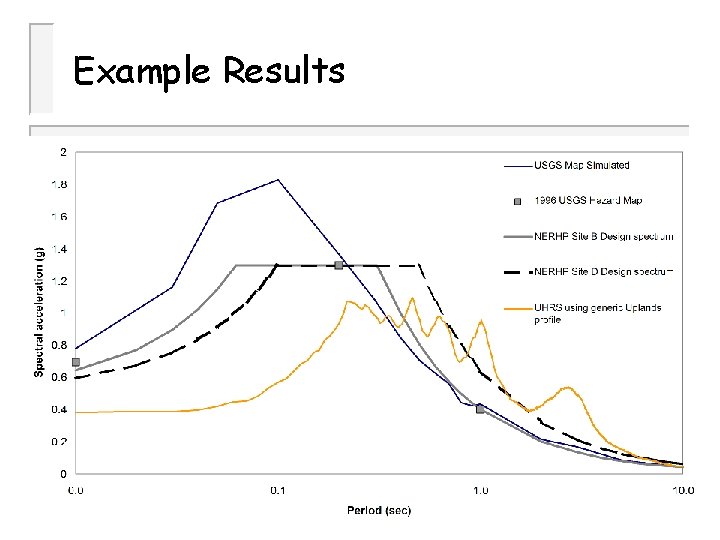
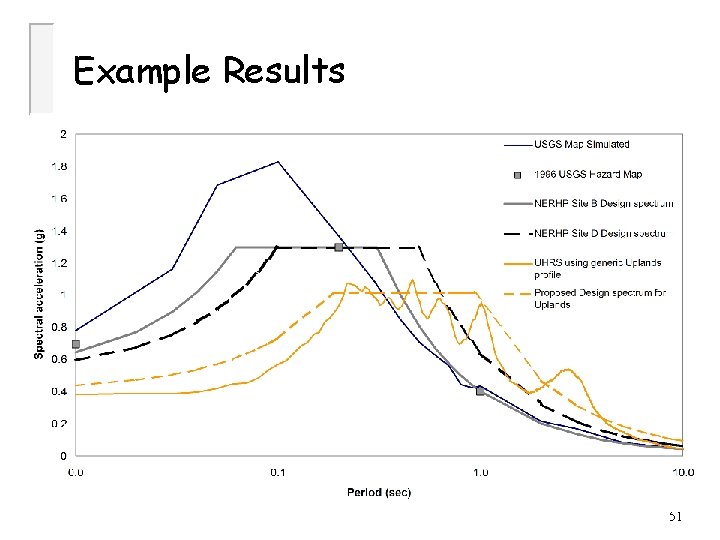
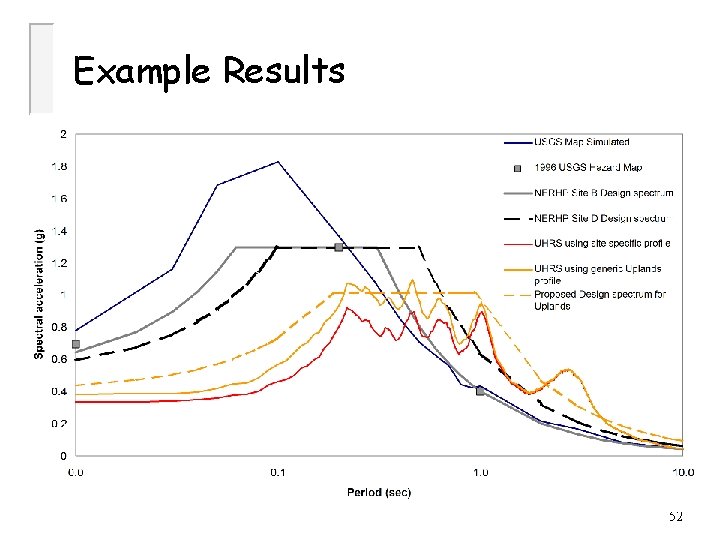
Example 48
Example Results 49
Example Results 50
Example Results 51
Example Results 52
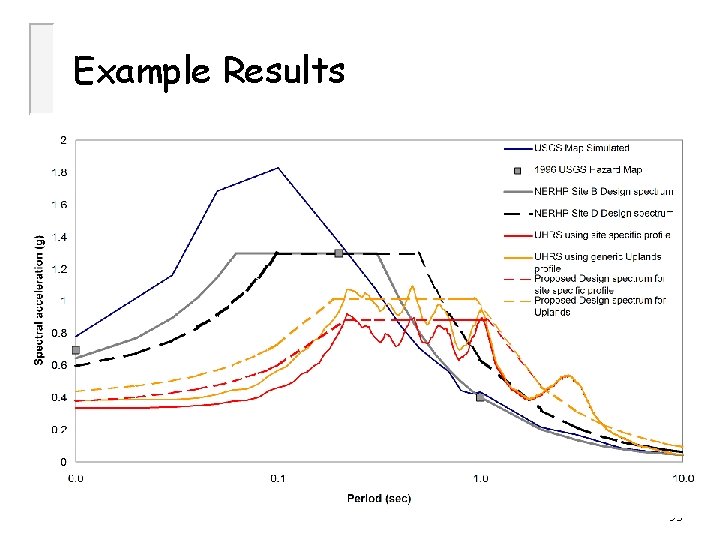
Example Results 53
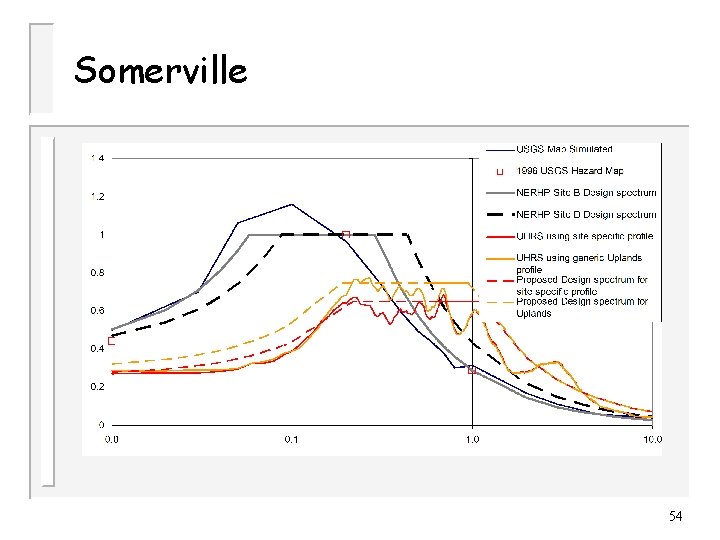
Somerville 54
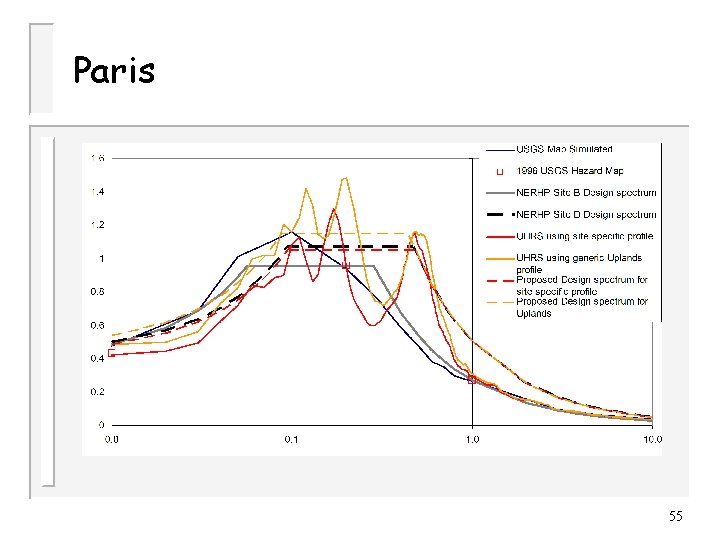
Paris 55
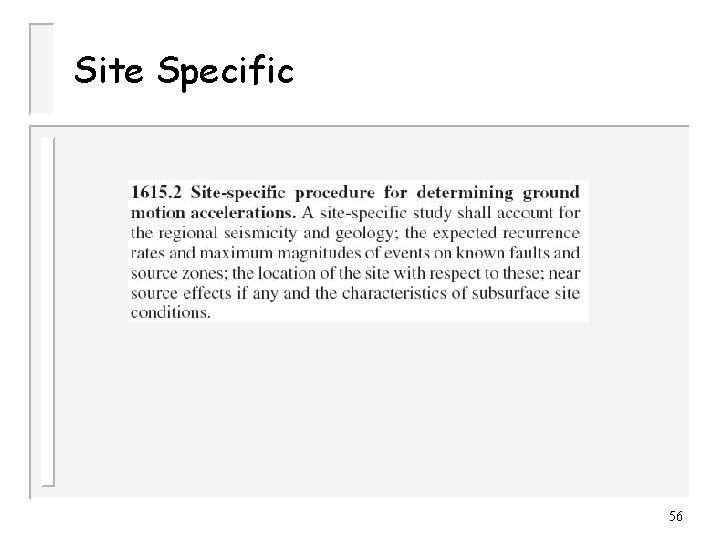
Site Specific 56
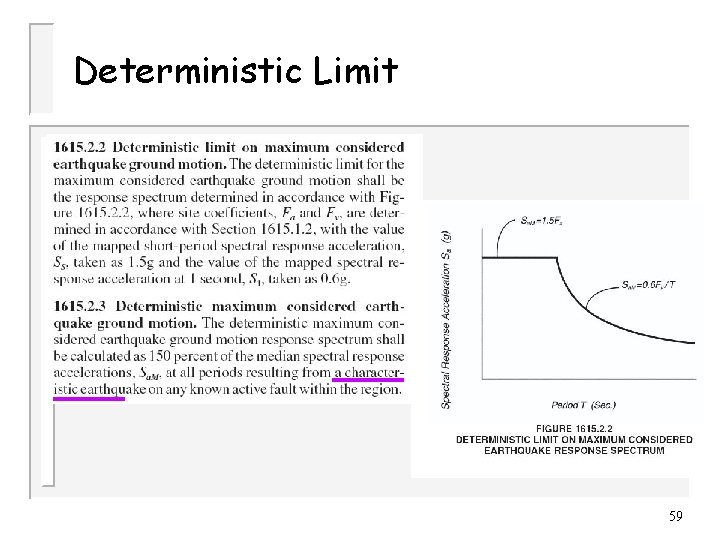
Deterministic Limit 59
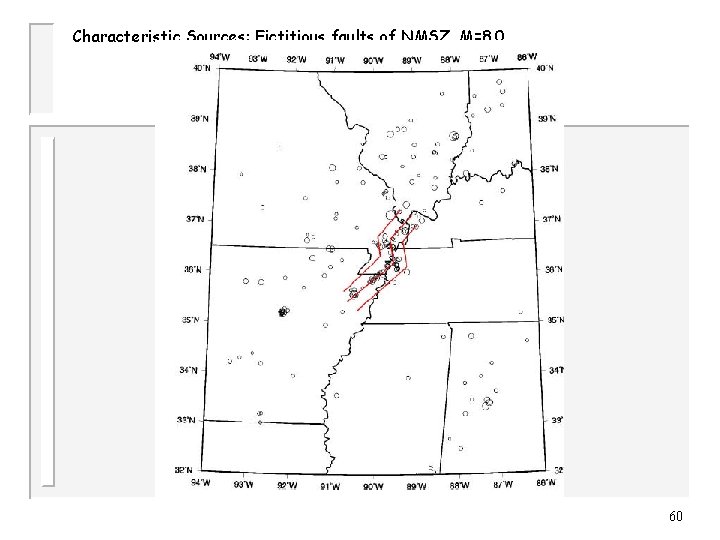
Characteristic Sources: Fictitious faults of NMSZ, M=8. 0 60
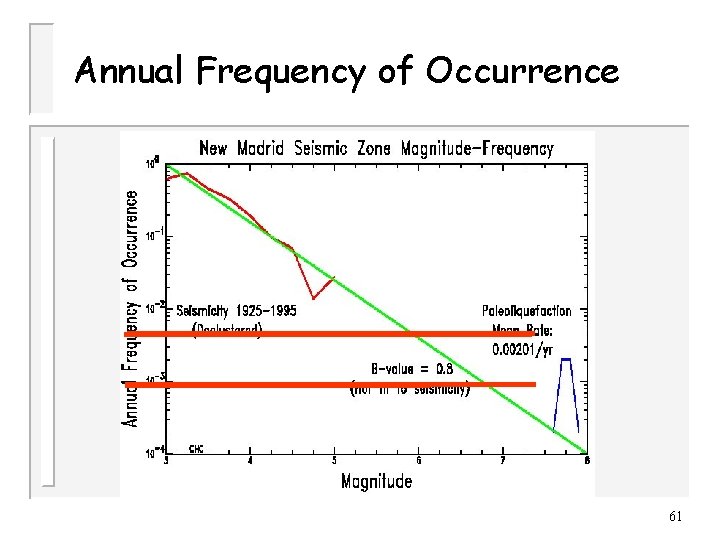
Annual Frequency of Occurrence 61
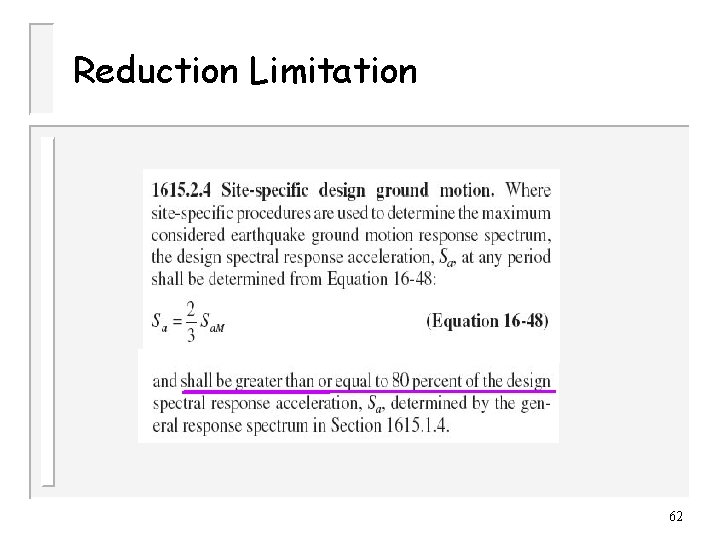
Reduction Limitation 62
Response Spectra Based on Site Specific Procedures Sect 3. 4. 3 n A site-specific probabilistic ground motion analysis shall include the following: l Characterization of seismic sources and ground motion attenuation that incorporates current scientific interpretations, including uncertainties in seismic source and ground motion models and parameter values l Detailed documentation l Detailed peer review 64

Site Class F n Where analyses to determine site soil response effects are required for Site Class F soils, the influence of the local soil conditions shall be determined based on sitespecific geotechnical investigation and dynamic site response analyses. 65
Response Spectra Based on Site Specific Procedures Sect 3. 4. 3 n For sites located within 10 km of an active fault, studies shall be considered to quantify near-fault effects on ground motions if these could significantly influence the bridge response. 66
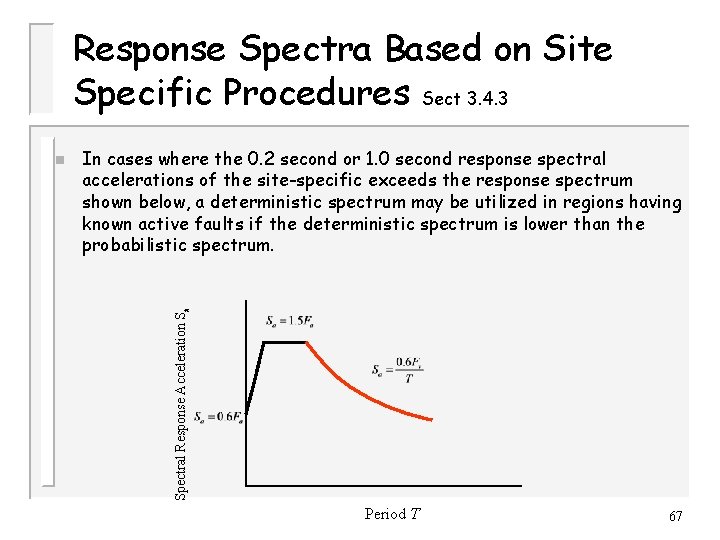
Response Spectra Based on Site Specific Procedures Sect 3. 4. 3 In cases where the 0. 2 second or 1. 0 second response spectral accelerations of the site-specific exceeds the response spectrum shown below, a deterministic spectrum may be utilized in regions having known active faults if the deterministic spectrum is lower than the probabilistic spectrum. Spectral Response Acceleration Sa n Period T 67
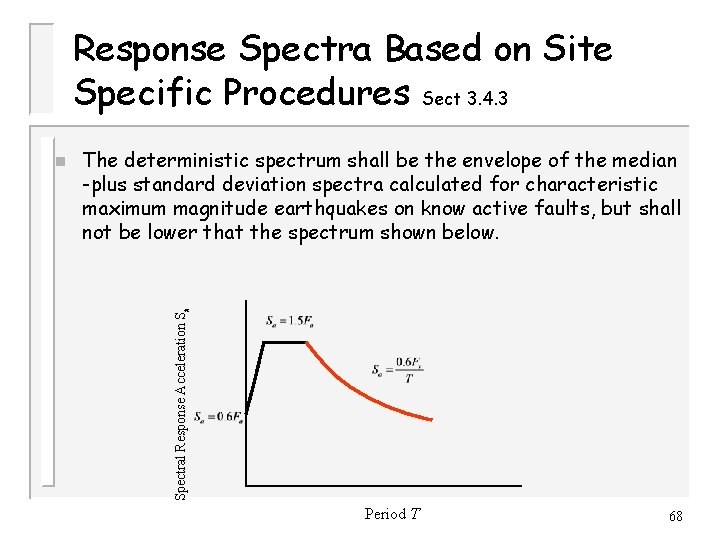
Response Spectra Based on Site Specific Procedures Sect 3. 4. 3 The deterministic spectrum shall be the envelope of the median -plus standard deviation spectra calculated for characteristic maximum magnitude earthquakes on know active faults, but shall not be lower that the spectrum shown below. Spectral Response Acceleration Sa n Period T 68
Response Spectra Based on Site Specific Procedures Sect 3. 4. 3 n n n If there is more than one active fault in the site region, the deterministic spectrum shall be calculated as the envelope of spectra for the different faults. Alternatively, deterministic spectra may be defined for each fault and each spectrum, or the spectrum that governs bridge response may be used for the analysis of the bridge. When response spectra are determined from a site-specific study, the spectra shall not be lower than two-third of the response spectra determined using the code procedure. 69
Acceleration Time Histories Sect. 3. 4. 4 n n Time histories shall be either recorded time histories or spectrum-matched time histories. If sufficient recorded motions are not available, simulated-recorded time histories may be developed using theoretical ground motion modeling methods that simulate the earthquake rupture and the source-to-site seismic wave propagation. If spectrum matched time histories are developed, the initial time histories to be spectrum matched shall be representative recorded or simulatedrecorded motions. Analytical techniques used for spectrum matching shall be demonstrated to be capable of achieving seismologically realistic time series that are similar to the time series of the initial time histories selected for spectrum matching. 70
Acceleration Time Histories Sect. 3. 4. 4 n n When using recorded or simulated time histories, they shall be scaled to the approximate level of the design response spectrum in the period range of significance. For each component of motion, an aggregate match of the design response spectrum shall be achieved for the set of acceleration time histories used. A mean spectrum of the individual spectra of the time histories shall be calculated period-by-period. Over the defined period range of significance, the mean spectrum shall not be more than 15% lower than the design spectrum at any period and the average of ratio of the mean spectrum to the design spectrum shall be equal to or greater than unity. 71

Questions? 72
- Slides: 65