
IBA HISTORY Course HISTORY OF INDIA up to
I-BA HISTORY Course: HISTORY OF INDIA up to 1206 ad Course Code: 20 UHIC 11 L 20 UHVC 11 Topic: - Sources for the study of Ancient Indian History T. Anas Babu Asst. Professor of History HKRH College Uthamapalayam Tamil Nadu
Contents � Introduction � Sources to Study Ancient Indian History � Various Literary Sources � Conclusion
Introduction The word history is derived from ‘Historia’ or ‘Istoria’ which means Knowledge/ Enquiry/ Wisdom, etc. v v History facts v This is an enquiry in to human past based on facts/evidences are available to us in the form of sources
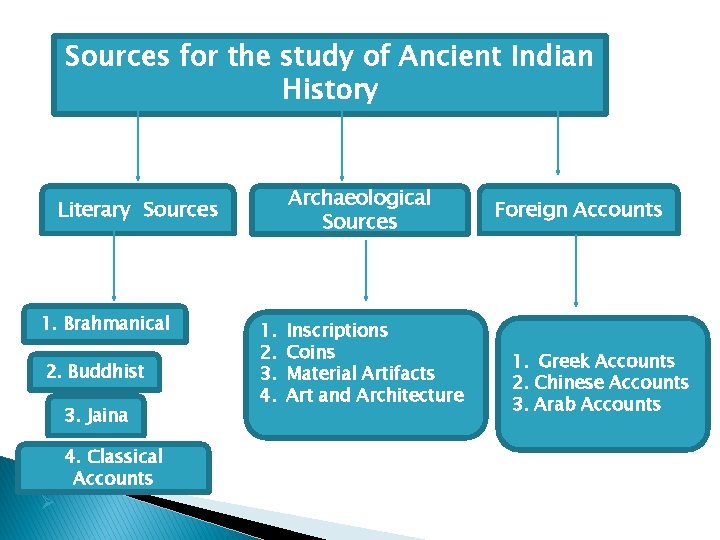
Sources for the study of Ancient Indian History Archaeological Sources Literary Sources 1. Brahmanical 2. Buddhist 3. Jaina 4. Classical Accounts Ø 1. 2. 3. 4. Inscriptions Coins Material Artifacts Art and Architecture Foreign Accounts 1. Greek Accounts 2. Chinese Accounts 3. Arab Accounts

I. LITERARY SOURCES Ø The literary sources are religious and secular in nature. Ø Importance- It provides social, economic, cultural, religious condition of the past. Important to understand the ‘historical evolution of the past’
1. Brahminical Literature -Written in Sanskrit language 1. Vedas a. Rig Veda- the earliest Veda. - collection of ‘ 1027 Sanskrit hymns’ b. Yajur Veda- Rituals that fulfilling the recitation of hymns c. Sama Veda – Book of prayers and chants - Musical collection d. Atharva Veda- Folk tradition of Vedas 2. Upanishads- Philosophical and ethical discourses. - 108 in number
3. Epics: a. Ramayana- written by Valmiki - has 24000 versus b. Mahabharata- written by Veda Vyasa. - Older than Ramayana - has 100, 00 versus - both provides changes of culture and beliefs. 4. Puranas: 18 in number -Vayu purana, Matsya purana, Brahma purana etc. 5. Brahmanas: the prose commentaries of Vedas - Every Veda has its own vedas 6. Aranyakas: studies done in forest 7. Sutras: Text using for the understanding of Vedas

2. Buddhist Literature -Written in Pali langauge. They are: 1. Jataka: ‘early life of Lord Buddha’ 2. Pitaka: ‘Sayings of Lord Buddha’ - Three in number called ‘Tripitakas’ - ‘sutta’, ‘Vinaya’ and ‘Abhidhamma’ 3. Nikaya: Commonly using in reference to Pitakas
3. Jaina Literature Written in Prakrit language 1. Angas 2. Upangas Life and Teachings of Lord Jaina.
4. Classical Accounts Secular (non-religious) texts - Some important texts are: 1. Kautilya- ‘Arthashastra’ -one of the greatest work of ancient India -Kautilya also known as Chanakya - He was the Minister Maurya ruler Chandragupta Maurya 2. Kalidasa- The great Sanskrit poet and dramatist lived in the court of Gupta emperor Chandra Gupta-II - He was called as Indian Shakespeare -He wrote Raghuvamsa, Meghaduta, Abhijnanasakunatalam, Kumara Sambava , Vikrama-urvasiya etc.
3. Ashtadhyayi written by Panini 4. ‘Mudra Rakshasa’ of Visakadatta 5. ‘Harsha Charita’ of Bana. 6. ‘Rajatarangini’ of Kalhana etc -
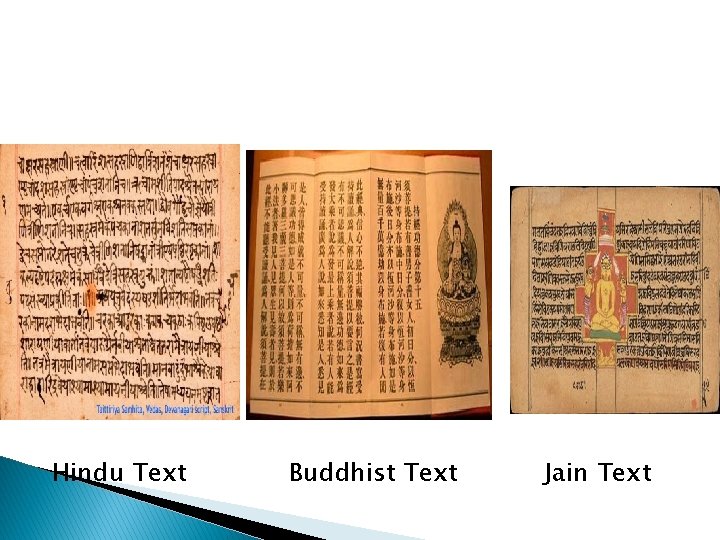
Hindu Text Buddhist Text Jain Text
II. ARCHAOLOGICAL SOURCES - 1. - - Archaeological sources divided into 3 1. Inscriptions 2. Coins 3. Art and architecture Inscriptions The study of inscriptions called Epigraphy The inscriptions provides genuine and valuable information of ancient history It is engraved in rocks, stones, pillars, caves etc The Ashokan edicts are the important source for Mauryan history
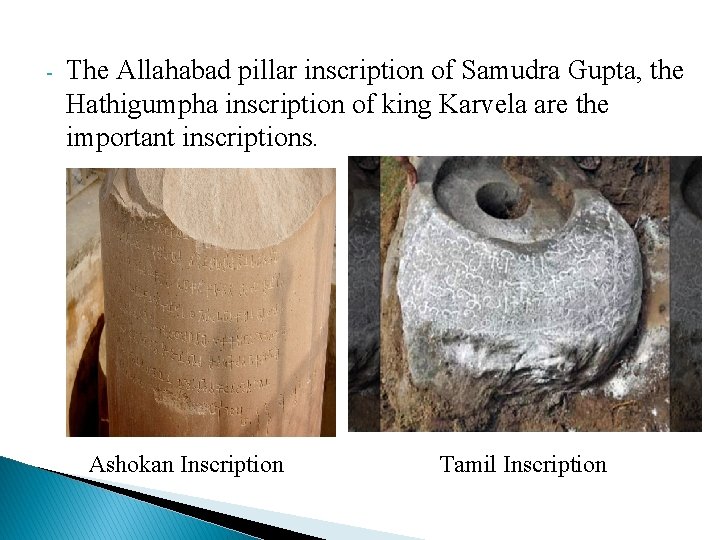
- The Allahabad pillar inscription of Samudra Gupta, the Hathigumpha inscription of king Karvela are the important inscriptions. Ashokan Inscription Tamil Inscription
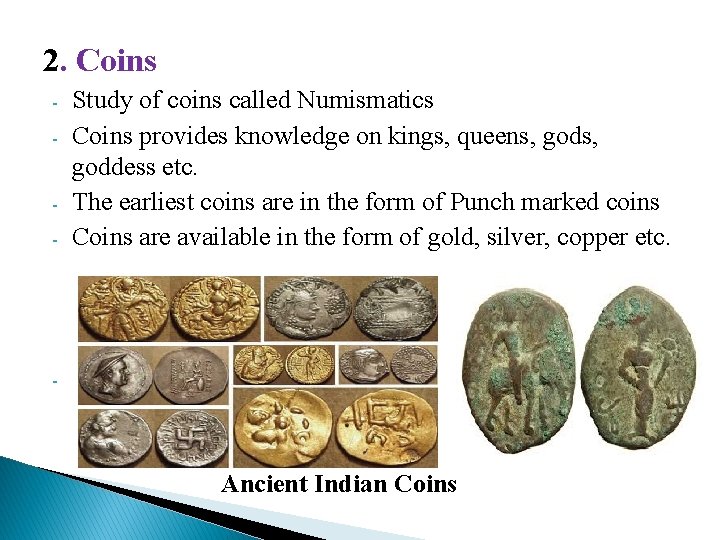
2. Coins - - Study of coins called Numismatics Coins provides knowledge on kings, queens, goddess etc. The earliest coins are in the form of Punch marked coins Coins are available in the form of gold, silver, copper etc. - Ancient Indian Coins
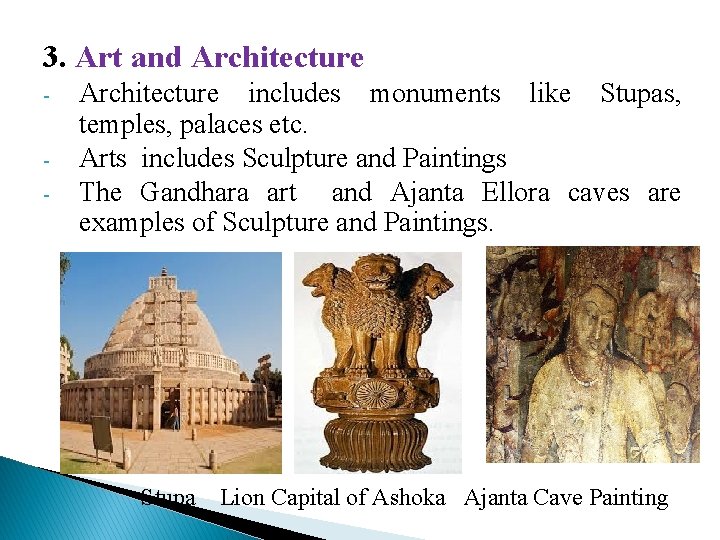
3. Art and Architecture - Architecture includes monuments like Stupas, temples, palaces etc. Arts includes Sculpture and Paintings The Gandhara art and Ajanta Ellora caves are examples of Sculpture and Paintings. Stupa Lion Capital of Ashoka Ajanta Cave Painting
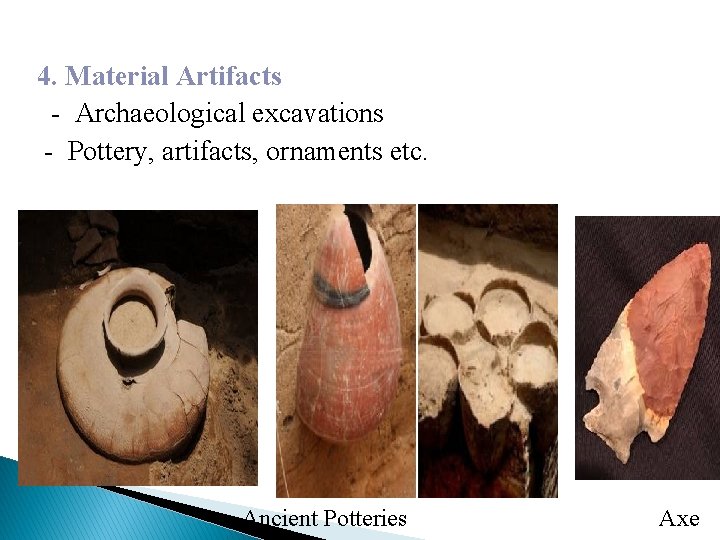
4. Material Artifacts - Archaeological excavations - Pottery, artifacts, ornaments etc. Ancient Potteries Axe
III. FOREIGN ACCOUNTS - Foreign accounts are the accounts given by Greeks, Chinese and Arabs 1. Greek Accounts - Megasthenes wrote ‘Indica’ is an important source about Maurya’s - He was the Greek ambassador in the court of Chandragupta Maurya - Pliny’s ‘Natural History’ - Ptolomy’s ‘Geography’ - Periplus Eritrean Sea are some important Greek accounts
2. Chinese Accounts - Fa-Hein visited India during the time of Chandra Gupta II - Huien-Tsang called ‘the price of pilgrims’ visited during the time of Harsha Vardhana wrote ‘Si-yuki’ - Itsing travelled India between 671 to 695 A. D. 3. Arab Account - ‘Tahkikul Hind’ of Albaruni- written in 9 th century
Conclusion � Innumerable sources are available for studying ancient Indian history. � It throws valuable information on polity, economy, society and religion of ancient period

Thank You
- Slides: 21