
IB DP Biology Unit 8 3 Photosynthesis HL
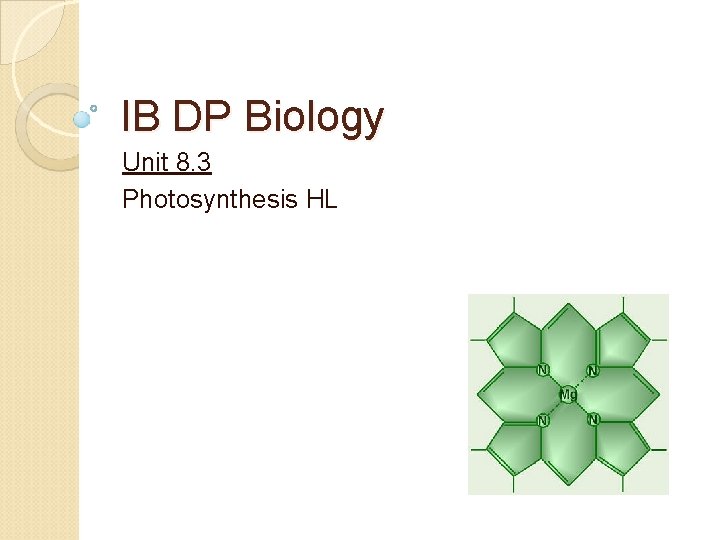
IB DP Biology Unit 8. 3 Photosynthesis HL
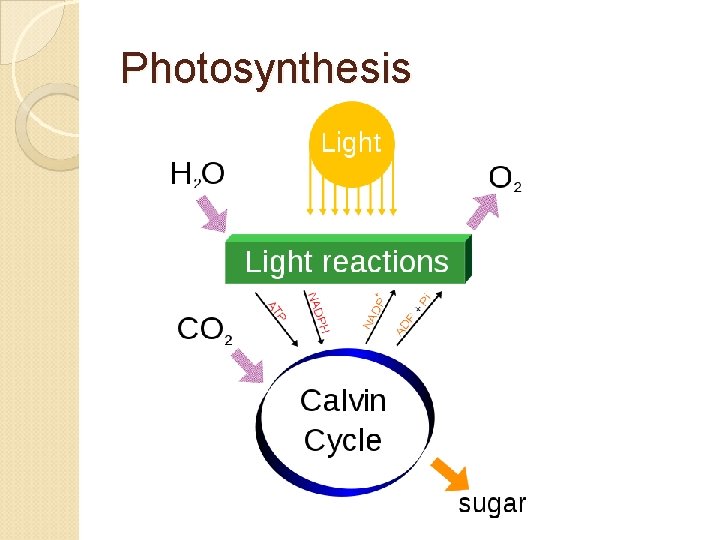
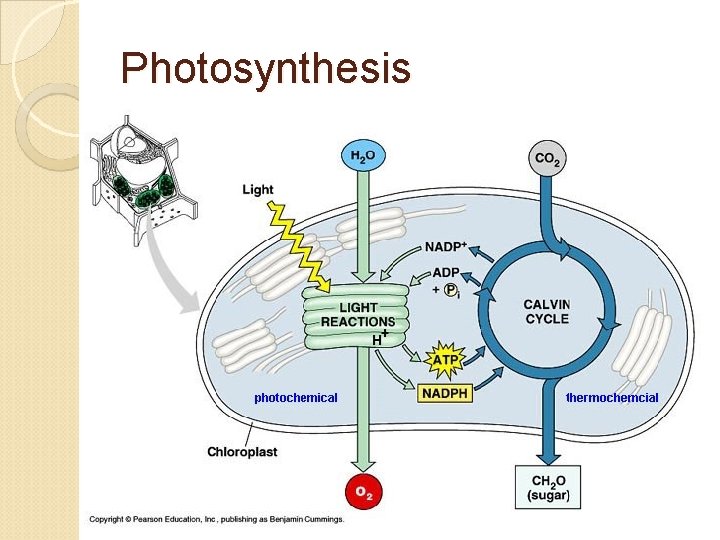
Photosynthesis Stages of Photosynthesis occurs in two main phases: ◦ Light dependent reaction ◦ Light independent reaction
Photosynthesis Summary 1. Light dependent reaction ◦ Creates electron carriers and ATP Used to power the Calvin Cycle 2. Light independent reaction ◦ Creates organic molecules (sugar, etc. ) aka: the Calvin Cycle Uses energy from the light dependent reactions
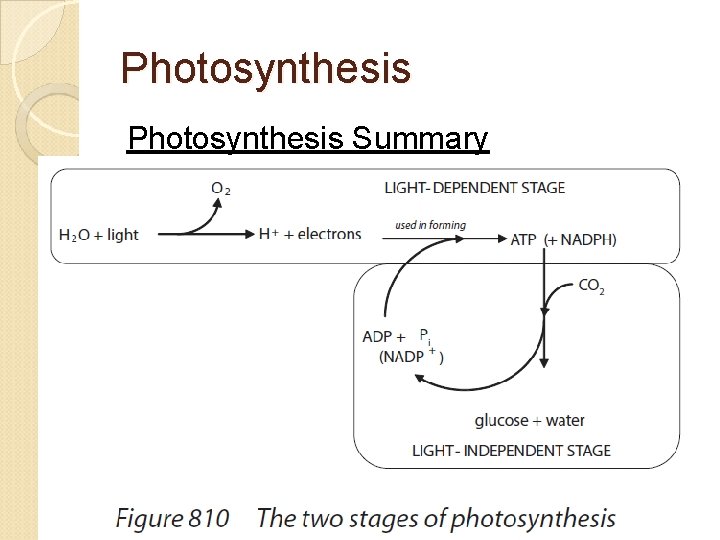
Photosynthesis Summary
Photosynthesis
Photosynthesis
8. 3. U 14 The structure of the chloroplast is adapted to its function in photosynthesis.
Photosynthesis Chloroplast structure
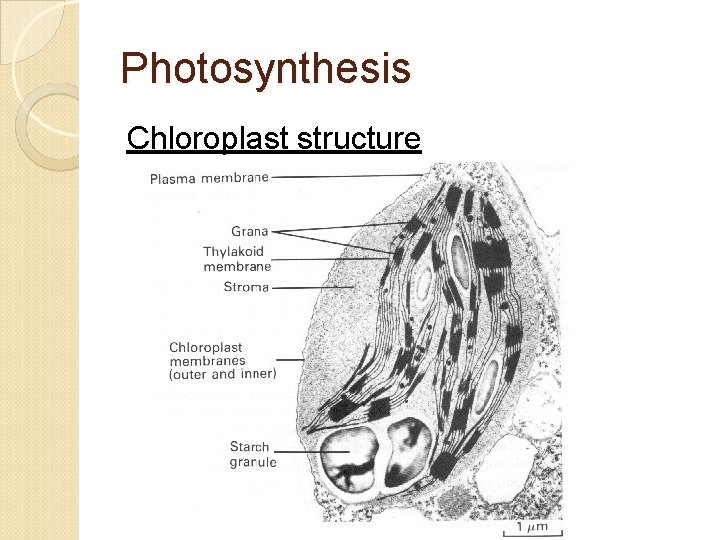
Photosynthesis Chloroplast structure Thylakoids ◦ Internal membranes often stacked in grana ◦ Location of the light dependent reaction Stroma ◦ Surrounding the thylakoids and inside the double membrane ◦ Location of the light independent reaction Including the Calvin cycle
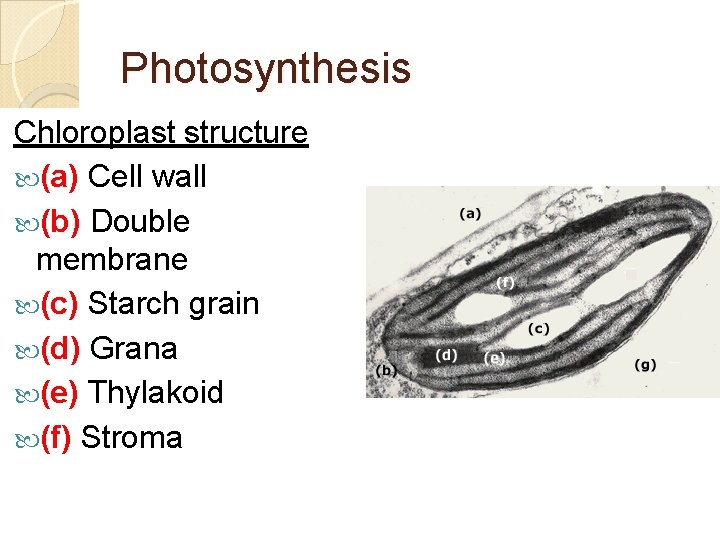
Photosynthesis Chloroplast structure (a) Cell wall (b) Double membrane (c) Starch grain (d) Grana (e) Thylakoid (f) Stroma
Photosynthesis
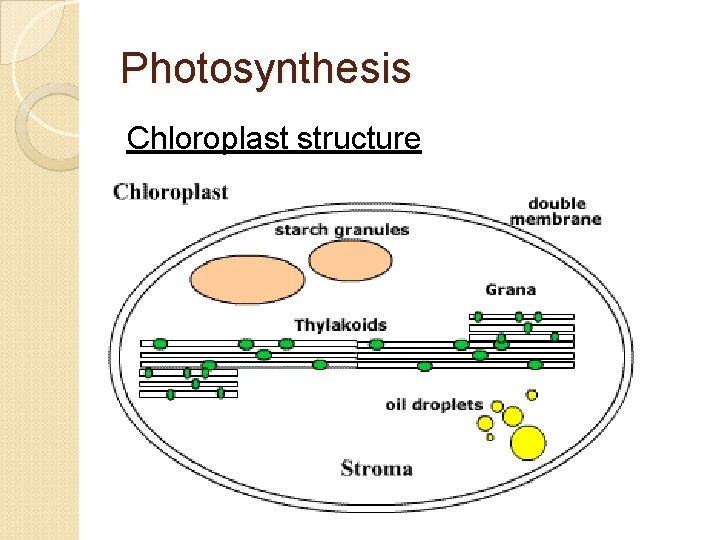
Photosynthesis Chloroplast structure
8. 3. U 1 Light-dependent reactions take place in the intermembrane space of the thylakoids.
Photosynthesis Stages of Photosynthesis Light Dependent Reaction ◦ Must have light to take place. ◦ Takes place on the thylakoid membranes using the intermembrane space
Photosynthesis Stages of Photosynthesis Light Dependent Reaction ◦ Energy of sun is trapped by chlorophyll molecules (reduction) ◦ Photon energy is used to raise the energy of electrons Which escape the chlorophyll (oxidizing it) ◦ This energy is coupled with reduction of: ADP + Pi ATP NADP+ NADPH + H+
Photosynthesis
8. 3. U 2 Light-independent reactions take place in the stroma.
Photosynthesis Stages of Photosynthesis Light Independent Reaction ◦ Does not require light Can occur in both the light and dark periods Uses the chemical energy from the LDR ◦ Takes place in the stroma ◦ Fixes atmospheric carbon into organic molecules Such as glucose
Photosynthesis
8. 3. U 4 Absorption of light by photosystems generates excited electrons.
Photosynthesis Light dependent reaction Photosystem ◦ System built around chlorophyll to change light energy into chemical energy Associated with other pigments and proteins ◦ Plants have two Photosystems: II and I 2 comes first!
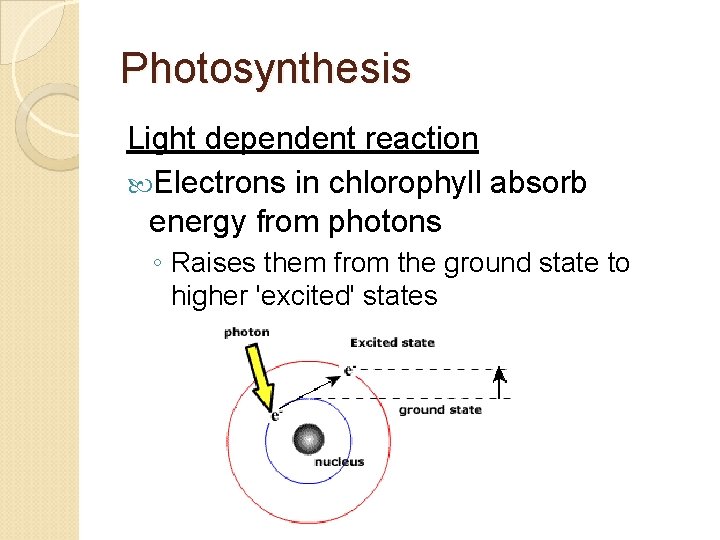
Photosynthesis Light dependent reaction Electrons in chlorophyll absorb energy from photons ◦ Raises them from the ground state to higher 'excited' states
Photosynthesis Light dependent reaction Excited electrons have more energy ◦ They are more easily lost from the chlorophyll This is a form of oxidation
8. 3. U 3 Reduced NADP and ATP are produced in the light-dependent reactions.
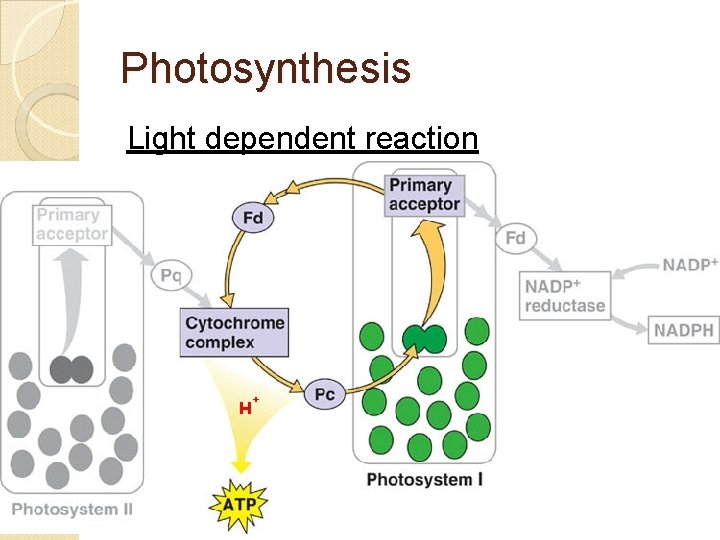
Photosynthesis Light dependent reaction Two main methods of making energy ◦ Non-cyclic photophosphorylation Passing electrons from Ps. II to Ps. I to NADP+ Replacing lost electrons from water photolysis ◦ Cyclic photophosphorylation Electrons cycle between Ps. I and a proton pump Creating ATP
Photosynthesis Light dependent reaction
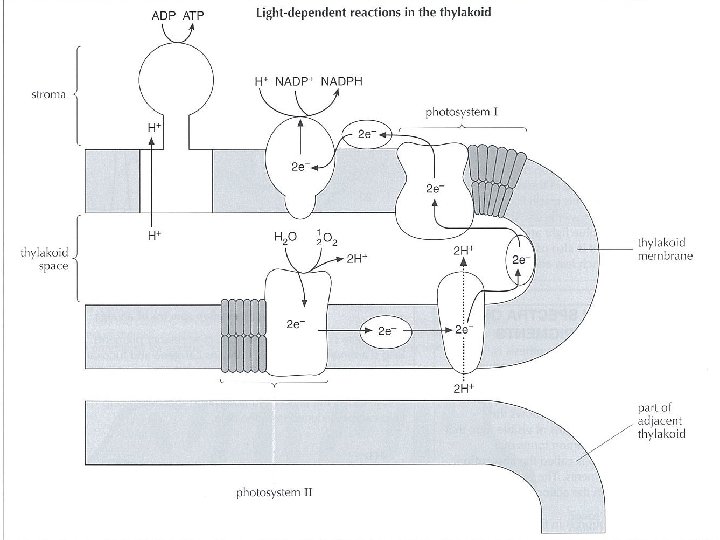
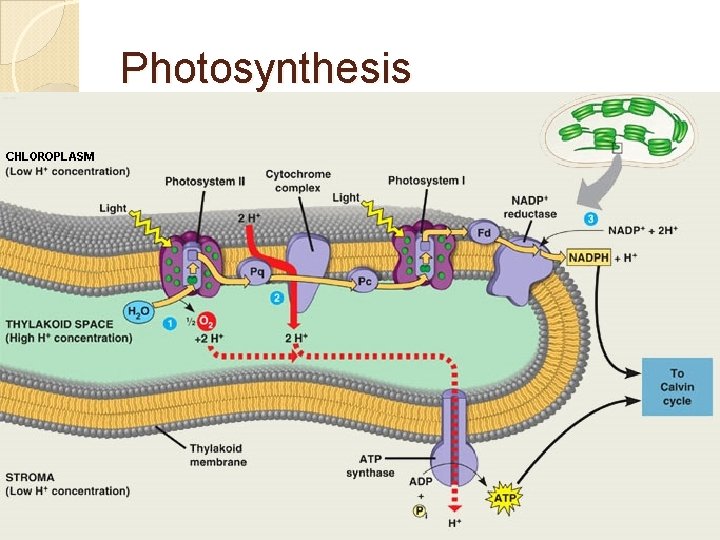
Photosynthesis Light dependent reaction Non-cyclic photophosphorylation ◦ One-way flow of 2 electrons From water to Ps. II From Ps. II to ETS From ETS to Ps. I From Ps. I to NADP+ ◦ 2 main products NADPH + H+ ATP
Photosynthesis Light dependent reaction: Non-cyclic P. Photoactivation of Photosystem II: ◦ Photons of light absorbed by pigments Especially chlorophyll a, at 680 nm ◦ Chlorophyll a is reduced as it gains energy ◦ Chlorophyll a is oxidized when excited e -s move to electron transport system
8. 3. U 5 Photolysis of water generates electrons for use in the light-dependent reactions.
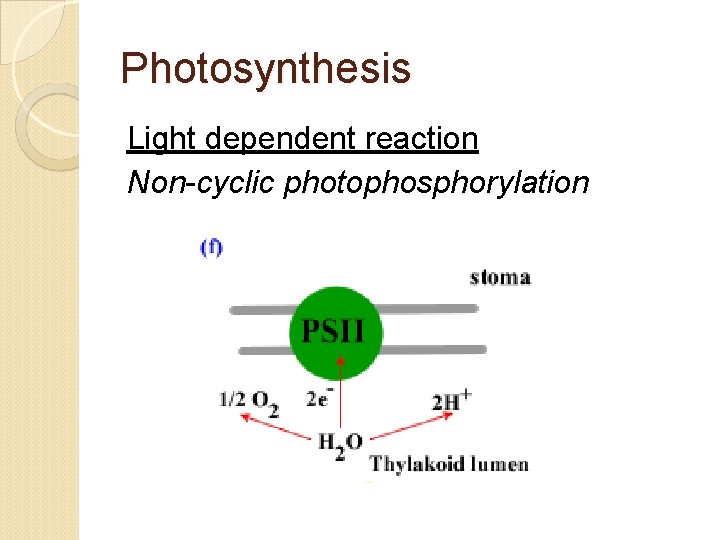
Photosynthesis Light dependent reaction: Non-cyclic P. Photolysis of water ◦ Oxidized chlorophyll a lacks electrons ◦ Replaced as H 2 O is split H 2 O 2 H+ + 2 e-s + 1/2 O 2
Photosynthesis Light dependent reaction: Non-cyclic P. Photolysis of water ◦ Protons Remain in thylakoid interior, lowering p. H This contributes to chemiosmotic gradient Used in phosphorylation of ATP ◦ Two electrons Replace electrons lost by chlorophyll to ETS 1/2 O 2 lost to environment as a waste product
8. 3. U 6 Transfer of excited electrons occurs between carriers in thylakoid membranes.
Photosynthesis Light dependent reaction: Non-cyclic P. Electron transport system ◦ Proteins embedded in thylakoid membrane
Photosynthesis Light dependent reaction: Non-cyclic P. Electron transport system ◦ Transfer energy along a pathway in series of redox reactions From Ps. II to Ps. I From Ps. I to NADP+
8. 3. U 7 Excited electrons from Photosystem II are used to contribute to generate a proton gradient.
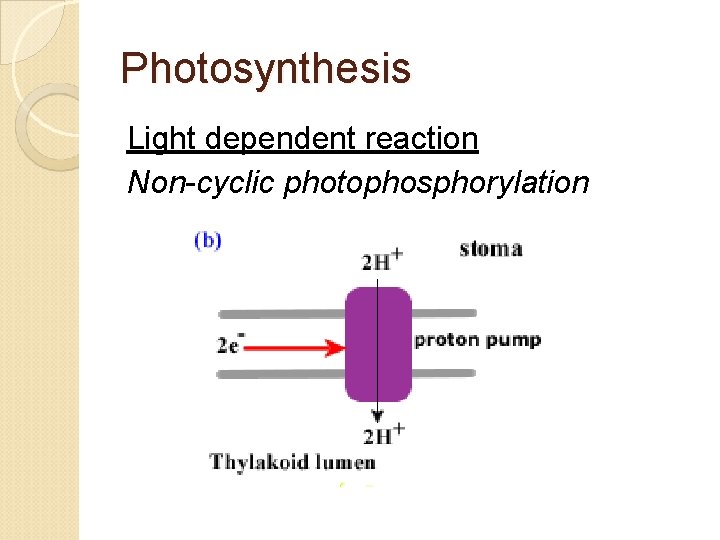
Photosynthesis Light dependent reaction: Non-cyclic P. Electron transport system ◦ Some energy used to pump H+s From stroma to thylakoid interior Lowering p. H Contributing to chemiosmotic gradient used in phosphorylation of ATP
Photosynthesis Light dependent reaction: Non-cyclic P. Photoactivation of Photosystem I ◦ Photons of visible light absorbed by pigments Especially chlorophyll a at 700 nm ◦ Chlorophyll is reduced as it gains energy ◦ Chlorophyll a oxidized when excited e-s move to electron transport system
Photosynthesis Light dependent reaction: Non-cyclic P. Reduction of NADP+ ◦ Gain of 2 electrons from ETS Reduces NADP+ NADPH + H+
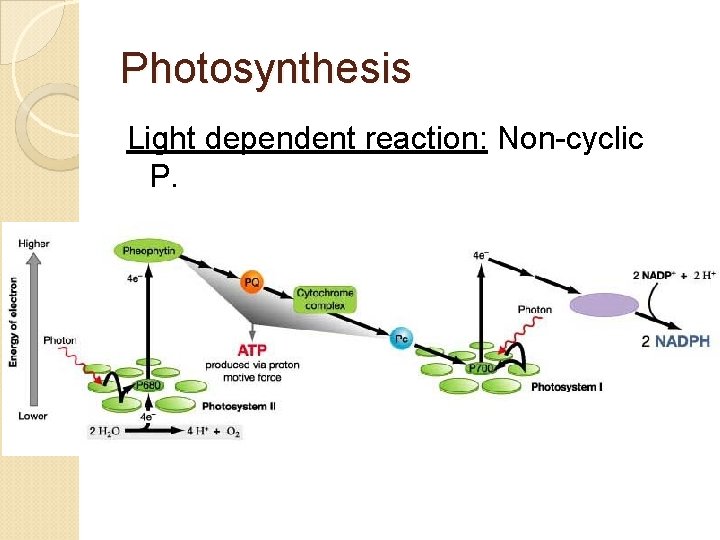
Photosynthesis Light dependent reaction: Non-cyclic P.
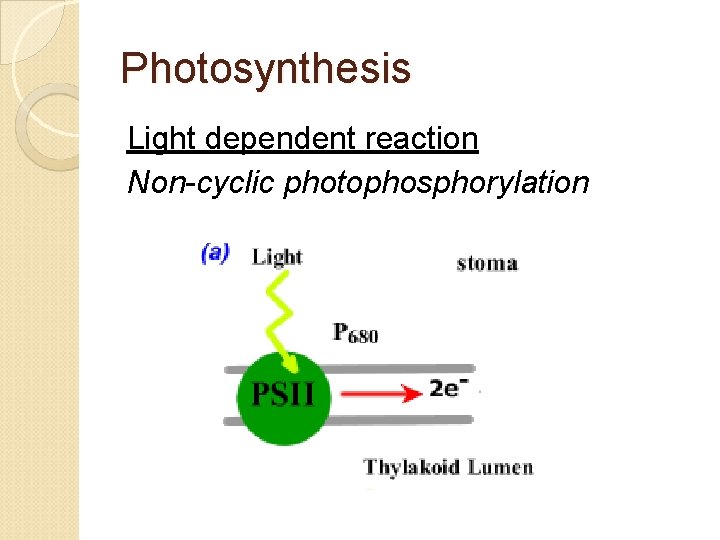
Photosynthesis Light dependent reaction Non-cyclic photophosphorylation 1. Light is absorbed by chlorophyll in Photosystem II 2. Chlorophyll absorbs the light energy Converts this to chemical energy as electrons 3. Photosystem II is oxidised Releasing electrons
Photosynthesis Light dependent reaction Non-cyclic photophosphorylation
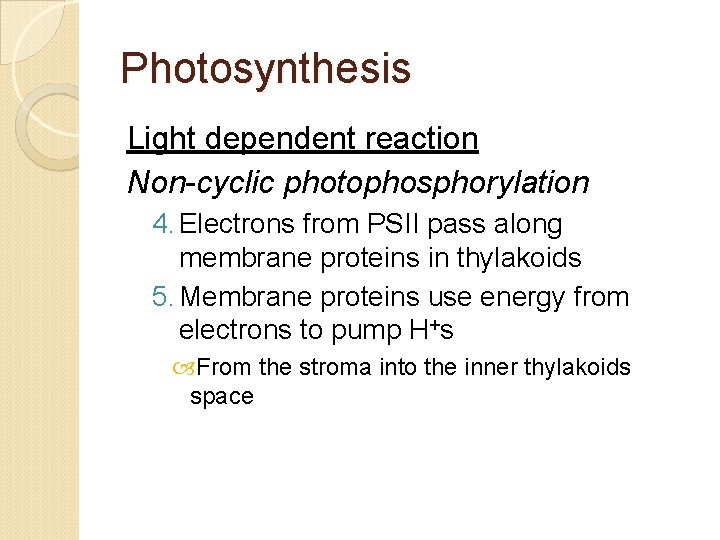
Photosynthesis Light dependent reaction Non-cyclic photophosphorylation 4. Electrons from PSII pass along membrane proteins in thylakoids 5. Membrane proteins use energy from electrons to pump H+s From the stroma into the inner thylakoids space
Photosynthesis Light dependent reaction Non-cyclic photophosphorylation
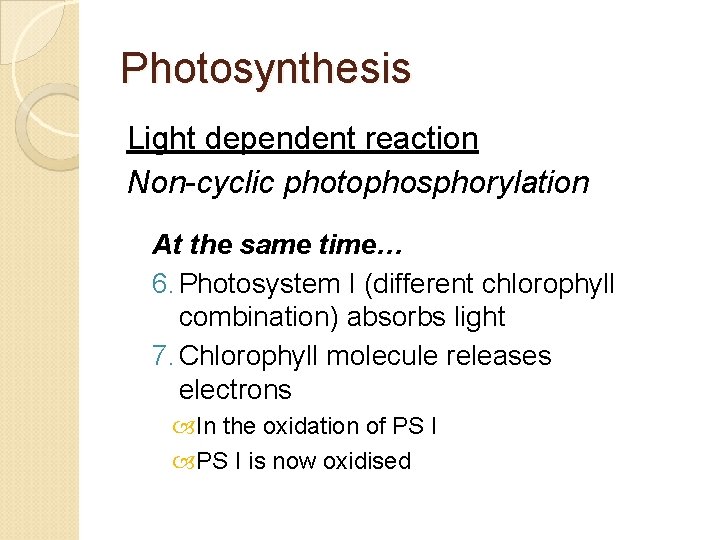
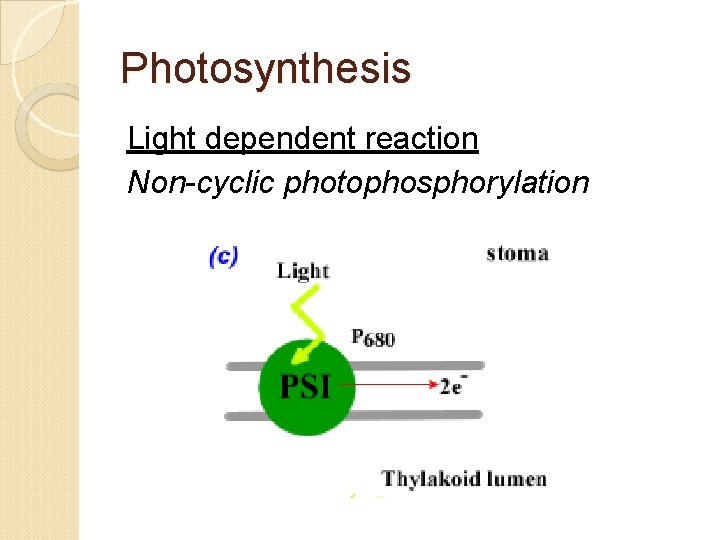
Photosynthesis Light dependent reaction Non-cyclic photophosphorylation At the same time… 6. Photosystem I (different chlorophyll combination) absorbs light 7. Chlorophyll molecule releases electrons In the oxidation of PS I is now oxidised
Photosynthesis Light dependent reaction Non-cyclic photophosphorylation
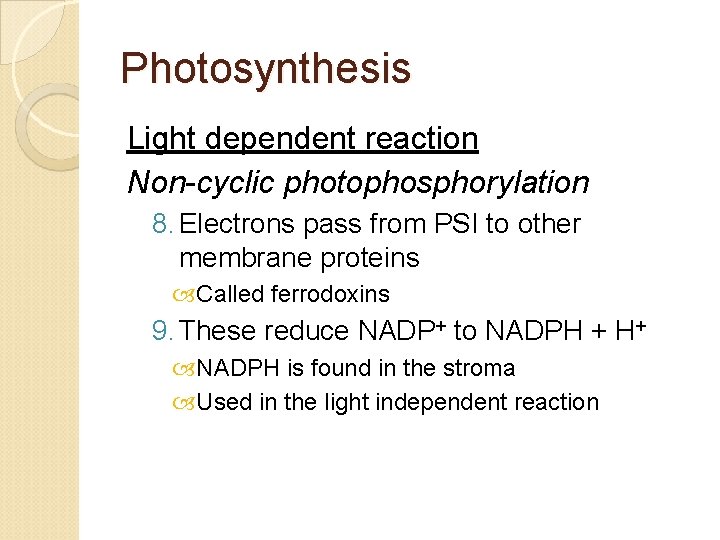
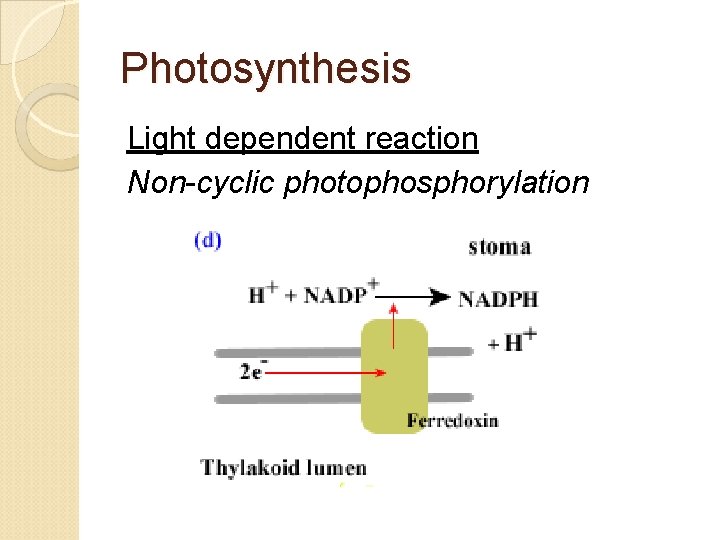
Photosynthesis Light dependent reaction Non-cyclic photophosphorylation 8. Electrons pass from PSI to other membrane proteins Called ferrodoxins 9. These reduce NADP+ to NADPH + H+ NADPH is found in the stroma Used in the light independent reaction
Photosynthesis Light dependent reaction Non-cyclic photophosphorylation
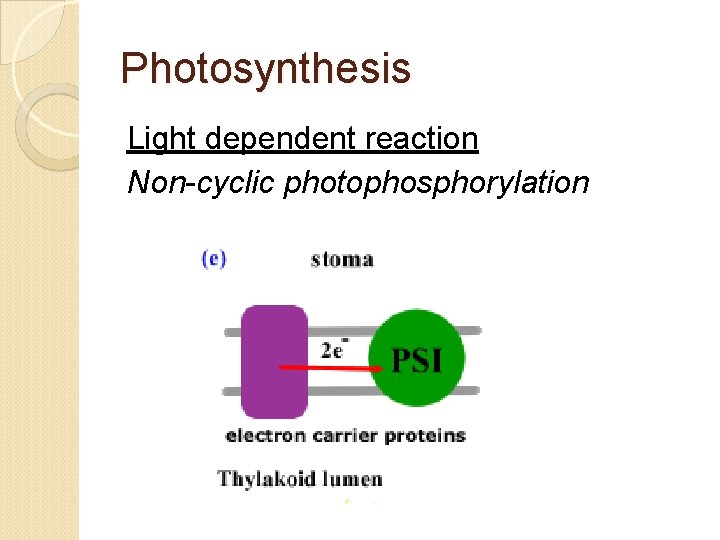
Photosynthesis Light dependent reaction Non-cyclic photophosphorylation 10. PS I has been oxidised and lost its electron To continue absorbing light Ps. I needs new electrons Source of electrons for this reduction are those from Ps. II electron carriers
Photosynthesis Light dependent reaction Non-cyclic photophosphorylation
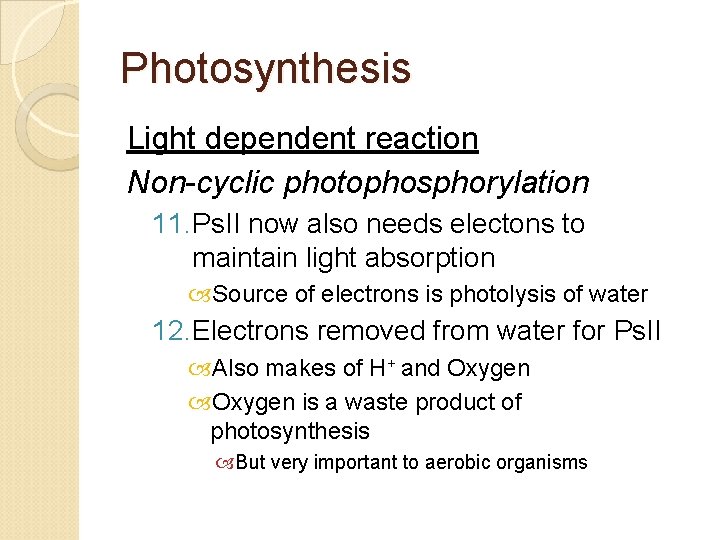
Photosynthesis Light dependent reaction Non-cyclic photophosphorylation 11. Ps. II now also needs electons to maintain light absorption Source of electrons is photolysis of water 12. Electrons removed from water for Ps. II Also makes of H+ and Oxygen is a waste product of photosynthesis But very important to aerobic organisms
Photosynthesis Light dependent reaction Non-cyclic photophosphorylation
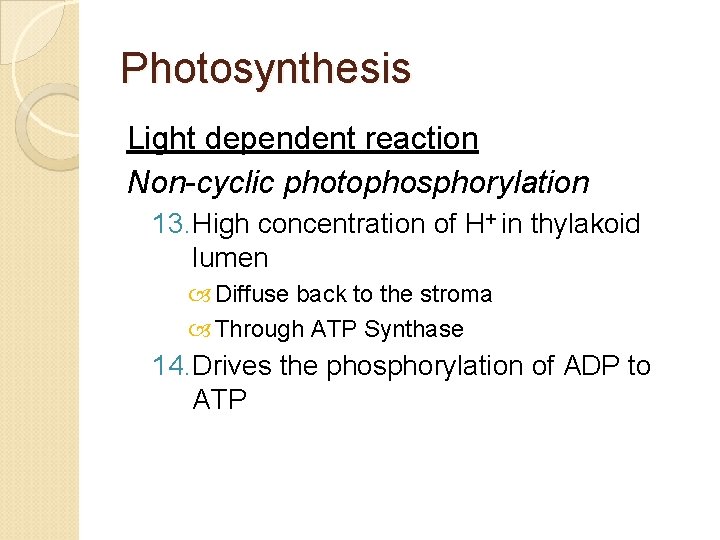
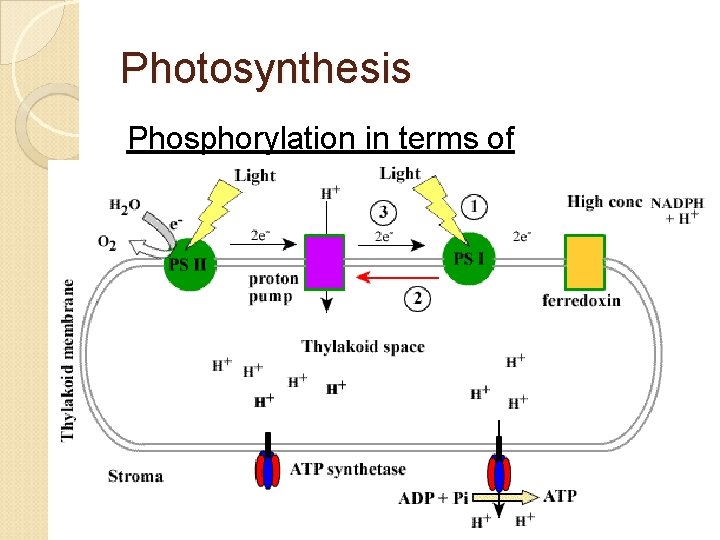
Photosynthesis Light dependent reaction Non-cyclic photophosphorylation 13. High concentration of H+ in thylakoid lumen Diffuse back to the stroma Through ATP Synthase 14. Drives the phosphorylation of ADP to ATP
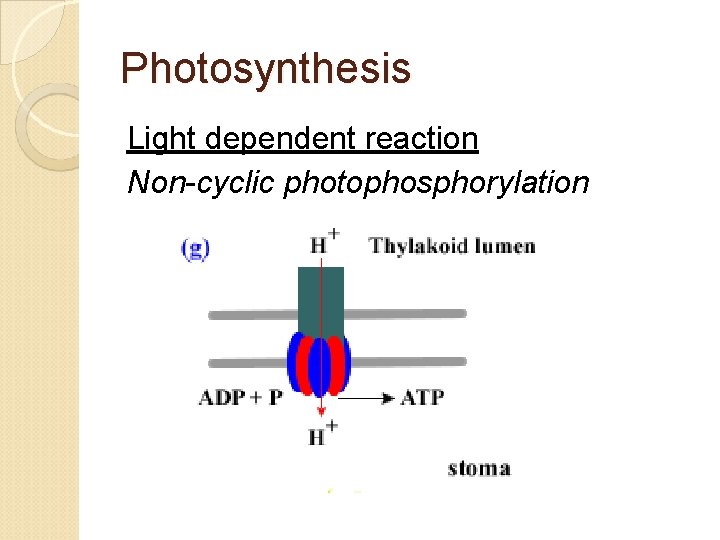
Photosynthesis Light dependent reaction Non-cyclic photophosphorylation
Photosynthesis
8. 3. U 9 Excited electrons from Photosystem I are used to reduce NADP.
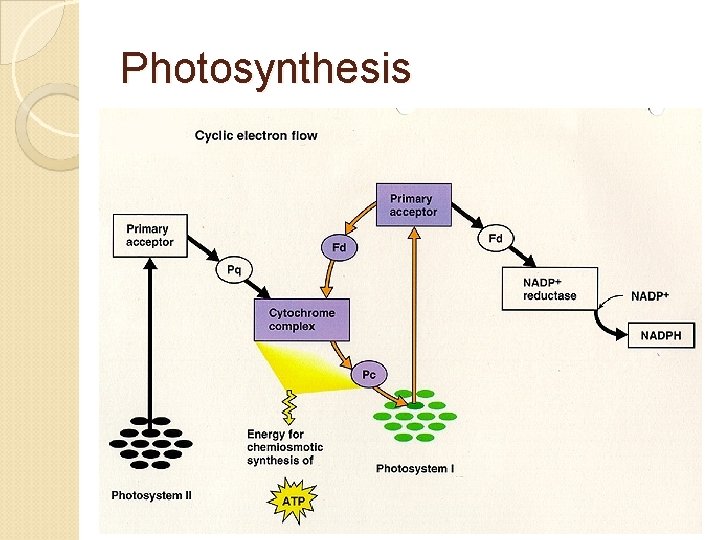
Photosynthesis Light dependent reaction Cyclic photophosphorylation ◦ When there is a lot of NADPH, PSI does not use electron to make NADPH It sends its 'excited' electron to a proton pump ◦ Cyclic: Flow of e-s from Ps. I to ETS and back
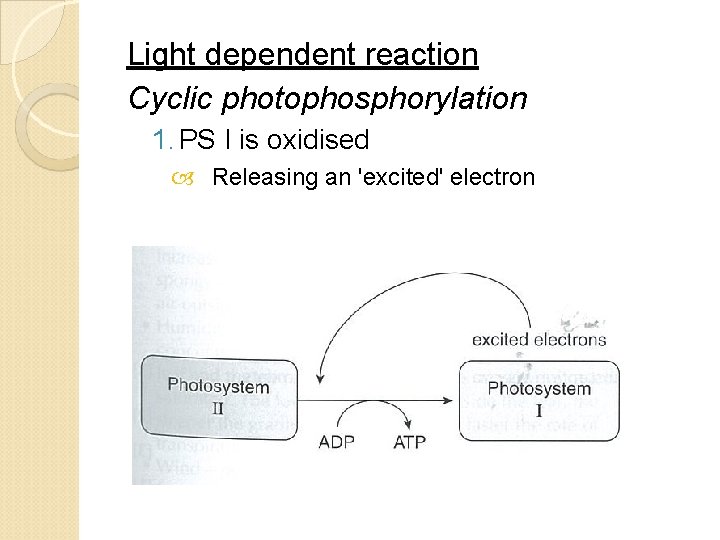
Light dependent reaction Cyclic photophosphorylation 1. PS I is oxidised Releasing an 'excited' electron
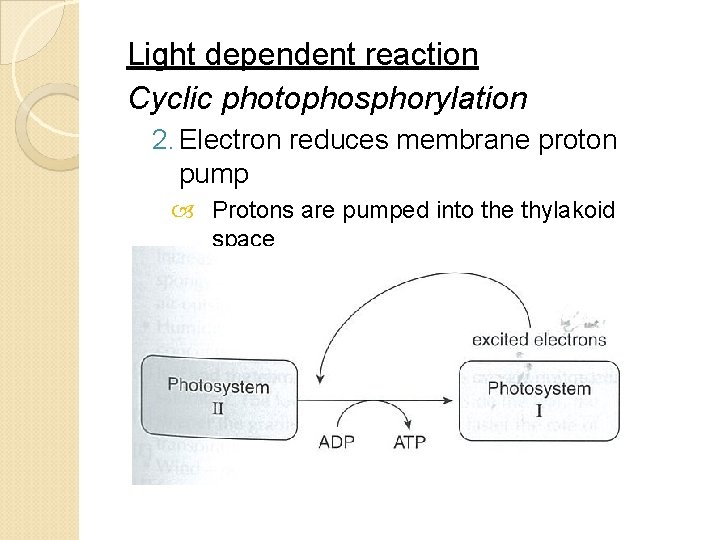
Light dependent reaction Cyclic photophosphorylation 2. Electron reduces membrane proton pump Protons are pumped into the thylakoid space Generates ATP
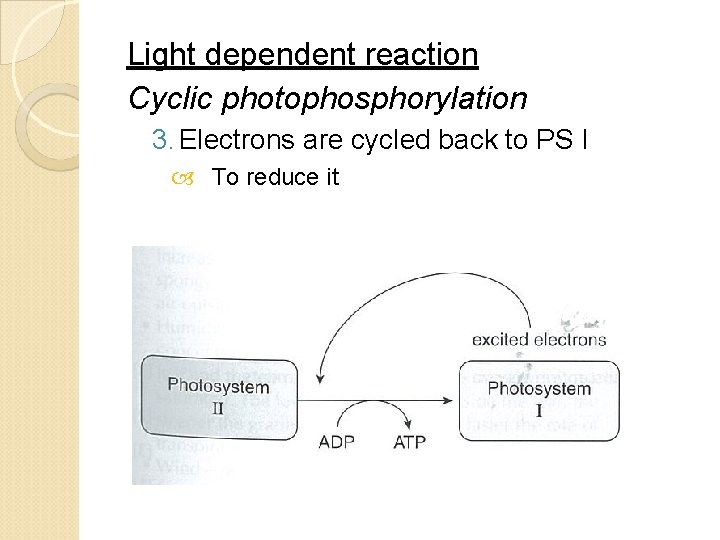
Light dependent reaction Cyclic photophosphorylation 3. Electrons are cycled back to PS I To reduce it
Photosynthesis
Photosynthesis ANIMATION
8. 3. U 8 ATP synthase in thylakoids generates ATP using the proton gradient.
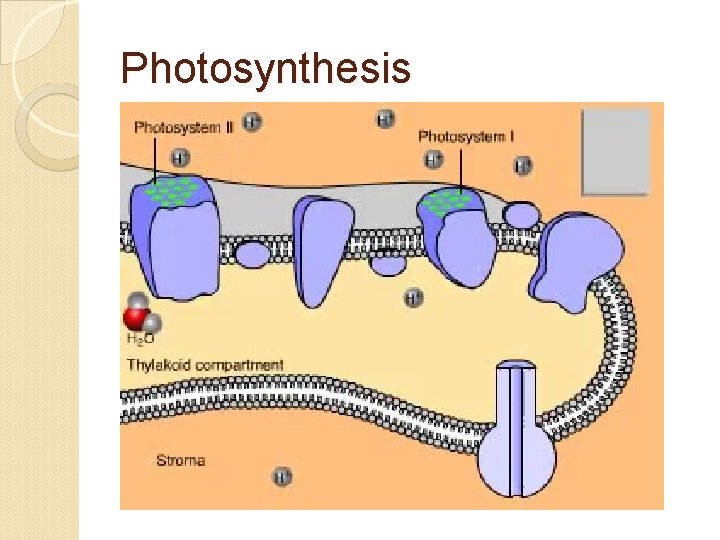
Photosynthesis Phosphorylation in terms of chemiosmosis Accumulation of H+ ◦ Due to proton pumping ◦ Causes H+ concentration difference Between thylakoid space (high concentration) and stroma (low concentration) Protons diffuse through ATP synthase ◦ ADP reduced to ATP ◦ Same mechanism as in cristae
Photosynthesis Phosphorylation in terms of chemiosmosis
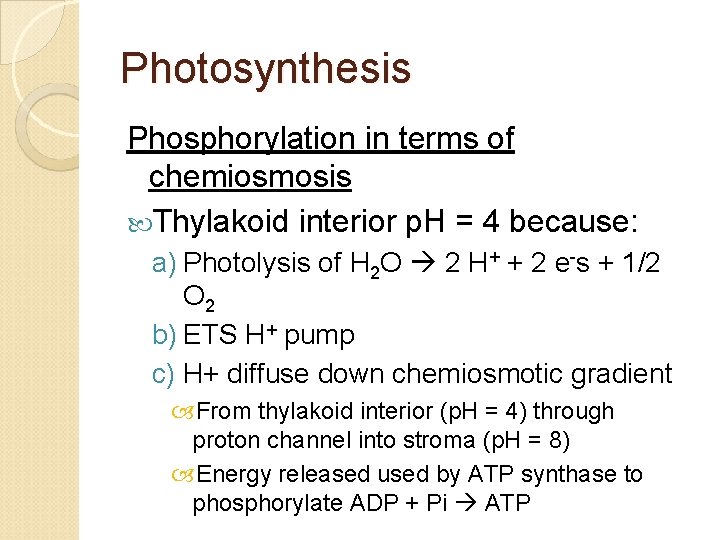
Photosynthesis Phosphorylation in terms of chemiosmosis Thylakoid interior p. H = 4 because: a) Photolysis of H 2 O 2 H+ + 2 e-s + 1/2 O 2 b) ETS H+ pump c) H+ diffuse down chemiosmotic gradient From thylakoid interior (p. H = 4) through proton channel into stroma (p. H = 8) Energy released used by ATP synthase to phosphorylate ADP + Pi ATP
Photosynthesis
Photosynthesis
MAJOR SOURCES Thank you to my favorite sources of information when making these lectures! John Burrell (Bangkok, TH) www. click 4 biology. info Dave Ferguson (Kobe, JA) http: //canada. canacad. ac. jp/High/49 Brent Cornell (Melbourne, AU) http: //ib. bioninja. com. au/ Andrew Allott – Biology for the IB Diploma C. J. Clegg – Biology for the IB Diploma Weem, Talbot, Mayrhofer – Biology for the International Baccalaureate Howard Hugh’s Medical Institute – www. hhmi. org/biointeractive Mr. Hoye’s TOK Website – http: //mrhoyestokwebsite. com And all the contributors at www. You. Tube. com
IB DP Biology Unit 8. 3 Photosynthesis HL
8. 3. U 10 In the light-independent reactions a carboxylase catalyses the carboxylation of ribulose bisphosphate (Ru. BP).
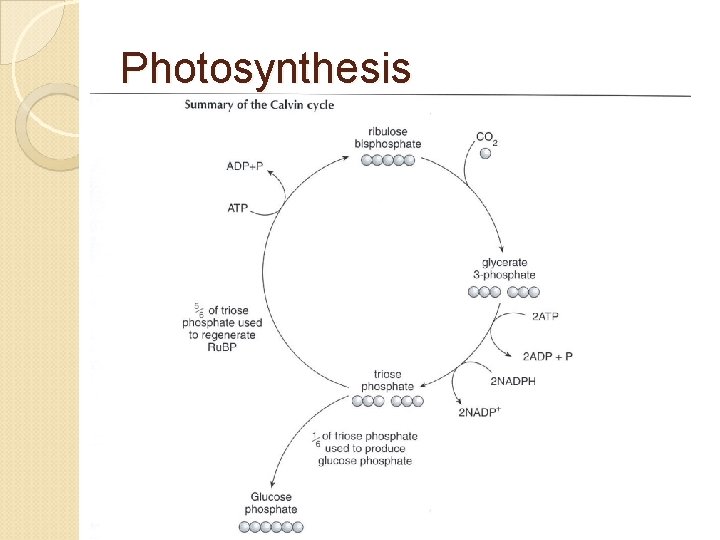
Photosynthesis Light independent reaction Energy trapped from sunlight in the light dependent reaction (ATP and NADPH) ◦ Used to fix carbon from carbon dioxide into organic molecules Reaction called the Calvin Cycle ◦ Takes place in the stroma ◦ Controlled by enzymes
Photosynthesis Light independent reaction Ribulose Bisphosphate Carboxylase (Rubisco) ◦ Enzyme that allows carbon to be fixed into an initial organic molecule Rubisco is a link between inorganic (non-living) and organic (living) ◦ Primary productivity
Photosynthesis
Photosynthesis Light independent reaction: Summary Ribulose bisphosphate carboxylase (rubisco) ◦ Enzyme that carboxylates ribulose bisphosphate ◦ Forming two glycerate 3 -phosphate ◦ Ru. BP + CO 2 rubisco 2 GP
Photosynthesis
8. 3. U 11 Glycerate 3 -phosphate is reduced to triose phosphate using reduced NADP and ATP.
Photosynthesis Light independent reaction: Summary Reduction of glycerate 3 -phosphate (GP) to triose phosphate (TP) ◦ Energy from ATP and NADPH + H+
8. 3. U 12 Triose phosphate is used to regenerate Ru. BP and produce carbohydrates. 8. 3. U 13 Ribulose bisphosphate is reformed using ATP.
Photosynthesis Light independent reaction: Summary Regeneration of Ru. BP ◦ 83% of 3 -carbon TP is used to regenerate 5 -carbon Ru. BP ◦ Using energy from ATP
Photosynthesis Light independent reaction: Summary Synthesis of carbohydrates and more ◦ Enzymes convert TP to various products: Monosaccharides Glucose, Fructose Disaccharides Sucrose Polysaccharides Starch Other products Lipids, Amino acids, Nucleic acids
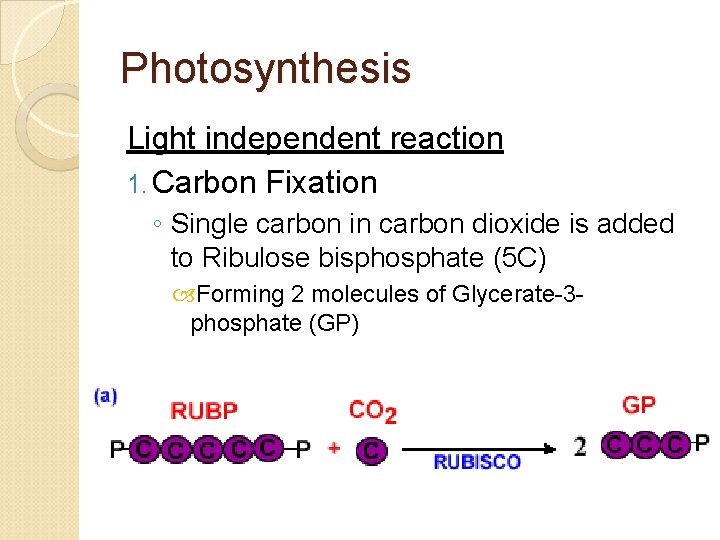
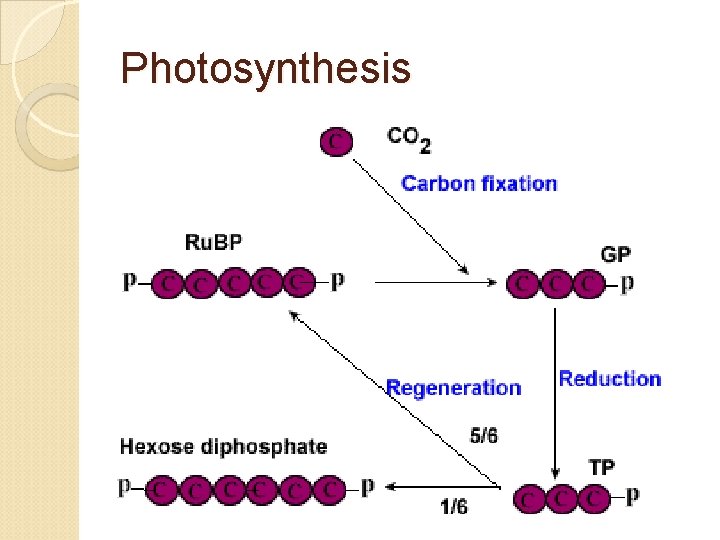
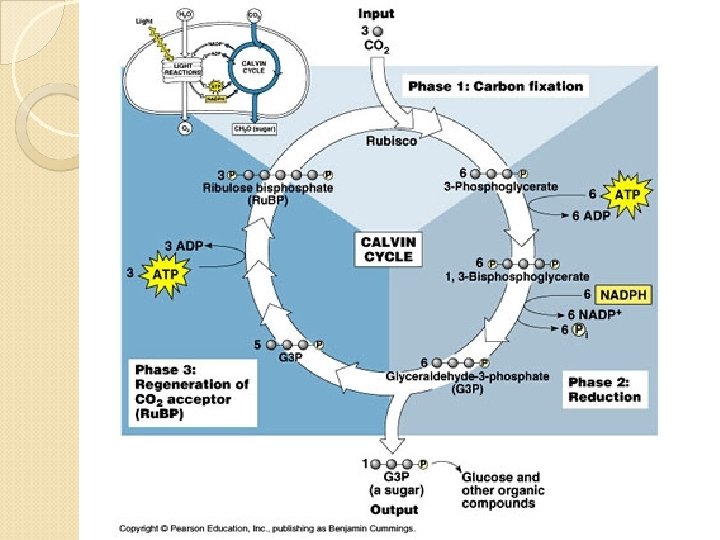
Photosynthesis Light independent reaction 1. Carbon Fixation ◦ Single carbon in carbon dioxide is added to Ribulose bisphosphate (5 C) Forming 2 molecules of Glycerate-3 phosphate (GP)
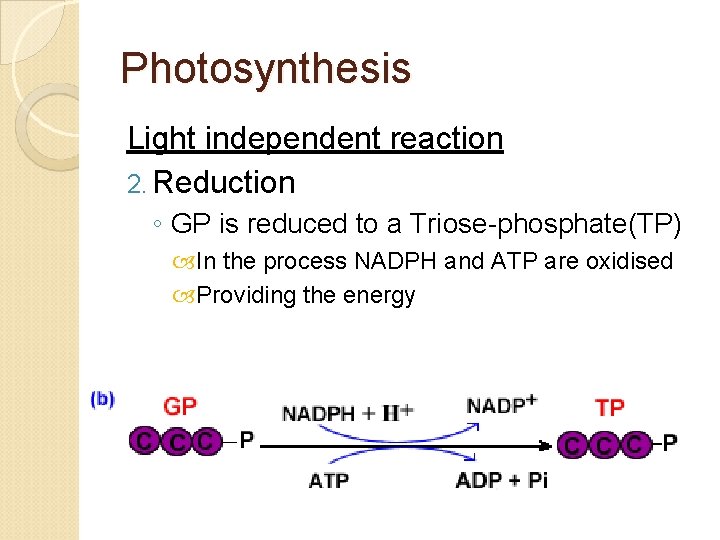
Photosynthesis Light independent reaction 2. Reduction ◦ GP is reduced to a Triose-phosphate(TP) In the process NADPH and ATP are oxidised Providing the energy
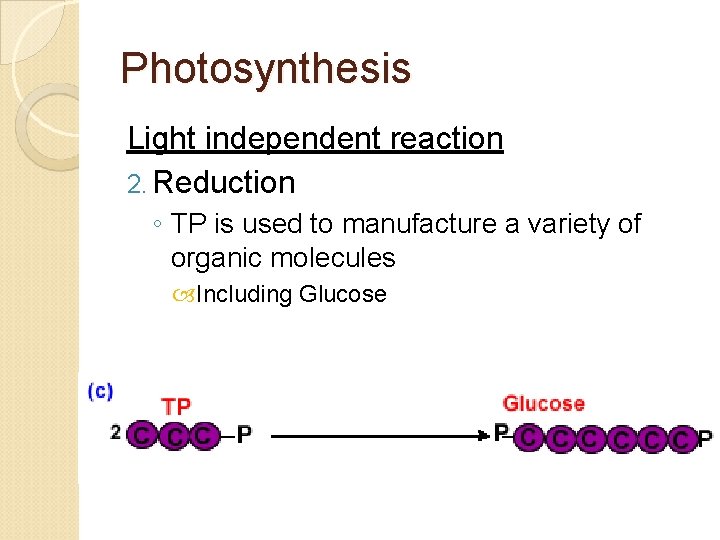
Photosynthesis Light independent reaction 2. Reduction ◦ TP is used to manufacture a variety of organic molecules Including Glucose
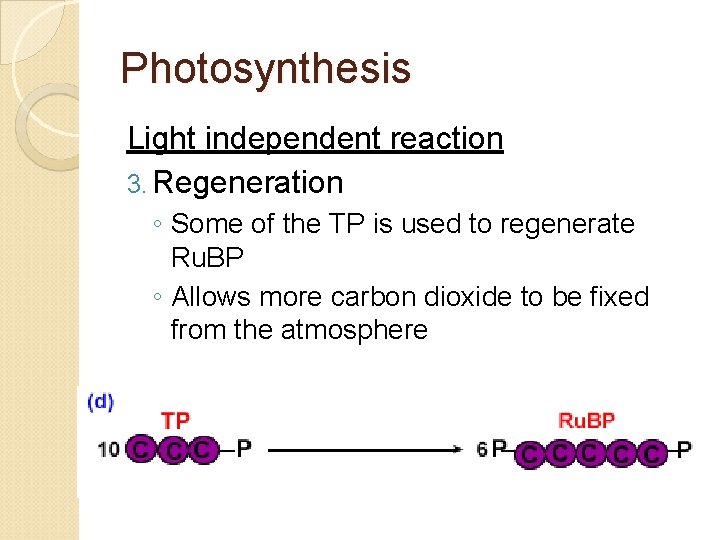
Photosynthesis Light independent reaction 3. Regeneration ◦ Some of the TP is used to regenerate Ru. BP ◦ Allows more carbon dioxide to be fixed from the atmosphere
Photosynthesis
8. 3. A 1 Calvin’s experiment to elucidate the carboxylation of Ru. BP.
Photosynthesis Calvin’s experiment Melvin Calvin, an American biochemist, figured out the steps of the LIR ◦ ‘Calvin Cycle’ is named after him ◦ Famous “lollipop” experiment because his equipment looked like an upside-down lollipop
Photosynthesis Calvin’s experiment Calvin used two types of Carbon in his experiments: ◦ Normal C (in the plants) ◦ Radioactive 14 C (in CO 2)
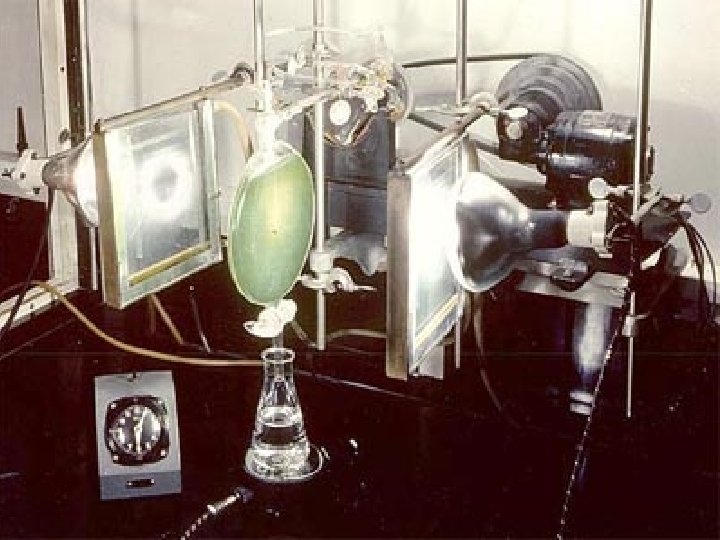
Photosynthesis Calvin’s experiment 1. Plants put in water to do photosynthesis ◦ CO 2 with radioactive 14 C is added ◦ Plants will use the radioactive 14 C when doing the LIR 2. Shine light on plants to start photosynthesis
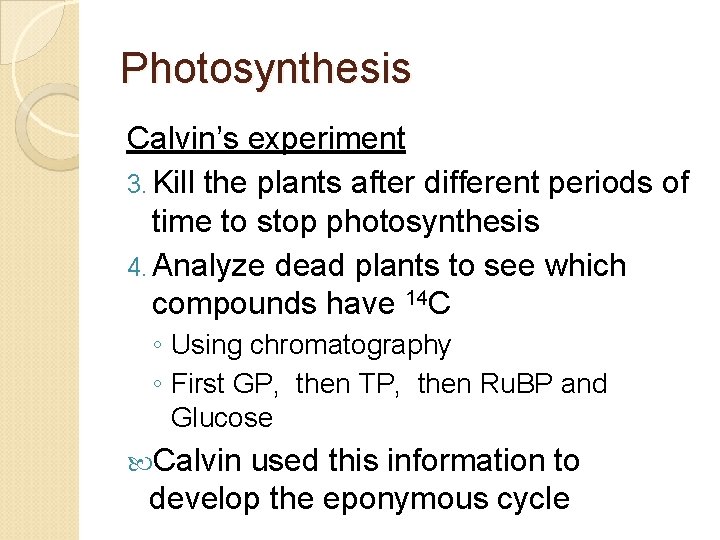
Photosynthesis Calvin’s experiment 3. Kill the plants after different periods of time to stop photosynthesis 4. Analyze dead plants to see which compounds have 14 C ◦ Using chromatography ◦ First GP, then TP, then Ru. BP and Glucose Calvin used this information to develop the eponymous cycle
TOK QUESTION: Abstract ART? The lollipop apparatus used to work out the biochemical details of the Calvin cycle shows considerable creativity. http: //science. howstuffworks. com/dictionary/famous-scientists/chemists/melvin-calvininfo. htm To what extent is the creation of an elegant procedure similar to the creation of a work of art?
8. 3. S 1 Annotation of a diagram to indicate the adaptations of a chloroplast to its function.
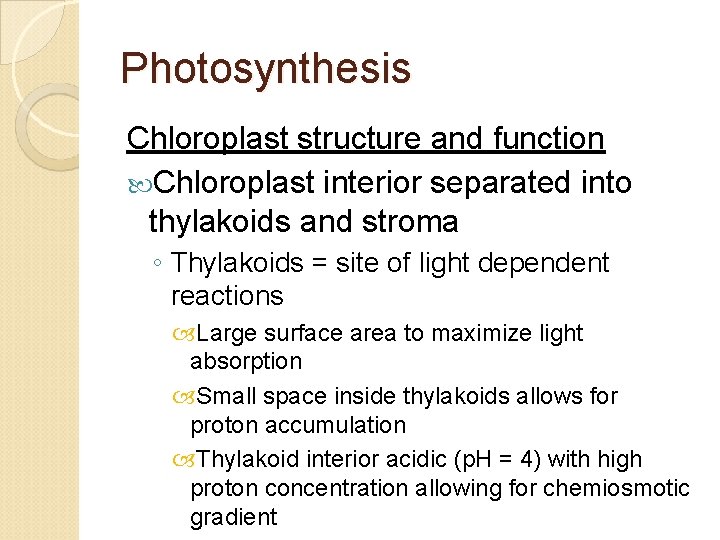
Photosynthesis Chloroplast structure and function Chloroplast interior separated into thylakoids and stroma ◦ Thylakoids = site of light dependent reactions Large surface area to maximize light absorption Small space inside thylakoids allows for proton accumulation Thylakoid interior acidic (p. H = 4) with high proton concentration allowing for chemiosmotic gradient
Photosynthesis Chloroplast structure and function Chloroplast interior separated into thylakoids and stroma ◦ Stroma = site of light independent reactions Stroma is basic (p. H = 8) Where Calvin cycle enzymes function optimally
Photosynthesis Chloroplast structure and function Thylakoid membranes hold photosystem pigments ◦ Pigments anchor in thylakoid membranes by hydrophobic/ hydrocarbon tails Photolysis enzymes on inner surface of thylakoid membrane ◦ Splits water into oxygen and hydrogen
Photosynthesis Chloroplast structure and function Intrinsic proteins bound in thylakoid membranes allow electron transport ◦ ETC proteins between photosystems II and I pump protons into thylakoid interior Adding to chemiosmotic gradient ◦ NADP reductase bound to outer thylakoid membrane Reduces NADP to NADPH for Calvin cycle
Photosynthesis Chloroplast structure and function ATP synthase in the thylakoid membrane ◦ Allows proton flow down chemiosmotic gradient to power photophosphorylation ◦ ATP production in stroma
Photosynthesis Chloroplast structure and function Chloroplast DNA and ribosomes allow for protein synthesis Chloroplast starch granules for storage of photosynthetic products
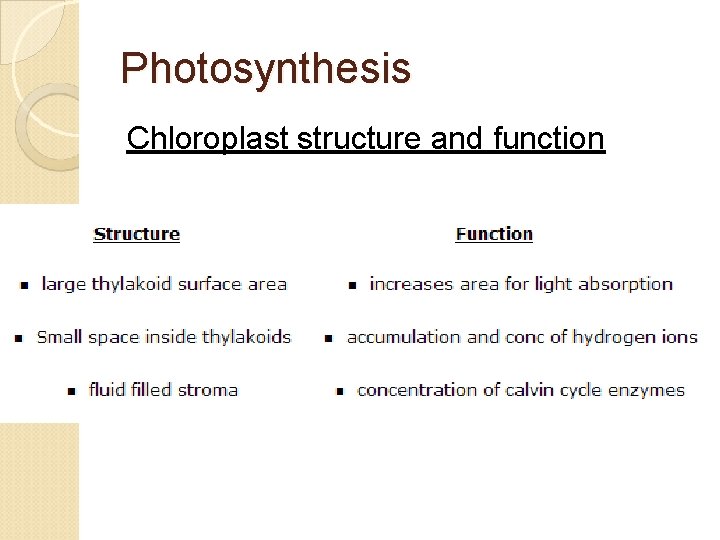
Photosynthesis Chloroplast structure and function
MAJOR SOURCES Thank you to my favorite sources of information when making these lectures! John Burrell (Bangkok, TH) www. click 4 biology. info Dave Ferguson (Kobe, JA) http: //canada. canacad. ac. jp/High/49 Brent Cornell (Melbourne, AU) http: //ib. bioninja. com. au/ Andrew Allott – Biology for the IB Diploma C. J. Clegg – Biology for the IB Diploma Weem, Talbot, Mayrhofer – Biology for the International Baccalaureate Howard Hugh’s Medical Institute – www. hhmi. org/biointeractive Mr. Hoye’s TOK Website – http: //mrhoyestokwebsite. com And all the contributors at www. You. Tube. com
- Slides: 103