
IB DP Biology Unit 1 4 Membrane transport
IB DP Biology Unit 1. 4 Membrane transport
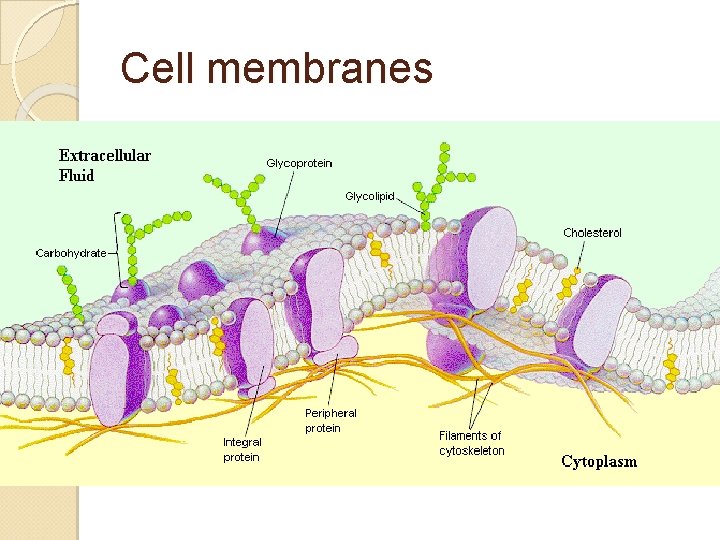
Cell membranes Structure ◦ Membranes control the composition of a cell by active and passive transport
Cell membranes
1. 4. U 1 Particles move across membranes by simple diffusion, facilitated diffusion, osmosis and active transport.
Cell membranes Transport across cell membrane Two types: ◦ PASSIVE Using no energy – happens by itself ◦ ACTIVE Needs energy – usually from ATP
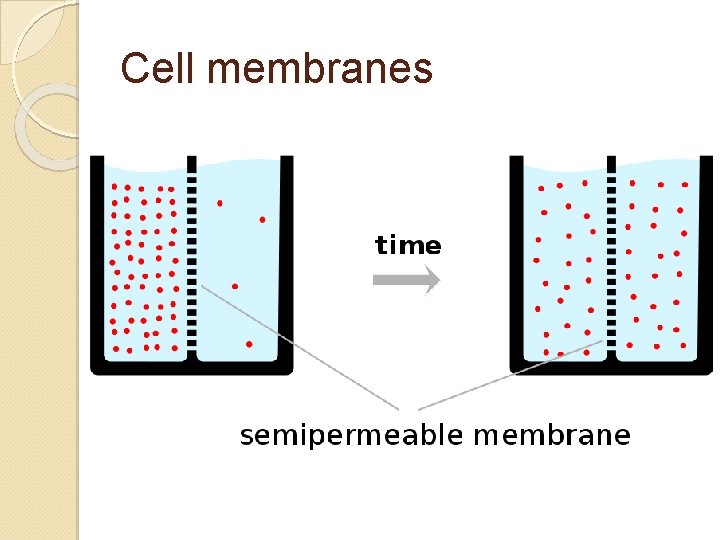
Cell membranes Passive transport Diffusion: ◦ Passive movement of particles from a region of higher concentration to a region of lower concentration Particles bounce off each other more where there are more of them
Cell membranes
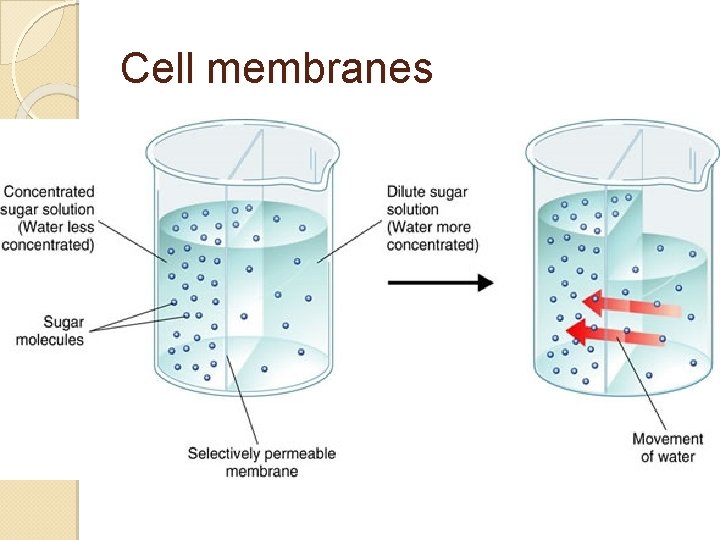
Cell membranes Passive transport Osmosis: ◦ Movement of water molecules from a region of lower solute concentration to a region of higher solute concentration ◦ Across a partially permeable membrane
Cell membranes
Cell membranes
Cell membranes Passive transport Osmosis: ◦ Sometimes aided by integral proteins called aquaporins
Cell membranes
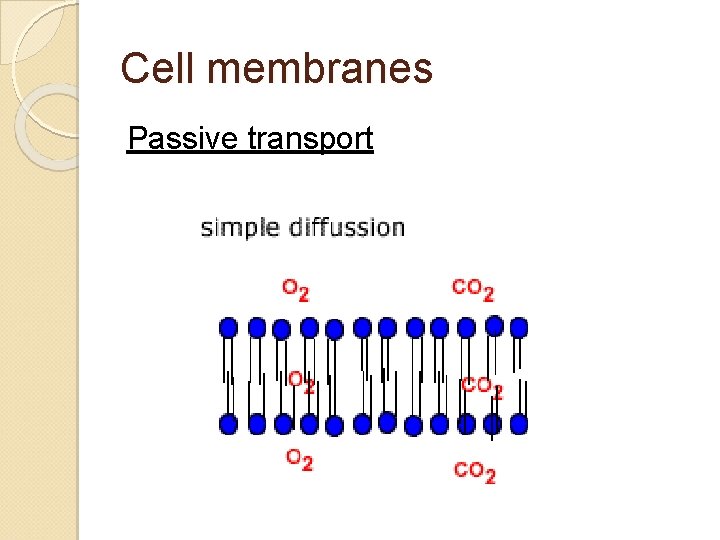
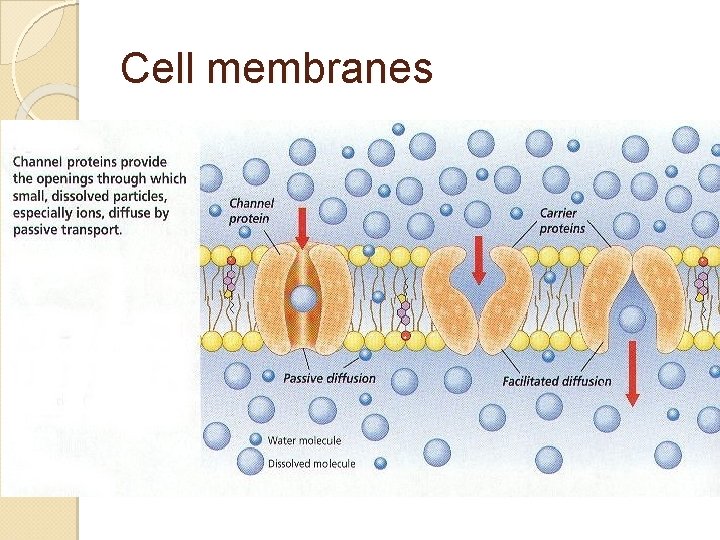
Cell membranes Passive transport Molecules can diffuse across membranes from areas of higher to lower concentration by: Simple diffusion: ◦ Traveling directly through the membrane If they are small and uncharged Avoiding repulsion by the hydrophobic, nonpolar tails of phospholipids in the middle of the membrane
Cell membranes Passive transport
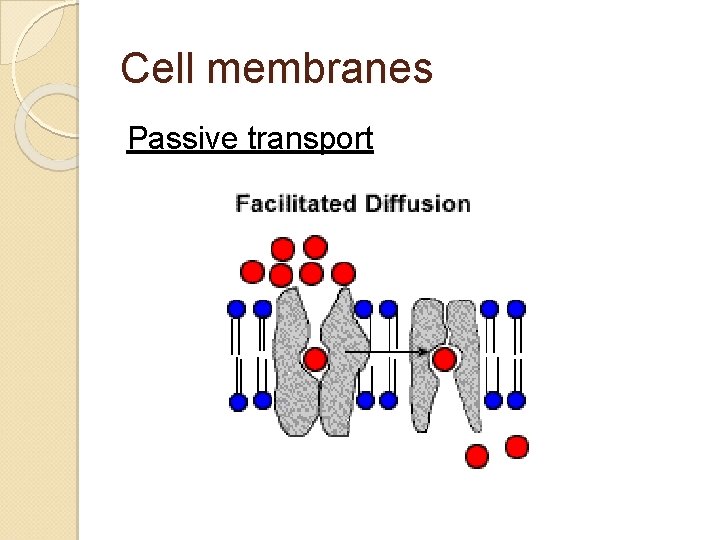
Cell membranes Passive transport Molecules can diffuse across membranes from areas of higher to lower concentration by: Facilitated diffusion: ◦ Traveling through special channel proteins Have to match the shape and charge requirements to fit through the channels in the proteins
Cell membranes Passive transport
Cell membranes Passive transport
Cell membranes
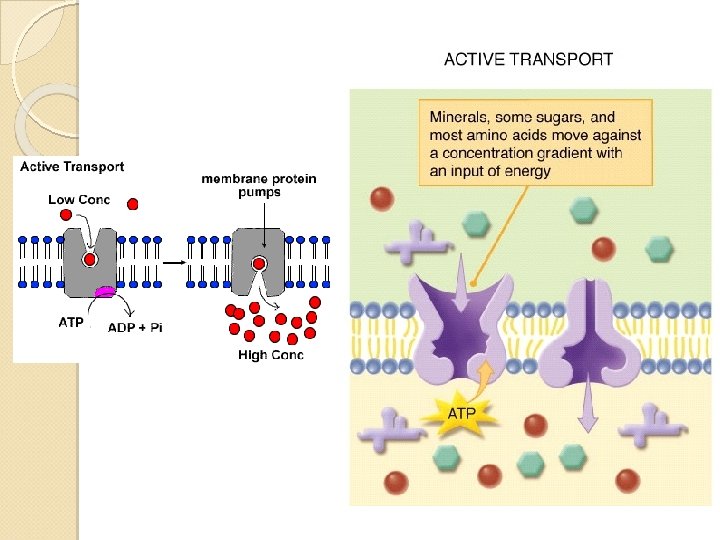
Cell membranes Active transport Protein pumps: ◦ Integral protein pumps embedded within membranes ◦ Specific to molecule transported Requires energy: ◦ Usually provided by ATP
Cell membranes
Cell membranes
1. 4. A 1 Structure and function of sodium– potassium pumps for active transport and potassium channels for facilitated diffusion in axons.
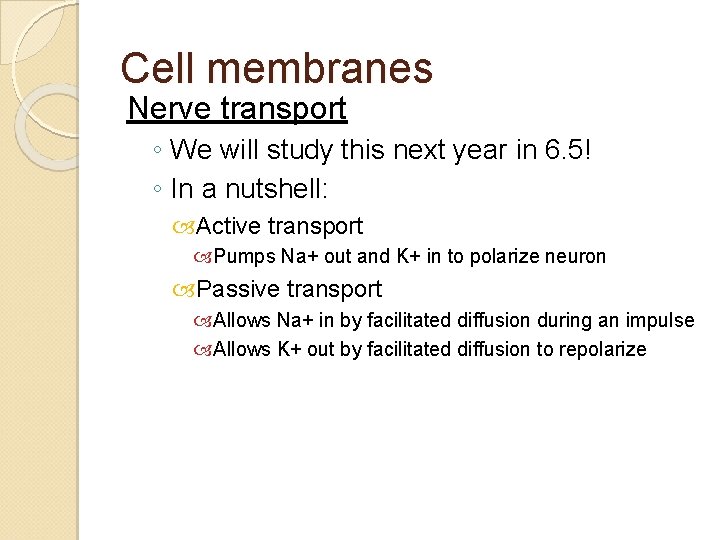
Cell membranes Nerve transport ◦ We will study this next year in 6. 5! ◦ In a nutshell: Active transport Pumps Na+ out and K+ in to polarize neuron Passive transport Allows Na+ in by facilitated diffusion during an impulse Allows K+ out by facilitated diffusion to repolarize
1. 4. U 2 The fluidity of membranes allows materials to be taken into cells by endocytosis or released by exocytosis.
1. 4. U 3 Vesicles move materials within cells.
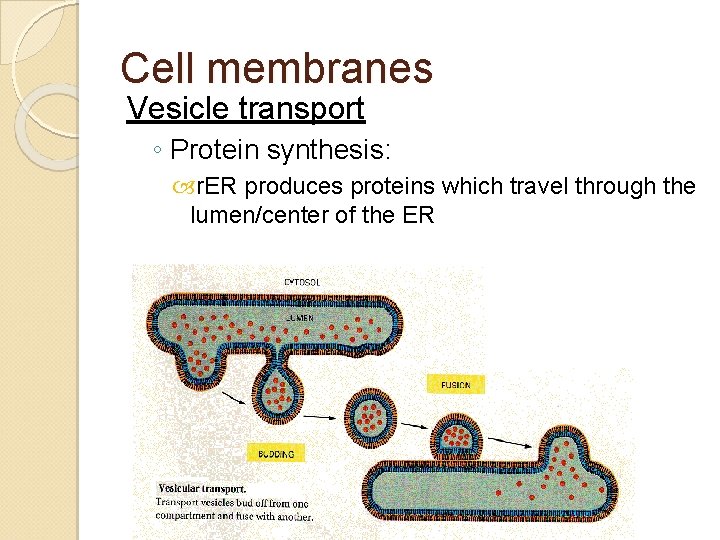
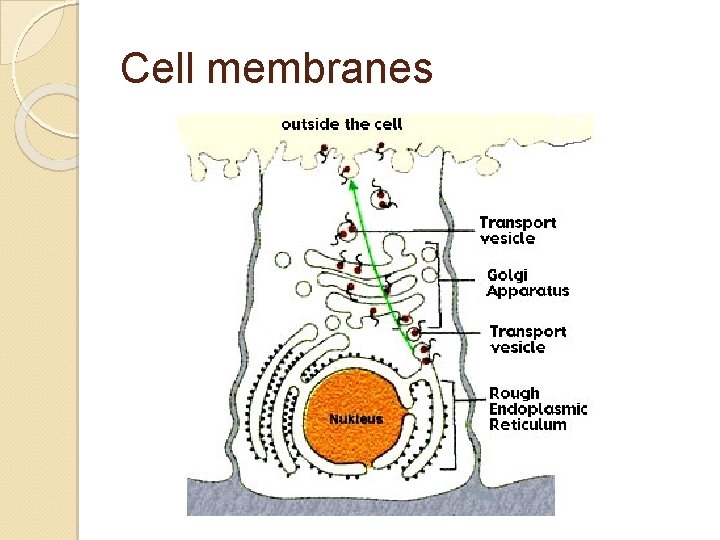
Cell membranes Vesicle transport ◦ Protein synthesis: r. ER produces proteins which travel through the lumen/center of the ER
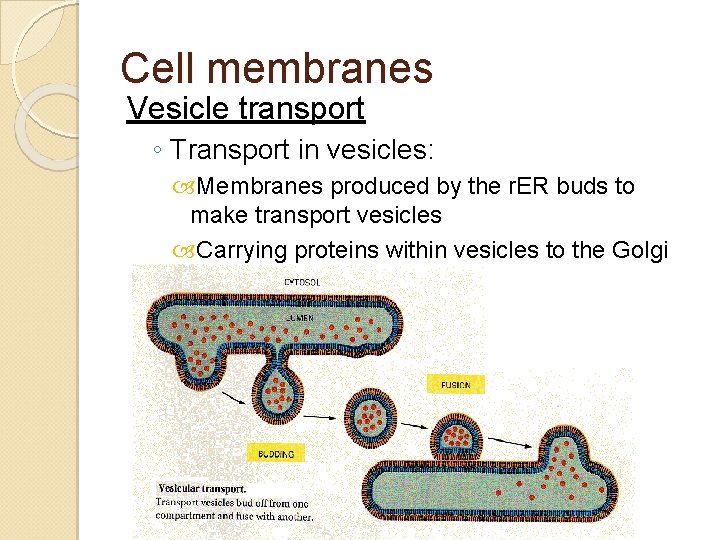
Cell membranes Vesicle transport ◦ Transport in vesicles: Membranes produced by the r. ER buds to make transport vesicles Carrying proteins within vesicles to the Golgi
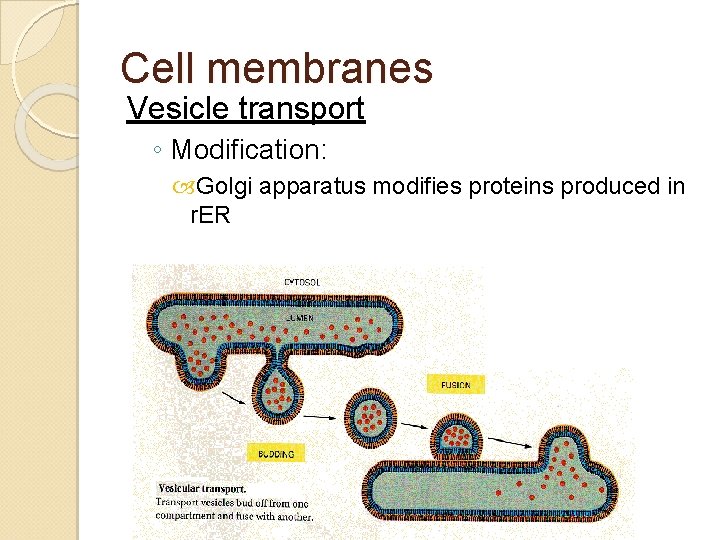
Cell membranes Vesicle transport ◦ Modification: Golgi apparatus modifies proteins produced in r. ER
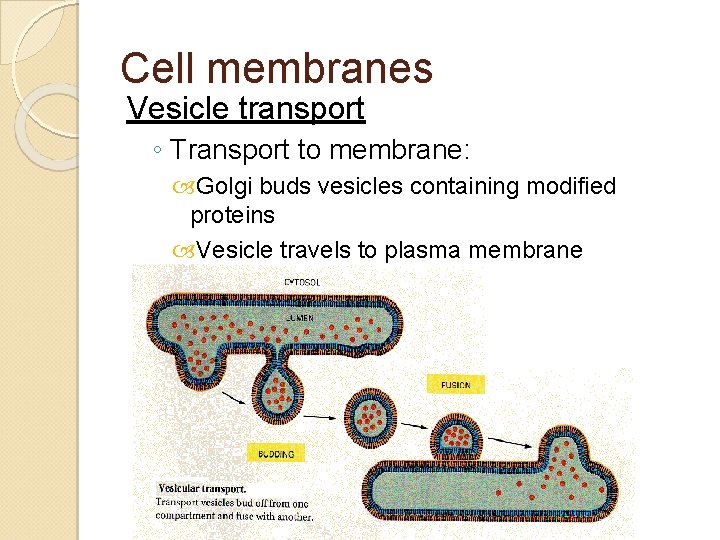
Cell membranes Vesicle transport ◦ Transport to membrane: Golgi buds vesicles containing modified proteins Vesicle travels to plasma membrane
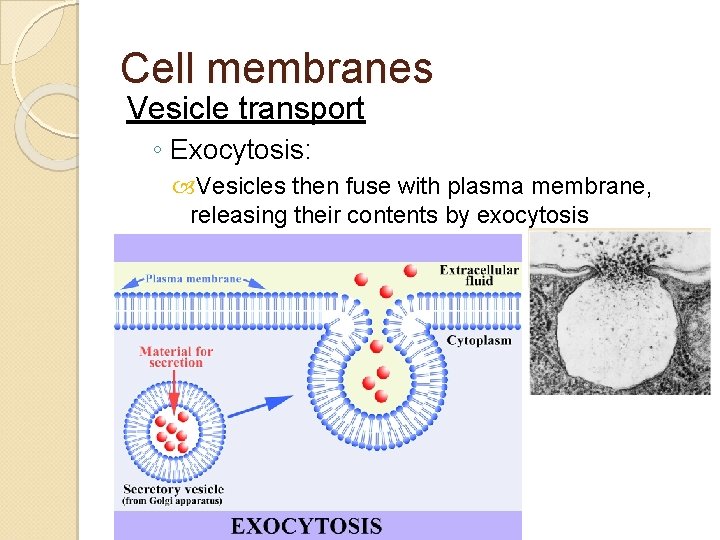
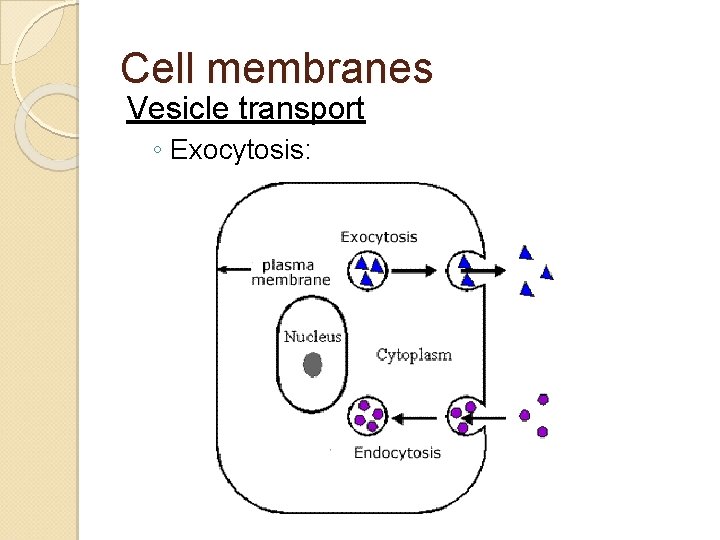
Cell membranes Vesicle transport ◦ Exocytosis: Vesicles then fuse with plasma membrane, releasing their contents by exocytosis
Cell membranes Vesicle transport ◦ Exocytosis:
Cell membranes Vesicle transport ◦ Exocytosis:
Cell membranes Vesicle transport ◦ Exocytosis:
Cell membranes
Cell membranes
Cell membranes Vesicle transport ◦ Endocytosis: Membrane pinches in and breaks off as a new vesicle around materials entering
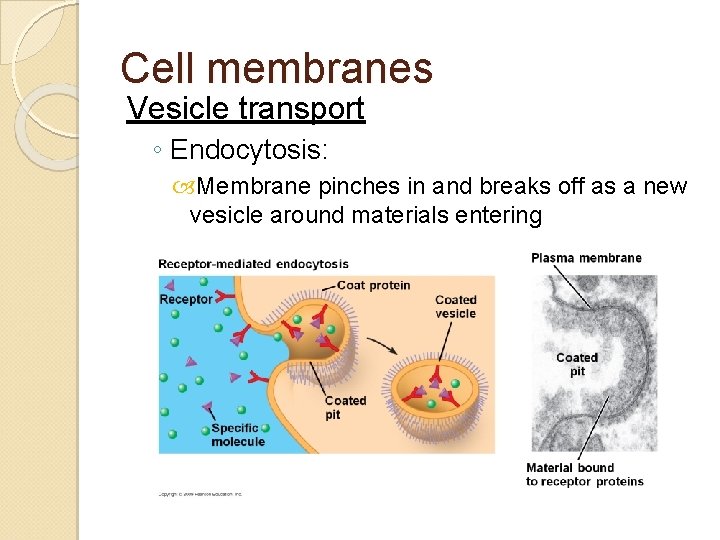
Cell membranes Vesicle transport ◦ Endocytosis: Membrane pinches in and breaks off as a new vesicle around materials entering
Cell membranes Vesicle transport ◦ Endocytosis vs. Exocytosis Endo makes cell membrane smaller while Exo makes it larger Endo allows materials to enter while Exo makes them exit Endo creates a vesicle while Exo absorbs a vesicle
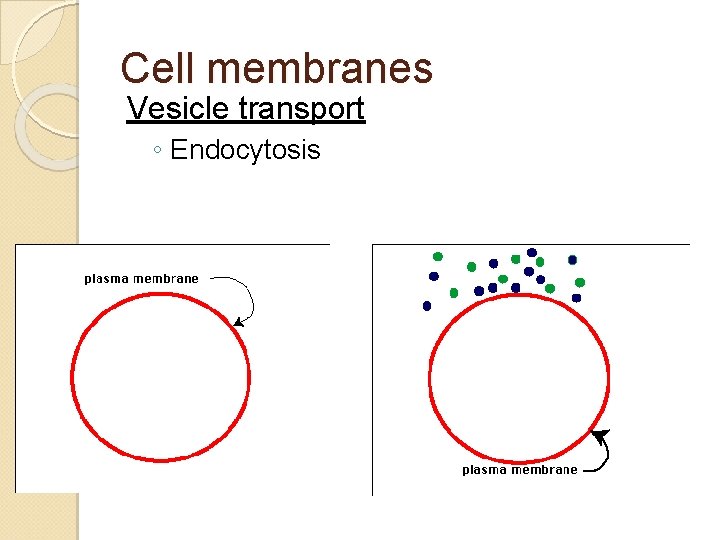
Cell membranes Vesicle transport ◦ Endocytosis
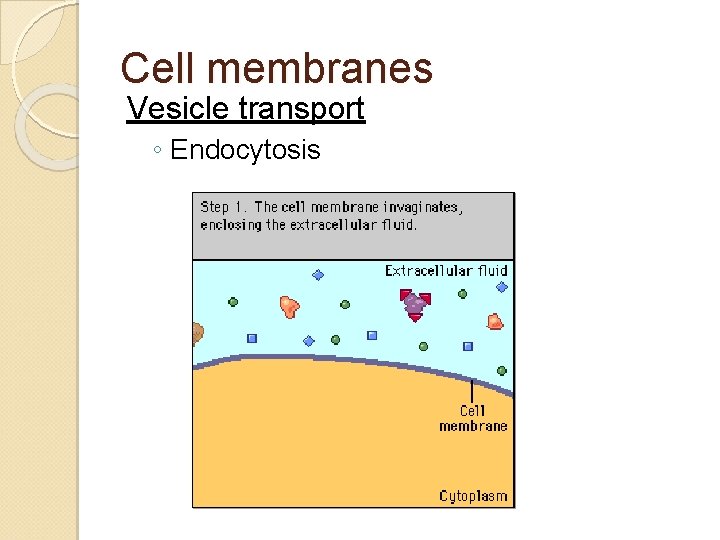
Cell membranes Vesicle transport ◦ Endocytosis
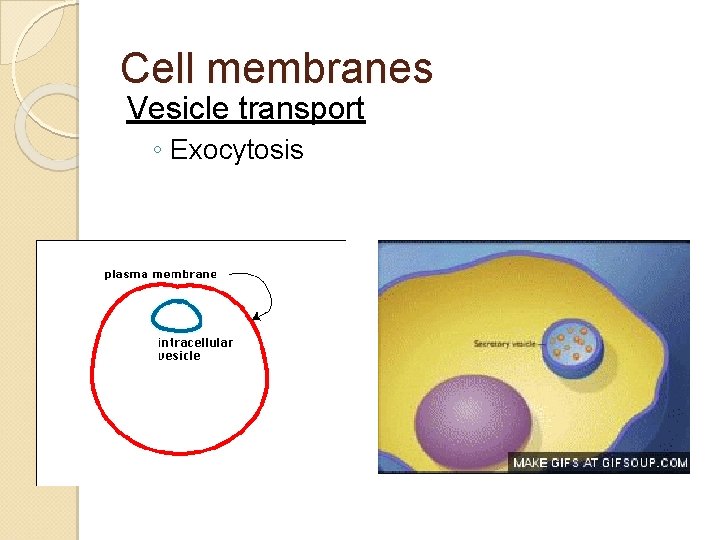
Cell membranes Vesicle transport ◦ Exocytosis
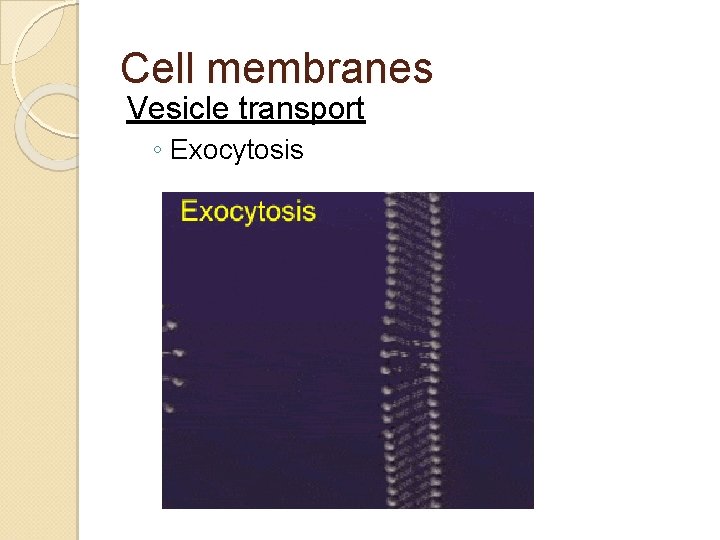
Cell membranes Vesicle transport ◦ Exocytosis
1. 4. S 1 Estimation of osmolarity in tissues by bathing samples in hypotonic and hypertonic solutions. (Practical 2)
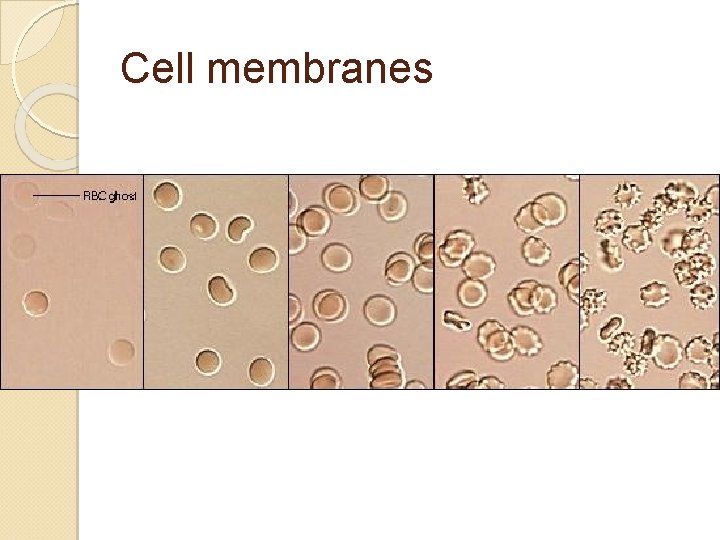
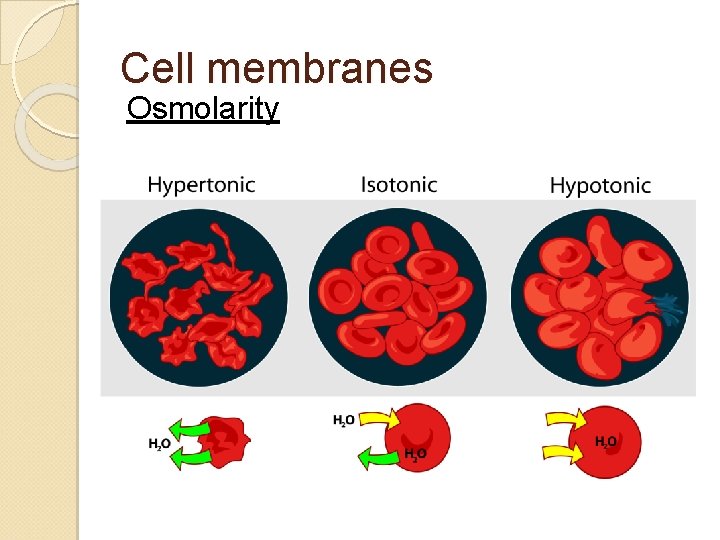
Cell membranes Osmolarity ◦ Isotonic When the solute concentration is equal inside and outside a cell ◦ Hypertonic When the solute concentration is higher outside the cell Makes the cell deflate (hyper people are skinny!) ◦ Hypotonic When the solute concentration is lower outside the cell Makes the cell inflate (hippos are large!)
Cell membranes Osmolarity ◦ If a cell is placed in a solution and it: Stays the same = isotonic Inflates or bursts = hypotonic Shrinks = hypertonic
Cell membranes Osmolarity
1. 4. A 2 Tissues or organs to be used in medical procedures must be bathed in a solution with the same osmolarity as the cytoplasm to prevent osmosis.
Cell membranes Osmolarity in medicine Osmolarity ◦ The concentration of a solution in number of solute particles per liter
Cell membranes Osmolarity in medicine Materials used to treat people should be isotonic to human cells ◦ Salt water dries your skin because it is hypertonic ◦ Long submersion in pure water can cause skin cells to burst ◦ Same things happen if liquid injected into bloodstream!
Cell membranes Osmolarity in medicine Materials used to treat people should be isotonic to human cells Examples: ◦ Fluids injected into blood ◦ Fluids used to rinse wounds ◦ Fluids used to keep damaged skin moist before treatment ◦ Eye drops/wash ◦ Materials used to pack organs for transport

MAJOR SOURCES Thank you to my favorite sources of information when making these lectures! John Burrell (Bangkok, TH) www. click 4 biology. info Dave Ferguson (Kobe, JA) http: //canada. canacad. ac. jp/High/49 Stephen Taylor (Bandung, IN) www. i-biology. net Andrew Allott – Biology for the IB Diploma C. J. Clegg – Biology for the IB Diploma Weem, Talbot, Mayrhofer – Biology for the International Baccalaureate Howard Hugh’s Medical Institute – www. hhmi. org/biointeractive Mr. Hoye’s TOK Website – http: //mrhoyestokwebsite. com And all the contributors at www. You. Tube. com
- Slides: 52