
IB Biology Neurobiology The Brain and Senses The
IB Biology Neurobiology The Brain and Senses
The Cerebral Cortex Develops from front part of neural tube Largest part of mature brain 2 divisions- right and left hemispheres Hemispheres covered with thin layer of grey matter (unmyelinated axons) cerebral cortex • Less than 5 mm thick, 75% body’s neurons • • – Reasoning, language, complex thought, visual processing, motor movement , memory, speech
Cerebral Cortex, cont. • Human brain larger in proportion to body size than any other animal – 3 X larger than chimp – 2 X larger than orca • Correlation between body size and brain size – E: S ratio • E is brain weight • S is body weight
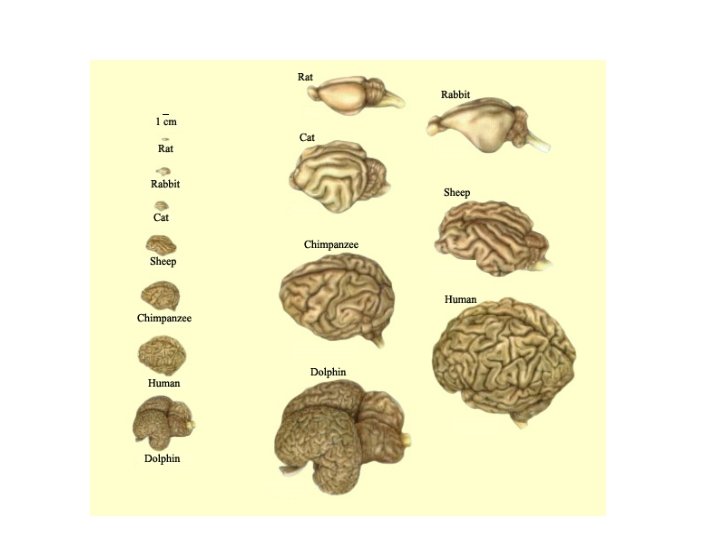
Enlargement of Cerebral Cortex • In order for brain to fit into skull proportionate to body, must fold into itself. • More folds, more complexity – More surface area is needed for more complex behaviors – Sulci (sulcus, indentation) and gyri(gyrus, raised bump)
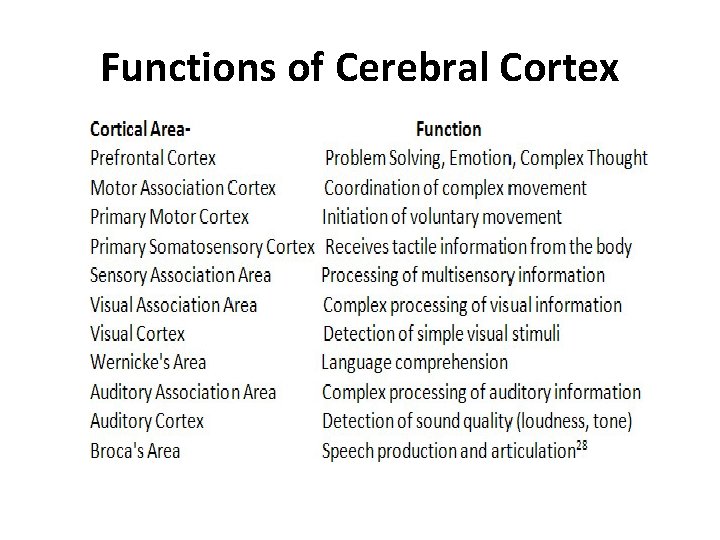
Functions of Cerebral Cortex
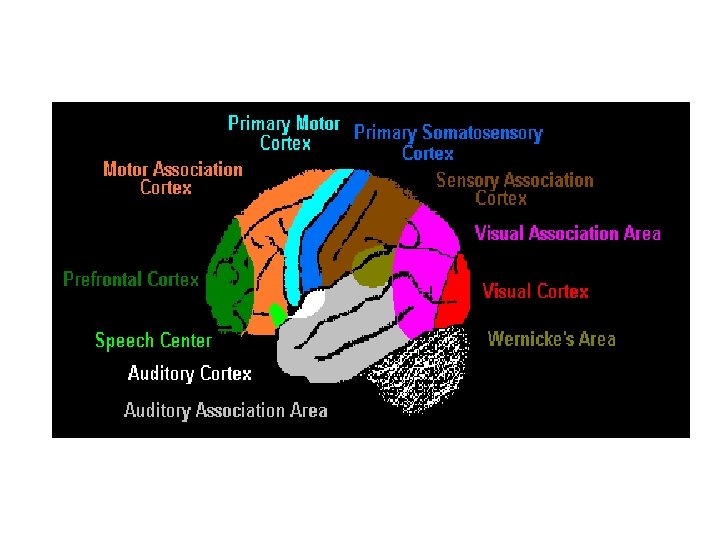
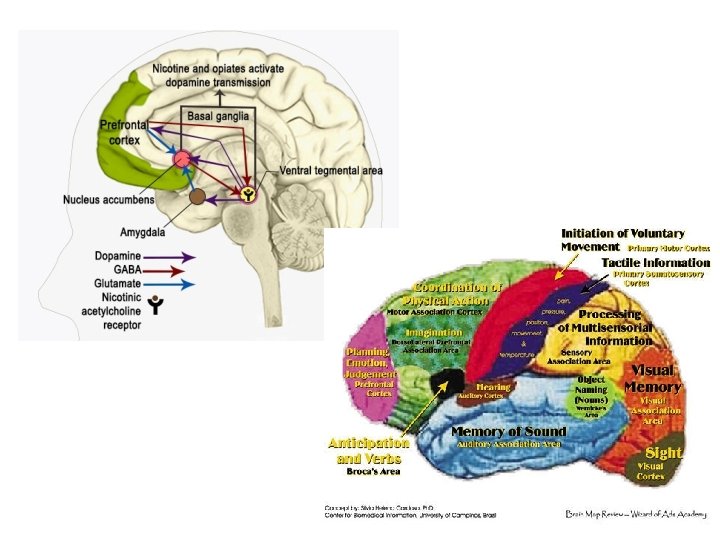
The Visual Cortex, Broca’s, Nucleus Accumbens • Broca’s area- speech and language – Broca’s aphasia- occurs when area is damaged, difficulty in language production • Nucleus accumbens- associated with reward ciruit, responds to dopamine and serotonin – Dopamine-promotes desire, activation is associated with anticipating a reward. – Dopamine synthesized by ventral tegmental area nucleus accumbens via axons – Cocaine and nicotine increase dopamine production – Serotonin- inhibits desire
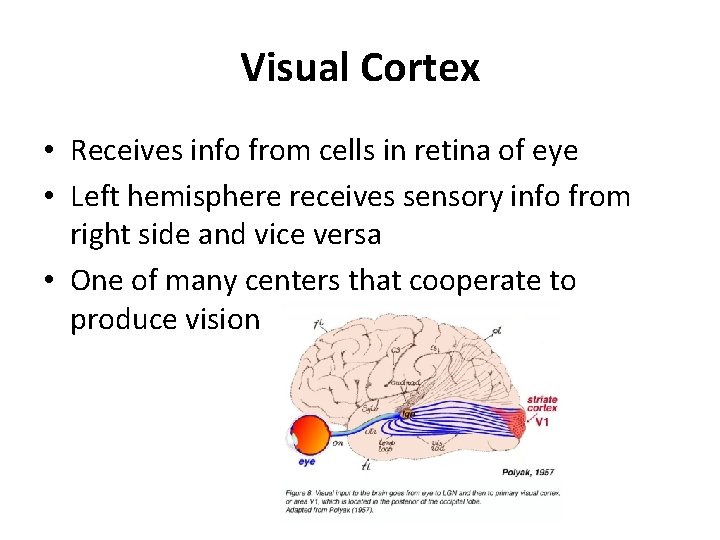
Visual Cortex • Receives info from cells in retina of eye • Left hemisphere receives sensory info from right side and vice versa • One of many centers that cooperate to produce vision
Sensory Cortex • CC made of unmyelinated neurons- grey matter • Hemispheres connected by corpus callosum • Primary somatosensory cortex receives messages about sense of touch • Primary visual cortex-receives info from right and left visual fields
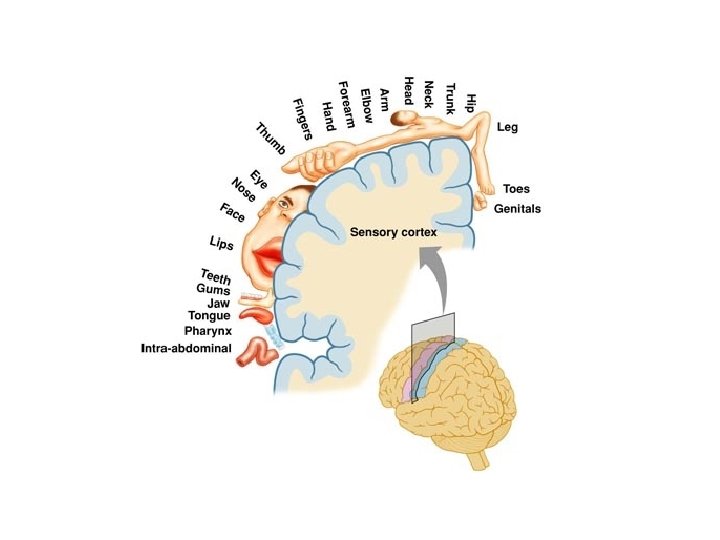
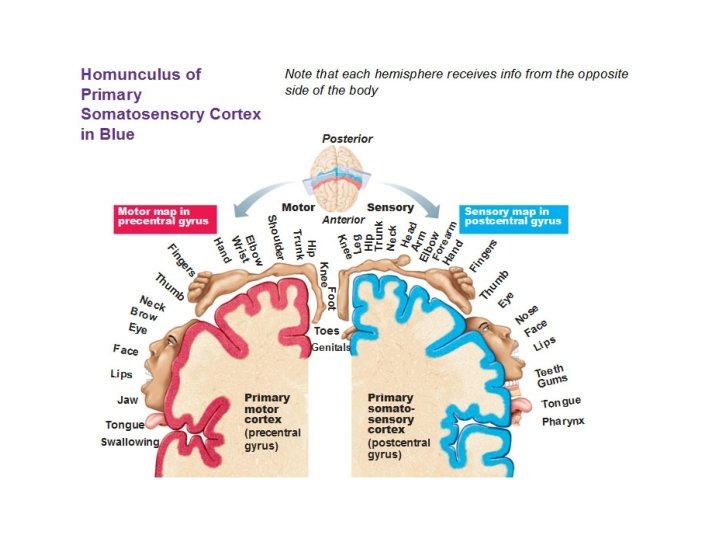
Motor Cortex • Controls voluntary movement • Right side controls left side of body, and vice versa • Stroke-blocked or ruptured blood vessel, interrupts oxygen flow to the brain cells, causes loss of function – Doctors can tell what part of brain is damaged by what function is lost
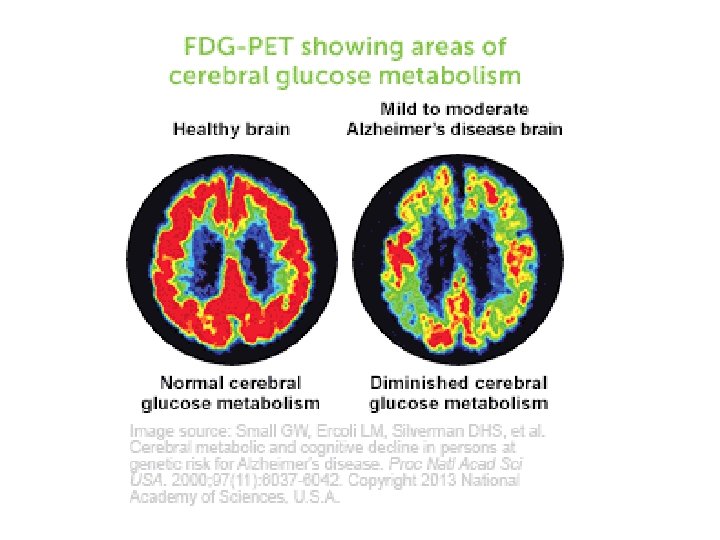
Brain Metabolism • Highly metabolic • Chemical signals sent consume half the energy used by the brain • Brain needs twice the energy of any other body part – Glucose is main energy source – Neurons cannot store it, so it is needed constantly – High quality carbs are best source – Sustained levels of glucose to the brain are necessary for learning
Sensory Perception • Comfort food, familiar faces, favorite music, senses linked to memories and emotions • Taste and sound are protective • Sense organs keep the brain aware of surroundings • Brain interprets senses for us
Sensory Receptors • Mechanoreceptors- detect force and pressure – Arteries- pressure receptors detect change in BP – Lungs- stretch receptors respond to degree of inflation – Proprioceptors in muscles, tendons, joints and ligaments help maintain posture and avoid injury – Inner Ear- pressure receptors manage equilibrium
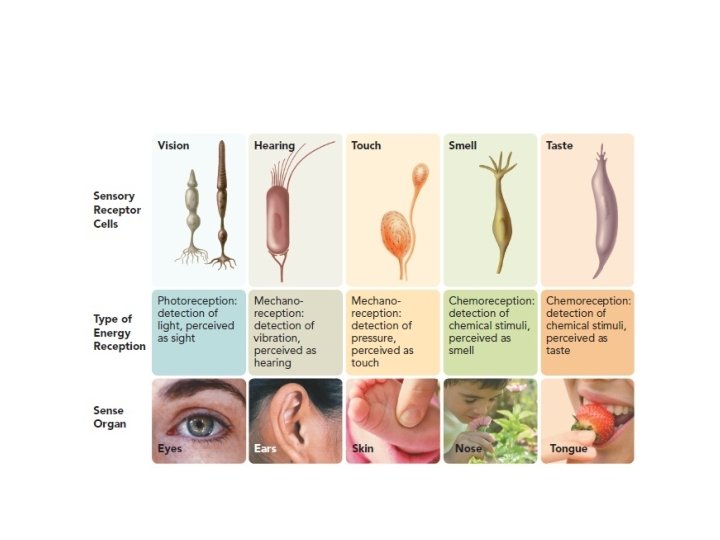
Sensory Receptors, cont. • Chemoreceptors- respond to chemical substances – Taste and smell – In Blood vessels- detect p. H changes – Damaged tissue- pain receptors respond to chemicals secreted by damaged tissue – Olfactory receptors- smell • • • All substances release volatile chemicals into the air Humans detect 10, 000 different odors Top of nasal passage neurons synapse to brain Receptors can be stimulated by more than one smell Olfactory receptors encoded by genes If your DNA lacks certain genes, you won’t be able to smell certain molecules
Sensory receptors, cont. • Thermoreceptors- respond to change in temperature • Located in skin • Warmth receptors detect rises in temperature • Cold receptors respond when temp drops
Receptors, cont. • Photoreceptors – Respond to light energy – Dim light- rods – Bright light- cones – All located on the retina
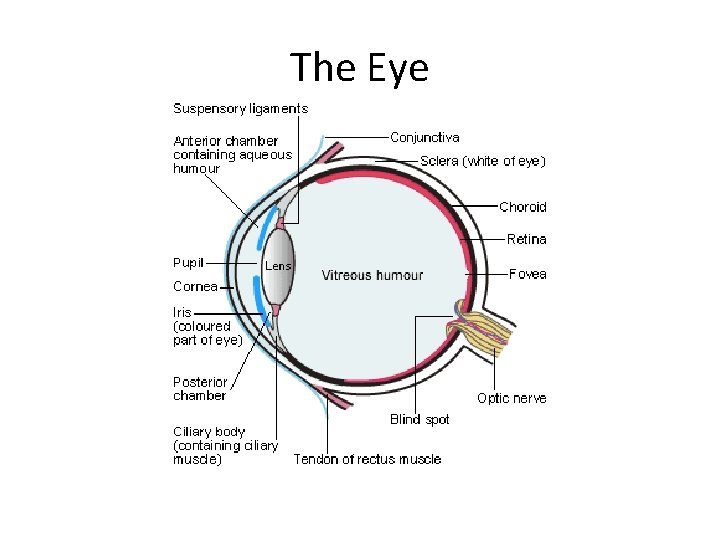
The Eye
Visual Pathway • Light enters eye rods and cones of the retina synapse with bipolar neurons BP neurons synapse with ganglion cell ( axons of ganglion cells make up the optic nerve) carries nerve impulse to brain interpretation of what is seen. • https: //www. youtube. com/watch? v=gvozcv 8 p. S 3 c • https: //www. youtube. com/watch? v=yzyph. STk. W 2 U
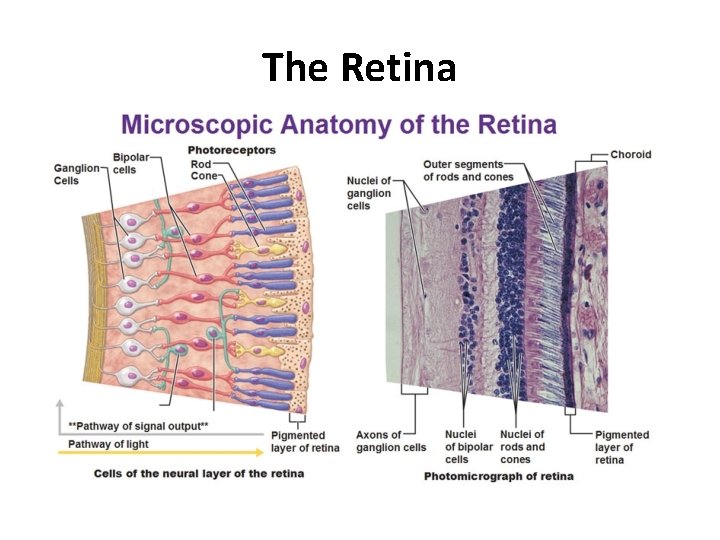
The Retina
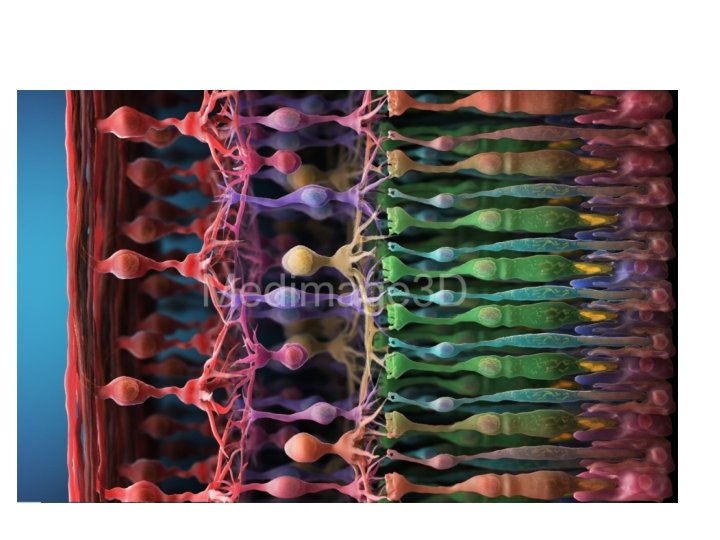
Rods and Cones • Rods- more sensitive to light, work well in dim light • Only 1 type of rod in retina, can absorb all wavelengths of light • Group of rod cells to 1 nerve fiber
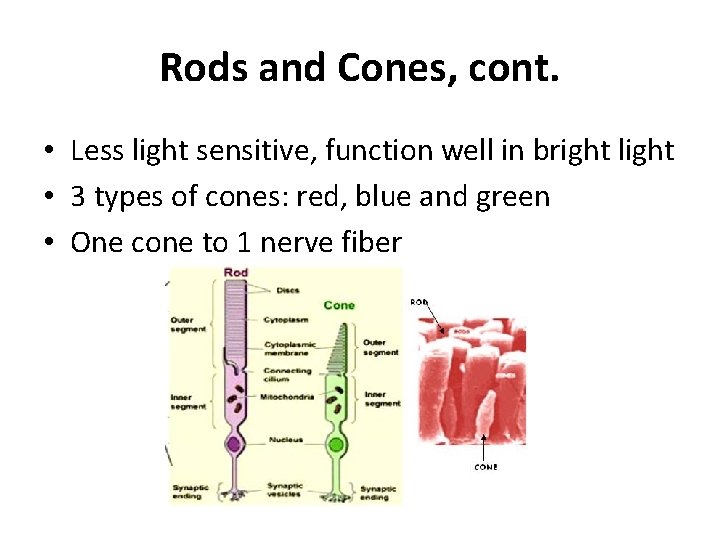
Rods and Cones, cont. • Less light sensitive, function well in bright light • 3 types of cones: red, blue and green • One cone to 1 nerve fiber
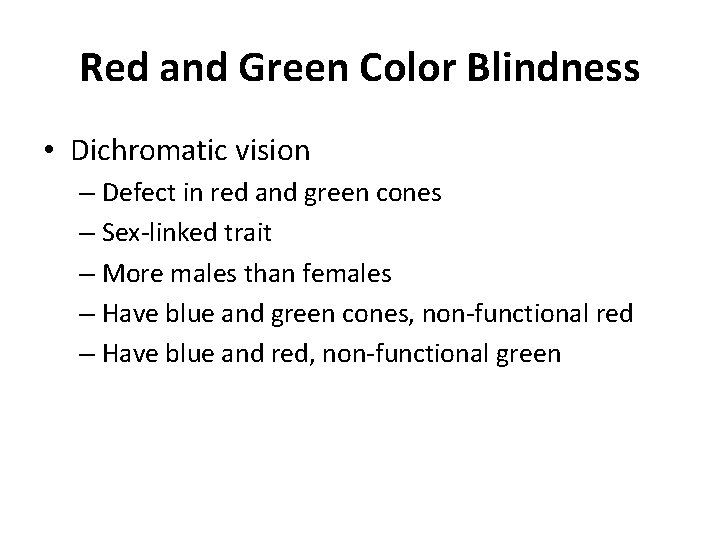
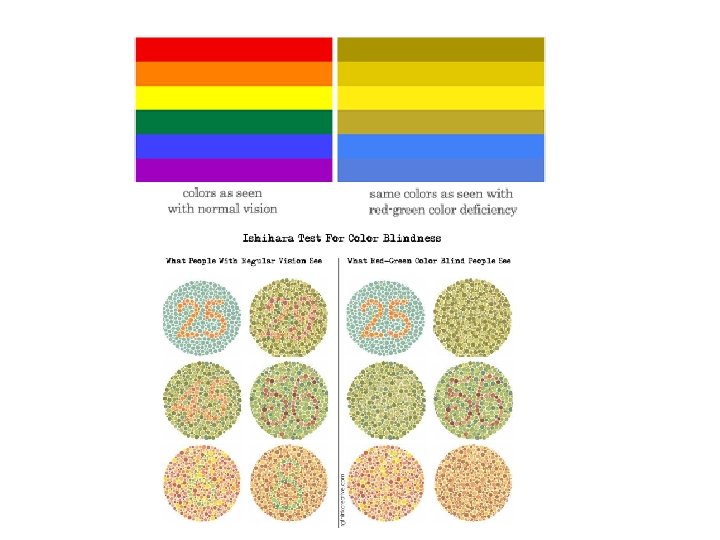
Red and Green Color Blindness • Dichromatic vision – Defect in red and green cones – Sex-linked trait – More males than females – Have blue and green cones, non-functional red – Have blue and red, non-functional green
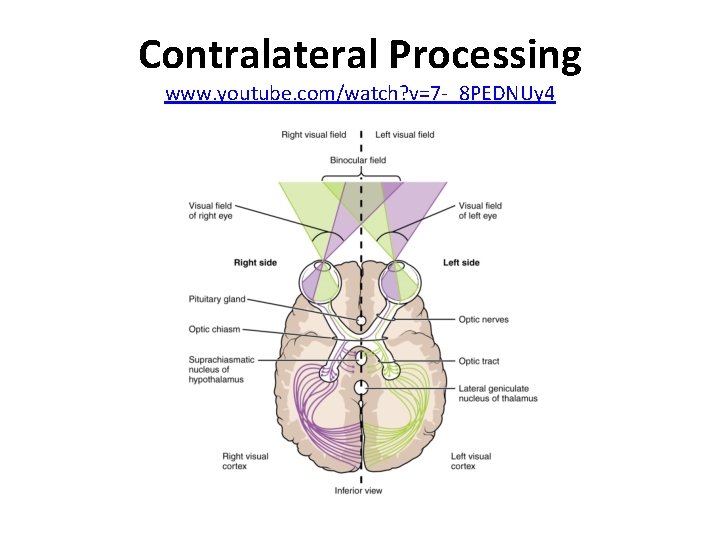
Contralateral Processing www. youtube. com/watch? v=7 -_8 PEDNUy 4
Hearing
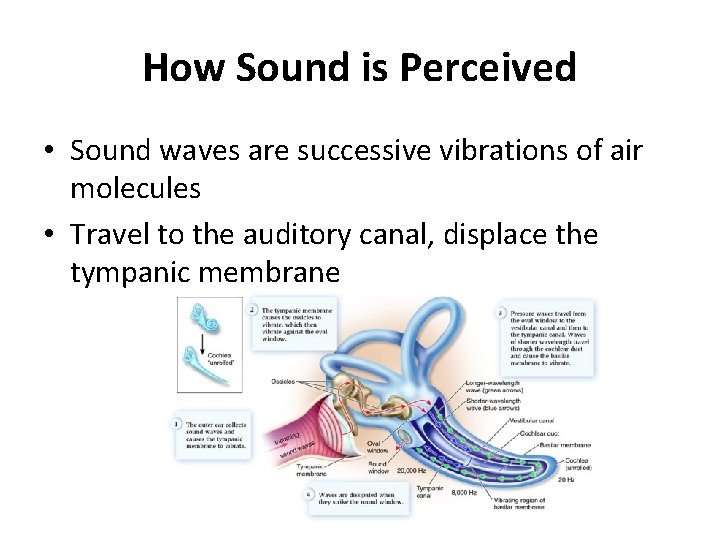
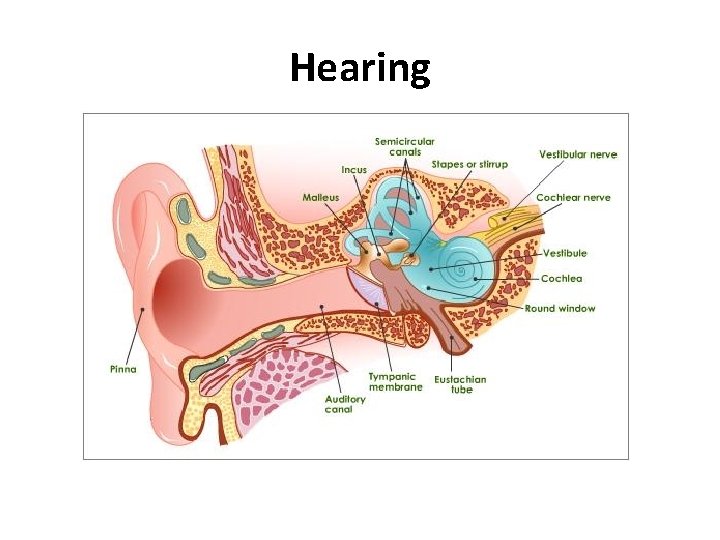
How Sound is Perceived • Sound waves are successive vibrations of air molecules • Travel to the auditory canal, displace the tympanic membrane
Structures in the Middle Ear • Bones of middle ear: malleus, incus, stapes receive vibrations and amplify 20 X • Stapes oval window vibration passes to fluid in cochlea fluid causes hair cells (mechanoreceptors) to vibrate hair cells release NT to sensory neuron of auditory nerve round window releases pressure so fluid in cochlea can vibrate
Sensory hairs of the Cochlea • Hair cells of cochlea have stereocilia that protrude from the hair cells and detect specific wavelengths • Bending of stereocilia create internal change that results in electrical impulse auditory nerve • Short, high frequency waves = high pitched sounds • Long, low frequency waves = low pitched sounds
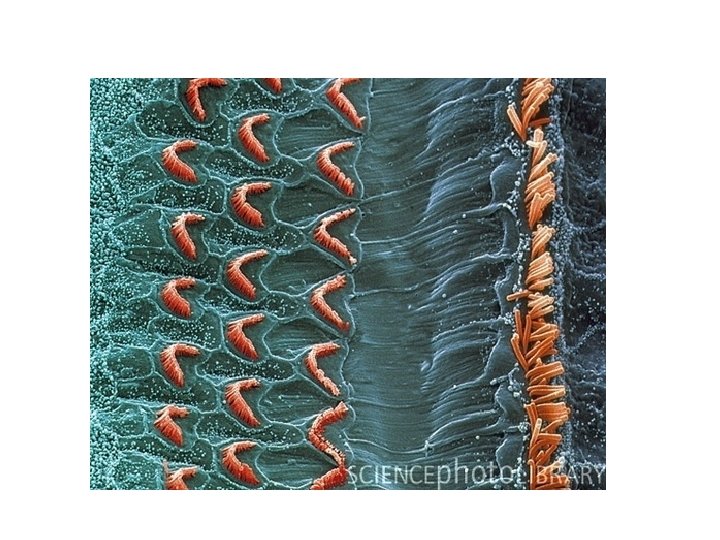
Auditory Processing • Sound is processed in auditory area of cerebral cortex • Hearing varies with individuals and with age • High frequency sounds for long periods can damage hearing, by damaging cochlear hair cells • Hair cells do not regenerate • https: //www. youtube. com/watch? v=ss. Ko. VTWV 9 9 s • https: //www. youtube. com/watch? v=66 r. Qwoc. Ha h. I
Hair Cells in Semi-Circular Canals • Three semi-circular canals • Filled with fluid and hair cells – Movement of fluid detected by hair cells detect rotational movement of the head – Hair cells are sensory receptors vestibular nerve – Maintain balance by position of otoliths in vestibular apparatus
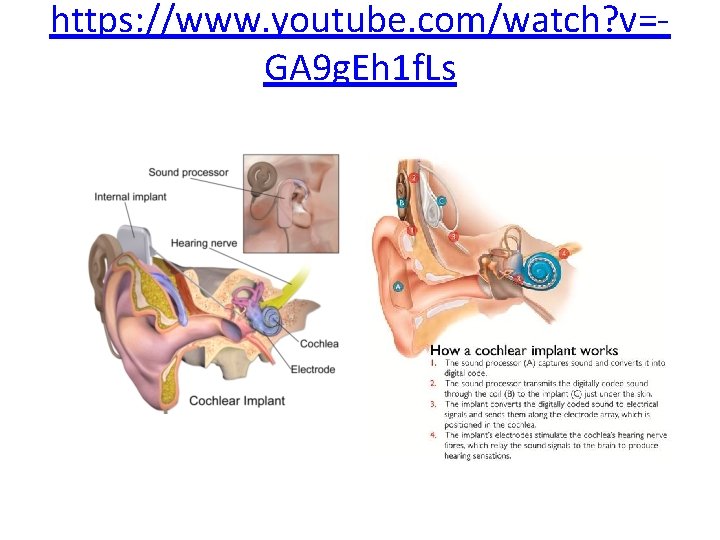
Cochlear Implants • Convert sound into electrical signals that are sent brain – External processor worn behind ear – Microphone in Ex Processor picks up sound – Processor digitizes the sound implant surgically placed in the cochlea – Implant like mini computer translating sound electrical signals – Auditory nerve brain – Brain interprets sound
https: //www. youtube. com/watch? v=GA 9 g. Eh 1 f. Ls
- Slides: 40