
Iambic Pentameter Miss Savvy Bowen Understanding Iambic Pentameter
Iambic Pentameter Miss. Savvy Bowen

Understanding Iambic Pentameter Iambic pentameter is based on the number of syllables in the line and the emphasis placed on those syllables. When we speak our syllables are either stressed (stronger emphasis) or unstressed (weaker emphasis) RE-MARK
Understanding Iambic Pentameter A group of two or three syllables is referred to as a foot. Specific type of foot is called an IAMB A foot is an IAMB if it consists of one unstressed syllable followed by one stressed syllable RE-MARK Pent means five – a line of iambic pentameter consists of five iambs Five sets of unstressed syllables followed by stressed syllables
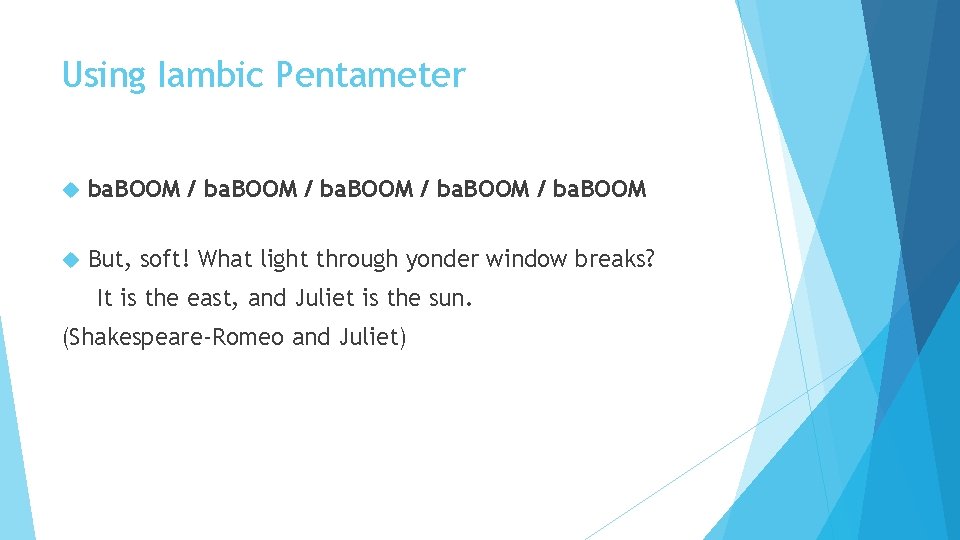
Using Iambic Pentameter ba. BOOM / ba. BOOM But, soft! What light through yonder window breaks? It is the east, and Juliet is the sun. (Shakespeare-Romeo and Juliet)
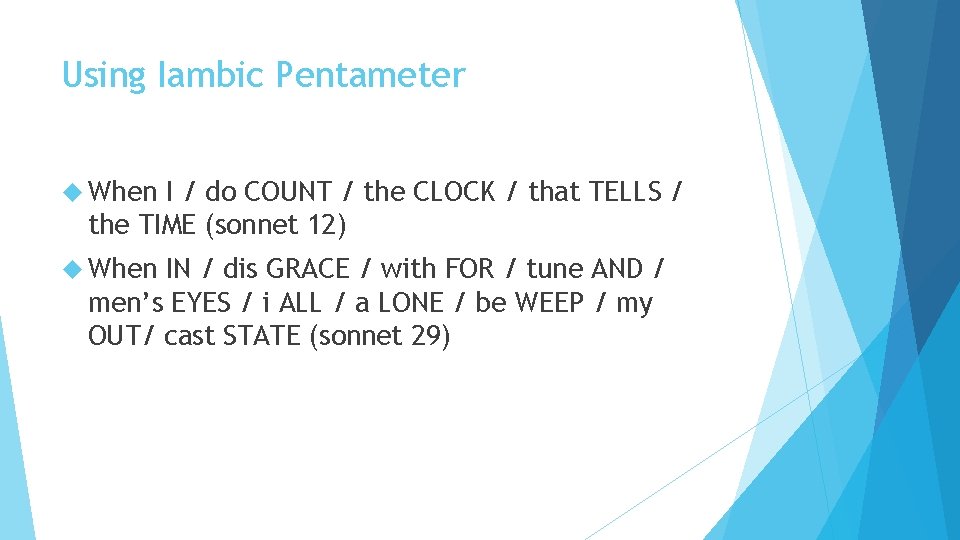
Using Iambic Pentameter When I / do COUNT / the CLOCK / that TELLS / the TIME (sonnet 12) When IN / dis GRACE / with FOR / tune AND / men’s EYES / i ALL / a LONE / be WEEP / my OUT/ cast STATE (sonnet 29)
Your Turn! Shall I compare thee to a summer’s day? Thou art more lovely and more temperate. (sonnet 18) Break down the iamb above!
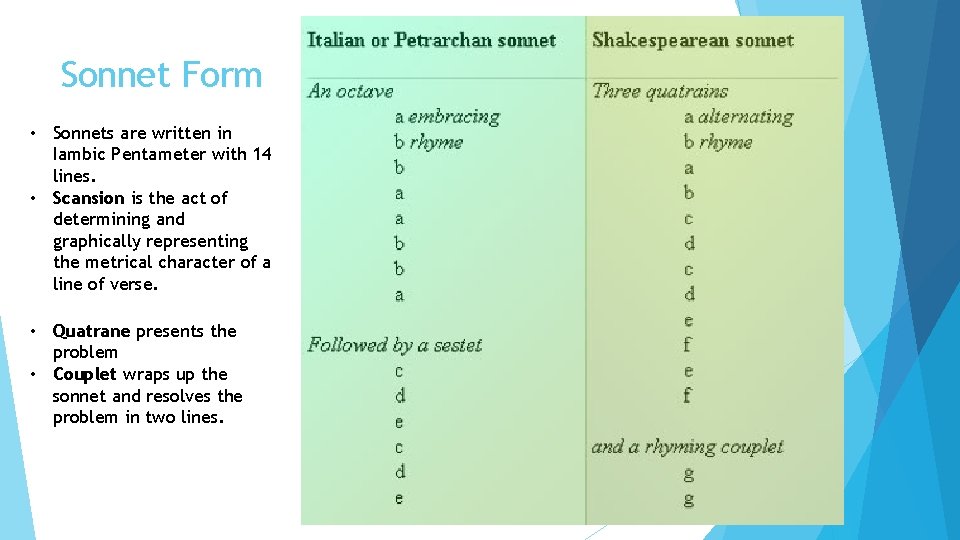
Sonnet Form • Sonnets are written in Iambic Pentameter with 14 lines. • Scansion is the act of determining and graphically representing the metrical character of a line of verse. • Quatrane presents the problem • Couplet wraps up the sonnet and resolves the problem in two lines.
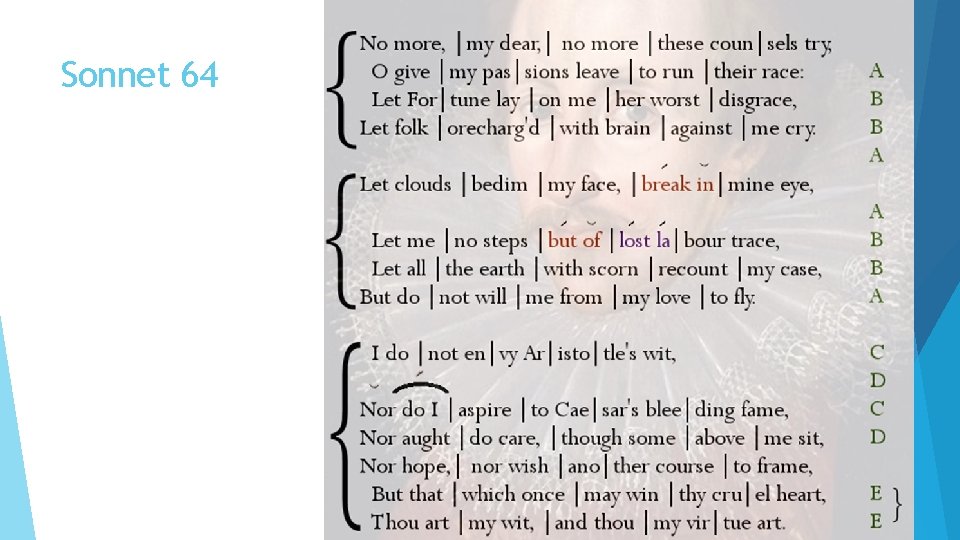
Sonnet 64
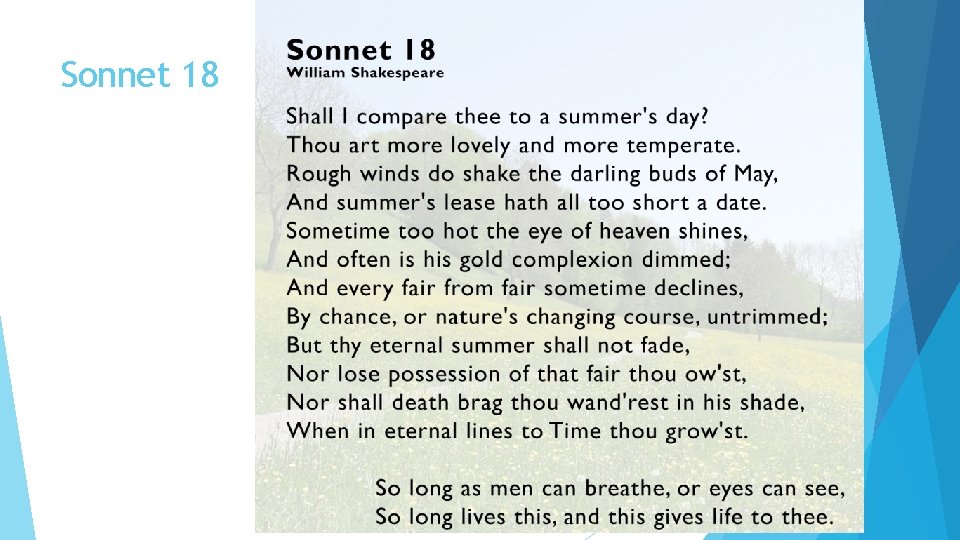
Sonnet 18
- Slides: 9