
IAC Miniwebinar Energy Analysis of Occupancy Controlled Lighting
IAC Mini-webinar: Energy Analysis of Occupancy Controlled Lighting in Libraries and Religious Facilities Presented by Saurabh Shekhadar Texas A&M University 7 th April 2021 Edit Master Slide - Department Name or Program Title Here 1
About me • Mechanical engineer with passion for energy efficiency • Leadership: Lead IAC Graduate student at Texas A&M • Research: Enhancing Energy Efficiency of Buildings Using Smart Technologies and Automation • Research Achievement: Second award for research poster at Texas Energy Conference 2020 • Reward: AEE Foundation Scholar 2020 • Credentials: LEED Green Associate, F. E. (Mechanical), Value Methodology Associate Edit Master Slide - Department Name or Program Title Here Presenter: Saurabh Shekhadar 2
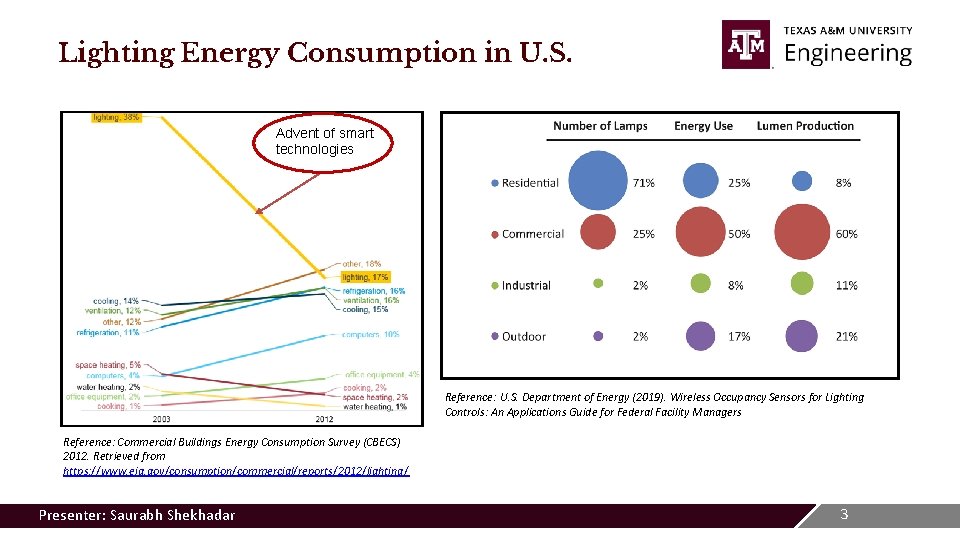
Lighting Energy Consumption in U. S. Advent of smart technologies Reference: U. S. Department of Energy (2019). Wireless Occupancy Sensors for Lighting Controls: An Applications Guide for Federal Facility Managers Reference: Commercial Buildings Energy Consumption Survey (CBECS) 2012. Retrieved from https: //www. eia. gov/consumption/commercial/reports/2012/lighting/ Edit Master Slide - Department Name or Program Title Here Presenter: Saurabh Shekhadar 3

Smart Technologies in Lighting Time clock control Occupancy sensors Daylighting control Reference: https: //www. graybar. com/applications/lighting/controls/systems Edit Master Slide - Department Name or Program Title Here Presenter: Saurabh Shekhadar Dimmer 4
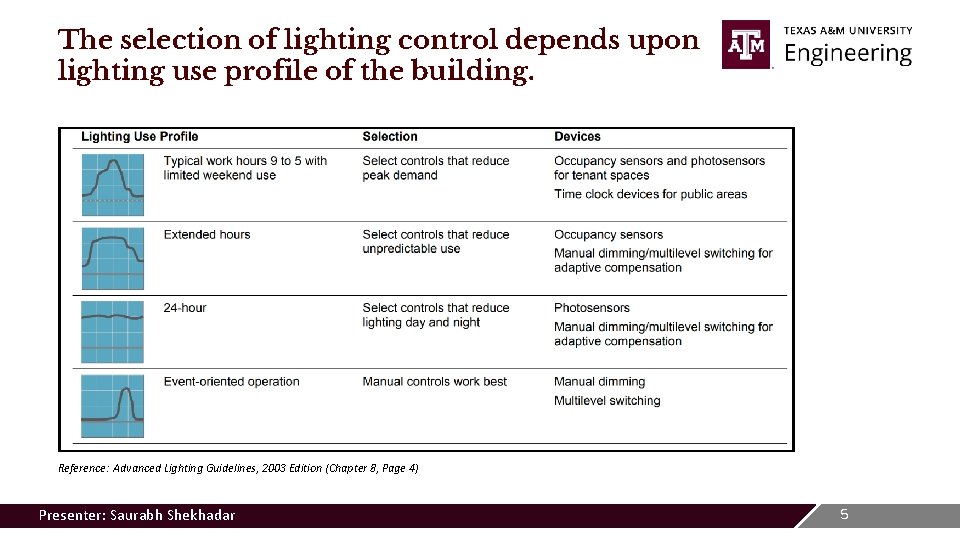
The selection of lighting control depends upon lighting use profile of the building. Reference: Advanced Lighting Guidelines, 2003 Edition (Chapter 8, Page 4) Edit Master Slide - Department Name or Program Title Here Presenter: Saurabh Shekhadar 5
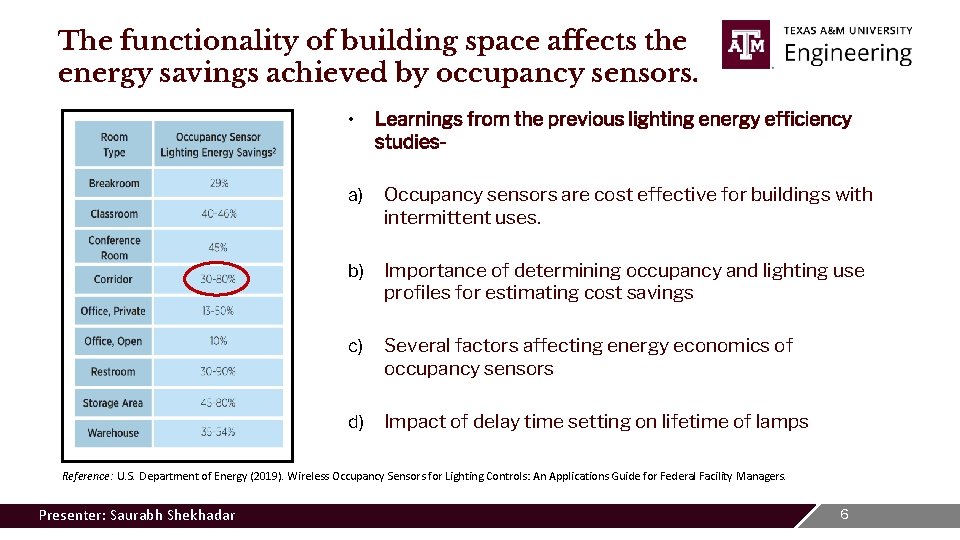
The functionality of building space affects the energy savings achieved by occupancy sensors. • Learnings from the previous lighting energy efficiency studies- a) Occupancy sensors are cost effective for buildings with intermittent uses. b) Importance of determining occupancy and lighting use profiles for estimating cost savings c) Several factors affecting energy economics of occupancy sensors d) Impact of delay time setting on lifetime of lamps Reference: U. S. Department of Energy (2019). Wireless Occupancy Sensors for Lighting Controls: An Applications Guide for Federal Facility Managers. Edit Master Slide - Department Name or Program Title Here Presenter: Saurabh Shekhadar 6
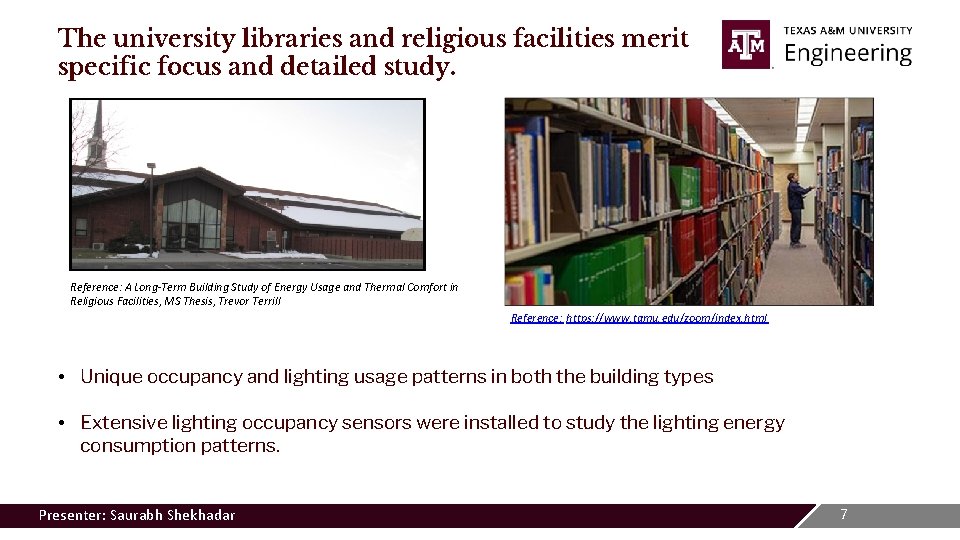
The university libraries and religious facilities merit specific focus and detailed study. Reference: A Long-Term Building Study of Energy Usage and Thermal Comfort in Religious Facilities, MS Thesis, Trevor Terrill Reference: https: //www. tamu. edu/zoom/index. html • Unique occupancy and lighting usage patterns in both the building types • Extensive lighting occupancy sensors were installed to study the lighting energy consumption patterns. Edit Master Slide - Department Name or Program Title Here Presenter: Saurabh Shekhadar 7
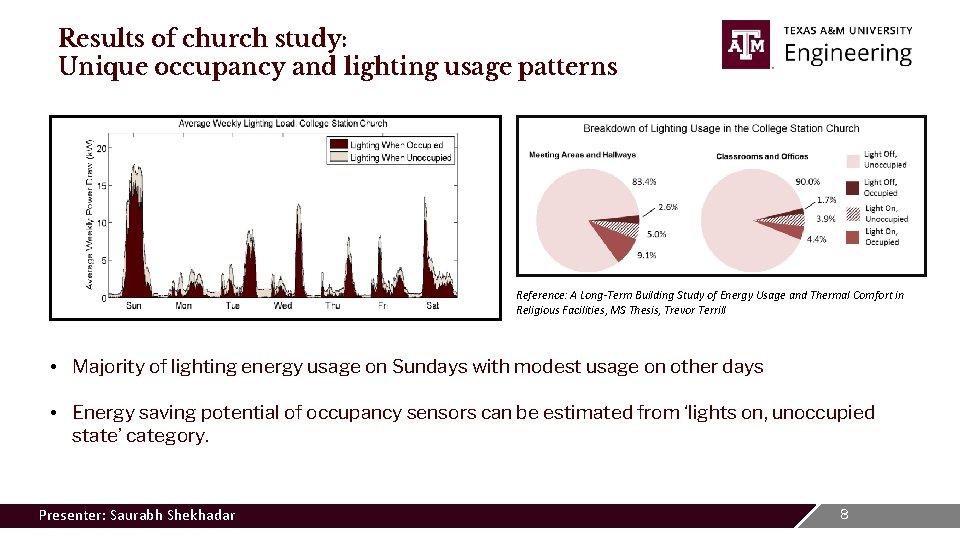
Results of church study: Unique occupancy and lighting usage patterns Reference: A Long-Term Building Study of Energy Usage and Thermal Comfort in Religious Facilities, MS Thesis, Trevor Terrill • Majority of lighting energy usage on Sundays with modest usage on other days • Energy saving potential of occupancy sensors can be estimated from ‘lights on, unoccupied state’ category. Edit Master Slide - Department Name or Program Title Here Presenter: Saurabh Shekhadar 8
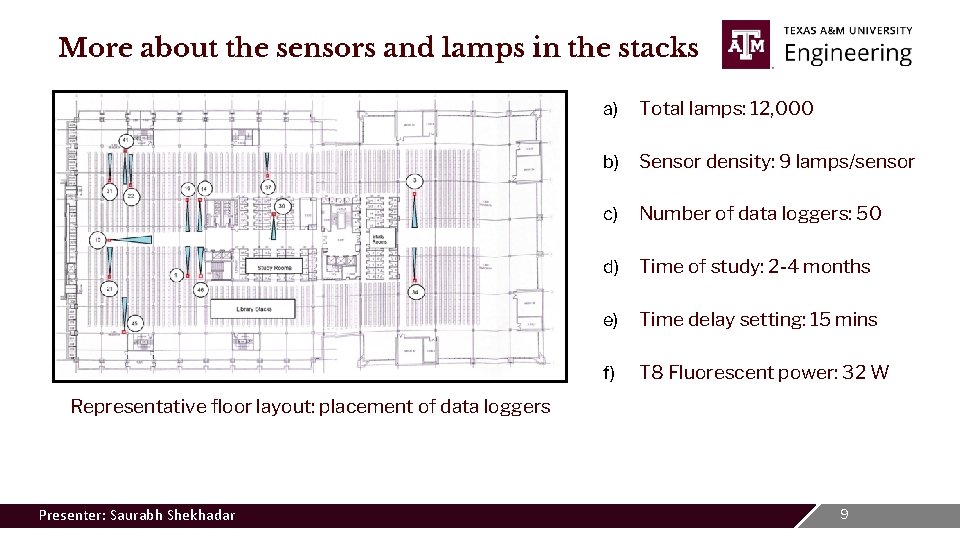
More about the sensors and lamps in the stacks a) Total lamps: 12, 000 b) Sensor density: 9 lamps/sensor c) Number of data loggers: 50 d) Time of study: 2 -4 months e) Time delay setting: 15 mins f) T 8 Fluorescent power: 32 W Representative floor layout: placement of data loggers Edit Master Slide - Department Name or Program Title Here Presenter: Saurabh Shekhadar 9
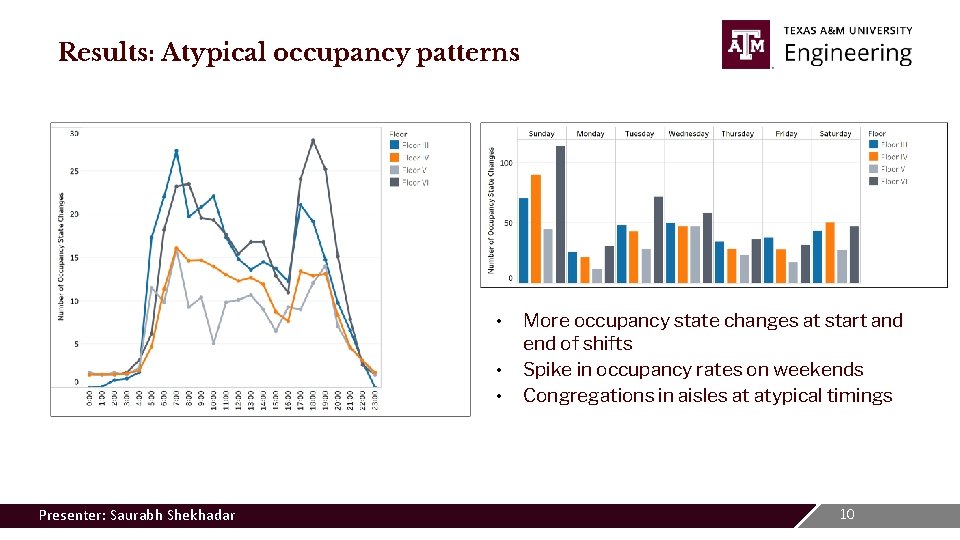
Results: Atypical occupancy patterns • • • Edit Master Slide - Department Name or Program Title Here Presenter: Saurabh Shekhadar More occupancy state changes at start and end of shifts Spike in occupancy rates on weekends Congregations in aisles at atypical timings 10
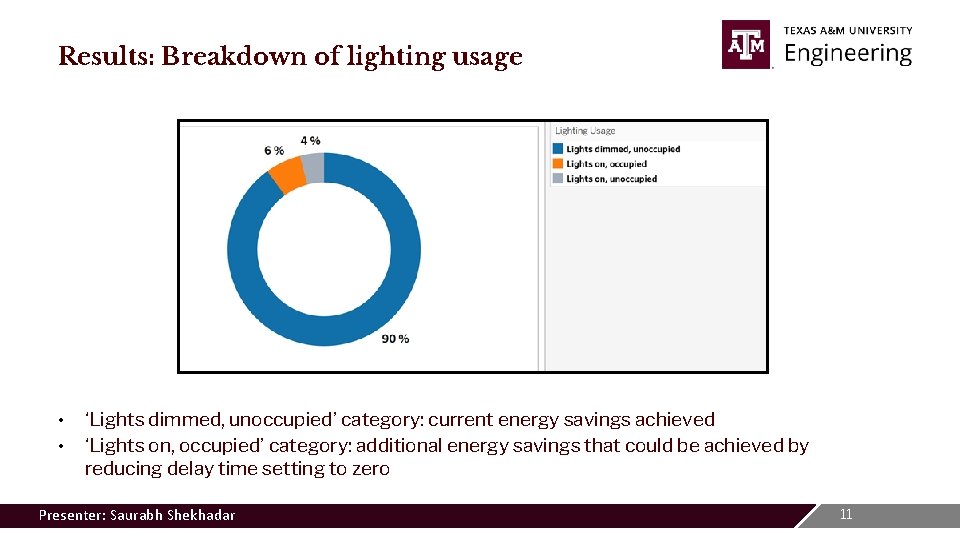
Results: Breakdown of lighting usage • • ‘Lights dimmed, unoccupied’ category: current energy savings achieved ‘Lights on, occupied’ category: additional energy savings that could be achieved by reducing delay time setting to zero Edit Master Slide - Department Name or Program Title Here Presenter: Saurabh Shekhadar 11
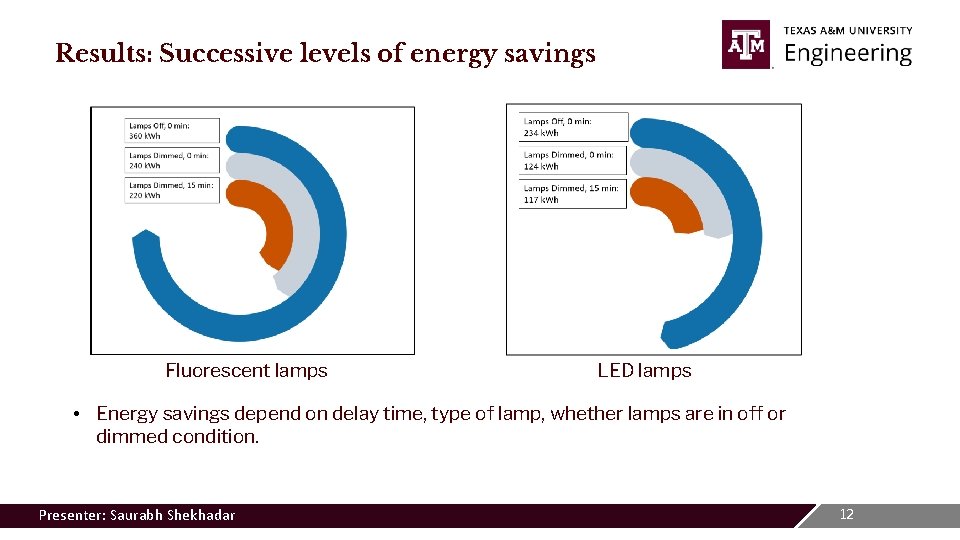
Results: Successive levels of energy savings Fluorescent lamps LED lamps • Energy savings depend on delay time, type of lamp, whether lamps are in off or dimmed condition. Edit Master Slide - Department Name or Program Title Here Presenter: Saurabh Shekhadar 12
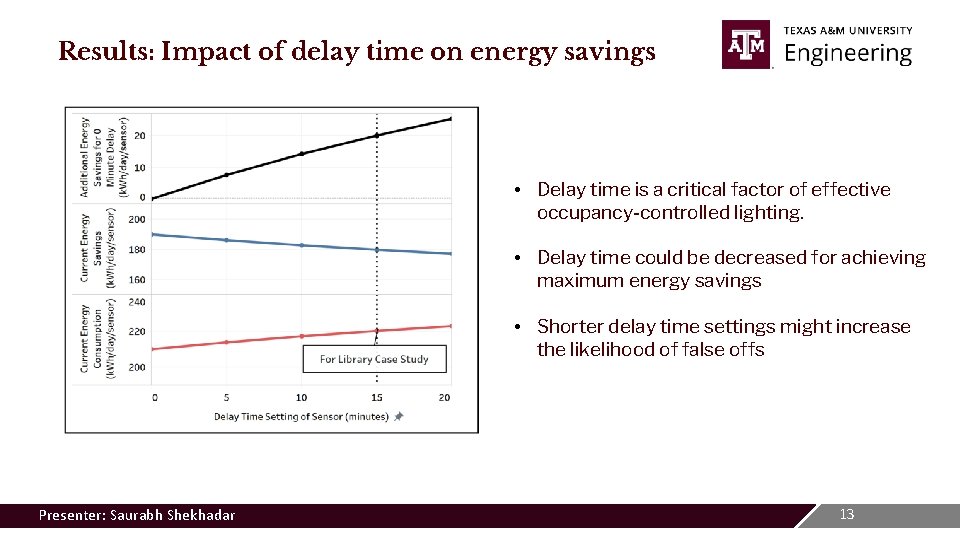
Results: Impact of delay time on energy savings • Delay time is a critical factor of effective occupancy-controlled lighting. • Delay time could be decreased for achieving maximum energy savings • Shorter delay time settings might increase the likelihood of false offs Edit Master Slide - Department Name or Program Title Here Presenter: Saurabh Shekhadar 13
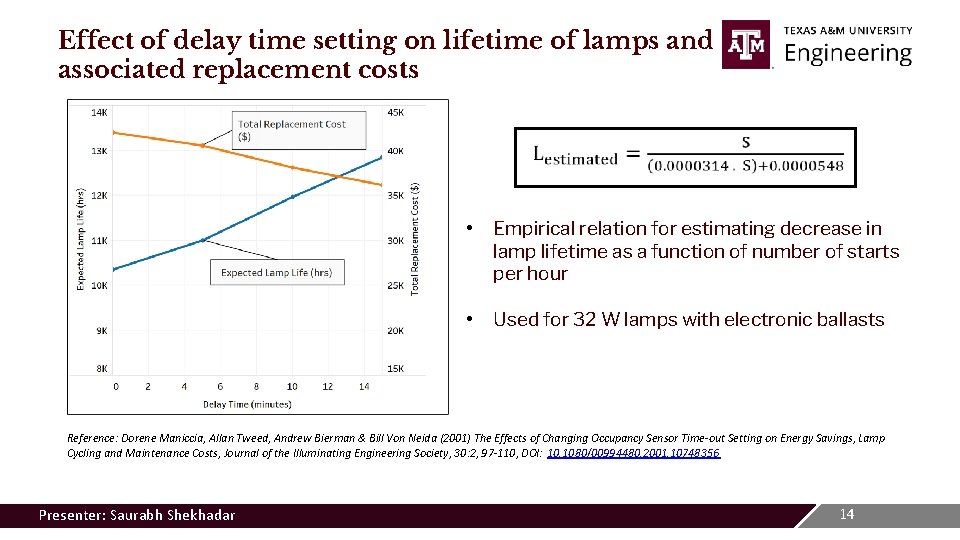
Effect of delay time setting on lifetime of lamps and associated replacement costs • Empirical relation for estimating decrease in lamp lifetime as a function of number of starts per hour • Used for 32 W lamps with electronic ballasts Reference: Dorene Maniccia, Allan Tweed, Andrew Bierman & Bill Von Neida (2001) The Effects of Changing Occupancy Sensor Time-out Setting on Energy Savings, Lamp Cycling and Maintenance Costs, Journal of the Illuminating Engineering Society, 30: 2, 97 -110, DOI: 10. 1080/00994480. 2001. 10748356 Edit Master Slide - Department Name or Program Title Here Presenter: Saurabh Shekhadar 14
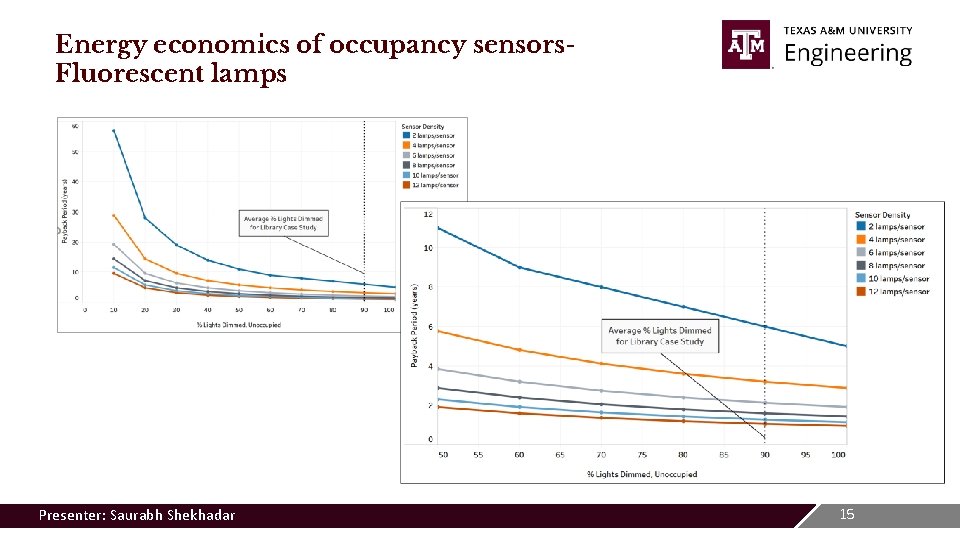
Energy economics of occupancy sensors. Fluorescent lamps Edit Master Slide - Department Name or Program Title Here Presenter: Saurabh Shekhadar 15
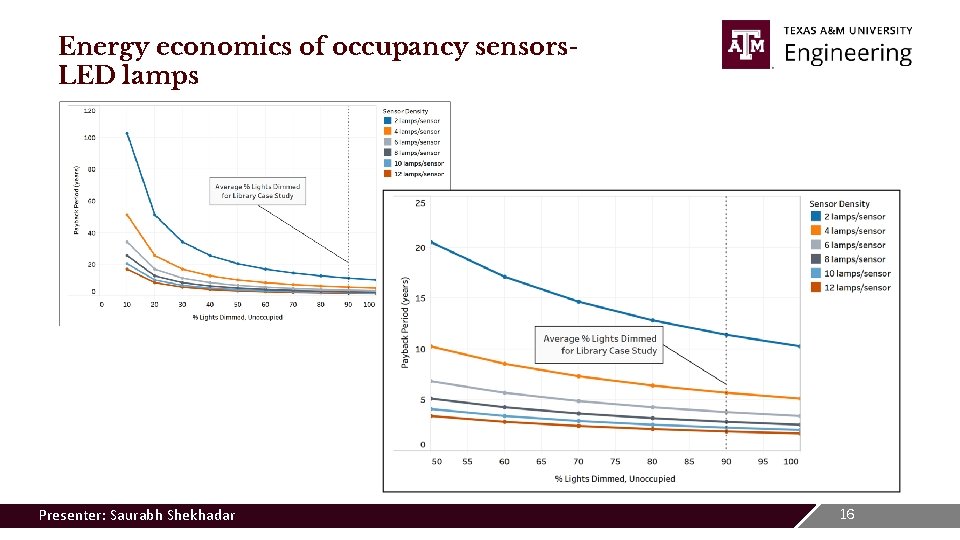
Energy economics of occupancy sensors. LED lamps Edit Master Slide - Department Name or Program Title Here Presenter: Saurabh Shekhadar 16
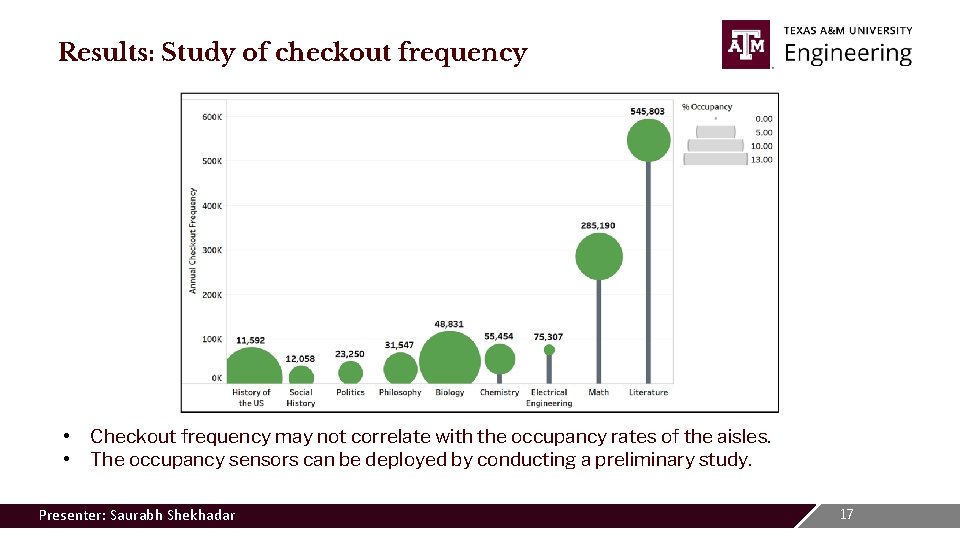
Results: Study of checkout frequency • Checkout frequency may not correlate with the occupancy rates of the aisles. • The occupancy sensors can be deployed by conducting a preliminary study. Edit Master Slide - Department Name or Program Title Here Presenter: Saurabh Shekhadar 17
Conclusions • The university library buildings and religious facilities exhibit unique occupancy patterns. • Importance of understanding the occupancy and lighting usage patterns • Several factors such as occupancy rate, delay time, number of lamps, sensor density, etc. govern the economic feasibility of occupancy-controlled lighting of library buildings. • Optimizing the delay time setting of sensors is correlated with striking a balance between energy savings, occupant satisfaction, and the lifetime of lamps. • Study of checkout frequency may not be a good idea while deciding about the locations of occupancy sensors in library buildings. Edit Master Slide - Department Name or Program Title Here Presenter: Saurabh Shekhadar 18
Acknowledgement Edit Master Slide - Department Name or Program Title Here Presenter: Saurabh Shekhadar 19
- Slides: 19