
I Understanding Visual Arguments Visual Rhetoric The use







- Slides: 18
I. Understanding Visual Arguments • Visual Rhetoric - The use of images, sometimes combined with sound or pleas to the other senses, to make an argument or persuade us to act as the maker of the media desires us to act.
II. “READING” IMAGES • Involves examining images to determine how they try to convince/persuade the audience • Pictures are symbols required • Critics must be able to recognize elements popular culture • Questions should be asked about rhetorical content • When was the visual argument created and by whom? • To what audience was it originally aimed at and with what purpose? • Where there ancillary audiences? • Similar to verbal texts, visual arguments can be examined for evidence, assumptions, and bias • We can ask what values are favored and what implications result from acceptance of their argument • Most visual arguments use emotional appeals • Most obvious in advertising • Often promise to reward desires for love, status, peace of mind, or escape from everyday responsibilities • The argument must be made concerning the claim’s reasonability • Is the reasoning sound or oversimplified and misleading?
III. ANALYSIS: 5 COMMON. TYPES OF VISUAL ARGUMENT • Advertisements • What are the sources of their appeal? • What is the targeted age group? • How might the two sexes respond to them? • How is the eye fooled by what is expected than what is actually there? • What are the impacts of playing with perception? • Editorial Cartoons • Rely on events and issues in the news • Most political cartoons rely on captions and dialogue • Most satirize a familiar problem • Some are created by one controversial side to poke fun at the opposing view • The complexity of the issue should be minimized
III. ANALYSIS: 5 COMMON. TYPES OF VISUAL ARGUMENT • • • Public Sculpture • The aim is to teach about a nation’s past and to honor its value. • What details led to a particular interpretation, and how do they compare with those of other people? News Photographs • Depiction of images to support the objective by adding detail • Camera angles, lighting, and foreground and background help represent a particular perspective Graphics- Tables and charts (arrangement of data into columns, summarizing results) • They represent data in visual form • Information is easily accessible
• Graphs (continued) • • • Information is easily interpreted, usually by showing comparisons at a single point in time Photographs • represent people, objects, and scenes realistically • Can be very dramatic and powerfully emotional • Potent persuaders Drawings (i. e. maps and cartoons) • Preferable when trying to show something is structured
WHAT IS EVIDENCE? • Evidence is: • Support for a claim. • Discovered by the arguer from experience or authority. • One of many different forms of support: • Examples • Statistics • Testimony
FORMS OF EVIDENCE: ASSERTION • An assertion is an argument that is made emphatically (as if no supporting evidence was necessary). • Weak arguments • Ineffective at gaining adherence from decision makers • More appropriate to the private sphere • Often leaves support unstated • Example: You should avoid drinking soda pop because it’s bad for you.
FORMS OF EVIDENCE: EXAMPLES • An example or illustration is an extended instance that illustrates a general principle. • Use examples to remind others of their own experience. • Examples must have the characteristics of good stories. • The more detailed an example the better it works to support your claim. • Hypothetical example—used when real examples are not available.
FORMS OF EVIDENCE: STATISTICS • Statistics are numerical compacting of an argument. • Raw numbers present numerical data to readers without much interpretation. • Measures of central tendency (mean, median, mode) report proportions, averages, and frequencies. • Statistical probability (p) is used to express the frequency with which events occur by pure chance, or the likelihood that something exceeds pure chance.
FORMS OF EVIDENCE: TESTIMONY • Testimony describes the statement of another person or agency that is used to support the claim. • Testimony of fact provides examples or statistics that may be seen as stronger than only testimony of opinion. • Testimony of opinion expresses examples or anecdotes that are weaker than testimony of fact.
USING EVIDENCE EFFECTIVELY • Use representative instances • Choose the best available examples to prove a generalization. • Use the most reliable (or general) statistical evidence available (e. g. , a poll of polls). • Use testimony from a representative figure.
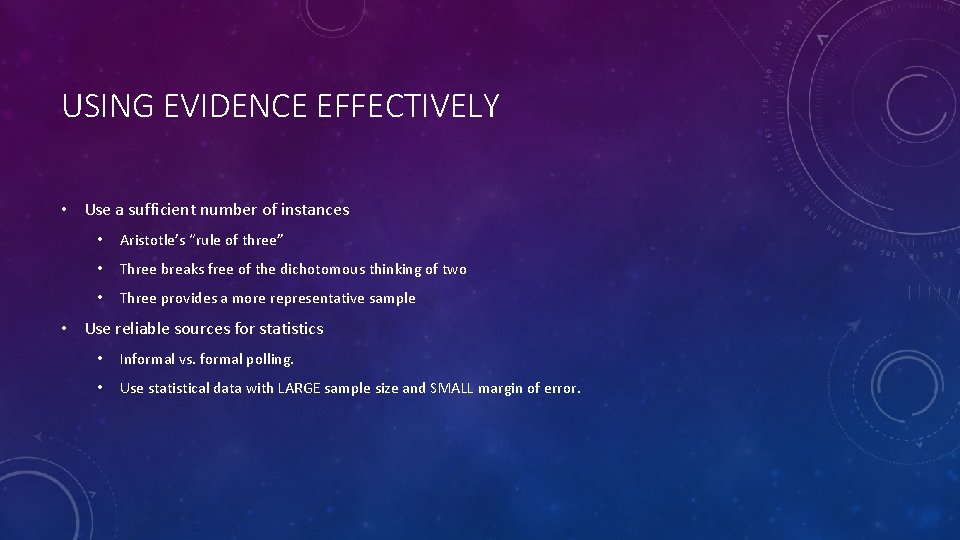
USING EVIDENCE EFFECTIVELY • Use a sufficient number of instances • Aristotle’s “rule of three” • Three breaks free of the dichotomous thinking of two • Three provides a more representative sample • Use reliable sources for statistics • Informal vs. formal polling. • Use statistical data with LARGE sample size and SMALL margin of error.
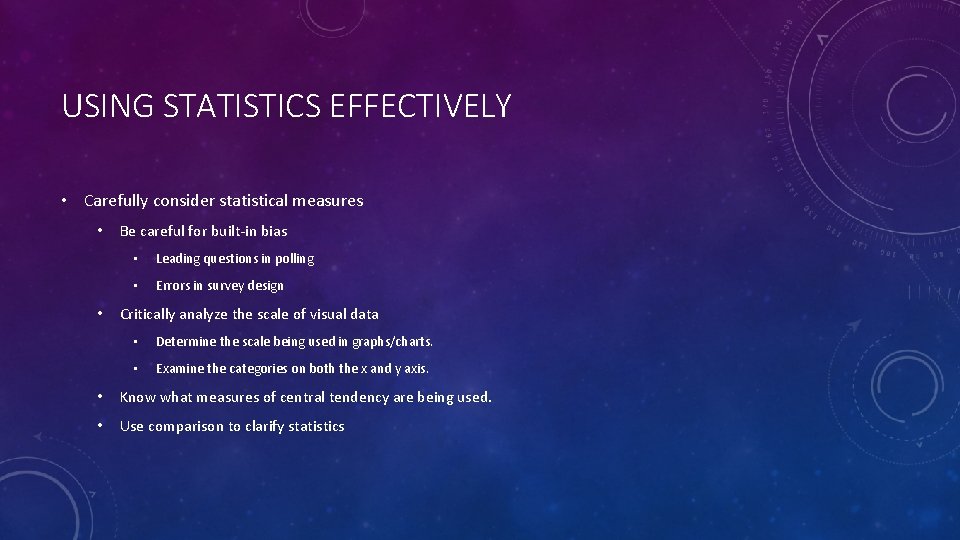
USING STATISTICS EFFECTIVELY • Carefully consider statistical measures • • Be careful for built-in bias • Leading questions in polling • Errors in survey design Critically analyze the scale of visual data • Determine the scale being used in graphs/charts. • Examine the categories on both the x and y axis. • Know what measures of central tendency are being used. • Use comparison to clarify statistics
01 20 02 20 03 20 04 20 05 20 06 20 07 20 08 20 09 20 10 20 00 20 90 19 80 19 70 19 60 19 50 19 40 19 30 19 27 19 20 19 10 19 Debt in Billions of USD 16000 14000 12000 10000 8000 Debt in Billions of USD 6000 4000 2000 0
Debt in Billions of USD 16 000 14 000 12 000 10 000 8 000 Debt in Billions of USD 6 000 4 000 2 000 0 2001 2002 2003 2004 2005 2006 2007 2008 2009 2010
Debt in Billions of USD 14 000 12 500 11 000 9 500 Debt in Billions of USD 8 000 6 500 5 000 2001 2002 2003 2004 2005 2006 2007 2008 2009 2010
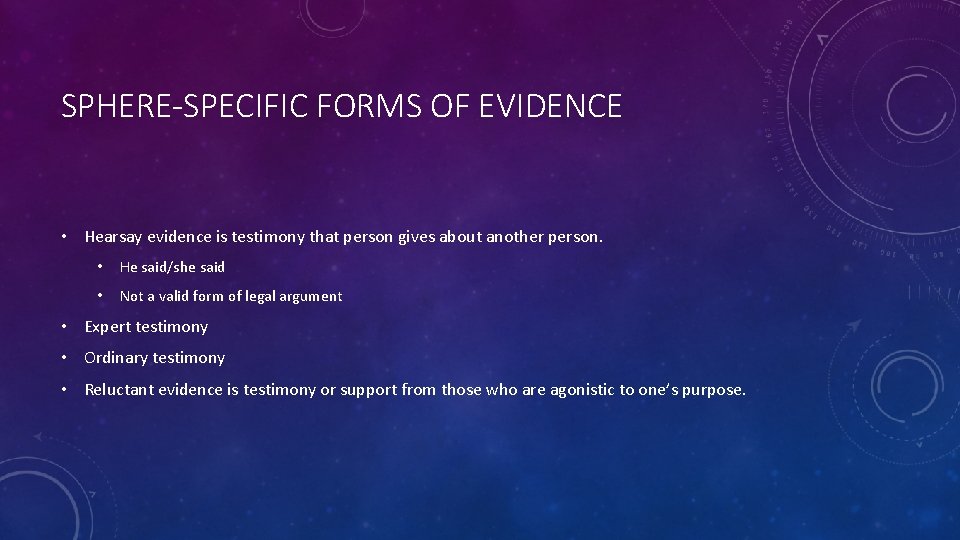
SPHERE-SPECIFIC FORMS OF EVIDENCE • Hearsay evidence is testimony that person gives about another person. • He said/she said • Not a valid form of legal argument • Expert testimony • Ordinary testimony • Reluctant evidence is testimony or support from those who are agonistic to one’s purpose.