
I The Human Body An Orientation A Anatomical
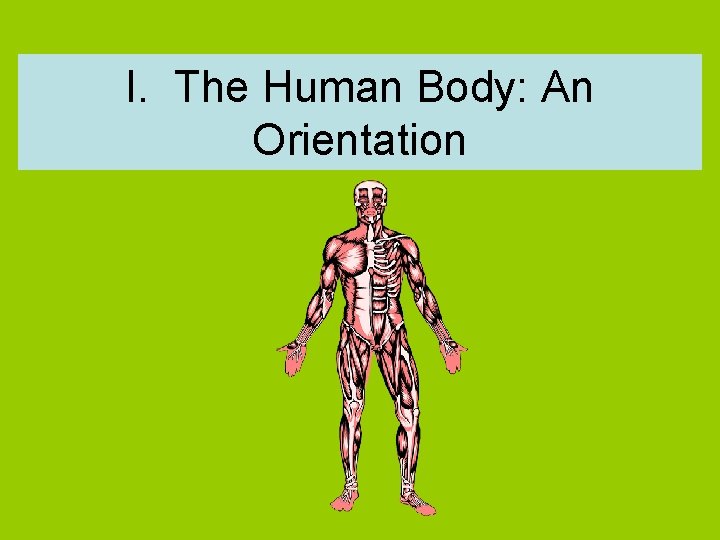
I. The Human Body: An Orientation
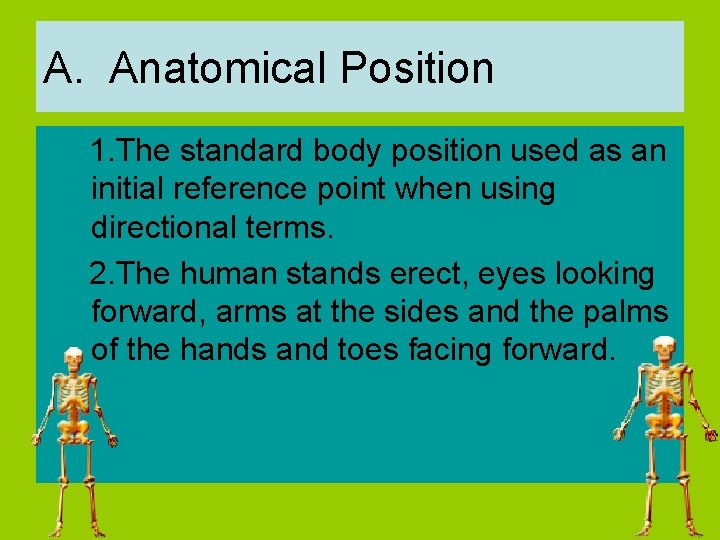
A. Anatomical Position 1. The standard body position used as an initial reference point when using directional terms. 2. The human stands erect, eyes looking forward, arms at the sides and the palms of the hands and toes facing forward.
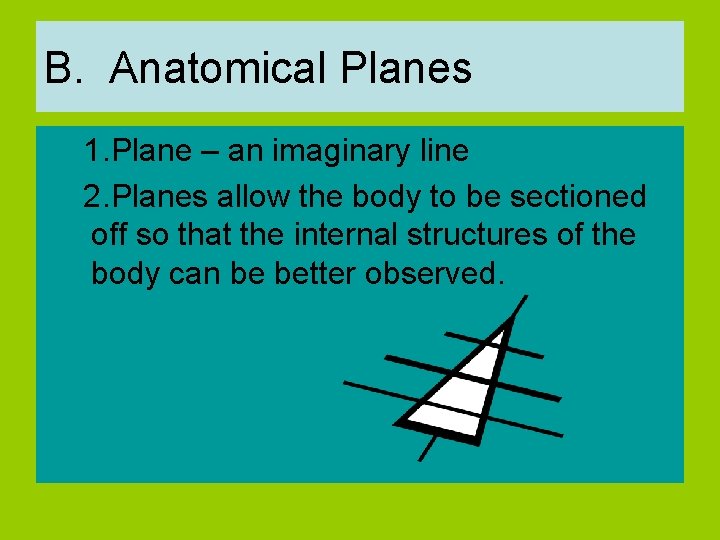
B. Anatomical Planes 1. Plane – an imaginary line 2. Planes allow the body to be sectioned off so that the internal structures of the body can be better observed.
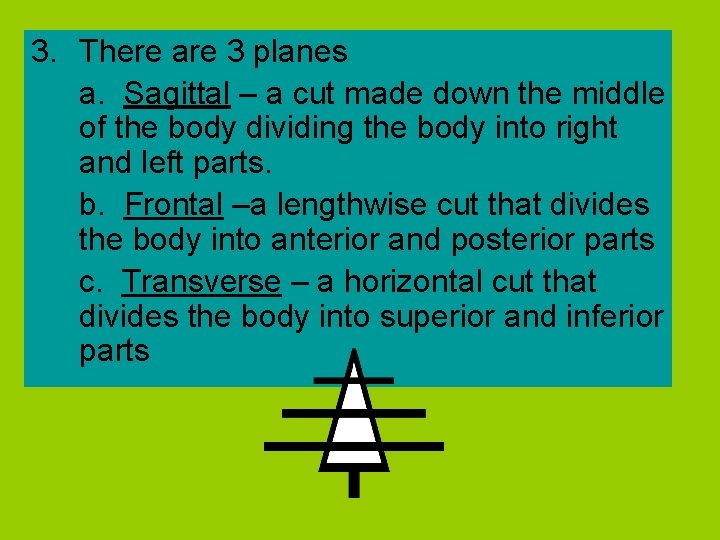
3. There are 3 planes a. Sagittal – a cut made down the middle of the body dividing the body into right and left parts. b. Frontal –a lengthwise cut that divides the body into anterior and posterior parts c. Transverse – a horizontal cut that divides the body into superior and inferior parts
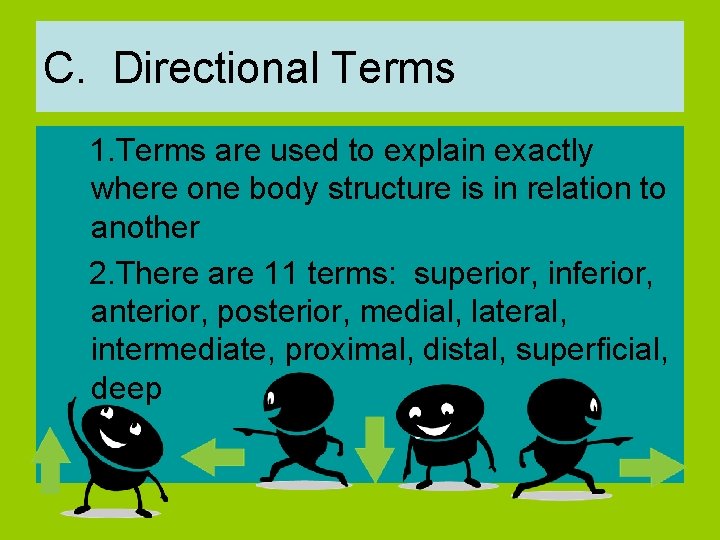
C. Directional Terms 1. Terms are used to explain exactly where one body structure is in relation to another 2. There are 11 terms: superior, inferior, anterior, posterior, medial, lateral, intermediate, proximal, distal, superficial, deep
D. Levels of Structural Organization 1. The human body starts as the smallest structural level and continually builds upon itself until it reaches the highest level of structural organization
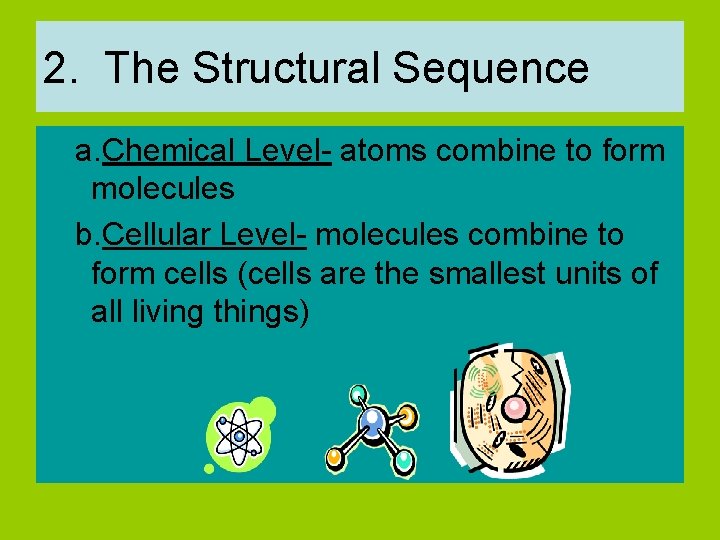
2. The Structural Sequence a. Chemical Level- atoms combine to form molecules b. Cellular Level- molecules combine to form cells (cells are the smallest units of all living things)
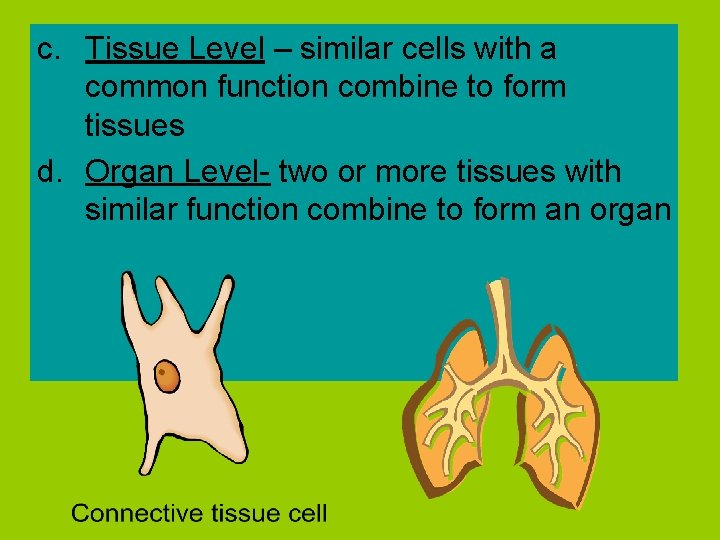
c. Tissue Level – similar cells with a common function combine to form tissues d. Organ Level- two or more tissues with similar function combine to form an organ
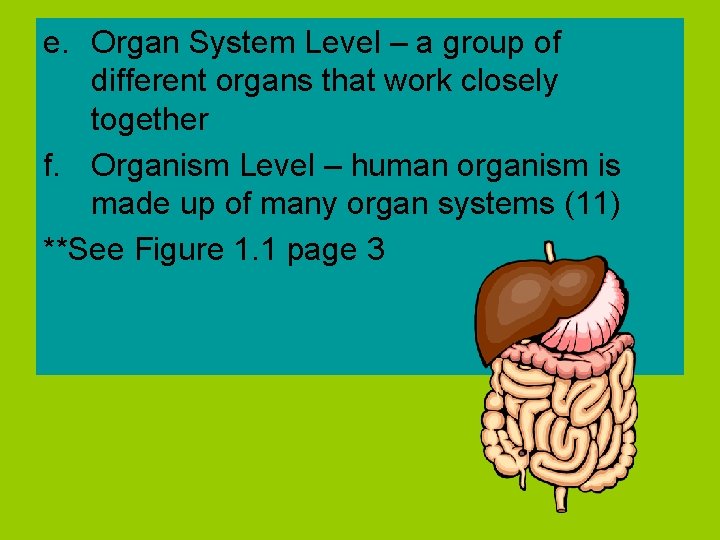
e. Organ System Level – a group of different organs that work closely together f. Organism Level – human organism is made up of many organ systems (11) **See Figure 1. 1 page 3
- Slides: 9