
I The Cell Cycle has four main stages
- Slides: 53
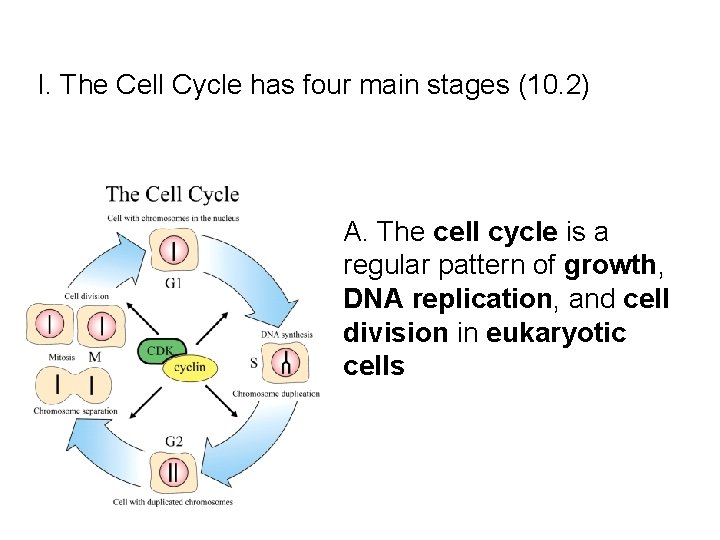
I. The Cell Cycle has four main stages (10. 2) A. The cell cycle is a regular pattern of growth, DNA replication, and cell division in eukaryotic cells
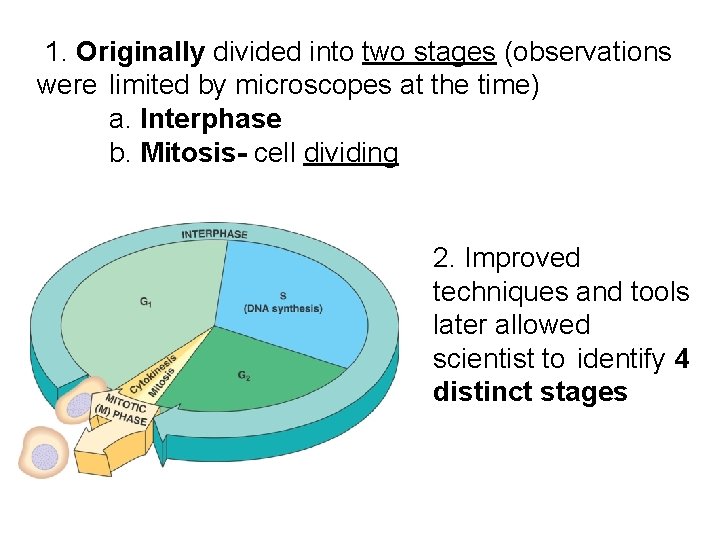
1. Originally divided into two stages (observations were limited by microscopes at the time) a. Interphase b. Mitosis- cell dividing 2. Improved techniques and tools later allowed scientist to identify 4 distinct stages
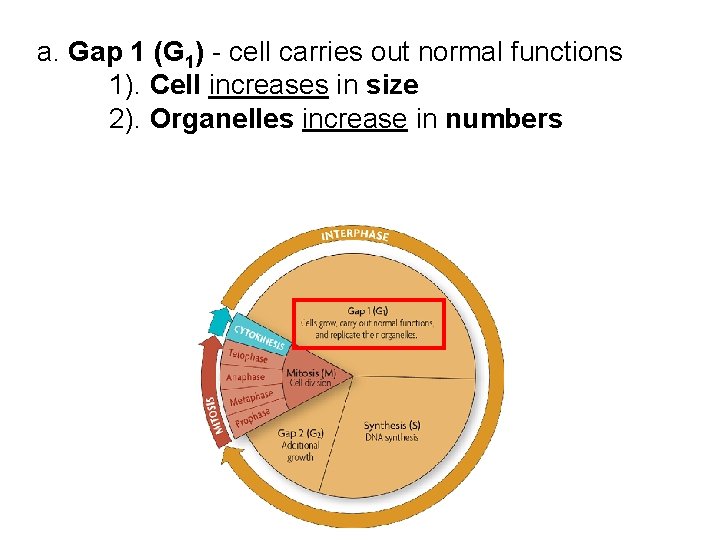
a. Gap 1 (G 1) - cell carries out normal functions 1). Cell increases in size 2). Organelles increase in numbers
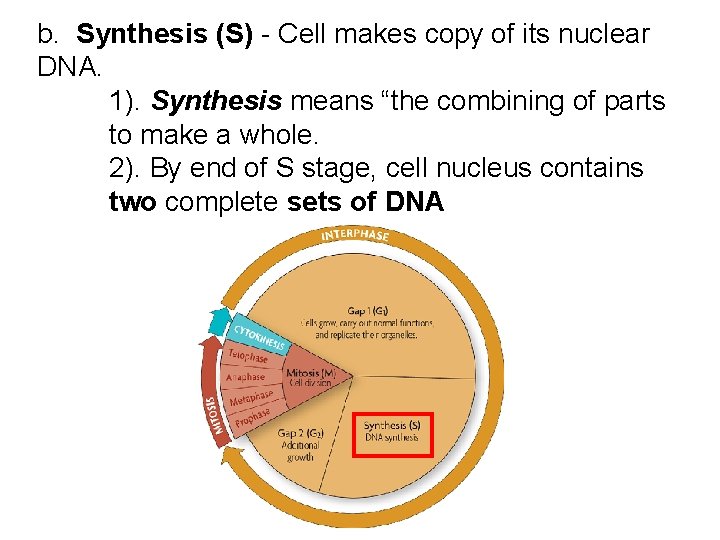
b. Synthesis (S) - Cell makes copy of its nuclear DNA. 1). Synthesis means “the combining of parts to make a whole. 2). By end of S stage, cell nucleus contains two complete sets of DNA
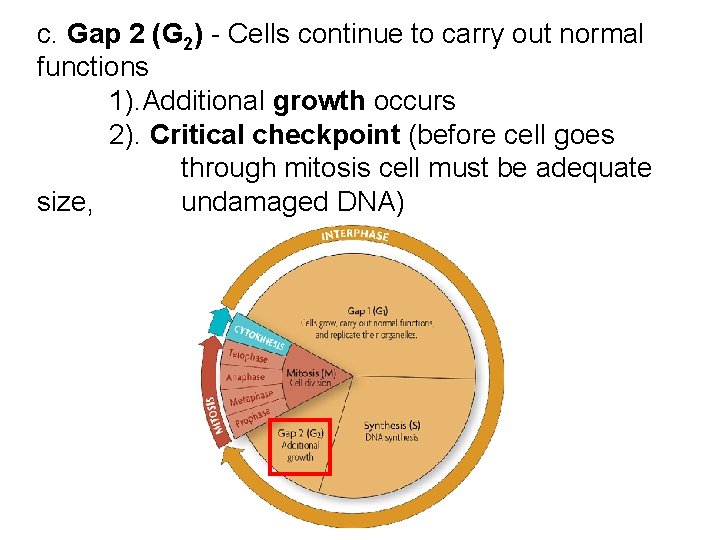
c. Gap 2 (G 2) - Cells continue to carry out normal functions 1). Additional growth occurs 2). Critical checkpoint (before cell goes through mitosis cell must be adequate size, undamaged DNA)
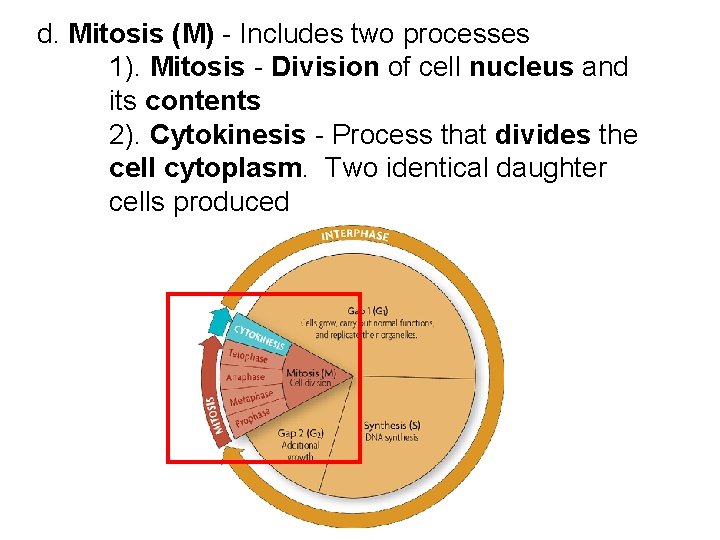
d. Mitosis (M) - Includes two processes 1). Mitosis - Division of cell nucleus and its contents 2). Cytokinesis - Process that divides the cell cytoplasm. Two identical daughter cells produced
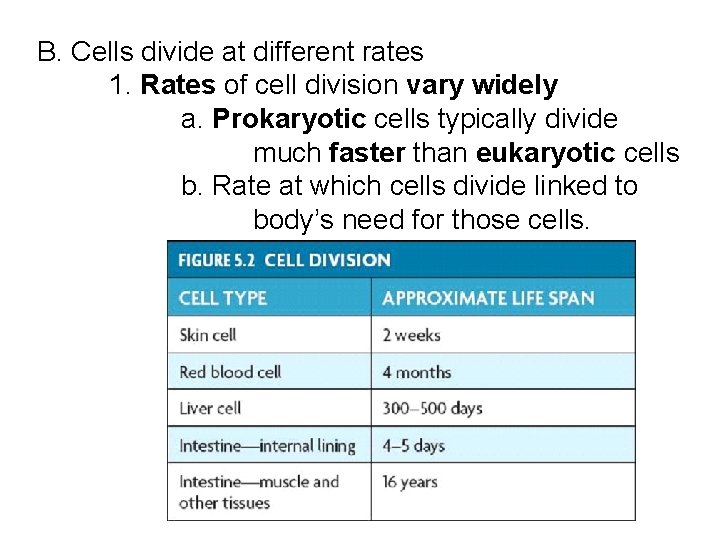
B. Cells divide at different rates 1. Rates of cell division vary widely a. Prokaryotic cells typically divide much faster than eukaryotic cells b. Rate at which cells divide linked to body’s need for those cells.
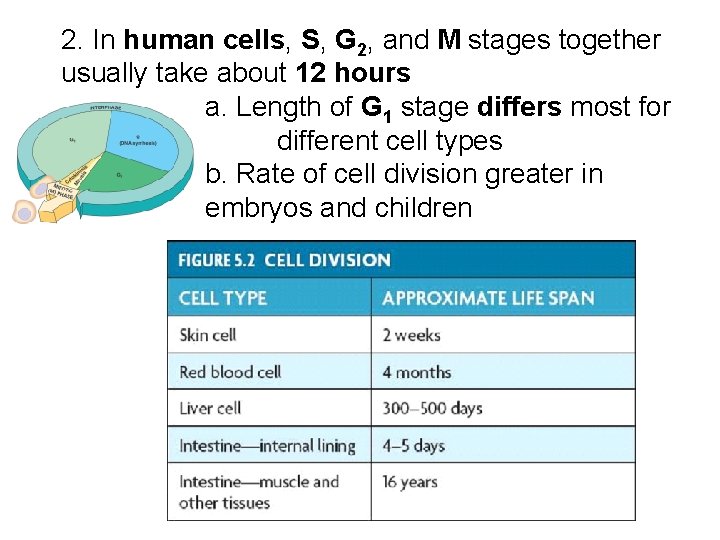
2. In human cells, S, G 2, and M stages together usually take about 12 hours a. Length of G 1 stage differs most for different cell types b. Rate of cell division greater in embryos and children
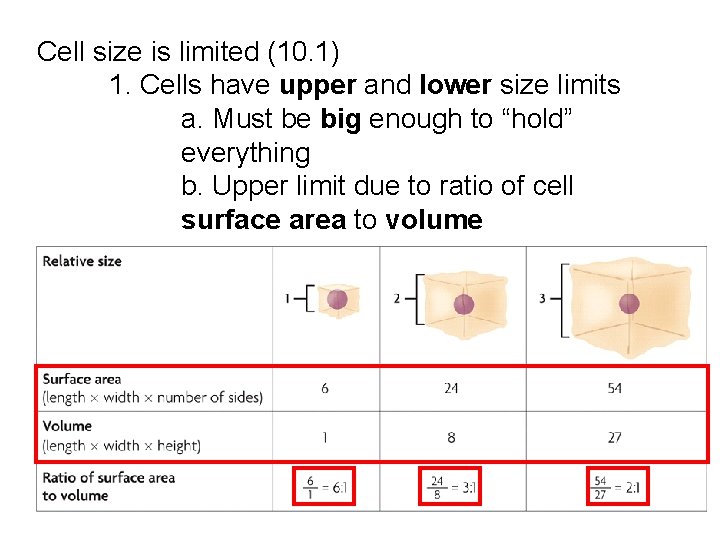
Cell size is limited (10. 1) 1. Cells have upper and lower size limits a. Must be big enough to “hold” everything b. Upper limit due to ratio of cell surface area to volume
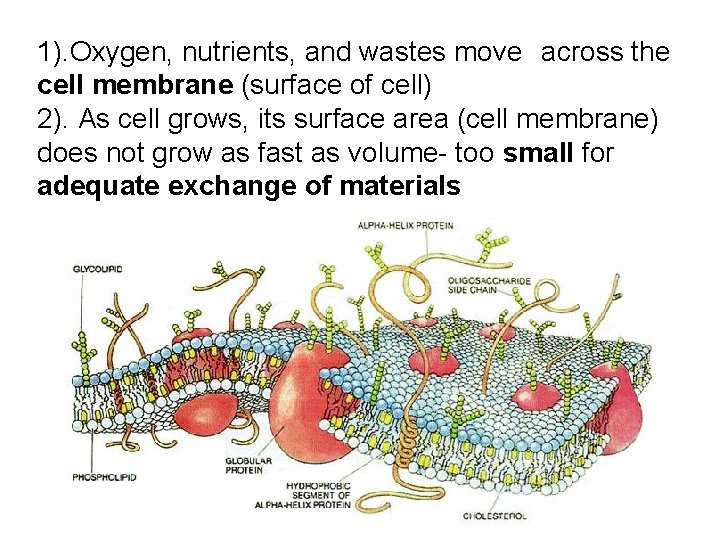
1). Oxygen, nutrients, and wastes move across the cell membrane (surface of cell) 2). As cell grows, its surface area (cell membrane) does not grow as fast as volume- too small for adequate exchange of materials
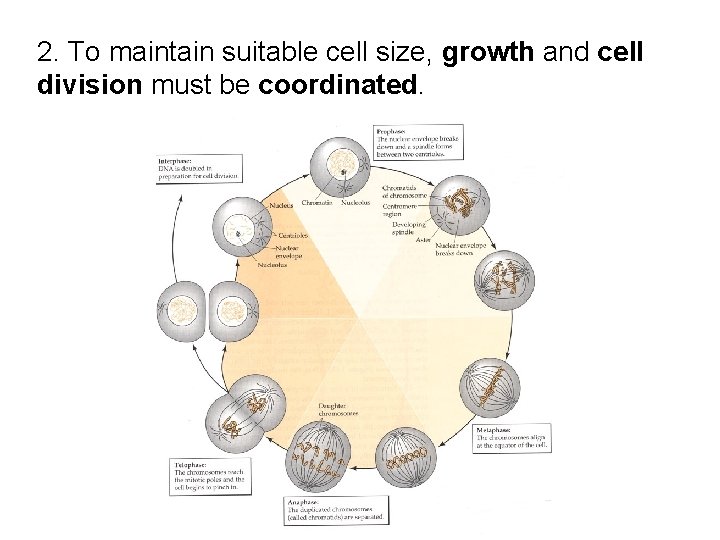
2. To maintain suitable cell size, growth and cell division must be coordinated.
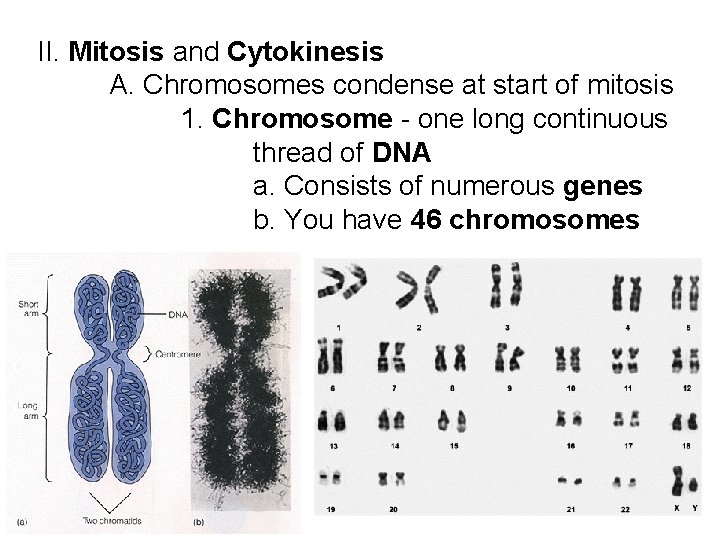
II. Mitosis and Cytokinesis A. Chromosomes condense at start of mitosis 1. Chromosome - one long continuous thread of DNA a. Consists of numerous genes b. You have 46 chromosomes
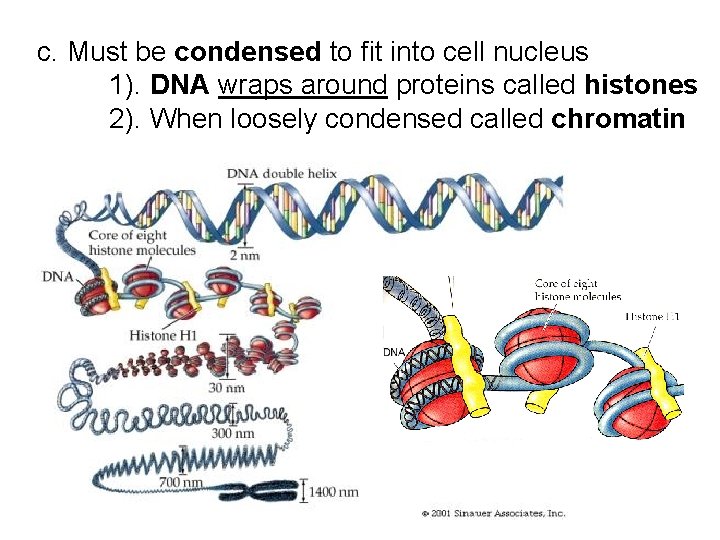
c. Must be condensed to fit into cell nucleus 1). DNA wraps around proteins called histones 2). When loosely condensed called chromatin
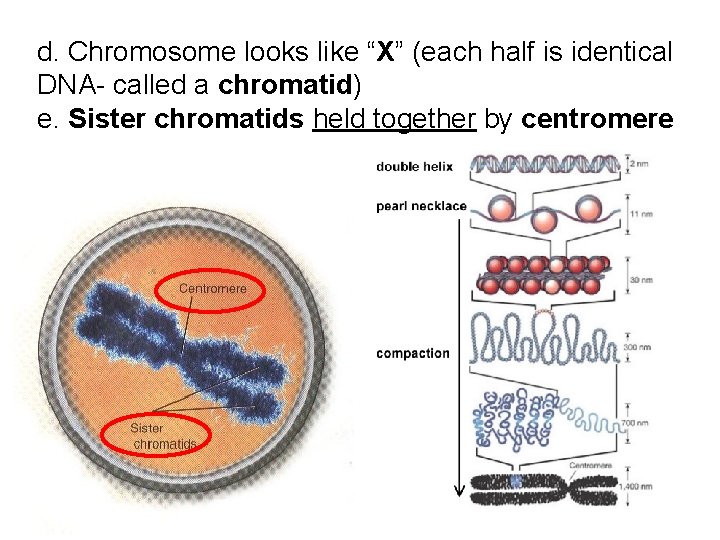
d. Chromosome looks like “X” (each half is identical DNA- called a chromatid) e. Sister chromatids held together by centromere
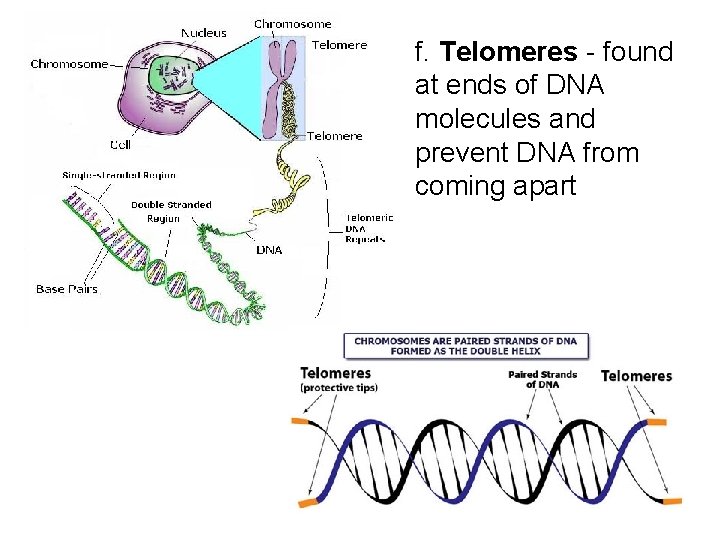
f. Telomeres - found at ends of DNA molecules and prevent DNA from coming apart
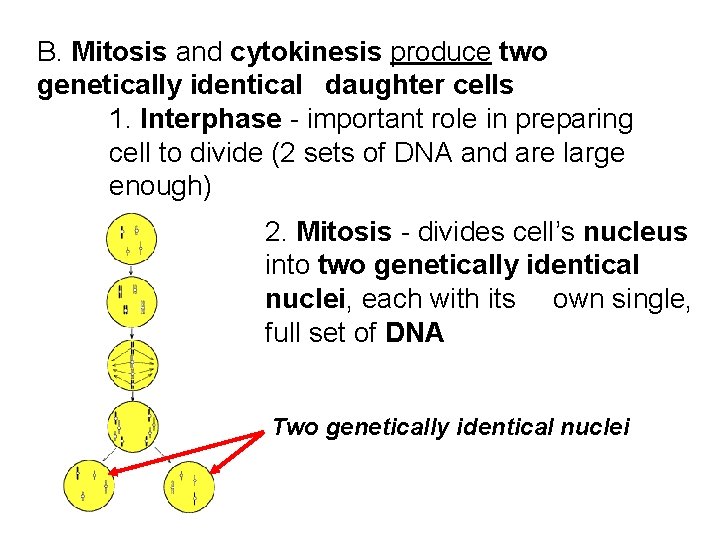
B. Mitosis and cytokinesis produce two genetically identical daughter cells 1. Interphase - important role in preparing cell to divide (2 sets of DNA and are large enough) 2. Mitosis - divides cell’s nucleus into two genetically identical nuclei, each with its own single, full set of DNA Two genetically identical nuclei
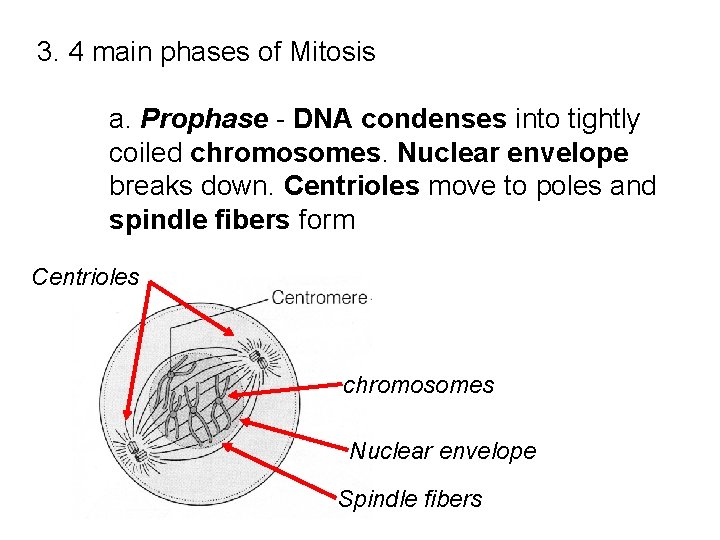
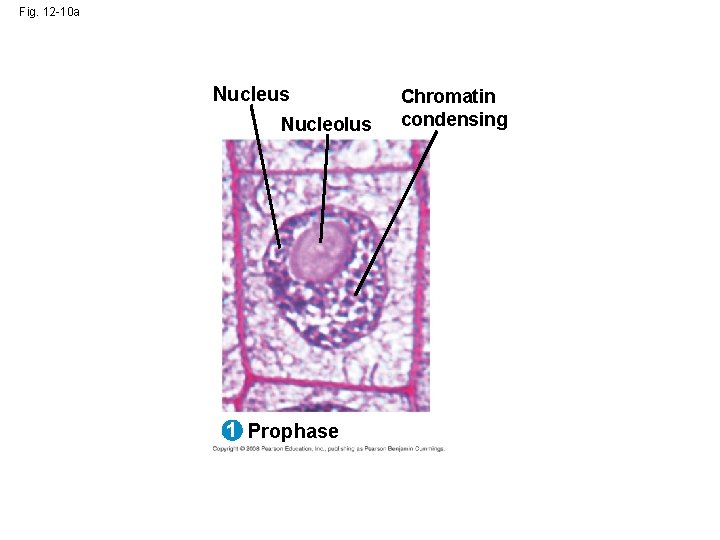
3. 4 main phases of Mitosis a. Prophase - DNA condenses into tightly coiled chromosomes. Nuclear envelope breaks down. Centrioles move to poles and spindle fibers form Centrioles chromosomes Nuclear envelope Spindle fibers
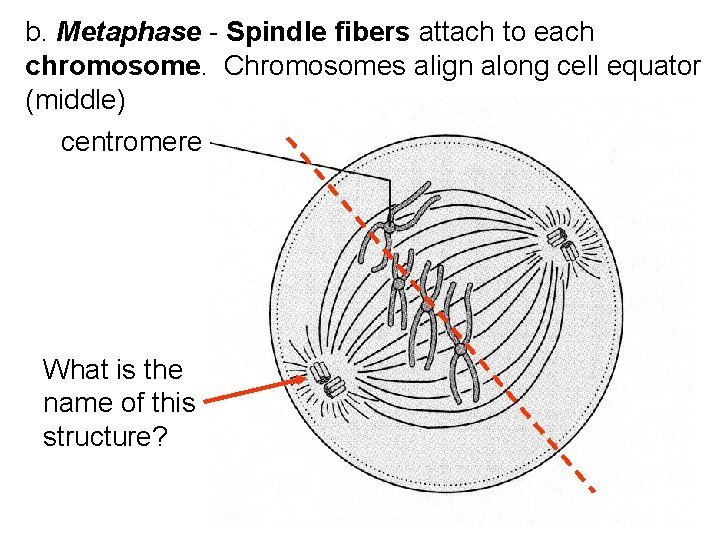
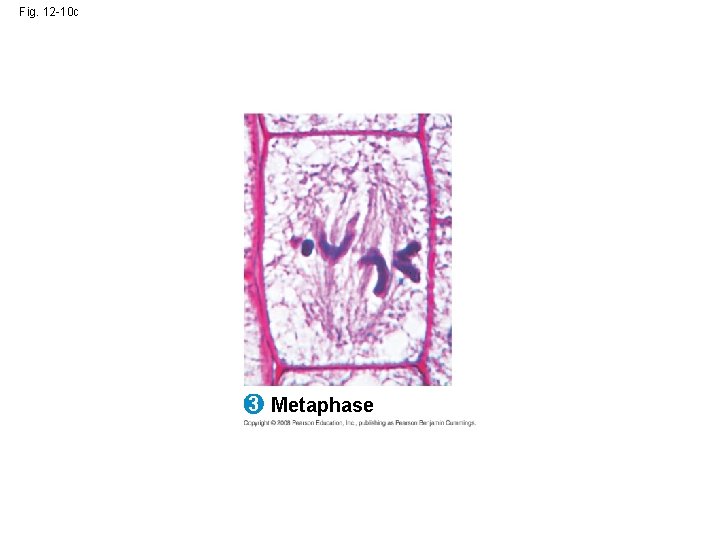
b. Metaphase - Spindle fibers attach to each chromosome. Chromosomes align along cell equator (middle) centromere What is the name of this structure?
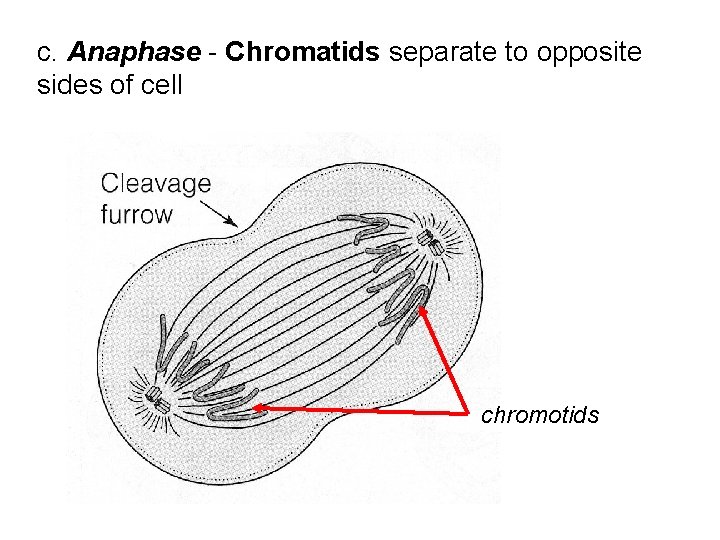
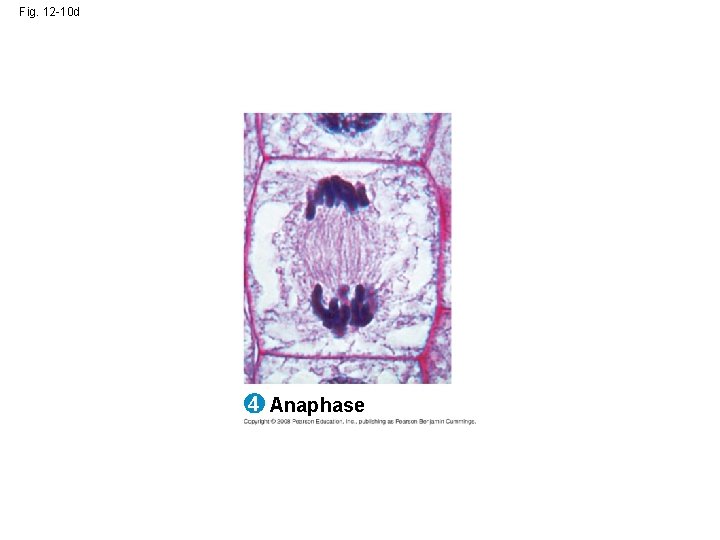
c. Anaphase - Chromatids separate to opposite sides of cell chromotids
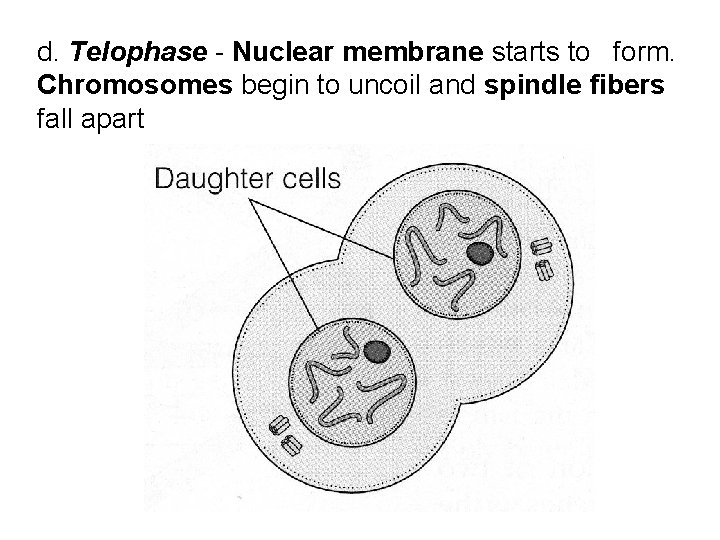
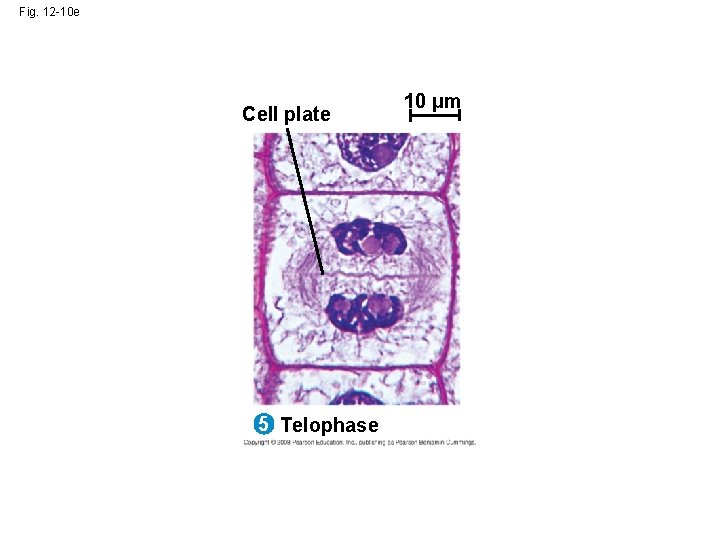
d. Telophase - Nuclear membrane starts to form. Chromosomes begin to uncoil and spindle fibers fall apart
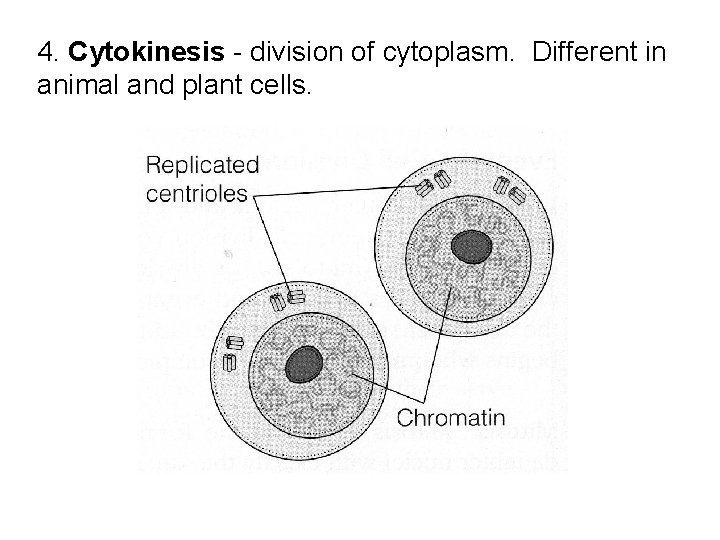
4. Cytokinesis - division of cytoplasm. Different in animal and plant cells.
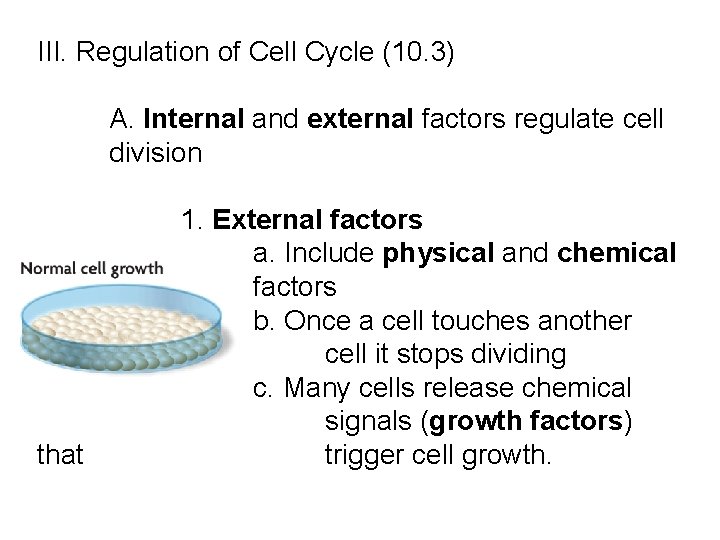
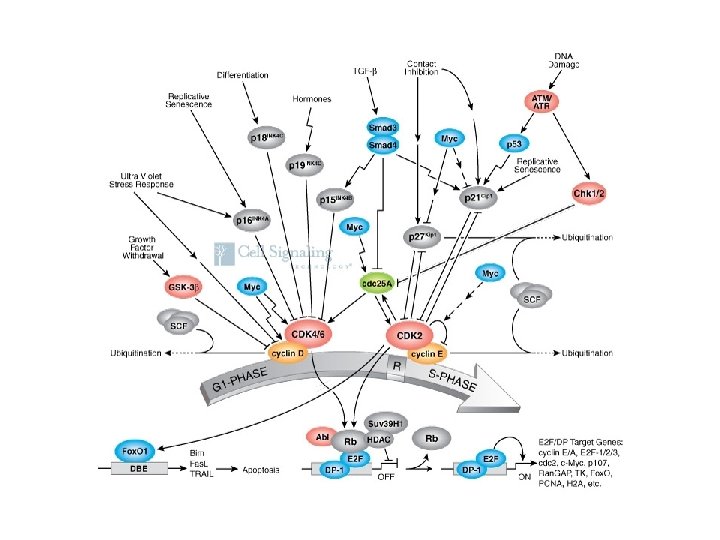
III. Regulation of Cell Cycle (10. 3) A. Internal and external factors regulate cell division that 1. External factors a. Include physical and chemical factors b. Once a cell touches another cell it stops dividing c. Many cells release chemical signals (growth factors) trigger cell growth.
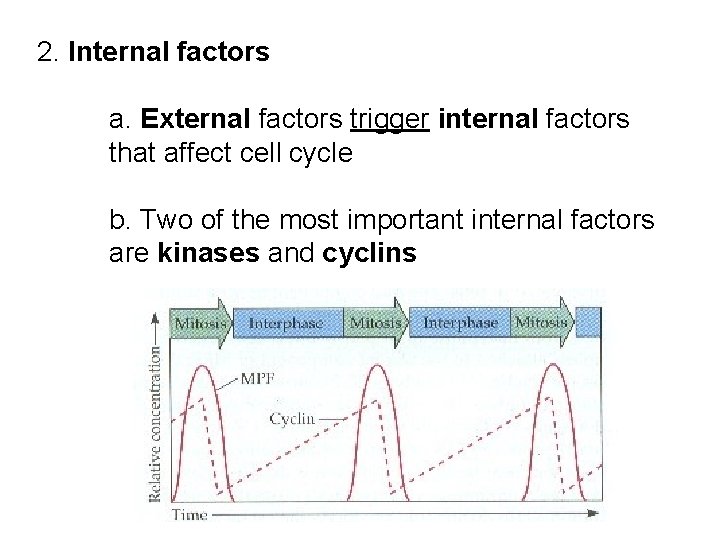
2. Internal factors a. External factors trigger internal factors that affect cell cycle b. Two of the most important internal factors are kinases and cyclins
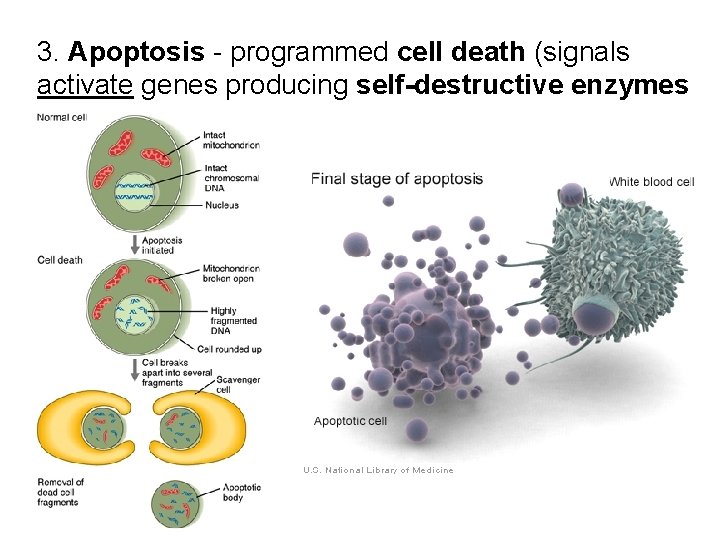
3. Apoptosis - programmed cell death (signals activate genes producing self-destructive enzymes
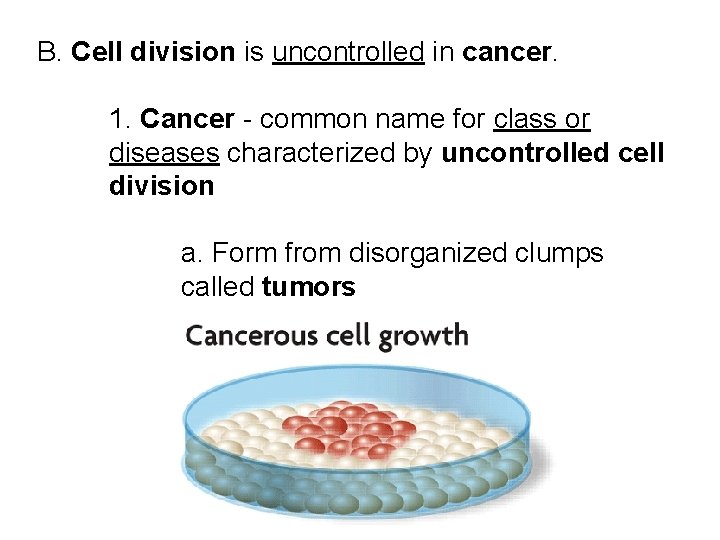
B. Cell division is uncontrolled in cancer. 1. Cancer - common name for class or diseases characterized by uncontrolled cell division a. Form from disorganized clumps called tumors
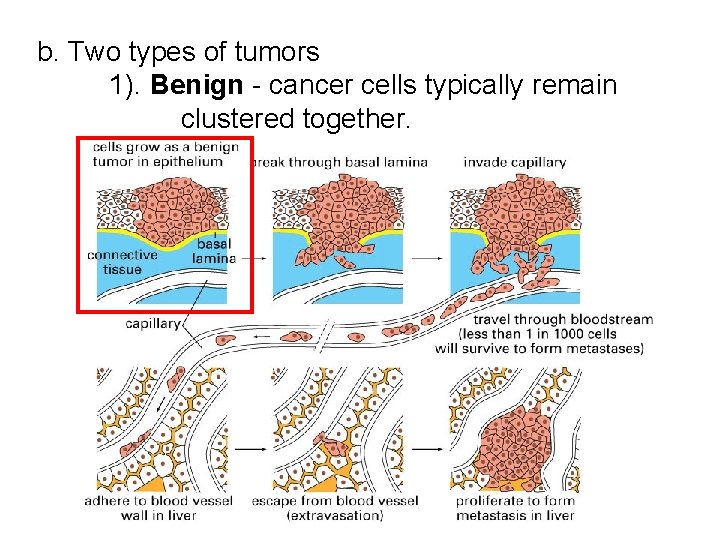
b. Two types of tumors 1). Benign - cancer cells typically remain clustered together.
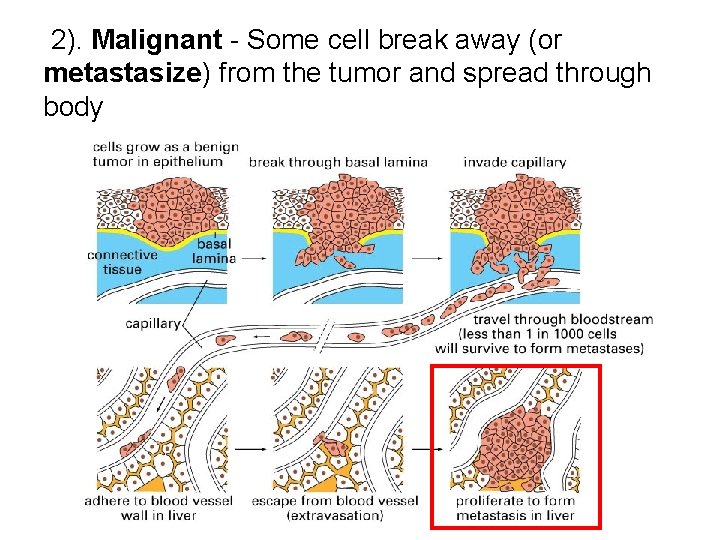
2). Malignant - Some cell break away (or metastasize) from the tumor and spread through body
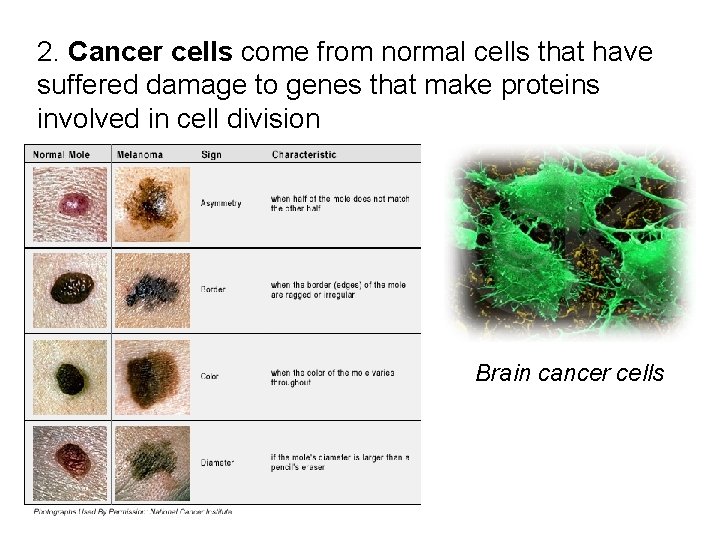
2. Cancer cells come from normal cells that have suffered damage to genes that make proteins involved in cell division Brain cancer cells
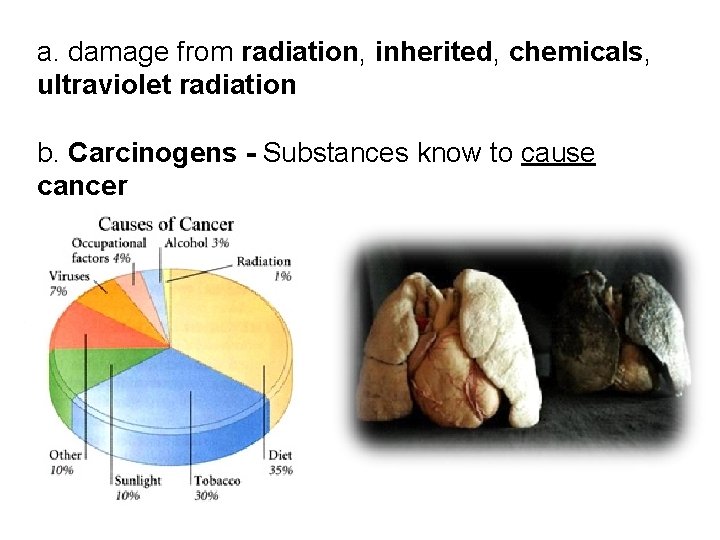
a. damage from radiation, inherited, chemicals, ultraviolet radiation b. Carcinogens - Substances know to cause cancer
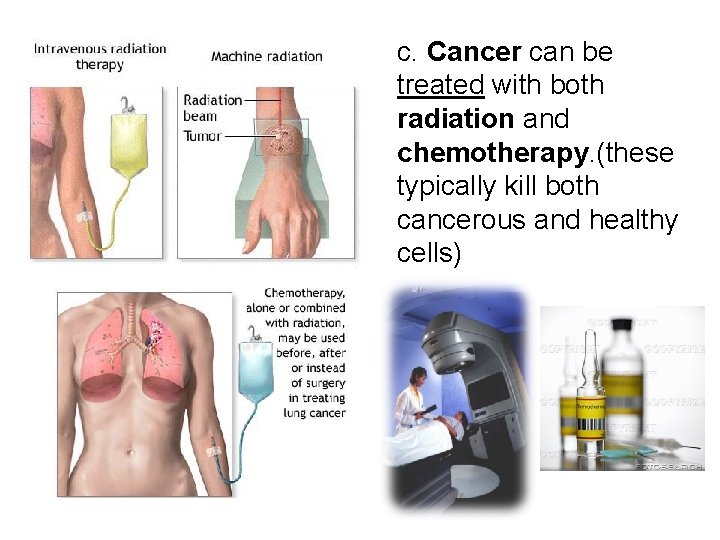
c. Cancer can be treated with both radiation and chemotherapy. (these typically kill both cancerous and healthy cells)
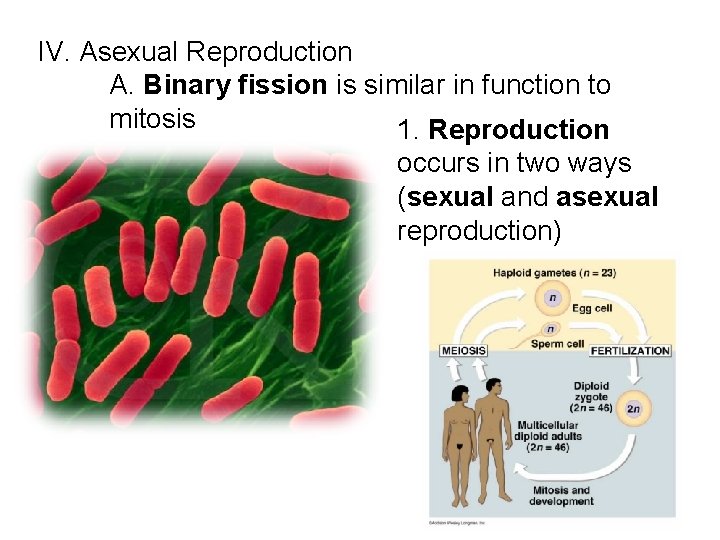
IV. Asexual Reproduction A. Binary fission is similar in function to mitosis 1. Reproduction occurs in two ways (sexual and asexual reproduction)
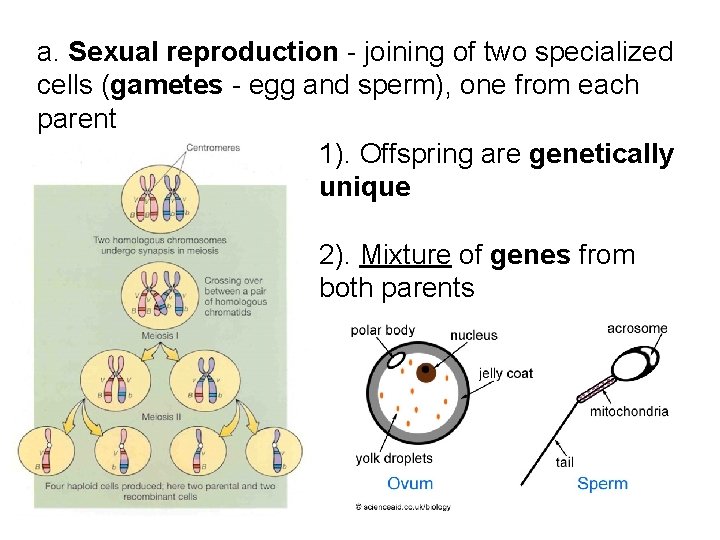
a. Sexual reproduction - joining of two specialized cells (gametes - egg and sperm), one from each parent 1). Offspring are genetically unique 2). Mixture of genes from both parents
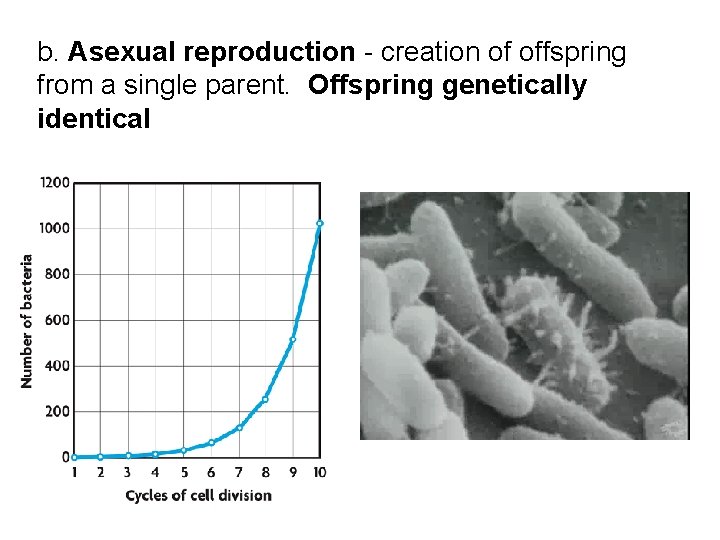
b. Asexual reproduction - creation of offspring from a single parent. Offspring genetically identical
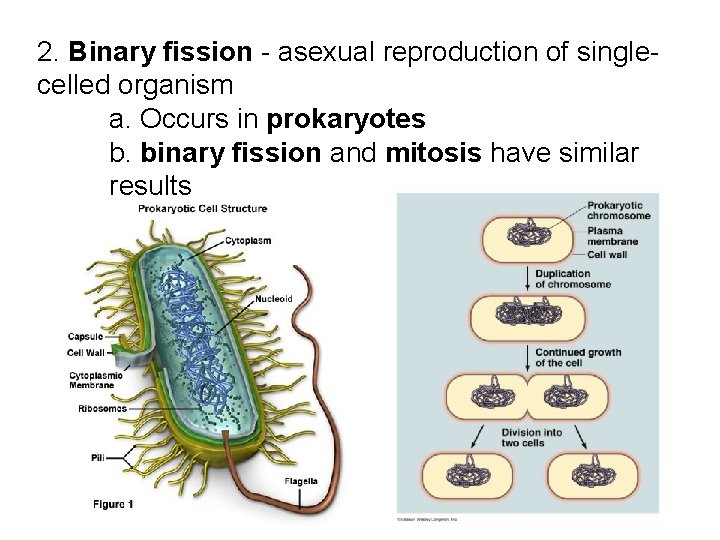
2. Binary fission - asexual reproduction of singlecelled organism a. Occurs in prokaryotes b. binary fission and mitosis have similar results
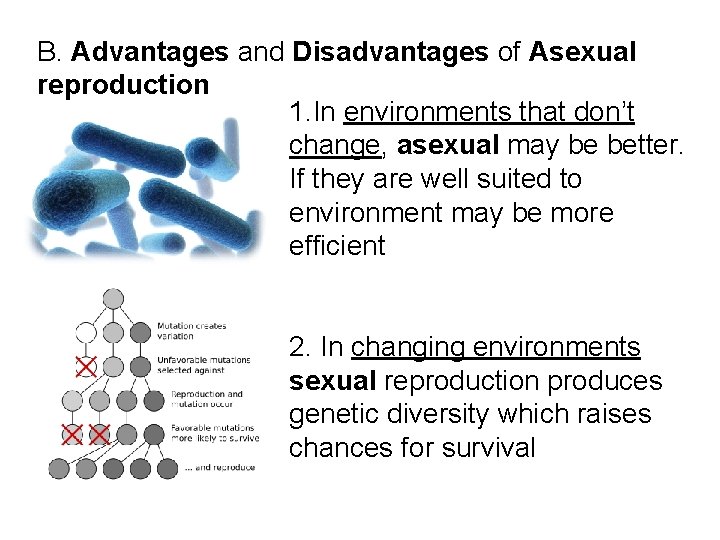
B. Advantages and Disadvantages of Asexual reproduction 1. In environments that don’t change, asexual may be better. If they are well suited to environment may be more efficient 2. In changing environments sexual reproduction produces genetic diversity which raises chances for survival
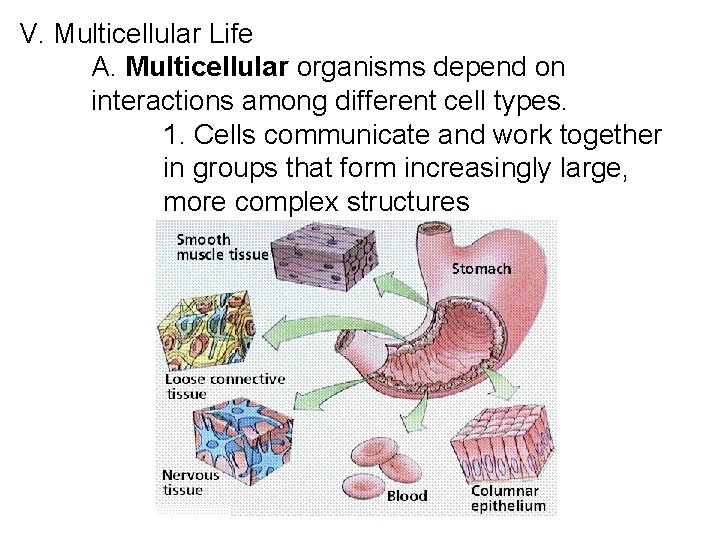
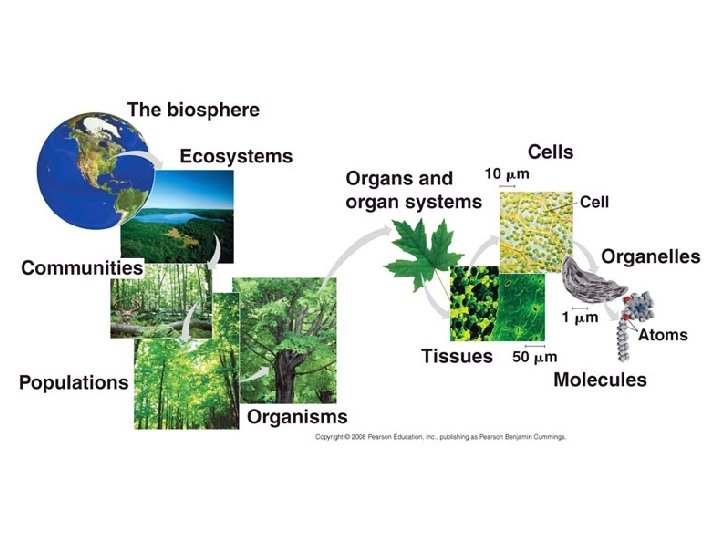
V. Multicellular Life A. Multicellular organisms depend on interactions among different cell types. 1. Cells communicate and work together in groups that form increasingly large, more complex structures
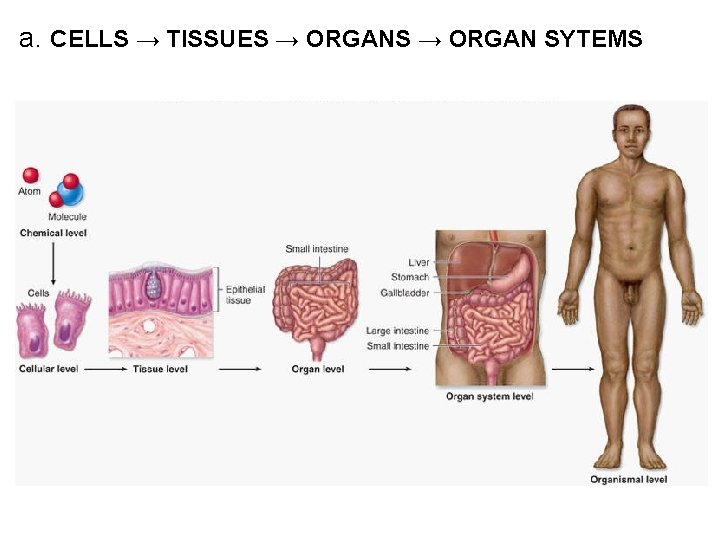
a. CELLS → TISSUES → ORGAN SYTEMS
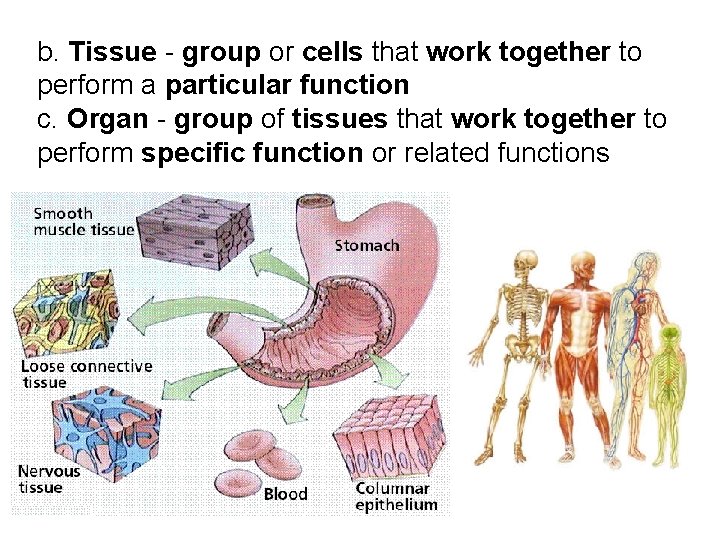
b. Tissue - group or cells that work together to perform a particular function c. Organ - group of tissues that work together to perform specific function or related functions
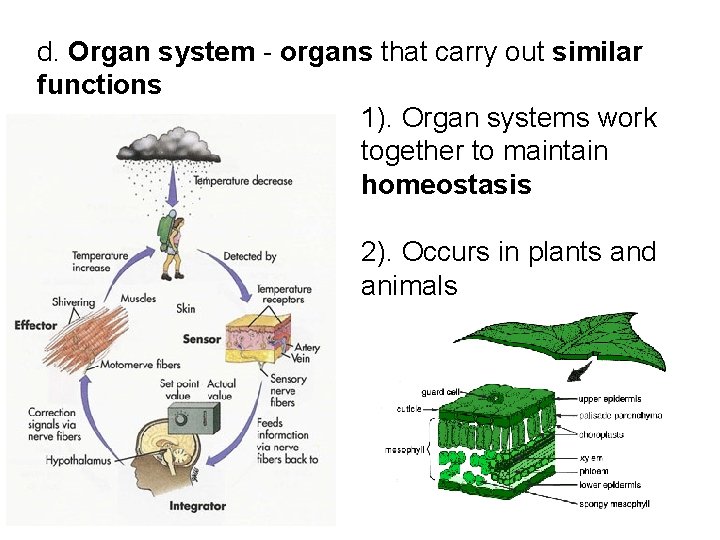
d. Organ system - organs that carry out similar functions 1). Organ systems work together to maintain homeostasis 2). Occurs in plants and animals
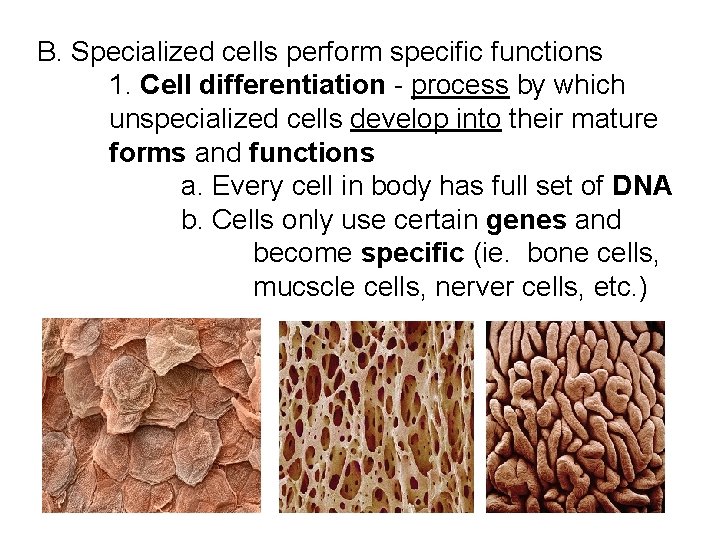
B. Specialized cells perform specific functions 1. Cell differentiation - process by which unspecialized cells develop into their mature forms and functions a. Every cell in body has full set of DNA b. Cells only use certain genes and become specific (ie. bone cells, mucscle cells, nerver cells, etc. )
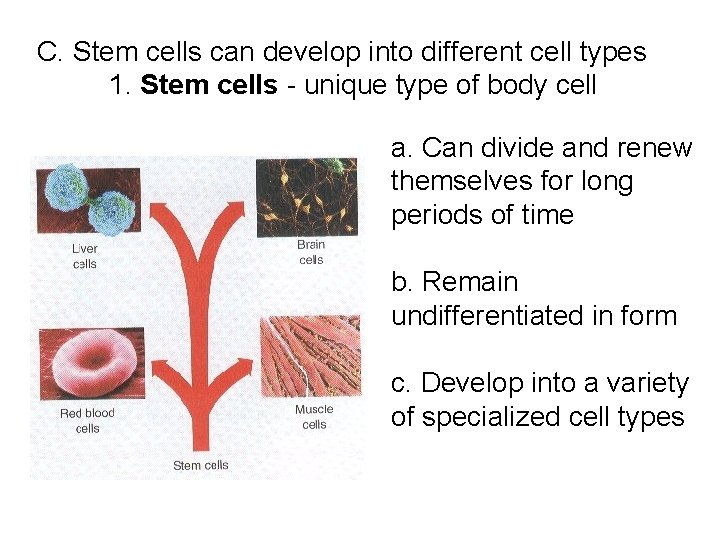
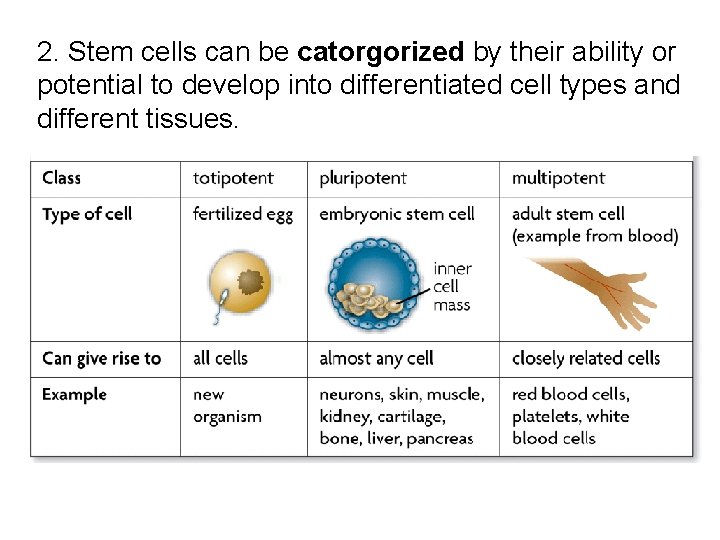
C. Stem cells can develop into different cell types 1. Stem cells - unique type of body cell a. Can divide and renew themselves for long periods of time b. Remain undifferentiated in form c. Develop into a variety of specialized cell types
2. Stem cells can be catorgorized by their ability or potential to develop into differentiated cell types and different tissues.
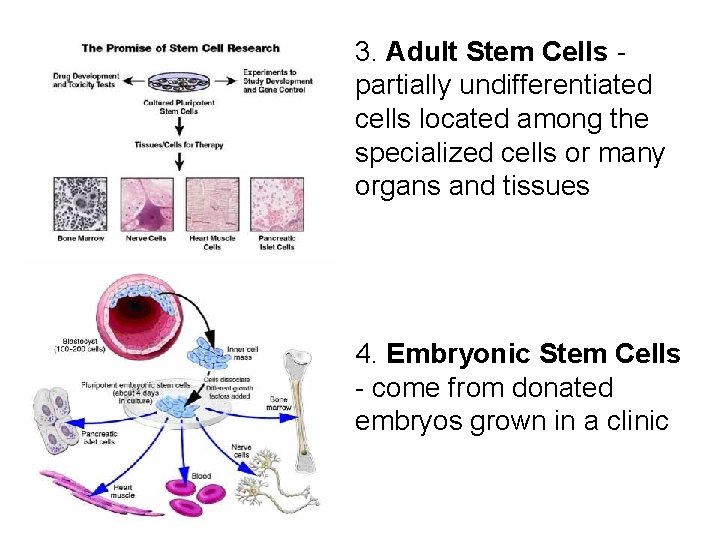
3. Adult Stem Cells partially undifferentiated cells located among the specialized cells or many organs and tissues 4. Embryonic Stem Cells - come from donated embryos grown in a clinic
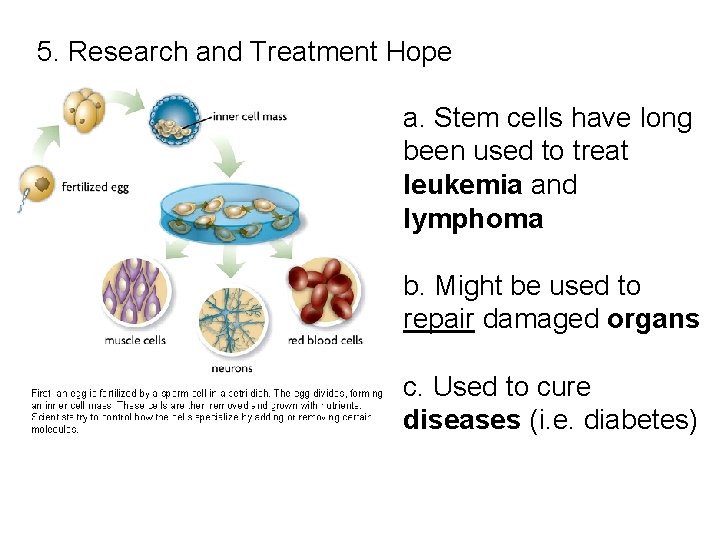
5. Research and Treatment Hope a. Stem cells have long been used to treat leukemia and lymphoma b. Might be used to repair damaged organs c. Used to cure diseases (i. e. diabetes)
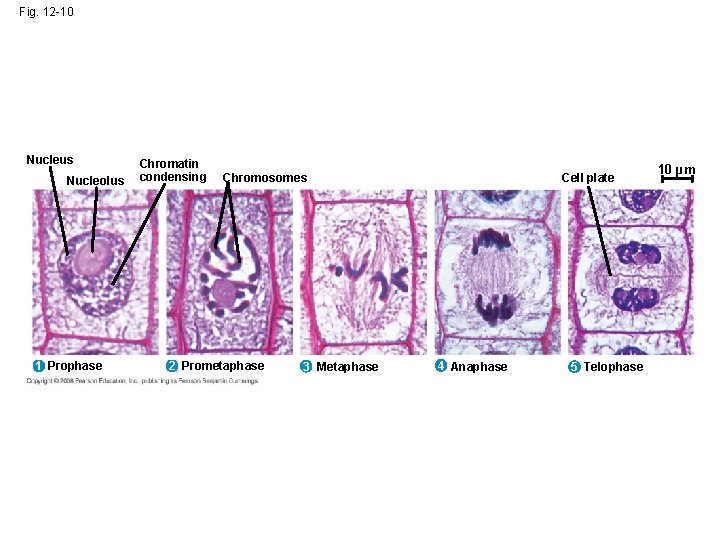
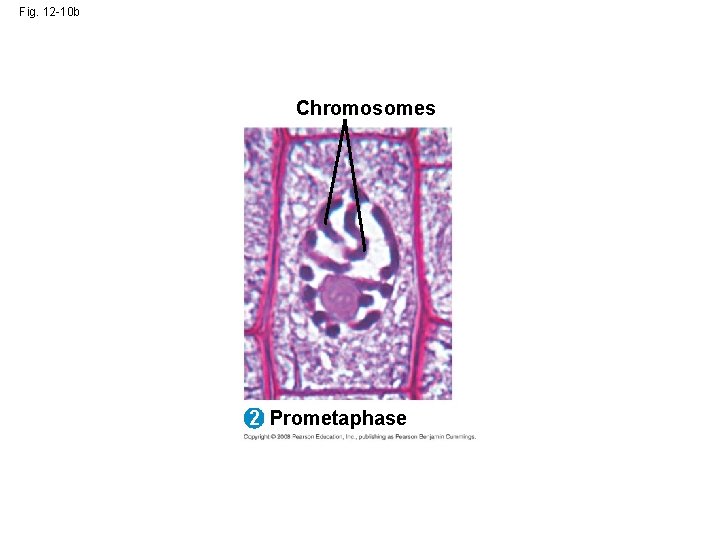
Fig. 12 -10 Nucleus Nucleolus 1 Prophase Chromatin condensing Chromosomes 2 Prometaphase 3 Metaphase Cell plate 4 Anaphase 5 Telophase 10 µm
Fig. 12 -10 a Nucleus Nucleolus 1 Prophase Chromatin condensing
Fig. 12 -10 b Chromosomes 2 Prometaphase
Fig. 12 -10 c 3 Metaphase
Fig. 12 -10 d 4 Anaphase
Fig. 12 -10 e Cell plate 5 Telophase 10 µm