
I States of Matter Kinetic Molecular Theory States



- Slides: 18
I. States of Matter –Kinetic Molecular Theory –States of Matter
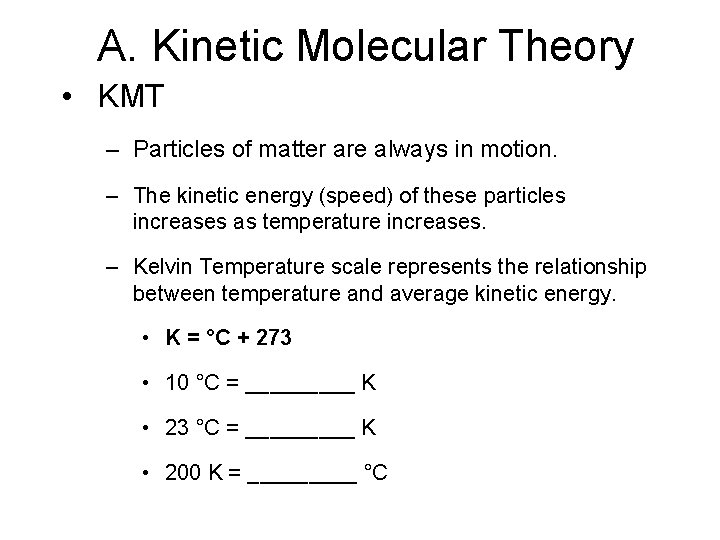
A. Kinetic Molecular Theory • KMT – Particles of matter are always in motion. – The kinetic energy (speed) of these particles increases as temperature increases. – Kelvin Temperature scale represents the relationship between temperature and average kinetic energy. • K = °C + 273 • 10 °C = _____ K • 23 °C = _____ K • 200 K = _____ °C
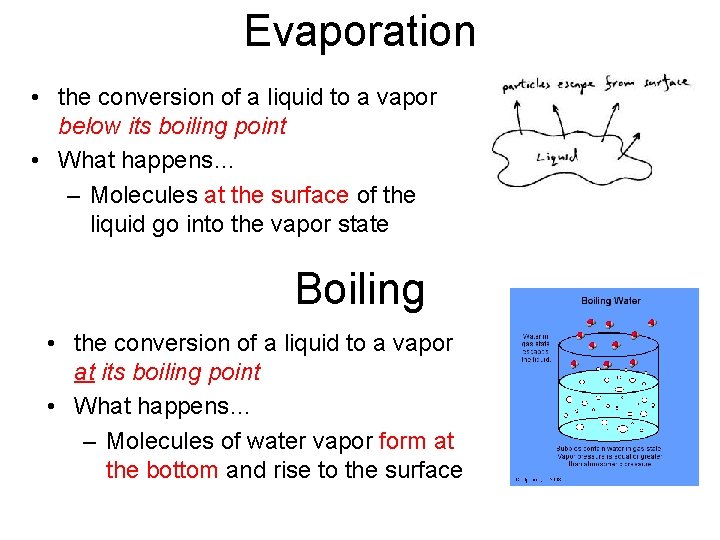
Evaporation • the conversion of a liquid to a vapor below its boiling point • What happens… – Molecules at the surface of the liquid go into the vapor state Boiling • the conversion of a liquid to a vapor at its boiling point • What happens… – Molecules of water vapor form at the bottom and rise to the surface
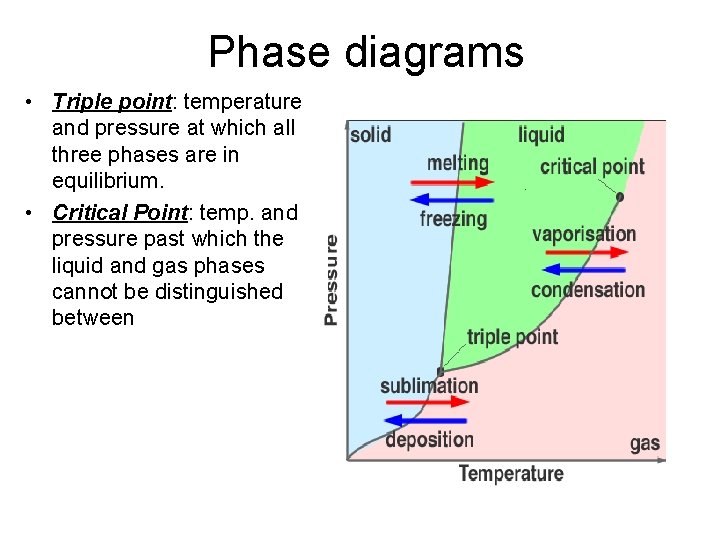
Phase Changes • Melting/Freezing • Vaporization/Condensation • Sublimation: Change of a substance from a solid to a gas or vapor w/o passing through the liquid state – Examples: dry ice, iodine • Deposition: Change of a substance from gas to solid w/o passing through the liquid state
Phase diagrams • Triple point: temperature and pressure at which all three phases are in equilibrium. • Critical Point: temp. and pressure past which the liquid and gas phases cannot be distinguished between
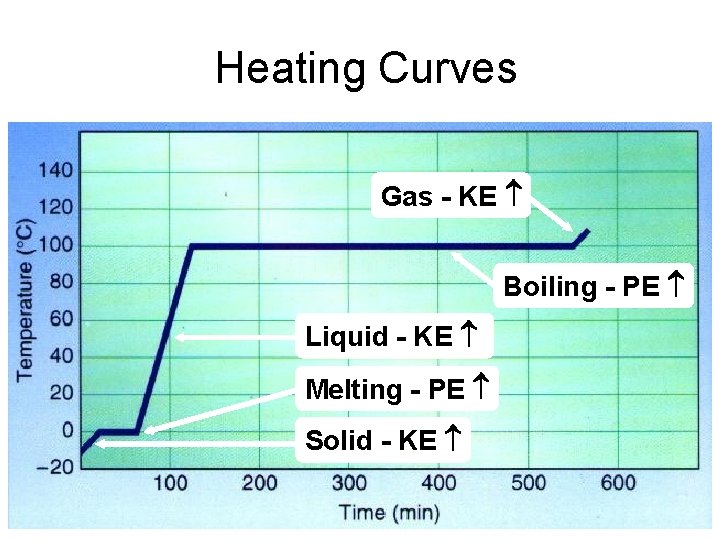
Heating Curves Gas - KE Boiling - PE Liquid - KE Melting - PE Solid - KE
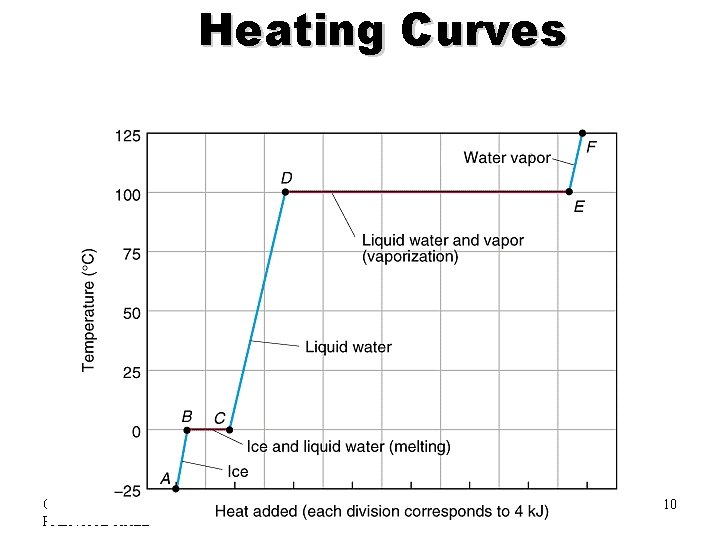
Heating Curves Copyright 1999, PRENTICE HALL Chapter 11 10
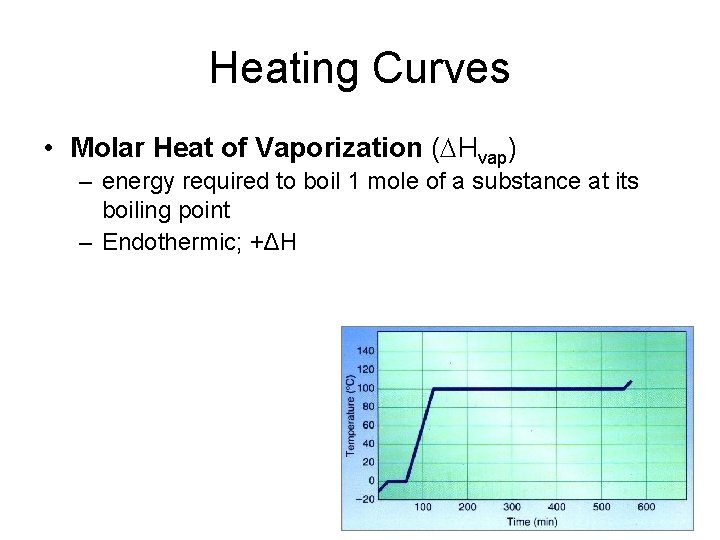
Heating Curves • Phase Change – change in Potential Energy (molecular arrangement) – temp remains constant until the phase change is complete • Molar Heat of Fusion ( Hfus) – energy required to melt 1 mole of a substance at its melting point – Melting is an endothermic process – + ΔH
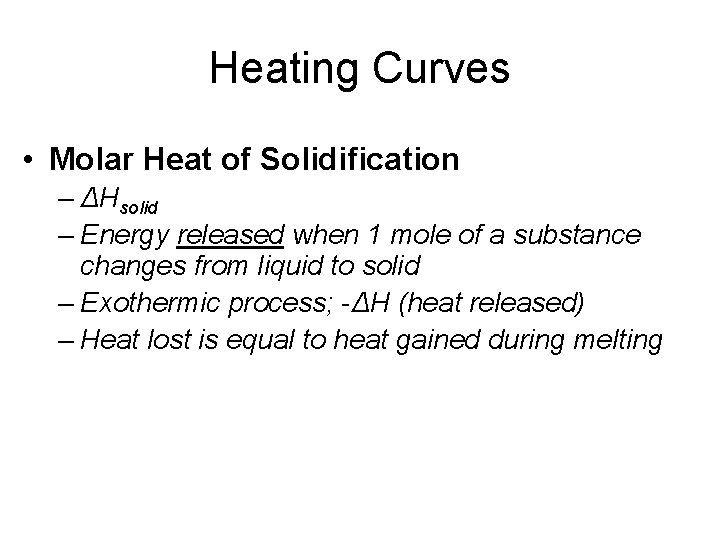
Heating Curves • Molar Heat of Solidification – ΔHsolid – Energy released when 1 mole of a substance changes from liquid to solid – Exothermic process; -ΔH (heat released) – Heat lost is equal to heat gained during melting
Heating Curves • Molar Heat of Vaporization ( Hvap) – energy required to boil 1 mole of a substance at its boiling point – Endothermic; +ΔH
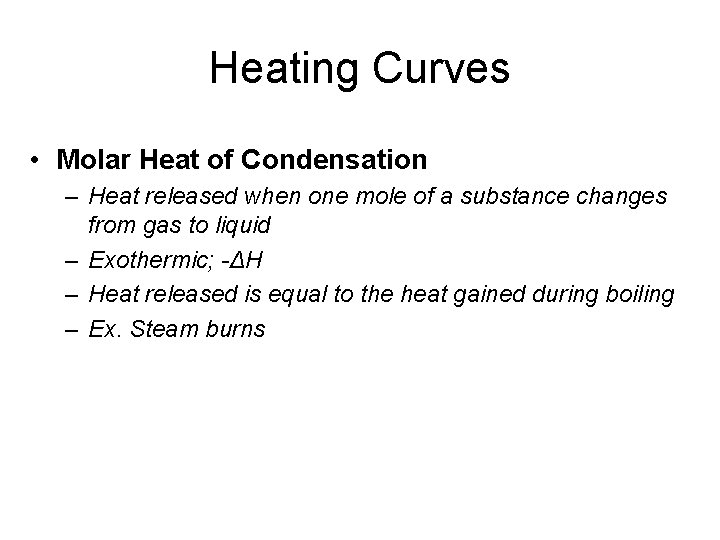
Heating Curves • Molar Heat of Condensation – Heat released when one mole of a substance changes from gas to liquid – Exothermic; -ΔH – Heat released is equal to the heat gained during boiling – Ex. Steam burns
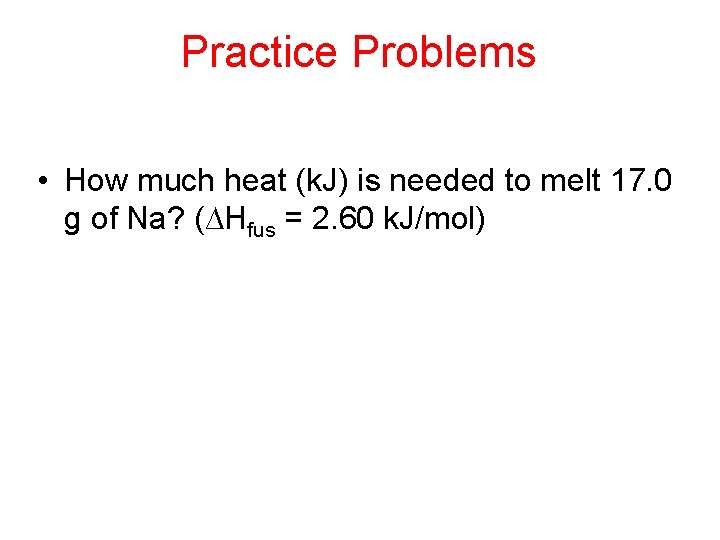
Practice Problems • How much heat (k. J) is needed to melt 17. 0 g of Na? (∆Hfus = 2. 60 k. J/mol)
• 1. 92 k. J
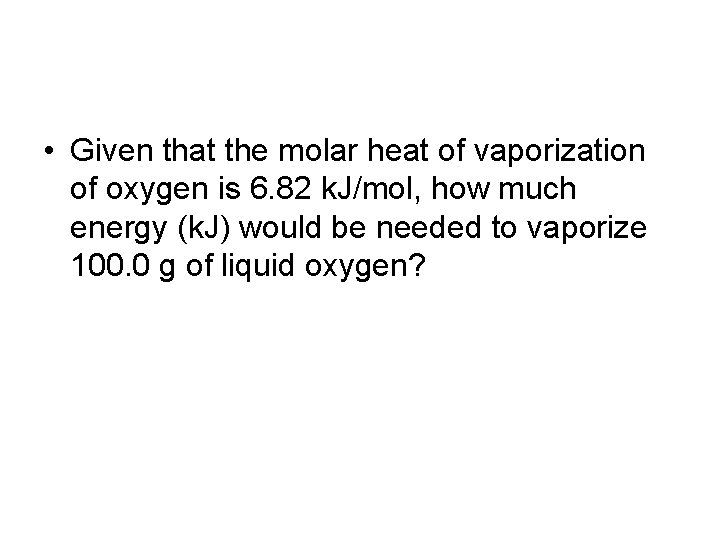
• Given that the molar heat of vaporization of oxygen is 6. 82 k. J/mol, how much energy (k. J) would be needed to vaporize 100. 0 g of liquid oxygen?
• 21. 31 k. J
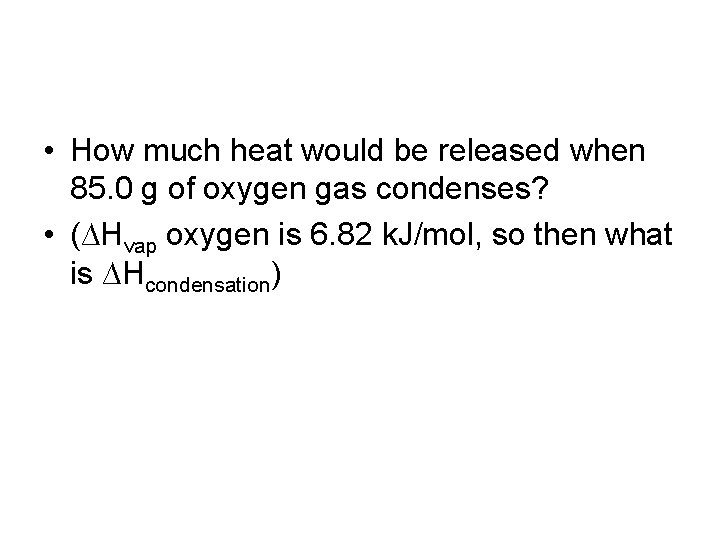
• How much heat would be released when 85. 0 g of oxygen gas condenses? • (∆Hvap oxygen is 6. 82 k. J/mol, so then what is ∆Hcondensation)
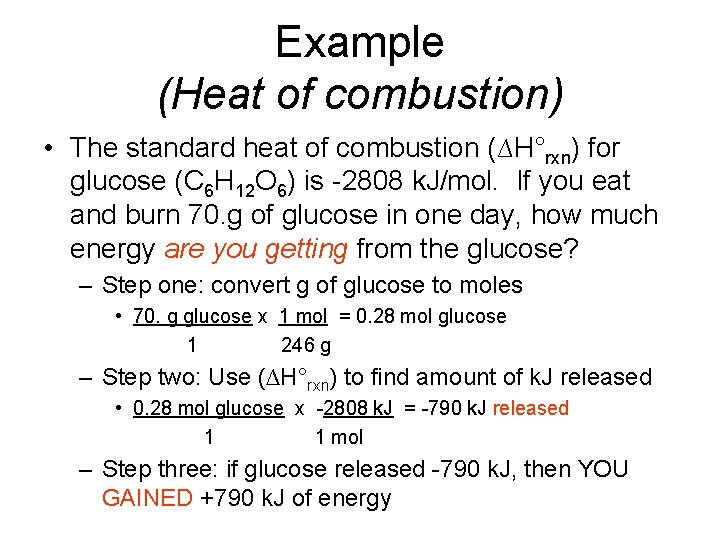
Example (Heat of combustion) • The standard heat of combustion (∆H°rxn) for glucose (C 6 H 12 O 6) is -2808 k. J/mol. If you eat and burn 70. g of glucose in one day, how much energy are you getting from the glucose? – Step one: convert g of glucose to moles • 70. g glucose x 1 mol = 0. 28 mol glucose 1 246 g – Step two: Use (∆H°rxn) to find amount of k. J released • 0. 28 mol glucose x -2808 k. J = -790 k. J released 1 1 mol – Step three: if glucose released -790 k. J, then YOU GAINED +790 k. J of energy