
I Human Genetic Disorders A Autosomal Recessive 3
- Slides: 16
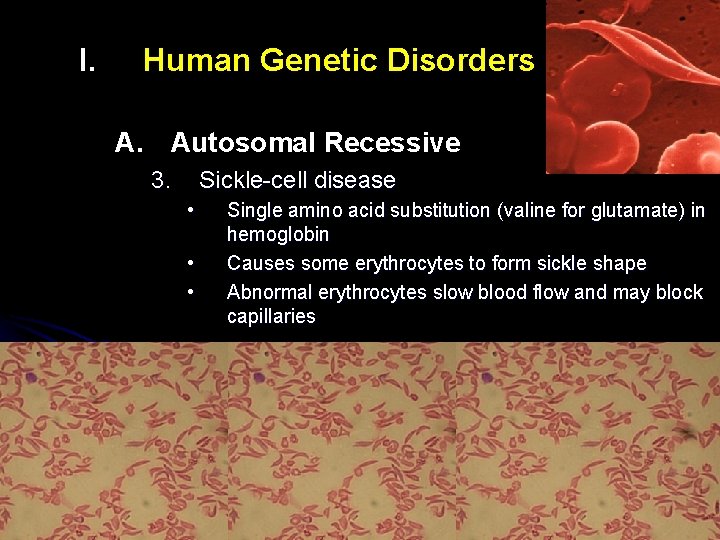
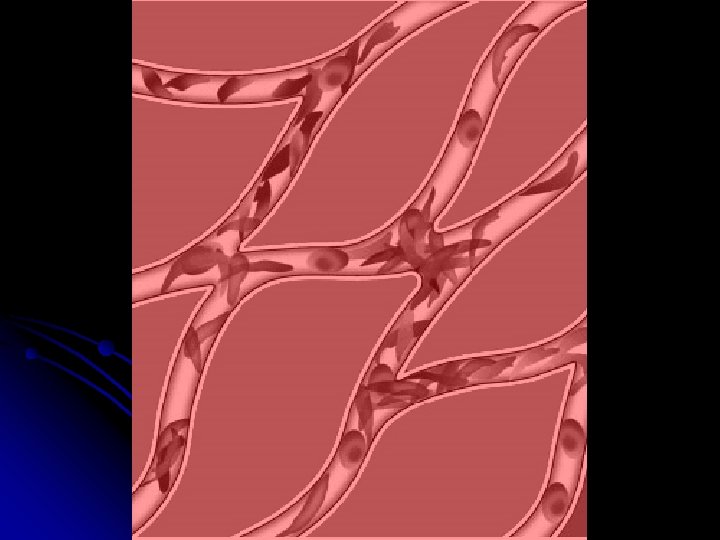
I. Human Genetic Disorders A. Autosomal Recessive 3. Sickle-cell disease • • • Single amino acid substitution (valine for glutamate) in hemoglobin Causes some erythrocytes to form sickle shape Abnormal erythrocytes slow blood flow and may block capillaries
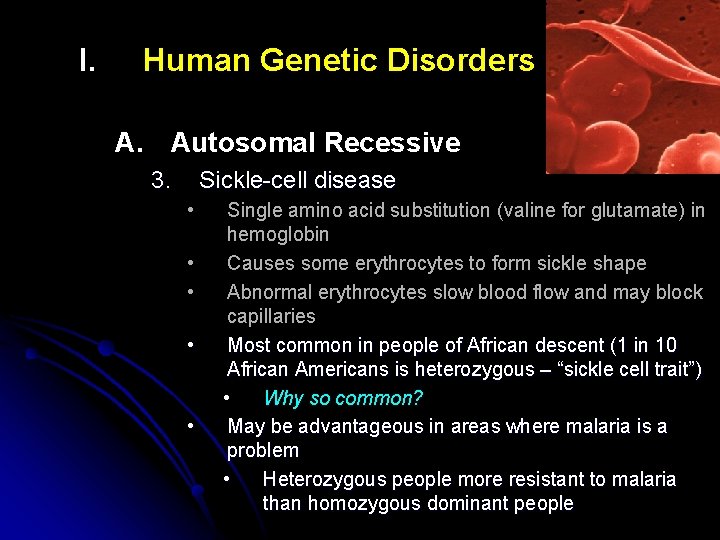
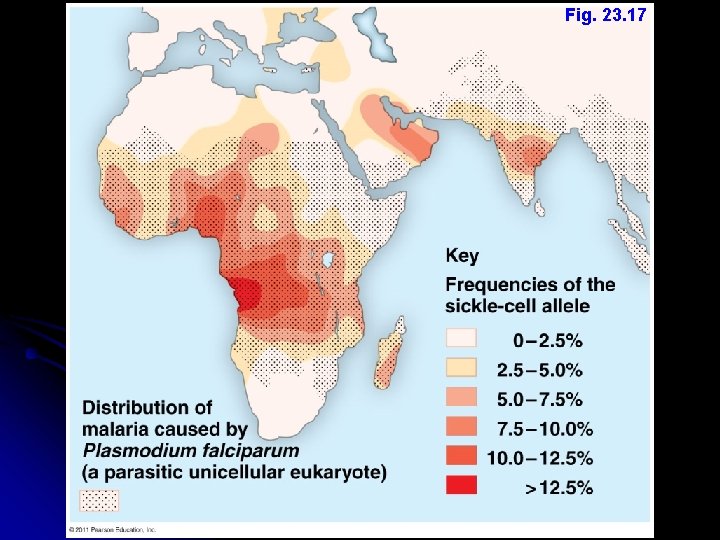
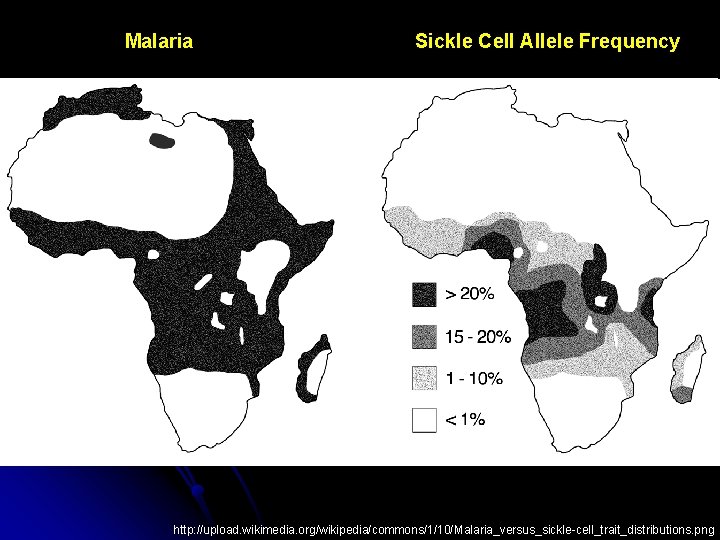
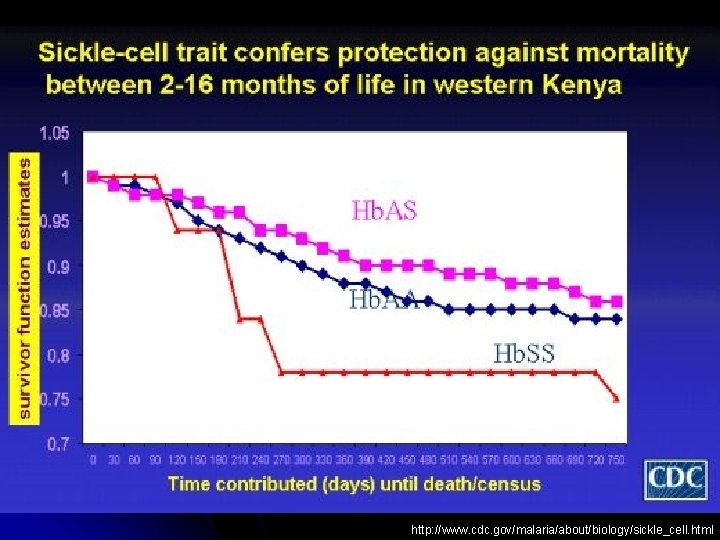
I. Human Genetic Disorders A. Autosomal Recessive 3. Sickle-cell disease • • • Single amino acid substitution (valine for glutamate) in hemoglobin Causes some erythrocytes to form sickle shape Abnormal erythrocytes slow blood flow and may block capillaries Most common in people of African descent (1 in 10 African Americans is heterozygous – “sickle cell trait”) • Why so common? May be advantageous in areas where malaria is a problem • Heterozygous people more resistant to malaria than homozygous dominant people
Fig. 23. 17
Malaria Sickle Cell Allele Frequency http: //upload. wikimedia. org/wikipedia/commons/1/10/Malaria_versus_sickle-cell_trait_distributions. png
http: //www. cdc. gov/malaria/about/biology/sickle_cell. html
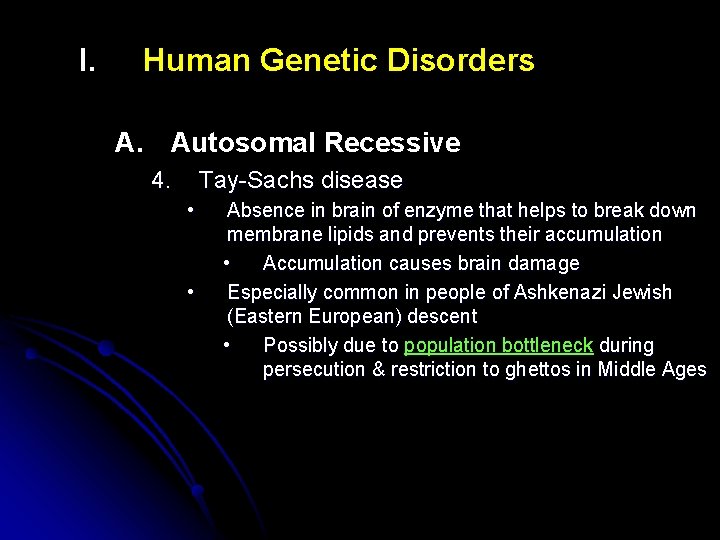
I. Human Genetic Disorders A. Autosomal Recessive 4. Tay-Sachs disease • • Absence in brain of enzyme that helps to break down membrane lipids and prevents their accumulation • Accumulation causes brain damage Especially common in people of Ashkenazi Jewish (Eastern European) descent • Possibly due to population bottleneck during persecution & restriction to ghettos in Middle Ages
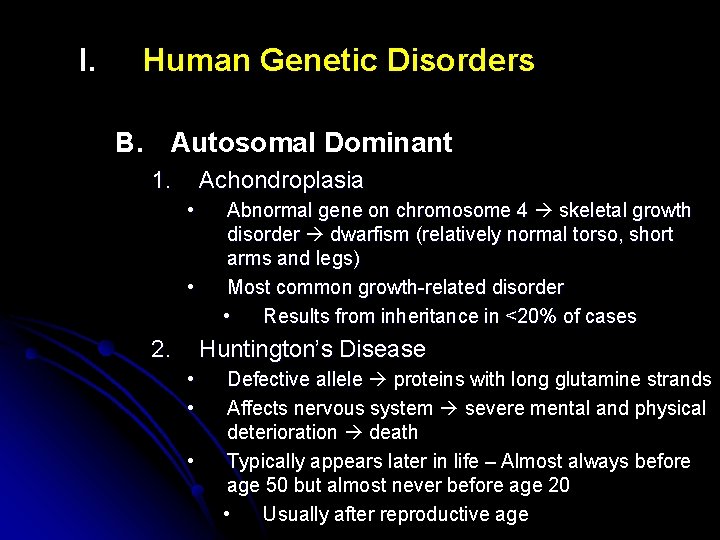
I. Human Genetic Disorders B. Autosomal Dominant 1. Achondroplasia • • 2. Abnormal gene on chromosome 4 skeletal growth disorder dwarfism (relatively normal torso, short arms and legs) Most common growth-related disorder • Results from inheritance in <20% of cases Huntington’s Disease • • • Defective allele proteins with long glutamine strands Affects nervous system severe mental and physical deterioration death Typically appears later in life – Almost always before age 50 but almost never before age 20 • Usually after reproductive age
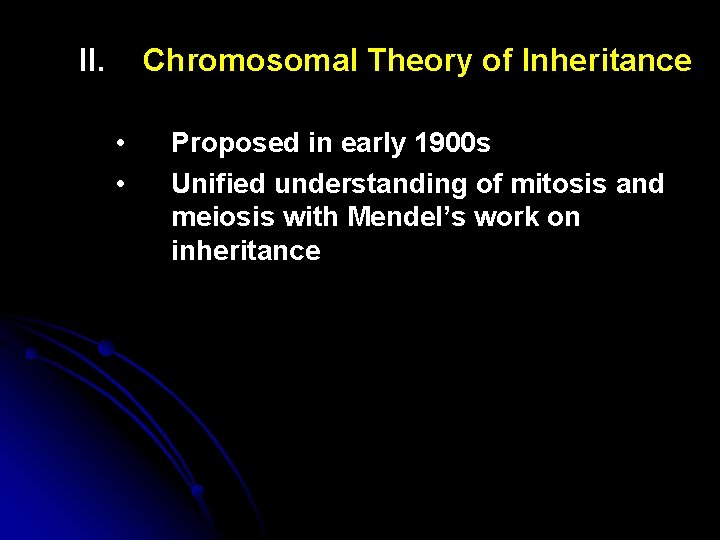
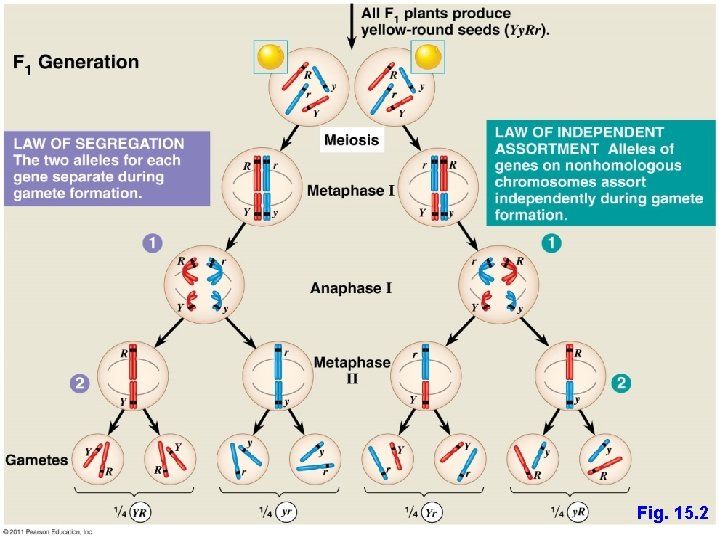
II. Chromosomal Theory of Inheritance • • Proposed in early 1900 s Unified understanding of mitosis and meiosis with Mendel’s work on inheritance
Fig. 15. 2
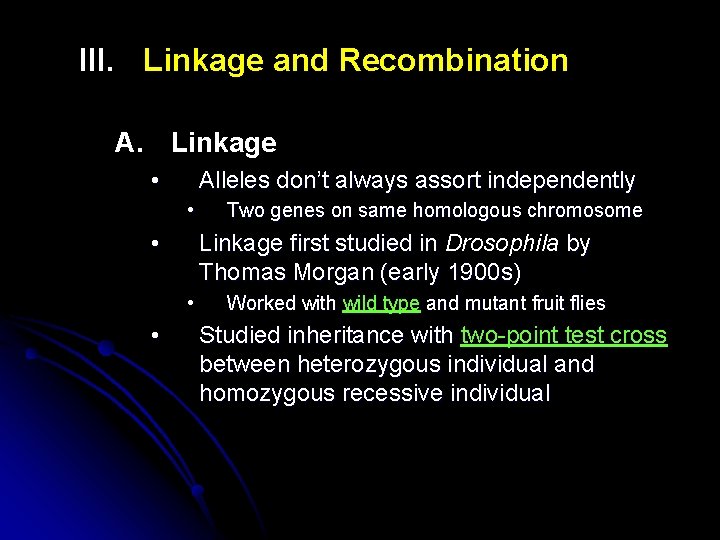
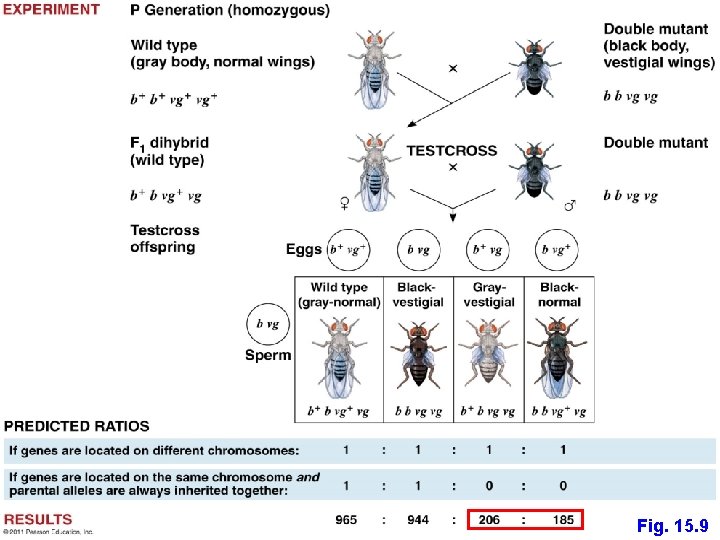
III. Linkage and Recombination A. Linkage • Alleles don’t always assort independently • • Linkage first studied in Drosophila by Thomas Morgan (early 1900 s) • • Two genes on same homologous chromosome Worked with wild type and mutant fruit flies Studied inheritance with two-point test cross between heterozygous individual and homozygous recessive individual
Fig. 15. 9
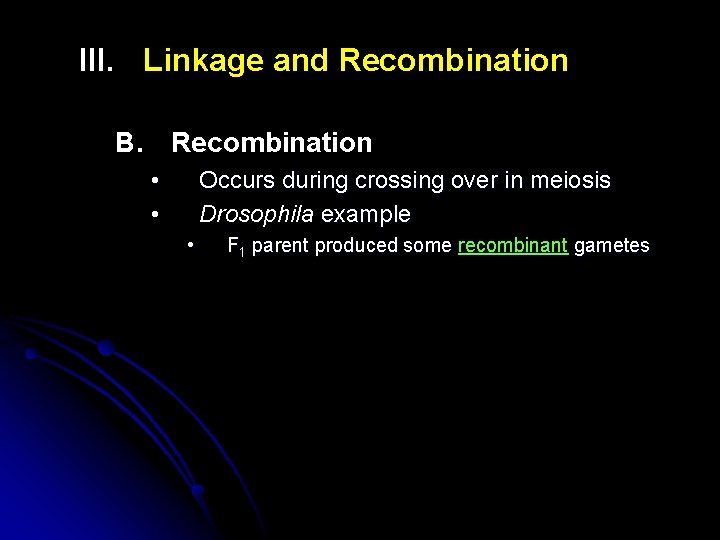
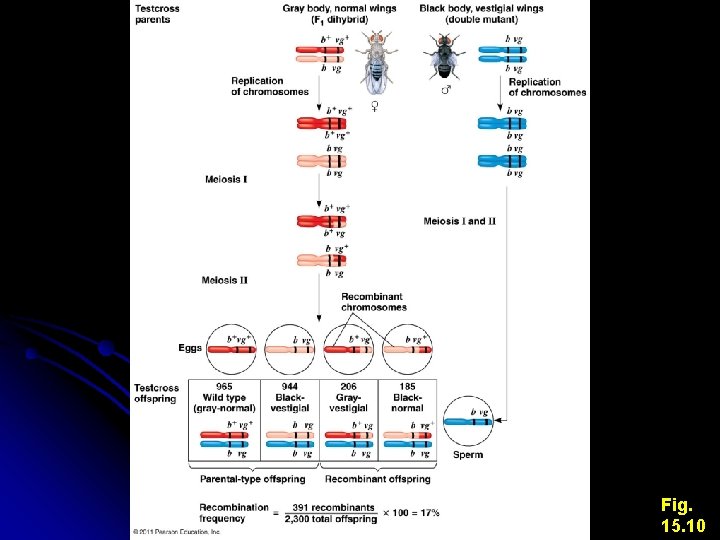
III. Linkage and Recombination B. Recombination • • Occurs during crossing over in meiosis Drosophila example • F 1 parent produced some recombinant gametes
Fig. 15. 10
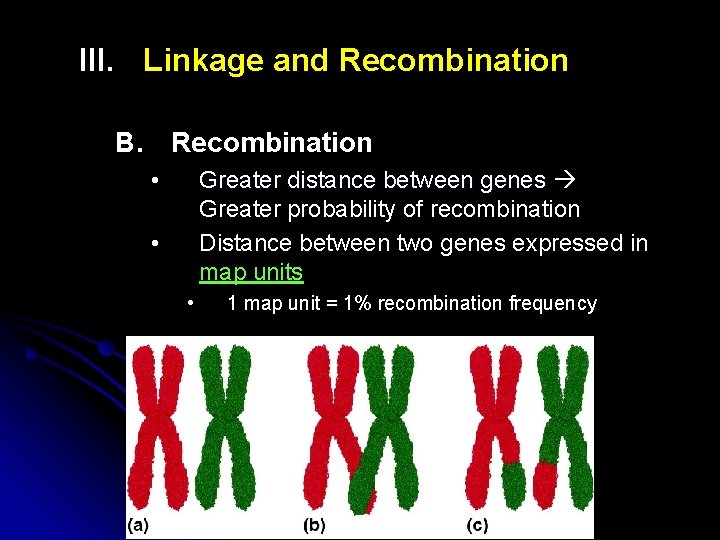
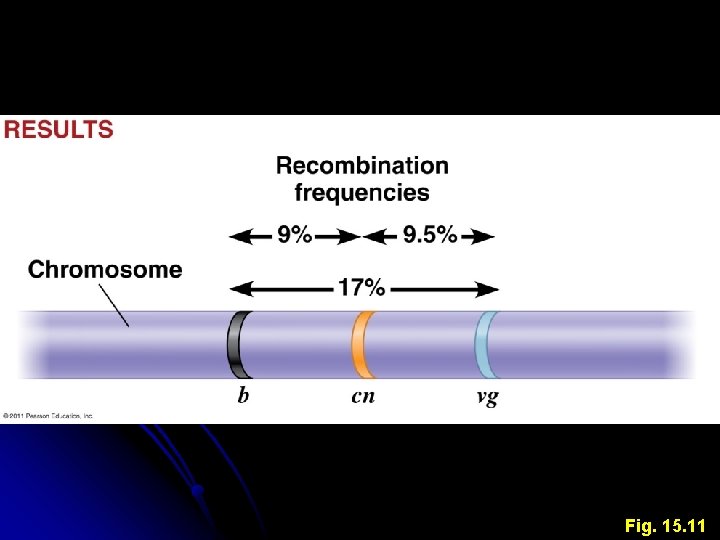
III. Linkage and Recombination B. Recombination • Greater distance between genes Greater probability of recombination Distance between two genes expressed in map units • • 1 map unit = 1% recombination frequency
Fig. 15. 11