
I have received 11 of 72 Harappa Video



- Slides: 35
I have received 11 of 72 ‘Harappa Video’ Notes. These were due 10/24. That was 11 days ago. I have given some in class work time on 4 of 7 school days between 10/24 and 11/1 If you have already turned in the Harappa video worksheet, then you are NOT required to complete the HW (right hand) portion of pages 1 -2 of today’s packet. Those students are… Porter, Elijah M, Raymond, Mikey, Kendra, Taylor, John K, Wyatt, Mitchell, Antonia, John D ALL students are still expected to complete the Harappa Video notes
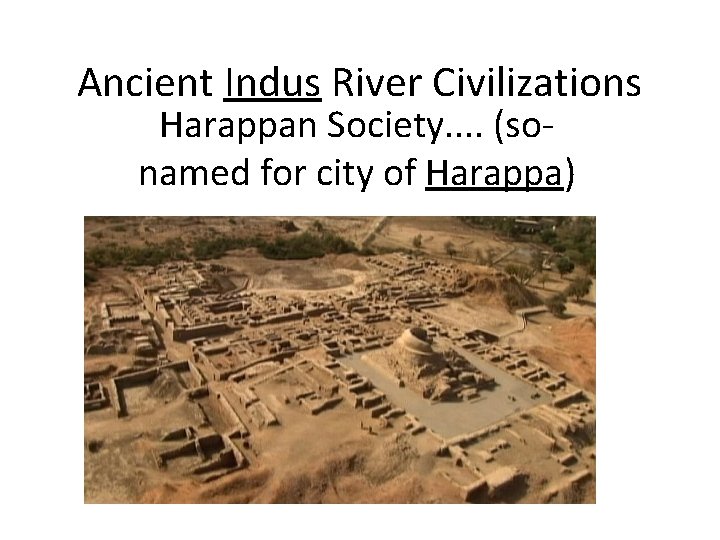
Ancient Indus River Civilizations Harappan Society. . (so- named for city of Harappa)
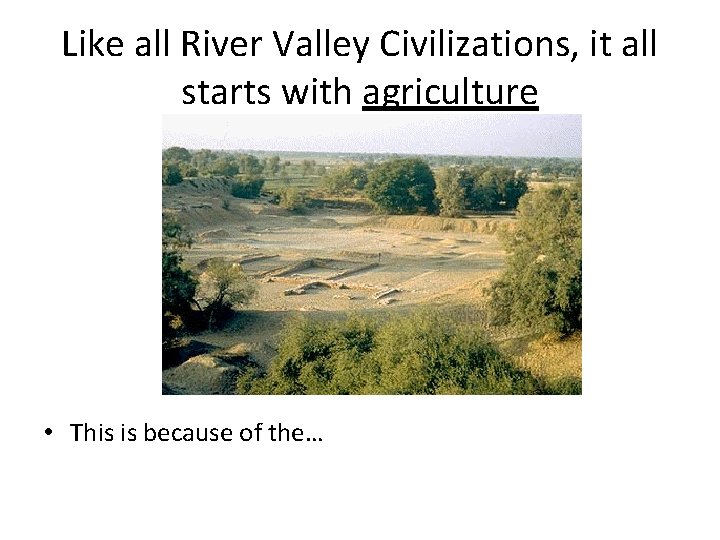
Like all River Valley Civilizations, it all starts with agriculture • This is because of the…
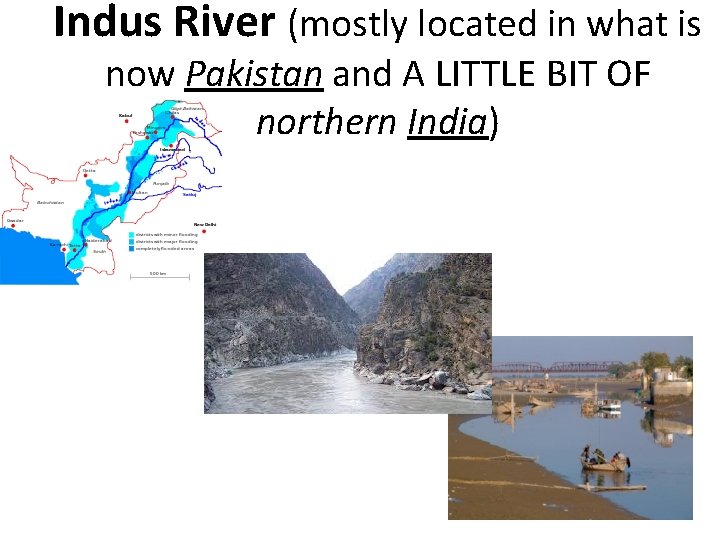
Indus River (mostly located in what is now Pakistan and A LITTLE BIT OF northern India)
PREDICTABLE FLOODING… • Like the Tigris and Euphrates River of Mesopotamia, and the Nile River of Egypt, the Indus River, as well as the Ganges River (in modern-day East India and Bangladesh) and the Brahmaputra River of India, flood predictably, leading first to agriculture and eventually to the development of advanced civilizations
PREDICTABLE FLOODING • Why did these rivers flood in a predictable manner? MONSOONS! Monsoons are seasonal winds that influence the South Asian sub-continent (India, Pakistan, and Bangladesh) as well as East Asia (China, Japan, Korea) and Southeast Asia (which is sometimes called Indo-China)
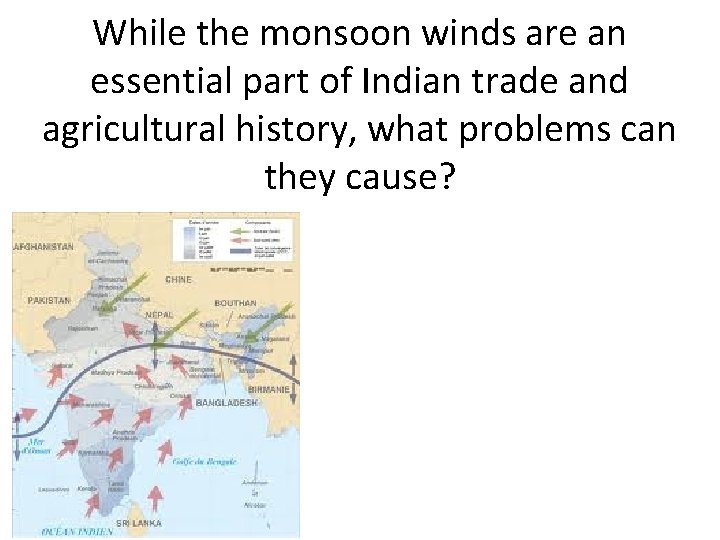
MONSOONS! • Summer monsoons bring warm rain and humidity to the eastern portion of Asia during the summer months (a lot like hurricanes in the Americas) • Winter monsoons bring dry, cool air from the northern mountains (Himalaya and Hindu-Kush) to the Indian sub-continent. • These predictable Monsoons give India its seasons and made it possible for early river valley peoples to develop agriculture around predictable flood seasons.
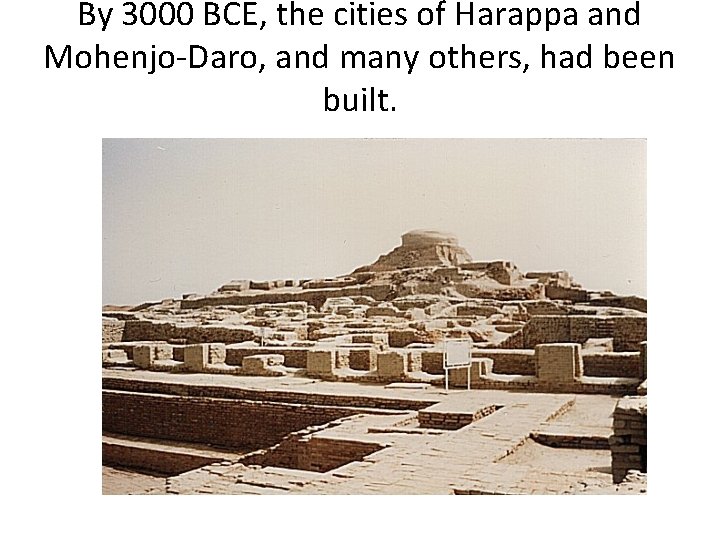
By 3000 BCE, the cities of Harappa and Mohenjo-Daro, and many others, had been built.
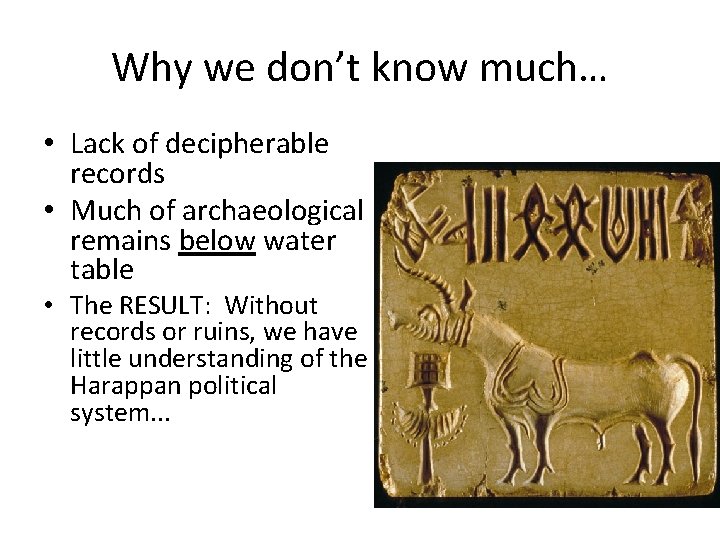
Why we don’t know much… • Lack of decipherable records • Much of archaeological remains below water table • The RESULT: Without records or ruins, we have little understanding of the Harappan political system. . .
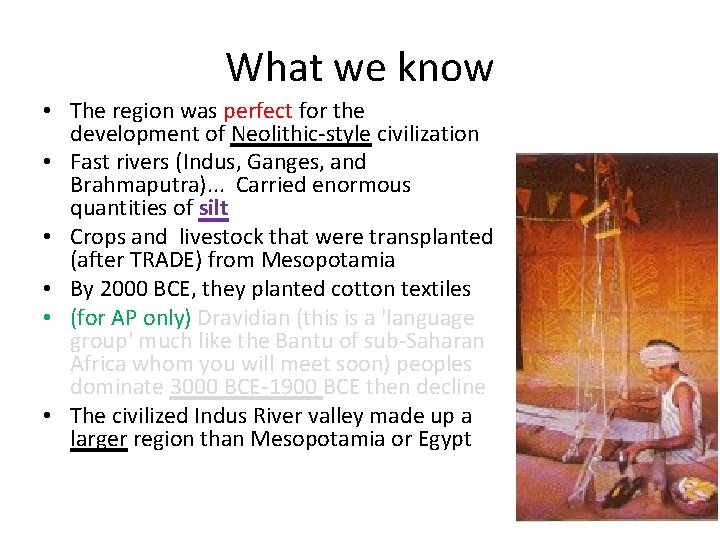
What we know • The region was perfect for the development of Neolithic-style civilization • Fast rivers (Indus, Ganges, and Brahmaputra). . . Carried enormous quantities of silt • Crops and livestock that were transplanted (after TRADE) from Mesopotamia • By 2000 BCE, they planted cotton textiles • (for AP only) Dravidian (this is a 'language group' much like the Bantu of sub-Saharan Africa whom you will meet soon) peoples dominate 3000 BCE-1900 BCE then decline • The civilized Indus River valley made up a larger region than Mesopotamia or Egypt
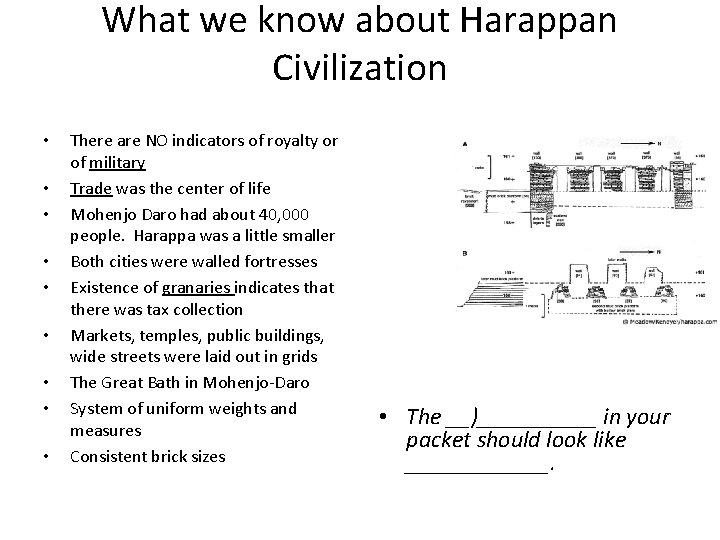
What we know about Harappan Civilization • • • There are NO indicators of royalty or of military Trade was the center of life Mohenjo Daro had about 40, 000 people. Harappa was a little smaller Both cities were walled fortresses Existence of granaries indicates that there was tax collection Markets, temples, public buildings, wide streets were laid out in grids The Great Bath in Mohenjo-Daro System of uniform weights and measures Consistent brick sizes • The __)_____ in your packet should look like ______.
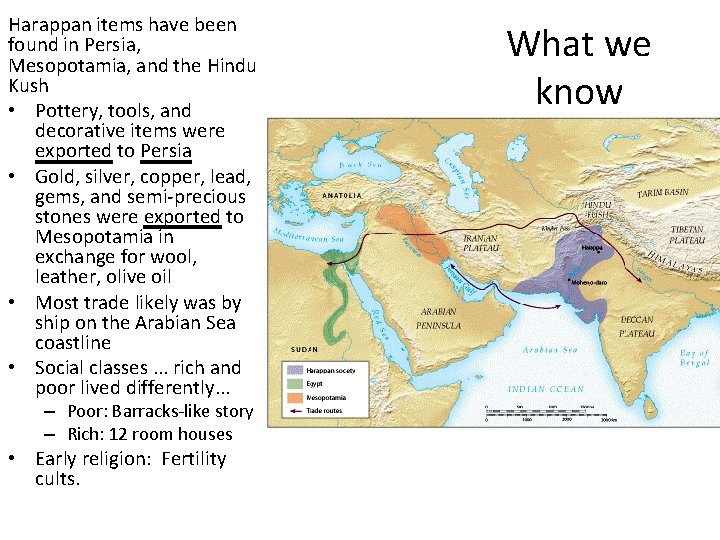
Harappan items have been found in Persia, Mesopotamia, and the Hindu Kush • Pottery, tools, and decorative items were exported to Persia • Gold, silver, copper, lead, gems, and semi-precious stones were exported to Mesopotamia in exchange for wool, leather, olive oil • Most trade likely was by ship on the Arabian Sea coastline • Social classes. . . rich and poor lived differently. . . – Poor: Barracks-like story – Rich: 12 room houses • Early religion: Fertility cults. What we know
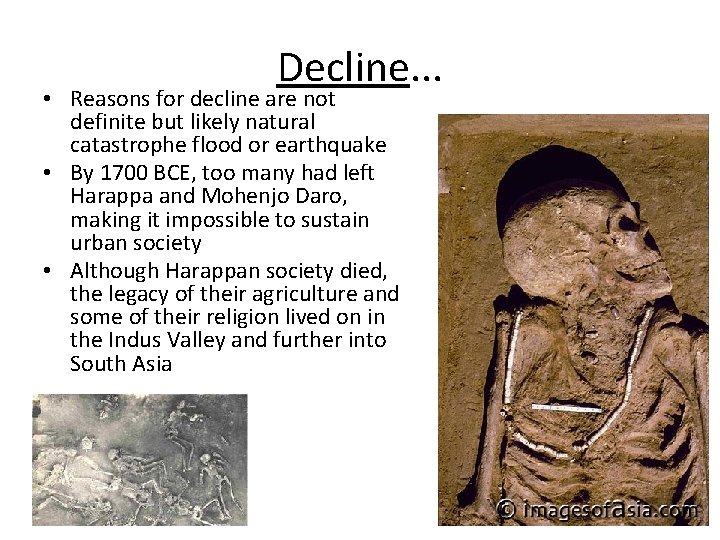
Decline. . . • Reasons for decline are not definite but likely natural catastrophe flood or earthquake • By 1700 BCE, too many had left Harappa and Mohenjo Daro, making it impossible to sustain urban society • Although Harappan society died, the legacy of their agriculture and some of their religion lived on in the Indus Valley and further into South Asia
Three questions to try to answer…
List artifacts that archaeologists found at Harappa and Mohenjo. Daro that indicate that the cities were part of an advanced civilization?
While the monsoon winds are an essential part of Indian trade and agricultural history, what problems can they cause?
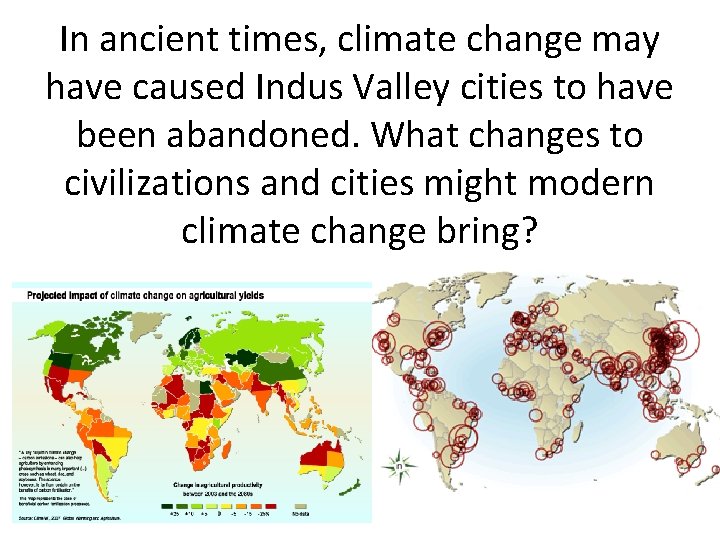
In ancient times, climate change may have caused Indus Valley cities to have been abandoned. What changes to civilizations and cities might modern climate change bring?
BACK TO THE FUN-FILLED WORK OF NOTE-TAKING …but the Indus River Valley was not destined to remain unpopulated and without civilization for long…
STOP HERE MR GINGROW!!! • Tomorrow we will look at what happened AFTER THE HARAPPANS… • For the remainder of today’s class, you may work on Right Hand Side questions so that you will never be 10 days late with a homework assignment again. (those who turned it in, you may work on other stuff)
Ten or so things to know about the Aryans in the Indus River Valley: FYI: The right hand side homework questions ARE REQUIRED from ALL STUDENTS!!!
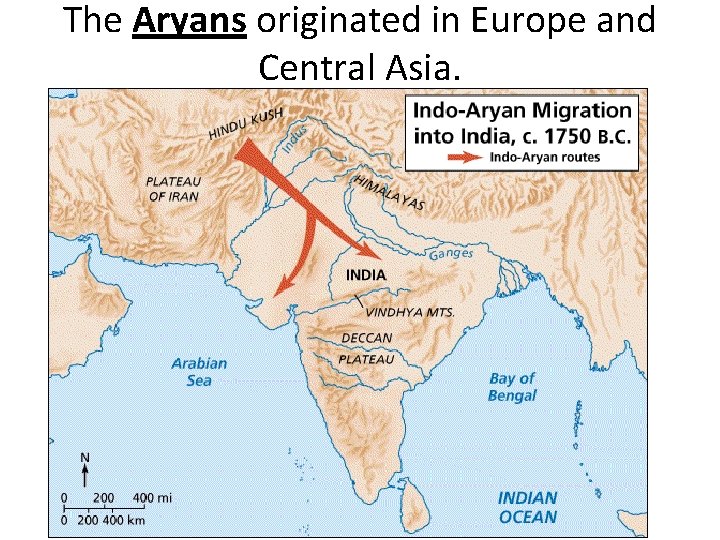
The Aryans originated in Europe and Central Asia.
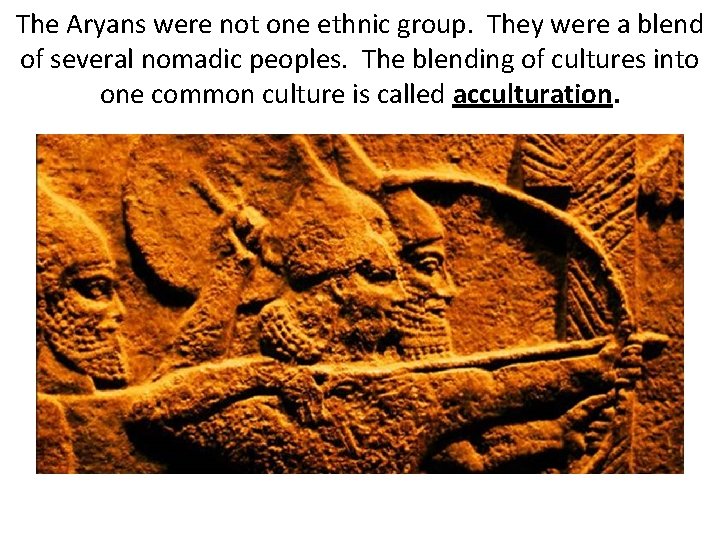
The Aryans were not one ethnic group. They were a blend of several nomadic peoples. The blending of cultures into one common culture is called acculturation.
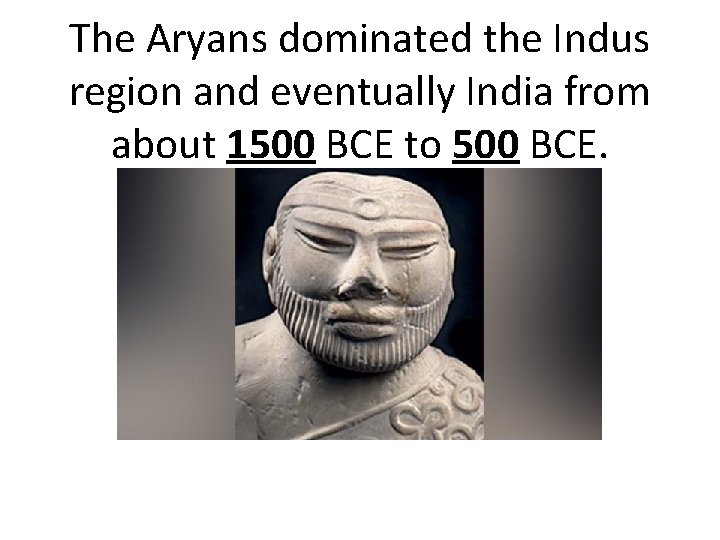
The Aryans dominated the Indus region and eventually India from about 1500 BCE to 500 BCE.
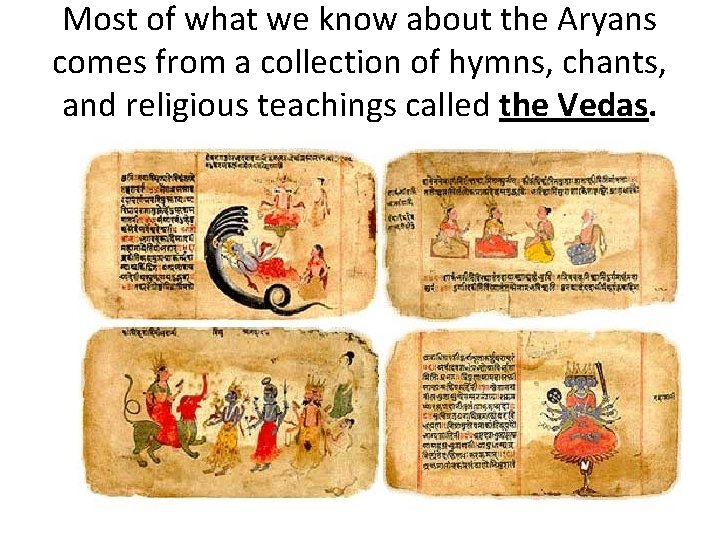
Most of what we know about the Aryans comes from a collection of hymns, chants, and religious teachings called the Vedas.
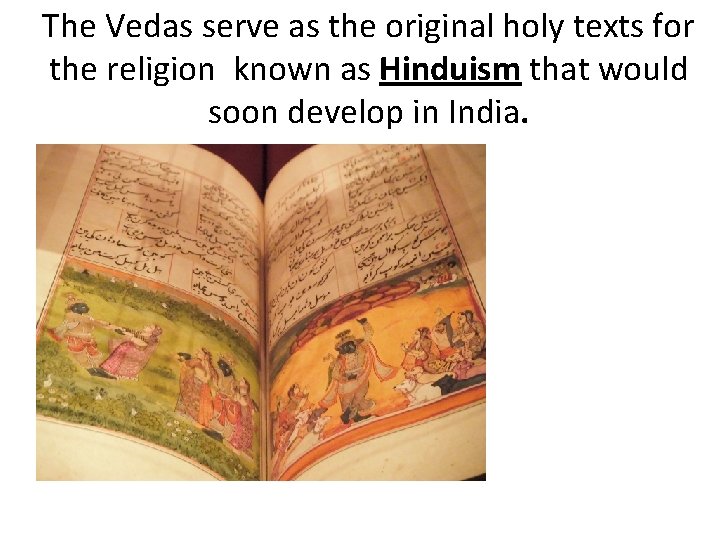
The Vedas serve as the original holy texts for the religion known as Hinduism that would soon develop in India.
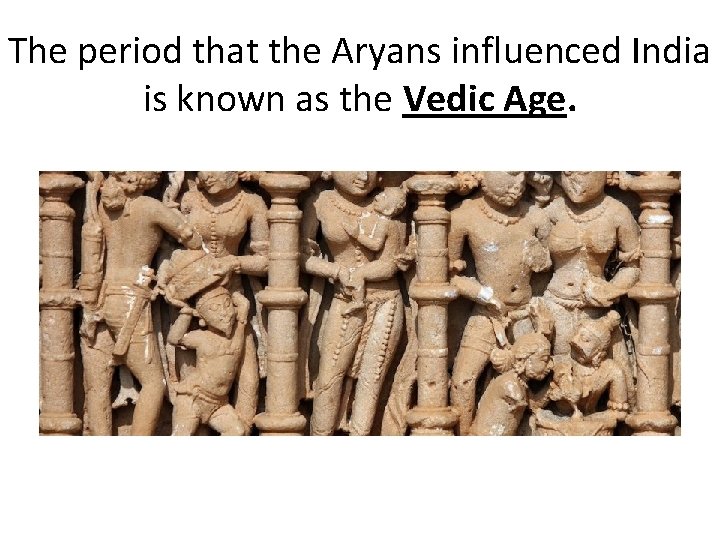
The period that the Aryans influenced India is known as the Vedic Age.
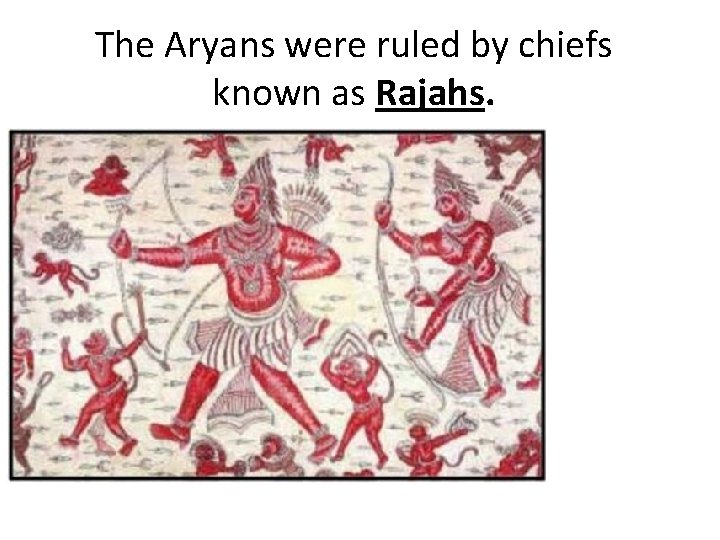
The Aryans were ruled by chiefs known as Rajahs.
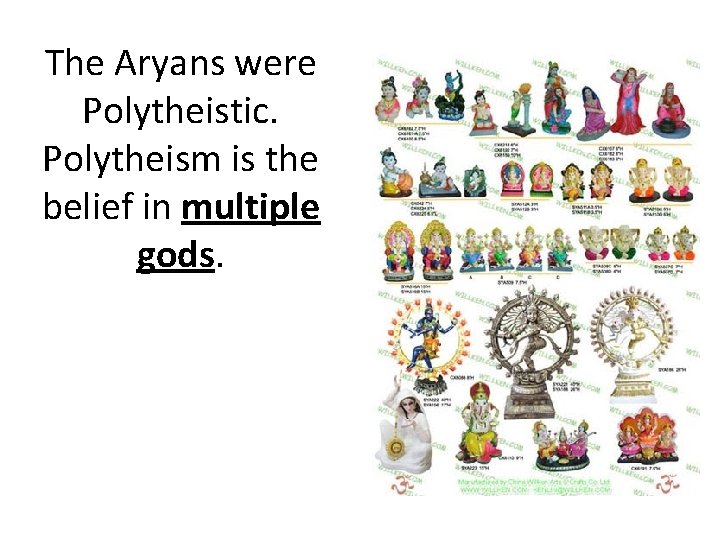
The Aryans were Polytheistic. Polytheism is the belief in multiple gods.
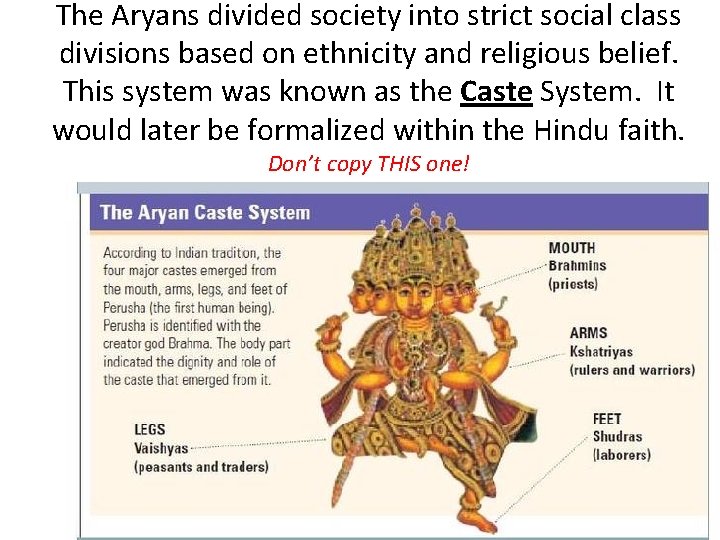
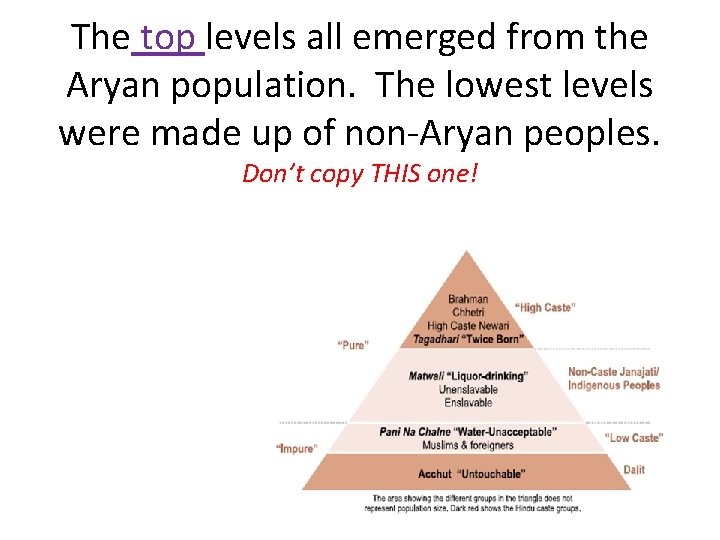
The Aryans divided society into strict social class divisions based on ethnicity and religious belief. This system was known as the Caste System. It would later be formalized within the Hindu faith. Don’t copy THIS one!
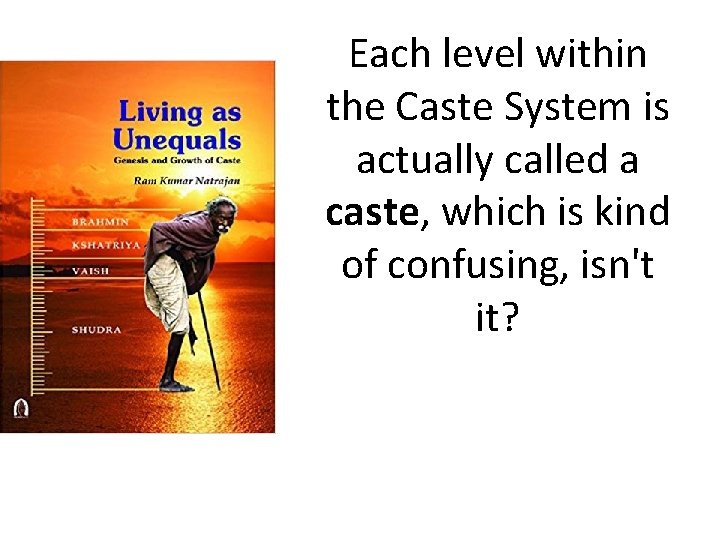
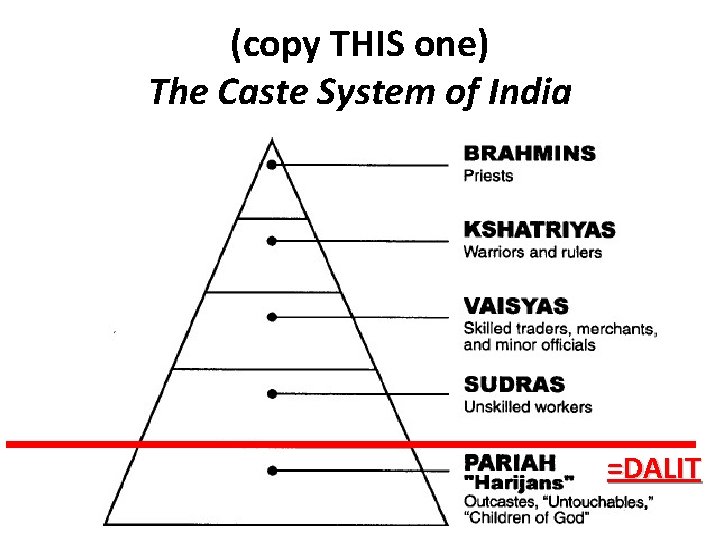
Each level within the Caste System is actually called a caste, which is kind of confusing, isn't it?
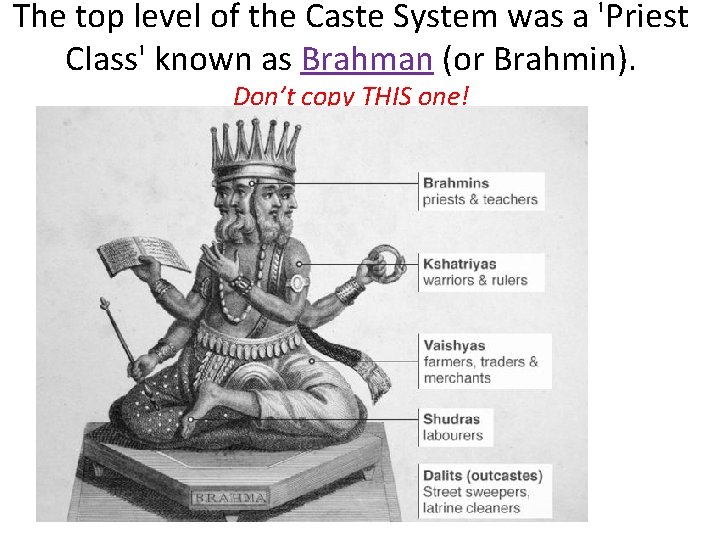
The top level of the Caste System was a 'Priest Class' known as Brahman (or Brahmin). Don’t copy THIS one!
The top levels all emerged from the Aryan population. The lowest levels were made up of non-Aryan peoples. Don’t copy THIS one!
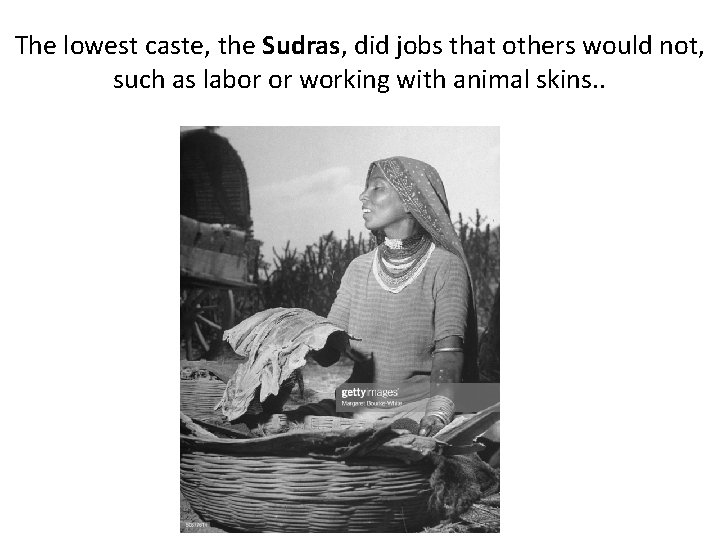
The lowest caste, the Sudras, did jobs that others would not, such as labor or working with animal skins. .
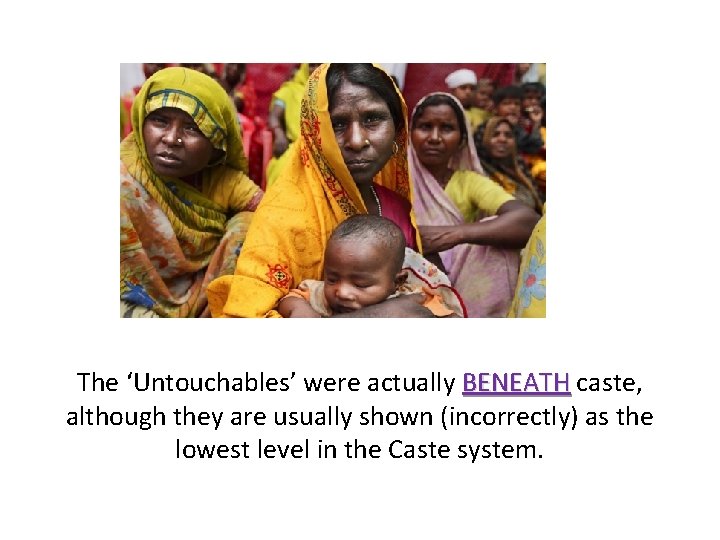
The ‘Untouchables’ were actually BENEATH caste, BENEATH although they are usually shown (incorrectly) as the lowest level in the Caste system.
(copy THIS one) The Caste System of India =DALIT