
I Geology B Plate Tectonics 2 MidOcean Ridge
I. Geology B. Plate Tectonics 2. Mid-Ocean Ridge System • • • 3. Discovered from sea floor mapping with SONAR during and after World War II Largest geological feature on Earth Ridges displaced in some areas by transform faults Trenches • • Conspicuous sea floor features Especially common in the Pacific Ocean
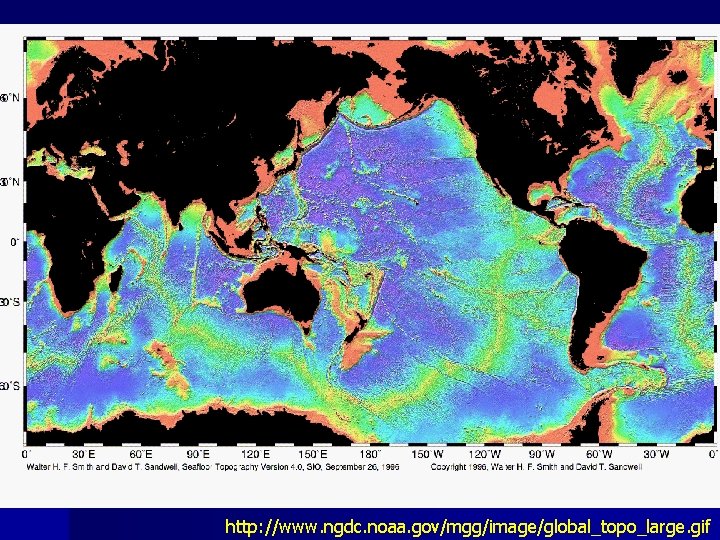
http: //www. ngdc. noaa. gov/mgg/image/global_topo_large. gif

Fig. 2. 5
I. Geology C. Plate Tectonics - Evidence 1. “Ring of Fire” • Geological activity (e. g. earthquakes, volcanoes) associated with mid-ocean ridges and with trenches
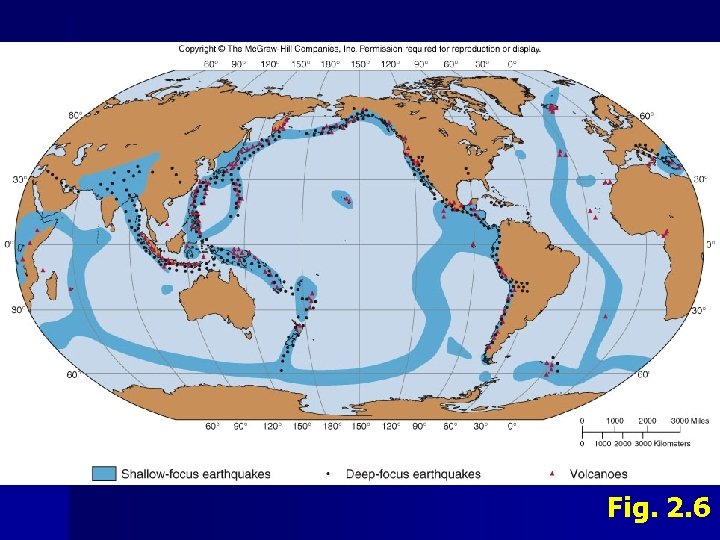
Fig. 2. 6
I. Geology C. Plate Tectonics - Evidence 1. “Ring of Fire” • 2. Geological activity (e. g. earthquakes, volcanoes) associated with mid-ocean ridges and with trenches Closer to ridges • • 3. Younger rock Thinner covering of sediment Magnetic anomalies • • Caused by magnetic field reversals Symmetrical on either side of ridge axis
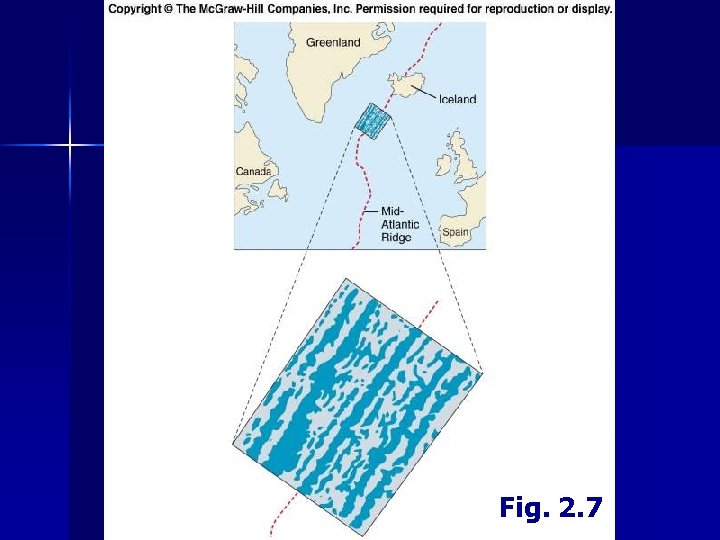
Fig. 2. 7

I. Geology D. Plate Tectonics - Mechanism 1. Sea-Floor Spreading • • Mid-ocean ridges contain rifts where two pieces of crust are moving apart and new oceanic crust is being created (spreading rate ca. 2 -18 cm y-1) As rift widens, hot mantle material rises through rift, cools and solidifies to form new oceanic crust Ridges = spreading centers Theory generated by induction explains observations • Younger rock closer to ridges • Thinner sediment closer to ridges • Patterns of magnetic anomalies
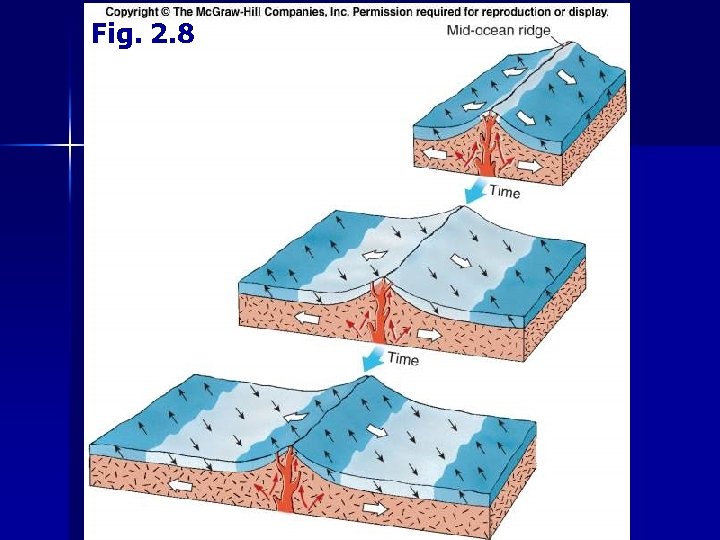
Fig. 2. 8
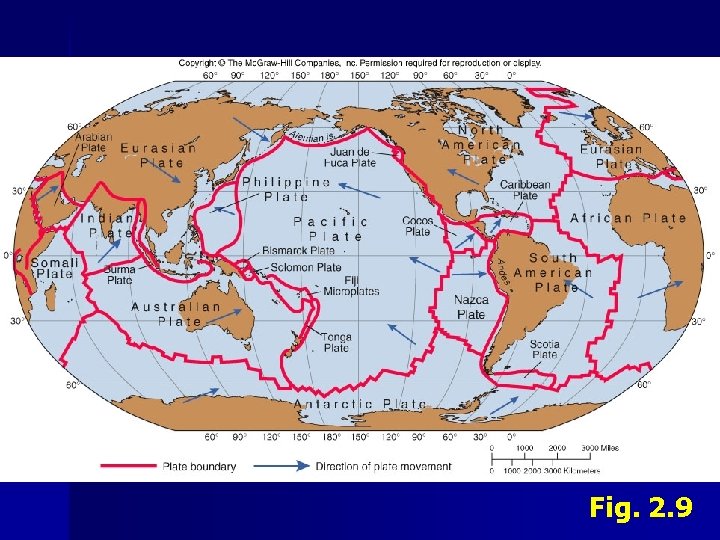
I. Geology D. Plate Tectonics - Mechanism 1. Sea-Floor Spreading • • • Lithosphere made up of lithospheric plates Plates may contain continental crust, oceanic crust, or both Plates rest on asthenosphere (plastic upper mantle) Plate boundaries correspond to locations of mid-ocean ridges and to trenches Not all plates completely characterized yet Fig. 2. 9
I. Geology D. Plate Tectonics - Mechanism 2. Subduction • • • Old crust destroyed when one plate dips below another • Oldest oceanic crust ~200 million years old Denser plate subducted beneath less dense plate Locations – oceanic trenches = subduction zones Recycles crust and supports volcanic activity May result from collisions between • Continental plate and oceanic plate (oceanic plate subducted; usually forms volcanoes) • Two oceanic plates (denser plate subducted; usually forms island arc)
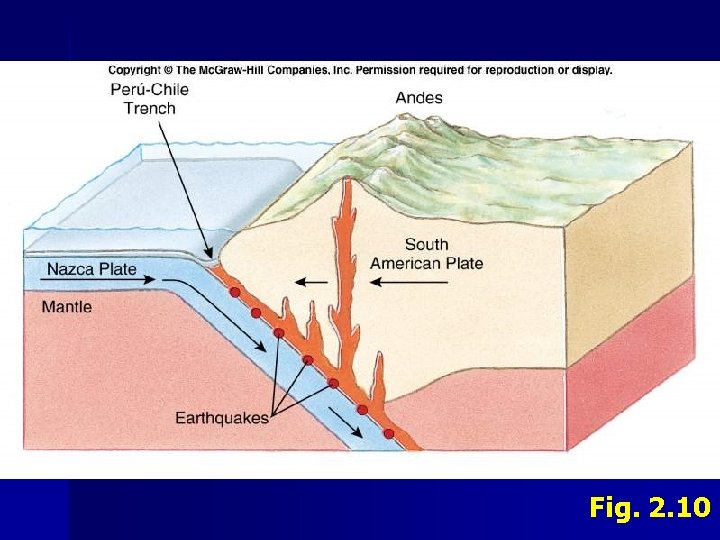
Fig. 2. 10
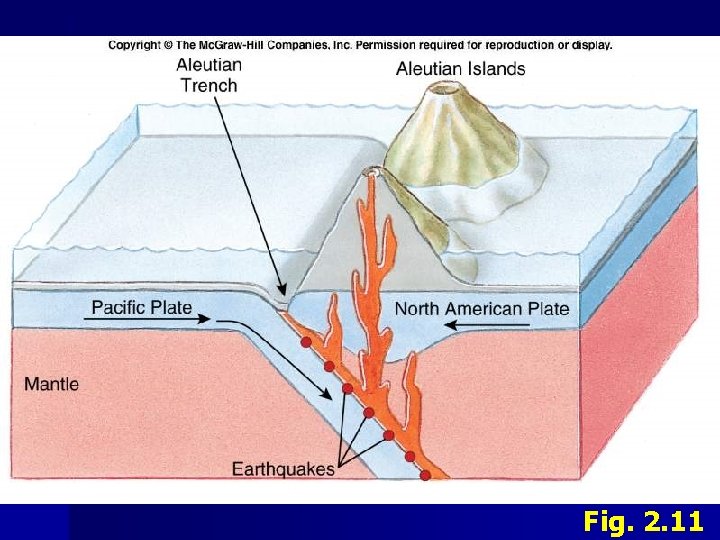
Fig. 2. 11
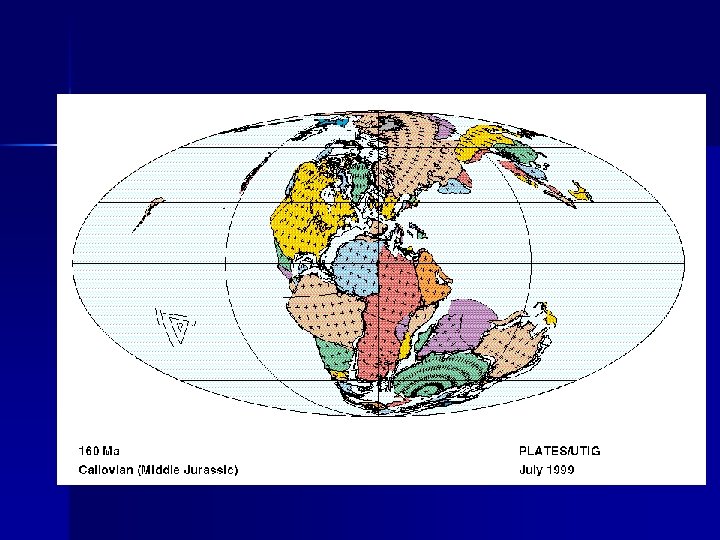
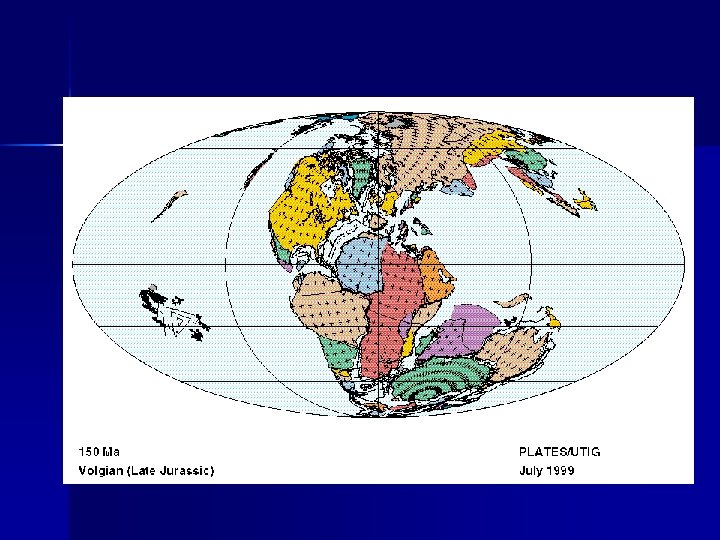
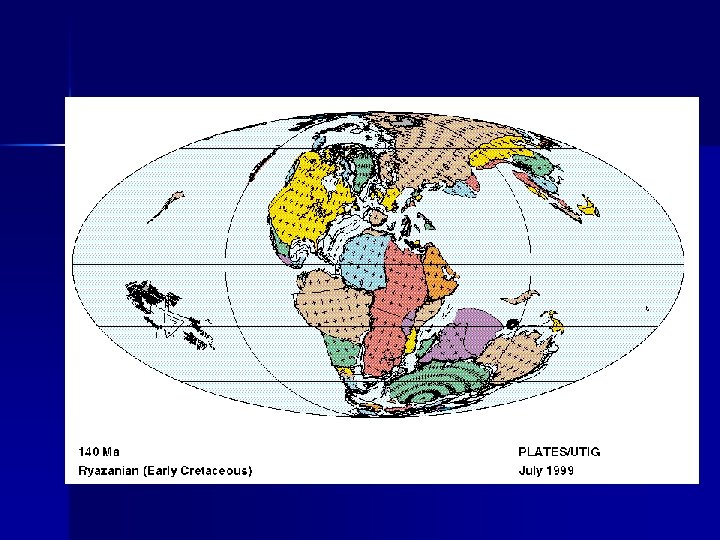
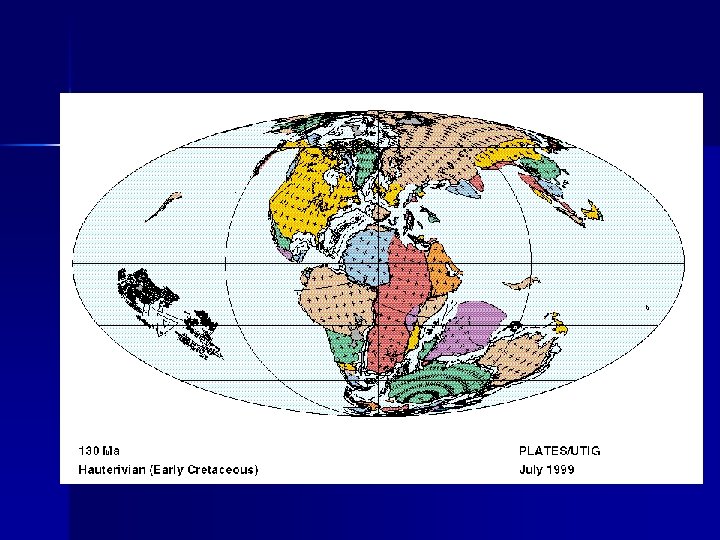
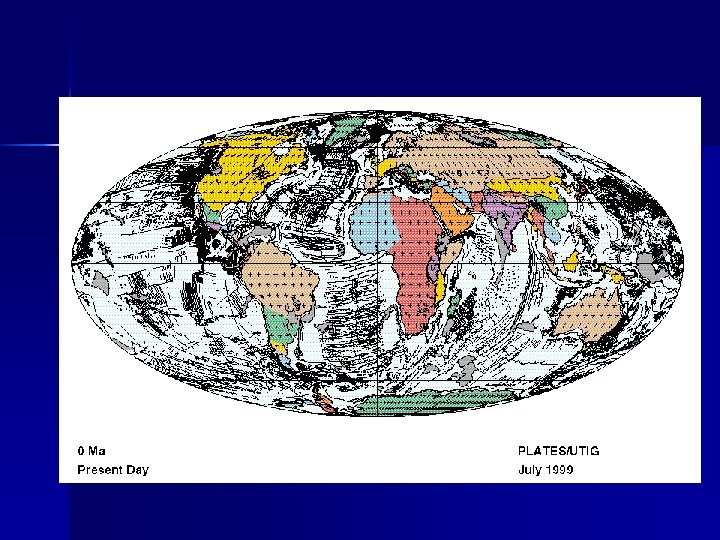
I. Geology E. Geological History 1. Continental Drift • • All continents joined together ~200 mya • Pangaea – “supercontinent” • Panthalassa – single ocean Pacific Ocean • Tethys Sea – Shallow sea between Eurasia & Africa Mediterranean Sea • Sinus Borealis Arctic Ocean Laurasia separated from Gondwana ~180 mya
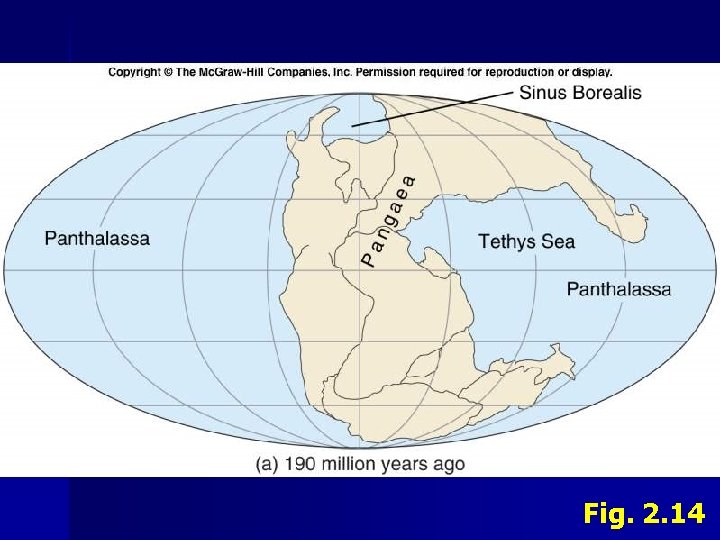
Fig. 2. 14
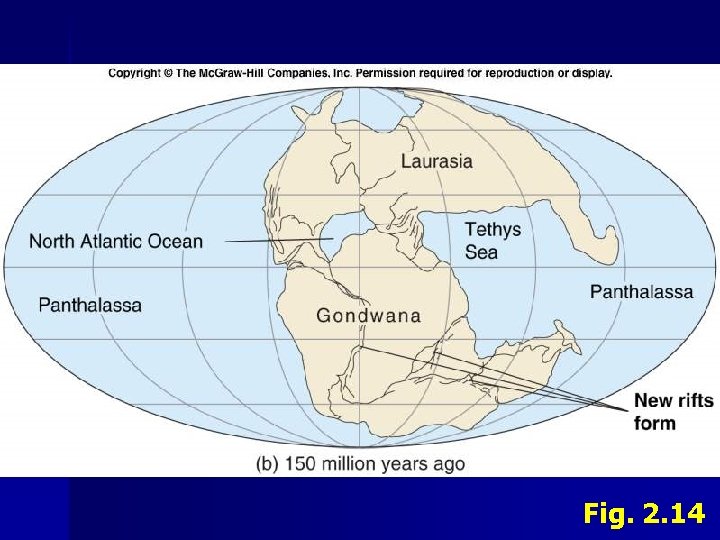
Fig. 2. 14
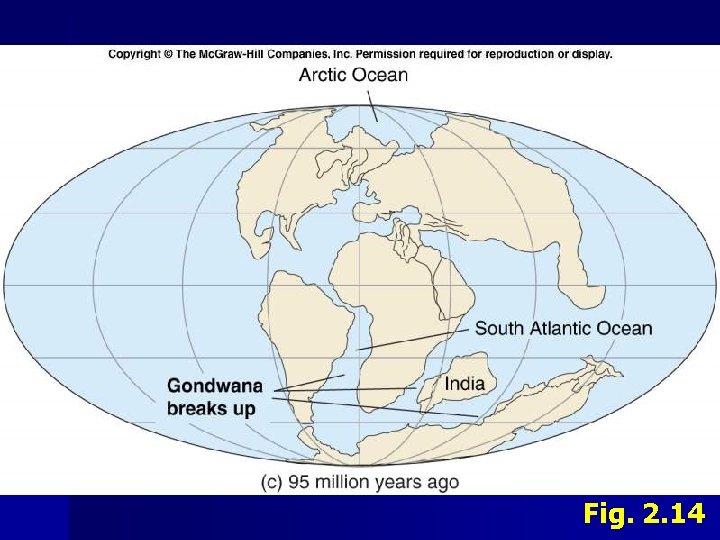
Fig. 2. 14
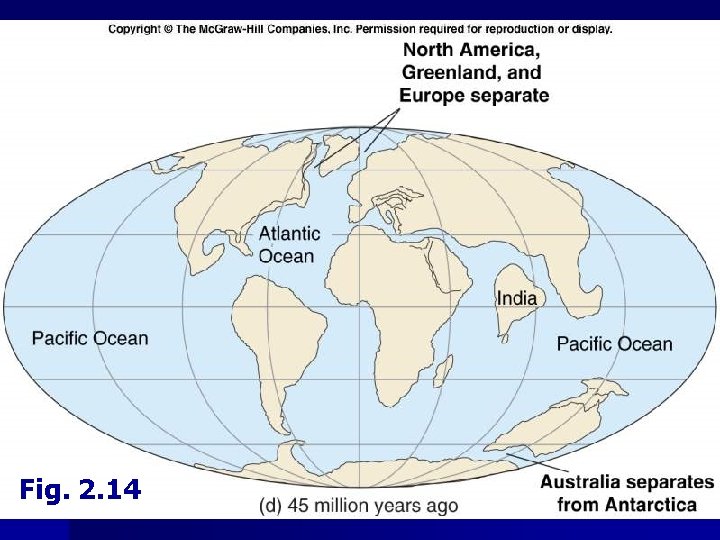
Fig. 2. 14
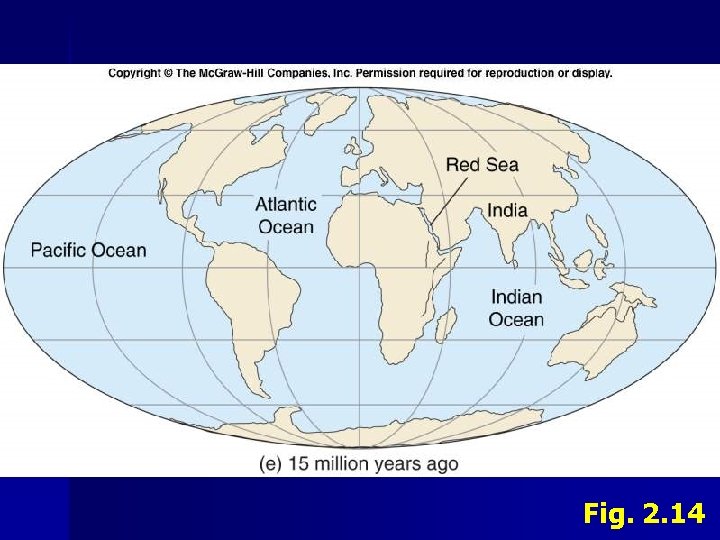
Fig. 2. 14
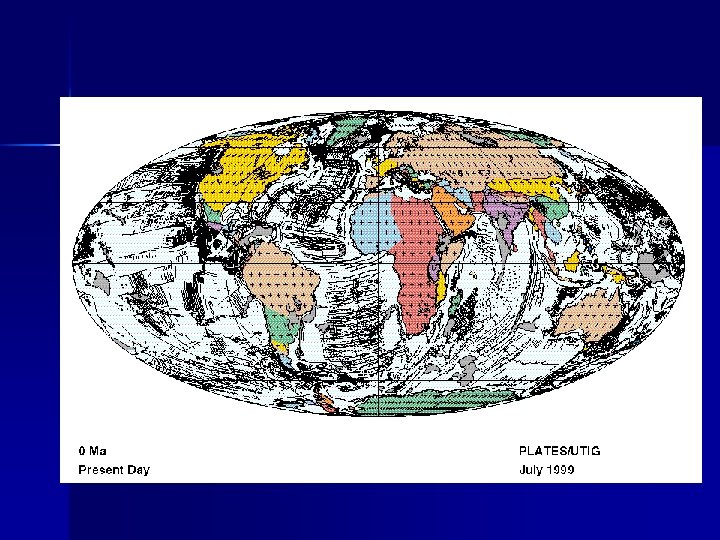
Global Plate Tectonics Jurassic to Present Day By L. A. Lawver, M. F. Coffin, I. W. D. Dalziel L. M. Gahagan, D. A. Campbell, and R. M. Schmitz 2001, University of Texas Institute for Geophysics February 9, 2001
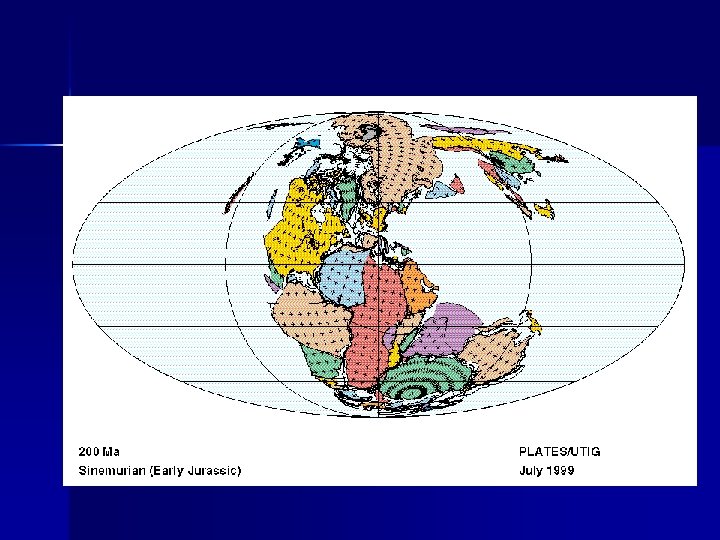
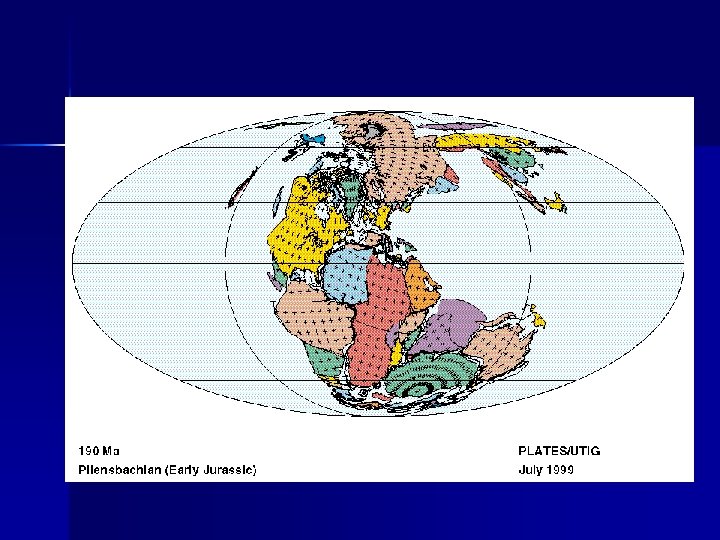
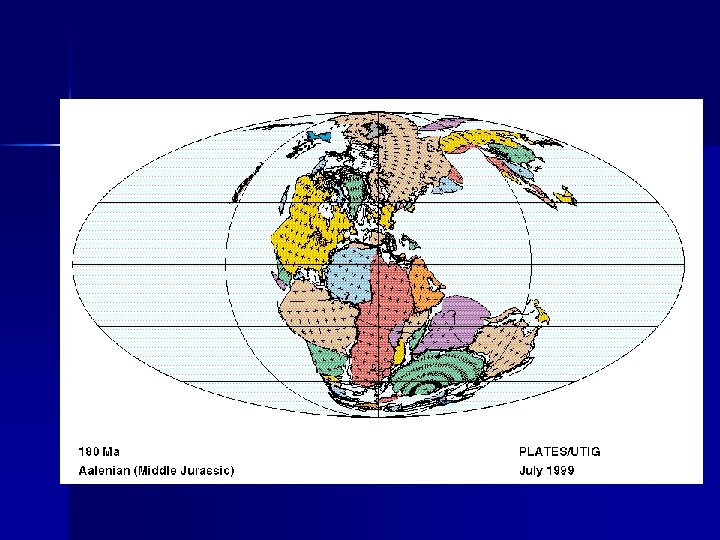
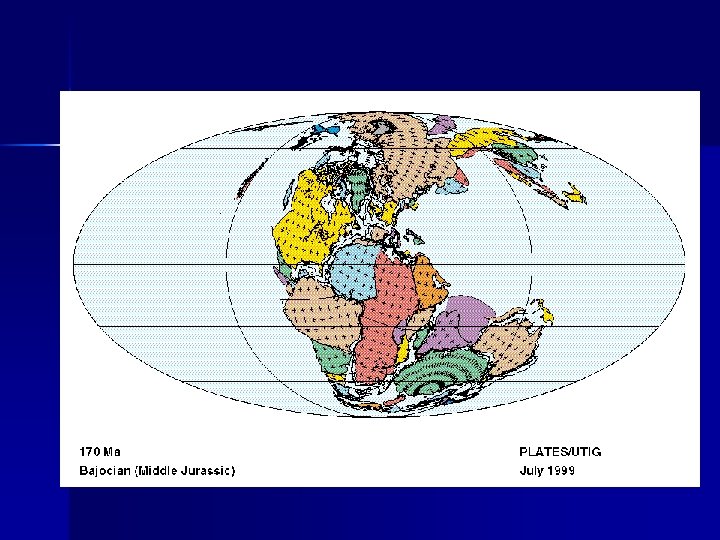
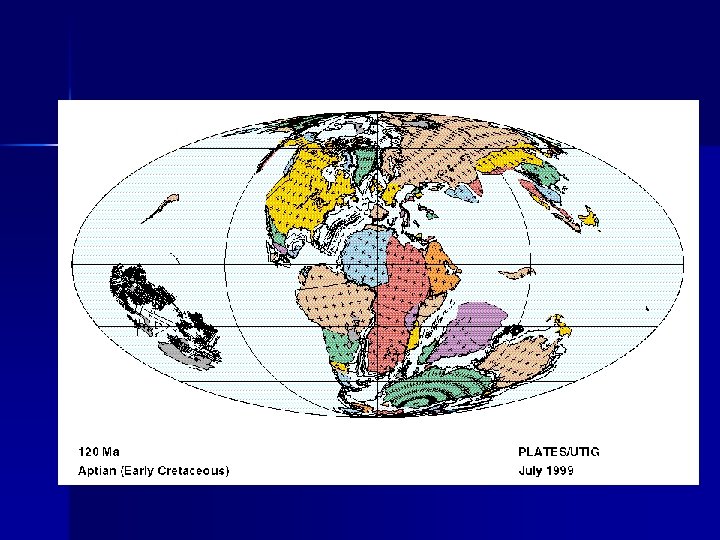
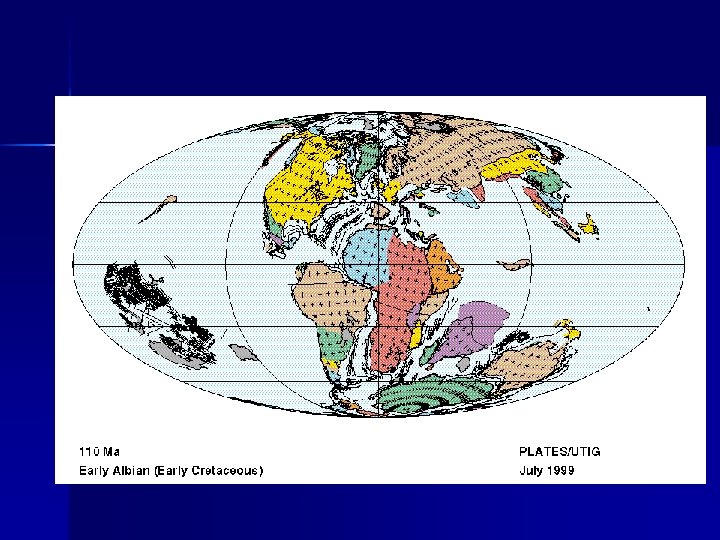
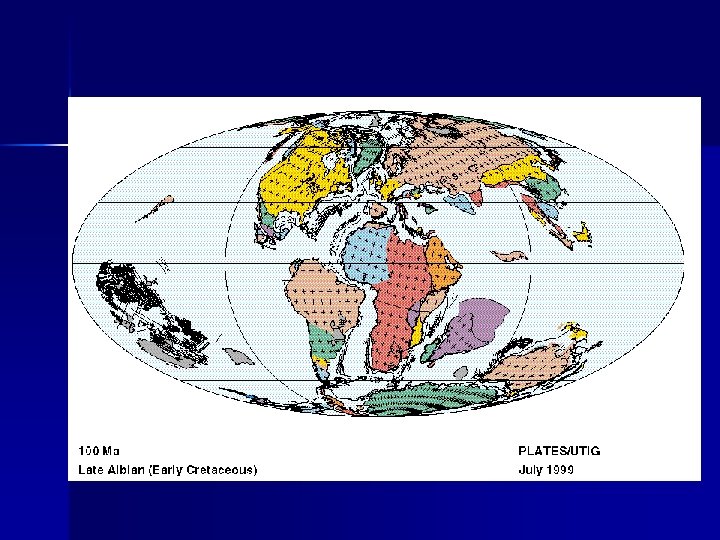
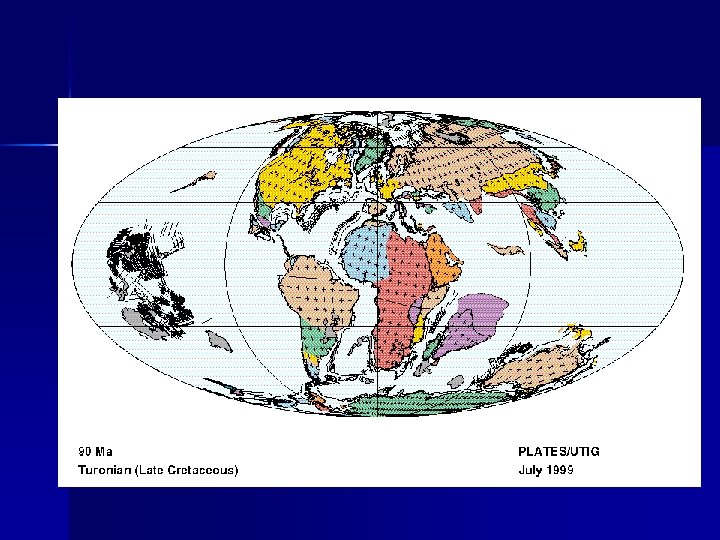
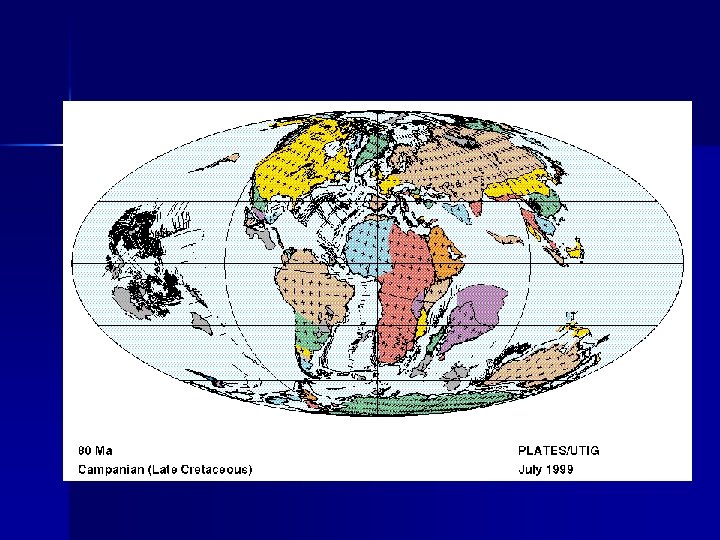
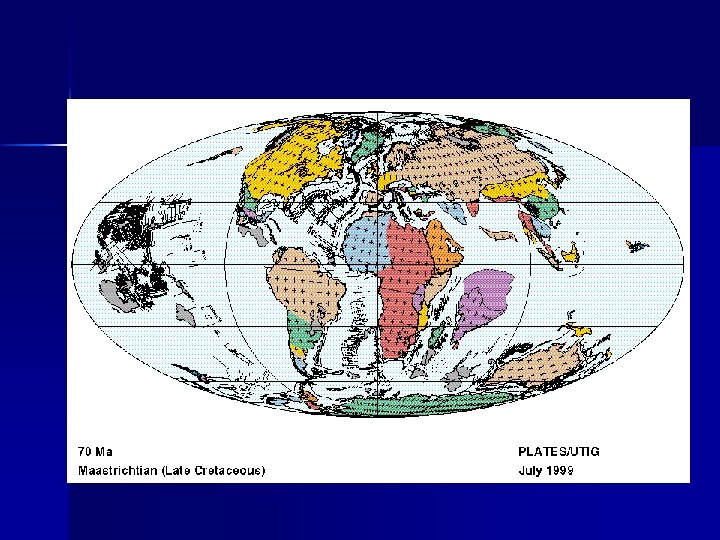
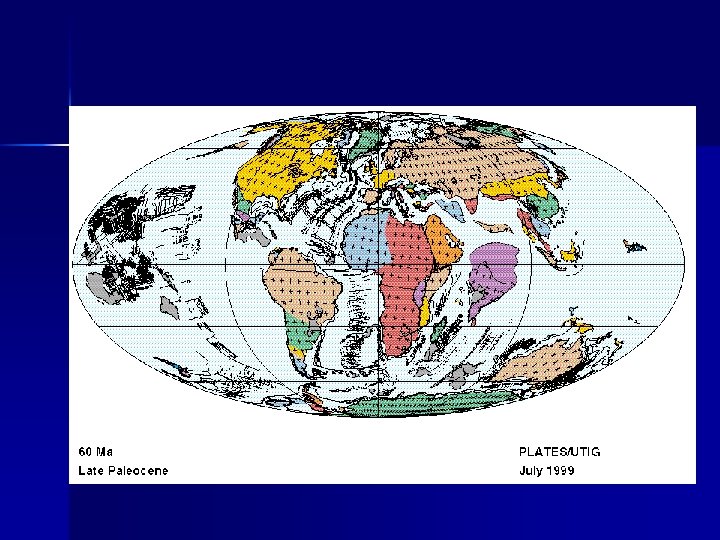
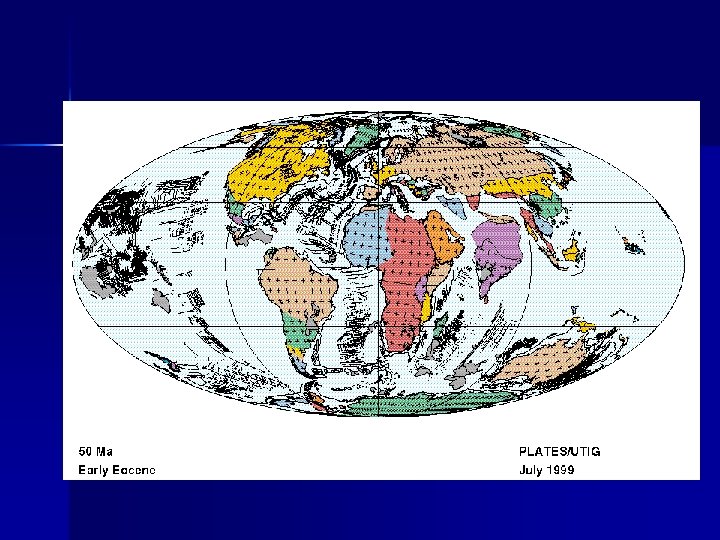
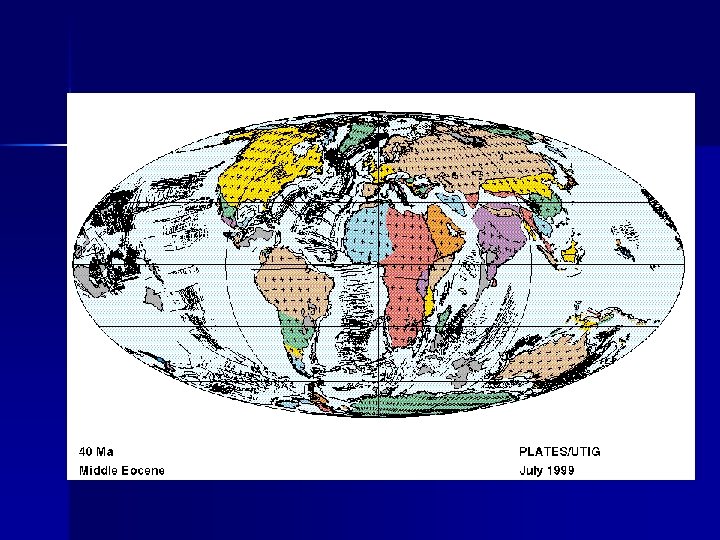
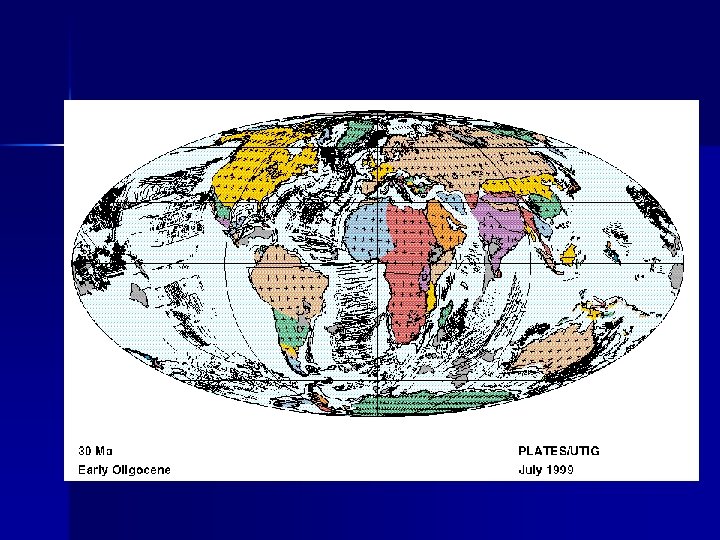
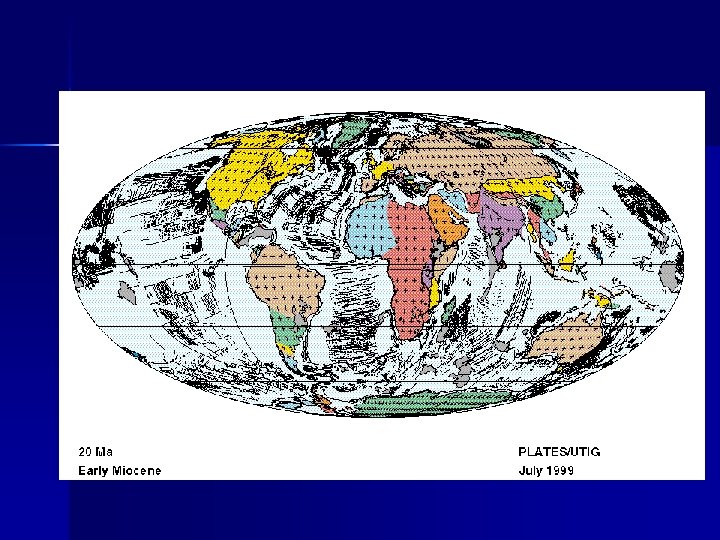
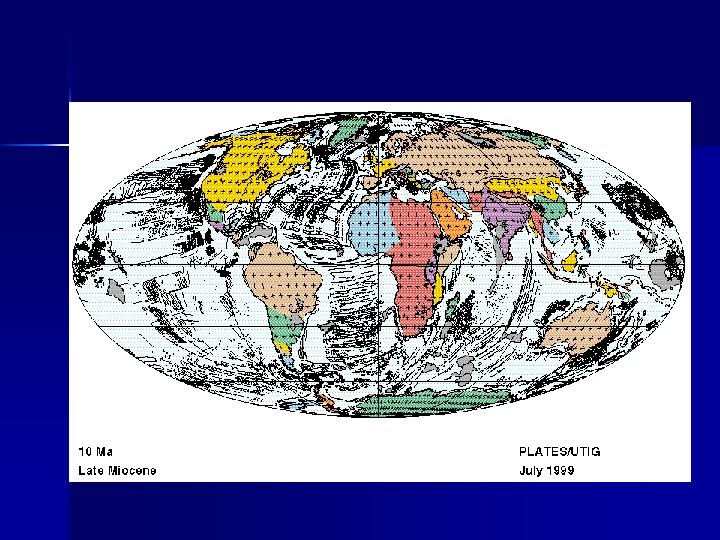

We wish to thank the PLATES’ sponsors for their support: Conoco, Total. Fina. Elf, Exxon-Mobil, Norsk Hydro, and Statoil.

For more information, contact: Lisa M. Gahagan Institute for Geophysics 4412 Spicewood Springs Rd. , Bldg. 600 Austin, TX 78759 plates@ig. utexas. edu
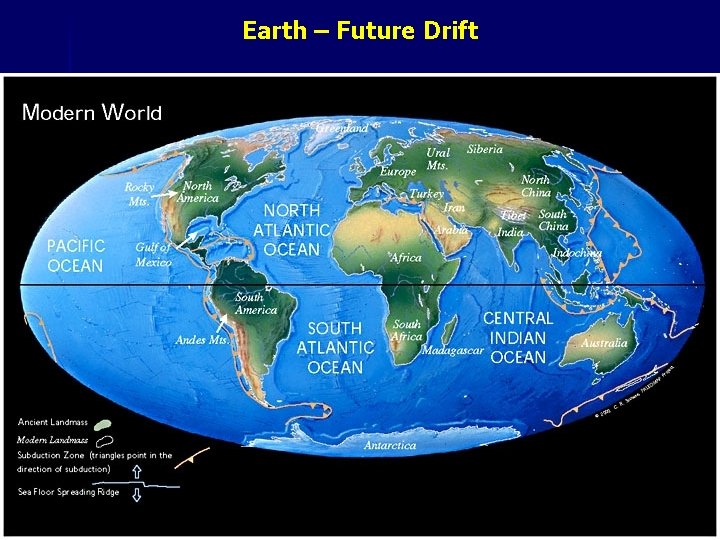
Earth – Future Drift
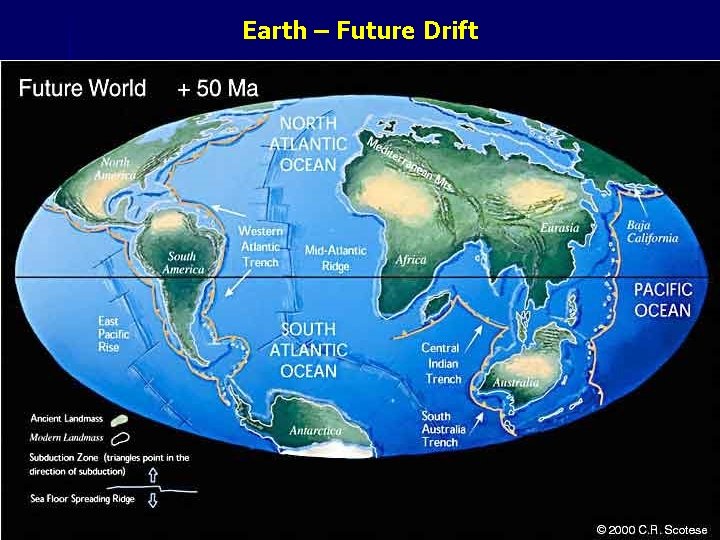
Earth – Future Drift
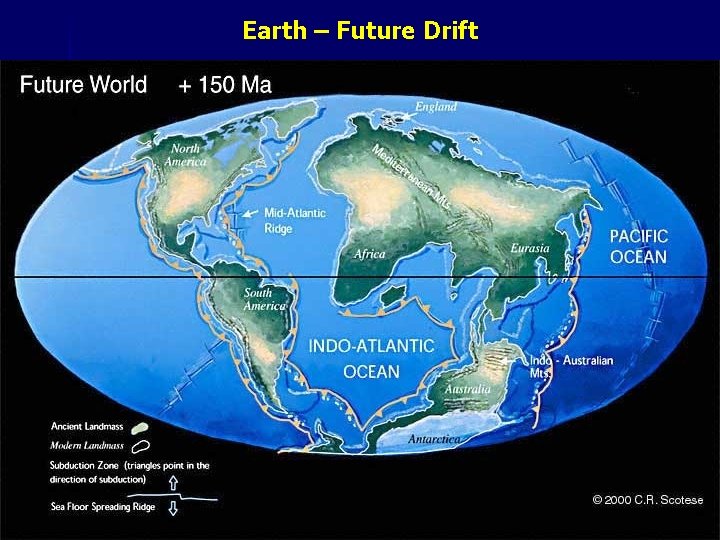
Earth – Future Drift
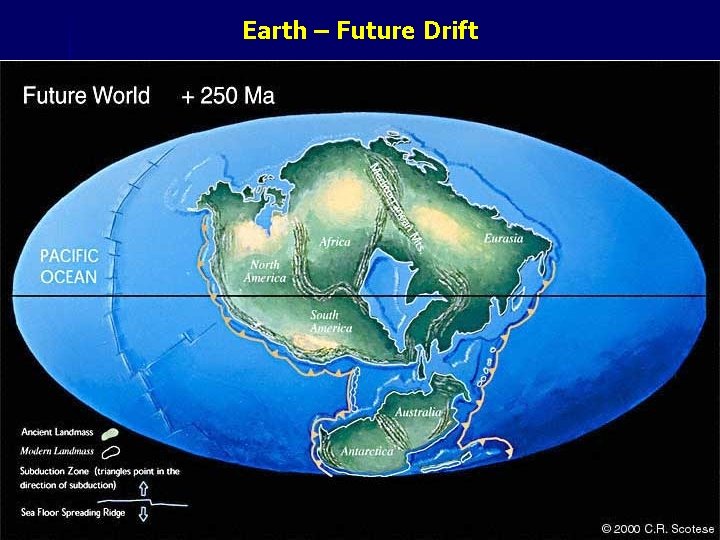
Earth – Future Drift
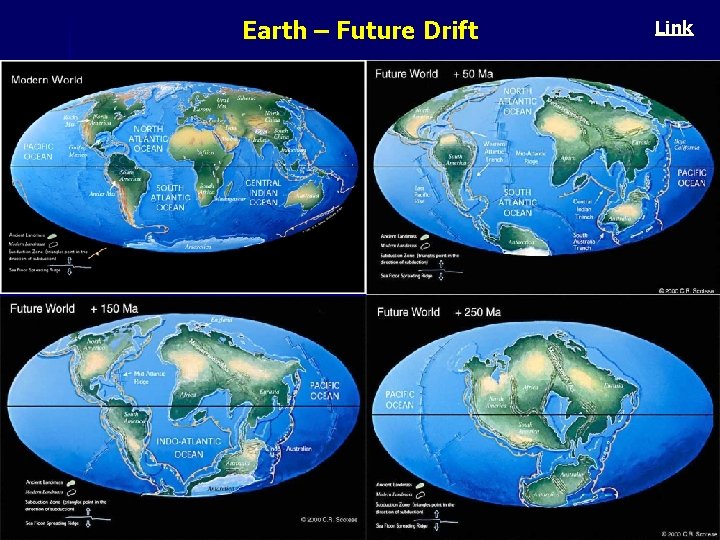
Earth – Future Drift Link
I. Geology F. Geological Provinces 1. Continental Margins • • a. b. c. 2. 3. 4. Boundaries between continental and oceanic crust Accumulate sediment deposits from rivers and streams Continental shelf Continental slope Continental rise Deep-Ocean Basins Mid-Ocean Ridges Hot Spots
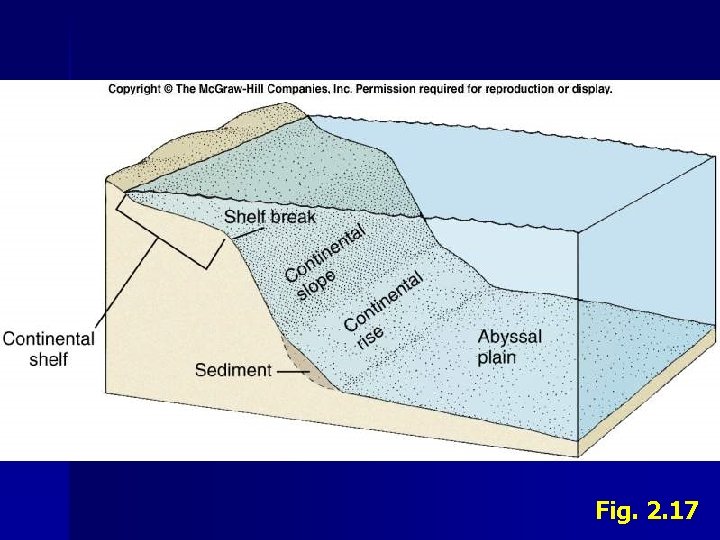
Fig. 2. 17
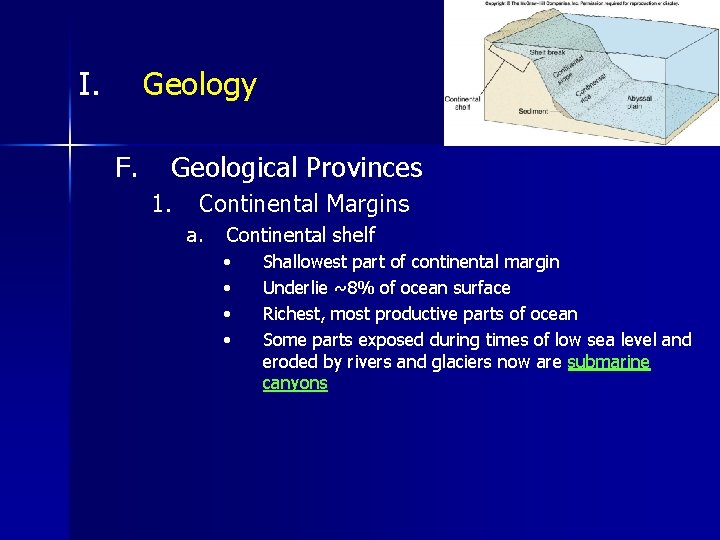
I. Geology F. Geological Provinces 1. Continental Margins a. Continental shelf • • Shallowest part of continental margin Underlie ~8% of ocean surface Richest, most productive parts of ocean Some parts exposed during times of low sea level and eroded by rivers and glaciers now are submarine canyons
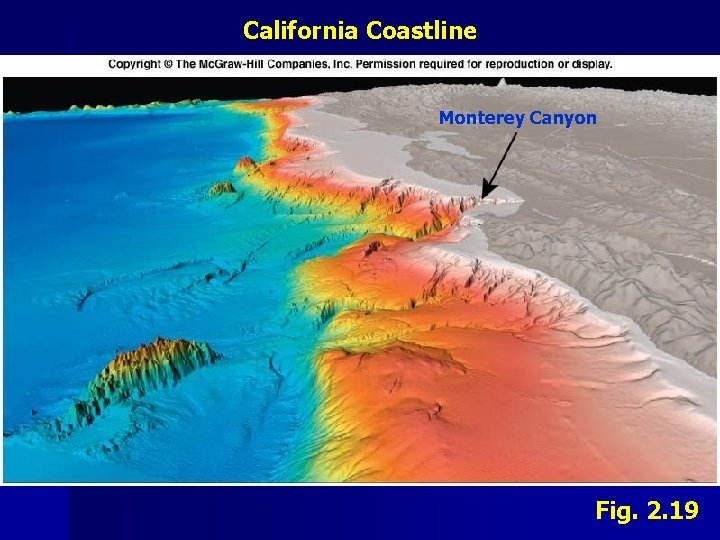
California Coastline Monterey Canyon Fig. 2. 19
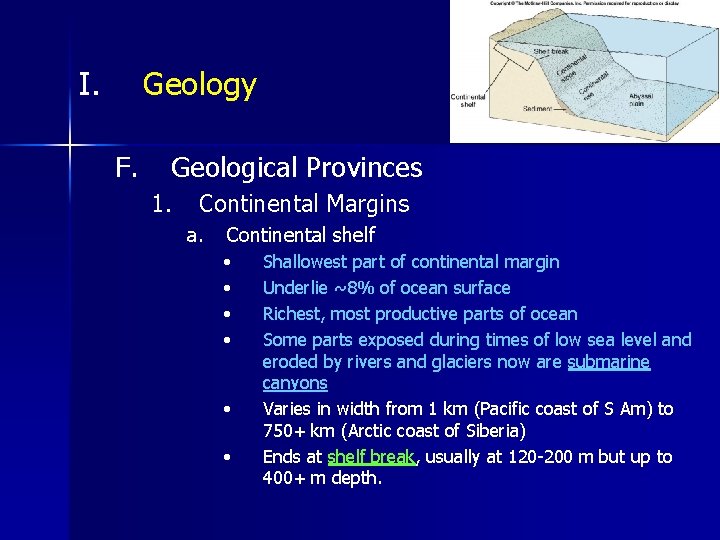
I. Geology F. Geological Provinces 1. Continental Margins a. Continental shelf • • • Shallowest part of continental margin Underlie ~8% of ocean surface Richest, most productive parts of ocean Some parts exposed during times of low sea level and eroded by rivers and glaciers now are submarine canyons Varies in width from 1 km (Pacific coast of S Am) to 750+ km (Arctic coast of Siberia) Ends at shelf break, usually at 120 -200 m but up to 400+ m depth.
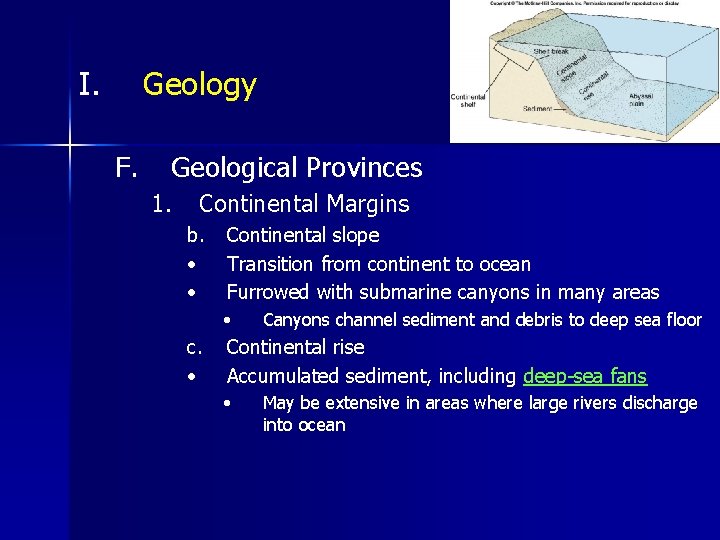
I. Geology F. Geological Provinces 1. Continental Margins b. • • Continental slope Transition from continent to ocean Furrowed with submarine canyons in many areas • c. • Canyons channel sediment and debris to deep sea floor Continental rise Accumulated sediment, including deep-sea fans • May be extensive in areas where large rivers discharge into ocean
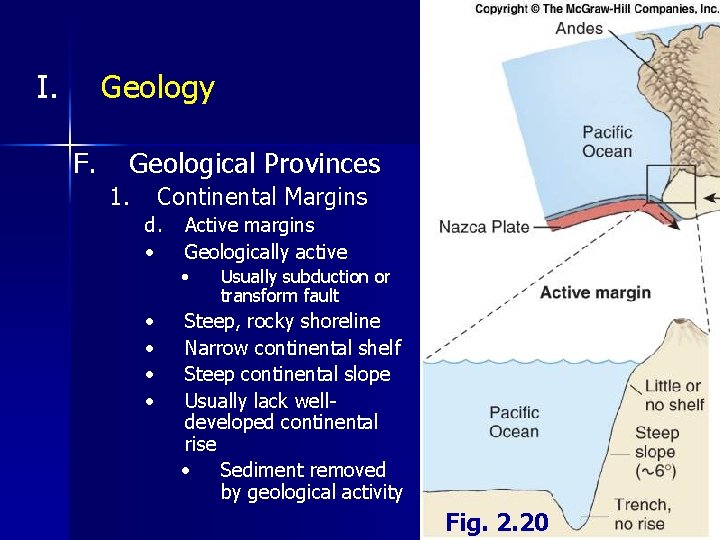
I. Geology F. Geological Provinces 1. Continental Margins d. • Active margins Geologically active • • • Usually subduction or transform fault Steep, rocky shoreline Narrow continental shelf Steep continental slope Usually lack welldeveloped continental rise • Sediment removed by geological activity Fig. 2. 20
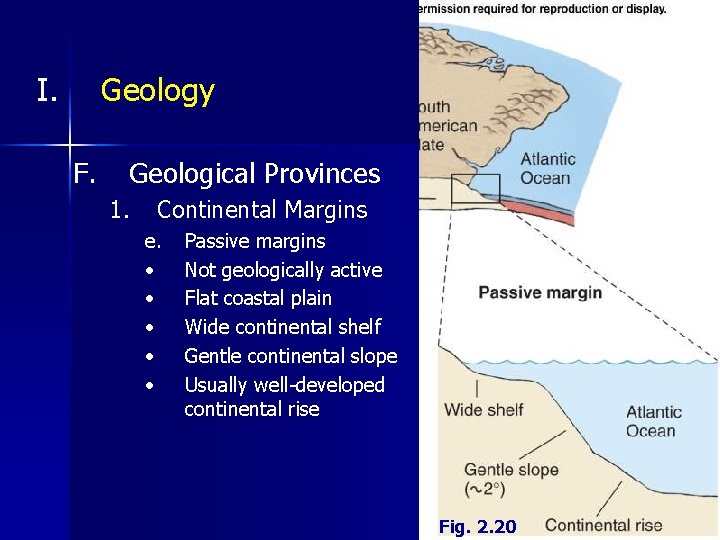
I. Geology F. Geological Provinces 1. Continental Margins e. • • • Passive margins Not geologically active Flat coastal plain Wide continental shelf Gentle continental slope Usually well-developed continental rise Fig. 2. 20
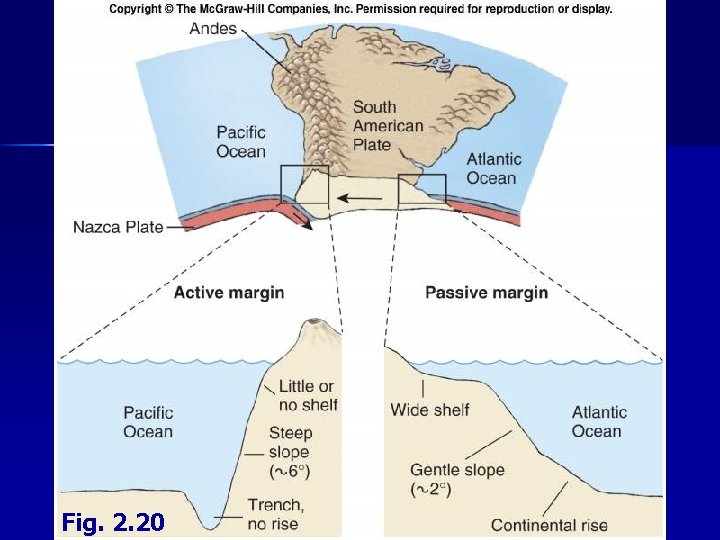
Fig. 2. 20
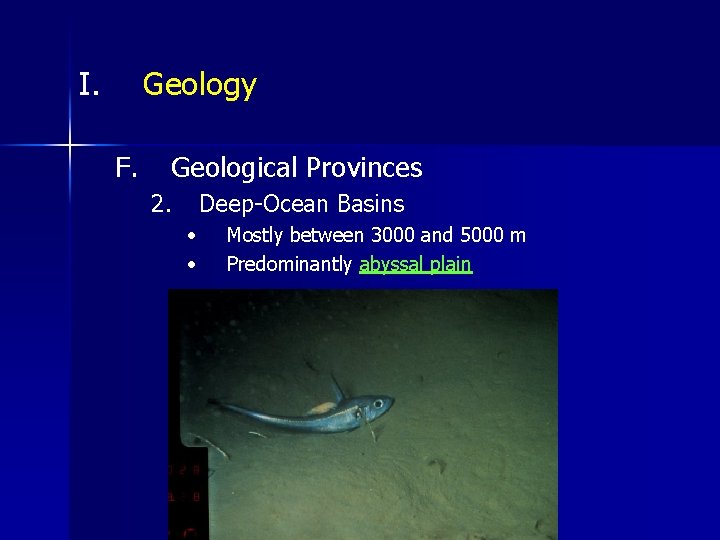
I. Geology F. Geological Provinces 2. Deep-Ocean Basins • • Mostly between 3000 and 5000 m Predominantly abyssal plain
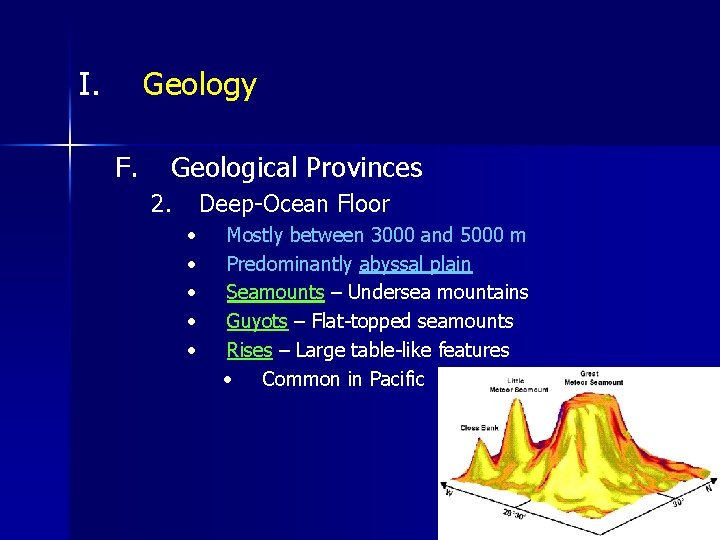
I. Geology F. Geological Provinces 2. Deep-Ocean Floor • • • Mostly between 3000 and 5000 m Predominantly abyssal plain Seamounts – Undersea mountains Guyots – Flat-topped seamounts Rises – Large table-like features • Common in Pacific
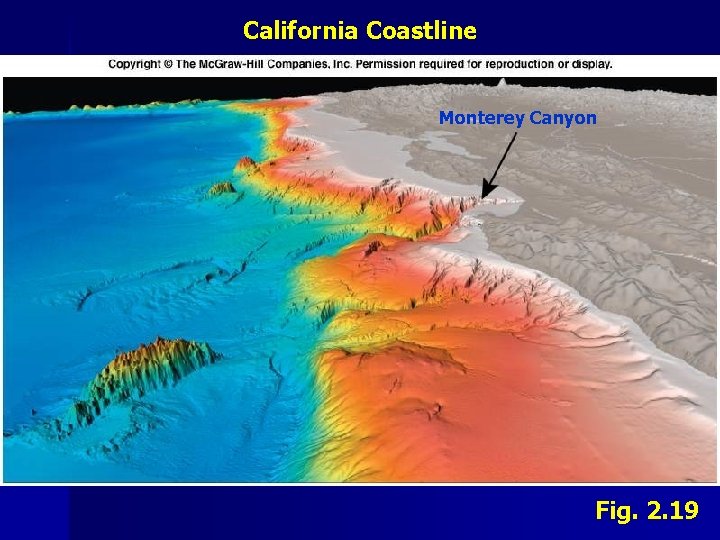
California Coastline Monterey Canyon Fig. 2. 19
I. Geology F. Geological Provinces 3. Mid-Ocean Ridges • Central region – rift valley • Fractures allow sea water to seep into crust
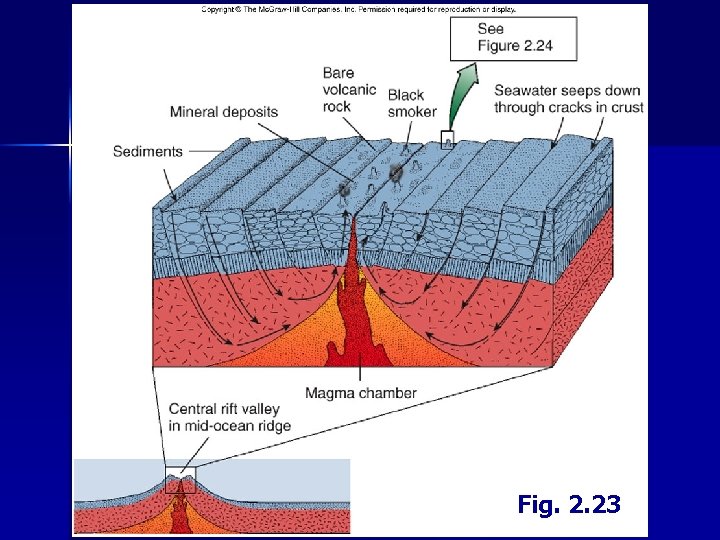
Fig. 2. 23
I. Geology F. Geological Provinces 3. Mid-Ocean Ridges • • • Central region – rift valley • Fractures allow sea water to seep into crust Water is heated by rock and rises back to surface of sea floor • Hot water picks up dissolved minerals (iron, manganese, sulfides) Hot, mineral-rich water contacts cold sea water • Precipitate forms • Black smokers • May be very hot (350 o. C or more)
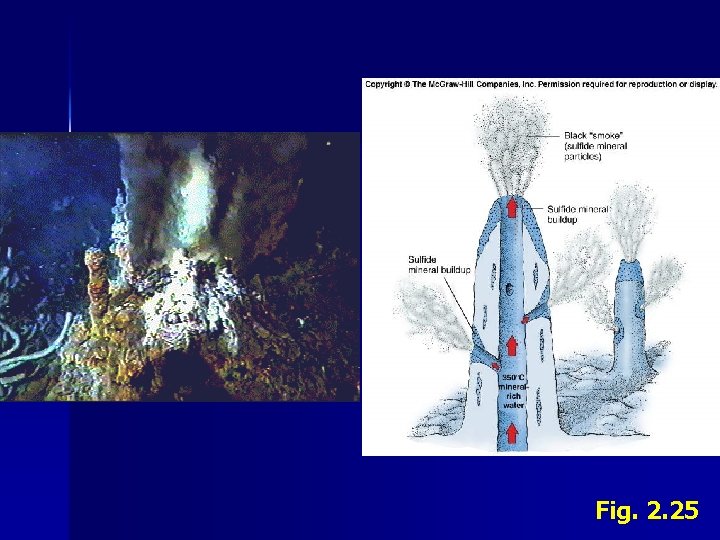
Fig. 2. 25
- Slides: 66