
I gaps educativi nellanafilassi Anafilassi educazione del paziente

- Slides: 59
I gaps educativi nell’anafilassi Anafilassi: educazione del paziente F. Cardinale UOC di Pediatria Generale e Allergo. Pneumologia Azienda Ospedaliero - Universitaria “Policlinico – Giovanni XXIII”, Bari
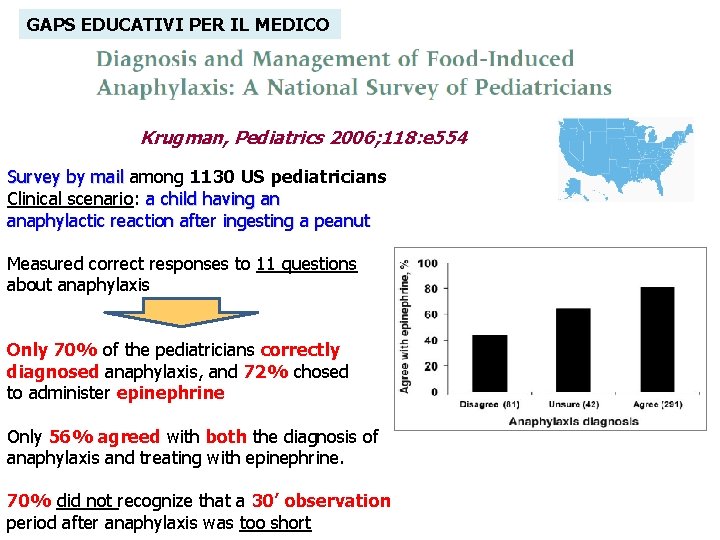
GAPS EDUCATIVI PER IL MEDICO Krugman, Pediatrics 2006; 118: e 554 Survey by mail among 1130 US pediatricians Clinical scenario: a child having an anaphylactic reaction after ingesting a peanut Measured correct responses to 11 questions about anaphylaxis Only 70% of the pediatricians correctly diagnosed anaphylaxis, and 72% chosed to administer epinephrine Only 56% agreed with both the diagnosis of anaphylaxis and treating with epinephrine. 70% did not recognize that a 30’ observation period after anaphylaxis was too short
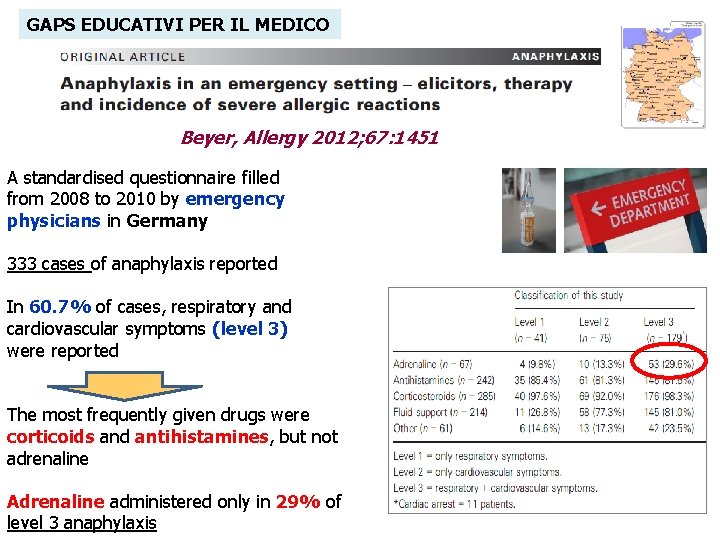
GAPS EDUCATIVI PER IL MEDICO Beyer, Allergy 2012; 67: 1451 A standardised questionnaire filled from 2008 to 2010 by emergency physicians in Germany 333 cases of anaphylaxis reported In 60. 7% of cases, respiratory and cardiovascular symptoms (level 3) were reported The most frequently given drugs were corticoids and antihistamines, but not adrenaline Adrenaline administered only in 29% of level 3 anaphylaxis
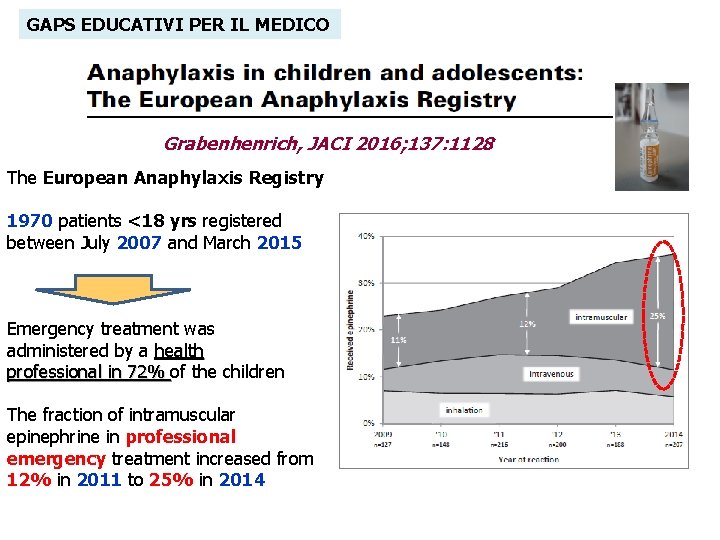
GAPS EDUCATIVI PER IL MEDICO Grabenhenrich, JACI 2016; 137: 1128 The European Anaphylaxis Registry 1970 patients <18 yrs registered between July 2007 and March 2015 Emergency treatment was administered by a health professional in 72% of the children The fraction of intramuscular epinephrine in professional emergency treatment increased from 12% in 2011 to 25% in 2014
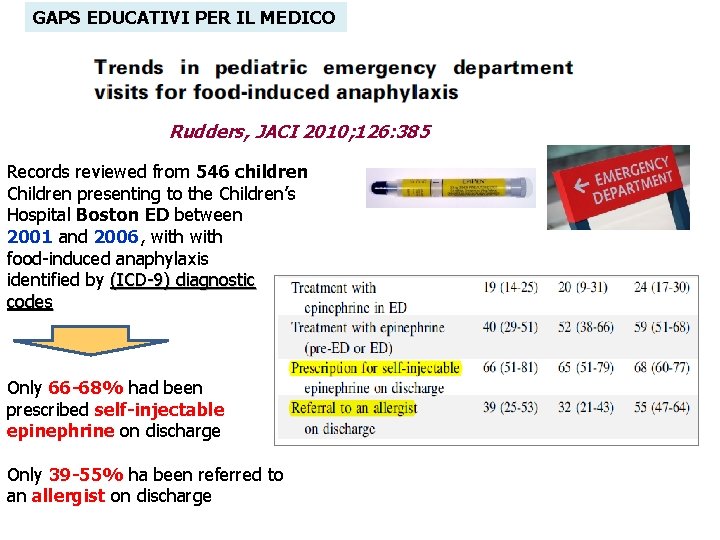
GAPS EDUCATIVI PER IL MEDICO Rudders, JACI 2010; 126: 385 Records reviewed from 546 children Children presenting to the Children’s Hospital Boston ED between 2001 and 2006, with food-induced anaphylaxis identified by (ICD-9) diagnostic codes Only 66 -68% had been prescribed self-injectable epinephrine on discharge Only 39 -55% ha been referred to an allergist on discharge
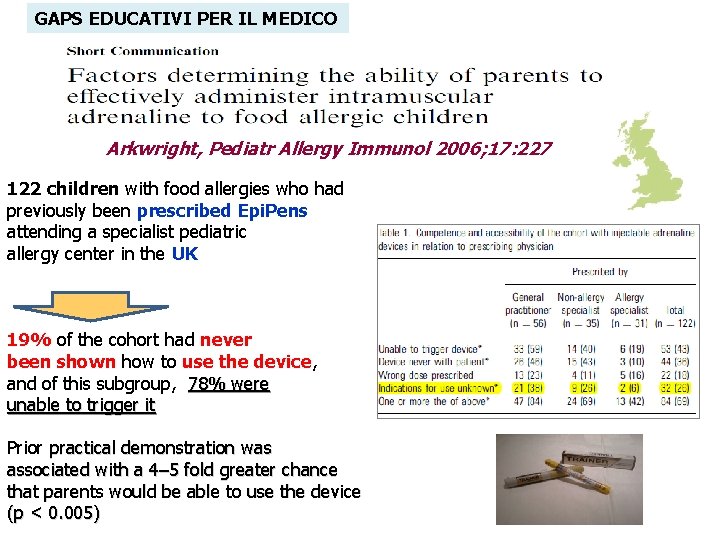
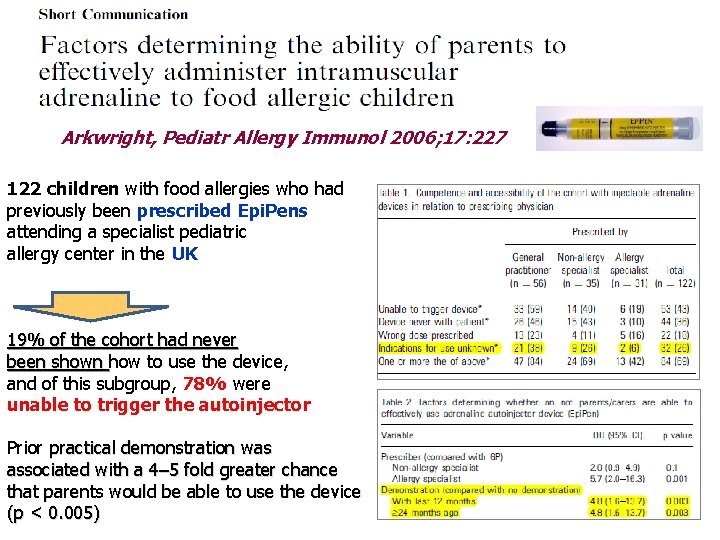
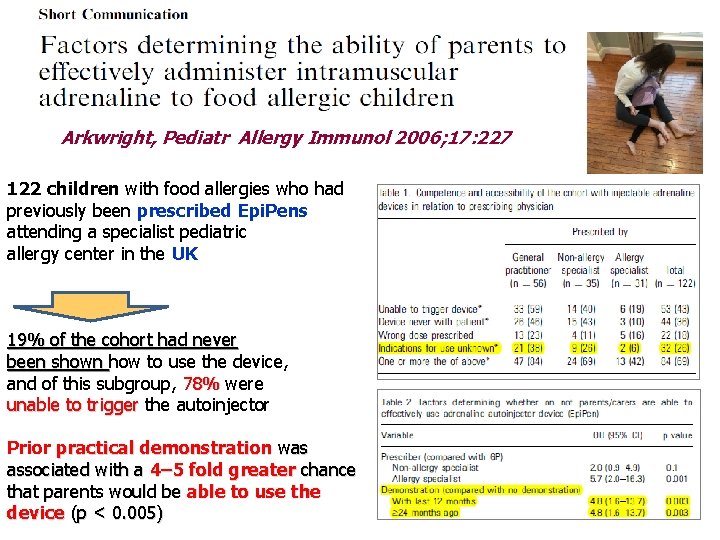
GAPS EDUCATIVI PER IL MEDICO Arkwright, Pediatr Allergy Immunol 2006; 17: 227 122 children with food allergies who had previously been prescribed Epi. Pens attending a specialist pediatric allergy center in the UK 19% of the cohort had never been shown how to use the device, and of this subgroup, 78% were unable to trigger it Prior practical demonstration was associated with a 4– 5 fold greater chance that parents would be able to use the device (p < 0. 005)
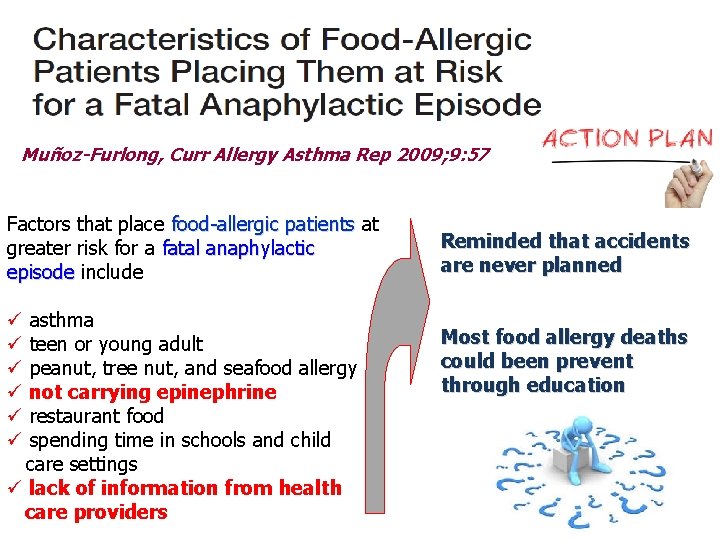
Muñoz-Furlong, Curr Allergy Asthma Rep 2009; 9: 57 Factors that place food-allergic patients at greater risk for a fatal anaphylactic episode include ü asthma ü teen or young adult ü peanut, tree nut, and seafood allergy ü not carrying epinephrine ü restaurant food ü spending time in schools and child care settings ü lack of information from health care providers Reminded that accidents are never planned Most food allergy deaths could been prevent through education
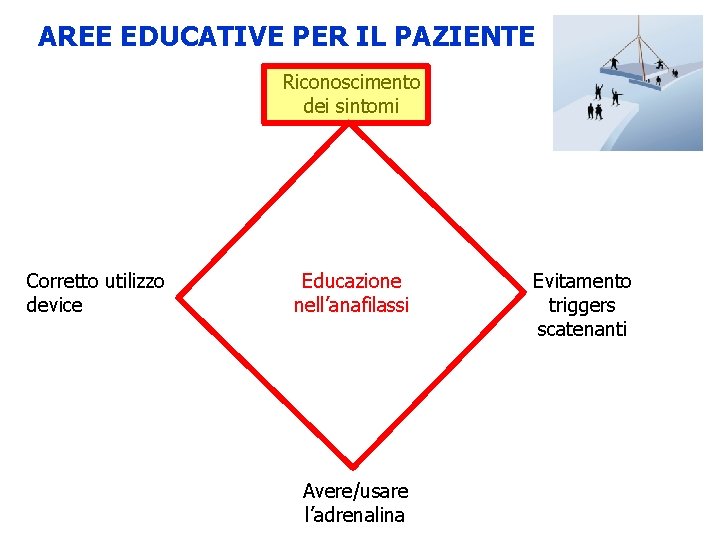
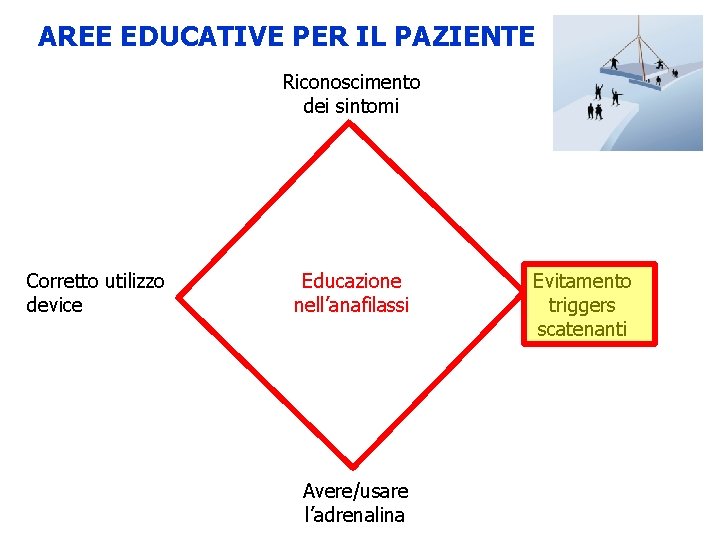
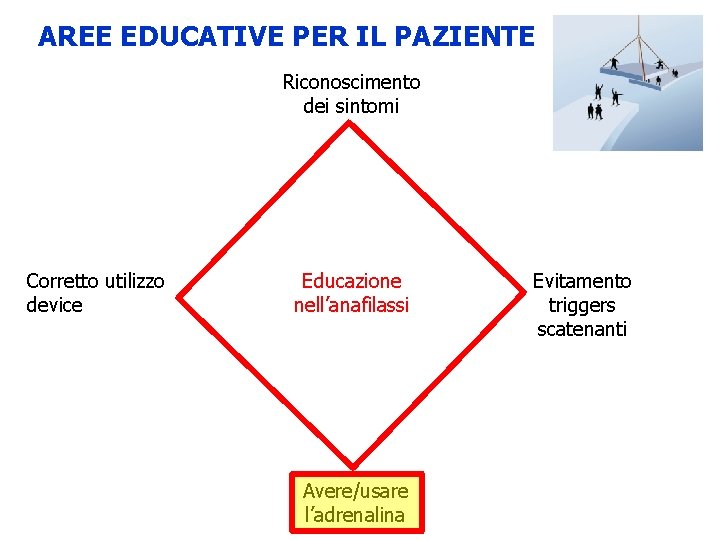
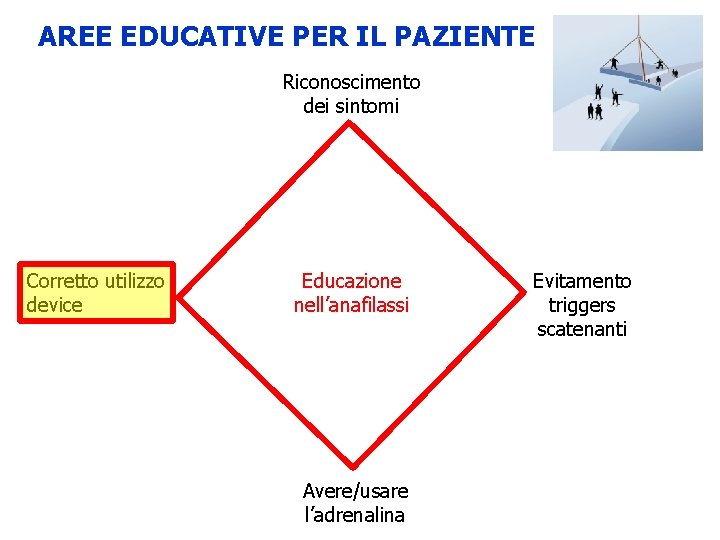
AREE EDUCATIVE PER IL PAZIENTE Riconoscimento dei sintomi Corretto utilizzo device Educazione nell’anafilassi Avere/usare l’adrenalina Evitamento triggers scatenanti
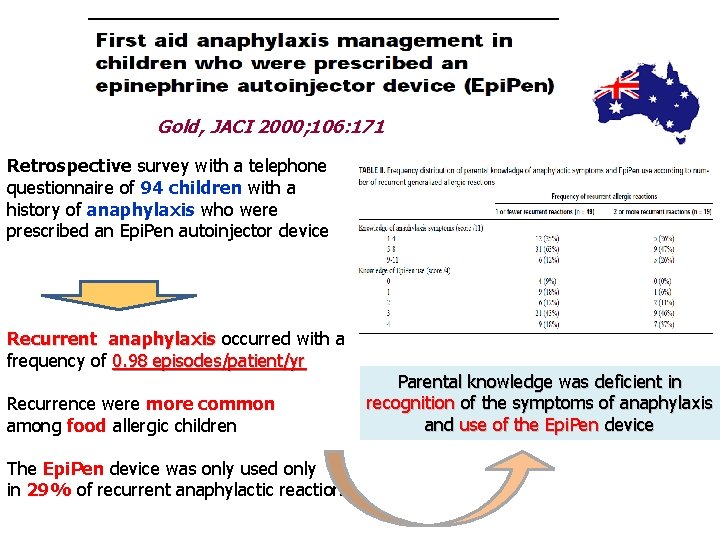
Gold, JACI 2000; 106: 171 Retrospective survey with a telephone questionnaire of 94 children with a history of anaphylaxis who were prescribed an Epi. Pen autoinjector device Recurrent anaphylaxis occurred with a frequency of 0. 98 episodes/patient/yr Recurrence were more common among food allergic children The Epi. Pen device was only used only in 29% of recurrent anaphylactic reactions. Parental knowledge was deficient in recognition of the symptoms of anaphylaxis and use of the Epi. Pen device
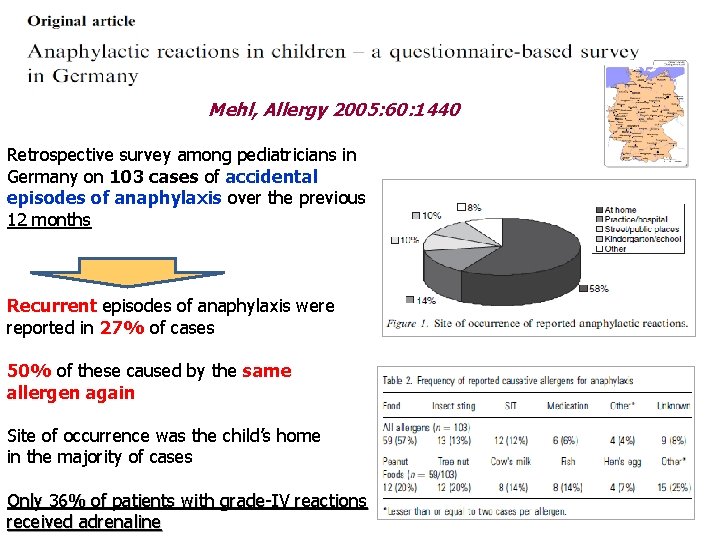
Mehl, Allergy 2005: 60: 1440 Retrospective survey among pediatricians in Germany on 103 cases of accidental episodes of anaphylaxis over the previous 12 months Recurrent episodes of anaphylaxis were reported in 27% of cases 50% of these caused by the same allergen again Site of occurrence was the child’s home in the majority of cases Only 36% of patients with grade-IV reactions received adrenaline
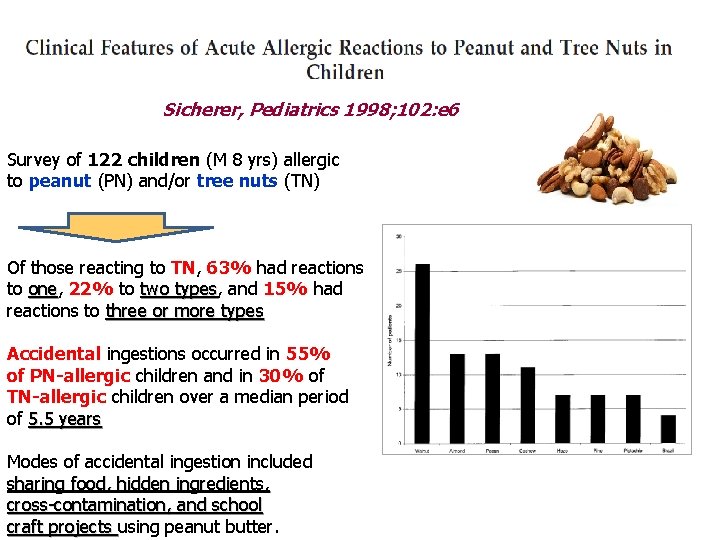
Sicherer, Pediatrics 1998; 102: e 6 Survey of 122 children (M 8 yrs) allergic to peanut (PN) and/or tree nuts (TN) Of those reacting to TN, 63% had reactions to one, one 22% to two types, types and 15% had reactions to three or more types Accidental ingestions occurred in 55% of PN-allergic children and in 30% of TN-allergic children over a median period of 5. 5 years Modes of accidental ingestion included sharing food, hidden ingredients, cross-contamination, and school craft projects using peanut butter.
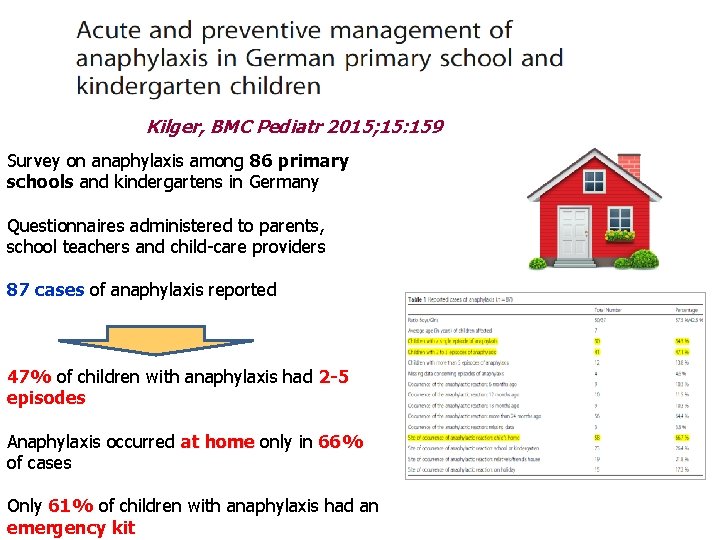
Kilger, BMC Pediatr 2015; 15: 159 Survey on anaphylaxis among 86 primary schools and kindergartens in Germany Questionnaires administered to parents, school teachers and child-care providers 87 cases of anaphylaxis reported 47% of children with anaphylaxis had 2 -5 episodes Anaphylaxis occurred at home only in 66% of cases Only 61% of children with anaphylaxis had an emergency kit
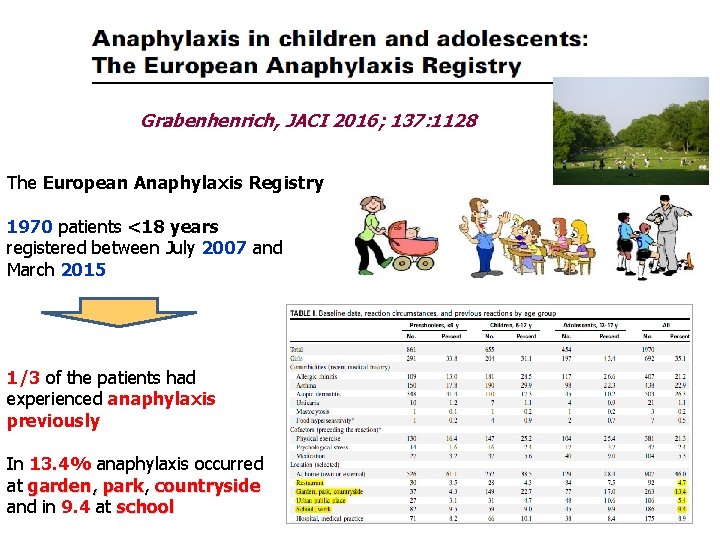
Grabenhenrich, JACI 2016; 137: 1128 The European Anaphylaxis Registry 1970 patients <18 years registered between July 2007 and March 2015 1/3 of the patients had experienced anaphylaxis previously In 13. 4% anaphylaxis occurred at garden, park, countryside and in 9. 4 at school
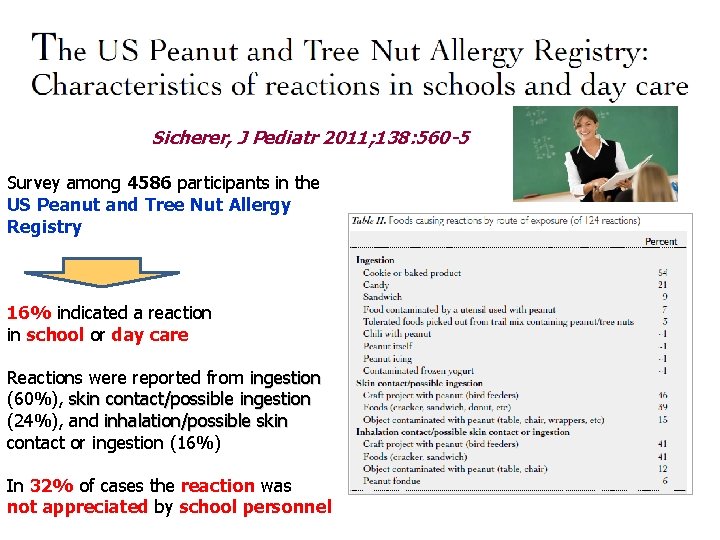
Sicherer, J Pediatr 2011; 138: 560 -5 Survey among 4586 participants in the US Peanut and Tree Nut Allergy Registry 16% indicated a reaction in school or day care Reactions were reported from ingestion (60%), skin contact/possible ingestion (24%), and inhalation/possible skin contact or ingestion (16%) In 32% of cases the reaction was not appreciated by school personnel
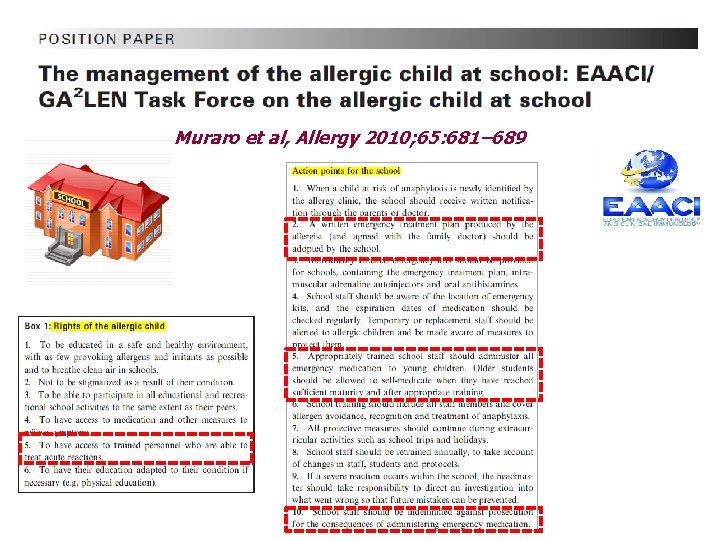
Muraro et al, Allergy 2010; 65: 681– 689
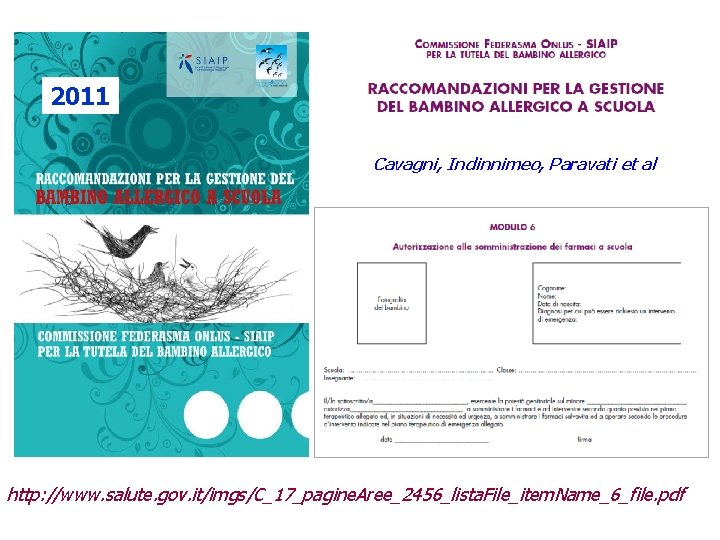
2011 Cavagni, Indinnimeo, Paravati et al http: //www. salute. gov. it/imgs/C_17_pagine. Aree_2456_lista. File_item. Name_6_file. pdf
AREE EDUCATIVE PER IL PAZIENTE Riconoscimento dei sintomi Corretto utilizzo device Educazione nell’anafilassi Avere/usare l’adrenalina Evitamento triggers scatenanti
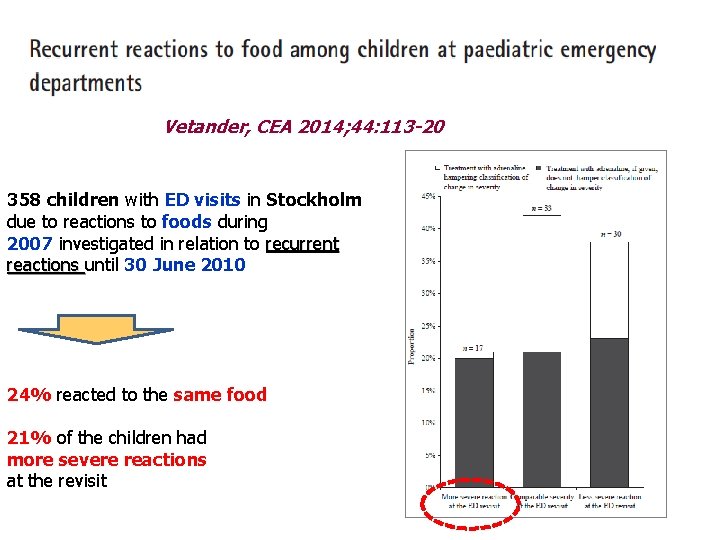
Vetander, CEA 2014; 44: 113 -20 358 children with ED visits in Stockholm due to reactions to foods during 2007 investigated in relation to recurrent reactions until 30 June 2010 24% reacted to the same food 21% of the children had more severe reactions at the revisit
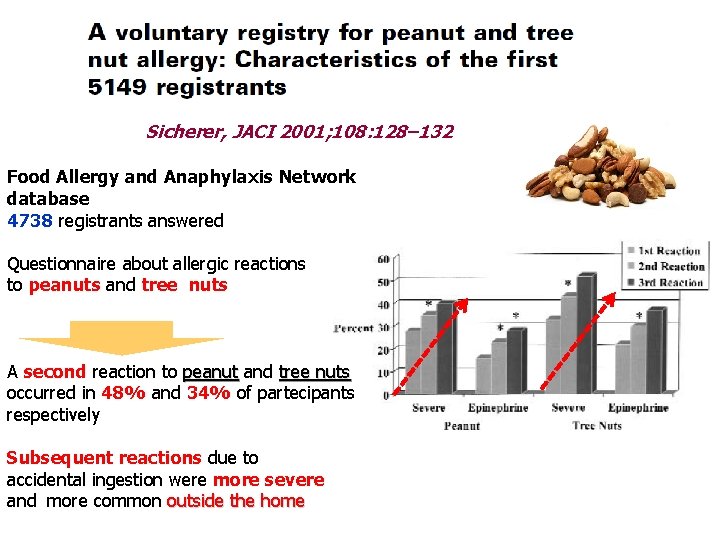
Sicherer, JACI 2001; 108: 128– 132 Food Allergy and Anaphylaxis Network database 4738 registrants answered Questionnaire about allergic reactions to peanuts and tree nuts A second reaction to peanut and tree nuts occurred in 48% and 34% of partecipants respectively Subsequent reactions due to accidental ingestion were more severe and more common outside the home
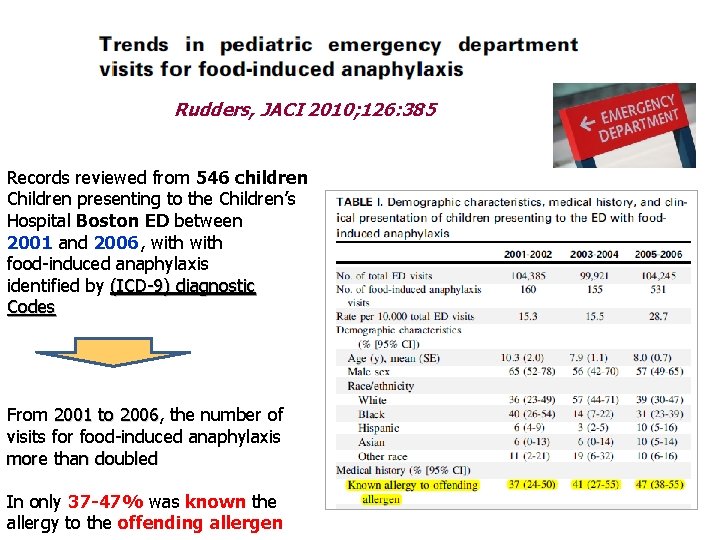
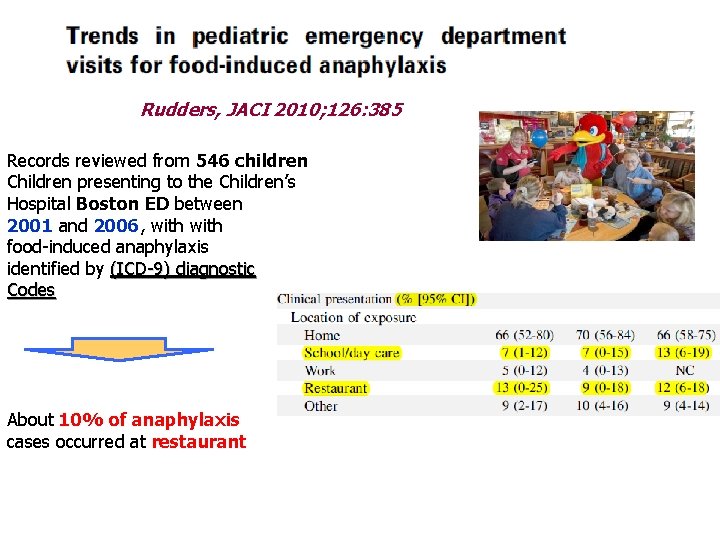
Rudders, JACI 2010; 126: 385 Records reviewed from 546 children Children presenting to the Children’s Hospital Boston ED between 2001 and 2006, with food-induced anaphylaxis identified by (ICD-9) diagnostic Codes From 2001 to 2006, 2006 the number of visits for food-induced anaphylaxis more than doubled In only 37 -47% was known the allergy to the offending allergen
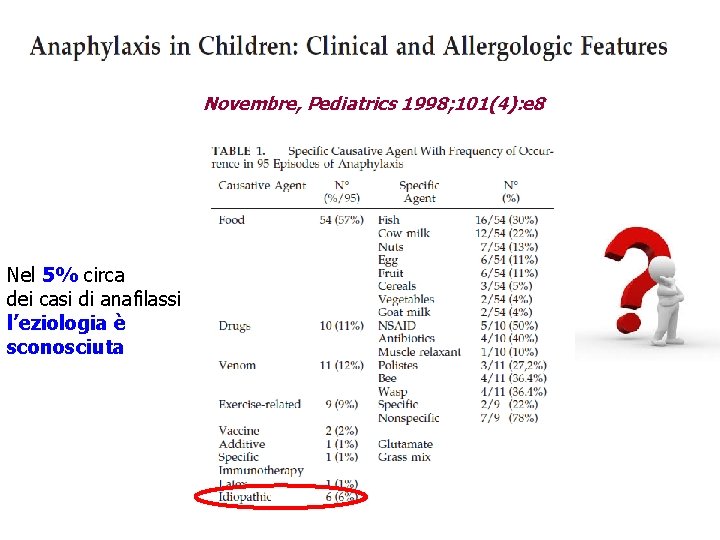
Novembre, Pediatrics 1998; 101(4): e 8 Nel 5% circa dei casi di anafilassi l’eziologia è sconosciuta
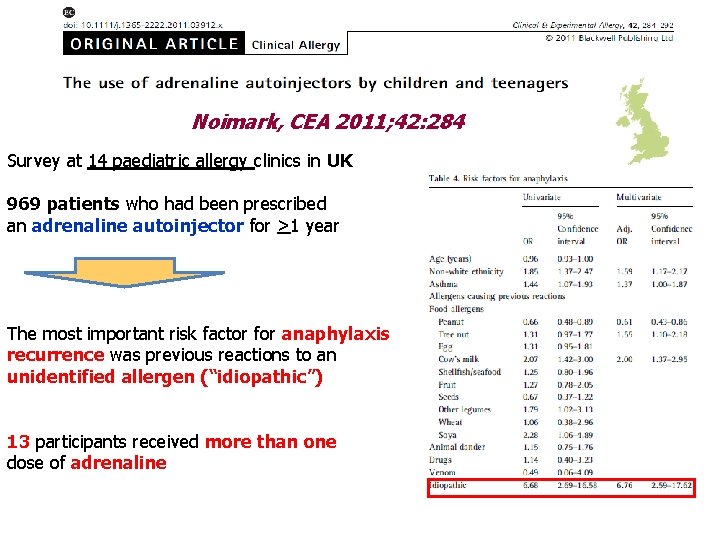
Noimark, CEA 2011; 42: 284 Survey at 14 paediatric allergy clinics in UK 969 patients who had been prescribed an adrenaline autoinjector for >1 year The most important risk factor for anaphylaxis recurrence was previous reactions to an unidentified allergen (“idiopathic”) 13 participants received more than one dose of adrenaline
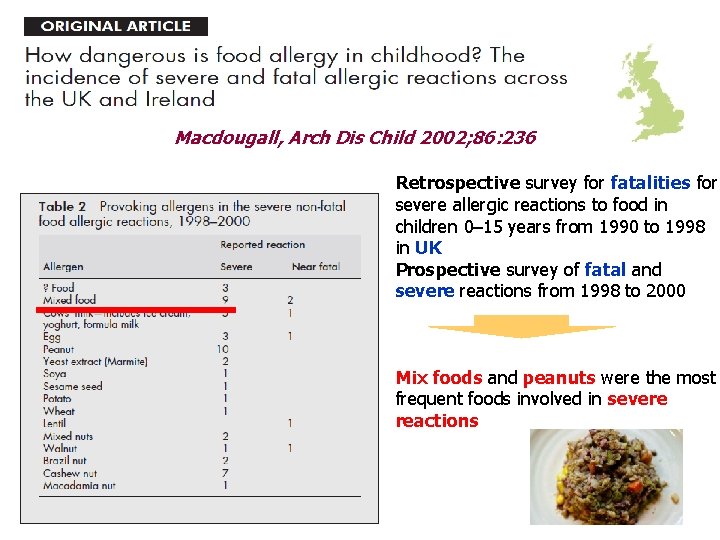
Macdougall, Arch Dis Child 2002; 86: 236 Retrospective survey for fatalities for severe allergic reactions to food in children 0– 15 years from 1990 to 1998 in UK Prospective survey of fatal and severe reactions from 1998 to 2000 Mix foods and peanuts were the most frequent foods involved in severe reactions
Rudders, JACI 2010; 126: 385 Records reviewed from 546 children Children presenting to the Children’s Hospital Boston ED between 2001 and 2006, with food-induced anaphylaxis identified by (ICD-9) diagnostic Codes About 10% of anaphylaxis cases occurred at restaurant
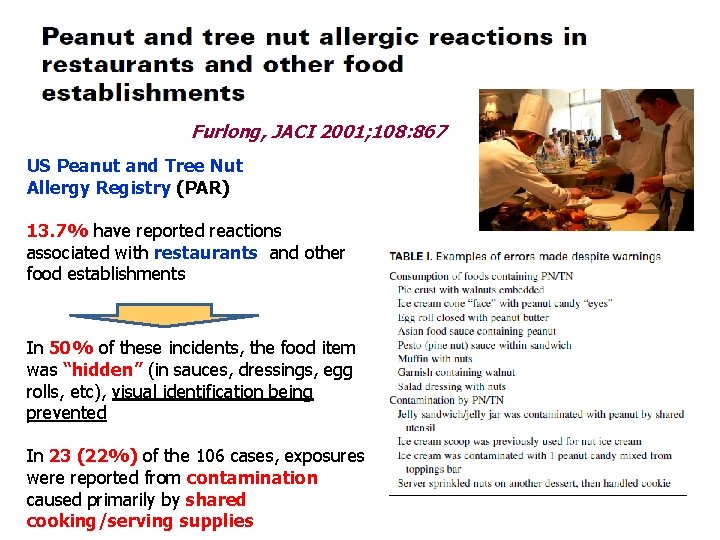
Furlong, JACI 2001; 108: 867 US Peanut and Tree Nut Allergy Registry (PAR) 13. 7% have reported reactions associated with restaurants and other food establishments In 50% of these incidents, the food item was “hidden” (in sauces, dressings, egg rolls, etc), visual identification being prevented In 23 (22%) of the 106 cases, exposures were reported from contamination caused primarily by shared cooking/serving supplies
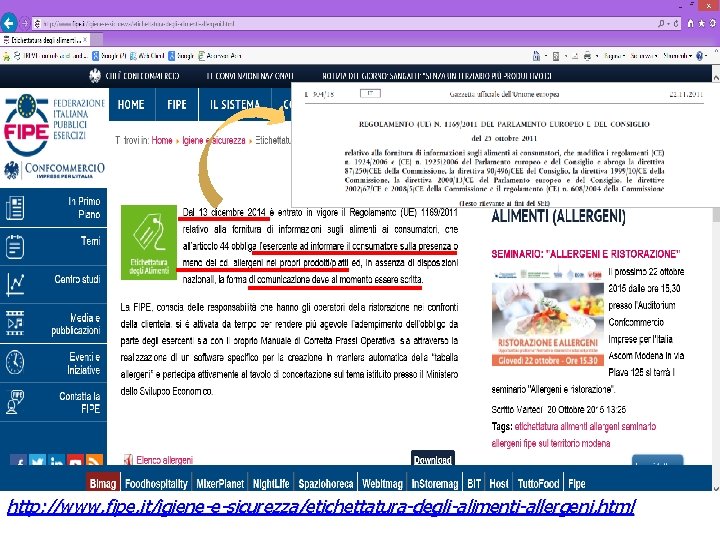
http: //www. fipe. it/igiene-e-sicurezza/etichettatura-degli-alimenti-allergeni. html
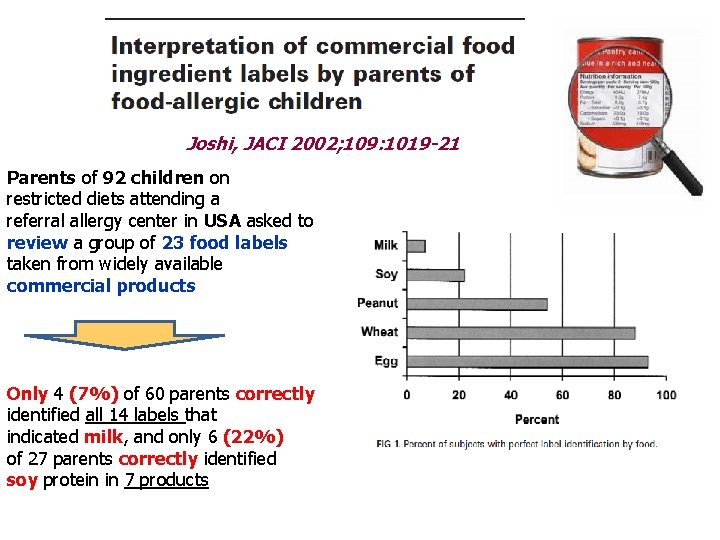
Joshi, JACI 2002; 109: 1019 -21 Parents of 92 children on restricted diets attending a referral allergy center in USA asked to review a group of 23 food labels taken from widely available commercial products Only 4 (7%) of 60 parents correctly identified all 14 labels that indicated milk, and only 6 (22%) of 27 parents correctly identified soy protein in 7 products
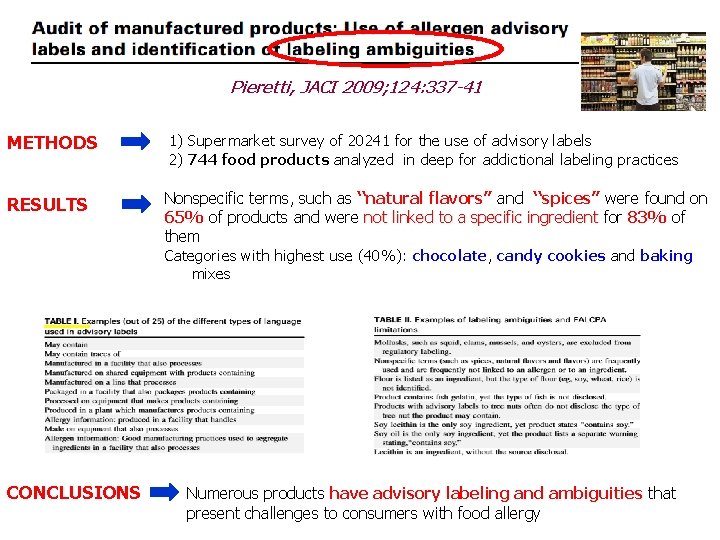
Pieretti, JACI 2009; 124: 337 -41 METHODS 1) Supermarket survey of 20241 for the use of advisory labels 2) 744 food products analyzed in deep for addictional labeling practices RESULTS Nonspecific terms, such as ‘‘natural flavors’’ and ‘‘spices’’ were found on 65% of products and were not linked to a specific ingredient for 83% of them Categories with highest use (40%): chocolate, candy cookies and baking mixes CONCLUSIONS Numerous products have advisory labeling and ambiguities that present challenges to consumers with food allergy
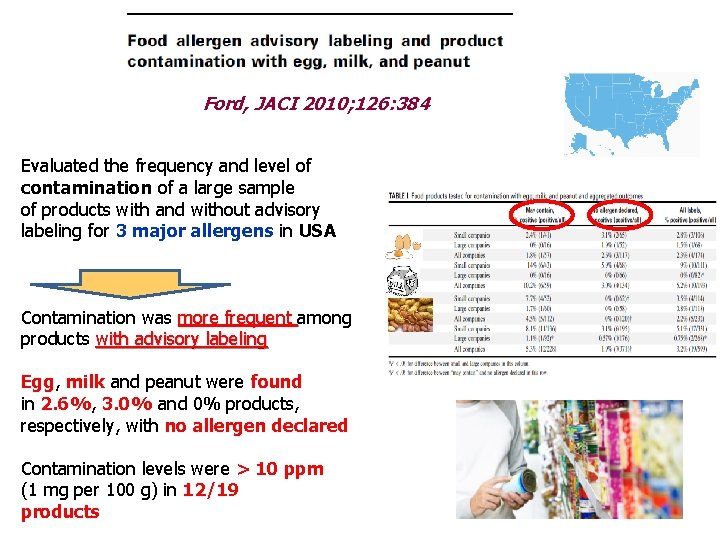
Ford, JACI 2010; 126: 384 Evaluated the frequency and level of contamination of a large sample of products with and without advisory labeling for 3 major allergens in USA Contamination was more frequent among products with advisory labeling Egg, milk and peanut were found in 2. 6%, 3. 0% and 0% products, respectively, with no allergen declared Contamination levels were > 10 ppm (1 mg per 100 g) in 12/19 products
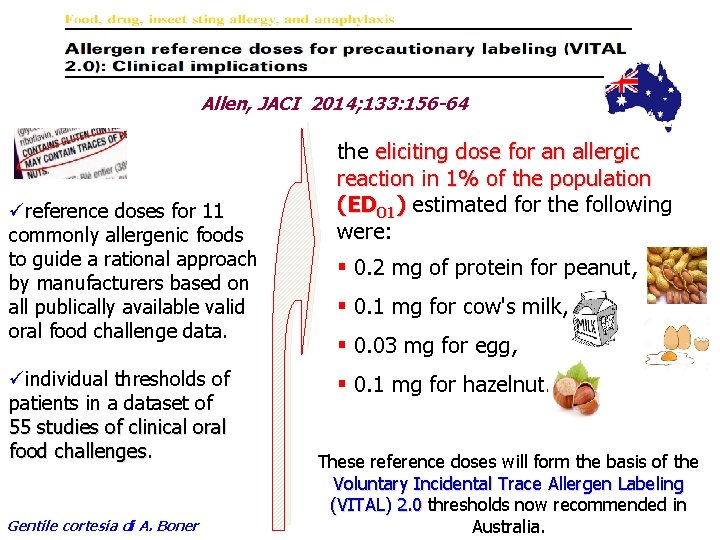
Allen, JACI 2014; 133: 156 -64 üreference doses for 11 commonly allergenic foods to guide a rational approach by manufacturers based on all publically available valid oral food challenge data. üindividual thresholds of patients in a dataset of 55 studies of clinical oral food challenges Gentile cortesia di A. Boner the eliciting dose for an allergic reaction in 1% of the population (ED 01) estimated for the following were: § 0. 2 mg of protein for peanut, § 0. 1 mg for cow's milk, § 0. 03 mg for egg, § 0. 1 mg for hazelnut. These reference doses will form the basis of the Voluntary Incidental Trace Allergen Labeling (VITAL) 2. 0 thresholds now recommended in Australia.
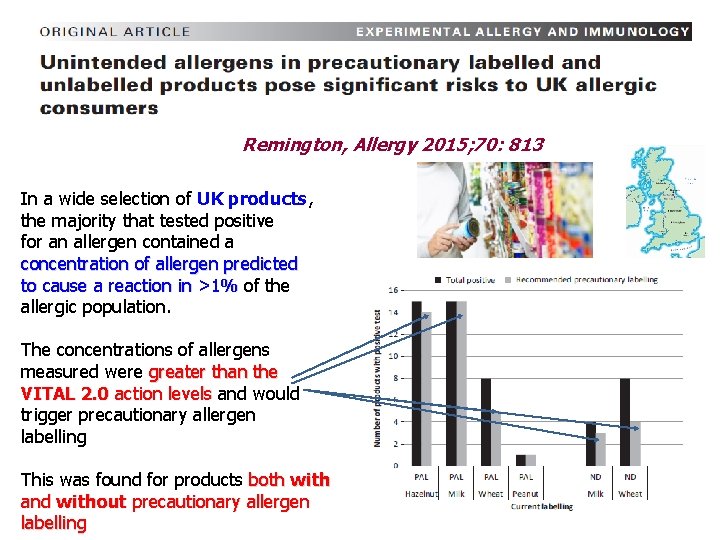
Remington, Allergy 2015; 70: 813 In a wide selection of UK products, the majority that tested positive for an allergen contained a concentration of allergen predicted to cause a reaction in >1% of the allergic population. The concentrations of allergens measured were greater than the VITAL 2. 0 action levels and would trigger precautionary allergen labelling This was found for products both with and without precautionary allergen labelling
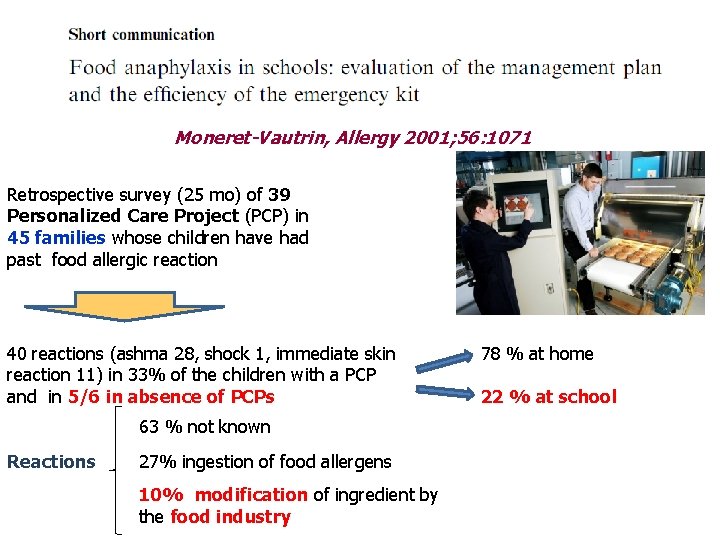
Moneret-Vautrin, Allergy 2001; 56: 1071 Retrospective survey (25 mo) of 39 Personalized Care Project (PCP) in 45 families whose children have had past food allergic reaction 40 reactions (ashma 28, shock 1, immediate skin reaction 11) in 33% of the children with a PCP and in 5/6 in absence of PCPs 63 % not known Reactions 27% ingestion of food allergens 10% modification of ingredient by the food industry 78 % at home 22 % at school
AREE EDUCATIVE PER IL PAZIENTE Riconoscimento dei sintomi Corretto utilizzo device Educazione nell’anafilassi Avere/usare l’adrenalina Evitamento triggers scatenanti
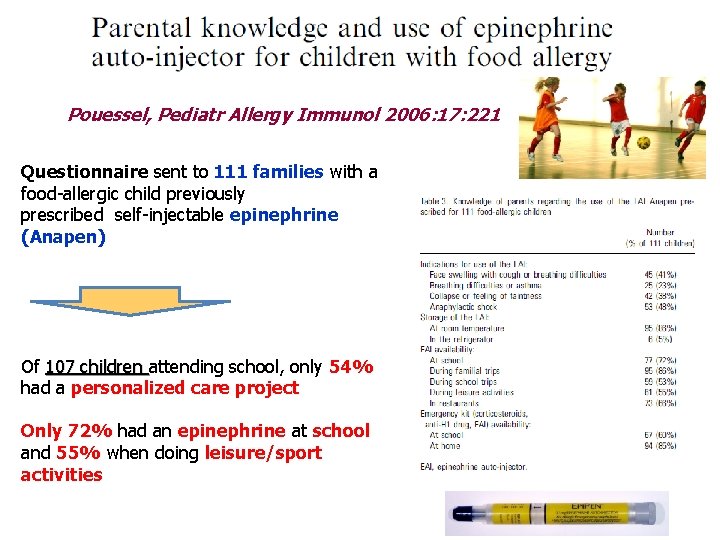
Pouessel, Pediatr Allergy Immunol 2006: 17: 221 Questionnaire sent to 111 families with a food-allergic child previously prescribed self-injectable epinephrine (Anapen) Of 107 children attending school, only 54% had a personalized care project Only 72% had an epinephrine at school and 55% when doing leisure/sport activities
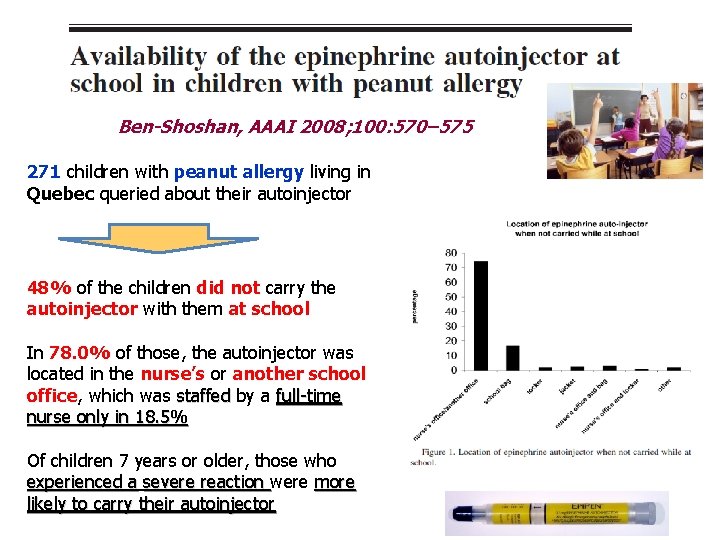
Ben-Shoshan, AAAI 2008; 100: 570– 575 271 children with peanut allergy living in Quebec queried about their autoinjector 48% of the children did not carry the autoinjector with them at school In 78. 0% of those, the autoinjector was located in the nurse’s or another school office, which was staffed by a full-time nurse only in 18. 5% Of children 7 years or older, those who experienced a severe reaction were more likely to carry their autoinjector
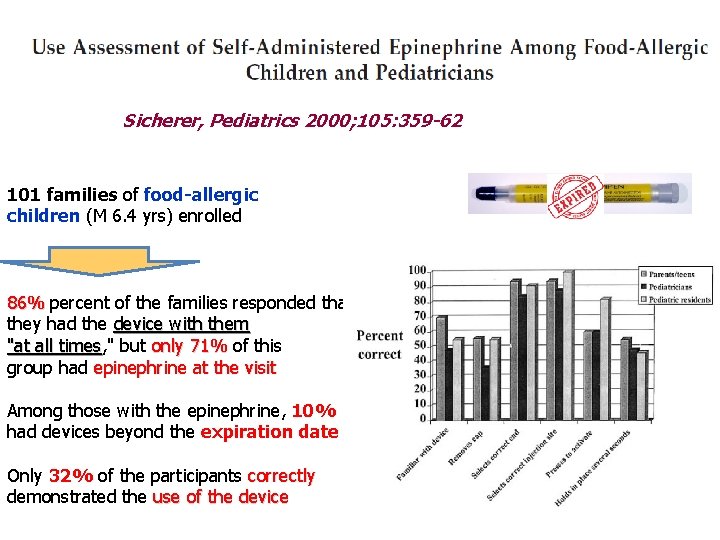
Sicherer, Pediatrics 2000; 105: 359 -62 101 families of food-allergic children (M 6. 4 yrs) enrolled 86% percent of the families responded that they had the device with them "at all times, " times but only 71% of this group had epinephrine at the visit Among those with the epinephrine, 10% had devices beyond the expiration date Only 32% of the participants correctly demonstrated the use of the device
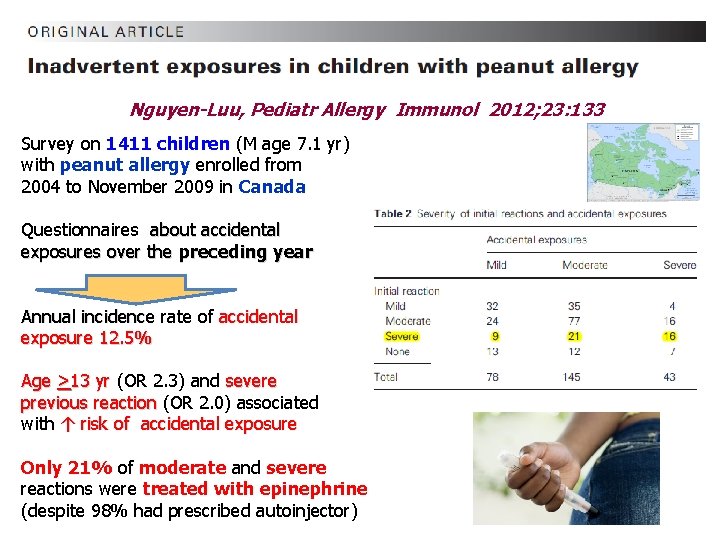
Nguyen-Luu, Pediatr Allergy Immunol 2012; 23: 133 Survey on 1411 children (M age 7. 1 yr) with peanut allergy enrolled from 2004 to November 2009 in Canada Questionnaires about accidental exposures over the preceding year Annual incidence rate of accidental exposure 12. 5% Age >13 yr (OR 2. 3) and severe previous reaction (OR 2. 0) associated with ↑ risk of accidental exposure Only 21% of moderate and severe reactions were treated with epinephrine (despite 98% had prescribed autoinjector)
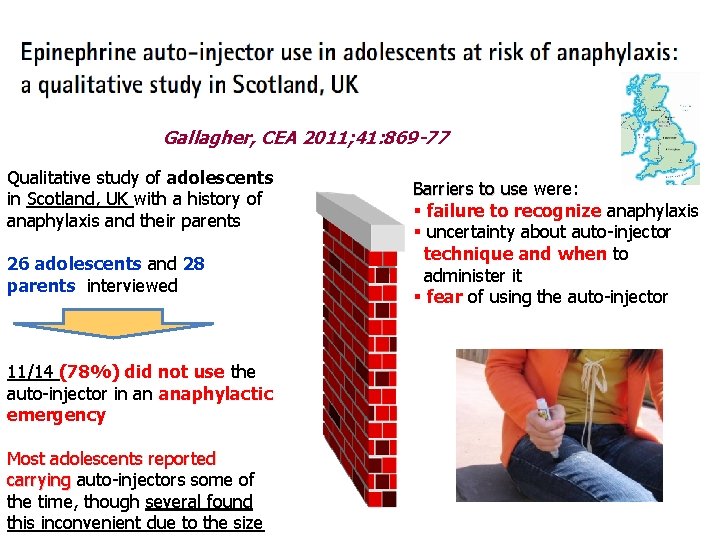
Gallagher, CEA 2011; 41: 869 -77 Qualitative study of adolescents in Scotland, UK with a history of anaphylaxis and their parents 26 adolescents and 28 parents interviewed 11/14 (78%) did not use the auto-injector in an anaphylactic emergency Most adolescents reported carrying auto-injectors some of the time, though several found this inconvenient due to the size Barriers to use were: § failure to recognize anaphylaxis § uncertainty about auto-injector technique and when to administer it § fear of using the auto-injector
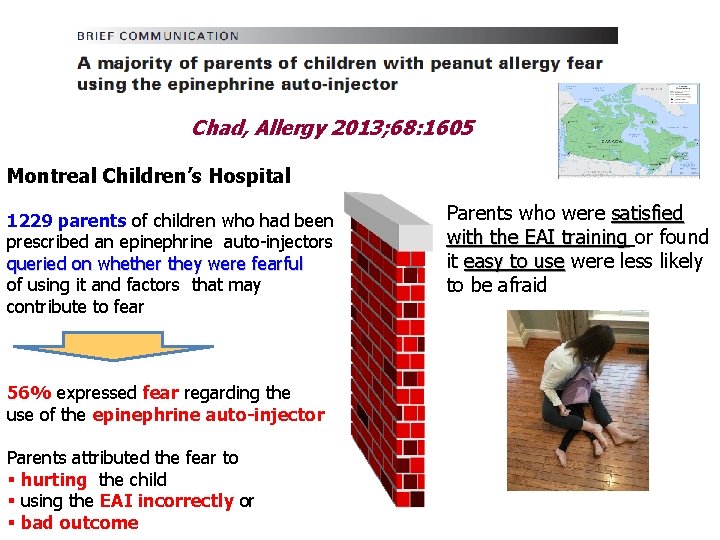
Chad, Allergy 2013; 68: 1605 Montreal Children’s Hospital 1229 parents of children who had been prescribed an epinephrine auto-injectors queried on whether they were fearful of using it and factors that may contribute to fear 56% expressed fear regarding the use of the epinephrine auto-injector Parents attributed the fear to § hurting the child § using the EAI incorrectly or § bad outcome Parents who were satisfied with the EAI training or found it easy to use were less likely to be afraid
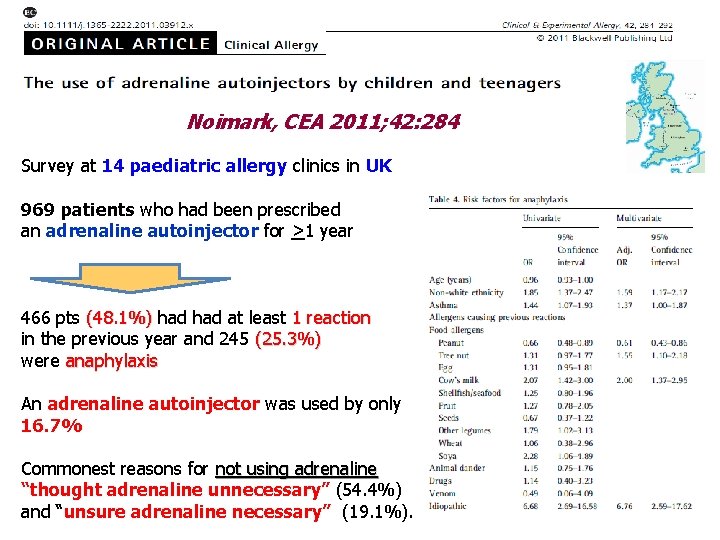
Noimark, CEA 2011; 42: 284 Survey at 14 paediatric allergy clinics in UK 969 patients who had been prescribed an adrenaline autoinjector for >1 year 466 pts (48. 1%) had at least 1 reaction in the previous year and 245 (25. 3%) were anaphylaxis An adrenaline autoinjector was used by only 16. 7% Commonest reasons for not using adrenaline “thought adrenaline unnecessary” (54. 4%) and “unsure adrenaline necessary” (19. 1%).
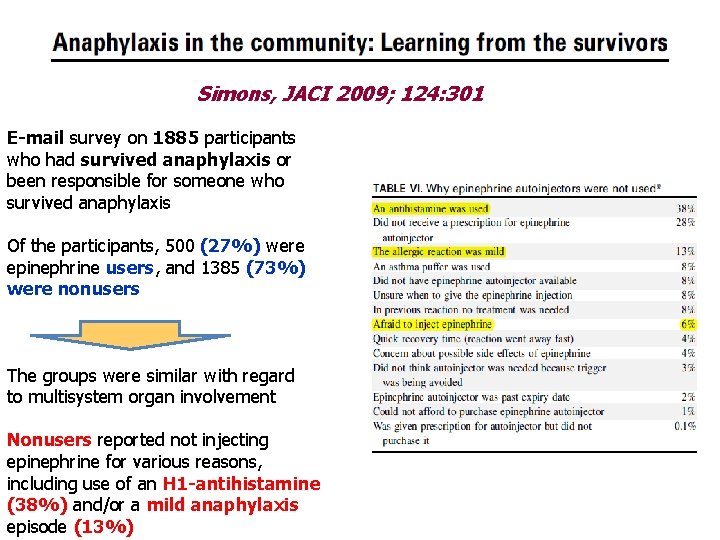
Simons, JACI 2009; 124: 301 E-mail survey on 1885 participants who had survived anaphylaxis or been responsible for someone who survived anaphylaxis Of the participants, 500 (27%) were epinephrine users, and 1385 (73%) were nonusers The groups were similar with regard to multisystem organ involvement Nonusers reported not injecting epinephrine for various reasons, including use of an H 1 -antihistamine (38%) and/or a mild anaphylaxis episode (13%)
AREE EDUCATIVE PER IL PAZIENTE Riconoscimento dei sintomi Corretto utilizzo device Educazione nell’anafilassi Avere/usare l’adrenalina Evitamento triggers scatenanti
Arkwright, Pediatr Allergy Immunol 2006; 17: 227 122 children with food allergies who had previously been prescribed Epi. Pens attending a specialist pediatric allergy center in the UK 19% of the cohort had never been shown how to use the device, and of this subgroup, 78% were unable to trigger the autoinjector Prior practical demonstration was associated with a 4– 5 fold greater chance that parents would be able to use the device (p < 0. 005)
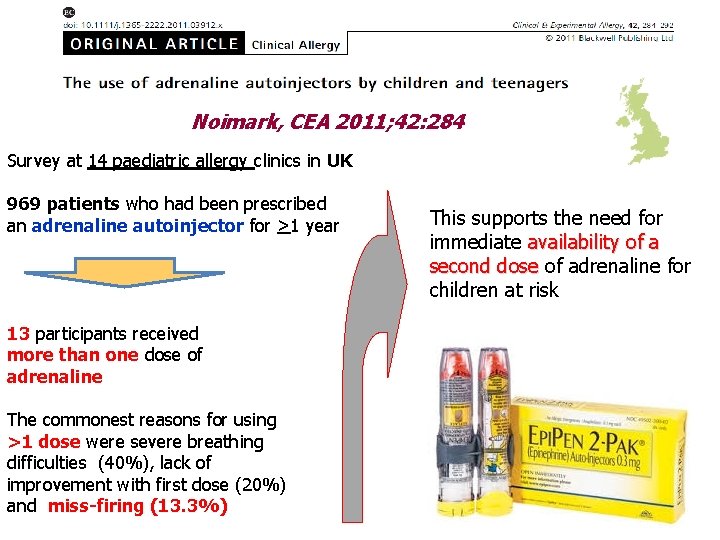
Noimark, CEA 2011; 42: 284 Survey at 14 paediatric allergy clinics in UK 969 patients who had been prescribed an adrenaline autoinjector for >1 year 13 participants received more than one dose of adrenaline The commonest reasons for using >1 dose were severe breathing difficulties (40%), lack of improvement with first dose (20%) and miss-firing (13. 3%) This supports the need for immediate availability of a second dose of adrenaline for children at risk
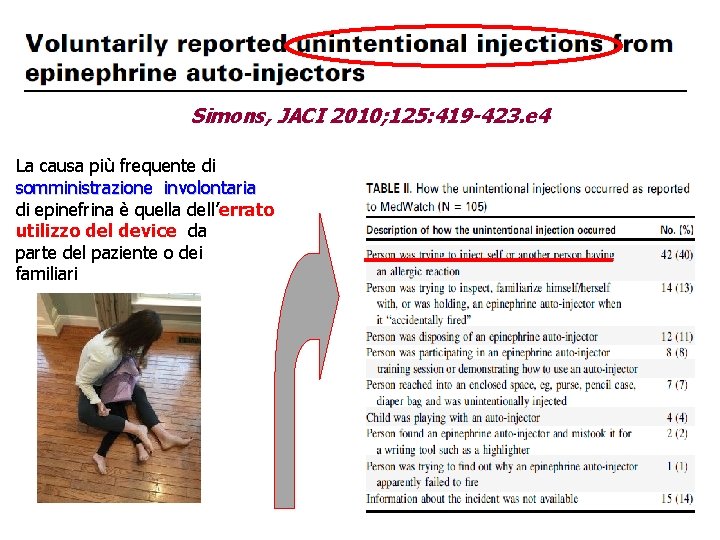
Simons, JACI 2010; 125: 419 -423. e 4 La causa più frequente di somministrazione involontaria di epinefrina è quella dell’errato utilizzo del device da parte del paziente o dei familiari
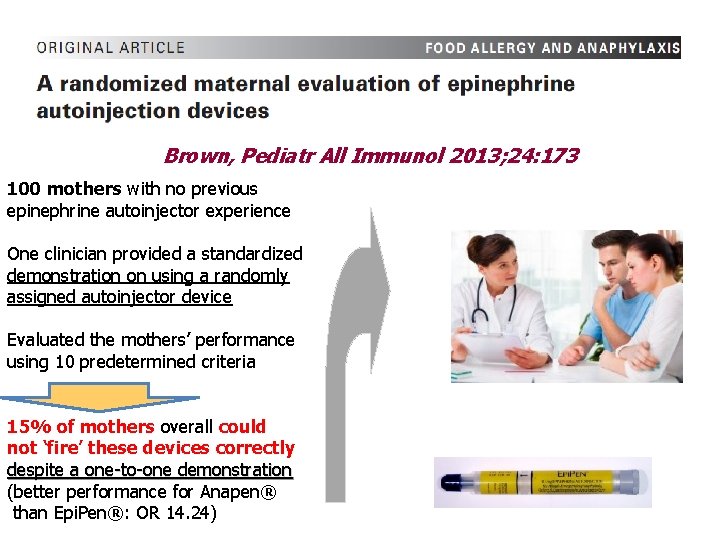
Brown, Pediatr All Immunol 2013; 24: 173 100 mothers with no previous epinephrine autoinjector experience One clinician provided a standardized demonstration on using a randomly assigned autoinjector device Evaluated the mothers’ performance using 10 predetermined criteria 15% of mothers overall could not ‘fire’ these devices correctly despite a one-to-one demonstration (better performance for Anapen® than Epi. Pen®: OR 14. 24)
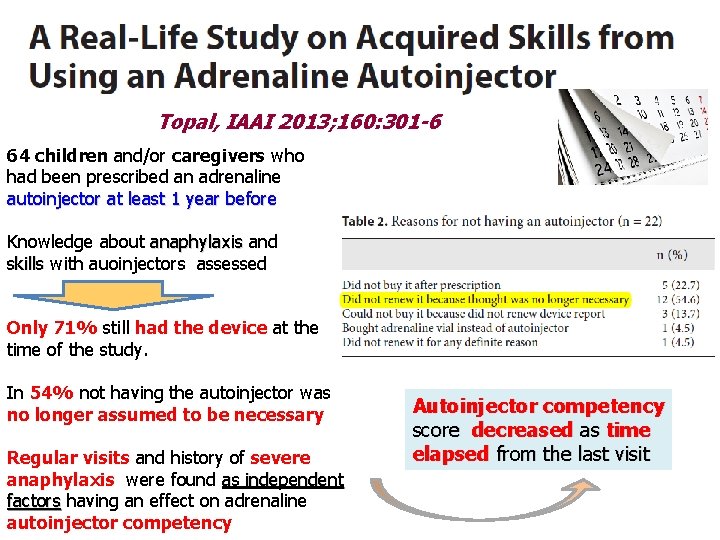
Topal, IAAI 2013; 160: 301 -6 64 children and/or caregivers who had been prescribed an adrenaline autoinjector at least 1 year before Knowledge about anaphylaxis and skills with auoinjectors assessed Only 71% still had the device at the time of the study. In 54% not having the autoinjector was no longer assumed to be necessary Regular visits and history of severe anaphylaxis were found as independent factors having an effect on adrenaline autoinjector competency Autoinjector competency score decreased as time elapsed from the last visit
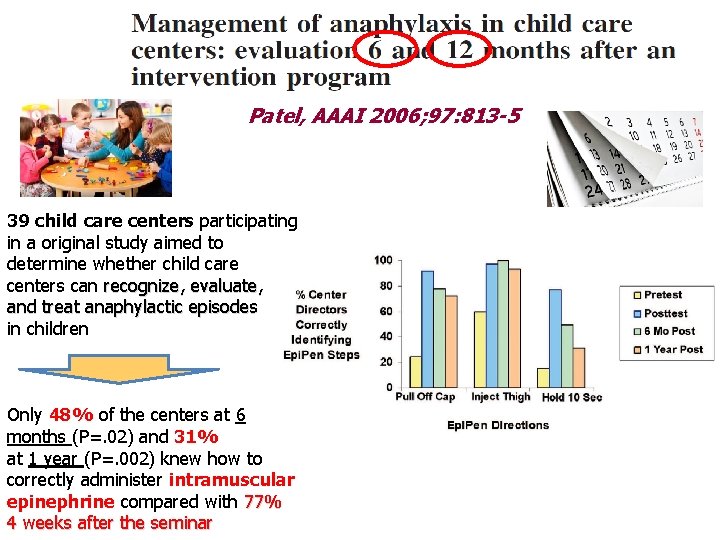
Patel, AAAI 2006; 97: 813 -5 39 child care centers participating in a original study aimed to determine whether child care centers can recognize, evaluate, and treat anaphylactic episodes in children Only 48% of the centers at 6 months (P=. 02) and 31% at 1 year (P=. 002) knew how to correctly administer intramuscular epinephrine compared with 77% 4 weeks after the seminar
Serve l’educazione al management dell’anafilassi?
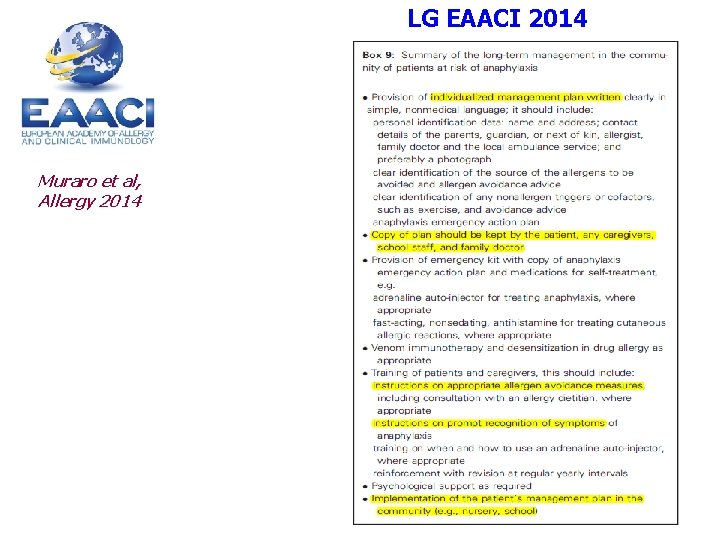
LG EAACI 2014 Muraro et al, Allergy 2014
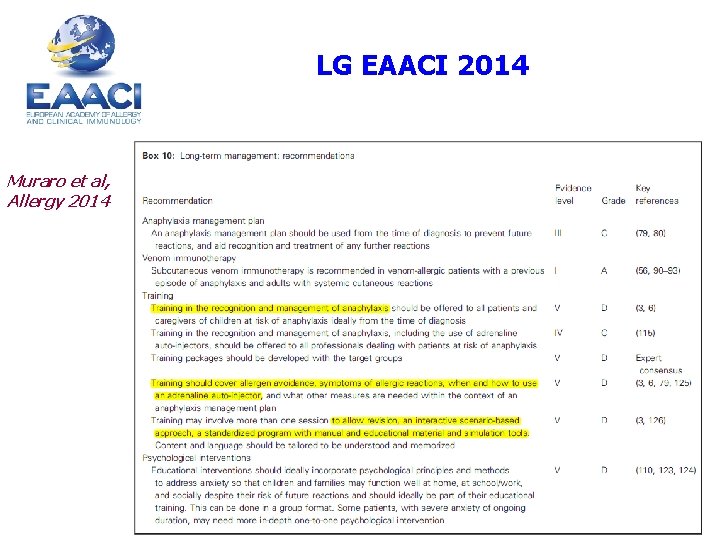
LG EAACI 2014 Muraro et al, Allergy 2014
https: //etraining. allergy. org. au/ E-learning
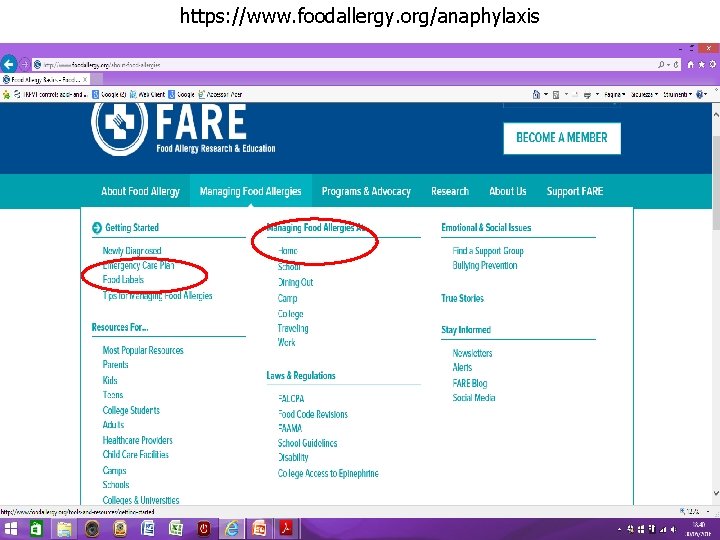
https: //www. foodallergy. org/anaphylaxis
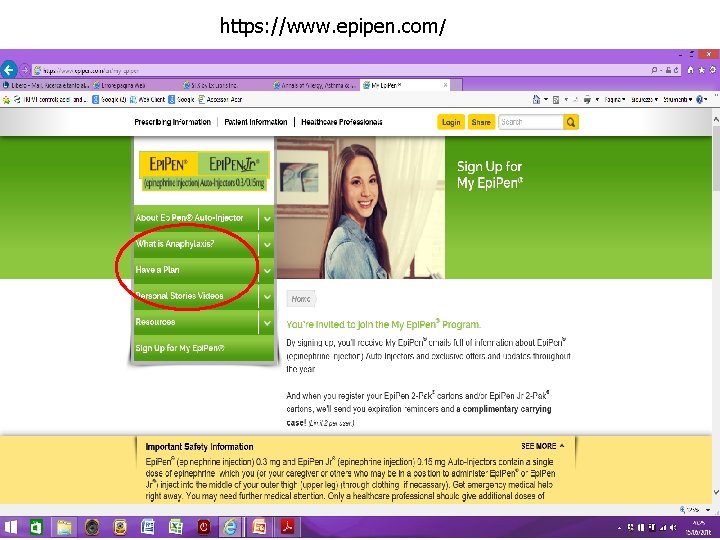
https: //www. epipen. com/
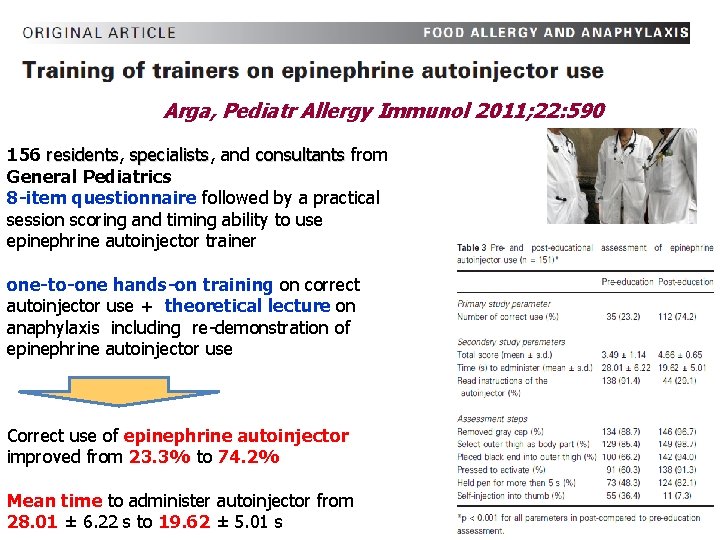
Arga, Pediatr Allergy Immunol 2011; 22: 590 156 residents, residents specialists, specialists and consultants from General Pediatrics 8 -item questionnaire followed by a practical session scoring and timing ability to use epinephrine autoinjector trainer one-to-one hands-on training on correct autoinjector use + theoretical lecture on anaphylaxis including re-demonstration of epinephrine autoinjector use Correct use of epinephrine autoinjector improved from 23. 3% to 74. 2% Mean time to administer autoinjector from 28. 01 ± 6. 22 s to 19. 62 ± 5. 01 s
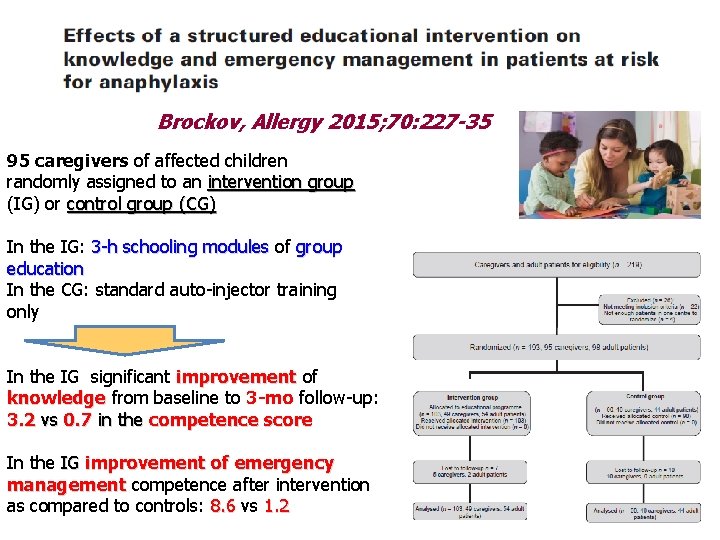
Brockov, Allergy 2015; 70: 227 -35 95 caregivers of affected children randomly assigned to an intervention group (IG) or control group (CG) In the IG: 3 -h schooling modules of group education In the CG: standard auto-injector training only In the IG significant improvement of knowledge from baseline to 3 -mo follow-up: 3. 2 vs 0. 7 in the competence score In the IG improvement of emergency management competence after intervention as compared to controls: 8. 6 vs 1. 2
Arkwright, Pediatr Allergy Immunol 2006; 17: 227 122 children with food allergies who had previously been prescribed Epi. Pens attending a specialist pediatric allergy center in the UK 19% of the cohort had never been shown how to use the device, and of this subgroup, 78% were unable to trigger the autoinjector Prior practical demonstration was associated with a 4– 5 fold greater chance that parents would be able to use the device (p < 0. 005)
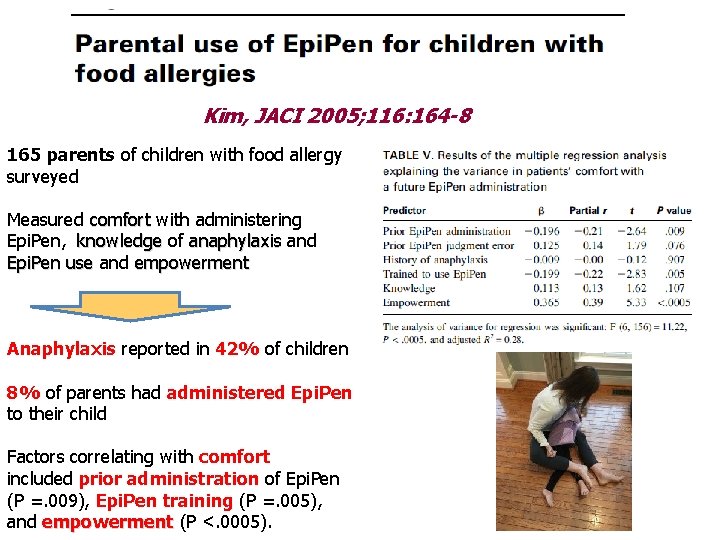
Kim, JACI 2005; 116: 164 -8 165 parents of children with food allergy surveyed Measured comfort with administering Epi. Pen, knowledge of anaphylaxis and Epi. Pen use and empowerment Anaphylaxis reported in 42% of children 8% of parents had administered Epi. Pen to their child Factors correlating with comfort included prior administration of Epi. Pen (P =. 009), Epi. Pen training (P =. 005), and empowerment (P <. 0005).
…grazie per l’attenzione