
I Function Receptors sense changes environments II Types

- Slides: 30
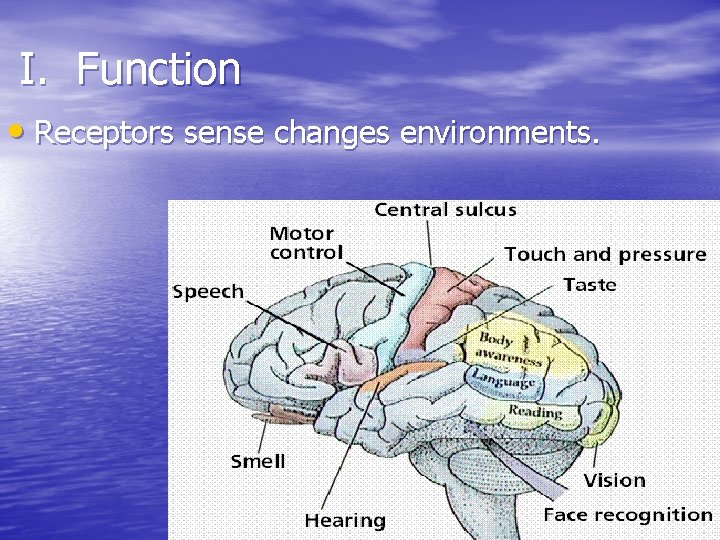
I. Function • Receptors sense changes environments.
II. Types of Receptors a. Chemoreceptors- changes in chemical b. c. d. e. concentrations Pain receptors- Tissue damage Thermoreceptors- changes in temperature Mechanoreceptors- pressure and movement Photoreceptors- light energy
III. Sensation • Sensory receptor receives a stimulus and sends it to the brain along a sensory neurons. • The brain (interneurons) interprets the signal as a sensation
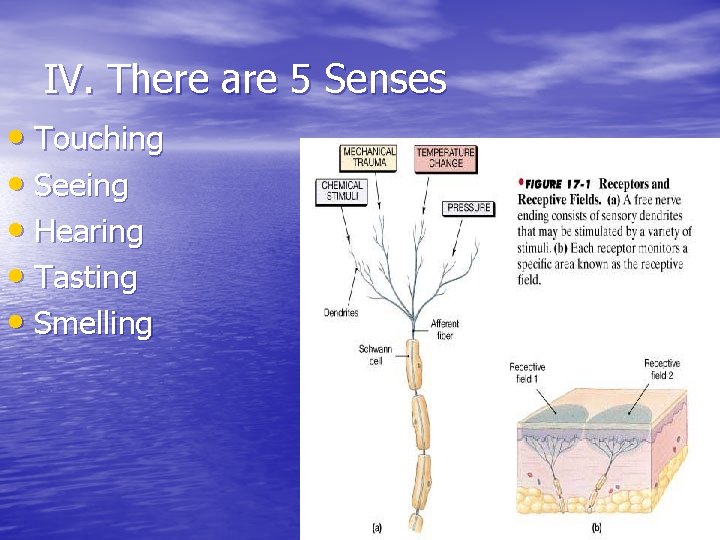
IV. There are 5 Senses • Touching • Seeing • Hearing • Tasting • Smelling
Lets do a lab- Pain • With your eyes closed, your partner should place the two ends of the paper clip far apart on your INDEX FINGER and slowly move them closer together. Record the distance, in millimeters, at which they feel like ONE point. • Repeat for back of Hand • Repeat for Forearm • Repeat for Calf
How about another lab Temperature • Place your left index finger in the ice water and your right index finger in the hot water. Record which finger adapts more quickly to the temperature. • Now remove both fingers from the hot and cold water and place them in the room temperature water. Record what you felt in each finger.
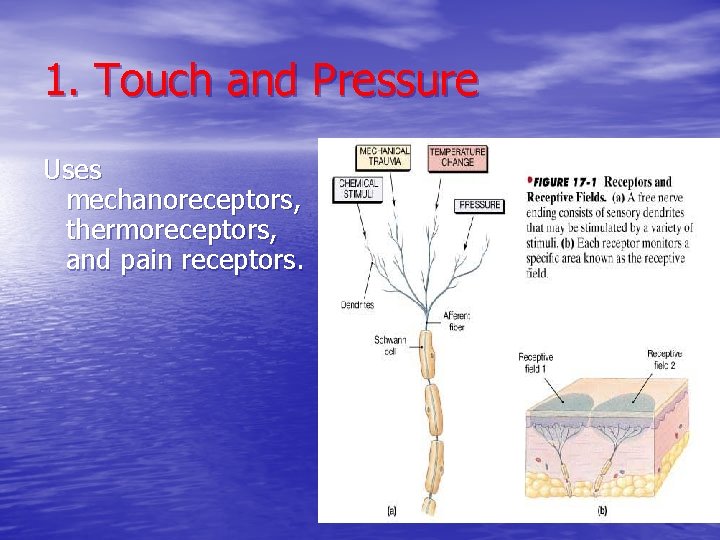
1. Touch and Pressure Uses mechanoreceptors, thermoreceptors, and pain receptors.
• a. Temperature – Warm and Cold Receptors – Adapt quickly – above 113 and below pain • b. Pain – Receptors in skin and internal tissue – Responds to damaged tissue – Adapts poorly
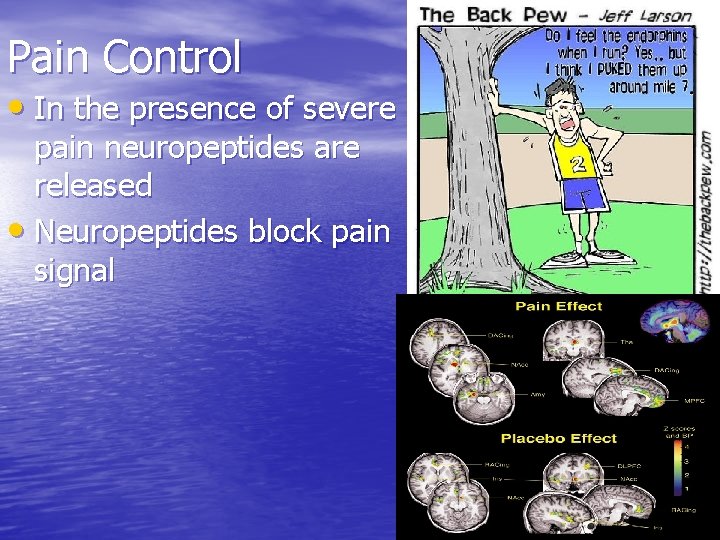
Pain Control • In the presence of severe pain neuropeptides are released • Neuropeptides block pain signal
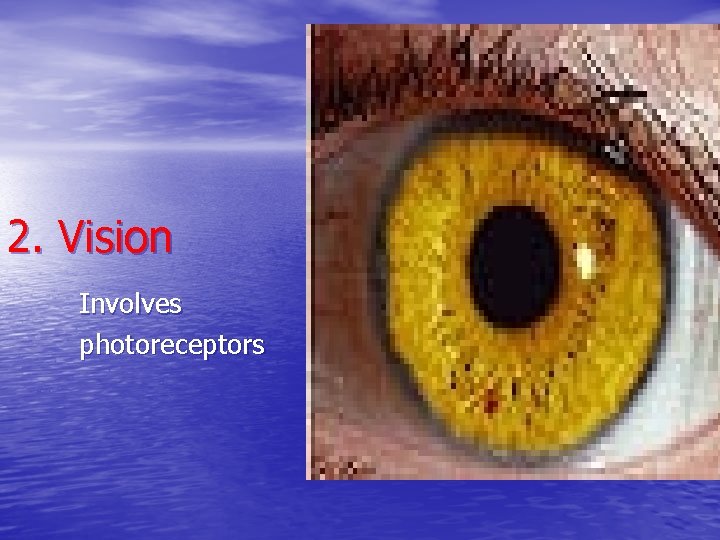
2. Vision Involves photoreceptors
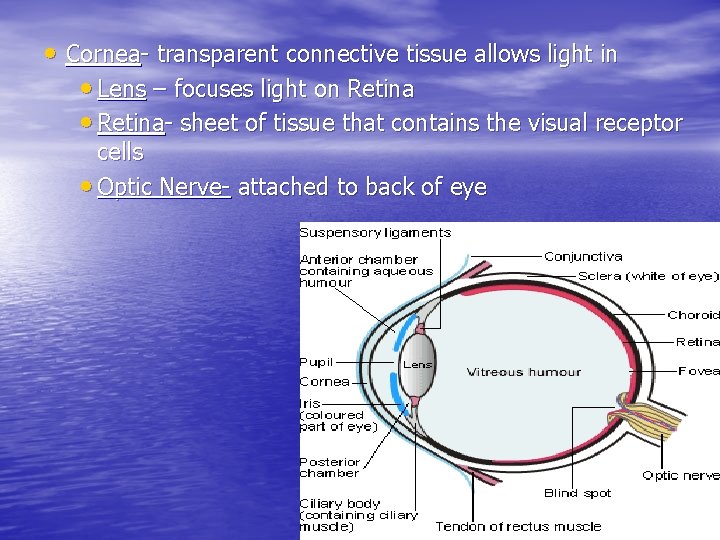
Light passes through pupil and is focused on retina. Image is upside down and reversed, brain interprets image
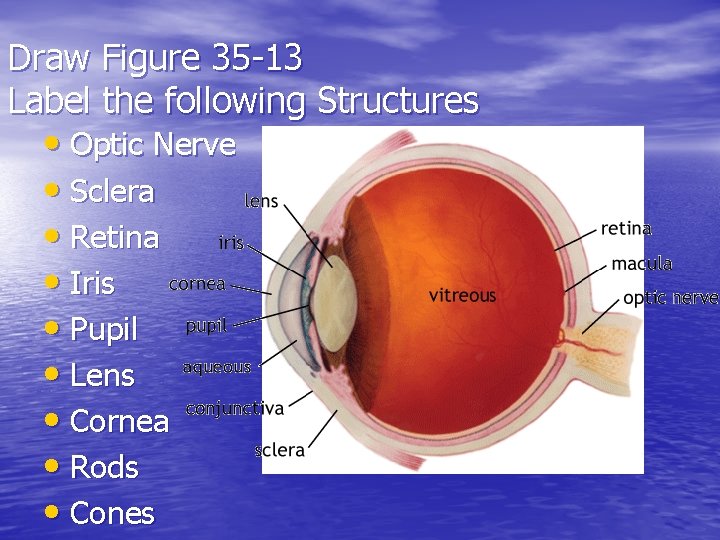
Draw Figure 35 -13 Label the following Structures • Optic Nerve • Sclera • Retina • Iris • Pupil • Lens • Cornea • Rods • Cones
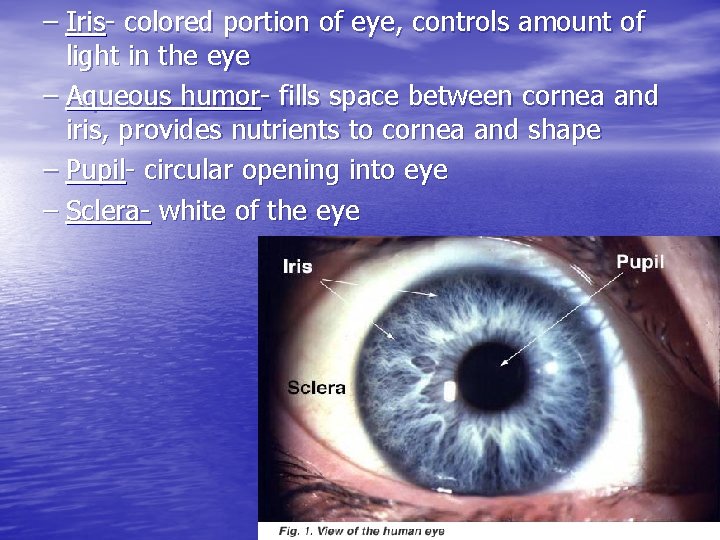
– Iris- colored portion of eye, controls amount of light in the eye – Aqueous humor- fills space between cornea and iris, provides nutrients to cornea and shape – Pupil- circular opening into eye – Sclera- white of the eye
• Cornea- transparent connective tissue allows light in • Lens – focuses light on Retina • Retina- sheet of tissue that contains the visual receptor cells • Optic Nerve- attached to back of eye
• A. Visual Receptors 1. Rods- colorless and dim light vision, 2. Cones- Color Receptors Rhodopsin- light sensitive chemical in rods Cones have one of three light sensitive pigments that detect different wavelengths of light. -Green, Red, and Violet
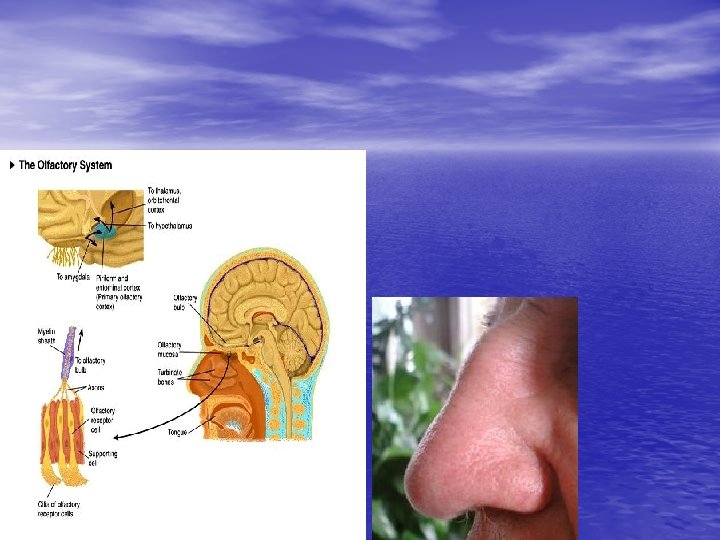
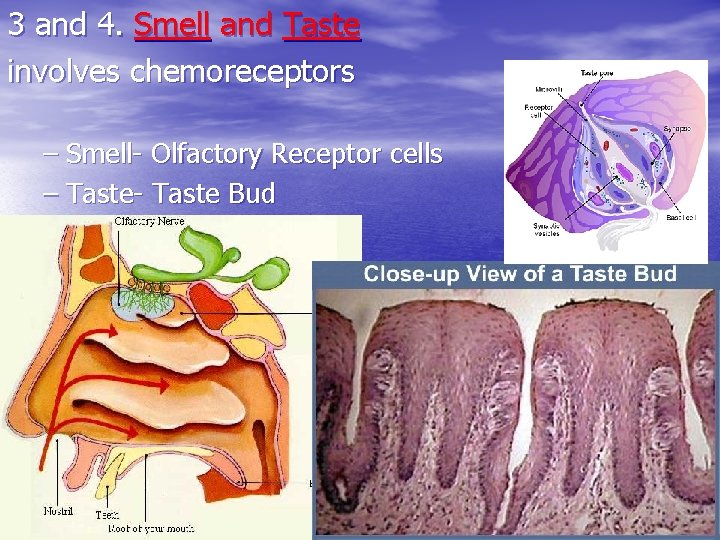
3 and 4. Smell and Taste involves chemoreceptors – Smell- Olfactory Receptor cells – Taste- Taste Bud – Both adapt quickly
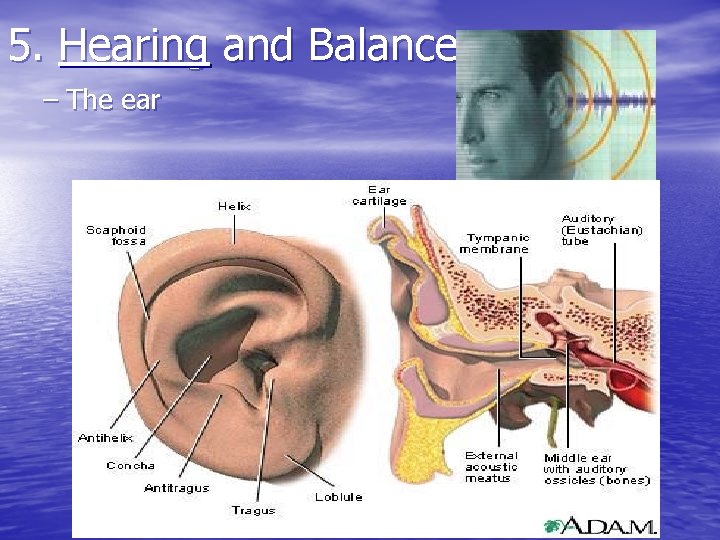
5. Hearing and Balance – The ear
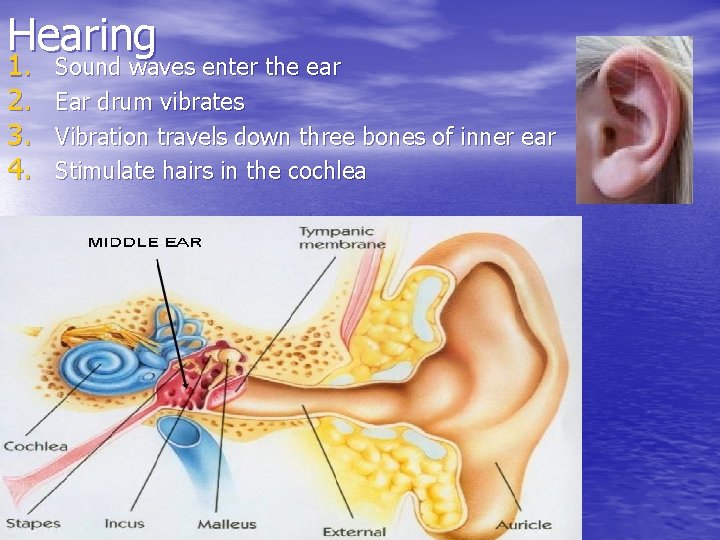
Hearing 1. 2. 3. 4. Sound waves enter the ear Ear drum vibrates Vibration travels down three bones of inner ear Stimulate hairs in the cochlea
7. Equilibirum – Canals lined with hairs and filled with fluid • Maintains balance based on position of head when the body is still • Detect motion and maintains balance
The sense of sound • http: //www. blackwellpublishing. com/mat thews/ear. html • http: //www. audiocheck. net/audiotests_fr equencycheckhigh. php
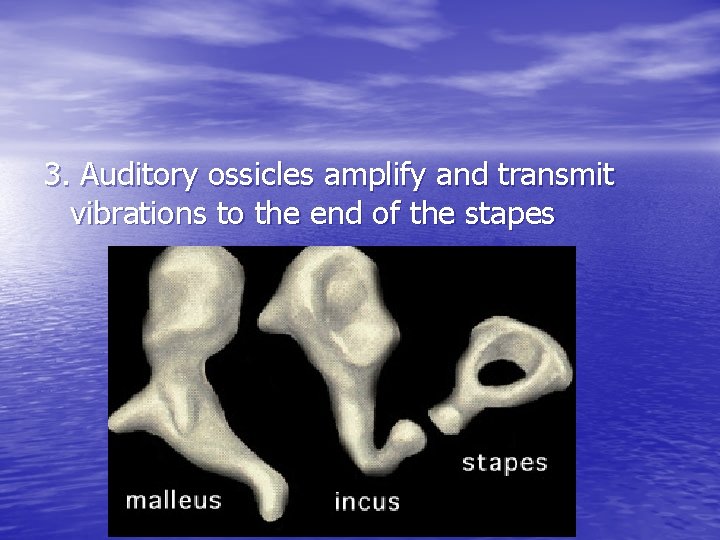
3. Auditory ossicles amplify and transmit vibrations to the end of the stapes
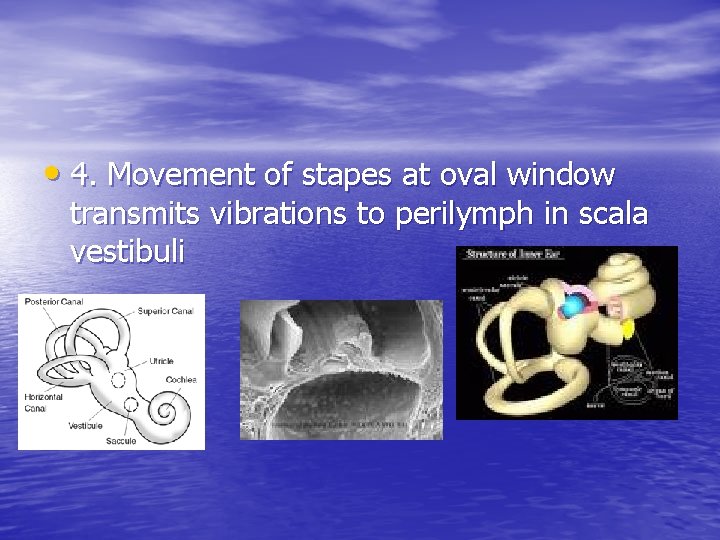
• 4. Movement of stapes at oval window transmits vibrations to perilymph in scala vestibuli
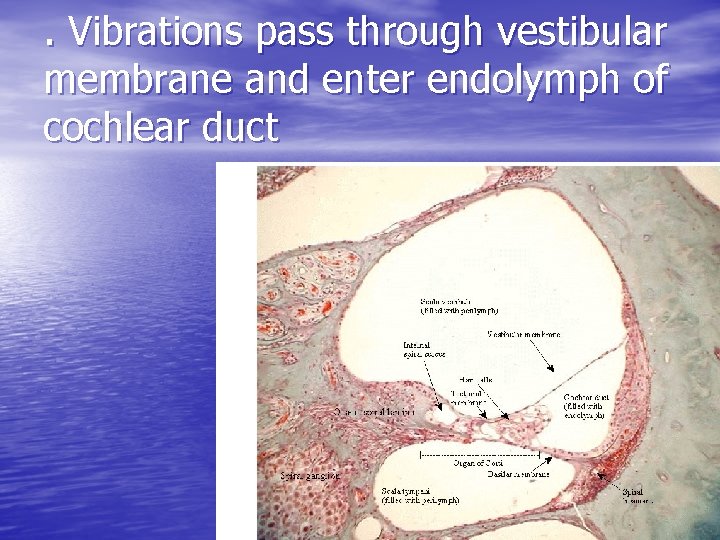
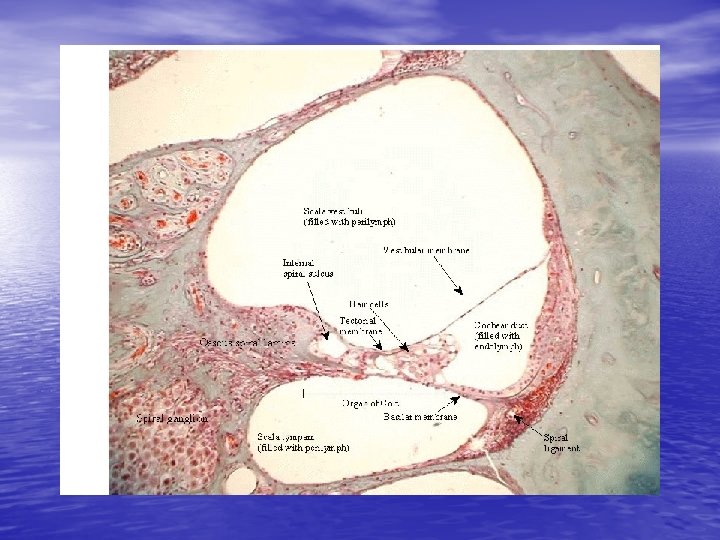
. Vibrations pass through vestibular membrane and enter endolymph of cochlear duct
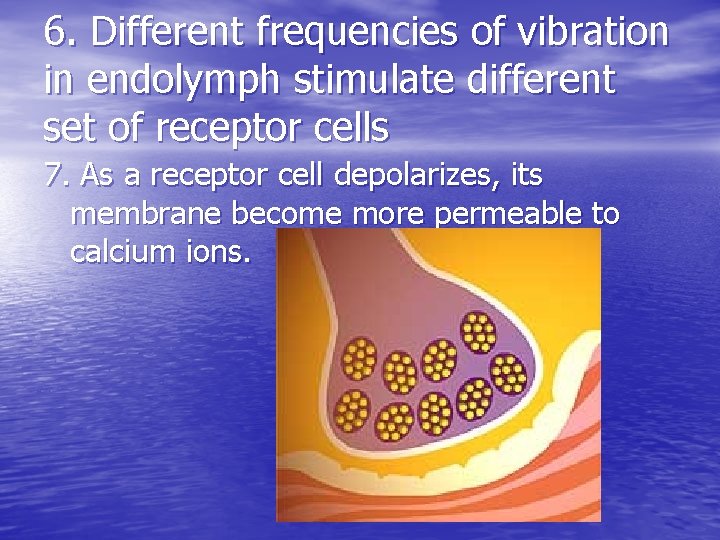
6. Different frequencies of vibration in endolymph stimulate different set of receptor cells 7. As a receptor cell depolarizes, its membrane become more permeable to calcium ions.
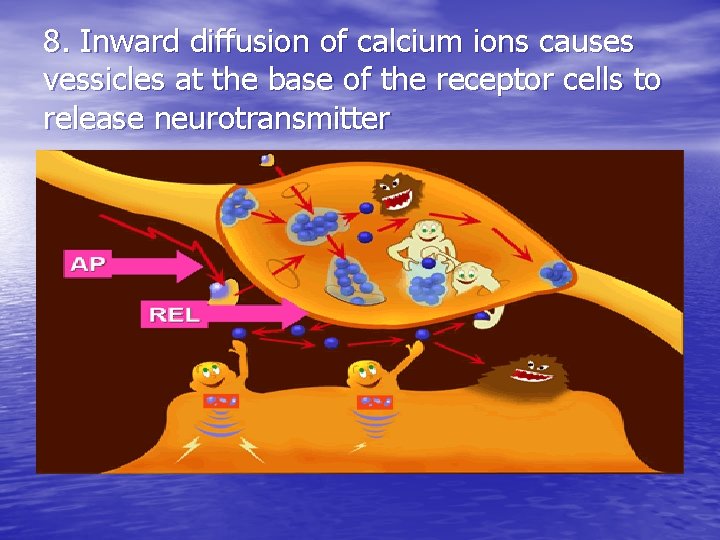
8. Inward diffusion of calcium ions causes vessicles at the base of the receptor cells to release neurotransmitter
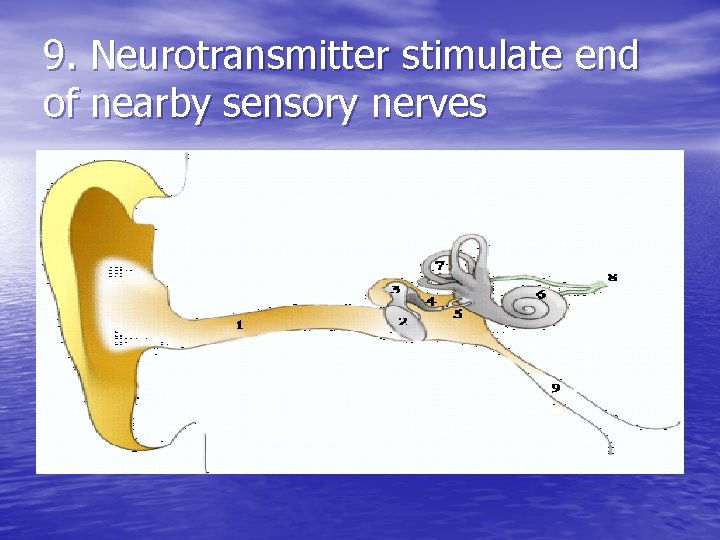
9. Neurotransmitter stimulate end of nearby sensory nerves