
I Flowering Plants Anthophyta Few truly marine species
- Slides: 28
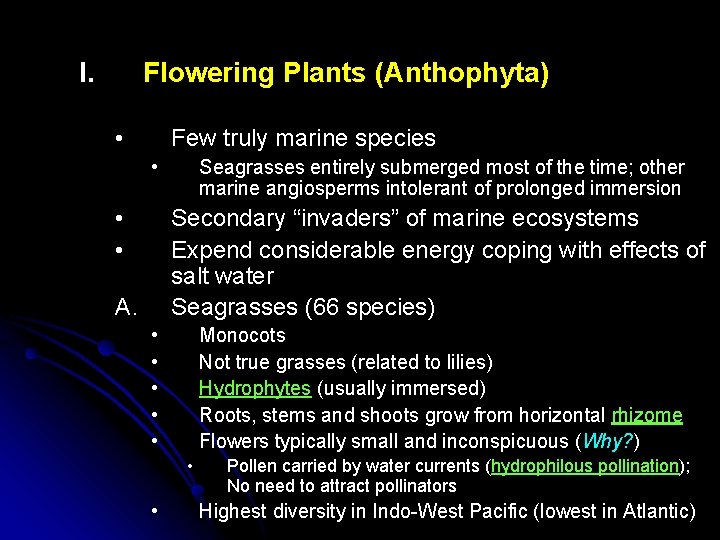
I. Flowering Plants (Anthophyta) • Few truly marine species • • • Seagrasses entirely submerged most of the time; other marine angiosperms intolerant of prolonged immersion Secondary “invaders” of marine ecosystems Expend considerable energy coping with effects of salt water Seagrasses (66 species) A. • • • Monocots Not true grasses (related to lilies) Hydrophytes (usually immersed) Roots, stems and shoots grow from horizontal rhizome Flowers typically small and inconspicuous (Why? ) • • Pollen carried by water currents (hydrophilous pollination); No need to attract pollinators Highest diversity in Indo-West Pacific (lowest in Atlantic)
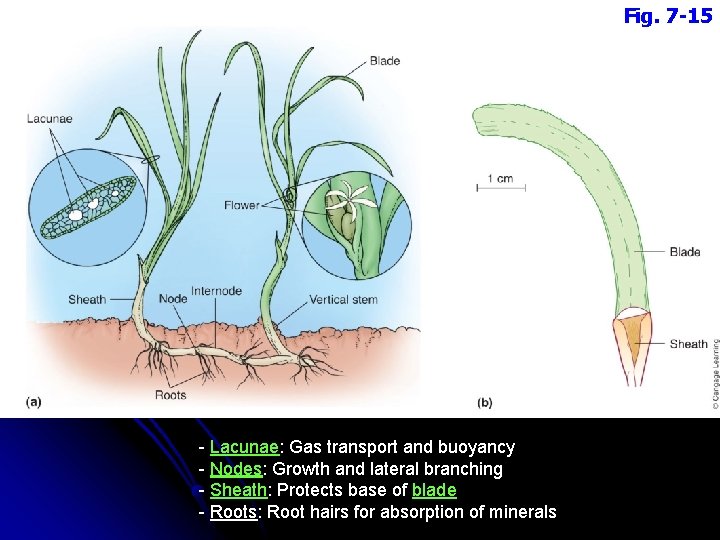
Fig. 7 -15 - Lacunae: Gas transport and buoyancy - Nodes: Growth and lateral branching - Sheath: Protects base of blade - Roots: Root hairs for absorption of minerals
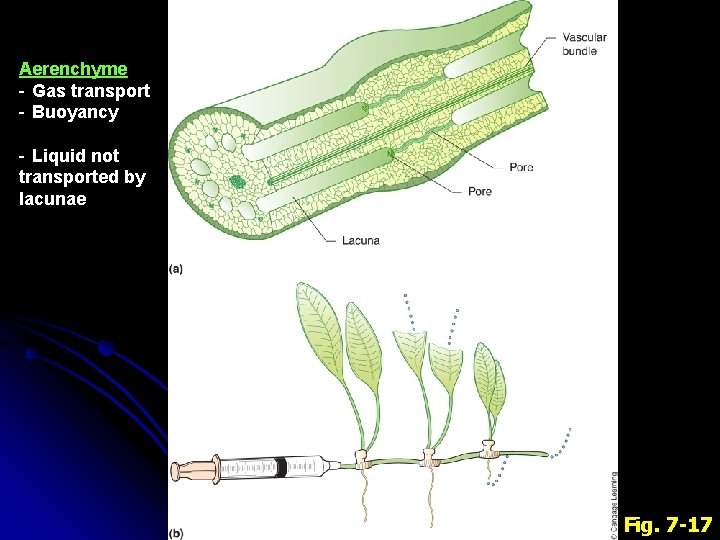
Aerenchyme - Gas transport - Buoyancy - Liquid not transported by lacunae Fig. 7 -17
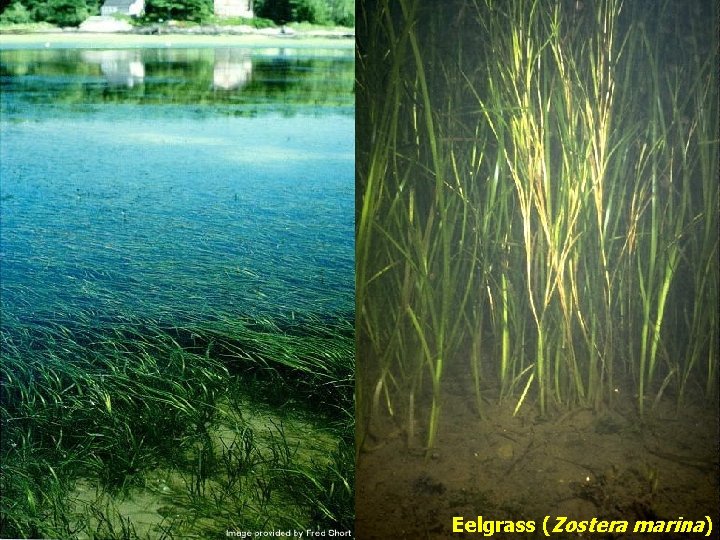
Eelgrass (Zostera marina)
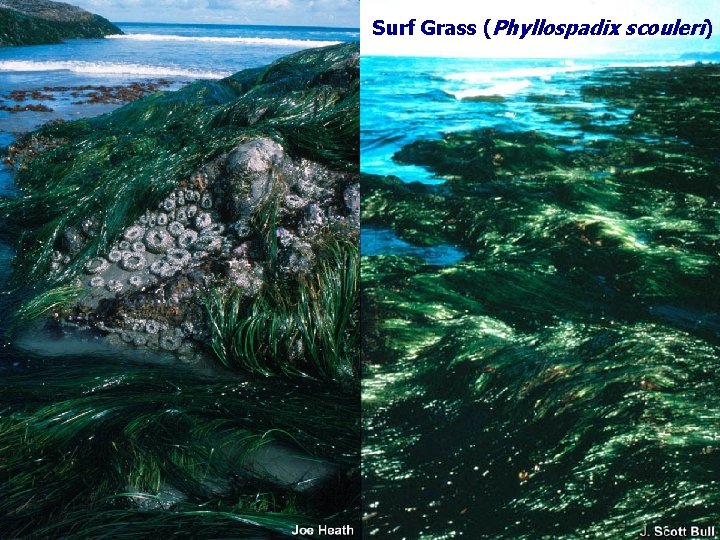
Surf Grass (Phyllospadix scouleri)
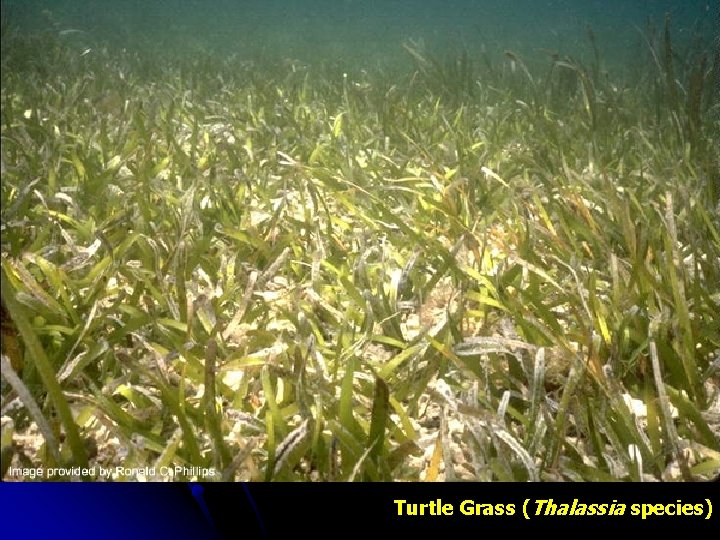
Turtle Grass (Thalassia species)
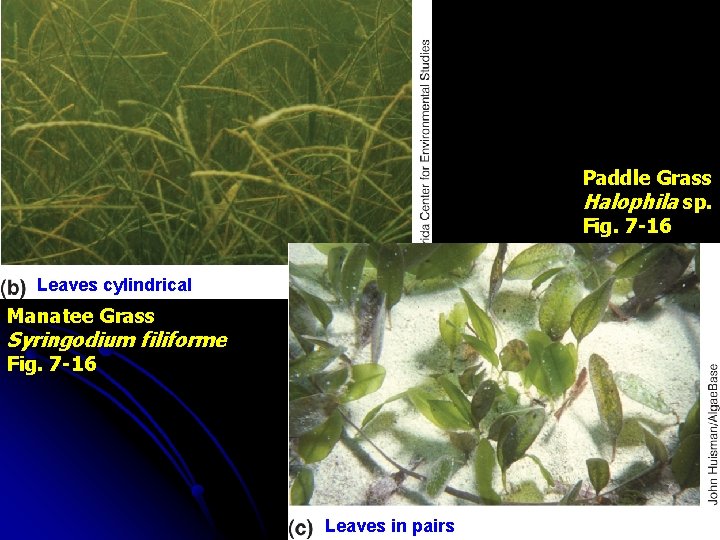
Paddle Grass Halophila sp. Fig. 7 -16 Leaves cylindrical Manatee Grass Syringodium filiforme Fig. 7 -16 Leaves in pairs
I. Flowering Plants (Anthophyta) A. Seagrasses • Leaves – periods of growth & senescence • • • Small blades/rapid senescence few epiphytes Large blades/slow senescence more epiphytes Relatively weak attachment of leaves • • • Protects rhizome from breakage Facilitates recovery following damage from storms, grazing Important in sediment deposition, stabilization • • • Enhance deposition of fine particles Reduce flow, resuspension of sediment Support diverse ecosystem • • • Many species inhabit seagrass beds Below sediment-water interface: rhizosphere Symbiotic associations with lucinid clams (Zostera) • Roots oxygenate sediments • Clams oxidize sulfide (van der Heide et al. 2012)
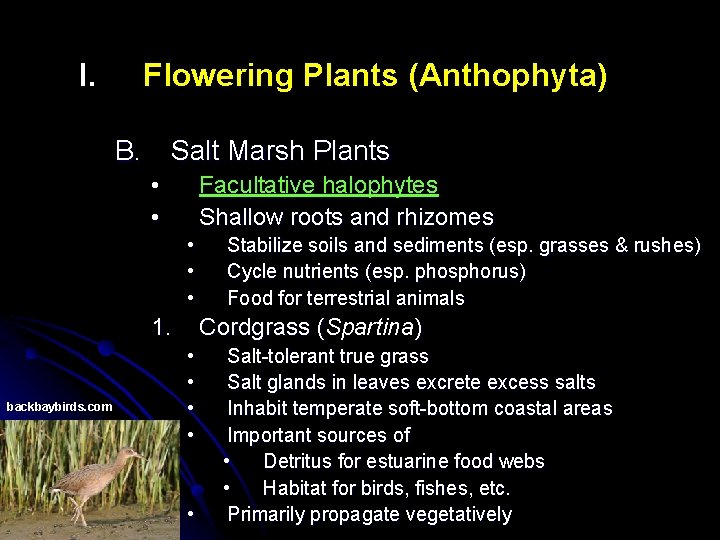
I. Flowering Plants (Anthophyta) B. Salt Marsh Plants • • Facultative halophytes Shallow roots and rhizomes • • • 1. backbaybirds. com Stabilize soils and sediments (esp. grasses & rushes) Cycle nutrients (esp. phosphorus) Food for terrestrial animals Cordgrass (Spartina ) ( • • • Salt-tolerant true grass Salt glands in leaves excrete excess salts Inhabit temperate soft-bottom coastal areas Important sources of • Detritus for estuarine food webs • Habitat for birds, fishes, etc. Primarily propagate vegetatively
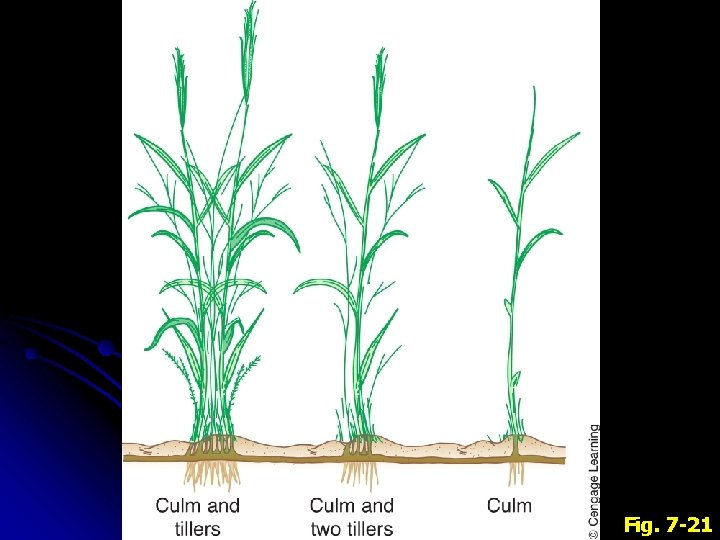
Fig. 7 -21
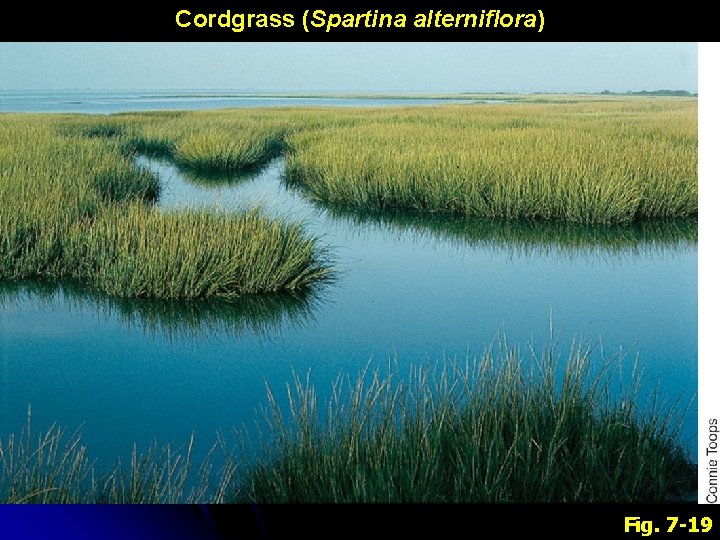
Cordgrass (Spartina alterniflora) Fig. 7 -19
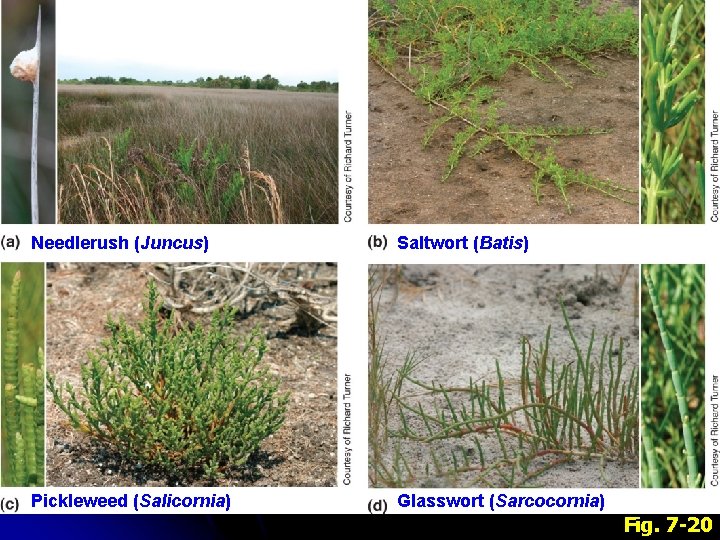
I. Flowering Plants (Anthophyta) B. Salt Marsh Plants 2. 3. 4. Needlerushes Saltworts Glassworts • • Succulent leaves, cuticle help to retain water Pickleweed (Salicornia ) ( • Occurs at higher levels in marsh with less inundation by salt water • Edible (sea beans)
Needlerush (Juncus) Saltwort (Batis) Pickleweed (Salicornia) Glasswort (Sarcocornia) Fig. 7 -20
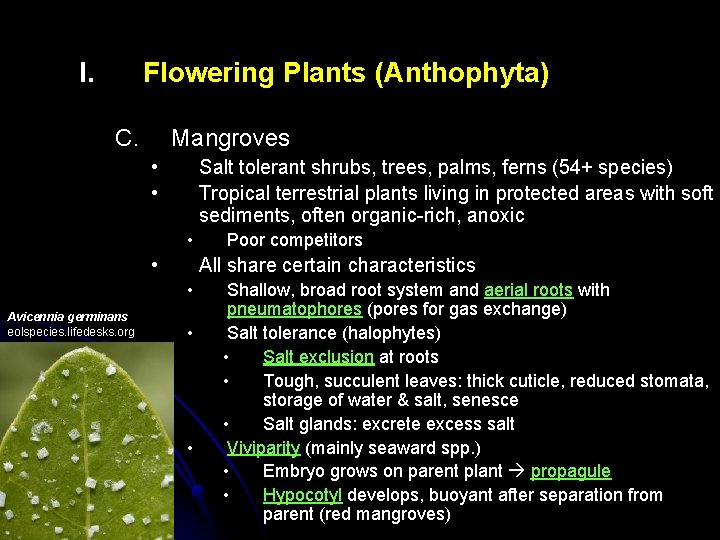
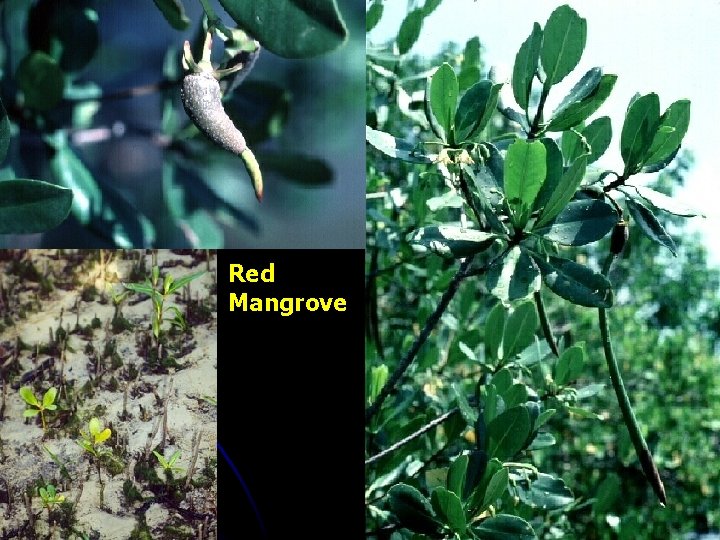
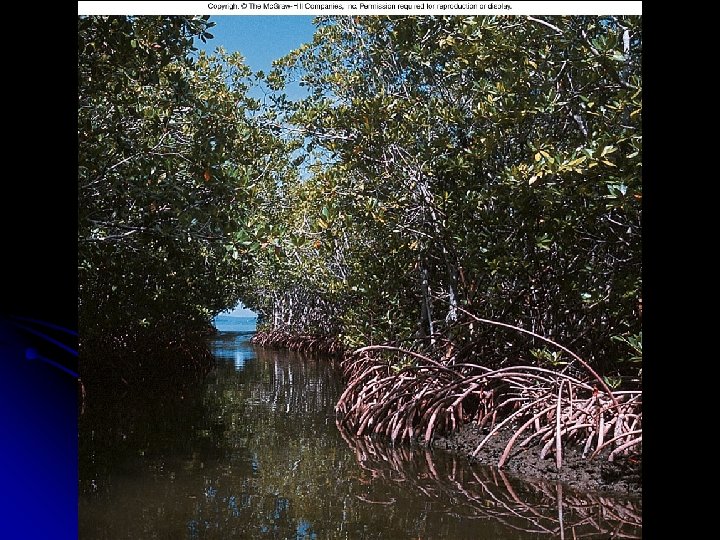
I. Flowering Plants (Anthophyta) C. Mangroves • • Salt tolerant shrubs, trees, palms, ferns (54+ species) Tropical terrestrial plants living in protected areas with soft sediments, often organic-rich, anoxic • • All share certain characteristics • Avicennia germinans eolspecies. lifedesks. org Poor competitors • • Shallow, broad root system and aerial roots with pneumatophores (pores for gas exchange) Salt tolerance (halophytes) • Salt exclusion at roots • Tough, succulent leaves: thick cuticle, reduced stomata, storage of water & salt, senesce • Salt glands: excrete excess salt Viviparity (mainly seaward spp. ) • Embryo grows on parent plant propagule • Hypocotyl develops, buoyant after separation from parent (red mangroves)
Red Mangrove
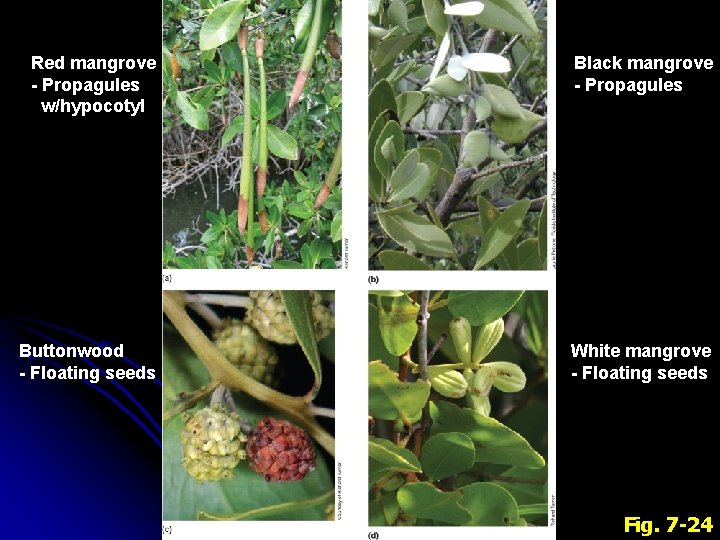
Red mangrove - Propagules w/hypocotyl Black mangrove - Propagules Buttonwood - Floating seeds White mangrove - Floating seeds Fig. 7 -24
I. Flowering Plants (Anthophyta) C. Mangroves • • • Root systems designed for immersion in soft, anoxic sediments Mostly horizontal, shallow Pores for gas exchange
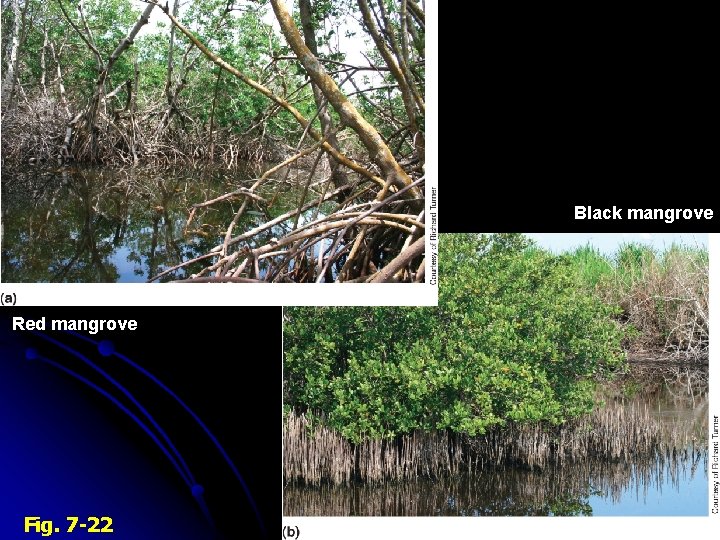
Black mangrove Red mangrove Fig. 7 -22
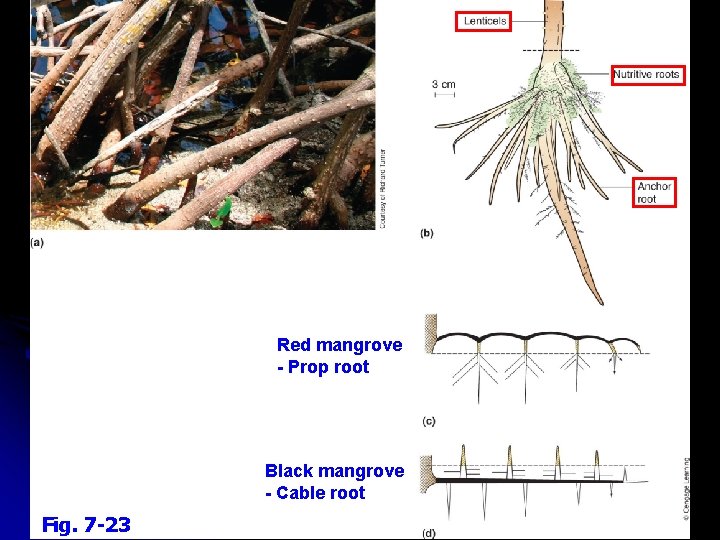
Red mangrove - Prop root Black mangrove - Cable root Fig. 7 -23
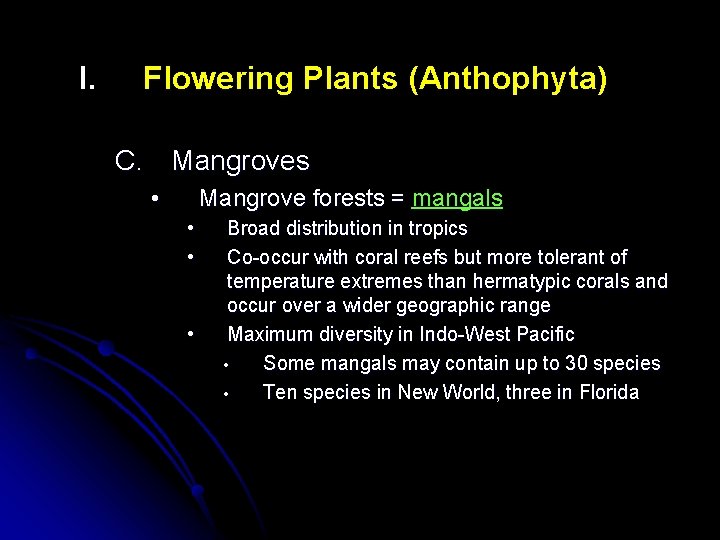
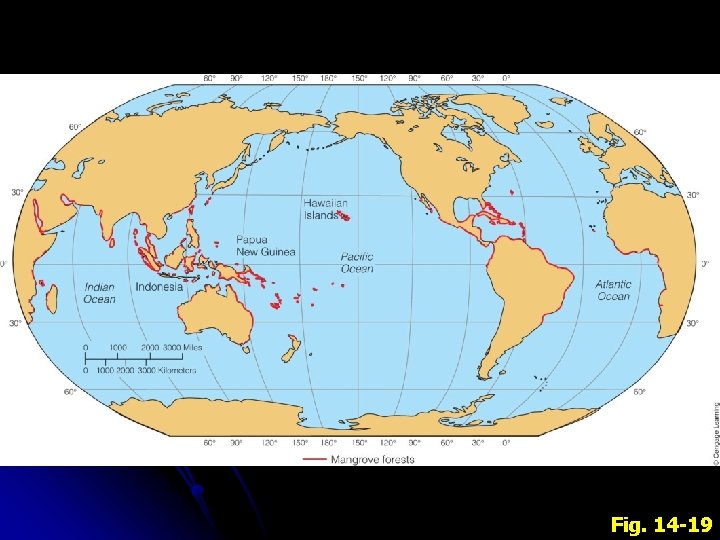
I. Flowering Plants (Anthophyta) C. Mangroves • Mangrove forests = mangals • • • Broad distribution in tropics Co-occur with coral reefs but more tolerant of temperature extremes than hermatypic corals and occur over a wider geographic range Maximum diversity in Indo-West Pacific • Some mangals may contain up to 30 species • Ten species in New World, three in Florida
Fig. 14 -19
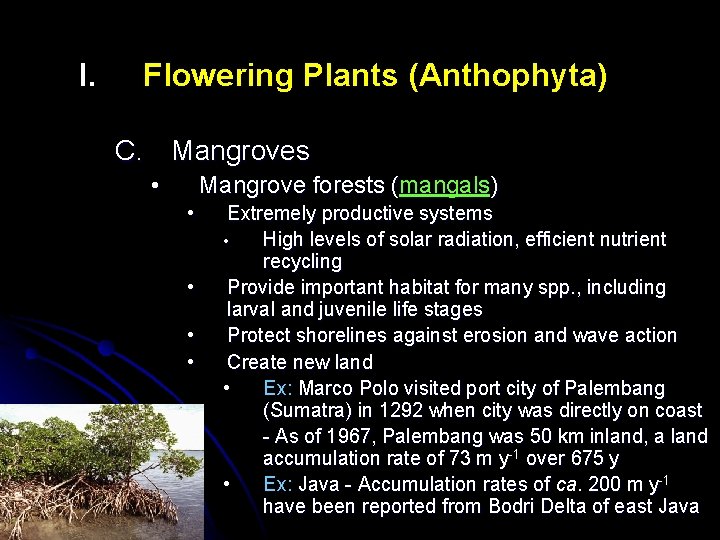
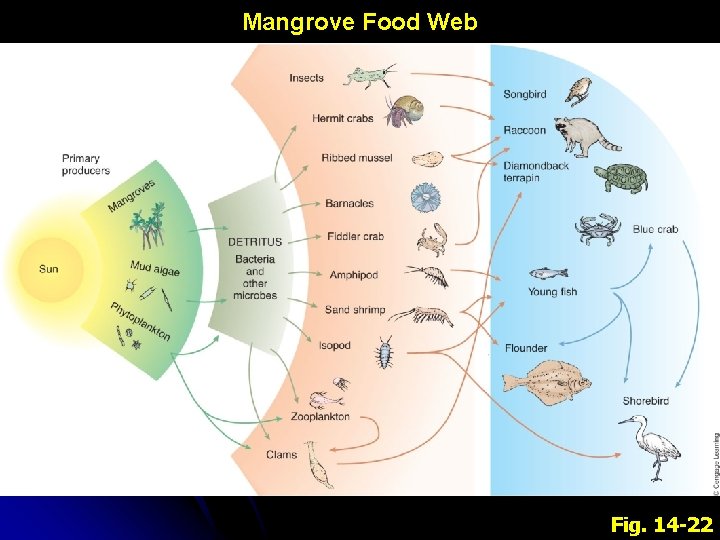
I. Flowering Plants (Anthophyta) C. Mangroves • Mangrove forests (mangals ) ( • • Extremely productive systems • High levels of solar radiation, efficient nutrient recycling Provide important habitat for many spp. , including larval and juvenile life stages Protect shorelines against erosion and wave action Create new land • Ex: Marco Polo visited port city of Palembang (Sumatra) in 1292 when city was directly on coast - As of 1967, Palembang was 50 km inland, a land accumulation rate of 73 m y-1 over 675 y • Ex: Java - Accumulation rates of ca. 200 m y-1 have been reported from Bodri Delta of east Java
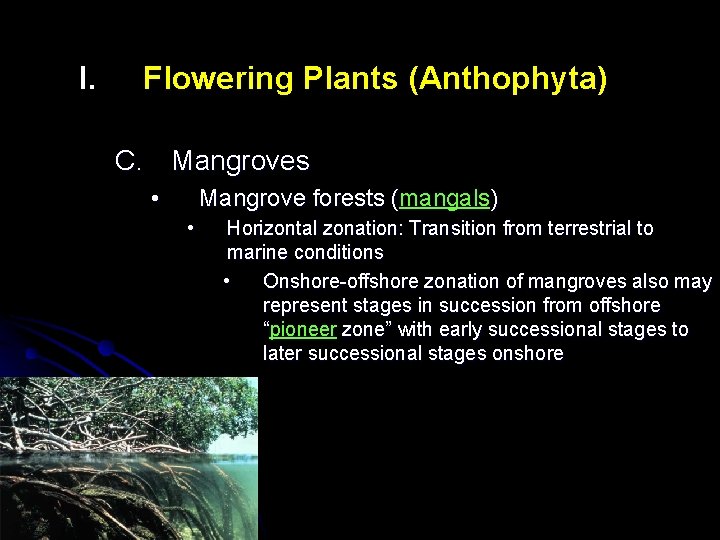
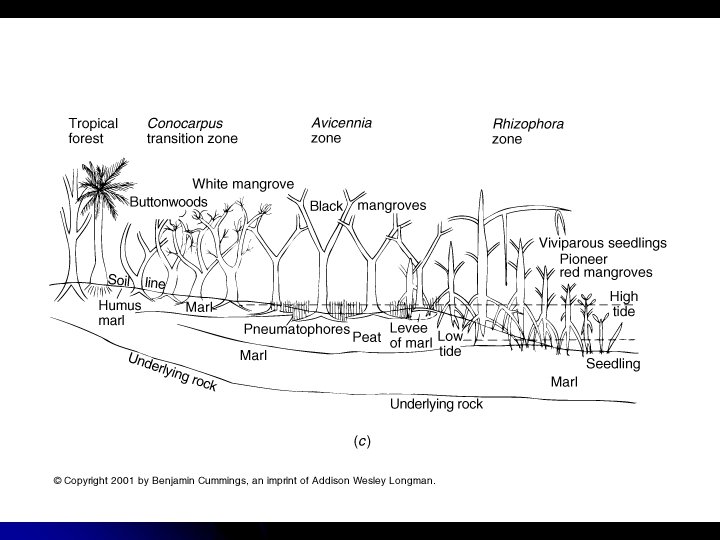
I. Flowering Plants (Anthophyta) C. Mangroves • Mangrove forests (mangals ) ( • Horizontal zonation: Transition from terrestrial to marine conditions • Onshore-offshore zonation of mangroves also may represent stages in succession from offshore “pioneer zone” with early successional stages to later successional stages onshore
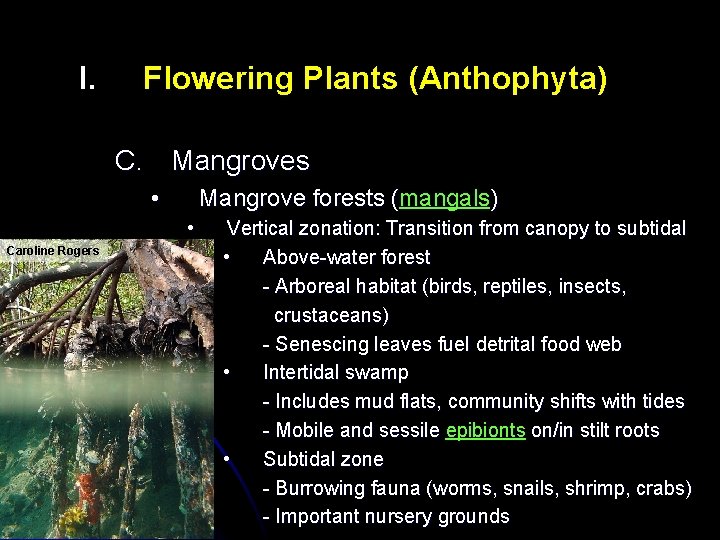
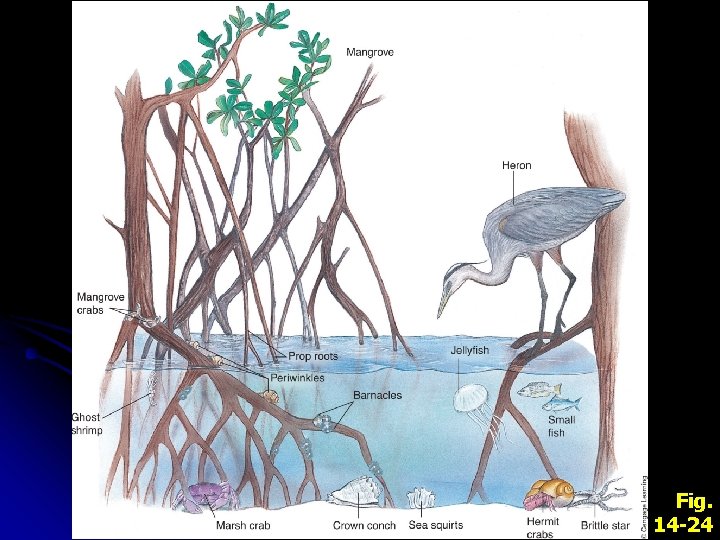
I. Flowering Plants (Anthophyta) C. Mangroves • Mangrove forests (mangals ) ( • Caroline Rogers Vertical zonation: Transition from canopy to subtidal • Above-water forest - Arboreal habitat (birds, reptiles, insects, crustaceans) - Senescing leaves fuel detrital food web • Intertidal swamp - Includes mud flats, community shifts with tides - Mobile and sessile epibionts on/in stilt roots • Subtidal zone - Burrowing fauna (worms, snails, shrimp, crabs) - Important nursery grounds
Fig. 14 -24
Mangrove Food Web Fig. 14 -22