
I EARLY GREEKS This set the stage for



- Slides: 18
I. EARLY GREEKS This set the stage for the next stage of greek civilization …
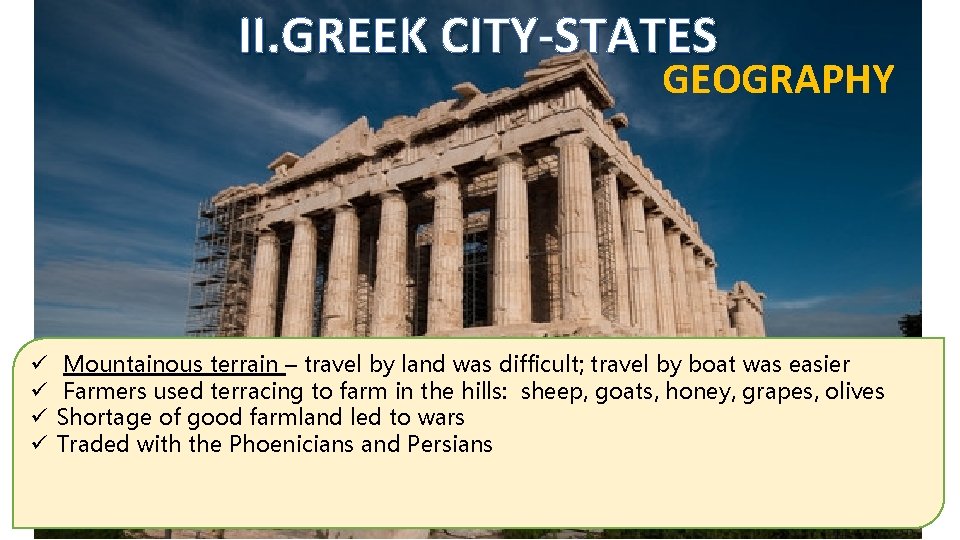
II. GREEK CITY-STATES GEOGRAPHY ü ü Mountainous terrain – travel by land was difficult; travel by boat was easier Farmers used terracing to farm in the hills: sheep, goats, honey, grapes, olives Shortage of good farmland led to wars Traded with the Phoenicians and Persians
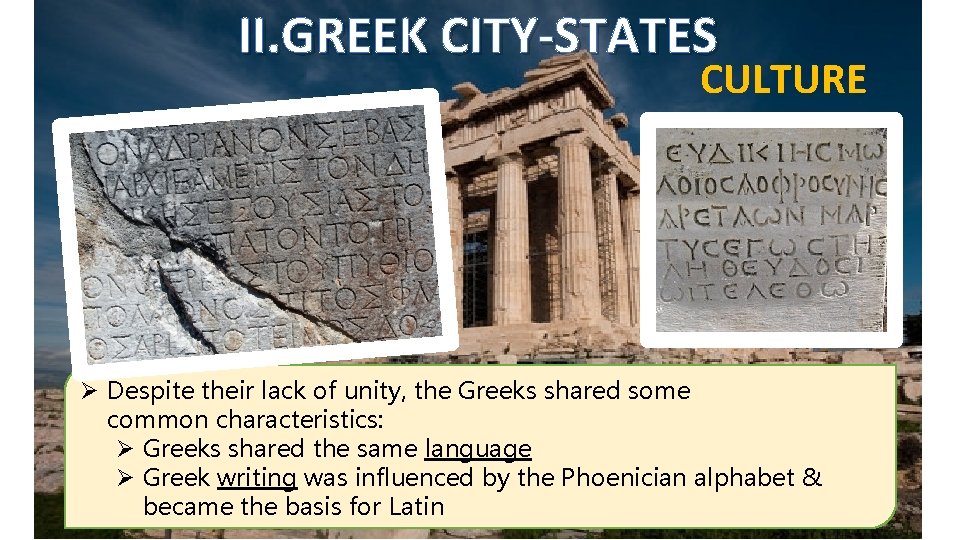
II. GREEK CITY-STATES CULTURE Ø Despite their lack of unity, the Greeks shared some common characteristics: Ø Greeks shared the same language Ø Greek writing was influenced by the Phoenician alphabet & became the basis for Latin
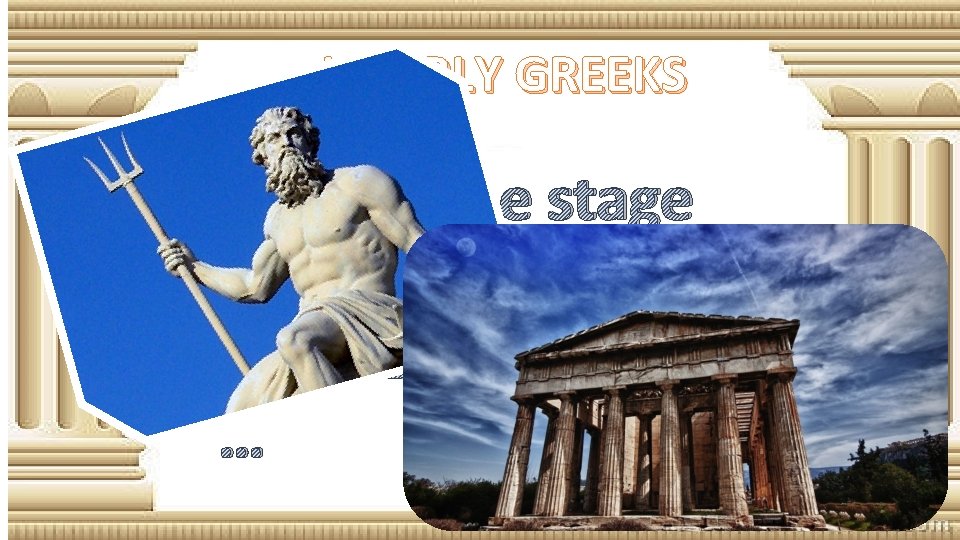
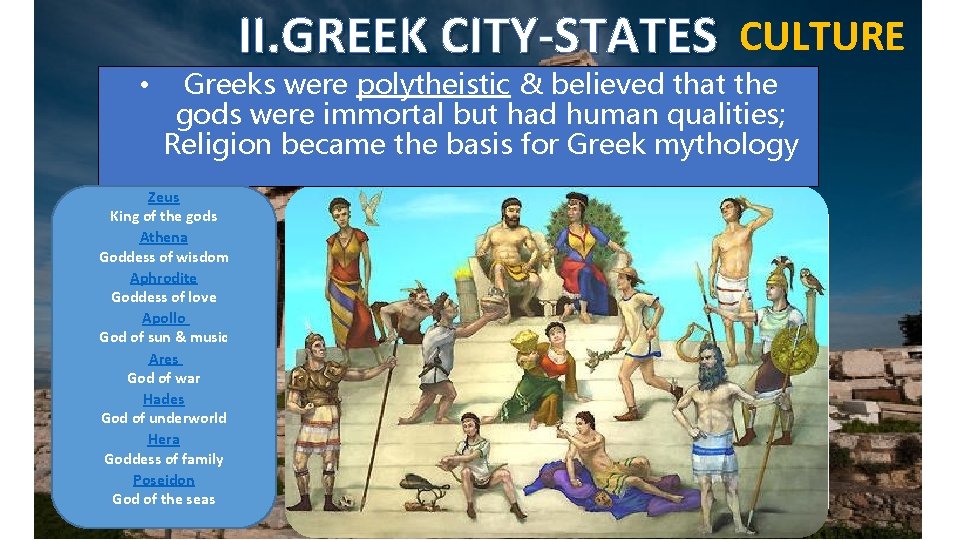
• II. GREEK CITY-STATES CULTURE Greeks were polytheistic & believed that the gods were immortal but had human qualities; Religion became the basis for Greek mythology Zeus King of the gods Athena Goddess of wisdom Aphrodite Goddess of love Apollo God of sun & music Ares God of war Hades God of underworld Hera Goddess of family Poseidon God of the seas
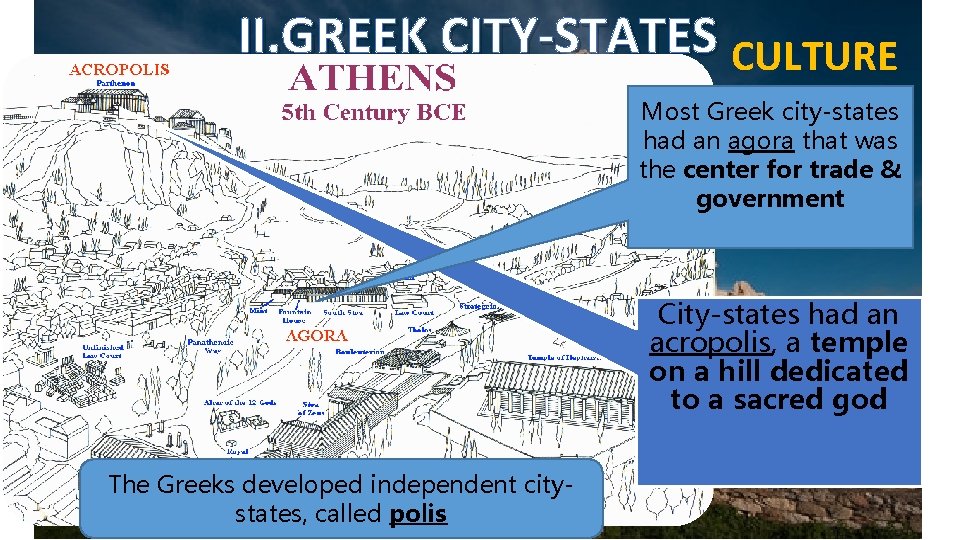
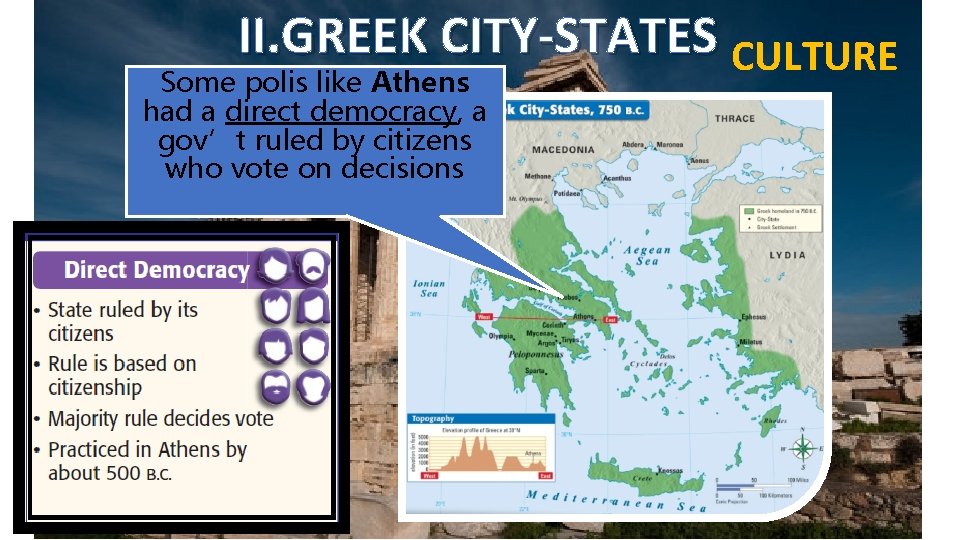
II. GREEK CITY-STATES CULTURE Most Greek city-states had an agora that was the center for trade & government City-states had an acropolis, a temple on a hill dedicated to a sacred god The Greeks developed independent citystates, called polis
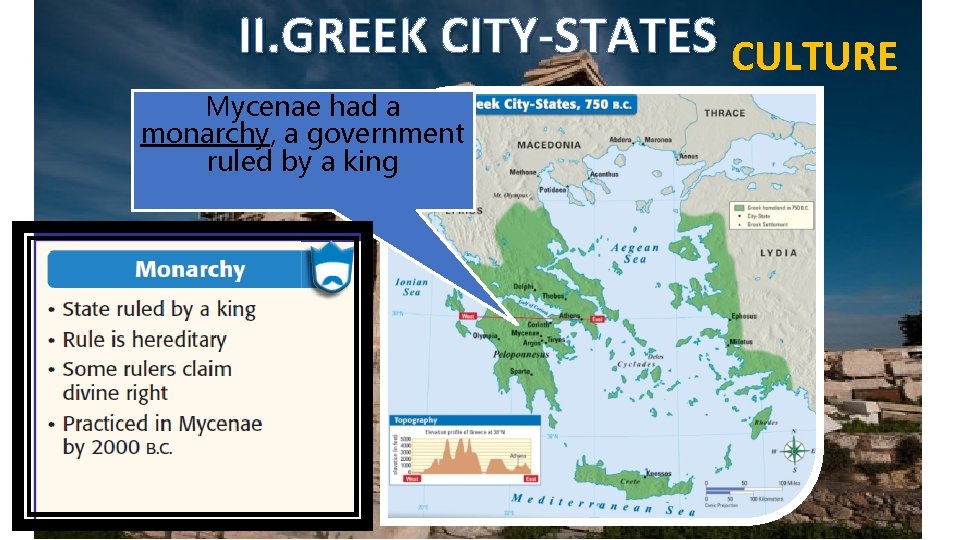
II. GREEK CITY-STATES CULTURE Mycenae had a monarchy, a government ruled by a king
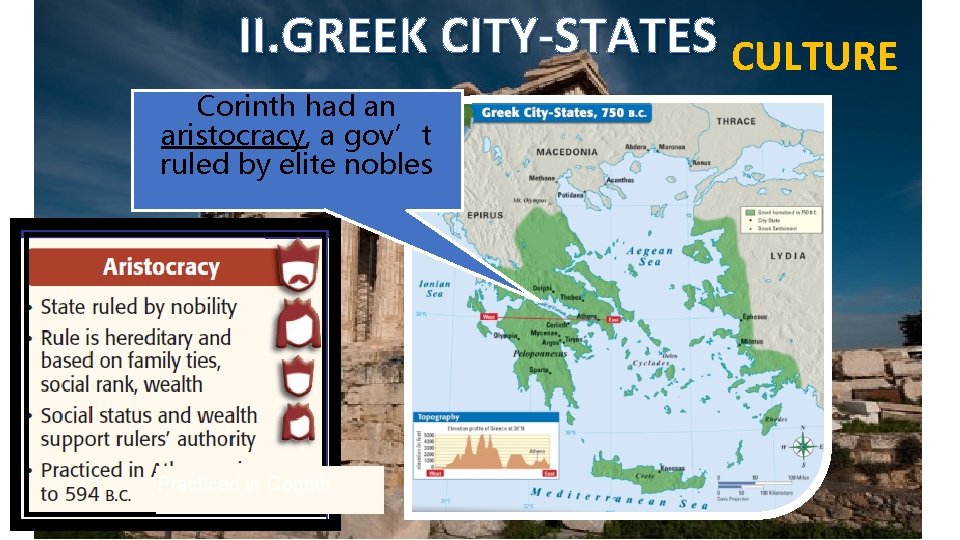
II. GREEK CITY-STATES CULTURE Corinth had an aristocracy, a gov’t ruled by elite nobles Practiced in Corinth
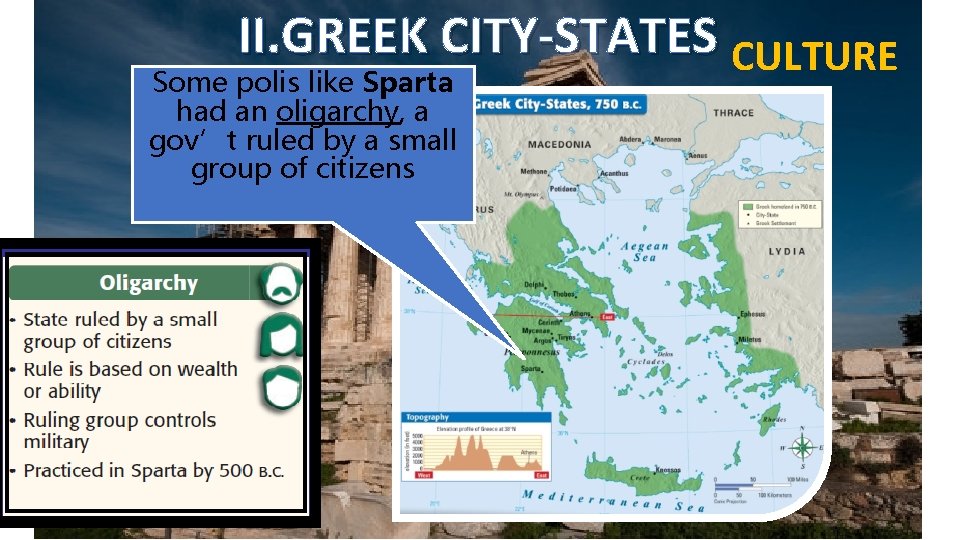
II. GREEK CITY-STATES CULTURE Some polis like Sparta had an oligarchy, a gov’t ruled by a small group of citizens
II. GREEK CITY-STATES CULTURE Some polis like Athens had a direct democracy, a gov’t ruled by citizens who vote on decisions
SPART A & II. GREEK CITY-STATES s n e h t A
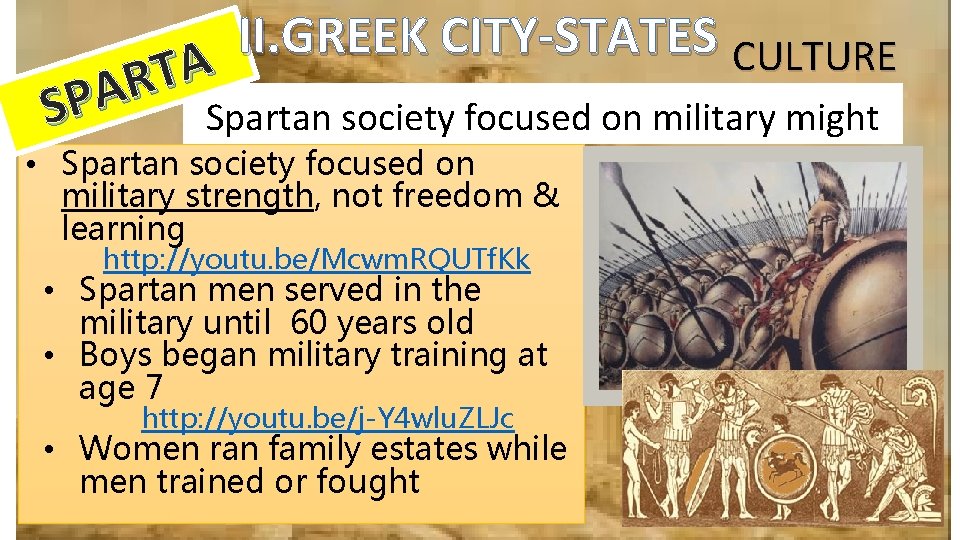
II. GREEK CITY-STATES CULTURE A T R A SP Spartan society focused on military might • Spartan society focused on military strength, not freedom & learning http: //youtu. be/Mcwm. RQUTf. Kk • Spartan men served in the military until 60 years old • Boys began military training at age 7 http: //youtu. be/j-Y 4 wlu. ZLJc • Women ran family estates while men trained or fought
II. GREEK CITY-STATES CULTURE A T R A SP v Spartan population was divided into three main groups: at the top was Spartan Proper, in the middle was Spartiates, and at the bottom was Perioikoi or “Dwellers Around” v around 735 B. C, Sparta became a leading Greek city-state v Sparta became a military superpower in 500 B. C.
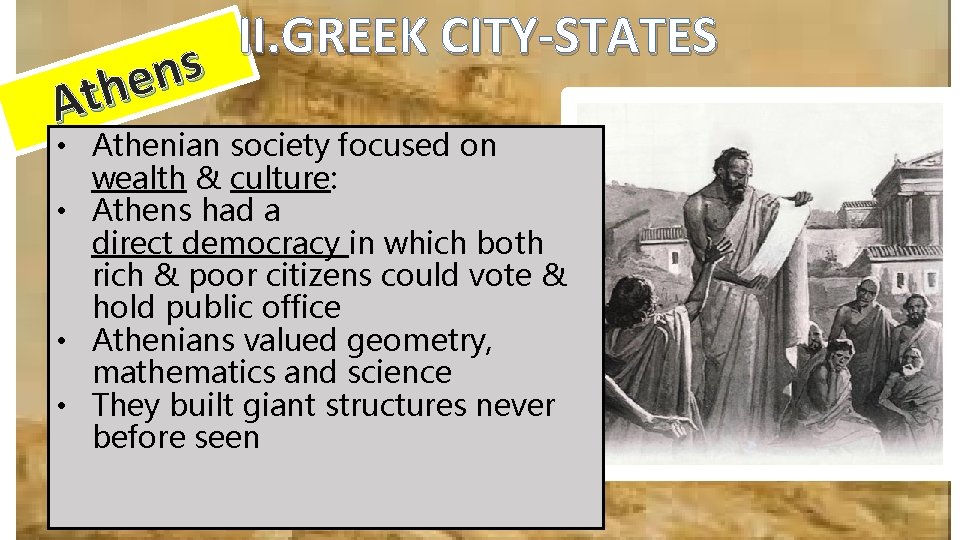
II. GREEK CITY-STATES s n e h At • Athenian society focused on wealth & culture: • Athens had a direct democracy in which both rich & poor citizens could vote & hold public office • Athenians valued geometry, mathematics and science • They built giant structures never before seen
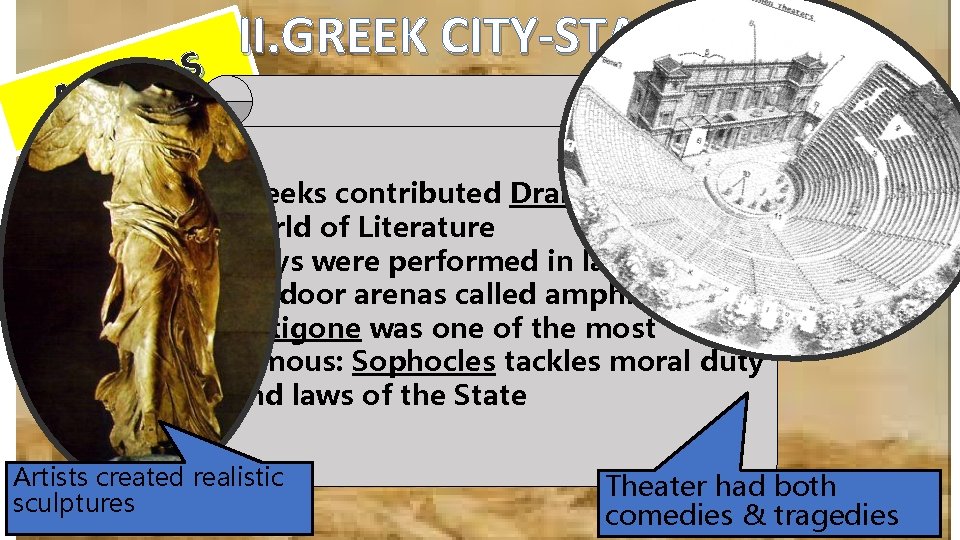
II. GREEK CITY-STATES s n e h At o Greeks contributed Drama to the world of Literature o Plays were performed in large outdoor arenas called amphitheaters o Antigone was one of the most famous: Sophocles tackles moral duty and laws of the State Artists created realistic sculptures Theater had both comedies & tragedies
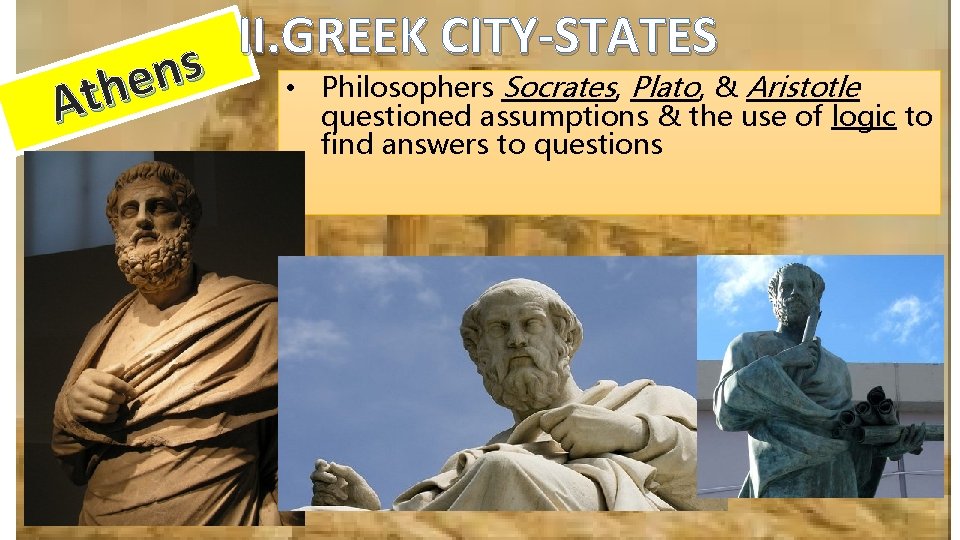
II. GREEK CITY-STATES s n • Philosophers Socrates, Plato, & Aristotle e h At questioned assumptions & the use of logic to find answers to questions