
I Context objectives of KIP INCA project Project
I) Context & objectives of KIP INCA project • Project owner is the Environment Knowledge Community (EKC) • EKC is an EU inter-services group involving key environmental data users and providers, i. e. DG ENV, DG CLIMA, DG JRC, DG ESTAT, DG RTD and EEA to strengthen the knowledge base for the 7 th EAP. • Knowledge Innovation Projects (KIPs) have the ambition to close gaps in environmental knowledge adopting an innovative approach. • ‘KIP INCA’ is a KIP on ‘Accounting for natural capital and ecosystem services’ • Key objective for 2016 is to develop a proposal for the design and resourcing of a future integrated EU ecosystem accounting system 1 Eurostat
Timing Two phases: • Phase 1: Feasibility and design phase (mid 2015 – mid 2016) • Phase 2: Implementation phase (2016 – 2020) What to achieve in Phase 1: • A joint set of EU ecosystem accounting objectives • A dialogue with Member States, researchers, policy makers, etc. • A proposal for design of future EU ecosystem accounting system • A plan for improving key data sources on natural capital • A reliable estimate of the necessary resources • An implementation plan until 2020 (and beyond) 2 Eurostat
The KIP INCA approach is iterative! • • SEEA-EEA as methodological reference MAES as important concept and data input SEEA-CF and System of National Accounts as overall frame Input from EU research projects to develop concepts & methods • Experiments, modelling and stepwise approach • Over time better adjustment of existing data to ecosystem accounting requirements • Building an operational data infrastructure • Possibility to plug-in Member States data at a later stage 17 September 2015 MAES Working Group Eurostat 3
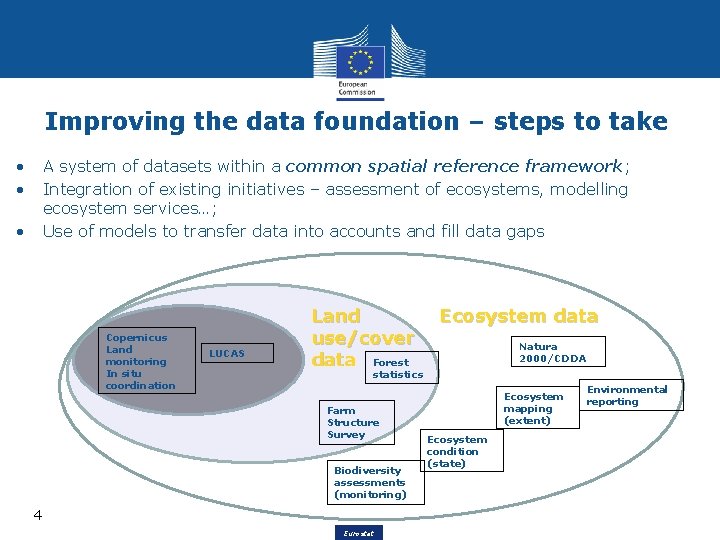
Improving the data foundation – steps to take • • A system of datasets within a common spatial reference framework; Integration of existing initiatives – assessment of ecosystems, modelling ecosystem services…; Use of models to transfer data into accounts and fill data gaps • Copernicus Land monitoring In situ coordination LUCAS Land use/cover data Forest Ecosystem data Natura 2000/CDDA statistics Farm Structure Survey Biodiversity assessments (monitoring) 4 Eurostat Ecosystem mapping (extent) Ecosystem condition (state) Environmental reporting
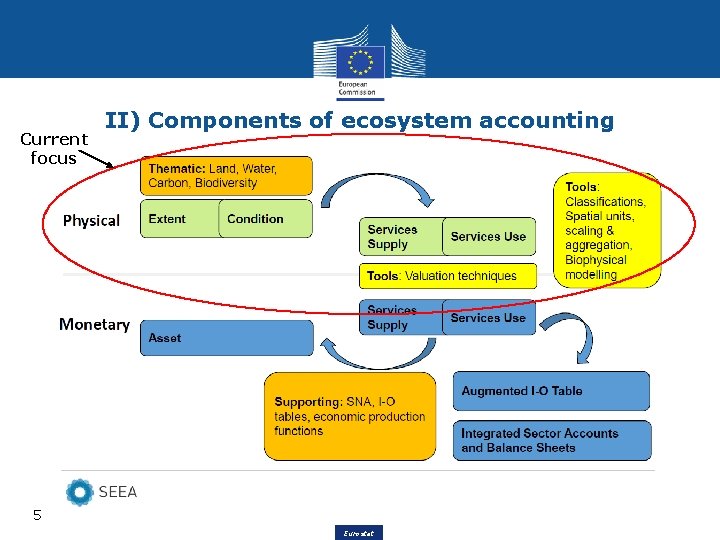
Current focus II) Components of ecosystem accounting 5 Eurostat
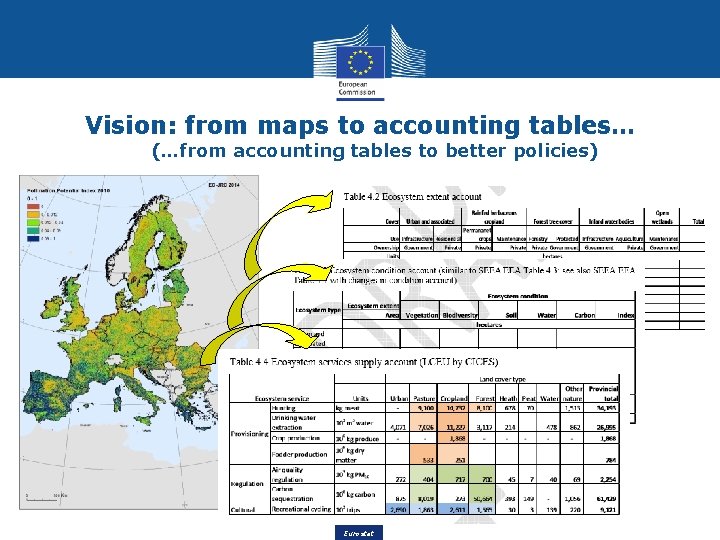
Vision: from maps to accounting tables… (…from accounting tables to better policies) Eurostat
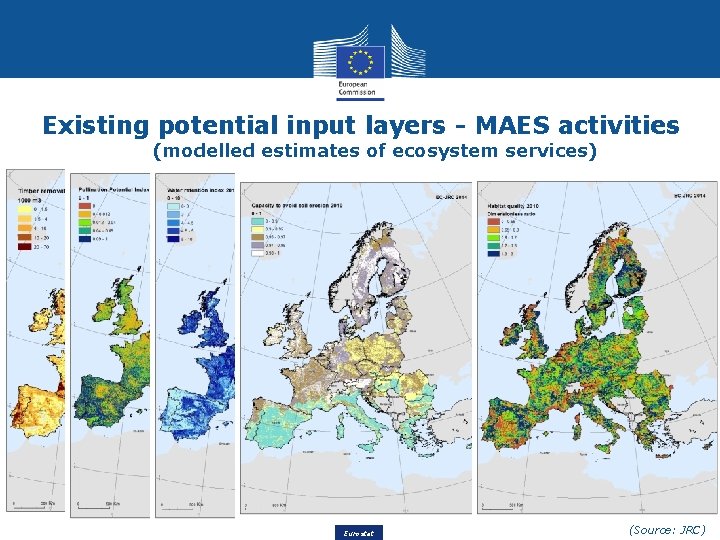
Existing potential input layers - MAES activities (modelled estimates of ecosystem services) 11/1/2020 Eurostat (Source: JRC)
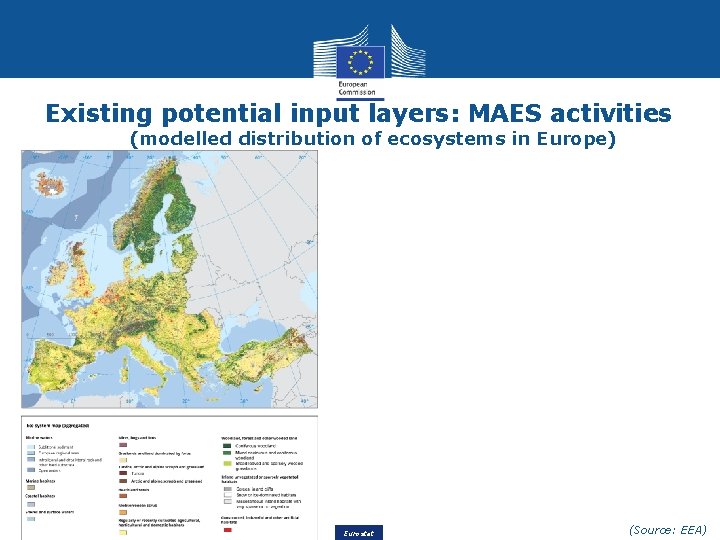
Existing potential input layers: MAES activities (modelled distribution of ecosystems in Europe) Eurostat (Source: EEA)
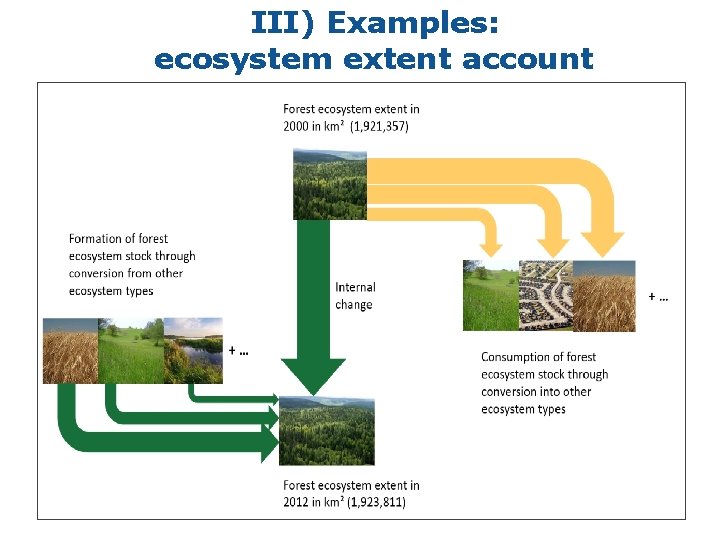
III) Examples: ecosystem extent account 9
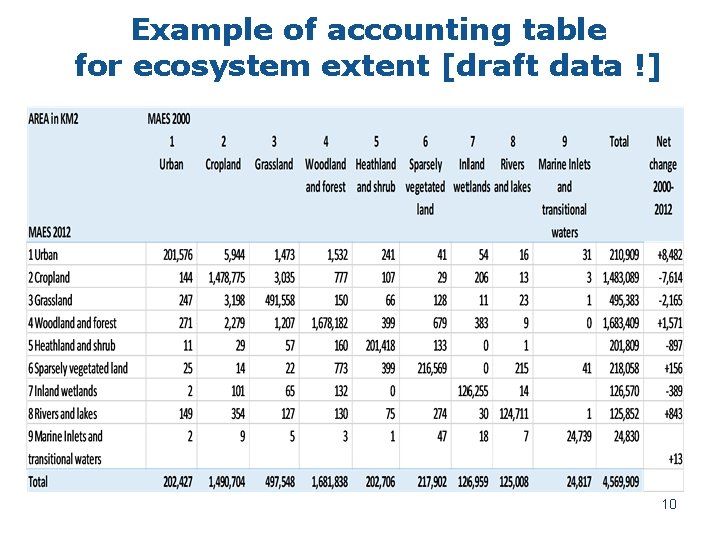
Example of accounting table for ecosystem extent [draft data !] 10
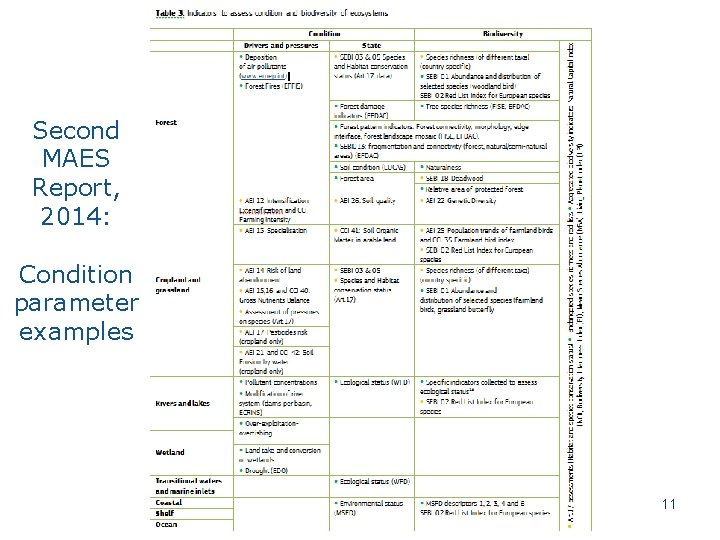
Second MAES Report, 2014: Condition parameter examples 11
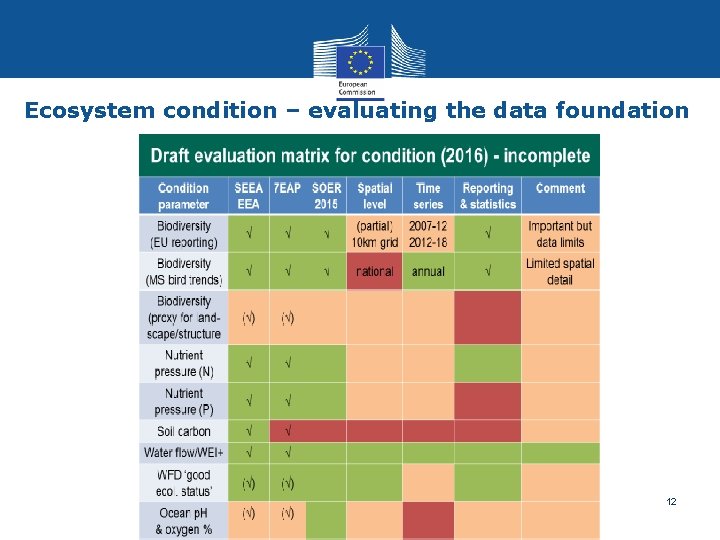
Ecosystem condition – evaluating the data foundation 12 Eurostat
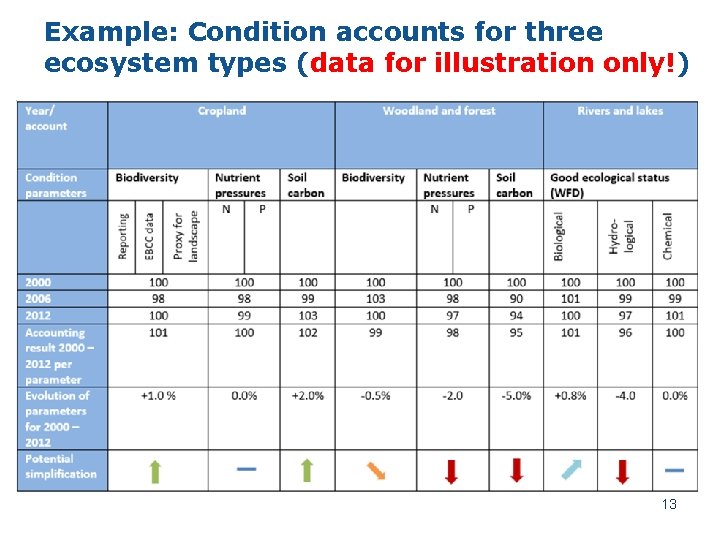
Example: Condition accounts for three ecosystem types (data for illustration only!) 13
Questions currently being discussed: • What are the most important ecosystem condition parameters to be considered? • Which ecosystem condition parameters fit an accounting approach? • How many condition parameters should be covered / can be understood in an accounting table? • Would it be better to use a limited number only, e. g. 5 or 10 in all? • How to combine general and ecosystem-specific condition parameters? • How to best connect the MAES ecosystem assessment work and the development of the accounting approach? 14 Eurostat
Summary of current progress & next steps • Draft proposals exist for all physical components in SEEA-EEA (in varying stages of development) • Background studies and concept exist for monetary part of SEEAEEA; KIP-INCA will set out a roadmap for the further development and implementation of these components in phase 2 • Current aim is to complete the KIP-INCA proposal by mid-year • Draft technical output of KIP INCA partners will be discussed with statistical and accounting experts from Member States and other DGs of the European Commission on 25/26 April • This workshop reviews the set-up of the EU system and potential engagement of Member States in an accounting perspective • The forthcoming KIP-INCA proposal sets out actions to be taken by EU partners – Phase 2 will see stepwise implementation by 2020 in interaction with EU Member States 15 Eurostat
IV) DG ENV contribution Potential policy uses of NCA • Develop macro-indicators, both physical and monetary • Show sectors benefit from and impact on natural capital • Account for range of ecosystem benefits and values • Determine synergies/trade-offs amongst ecosystem services • Corporate accounting: consistency with national accounts • EU input to UN-SEEA • WAVES: World Bank - developing countries 16 Eurostat
DG ENV contribution Some research issues • Underlying science of relationship between biodiversity, ecosystem condition and services • Data issues – integrating and making use of various data sources (including Copernicus, etc. ) • Issues of scale and aggregation • Valuation methodologies for accounting • Using accounts in decision making processes • Requires approaches across disciplines and specific expertise • Capacity building
Thank you for your attention! 18

Suggested Land Cover Ecosystem Classification based on MAES Ecosystem types and CLC classes 20
- Slides: 20