
I Cell Shape and Size 3 1 Cell

- Slides: 32
I. Cell Shape and Size • 3. 1 Cell Morphology • 3. 2 Cell Size and the Significance of Smallness © 2012 Pearson Education, Inc.
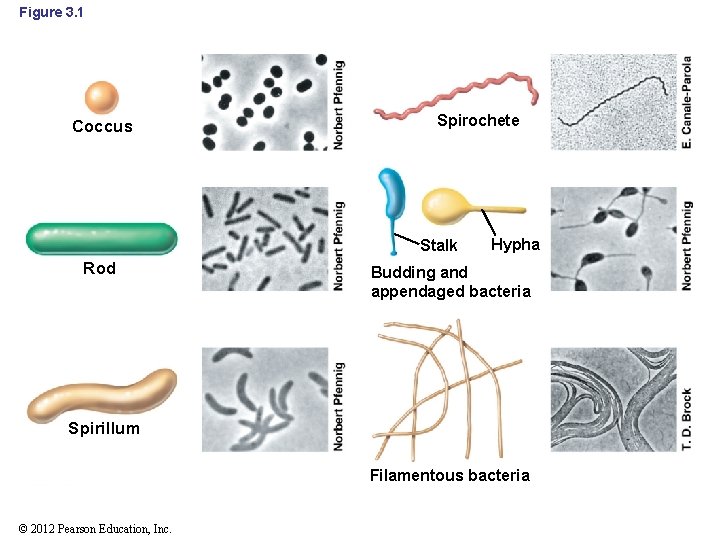
Figure 3. 1 Coccus Spirochete Stalk Rod Hypha Budding and appendaged bacteria Spirillum Filamentous bacteria © 2012 Pearson Education, Inc.
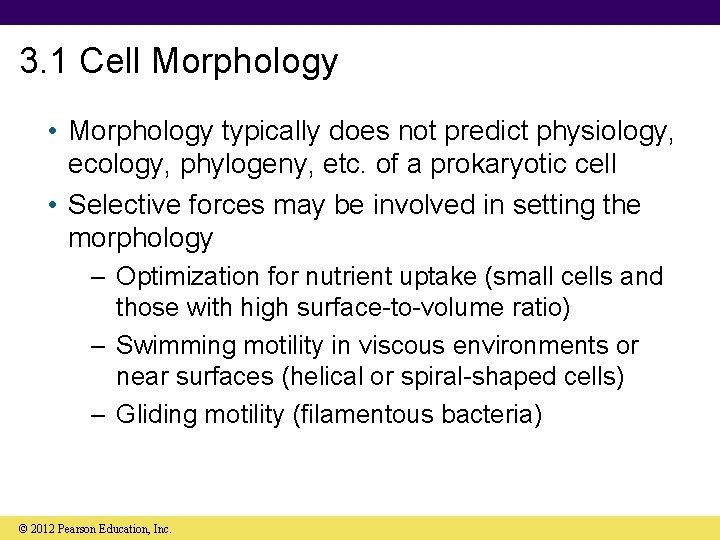
3. 1 Cell Morphology • Morphology typically does not predict physiology, ecology, phylogeny, etc. of a prokaryotic cell • Selective forces may be involved in setting the morphology – Optimization for nutrient uptake (small cells and those with high surface-to-volume ratio) – Swimming motility in viscous environments or near surfaces (helical or spiral-shaped cells) – Gliding motility (filamentous bacteria) © 2012 Pearson Education, Inc.
3. 2 Cell Size and the Significance of Smallness • Size range for prokaryotes: 0. 2 µm to >700 µm in diameter – Most cultured rod-shaped bacteria are between 0. 5 and 4. 0 µm wide and <15 µm long – Examples of very large prokaryotes • Epulopiscium fishelsoni (Figure 3. 2 a) • Thiomargarita namibiensis (Figure 3. 2 b) • Size range for eukaryotic cells: 10 to >200 µm in diameter © 2012 Pearson Education, Inc.
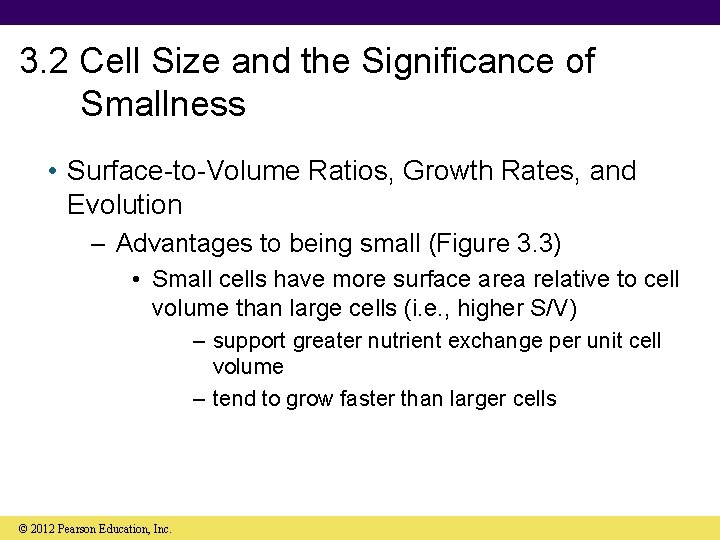
3. 2 Cell Size and the Significance of Smallness • Surface-to-Volume Ratios, Growth Rates, and Evolution – Advantages to being small (Figure 3. 3) • Small cells have more surface area relative to cell volume than large cells (i. e. , higher S/V) – support greater nutrient exchange per unit cell volume – tend to grow faster than larger cells © 2012 Pearson Education, Inc.
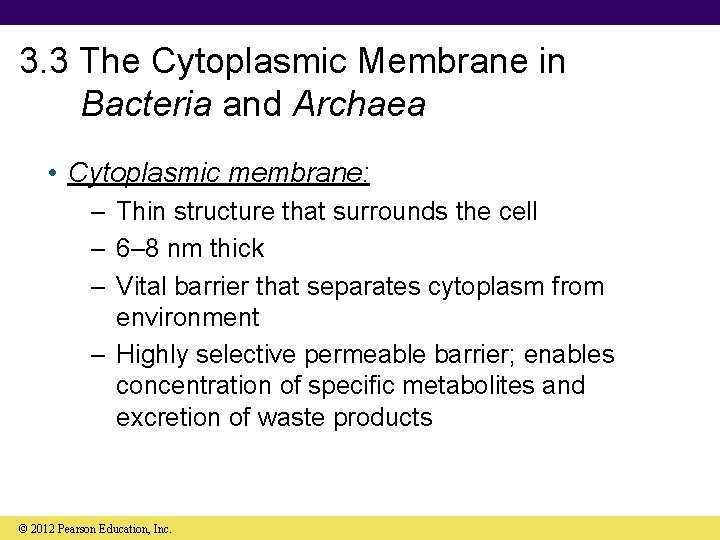
3. 3 The Cytoplasmic Membrane in Bacteria and Archaea • Cytoplasmic membrane: – Thin structure that surrounds the cell – 6– 8 nm thick – Vital barrier that separates cytoplasm from environment – Highly selective permeable barrier; enables concentration of specific metabolites and excretion of waste products © 2012 Pearson Education, Inc.
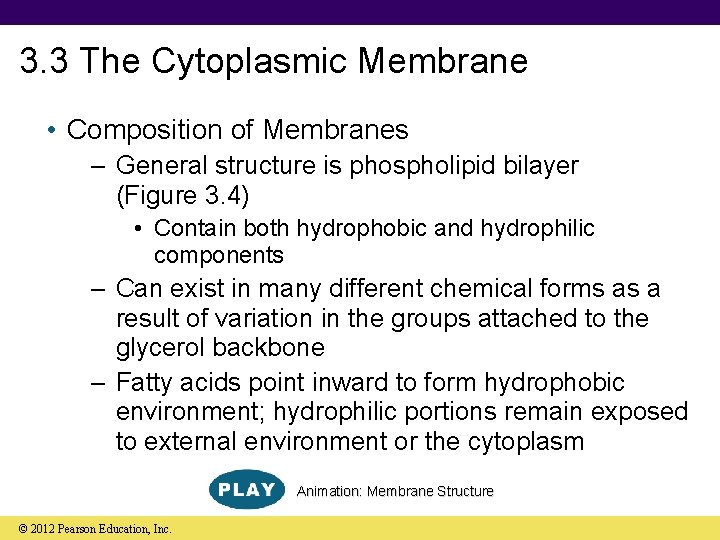
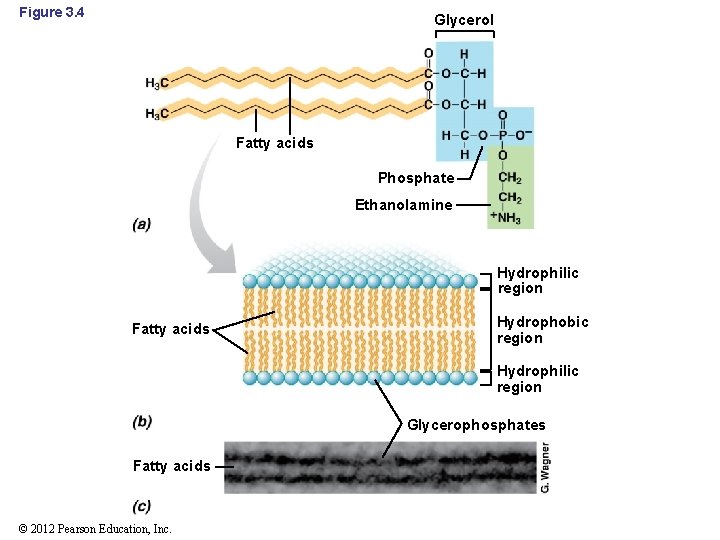
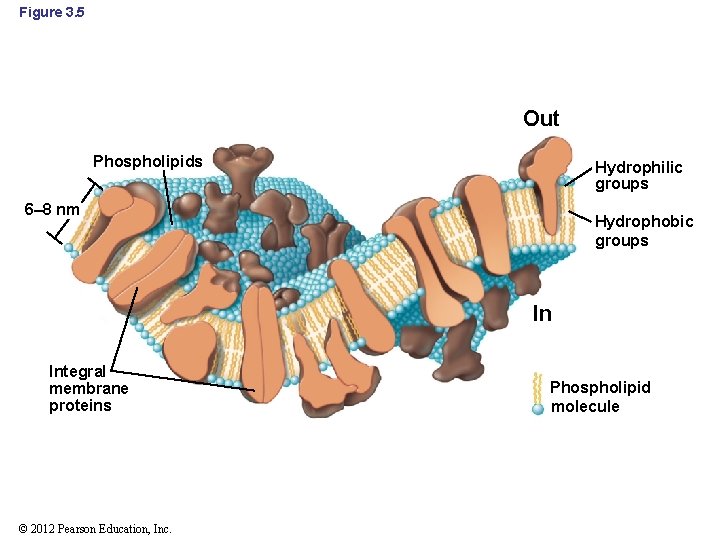
3. 3 The Cytoplasmic Membrane • Composition of Membranes – General structure is phospholipid bilayer (Figure 3. 4) • Contain both hydrophobic and hydrophilic components – Can exist in many different chemical forms as a result of variation in the groups attached to the glycerol backbone – Fatty acids point inward to form hydrophobic environment; hydrophilic portions remain exposed to external environment or the cytoplasm Animation: Membrane Structure © 2012 Pearson Education, Inc.
Figure 3. 4 Glycerol Fatty acids Phosphate Ethanolamine Hydrophilic region Fatty acids Hydrophobic region Hydrophilic region Glycerophosphates Fatty acids © 2012 Pearson Education, Inc.
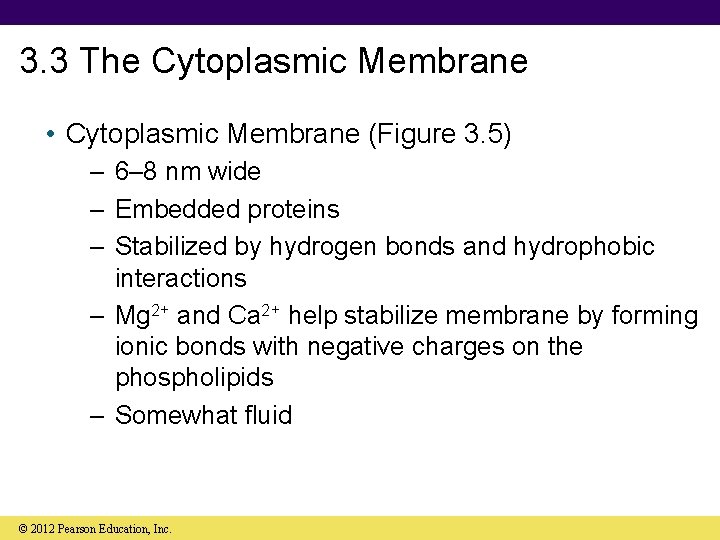
3. 3 The Cytoplasmic Membrane • Cytoplasmic Membrane (Figure 3. 5) – 6– 8 nm wide – Embedded proteins – Stabilized by hydrogen bonds and hydrophobic interactions – Mg 2+ and Ca 2+ help stabilize membrane by forming ionic bonds with negative charges on the phospholipids – Somewhat fluid © 2012 Pearson Education, Inc.
Figure 3. 5 Out Phospholipids Hydrophilic groups 6– 8 nm Hydrophobic groups In Integral membrane proteins © 2012 Pearson Education, Inc. Phospholipid molecule
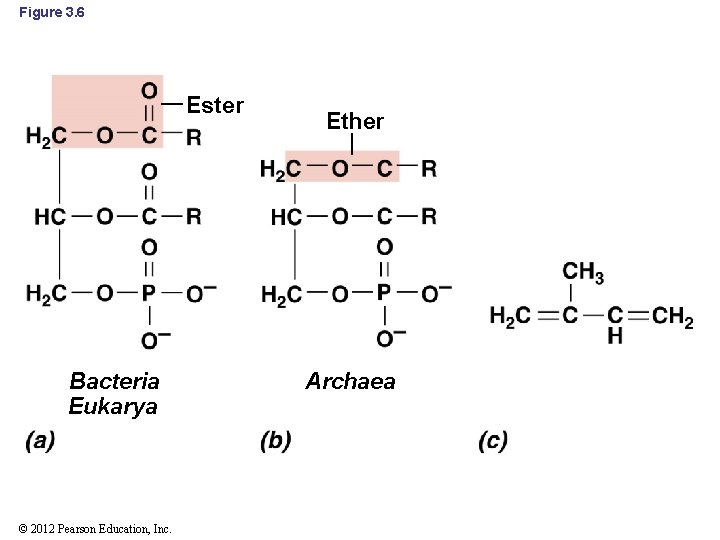
Figure 3. 6 Ester Bacteria Eukarya © 2012 Pearson Education, Inc. Ether Archaea
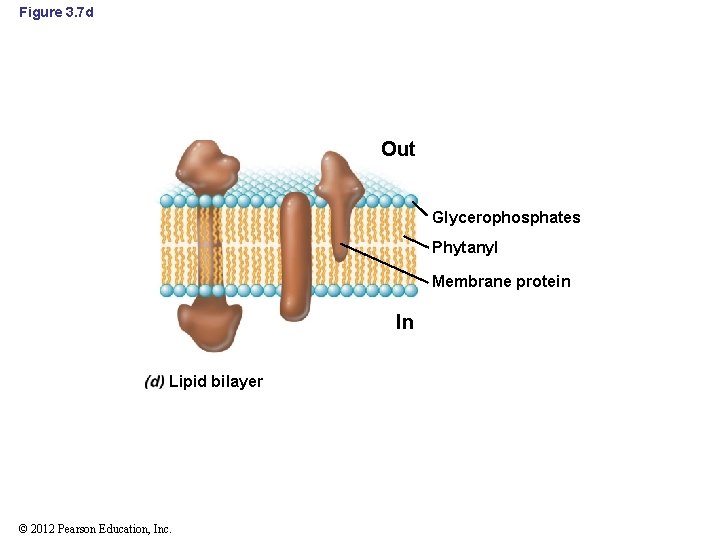
Figure 3. 7 d Out Glycerophosphates Phytanyl Membrane protein In Lipid bilayer © 2012 Pearson Education, Inc.
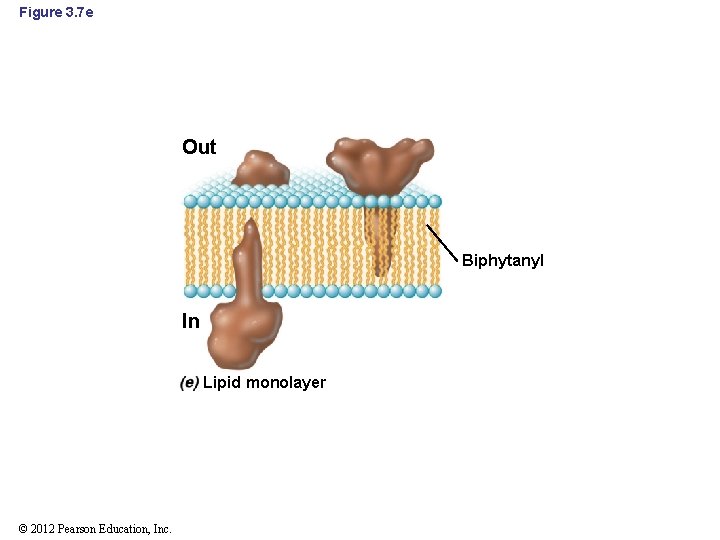
Figure 3. 7 e Out Biphytanyl In Lipid monolayer © 2012 Pearson Education, Inc.
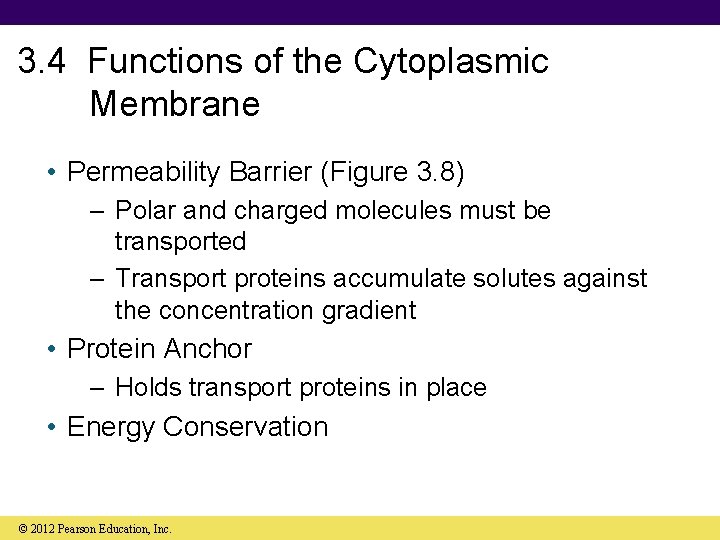
3. 4 Functions of the Cytoplasmic Membrane • Permeability Barrier (Figure 3. 8) – Polar and charged molecules must be transported – Transport proteins accumulate solutes against the concentration gradient • Protein Anchor – Holds transport proteins in place • Energy Conservation © 2012 Pearson Education, Inc.
III. Cell Walls of Prokaryotes • 3. 6 The Cell Wall of Bacteria: Peptidoglycan • 3. 7 The Outer Membrane • 3. 8 Cell Walls of Archaea © 2012 Pearson Education, Inc.
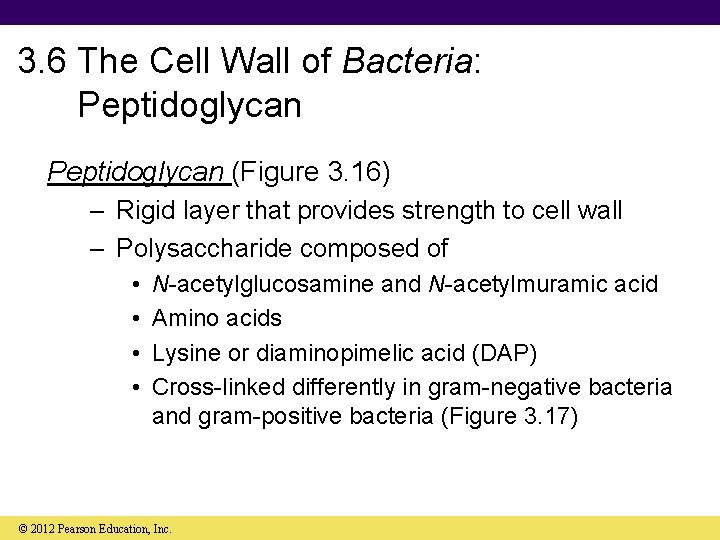
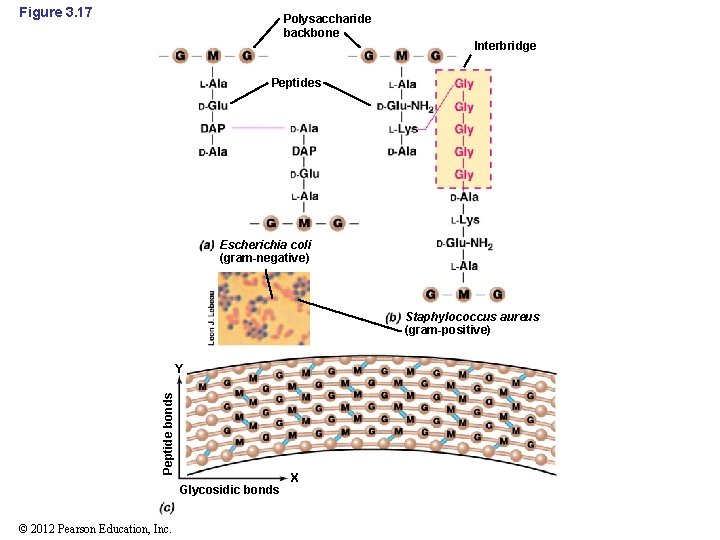
3. 6 The Cell Wall of Bacteria: Peptidoglycan (Figure 3. 16) – Rigid layer that provides strength to cell wall – Polysaccharide composed of • • N-acetylglucosamine and N-acetylmuramic acid Amino acids Lysine or diaminopimelic acid (DAP) Cross-linked differently in gram-negative bacteria and gram-positive bacteria (Figure 3. 17) © 2012 Pearson Education, Inc.
Figure 3. 17 Polysaccharide backbone Interbridge Peptides Escherichia coli (gram-negative) Staphylococcus aureus (gram-positive) Peptide bonds Y Glycosidic bonds © 2012 Pearson Education, Inc. X
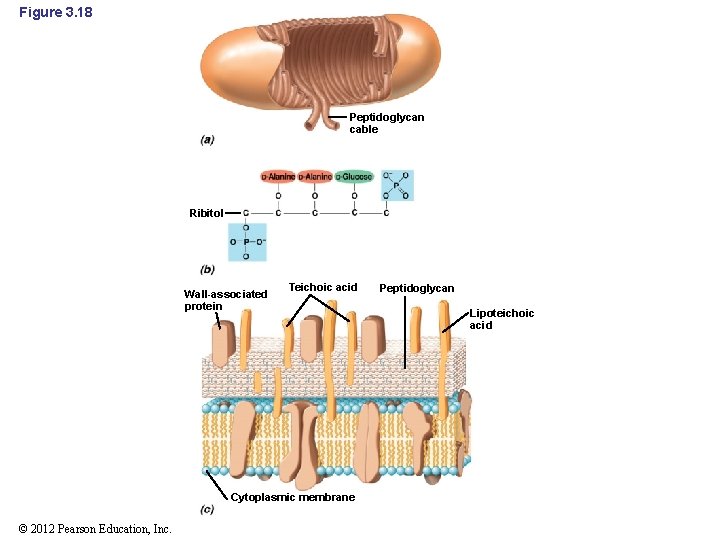
3. 6 The Cell Wall of Bacteria: Peptidoglycan • Gram-Positive Cell Walls (Figure 3. 18) – Can contain up to 90% peptidoglycan – Common to have teichoic acids (acidic substances) embedded in the cell wall • Lipoteichoic acids: teichoic acids covalently bound to membrane lipids © 2012 Pearson Education, Inc.
Figure 3. 18 Peptidoglycan cable Ribitol Wall-associated protein Teichoic acid Cytoplasmic membrane © 2012 Pearson Education, Inc. Peptidoglycan Lipoteichoic acid
3. 6 The Cell Wall of Bacteria: Peptidoglycan • Prokaryotes That Lack Cell Walls – Mycoplasmas • Group of pathogenic bacteria – Thermoplasma • Species of Archaea © 2012 Pearson Education, Inc.
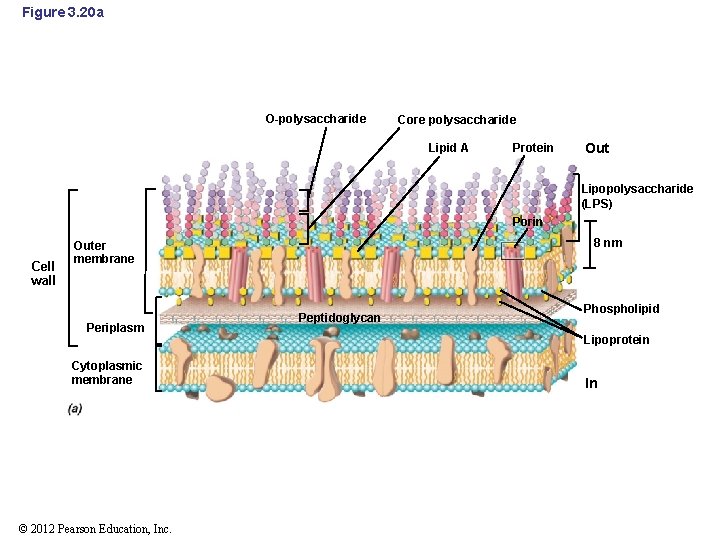
3. 7 The Outer Membrane • Total cell wall contains ~10% peptidoglycan (Figure 3. 20 a) • Most of cell wall composed of outer membrane (aka lipopolysaccharide [LPS] layer) – LPS consists of core polysaccharide and O-polysaccharide – LPS replaces most of phospholipids in outer half of outer membrane – Endotoxin: the toxic component of LPS © 2012 Pearson Education, Inc.
Figure 3. 20 a O-polysaccharide Core polysaccharide Lipid A Protein Out Lipopolysaccharide (LPS) Porin Cell wall 8 nm Outer membrane Periplasm Cytoplasmic membrane © 2012 Pearson Education, Inc. Peptidoglycan Phospholipid Lipoprotein In
3. 7 The Outer Membrane • Structural differences between cell walls of gram-positive and gram-negative Bacteria are responsible for differences in the Gram stain reaction © 2012 Pearson Education, Inc.
3. 8 Cell Walls of Archaea • No peptidoglycan • Typically no outer membrane • Pseudomurein – Polysaccharide similar to peptidoglycan (Figure 3. 21) – Composed of N-acetylglucosamine and Nacetyltalosaminuronic acid – Found in cell walls of certain methanogenic Archaea • Cell walls of some Archaea lack pseudomurein © 2012 Pearson Education, Inc.
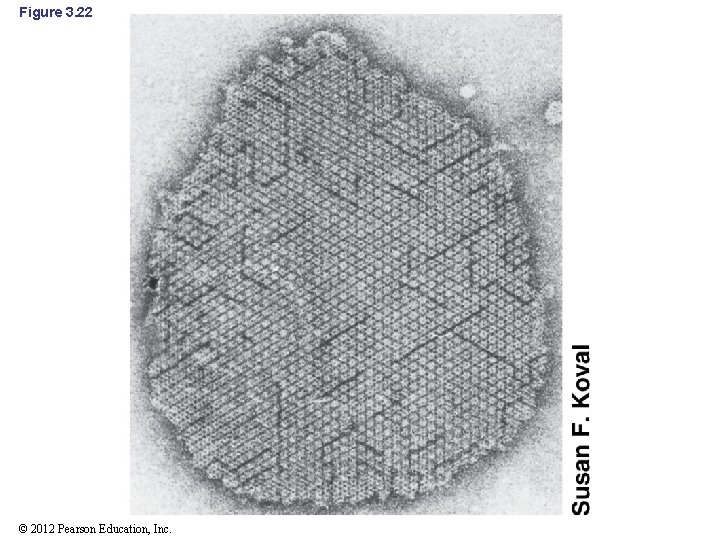
3. 8 Cell Walls of Archaea • S-Layers – Most common cell wall type among Archaea – Consist of protein or glycoprotein – Paracrystalline structure (Figure 3. 22) © 2012 Pearson Education, Inc.
Figure 3. 22 © 2012 Pearson Education, Inc.
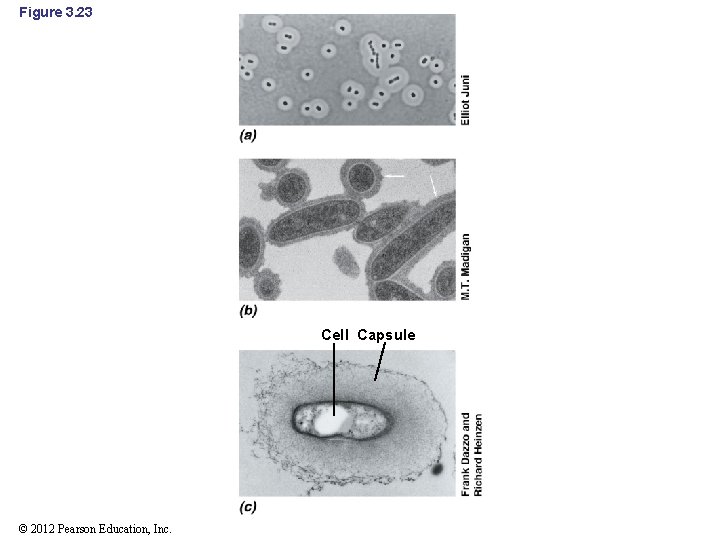
3. 9 Cell Surface Structures • Capsules and Slime Layers – Polysaccharide layers (Figure 3. 23) • May be thick or thin, rigid or flexible – Assist in attachment to surfaces – Protect against phagocytosis – Resist desiccation © 2012 Pearson Education, Inc.
Figure 3. 23 Cell Capsule © 2012 Pearson Education, Inc.
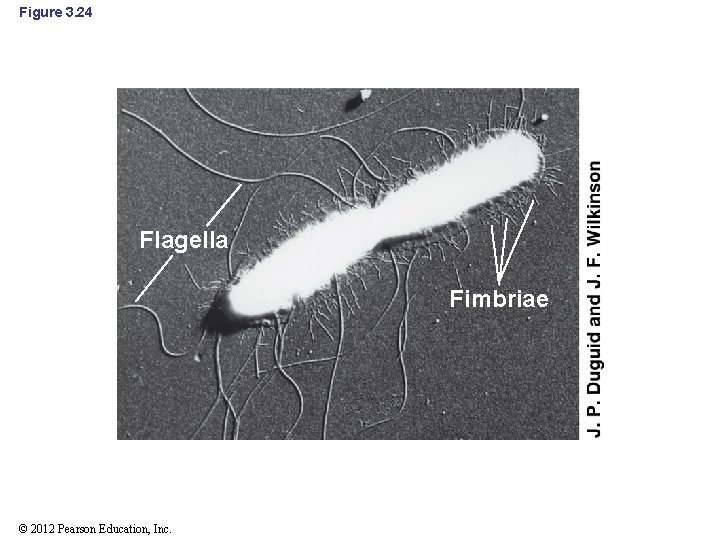
3. 9 Cell Surface Structures • Fimbriae – Filamentous protein structures (Figure 3. 24) – Enable organisms to stick to surfaces or form pellicles © 2012 Pearson Education, Inc.
Figure 3. 24 Flagella Fimbriae © 2012 Pearson Education, Inc.
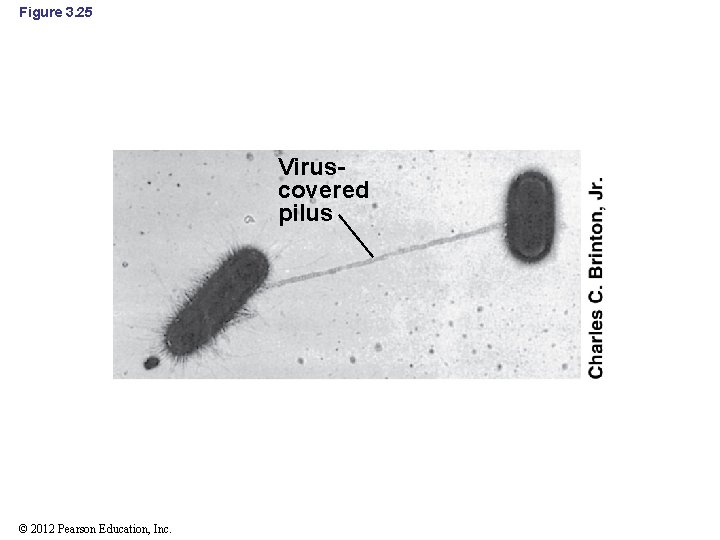
3. 9 Cell Surface Structures • Pili – Filamentous protein structures (Figure 3. 25) – Typically longer than fimbriae – Assist in surface attachment – Facilitate genetic exchange between cells (conjugation) – Type IV pili involved in twitching motility © 2012 Pearson Education, Inc.
Figure 3. 25 Viruscovered pilus © 2012 Pearson Education, Inc.