
I cdnuolt blveiee taht I cluod aulaclty uesdnatnrd

I cdnuolt blveiee taht I cluod aulaclty uesdnatnrd waht I was rdanieg The phaonmneal pweor of the hmuan mnid! Aoccdrnig to a rscheearch at Cmabrigde Uinervtisy, it deosn't mttaer inwaht oredr the ltteers in a wrod are, the olny iprmoatnt tihng is taht the frist and lsat ltteer be in the rghit pclae. The rset can be a taotl mses and you can sitll raed it wouthit a porbelm. Tihs is bcuseae the huamn mnid deos not raed ervey lteter by istlef, but the wrod as a wlohe. Amzanig huh? Yaeh, and I awlyas thought slpeling was ipmorantt.

Designing a Training Programme Joe O Connor joseph. oconnor@staff. ittralee. ie
Today’s Content • Principles of Training • Components of Fitness • Goal Setting • Periodization • Bring it all together!!
Designing a training program! For what? Worksheet 1 What? Why? How?
Principles of Training
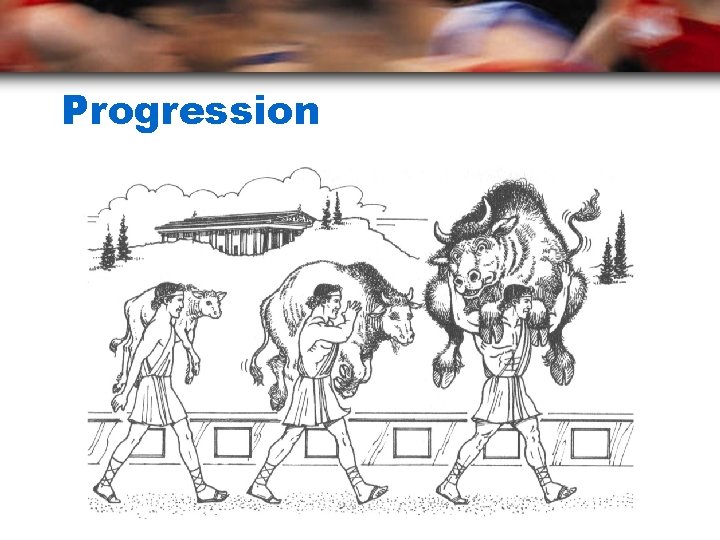
Principles of Training • Overload – Progression • • • Specificity Recovery Variation Reversibility Individual Differences Adaptation
Overload Training programmes should sufficiently stress the player/athlete’s physiological systems to effect an improvement
Overload • Frequency – Number of times per week • Intensity – The amount of overload • Time – Overall duration • Type – Nature of exercise • Rest
Progression

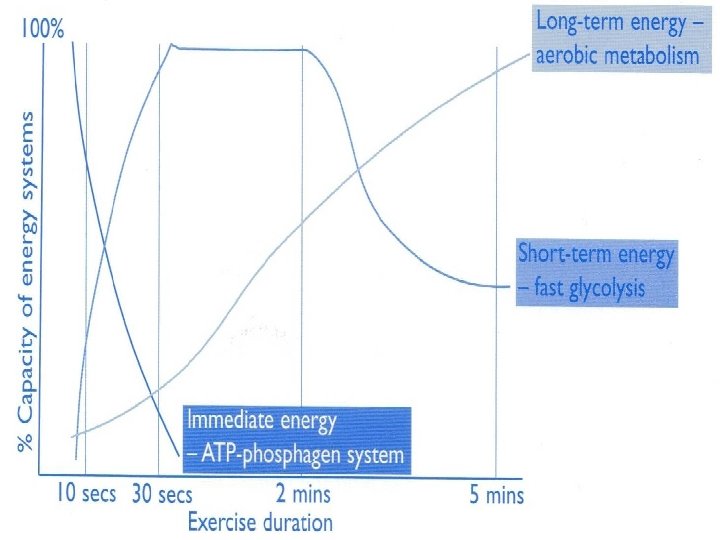
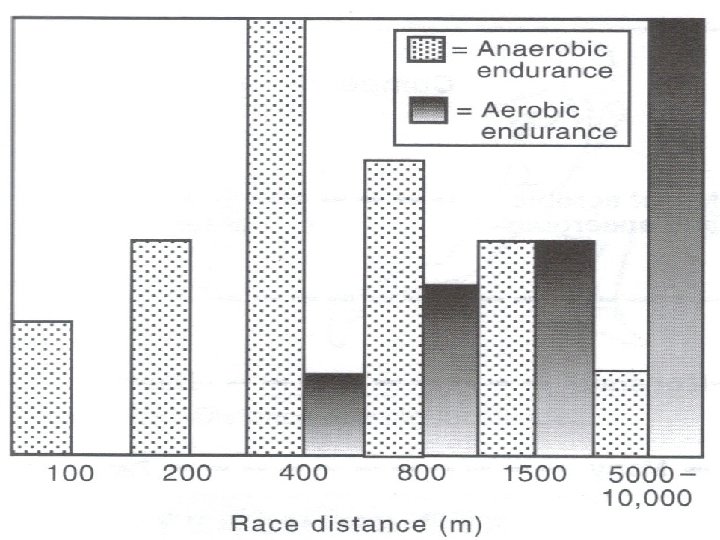
Specificity If you want to be good at snooker. . PLAY SNOOKER!! • Underlying Factors: – Bioenergetics of metabolism – Mechanical Factors
Specificity
Recovery The recovery period is the time when the body’s physiological mechanisms for improvement are implemented. Optimal Training + Optimal Recovery = Optimal Performance
Variation An manipulation of general and specific training. E. G: • Too little progressive overload results in a player never improving • Too much overload results in the player never recovering sufficiently to perform to their best potential and risks injury through overtraining. • Variety is the spice of life!
Reversibility “Use it or Lose it” Training gains achieved will be lost if the training load is removed! Goal setting!!
Individual Differences Adaptation
Principles of Training Worksheet 2
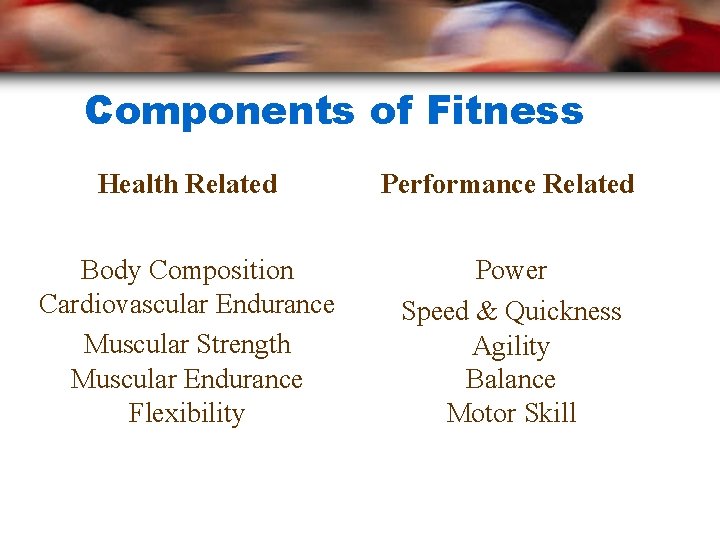
Components of Fitness Health Related Performance Related Body Composition Cardiovascular Endurance Muscular Strength Muscular Endurance Flexibility Power Speed & Quickness Agility Balance Motor Skill
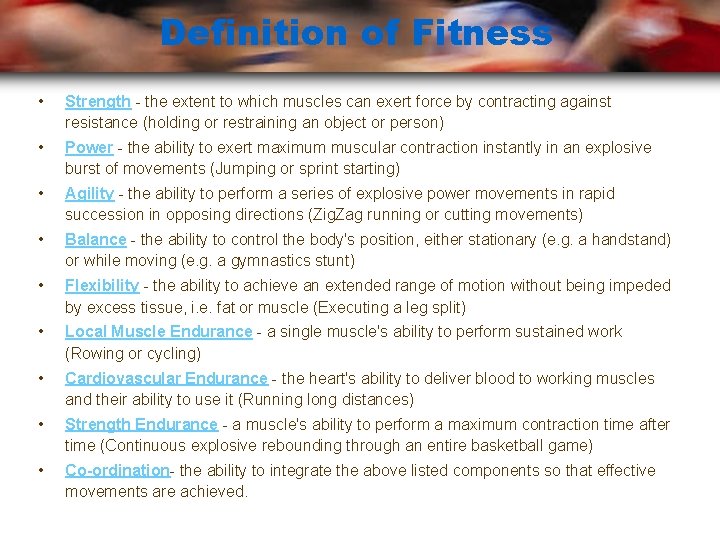
Definition of Fitness • Strength - the extent to which muscles can exert force by contracting against resistance (holding or restraining an object or person) • Power - the ability to exert maximum muscular contraction instantly in an explosive burst of movements (Jumping or sprint starting) • Agility - the ability to perform a series of explosive power movements in rapid succession in opposing directions (Zig. Zag running or cutting movements) • Balance - the ability to control the body's position, either stationary (e. g. a handstand) or while moving (e. g. a gymnastics stunt) • Flexibility - the ability to achieve an extended range of motion without being impeded by excess tissue, i. e. fat or muscle (Executing a leg split) • Local Muscle Endurance - a single muscle's ability to perform sustained work (Rowing or cycling) • Cardiovascular Endurance - the heart's ability to deliver blood to working muscles and their ability to use it (Running long distances) • Strength Endurance - a muscle's ability to perform a maximum contraction time after time (Continuous explosive rebounding through an entire basketball game) • Co-ordination- the ability to integrate the above listed components so that effective movements are achieved.
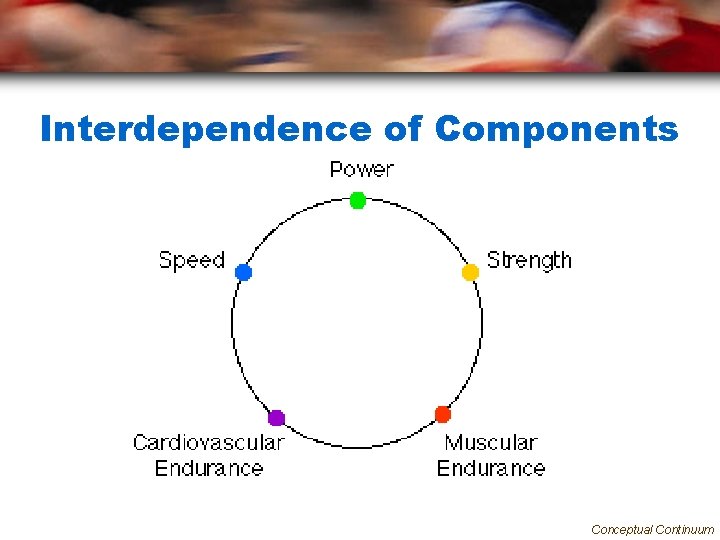
Interdependence of Components Conceptual Continuum
Components of Fitness Worksheet 3
Goal Setting Examples?
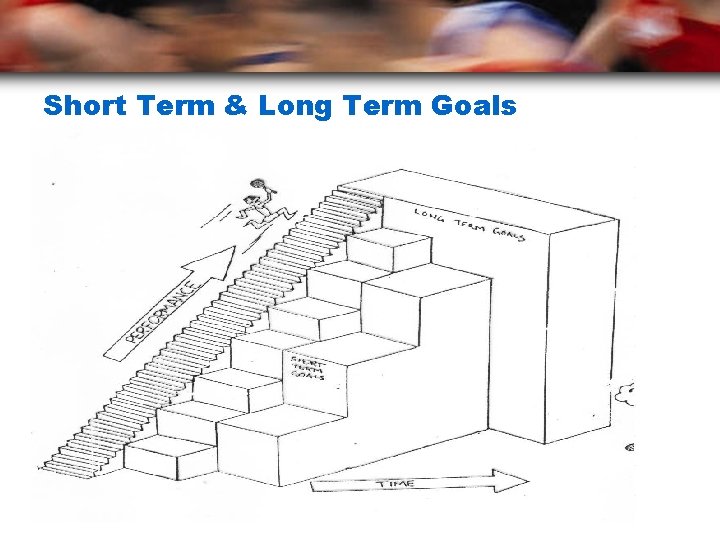
Short Term & Long Term Goals
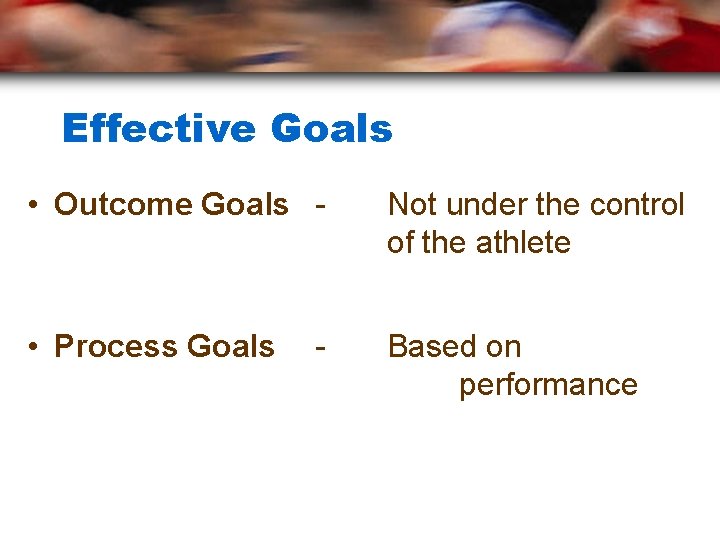
Effective Goals • Outcome Goals - Not under the control of the athlete • Process Goals Based on performance -
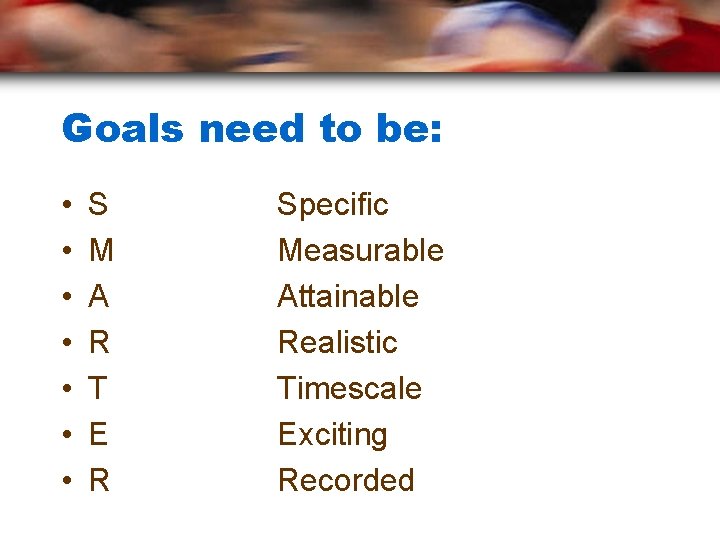
Goals need to be: • • S M A R T E R Specific Measurable Attainable Realistic Timescale Exciting Recorded
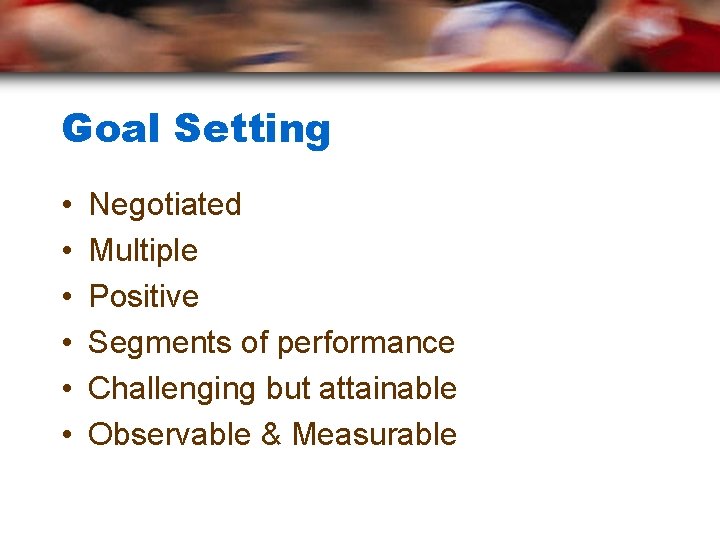
Goal Setting • • • Negotiated Multiple Positive Segments of performance Challenging but attainable Observable & Measurable
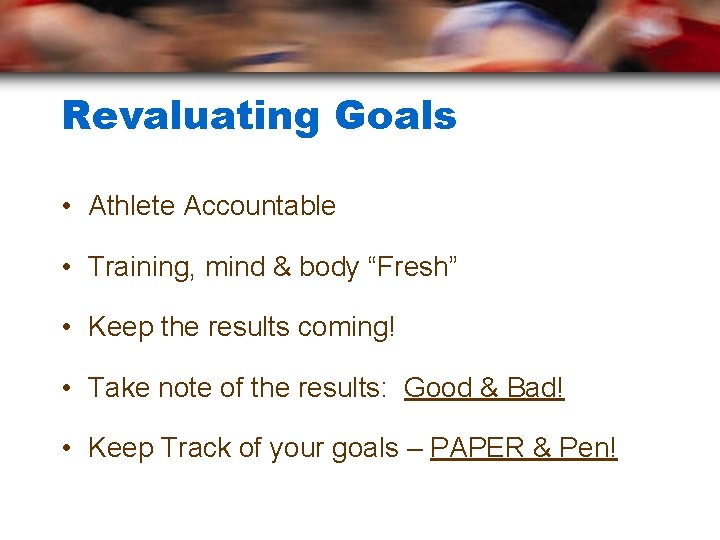
Revaluating Goals • Athlete Accountable • Training, mind & body “Fresh” • Keep the results coming! • Take note of the results: Good & Bad! • Keep Track of your goals – PAPER & Pen!
Take a look at the picture? What do you see? Research has shown that young children cannot identify the intimate couple because they do not have prior memory associated with such a scenario. Children see nine dolphins. This is a test to determine if you already have a corrupted mind. If it is hard for you to find the dolphins within six seconds, your mind is indeed corrupted.

Obstacles are those frightening things that become visible when we take our eyes off our goals. " - Henry Ford 1. The cross represents your goal! 2. The purple dots represent obsticles to you goal 3. The green dot represents your reminder to stay focused.

“It's a dream until you write it down, when down its a goal” “To give anything less than your best is to sacrifice your gift” -Steve Prefontane
Goal Setting Priority

Periodization

Periodization “An organized approach to training that involves progressive cycling of various aspects of a training program during a specific period of time”
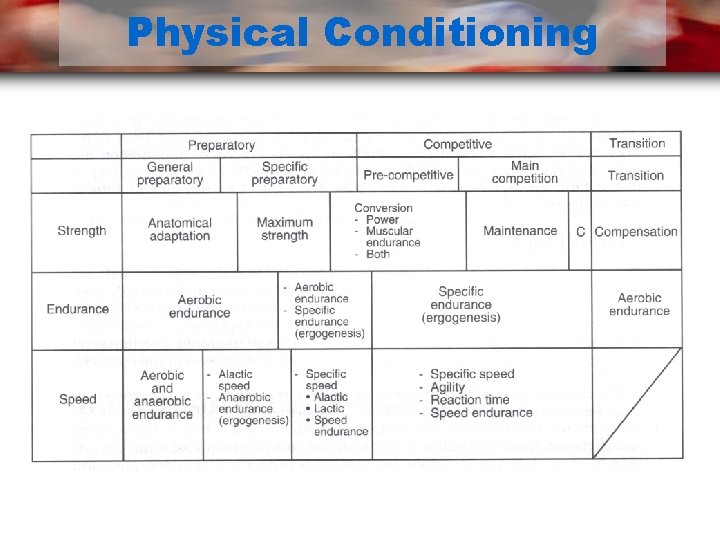
Physical Conditioning
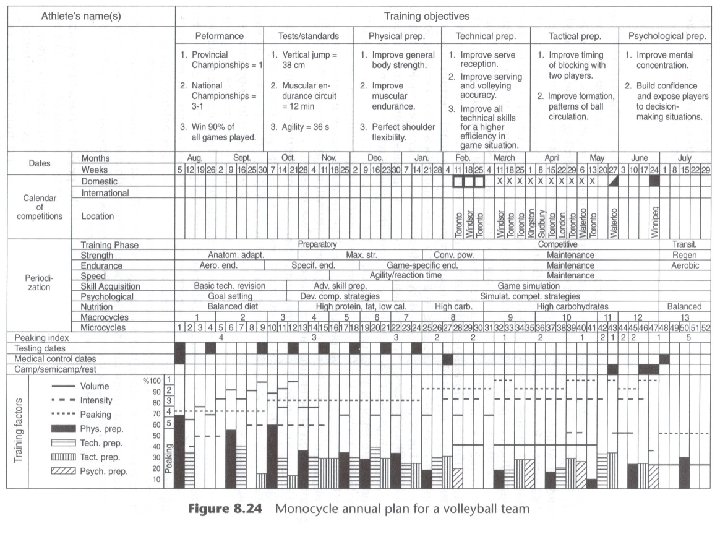
“Fail to Prepare” & “Prepare to Fail” • Derived from “Period” or “Phase of Training” • Annual Plan – Micro Cycles – Meso. Cycles / Macro. Cycles • Mono Cycle • Bi-Cycle • Tri-Cycle
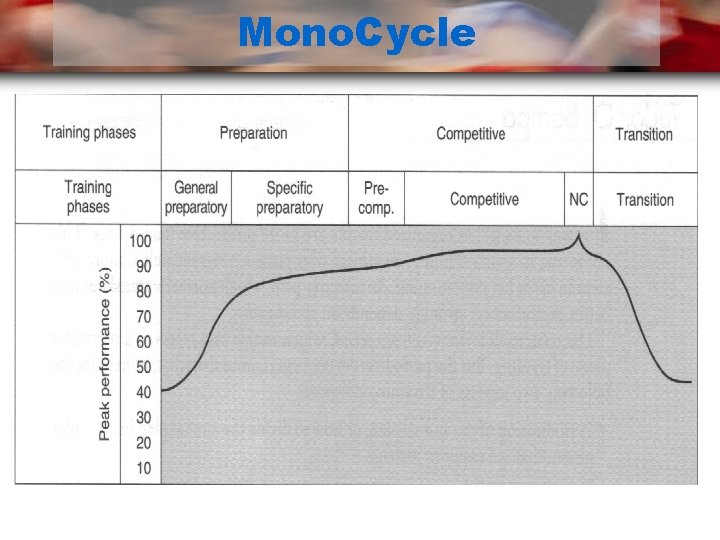
Mono. Cycle
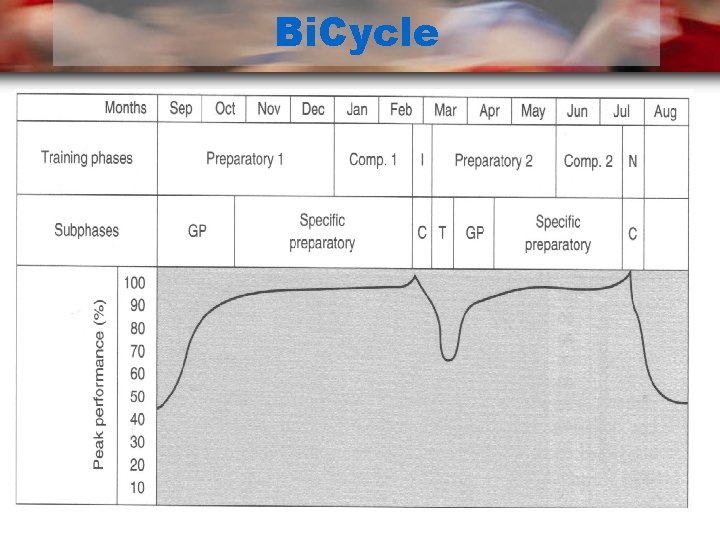
Bi. Cycle
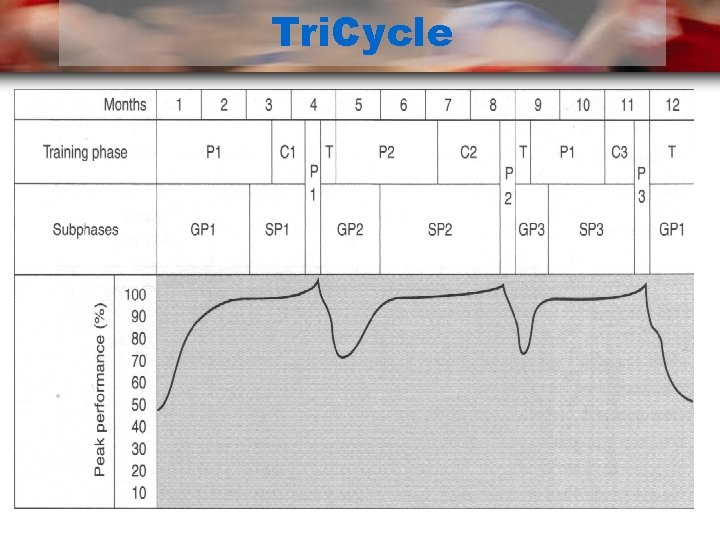
Tri. Cycle
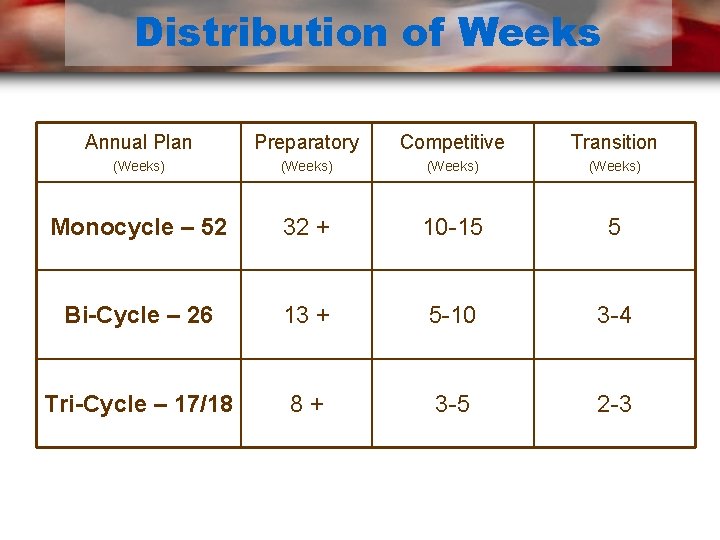
Distribution of Weeks Annual Plan Preparatory Competitive Transition (Weeks) Monocycle – 52 32 + 10 -15 5 Bi-Cycle – 26 13 + 5 -10 3 -4 Tri-Cycle – 17/18 8 + 3 -5 2 -3
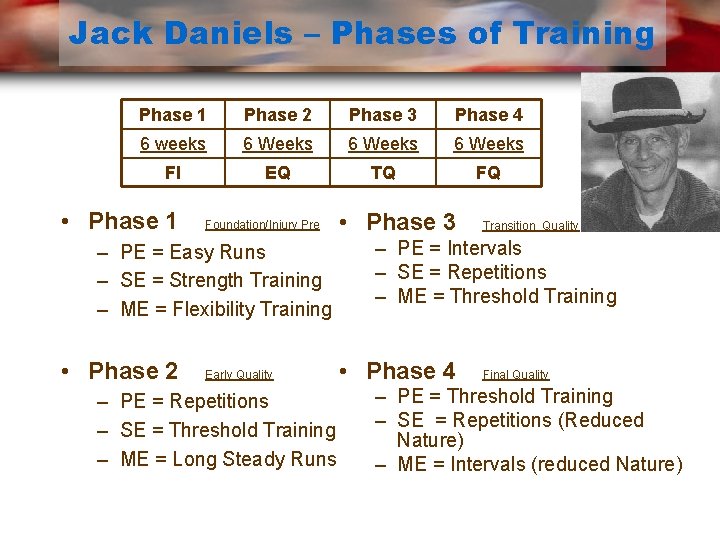
Jack Daniels – Phases of Training Phase 1 Phase 2 Phase 3 Phase 4 6 weeks 6 Weeks FI EQ TQ FQ • Phase 1 Foundation/Injury Pre – PE = Easy Runs – SE = Strength Training – ME = Flexibility Training • Phase 2 Early Quality – PE = Repetitions – SE = Threshold Training – ME = Long Steady Runs • Phase 3 Transition Quality – PE = Intervals – SE = Repetitions – ME = Threshold Training • Phase 4 Final Quality – PE = Threshold Training – SE = Repetitions (Reduced Nature) – ME = Intervals (reduced Nature)
Periodization Worksheet 4

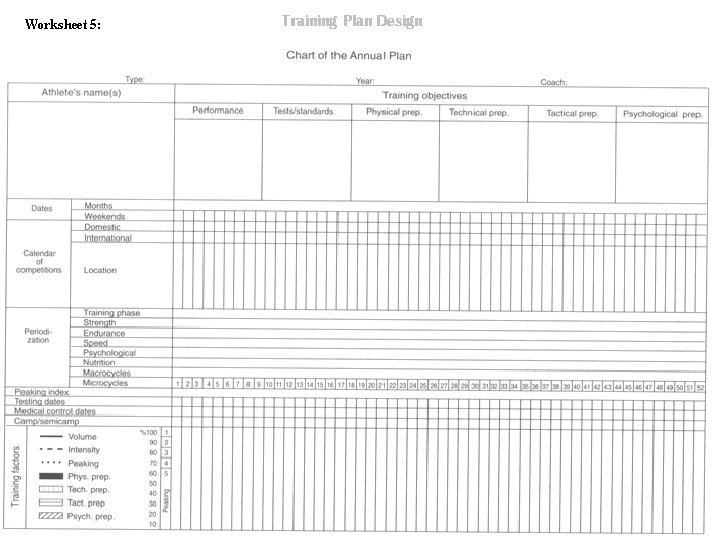
Bring it all together Worksheet 5
Design a Training Program • Principles of Training • Components of Fitness • Goal Setting • Periodization

Any Questions

Thank you for your time!
- Slides: 47