
I can understand how the author uses dialogue
- Slides: 10
I can understand how the author uses dialogue to convey character to the reader. The scene…. . When he came to himself, he was lying in a firelit place with bruised limbs, and a bad headache. Low voices were speaking close at hand……. .
One of the main ways to create character is by what the character actually says inside the speech marks.
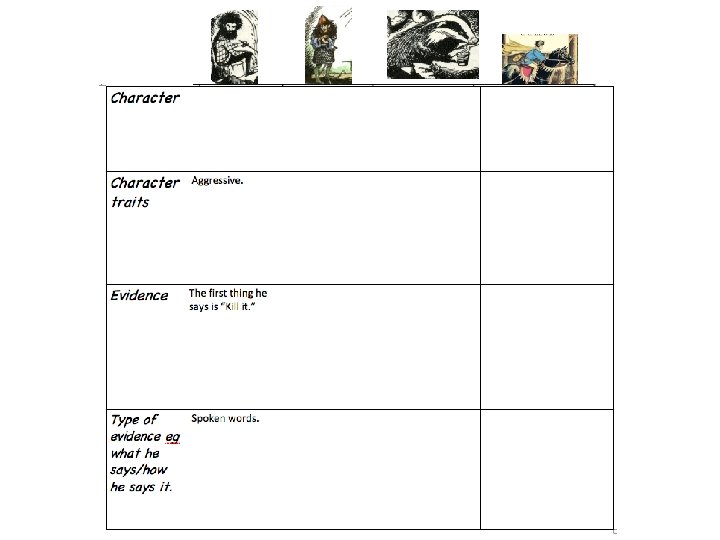
When he came to himself, he was lying in a firelit place with bruised limbs, and a bad headache. Low voices were speaking close at hand. “And now, “ said one, “Before it wakes up, we must decide what to do with it. ” “Kill it, ” said another, ”We can’t let it live. It would betray us. ” What can you tell about either of these characters? What gave you the clue?
When he came to himself, he was lying in a firelit place with bruised limbs, and a bad headache. Low voices were speaking close at hand. “And now, “ said one, “Before it wakes up, we must decide what to do with it. ” “Kill it, ” said another, ”We can’t let it live. It would betray us. ” “We ought to have killed it at once, or else let it alone. ” said a third voice. “We can’t kill it now. Not after we’ve taken it in and bandaged its head and all. It would be murdering a guest. ” What can you tell about the new character? What gave you the clue?
As well as the words spoken, there are other ways to use dialogue to covey character and advance …. Do you know what they are?
When he came to himself, he was lying in a firelit place with bruised limbs, and a bad headache. Low voices were speaking close at hand. “And now, “ said one, “Before it wakes up, we must decide what to do with it. ” “Kill it, ” said another, ”We can’t let it live. It would betray us. ” “We ought to have killed it at once, or else let it alone. ” said a third voice. “We can’t kill it now. Not after we’ve taken it in and bandaged its head and all. It would be murdering a guest. ” “Gentlemen, ” said Caspian, in a feeble voice. “Whatever you do to me, I hope you will be kind to my poor horse. ” “Your horse took flight long before we found you, ” said the first voice – a curiously husky, earthy voice. “Now, don’t let it talk you round with pretty words, ” said the second voice, which was full of mistrust. “I still say we should-” “Horns and halibuts!” said the third voice, richer, mellower, but impatient. “Of course we’re not going to kill it! For shame, Nikabrik. What shall we do, Truffehunter? ” “I say give it a drink. ” said the growly voice. A dark shape approached. Caspian felt an arm slipped under his shoulders – if it was an arm – the shape felt somehow wrong. What extra information on the characters can you work out?
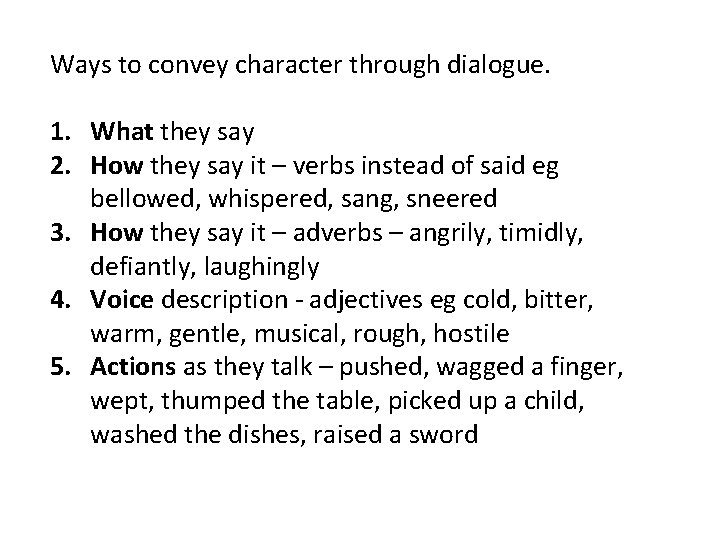
Ways to convey character through dialogue. 1. What they say 2. How they say it – verbs instead of said eg bellowed, whispered, sang, sneered 3. How they say it – adverbs – angrily, timidly, defiantly, laughingly 4. Voice description - adjectives eg cold, bitter, warm, gentle, musical, rough, hostile 5. Actions as they talk – pushed, wagged a finger, wept, thumped the table, picked up a child, washed the dishes, raised a sword
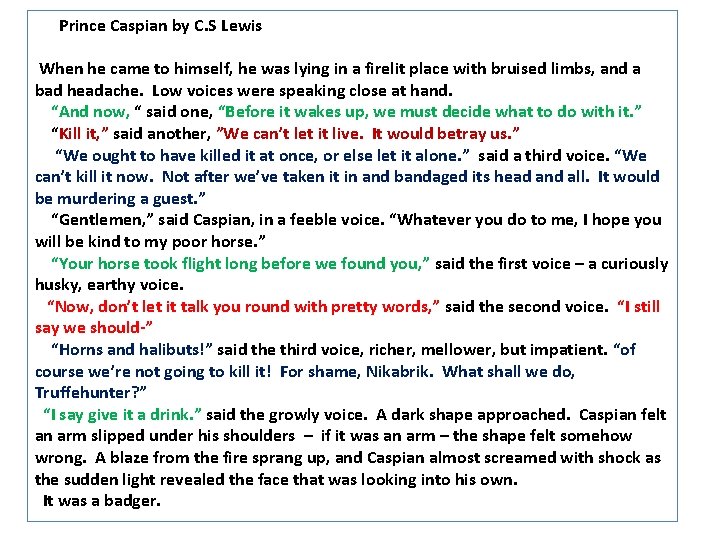
Prince Caspian by C. S Lewis When he came to himself, he was lying in a firelit place with bruised limbs, and a bad headache. Low voices were speaking close at hand. “And now, “ said one, “Before it wakes up, we must decide what to do with it. ” “Kill it, ” said another, ”We can’t let it live. It would betray us. ” “We ought to have killed it at once, or else let it alone. ” said a third voice. “We can’t kill it now. Not after we’ve taken it in and bandaged its head and all. It would be murdering a guest. ” “Gentlemen, ” said Caspian, in a feeble voice. “Whatever you do to me, I hope you will be kind to my poor horse. ” “Your horse took flight long before we found you, ” said the first voice – a curiously husky, earthy voice. “Now, don’t let it talk you round with pretty words, ” said the second voice. “I still say we should-” “Horns and halibuts!” said the third voice, richer, mellower, but impatient. “of course we’re not going to kill it! For shame, Nikabrik. What shall we do, Truffehunter? ” “I say give it a drink. ” said the growly voice. A dark shape approached. Caspian felt an arm slipped under his shoulders – if it was an arm – the shape felt somehow wrong. A blaze from the fire sprang up, and Caspian almost screamed with shock as the sudden light revealed the face that was looking into his own. It was a badger.
gentle caring rough wild aggressive impatient kindly authoritative brave weak exhausted distrustful angry fair argumentative obedient frightened