
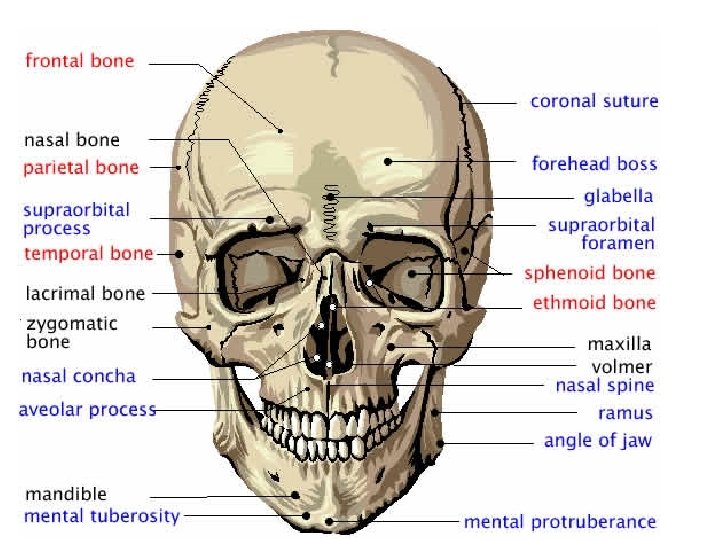
I Anatomy A Bones of the Skull Maxilla
I Anatomy A) Bones of the Skull Maxilla- Top of mouth Mandible- Jaw Zygomatic- Cheek bone Tempomandibular Joint-TMJmandible to temple Nasal –top of nose
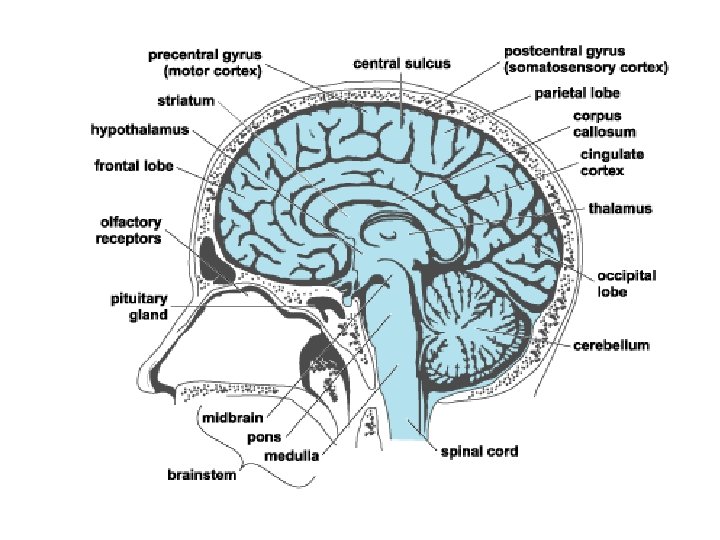
B) The brain- Encephalon Central Nervous System- brain and Spinal Cord 4 parts. Cerebrum~ thinking Cerebellum~ movement Pons~ Medulla Oblongata~ involuntary
C) Meninges Three membranes that surround and suspends the brain and spinal chord. Used for shock absorption, cushioning and to dispense force 1) Dura Mater 2) Arachnoid Mater- silk like threads Sub-arachnoid space~ where spinal fluid is found (CSF- cerebral spinal fluid) 3) Pia Mater


II Injuries 1) Concussions- jarring or shaking of the head. Can have immediate or delayed impairment of neurological function ~ not always LOC Symptoms: headache, memory loss, nausea, tinnitus, pupil changes, confusion, dizziness, loss of coordination, photophobia, sleep problems, anxiety, irritability
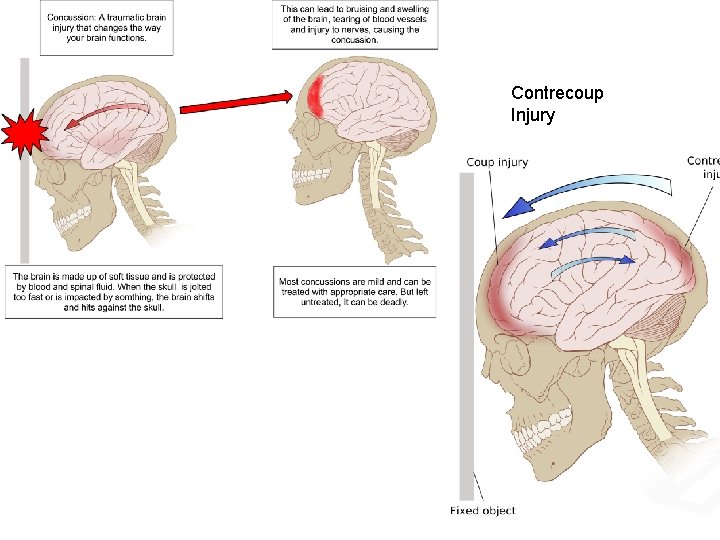
Contrecoup Injury

Grades of Concussions Grade 1 No LOC “bell rung” Confusion/dizziness watch for Deterioration TX- watch and test after 15 minutes
Grade II • no LOC • Confusion/dizziness • Poor gait • Tinnitus • Headache • Nauseous • Memory loss • Pupil response (see grade 3) TX- stop playing, Doctor, can’t return until post test completed.
Grade III • LOC- any • Retrograde amnesia • Pupils irregular (dilated, uneven, constricted, not responding to pen light, photophobia) • TX-911
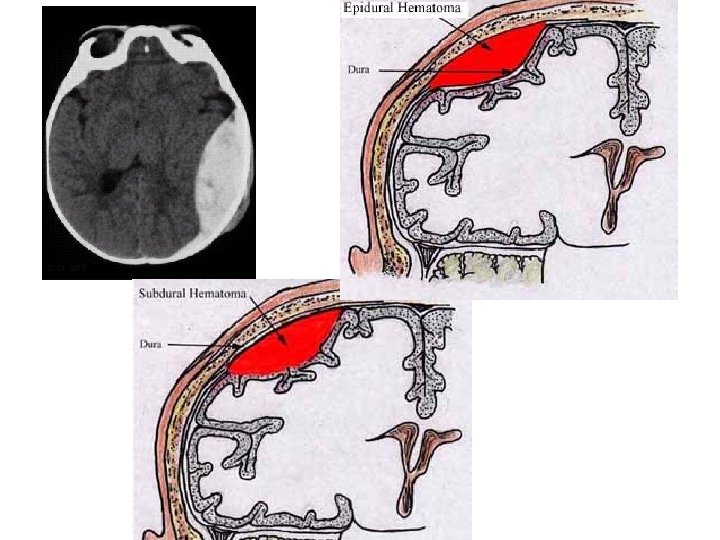
II. Injuries cont. • 3) Hematoma • Blood/lymph in a localized area- usually no room • If happens in skull there is no room so blood puts pressure in brain- neurological disfunction • Named by where blood is located: Epidural Subdural
II. Injuries cont • 1) Epidural Hematoma- 1 st LOC then headache, vomitting, dilated pupils, etc • TX-immediate surgery • 2) Subdural Hematoma- Signs might not show up for days/weeks- slow bleed from vein fatal
II Injuries cont 2) Face injuries from article- “In Your Face” Directions: 1) underline def, symptoms and TX as we read 2) Answer question on back of packet Read NFL stories
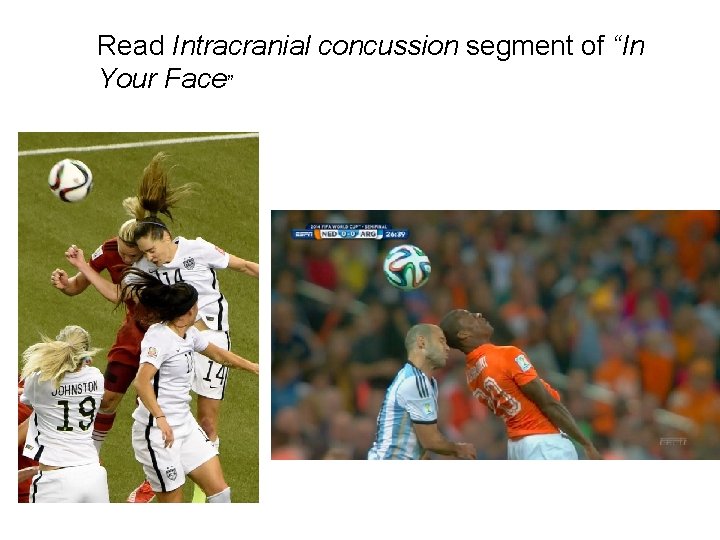
Read Intracranial concussion segment of “In Your Face”
II Injuries cont • Trainers’ Nightmare • Second Impact Syndrome- two head injuries that separate would be mild, but together…. Fatal • A second concussion happens before the symptoms/recovery from 1 st concussion is gone – person collapses and dies quickly
2 nd Impact cont. ifficult to detect 1) fear of not playing 2) unaware of dangers 3) thinking symptoms are minor 4) others can’t see symptoms ***** 100% preventable How? ?
nd 2 Impact cont In most reported cases athlete denied symptoms from 1 st concussion When received 2 nd head injury collapsed within minutes TX- how to prevent? ?
III. Assessment of Concussions A) Primary Survey! B) Secondary Survey (HOPS) 1. History- Have you ever had a concussion. How is your headache? Tinnitus? Nausea? Etc Amnesia- Ask question @ game, place, score, etc Memory- Silly sentence, remember 3 -5 facts 2. Observation~ determine level of consciousness, speech, balance, gait
III. Assessment cont. 3. Palpations~ pulse, BP, PT in neck region 4. Special Tests (repeat some of History) a) Pen Light-pupil response: size, response, nystagmus, ask about Diplopia b) Ask questions How is your headache? Tinnitus? Nausea? Etc Amnesia (retrograde)- Ask question @ game, place, score, etc Memory(short term)- Silly sentence, remember 3 -5 facts Concentration- alphabet backwards, repeat numbers backwards, 100 -7
4. Spec tests cont. • • Romberg test Stork Stand test Heel toe test Stress tests(exertion tests): sit ups, carioca, sprints 5. Neurological (in this class we do not do)strength, sensation, Bilateral
Sideline Cognitive Evaluation http: //static 1. 1. sqspcdn. com/static/f/707372 /11252161/1300281153863/side+line+card +710. pdf? token=TTpiz. V 8 xpj. ROFRrlg. XAKo. Us Dh. HQ%3 D http: //kingdevicktest. com/concussion/demo nstration-videos/
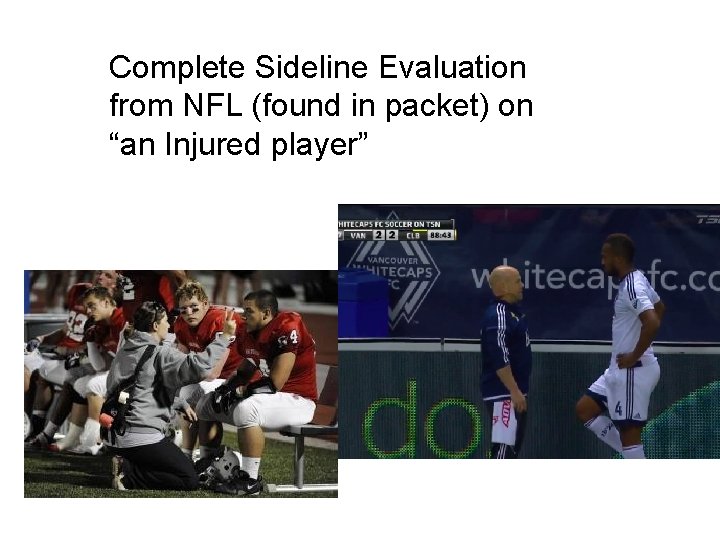
Complete Sideline Evaluation from NFL (found in packet) on “an Injured player”
Article about CTE and Dr. Omalu http: //www. nytimes. com/2007/01/18/sports/ football/18 waters. html


- Slides: 36