
I Amphibians A Urodela salamanders newts B Terrestrial
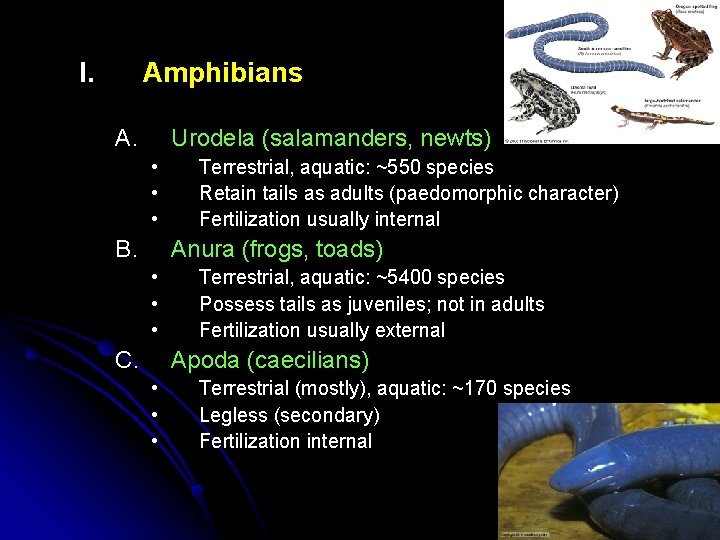
I. Amphibians A. Urodela (salamanders, newts) • • • B. Terrestrial, aquatic: ~550 species Retain tails as adults (paedomorphic character) Fertilization usually internal Anura (frogs, toads) • • • C. Terrestrial, aquatic: ~5400 species Possess tails as juveniles; not in adults Fertilization usually external Apoda (caecilians) • • • Terrestrial (mostly), aquatic: ~170 species Legless (secondary) Fertilization internal
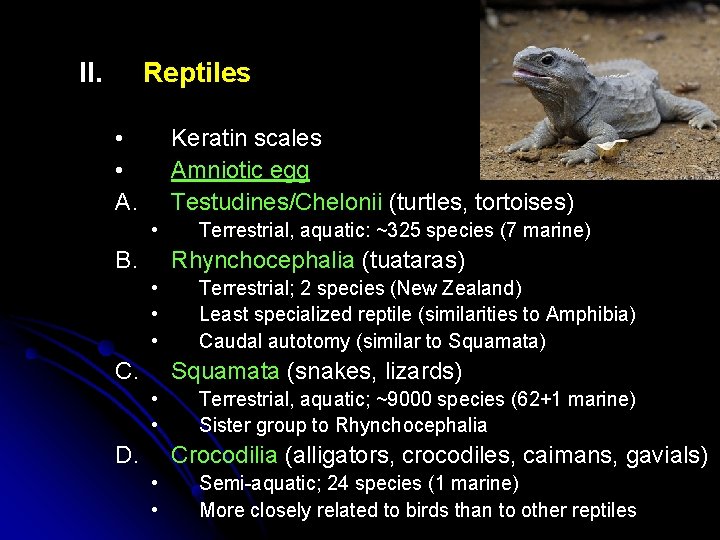
II. Reptiles • • A. Keratin scales Amniotic egg Testudines/Chelonii (turtles, tortoises) • B. Terrestrial, aquatic: ~325 species (7 marine) Rhynchocephalia (tuataras) • • • C. Terrestrial; 2 species (New Zealand) Least specialized reptile (similarities to Amphibia) Caudal autotomy (similar to Squamata) Squamata (snakes, lizards) • • D. Terrestrial, aquatic; ~9000 species (62+1 marine) Sister group to Rhynchocephalia Crocodilia (alligators, crocodiles, caimans, gavials) • • Semi-aquatic; 24 species (1 marine) More closely related to birds than to other reptiles
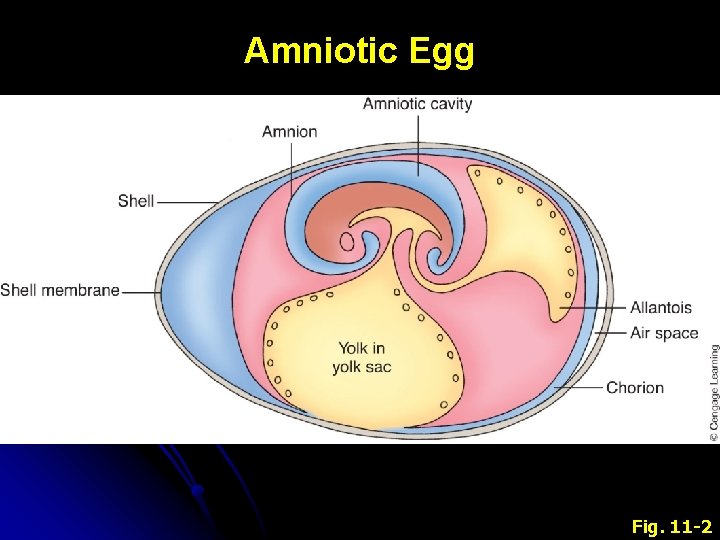
Amniotic Egg Fig. 11 -2
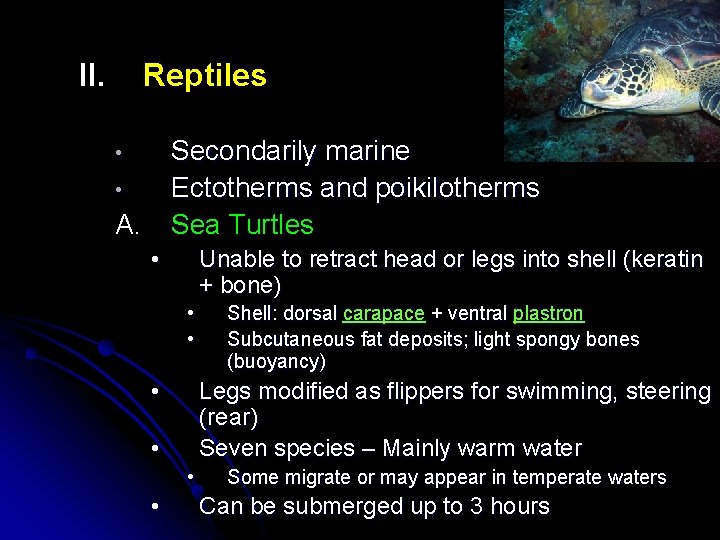
II. Reptiles Secondarily marine Ectotherms and poikilotherms Sea Turtles • • A. • Unable to retract head or legs into shell (keratin + bone) • • • Legs modified as flippers for swimming, steering (rear) Seven species – Mainly warm water • • • Shell: dorsal carapace + ventral plastron Subcutaneous fat deposits; light spongy bones (buoyancy) Some migrate or may appear in temperate waters Can be submerged up to 3 hours
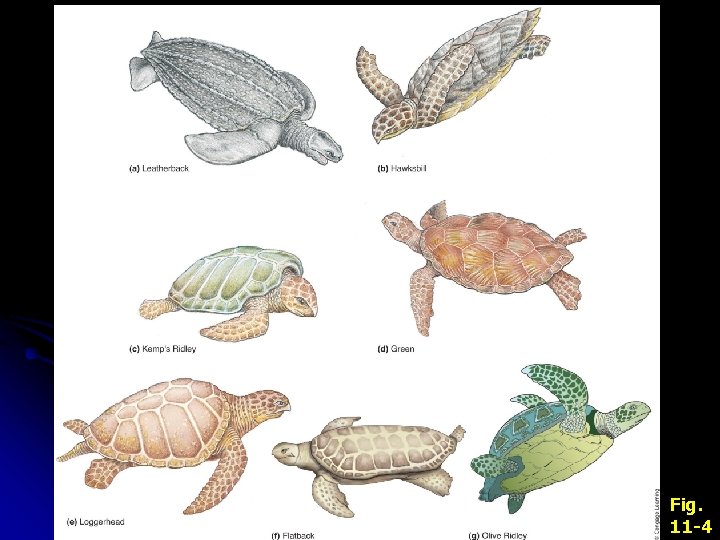
Fig. 11 -4
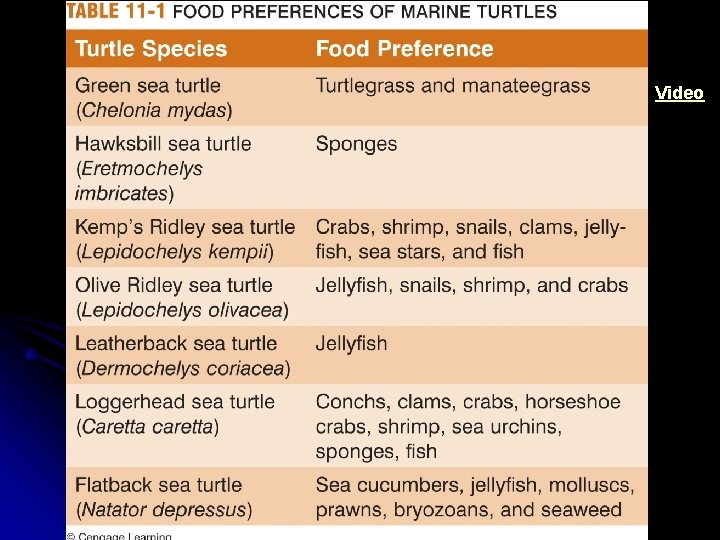
Video
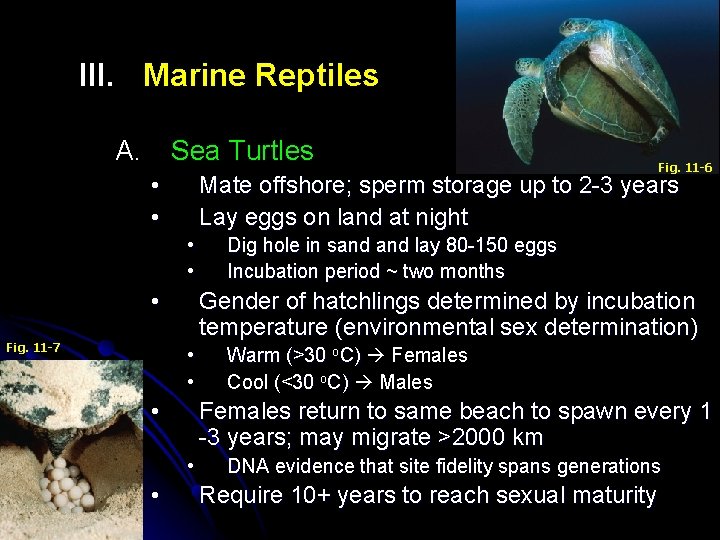
III. Marine Reptiles A. Sea Turtles • • Mate offshore; sperm storage up to 2 -3 years Lay eggs on land at night • • • Fig. 11 -7 Dig hole in sand lay 80 -150 eggs Incubation period ~ two months Gender of hatchlings determined by incubation temperature (environmental sex determination) • • • Warm (>30 o. C) Females Cool (<30 o. C) Males Females return to same beach to spawn every 1 -3 years; may migrate >2000 km • • Fig. 11 -6 DNA evidence that site fidelity spans generations Require 10+ years to reach sexual maturity
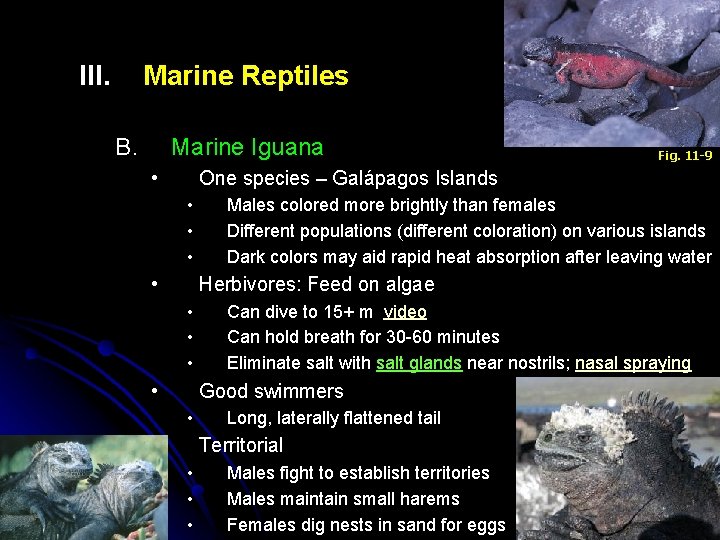
III. Marine Reptiles B. Marine Iguana • Fig. 11 -9 One species – Galápagos Islands • • Males colored more brightly than females Different populations (different coloration) on various islands Dark colors may aid rapid heat absorption after leaving water Herbivores: Feed on algae • • Can dive to 15+ m video Can hold breath for 30 -60 minutes Eliminate salt with salt glands near nostrils; nasal spraying Good swimmers • • Long, laterally flattened tail Territorial • • • Males fight to establish territories Males maintain small harems Females dig nests in sand for eggs
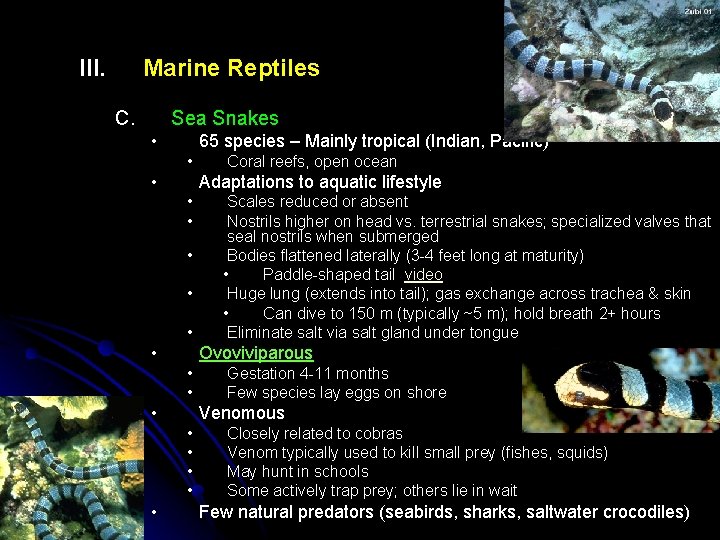
III. Marine Reptiles C. Sea Snakes • 65 species – Mainly tropical (Indian, Pacific) • • Adaptations to aquatic lifestyle • • • Scales reduced or absent Nostrils higher on head vs. terrestrial snakes; specialized valves that seal nostrils when submerged Bodies flattened laterally (3 -4 feet long at maturity) • Paddle-shaped tail video Huge lung (extends into tail); gas exchange across trachea & skin • Can dive to 150 m (typically ~5 m); hold breath 2+ hours Eliminate salt via salt gland under tongue Ovoviviparous • • • Gestation 4 -11 months Few species lay eggs on shore Venomous • • • Coral reefs, open ocean Closely related to cobras Venom typically used to kill small prey (fishes, squids) May hunt in schools Some actively trap prey; others lie in wait Few natural predators (seabirds, sharks, saltwater crocodiles)
- Slides: 9