
I 2 C Bus Interface and Protocol Prabhas

I 2 C Bus, Interface and Protocol Prabhas Chongstitvatana Information from: https: //i 2 c. info/

I 2 C Bus • serial protocol, two-wire interface, low speed, invented by Philips • control by a master using start and stop conditions
• Each slave device has a unique address. • Transfer from and to master device is serial and it is. split into 8 -bit packets. • Speed 100 k. Hz, • 400 k. Hz Fast mode, • 3. 4 MHz High speed mode, • 5 MHz ultra-fast mode
I 2 C Interface and protocol • Two wires: SCL (serial clock) and SDA (serial data). • Both need to be pulled up with a resistor to +Vdd. • Transfers of 8 bits or bytes. • Each I 2 C slave device has a 7 -bit address • 10 -bit address as allowed by the specification.
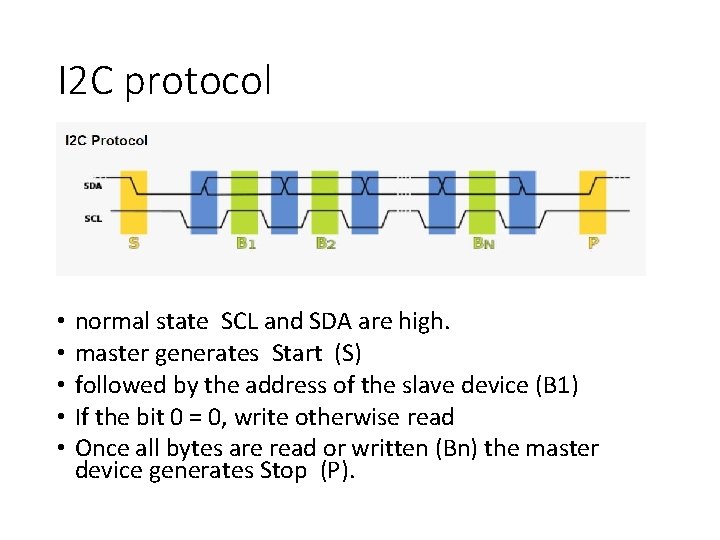
I 2 C protocol • • • normal state SCL and SDA are high. master generates Start (S) followed by the address of the slave device (B 1) If the bit 0 = 0, write otherwise read Once all bytes are read or written (Bn) the master device generates Stop (P).

Example, I 2 C in a system
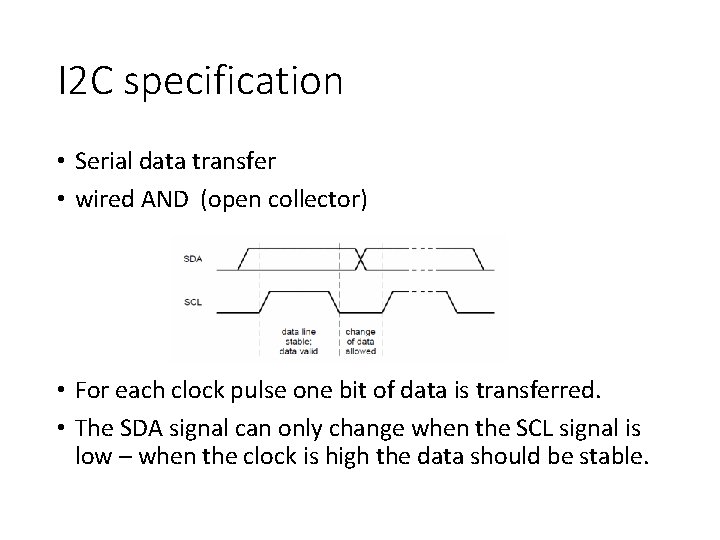
I 2 C specification • Serial data transfer • wired AND (open collector) • For each clock pulse one bit of data is transferred. • The SDA signal can only change when the SCL signal is low – when the clock is high the data should be stable.
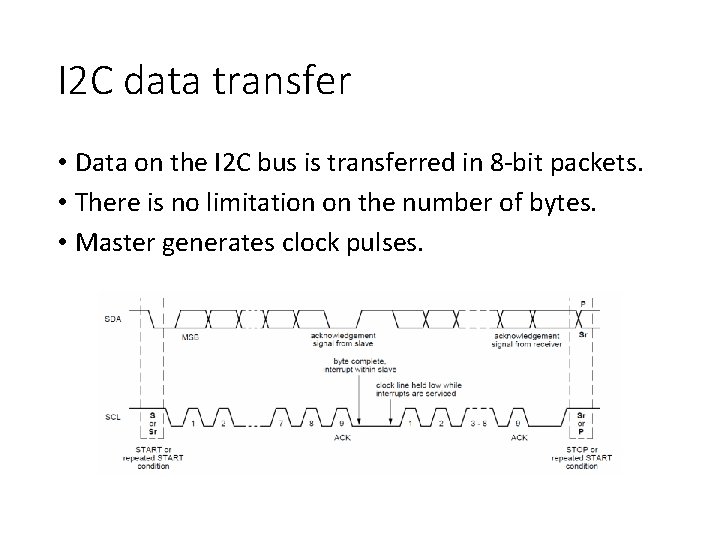
I 2 C data transfer • Data on the I 2 C bus is transferred in 8 -bit packets. • There is no limitation on the number of bytes. • Master generates clock pulses.
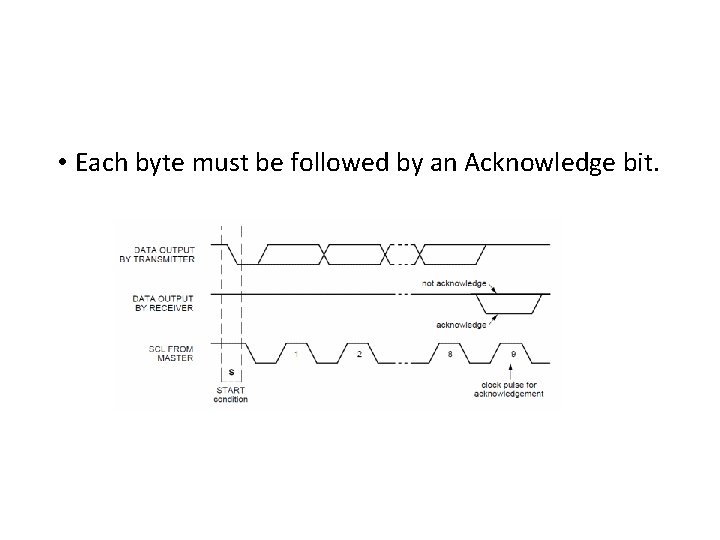
• Each byte must be followed by an Acknowledge bit.
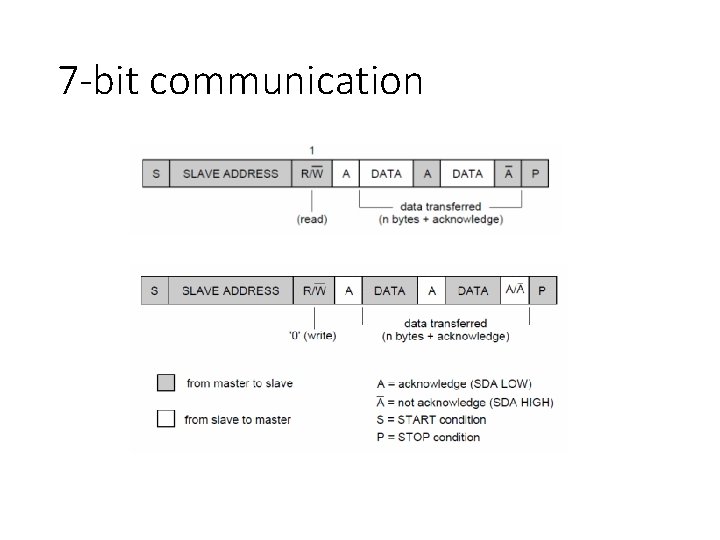
7 -bit communication
Arbitration • If more than one master, they must arbitrate • Arbitration is performed on the SDA signal while the SCL signal is high. • Each master checks if the SDA signal on the bus corresponds to the generated SDA signal. • If the SDA signal on the bus is low but it should be high, then this master has lost arbitration. • It goes into slave mode.
- Slides: 11