
Hystor Making the Best Use of Solid State

Hystor: Making the Best Use of Solid State Drives in High Performance Storage Systems Feng Chen, David Koufaty Xiaodong Zhang Circuits and Systems Research Dept. of Computer Science & Engineering Intel Labs The Ohio State University ICS '11 Proceedings of the international conference on Supercomputing
Introduction High-performance storage systems are still built on conventional hard disk drives (HDDs) low random access performance high power consumption Gordon San Diego Supercomputer Center 256 TB of flash memory storage backed by $20 million fund! 2
Introduction SSD is nearly 10 times more expensive than HDD SSD is not a replacement for HDD SSD can be used as a secondary-level cache Between DRAM and HDD LRU? 3
Which blocks should be cached? Sequential vs. Random Reading a big file Most performance-critical blocks Filesystem metadata 4
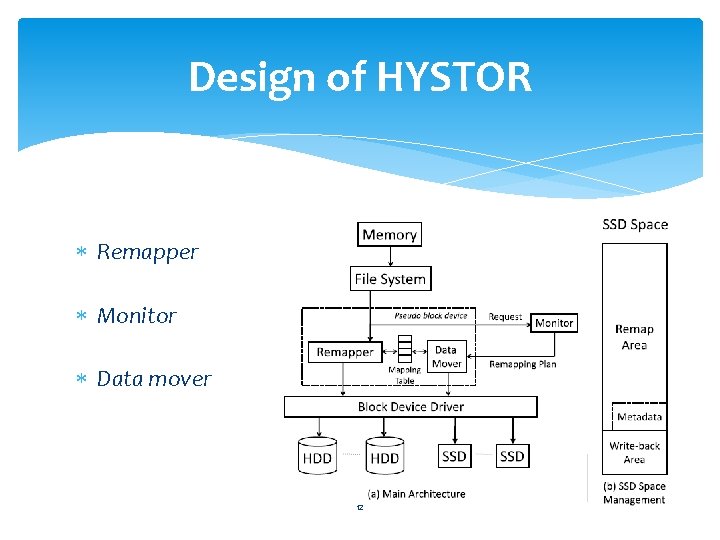
Hystor Hybrid storage system Integrates SSD and HDD as a single block device Minimum changes to OS kernel Implemented as a kernel module Write-back buffer 5

Sequential vs. Random 6
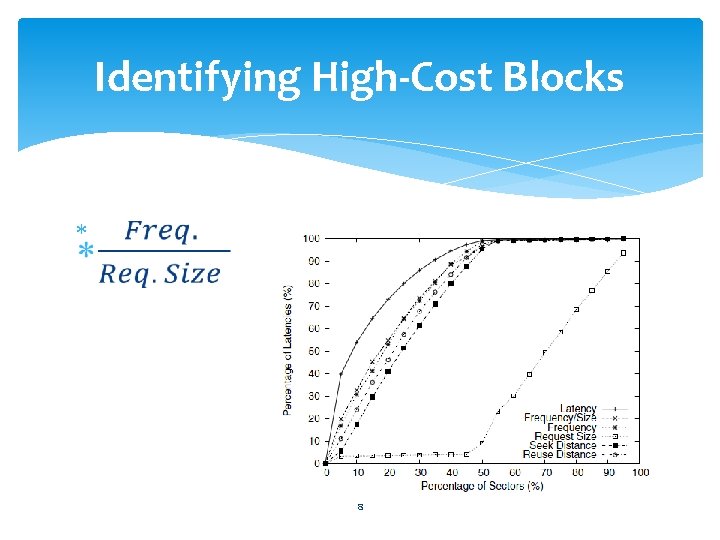
Identifying High-Cost Blocks Measure I/O latency of accessing each block Use the accumulated latency as ‘cost’ of each block Measure latency in SSD? Another pattern-related metric like latency Request size Frequency Seek distance Reuse distance 7
Identifying High-Cost Blocks 8
Identifying Metadata Blocks Before accessing a file, its metadata blocks must be loaded into memory Static metadata detection File systems like ext 3 /ext 4 tag metadata blocks for I/O scheduler 9
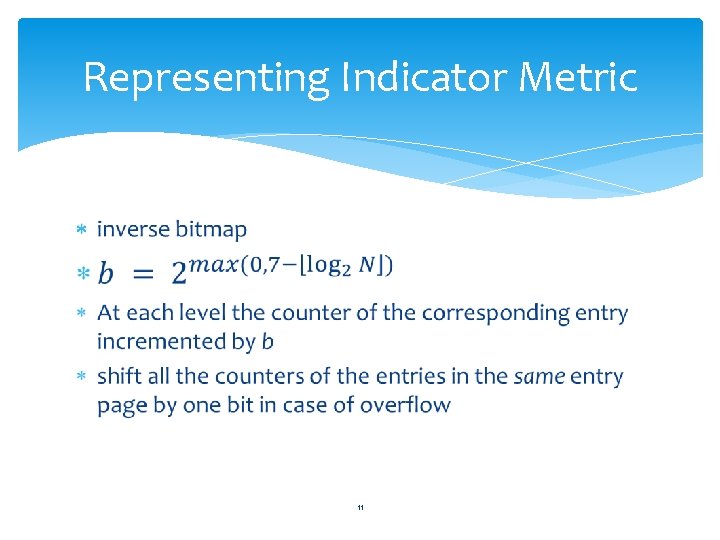
Maintaining Data Access History Three-level table Block Global Directory (BGD) Block Middle Directory (BMD) Block Table Entry (BTE) Each BGD or BMD entry has a 32 -bit pointer field pointing to a (BMD or BTE) page in the next level Each BTE entry has a 16 -bit counter field and a 16 -bit flag field 10
Representing Indicator Metric 11
Design of HYSTOR Remapper Monitor Data mover 12
Performance of Hystor 13
Performance of Hystor 14
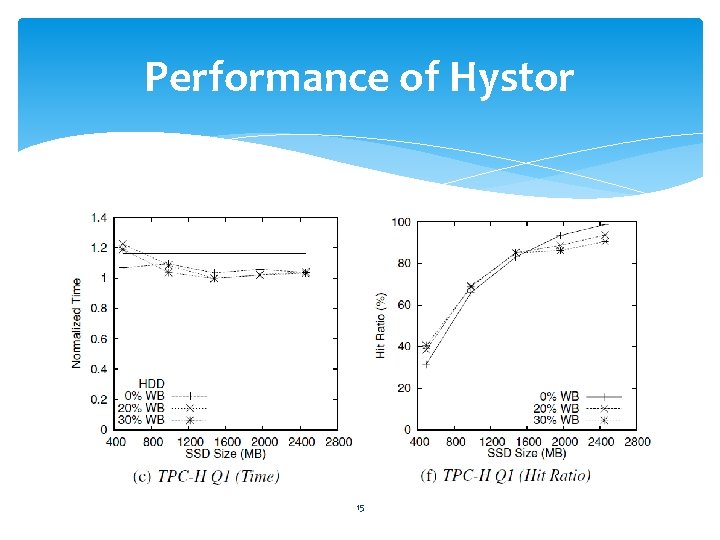
Performance of Hystor 15
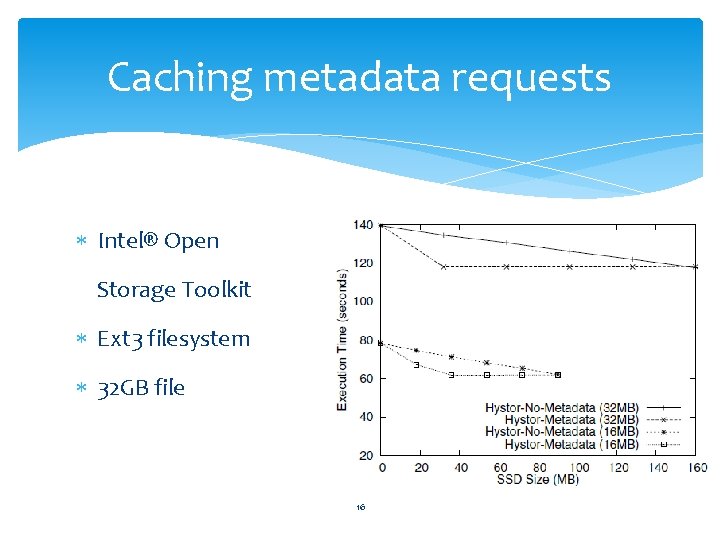
Caching metadata requests Intel® Open Storage Toolkit Ext 3 filesystem 32 GB file 16

Azor: Using Two-level Block Selection to Improve SSD-based I/O caches Yannis Klonatos, Thanos Makatos, Manolis Marazakis, Michail D. Flouris, and Angelos Bilas Foundation for Research and Technology - Hellas (FORTH), Institute of Computer Science (ICS) 2011 Sixth IEEE International Conference on Networking, Architecture, and Storage

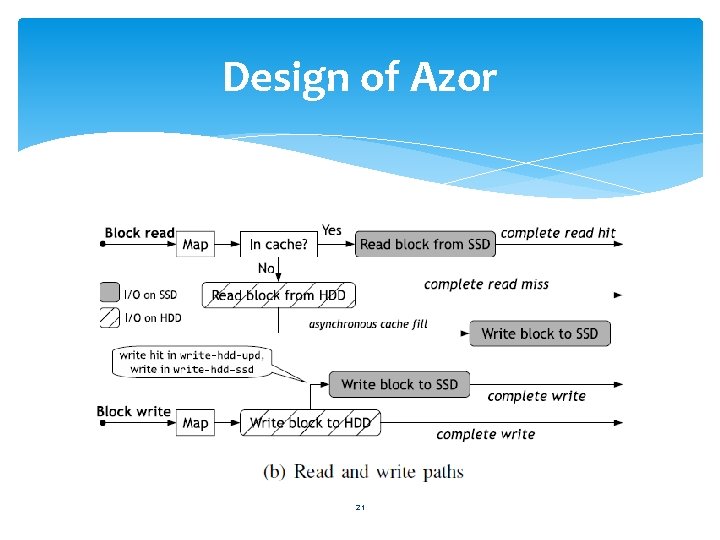
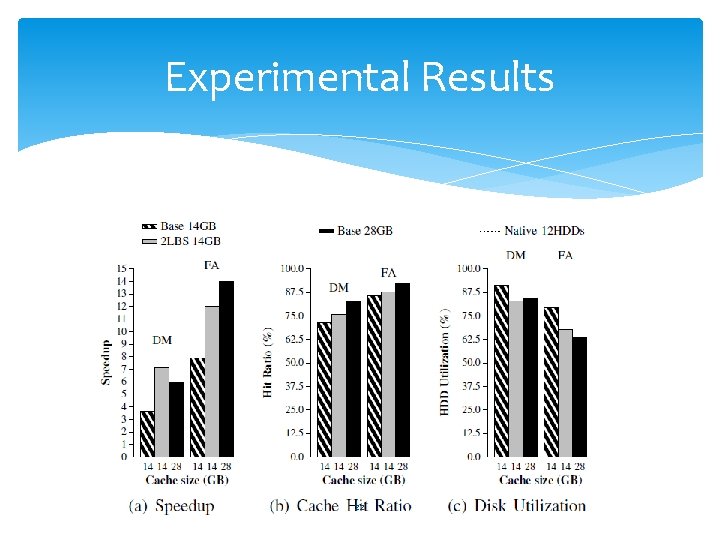
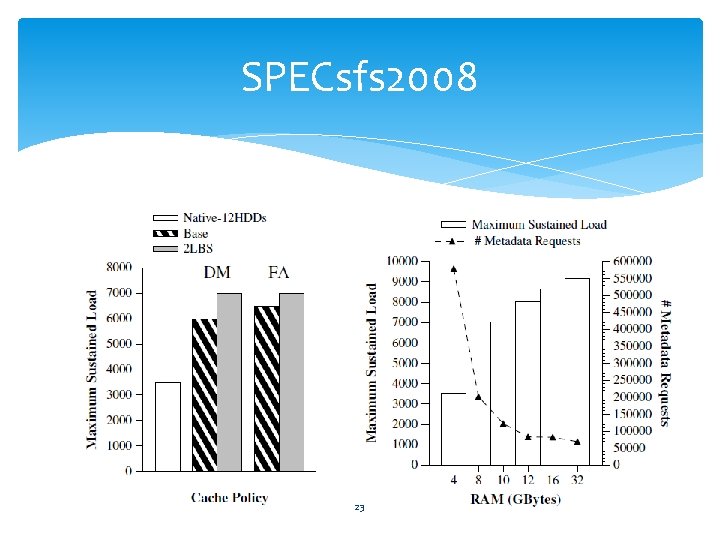
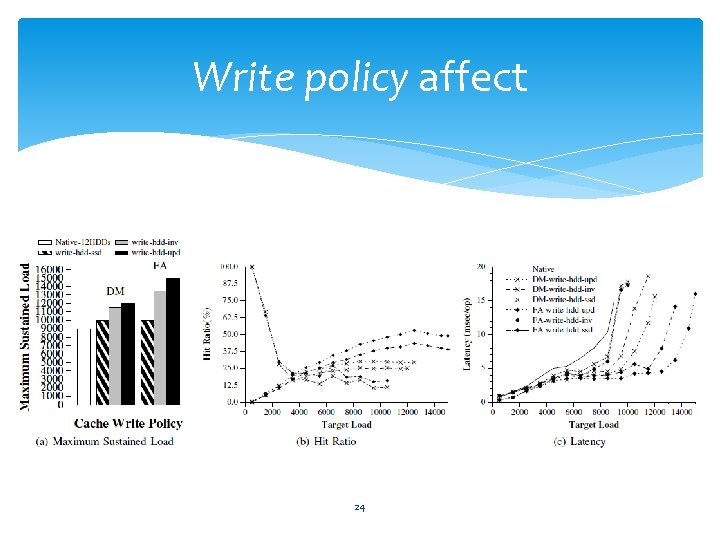
Important factors Cache associativity Two-level block selection scheme Write-handling policies 18
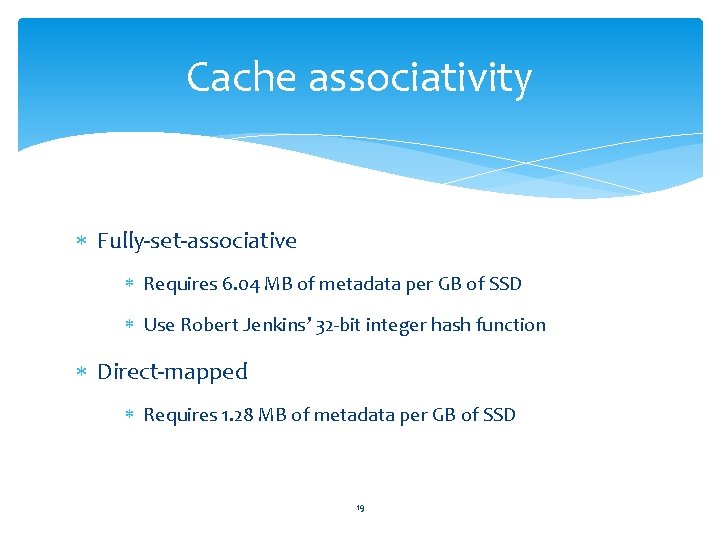
Cache associativity Fully-set-associative Requires 6. 04 MB of metadata per GB of SSD Use Robert Jenkins’ 32 -bit integer hash function Direct-mapped Requires 1. 28 MB of metadata per GB of SSD 19
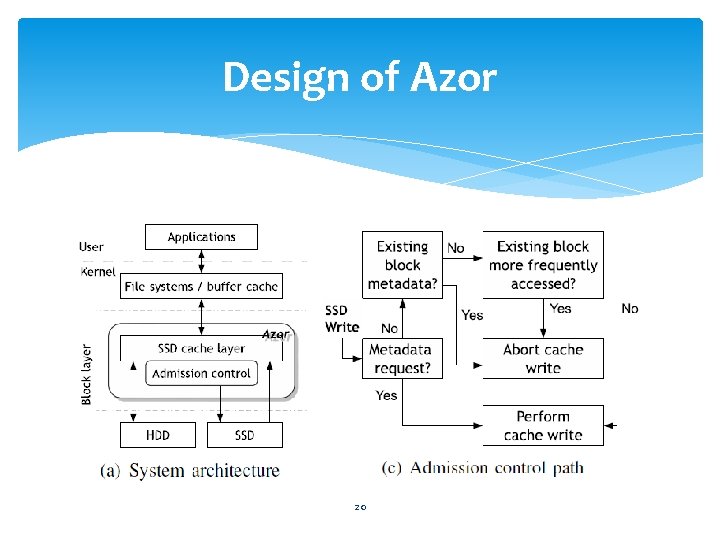
Design of Azor 20
Design of Azor 21
Experimental Results 22
SPECsfs 2008 23
Write policy affect 24

? 25
- Slides: 25