
HYPOXIC ZONE By Garrett Stephens WHAT IS THE
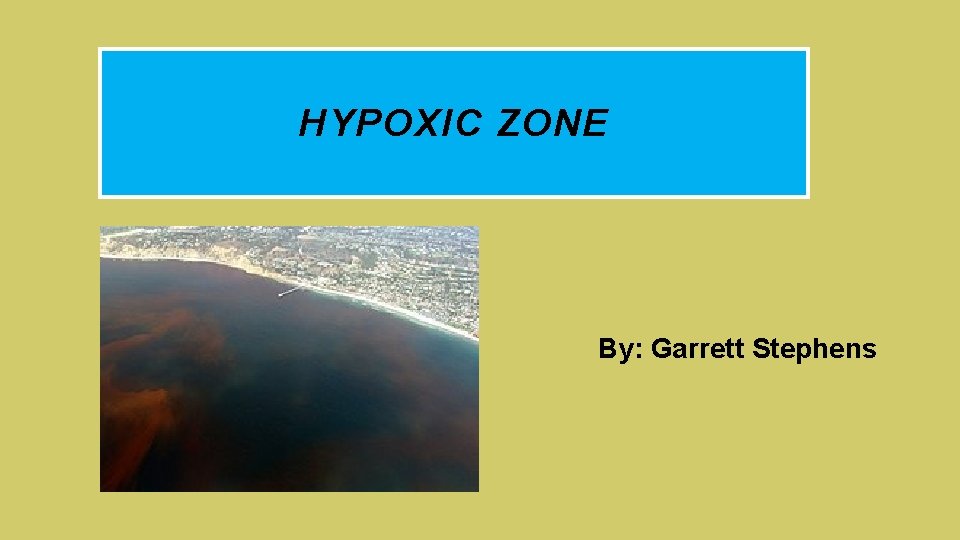
HYPOXIC ZONE By: Garrett Stephens
WHAT IS THE HYPOXIC ZONE • A hypoxic or low-oxygen zone, also called a dead zone, is an area of low to no oxygen that can kill fish and other marine life. It’s primarily caused by an excess of agricultural nutrients that flow downstream and into surface waters, stimulating harmful algae.
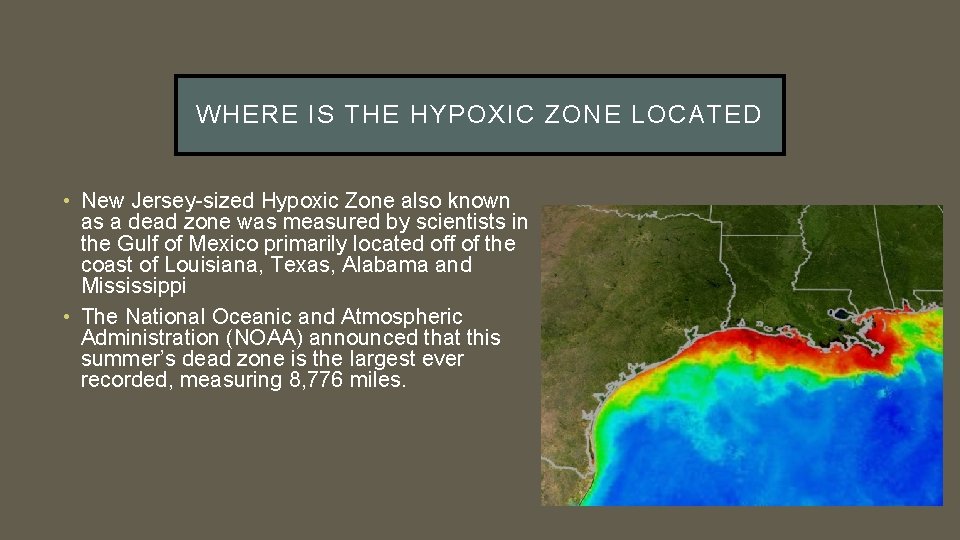
WHERE IS THE HYPOXIC ZONE LOCATED • New Jersey-sized Hypoxic Zone also known as a dead zone was measured by scientists in the Gulf of Mexico primarily located off of the coast of Louisiana, Texas, Alabama and Mississippi • The National Oceanic and Atmospheric Administration (NOAA) announced that this summer’s dead zone is the largest ever recorded, measuring 8, 776 miles.

SIZE COMPARISON: 3 YEAR DIFFERENCE
WHY DOES THE HYPOXIC ZONE EXIST • This year’s large size is mainly due to heavy stream flows in May which were about 34 percent above the long-term average and carried higherthan-average amounts of nutrients through Midwest waterways and into the Gulf. • For many years there were no regulations put into place that would help prevent runoff from farm Agricultural and sewer/wastewater industries. • Climate change, but that is a whole other topic.
EFFECTS OF THE DEAD ZONE • Low Oxygen levels resulting in: • Reduction in sea life • Shrimp size diminishing along with total catch • Higher cost of product at the market place • Loss of jobs for fisherman and other economic ripples that are dependent on ocean life.
MAIN COMPONENTS CONTRIBUTING TO THE HYPOXIC ZONE • The Gulf’s hypoxic zones are caused by excess nutrient pollution, primarily from human activities such as agriculture and wastewater treatment. • Farmland runoff containing fertilizers and livestock waste is the main source of the nitrogen and phosphorus, which stimulate an overgrowth of algae that sinks and decomposes in the water. • Temperature is perhaps the climate-related factor that most broadly affects dead zones.
SUMMER 2017 RESEARCH MISSION
DATA FROM PREVIOUS YEARS
DATA CONTINUED
GROUPS WORKING TO FIND A SOLUTION • Mississippi River/ Gulf of Mexico Hypoxia task force • Environmental Protection Agency
POSSIBLE SOLUTIONS/ CHANGES MADE • 59 percent reduction in the amount of nitrogen runoff that flows down the Mississippi River in order to reach expected goals. • Serious actions are taken to reduce the loss of Midwest fertilizers into the Mississippi River system • Dead zones can be tackled by reducing nutrient pollution. With less nitrogen or phosphorus to feed algal blooms, dead zones are less likely to form no matter how warm it gets. • Potential paths toward reducing levels of both nitrogen and phosphorus include altering fertilizer application rates, using cover crops (fast-growing crops planted to prevent soil erosion), improving overall nutrient management, and pursuing alternatives to corn-based biofuels
ENVIRONMENTAL PROTECTION AGENCY REGULATIONS
SPECIFICALLY ILLINOIS REGULATIONS
FUTURE GOALS • Mississippi river/gulf of Mexico Hypoxia task force recently extended the deadline until 2035 for achieving the goal of a 1, 950 -square-mile dead zone. • Task force also agreed on an interim target of a 20 percent reduction in the amount of nitrogen flowing into the Gulf of Mexico by 2025.
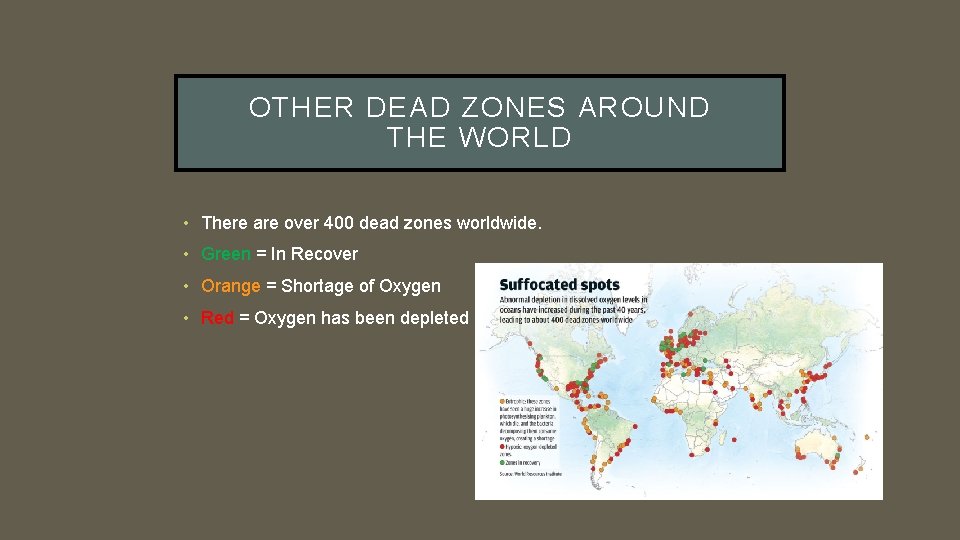
OTHER DEAD ZONES AROUND THE WORLD • There are over 400 dead zones worldwide. • Green = In Recover • Orange = Shortage of Oxygen • Red = Oxygen has been depleted
WORKS CITED • http: //news. nationalgeographic. com/2017/08/gulf-mexico-hypoxia-waterquality-dead-zone/ • http: //www. noaa. gov/media-release/noaa-usgs-and-partners-predictthird-largest-gulf-of-mexico-summer-dead-zone-ever • http: //www. smithsonianmag. com/science-nature/ocean-dead-zones-aregetting-worse-globally-due-climate-change-180953282 •
- Slides: 17